


15 Best Customer Experience Tools in 2026


The CX intelligence
platform that's AI-native by design
Book a demoQuick Summary
The best CX tools in 2026 span feedback analytics, support automation, product insights, and reputation management. Chattermill leads for enterprise feedback unification. Freshdesk and HubSpot Service Hub are great options for support heavy operations. For AI-native feedback analysis tied to revenue and retention, Chattermill is the top choice.
We evaluated 15 customer experience software platforms across pricing, AI capabilities, integration depth, and real user ratings. Whether you are a growing team looking for free tools or an enterprise CX leader managing millions of interactions, this guide will help you find the right fit.
Here are our top three picks:
| # | Tool | Best For |
|---|---|---|
| 1 | Chattermill | Unifying feedback analytics across every channel with advanced AI |
| 2 | Freshdesk | Growing support teams on a budget with AI-powered ticketing |
| 3 | HubSpot Service Hub | CRM-native customer service for teams in the HubSpot ecosystem |
Why Listen To Us?
At Chattermill, we build customer experience intelligence software used by mid-market and enterprise CX teams to analyze millions of feedback signals across dozens of languages. We've worked with global enterprises like Uber, HelloFresh, H&M, Booking.com and JustEat for the last 11 yea Our platform sits at the intersection of CX analytics and AI-driven decision-making, which means we understand not just what these tools promise, but how they perform in practice at enterprise scale.
What Is Customer Experience Software?
Customer experience (CX) software is a category of tools that helps businesses monitor, manage, and improve every interaction customers have with their brand. These platforms collect data from touchpoints like support conversations, surveys, product usage, social media, and online reviews, then organize that data into insights teams can act on.
Why does this matter? Because customer expectations have outpaced most organizations' ability to respond. Organizations that invest in customer experience consistently see stronger retention, higher customer lifetime value, and faster growth. Yet most teams still rely on siloed tools that capture feedback in one channel but miss the broader picture.
Modern customer experience software addresses this by consolidating feedback sources, applying analytics (increasingly AI-powered) to detect patterns and sentiment, and connecting those insights to business outcomes like retention, satisfaction scores, and product improvements. The best platforms go further — they surface anomalies before they become crises and tie customer signals directly to metrics like NPS, CSAT, and CES.
The category spans a broad range: from survey builders and support ticketing systems to full-stack CX intelligence platforms. What separates a good tool from the right tool depends on your team's maturity, the channels you need to cover, and whether you need descriptive analytics or predictive intelligence.
15 Top Customer Experience Tools: Head to Head Comparison
1. Chattermill

If your CX challenge is not collecting feedback but making sense of it all, Chattermill is built for exactly that problem. Where most tools force teams to analyze feedback channel by channel — one dashboard for surveys, another for support tickets, yet another for app reviews — Chattermill unifies every source into a single analytics layer powered by purpose-built AI.
The platform ingests data from surveys (NPS, CSAT, CES), support tickets, online reviews, social media, and app store feedback, then applies advanced natural language understanding to surface themes, sentiment, and emerging trends across all of it simultaneously. This is not keyword matching or basic sentiment scoring. Chattermill's AI models are trained to understand nuance, context, and the specific language patterns that matter to CX, insights, and product teams.
What makes Chattermill particularly valuable is its focus on connecting feedback to business outcomes. Rather than delivering a wall of charts, the platform shows teams exactly how specific themes and issues are driving changes in NPS, CSAT, and CES scores. When an anomaly appears — a sudden spike in complaints about delivery times, say, or a drop in sentiment around a new feature — Chattermill's automated alerts flag it in real time so teams can respond before it escalates.
Chattermill Features
- Unified Feedback Analytics: Consolidate feedback from surveys, support, reviews, social media, and app stores into one platform — no more toggling between tools to understand the full picture.
- Advanced AI Theme And Sentiment Analysis: Go beyond basic sentiment scoring with AI models that identify granular themes, contextual sentiment, and emerging patterns across feedback in multiple languages.
- Anomaly Detection And Automated Alerts: Get notified automatically when metrics shift unexpectedly, allowing teams to investigate and respond before issues affect broader customer satisfaction.
- Impact Measurement: Directly link customer feedback themes to movements in NPS, CSAT, and CES, so teams can quantify the business impact of specific issues or improvements.
- Multi-Language Support: Analyze feedback in dozens of languages natively, making Chattermill well-suited for organizations operating across multiple markets.
- Customizable Dashboards And Reporting: Build views tailored to different stakeholders — from CX leaders tracking strategic metrics to product managers monitoring feature-level sentiment.
- Integrations: Connect with major survey platforms, CRM systems, support tools, and data warehouses to fit into existing workflows without disrupting them.
2026 Pricing
Chattermill uses custom pricing based on feedback volume and the number of data sources connected. Book a Demo to discuss pricing and see the platform in action.
Chattermill Pros
- Unifies fragmented feedback sources into a single, coherent analytics layer — a genuine differentiator for teams drowning in siloed data
- AI analysis goes deeper than keyword matching, surfacing contextual themes and sentiment that simpler tools miss
- Anomaly detection gives teams early warning on emerging issues rather than waiting for quarterly reports
- Direct linkage between feedback themes and business metrics like NPS and CSAT helps prioritize with confidence
- MCP integration future-proofs the platform for AI agent workflows
- Strong multi-language support makes it practical for global CX programs
- Designed for CX, insights, and product teams at organizations that collect feedback at scale across multiple channels and languages
Chattermill Cons
- Custom pricing means no self-serve option for smaller teams or those needing a quick cost comparison
- The platform's depth may require onboarding time for teams unfamiliar with advanced feedback analytics
- Best suited for organizations that already collect feedback at scale — teams still building their feedback infrastructure may not realize the full value immediately
Who It's For
CX, insights, and product teams at mid-market and enterprise organizations that collect feedback across multiple channels and languages and need AI-driven analytics to turn that data into prioritized, actionable insights.
G2 Rating
Chattermill G2 Score: 4.5/5
2. Freshdesk

Freshdesk has become a go-to for growing support teams that need multichannel ticketing without enterprise complexity or enterprise pricing. It covers email, chat, phone, social media, and messaging apps in a single workspace, and its free tier makes it accessible to teams just getting started.
The introduction of Freddy AI adds a copilot layer that helps agents draft responses, summarize tickets, and suggest next steps. For teams scaling from a shared inbox to a structured support operation, Freshdesk offers a smooth transition path with enough depth to grow into.
Freshdesk Features
- Freddy AI Copilot: AI-powered agent assistance for response drafting, ticket summarization, and resolution suggestions.
- Omnichannel Ticketing: Manage email, chat, phone, social, and messaging conversations from a unified inbox.
- Automations And Workflows: Route, prioritize, and escalate tickets based on configurable rules.
- Self-Service Portal: Knowledge base and community forums to deflect common queries.
- Collaboration Tools: Shared ownership, linked tickets, and internal notes for team coordination.
2026 Pricing
Free plan available for up to 2 agents. Paid plans start at $15/agent/month billed annually (Growth plan), scaling to $79/agent/month for Enterprise. Pricing as of 2026.
Freshdesk Pros
- Generous free tier makes it a low-risk starting point for small teams
- Freddy AI copilot reduces agent workload on repetitive queries
- Clean interface with a short learning curve
- Strong marketplace of integrations and add-ons
Freshdesk Cons
- Advanced analytics and AI features are locked behind higher-tier plans
- Reporting depth does not match dedicated analytics platforms
- Customization options can feel limited for complex enterprise workflows
Who It's For
Growing support teams at small to mid-market companies that need multichannel ticketing with room to scale — especially those looking for a capable free tier to start with.
G2 Rating
Freshdesk G2 Score: 4.4/5
3. HubSpot Service Hub

For organizations already using HubSpot's CRM, Marketing Hub, or Sales Hub, Service Hub is a natural extension. It brings support ticketing, customer portals, knowledge base management, and feedback surveys into the same platform where your marketing and sales data already lives.
The strength here is context. Because Service Hub shares data with the rest of the HubSpot ecosystem, agents see a customer's full history — from first marketing touch to last purchase — without switching tools. This CRM-native approach is especially valuable for teams that want a single source of truth across revenue and support.
HubSpot Service Hub Features
- Shared CRM Database: Every support interaction is tied to the same contact record used by marketing and sales.
- Customer Portal: Branded self-service portal where customers track and manage their own tickets.
- Knowledge Base: SEO-optimized help articles with analytics on search terms and article performance.
- Feedback Surveys: NPS, CSAT, and CES surveys built into the platform with automated follow-up workflows.
- Conversation Intelligence: AI-powered call analysis for coaching and quality assurance.
2026 Pricing
Starts at $15/month per seat (Starter). Professional plan at $90/month per seat. Enterprise at $150/month per seat. Pricing as of 2026.
HubSpot Service Hub Pros
- Seamless integration with HubSpot's CRM, marketing, and sales tools
- Rich customer context available to every agent without tool switching
- Strong knowledge base and customer portal capabilities
- Feedback surveys and automation built in natively
HubSpot Service Hub Cons
- Most powerful features require Professional or Enterprise tiers, which escalate costs quickly
- Less flexible than best-of-breed tools for organizations not already in the HubSpot ecosystem
- Reporting is solid but does not match purpose-built CX analytics platforms
Who It's For
Teams already invested in HubSpot's ecosystem that want unified CRM, marketing, sales, and service data in one platform.
G2 Rating
HubSpot Service Hub G2 Score: 4.4/5
4. Hotjar

Hotjar approaches customer experience from a different angle — behavioral analytics. Instead of analyzing what customers say, it shows you what they actually do. Heatmaps, session recordings, and user feedback widgets give product and UX teams visual evidence of where users struggle, what catches their attention, and where they drop off.
This makes Hotjar particularly useful for digital experience optimization. If your CX challenge is tied to website or app usability, Hotjar fills a gap that traditional survey and support tools cannot.
Hotjar Features
- Heatmaps: Visual overlays showing clicks, scrolls, and mouse movement across pages.
- Session Recordings: Replay individual user sessions to understand behavior in context.
- Feedback Widgets: On-page surveys and reaction buttons for in-the-moment feedback.
- Funnels And Form Analytics: Identify where users abandon key conversion flows.
- Surveys: Targeted surveys triggered by behavior, page, or user segment.
2026 Pricing
Free plan with limited sessions. Paid plans start at $39/month (Plus), with Business at $99/month and Scale at $213/month. Pricing as of 2026.
Hotjar Pros
- Heatmaps and recordings provide visual evidence that is easy to share with stakeholders
- Free tier is functional enough for early-stage experimentation
- Quick to install and start collecting data
- Complements survey-based tools by showing behavior rather than self-reported opinions
Hotjar Cons
- Focused on digital behavior — does not cover support, voice, or offline feedback channels
- Session recording volume is capped on lower plans
- Not a replacement for structured feedback analytics or VoC programs
Who It's For
Product and UX teams focused on optimizing digital experiences through behavioral data rather than survey-based feedback.
G2 Rating
Hotjar G2 Score: 4.3/5
5. Intercom
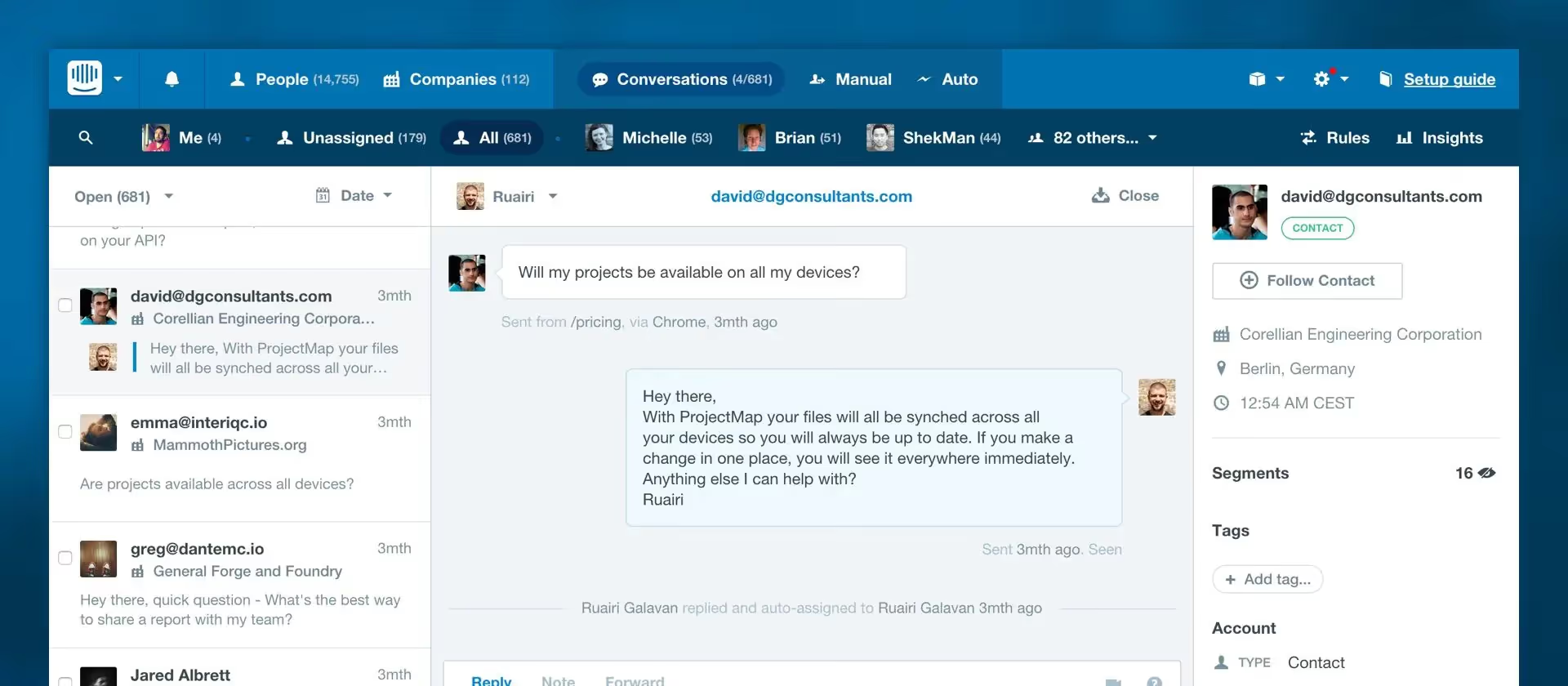
Intercom has evolved from a live chat widget into a full conversational support platform built around AI. Its Fin chatbot resolves a meaningful share of customer queries without human involvement, while proactive messaging, product tours, and a built-in help center round out the experience.
For SaaS companies where the product is the primary touchpoint, Intercom's in-app communication model fits naturally. It is designed to meet customers where they already are — inside the product — rather than routing them to external support channels.
Intercom Features
- Fin AI Chatbot: AI-powered resolution of customer queries using your help center and knowledge base content.
- Proactive Messaging: Targeted in-app messages and banners based on user behavior and attributes.
- Product Tours: Guided walkthroughs to onboard users and drive feature adoption.
- Help Center: Embeddable, searchable knowledge base integrated with the messenger.
- Inbox And Ticketing: Shared inbox with assignment, tagging, and SLA tracking.
2026 Pricing
Starts at $29/seat/month (Essential). Advanced plan at $85/seat/month. Expert plan at $132/seat/month. Fin AI resolutions are billed separately at $0.99 per resolution. Pricing as of 2026.
Intercom Pros
- Fin AI chatbot genuinely reduces ticket volume for teams with good help content
- In-app messaging meets SaaS users exactly where they are
- Product tours improve onboarding and feature adoption
- Sleek, modern interface with strong developer documentation
Intercom Cons
- Per-resolution billing for Fin AI can make costs unpredictable at scale
- Pricing tiers add up quickly for larger teams needing advanced features
- Less suited for non-digital or offline customer experience workflows
Who It's For
SaaS and product-led companies that want conversational, in-app customer support with AI-driven self-service.
G2 Rating
Intercom G2 Score: 4.5/5
6. Medallia

Medallia is an enterprise-grade experience management platform that captures signals across digital, in-store, contact center, and employee channels. It is designed for large organizations running complex, multi-touchpoint CX programs where the challenge is not just collecting feedback but orchestrating responses across the entire organization.
The platform's journey analytics and action management capabilities allow teams to map feedback to specific stages of the customer lifecycle and trigger workflows based on real-time signals. Medallia also extends into employee experience, connecting the two sides of the equation for organizations that see staff engagement as a driver of customer satisfaction.
Medallia Features
- Omnichannel Signal Capture: Collect feedback from web, mobile, in-store, contact center, social, and IoT sources.
- Journey Orchestration: Map customer journeys and trigger actions based on real-time behavioral and feedback signals.
- Text And Speech Analytics: AI-driven analysis of unstructured feedback from surveys, calls, and digital interactions.
- Employee Experience: Measure and improve employee engagement alongside customer experience.
- Action Management: Route insights to the right teams with automated workflows and case management.
2026 Pricing
Custom pricing only. Medallia does not publish standard rates — expect enterprise-level contracts. Pricing as of 2026.
Medallia Pros
- Comprehensive signal capture across digital and physical touchpoints
- Journey orchestration connects feedback to specific lifecycle stages
- Employee experience capabilities add a dimension most CX tools lack
- Proven at massive scale with large enterprise deployments
Medallia Cons
- Custom pricing and enterprise sales cycles make it inaccessible for smaller organizations
- Implementation complexity requires significant onboarding and professional services
- The breadth of the platform can be overwhelming for teams with narrower CX needs
Who It's For
Large enterprises running multi-channel, multi-department CX programs that need signal capture, journey orchestration, and action management at scale.
G2 Rating
Medallia G2 Score: 4.5/5
7. NICE CXone
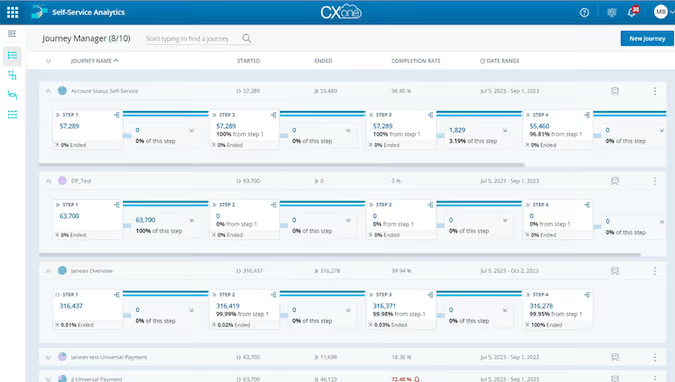
NICE CXone is a cloud-native contact center platform built for organizations where the phone, email, and chat queues are the frontline of customer experience. It combines automatic call distribution (ACD), interactive voice response (IVR), workforce optimization, and interaction analytics in a single suite.
For large contact centers managing hundreds or thousands of agents, CXone's strength is operational control — routing the right interactions to the right agents, forecasting staffing needs, and analyzing call quality at scale.
NICE CXone Features
- Omnichannel ACD Routing: Route voice, email, chat, and social interactions to agents based on skills, availability, and priority.
- Workforce Management: Forecasting, scheduling, and adherence tracking for contact center teams.
- Interaction Analytics: Speech and text analytics across recorded interactions for quality and compliance monitoring.
- IVR And Self-Service: Configurable voice menus and chatbot flows to handle routine queries automatically.
- Quality Management: Call scoring, screen recording, and coaching tools for agent performance.
2026 Pricing
Starts at $71/agent/month (Digital Agent plan). CXone Mpower plans range up to $209/agent/month for the Complete Suite. Pricing as of 2026.
NICE CXone Pros
- Purpose-built for large-scale contact center operations
- Workforce management tools help optimize staffing and reduce costs
- Interaction analytics provide granular insight into agent performance and customer sentiment
- Established platform with a long track record in the contact center space
NICE CXone Cons
- Pricing is steep for smaller teams — this is an enterprise investment
- Complexity can require dedicated administration and training
- Less relevant for teams where the contact center is not the primary CX channel
Who It's For
Large contact center operations needing omnichannel routing, workforce optimization, and interaction analytics under one roof.
G2 Rating
NICE CXone G2 Score: 4.3/5
8. Qualtrics XM
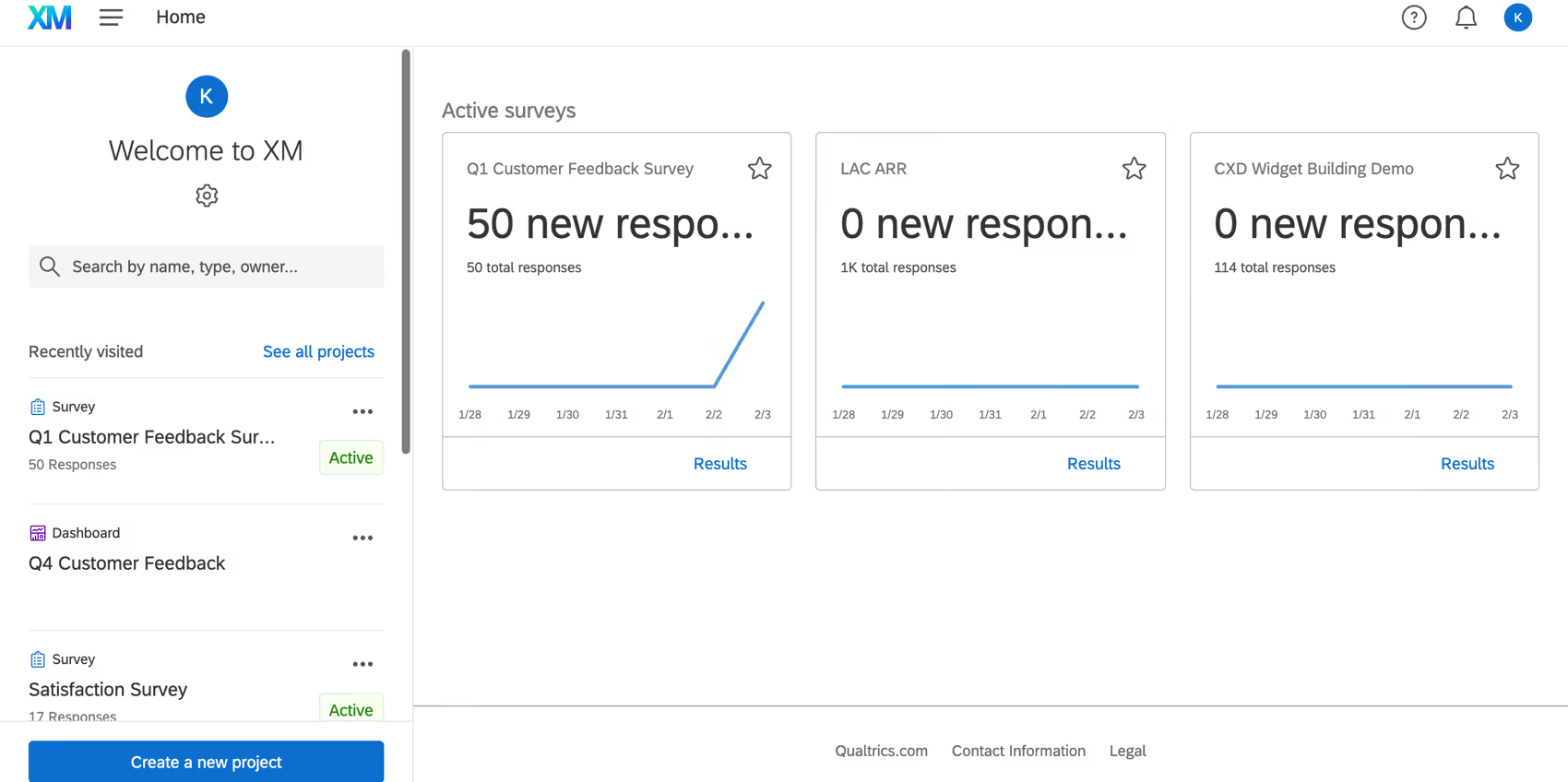
Qualtrics XM is the platform many enterprise research and insights teams reach for when they need sophisticated survey design, advanced analytics, and predictive modeling. It spans customer experience, employee experience, product experience, and brand experience, making it a broad experience management suite rather than a point solution.
The platform's strength lies in its research rigor — branching logic, conjoint analysis, statistical modeling, and text analytics give teams the depth needed for complex VoC programs. If your organization treats customer experience as a research discipline, Qualtrics provides the academic-grade toolkit.
Qualtrics XM Features
- Advanced Survey Design: Complex branching logic, display conditions, quotas, and embedded data for research-grade surveys.
- Text iQ: Natural language processing for open-ended response analysis, theme detection, and sentiment scoring.
- Predict iQ: Machine learning models to forecast churn risk and identify at-risk customers.
- Journey Optimizer: Map and optimize customer journeys using behavioral and attitudinal data.
- XM Directory: Centralized contact management for longitudinal research and panel management.
2026 Pricing
Custom pricing only. Qualtrics does not publish standard rates — expect enterprise contracts. Pricing as of 2026.
Qualtrics XM Pros
- Among the deepest survey design and research methodology toolsets in this comparison
- Predictive analytics and statistical modeling go beyond descriptive reporting
- Covers multiple experience domains (customer, employee, product, brand) in one platform
- Strong text analytics for open-ended feedback
Qualtrics XM Cons
- Custom pricing and long sales cycles put it out of reach for most small and mid-market teams
- The platform's research orientation can feel heavy for teams that need operational CX insights
- Requires trained users to take advantage of advanced features
Who It's For
Enterprise insights and research teams running structured VoC programs that require advanced survey methodology, predictive modeling, and cross-domain experience management.
G2 Rating
Qualtrics XM G2 Score: 4.3/5
9. Salesforce Service Cloud
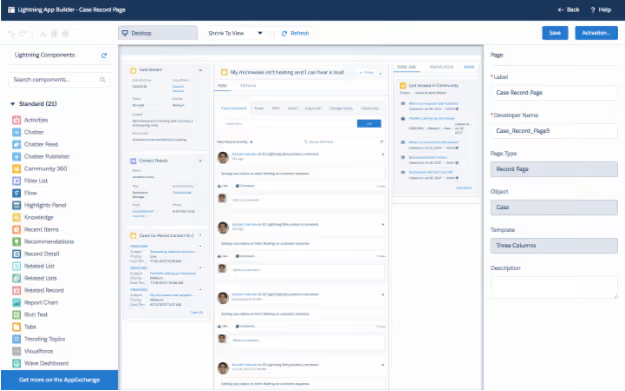
Salesforce Service Cloud brings customer support into the Salesforce ecosystem, giving agents access to the same 360-degree customer view that sales and marketing teams use. For organizations already running Salesforce CRM, this continuity is a significant advantage — there is no integration tax to get customer context into the hands of support agents.
Einstein AI adds case classification, response recommendations, and chatbot capabilities, while the AppExchange marketplace offers thousands of pre-built integrations. The trade-off is complexity: Salesforce environments often require dedicated administrators and careful configuration.
Salesforce Service Cloud Features
- Case Management: Full lifecycle case tracking with assignment rules, escalation, and SLA management.
- Einstein AI: AI-powered case classification, next-best-action recommendations, and chatbot (Einstein Bot).
- Omnichannel Routing: Route cases from email, chat, phone, social, and messaging to the right agents.
- Knowledge Base: Centralized article management with search, versioning, and agent-facing recommendations.
- AppExchange Integrations: Access to thousands of third-party apps and connectors.
2026 Pricing
Starts at $25/user/month (Starter Suite). Professional at $80/user/month. Enterprise at $165/user/month. Unlimited at $330/user/month. Pricing as of 2026.
Salesforce Service Cloud Pros
- Deep integration with Salesforce CRM provides extensive customer context for teams in that ecosystem
- Einstein AI automates routine classification and routing tasks
- AppExchange marketplace offers thousands of integrations
- Scales from small teams to the largest enterprises
Salesforce Service Cloud Cons
- Requires Salesforce ecosystem investment — limited value as a standalone tool
- Administration complexity often necessitates a dedicated Salesforce admin
- Costs escalate quickly when adding advanced features and higher-tier plans
Who It's For
Organizations already invested in Salesforce CRM that want unified sales, marketing, and service data with AI-powered support automation.
G2 Rating
Salesforce Service Cloud G2 Score: 4.3/5
10. Survicate

Survicate specializes in getting feedback fast — lightweight surveys embedded in products, websites, emails, and mobile apps that capture responses without disrupting the user experience. For product teams that need quick signal on feature launches, onboarding flows, or satisfaction trends, Survicate's simplicity is a strength.
The platform supports NPS, CSAT, CES, and custom surveys with targeting rules that let you trigger the right question at the right moment based on user behavior, page visits, or attributes.
Survicate Features
- In-Product Surveys: Embed surveys directly in web and mobile apps with behavioral targeting.
- Website Feedback Widgets: Non-intrusive survey widgets triggered by page, scroll depth, or exit intent.
- Email And Link Surveys: Distribute surveys via email campaigns or shareable links.
- NPS, CSAT, And CES Templates: Pre-built templates for standard CX metrics with benchmarking.
- Integrations: Connect with analytics, CRM, and product tools including HubSpot, Intercom, and Amplitude.
2026 Pricing
Free plan with up to 25 responses per month. Paid plans start at 89 GBP/month (Good plan), scaling to 299 GBP/month (Better) and custom Enterprise pricing. Pricing as of 2026.
Survicate Pros
- Quick setup — launch surveys in minutes without developer involvement
- Behavioral targeting ensures surveys reach the right users at the right moment
- Clean, intuitive interface with minimal learning curve
- Generous integration library for product and marketing stacks
Survicate Cons
- Free plan is quite limited (25 responses/month)
- Analysis capabilities do not match dedicated feedback analytics platforms
- Not designed for complex, multi-channel CX programs
Who It's For
Product and growth teams at SaaS and digital-first companies that need fast, targeted feedback collection without heavy infrastructure.
G2 Rating
Survicate G2 Score: 4.6/5
11. Zendesk
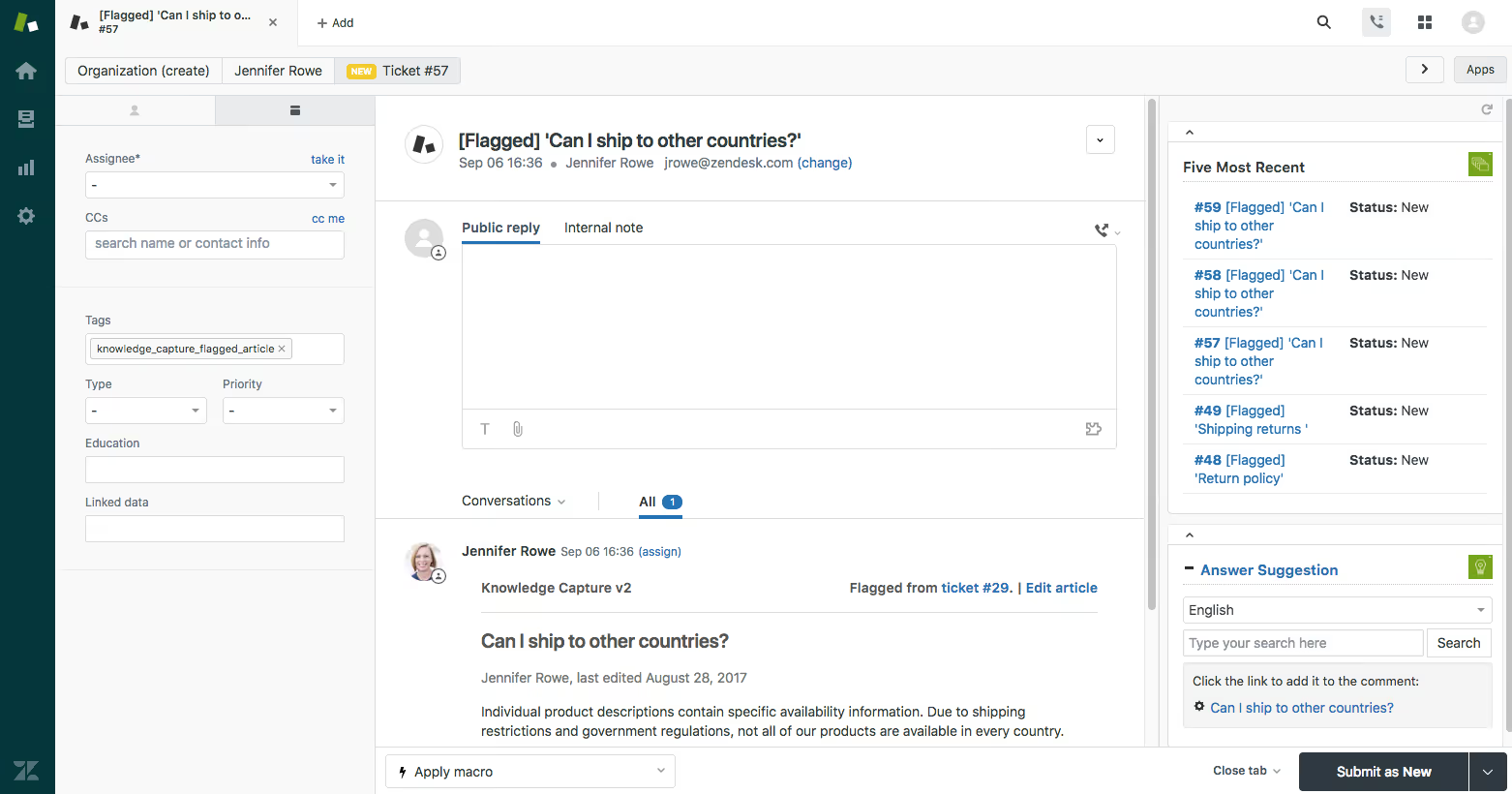
Zendesk is one of the most widely adopted customer support platforms, and its recent AI investments have sharpened its appeal for teams looking to automate ticket resolution. The platform handles email, chat, phone, social, and messaging in a unified agent workspace, with AI capabilities that include ticket routing, response suggestions, and a self-service Answer Bot.
For teams that measure success by resolution speed and agent efficiency, Zendesk's combination of mature ticketing infrastructure and expanding AI features makes it a solid operational choice.
Zendesk Features
- AI-Powered Ticket Routing: Automatically classify and route tickets based on intent, language, and sentiment.
- Answer Bot: AI self-service that resolves common questions using knowledge base content.
- Unified Agent Workspace: Single interface for managing conversations across all channels.
- Marketplace: Over 1,000 pre-built apps and integrations.
- Reporting And Analytics: Pre-built dashboards and custom reports for operational metrics.
2026 Pricing
Starts at $19/agent/month (Support Team). Suite Team at $55/agent/month. Suite Professional at $115/agent/month. Suite Enterprise pricing is custom. Pricing as of 2026.
Zendesk Pros
- Mature, battle-tested ticketing platform trusted by thousands of companies
- AI features are improving rapidly, especially for ticket deflection and routing
- Large marketplace of integrations and apps
- Scales well from small teams to large support operations
Zendesk Cons
- Advanced AI and analytics features require higher-tier plans
- Per-agent pricing can become expensive as teams grow
- Feedback analytics are limited compared to purpose-built CX intelligence platforms
Who It's For
Support teams of any size looking for a proven ticketing platform with growing AI capabilities and a broad integration ecosystem.
G2 Rating
Zendesk G2 Score: 4.3/5
12. Zonka Feedback
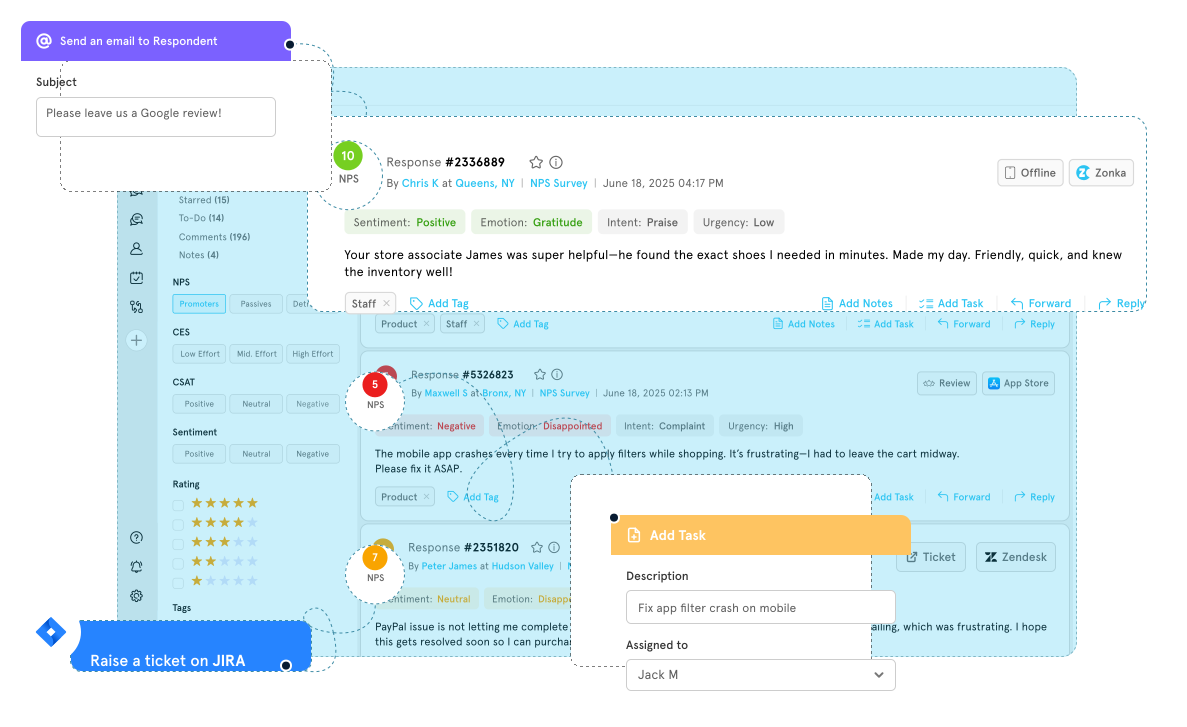
Zonka Feedback stands out for its strength in offline and on-premise feedback collection. While most CX tools focus on digital channels, Zonka supports kiosk-mode surveys, tablet-based feedback forms, and SMS surveys alongside web and email distribution. This makes it a strong fit for businesses with physical locations — retail stores, hotels, clinics, or event venues.
The platform also includes CX automation workflows, letting teams trigger actions based on survey responses like sending alerts for detractors or routing feedback to specific departments.
Zonka Feedback Features
- Offline And Kiosk Surveys: Collect feedback on tablets and kiosks without an internet connection — data syncs when connectivity returns.
- Multi-Channel Distribution: Surveys via email, SMS, web, in-app, QR codes, and on-premise devices.
- CX Workflows: Automated actions triggered by survey responses — alerts, tagging, routing, and follow-ups.
- NPS, CSAT, And CES: Built-in templates with real-time scoring and trend tracking.
- White-Label Surveys: Fully branded survey experiences for customer-facing touchpoints.
2026 Pricing
Starts at $33/month (Starter). Professional at $99/month. Growth at $199/month. Enterprise pricing is custom. Pricing as of 2026.
Zonka Feedback Pros
- Strong offline and kiosk survey capabilities that stand out for physical-location use cases
- Multi-channel distribution covers both digital and physical touchpoints
- CX automation workflows add operational value beyond data collection
- Affordable entry point compared to enterprise platforms
Zonka Feedback Cons
- Analytics depth does not match dedicated feedback analytics platforms
- The platform's breadth can feel scattered — it tries to cover many use cases
- Brand recognition is lower, which may matter for enterprise procurement
Who It's For
Businesses with physical locations (retail, hospitality, healthcare, events) that need to collect feedback both online and at the point of experience.
G2 Rating
Zonka Feedback G2 Score: 4.7/5
13. AskNicely

AskNicely is purpose-built for service businesses that want to measure and improve frontline performance using NPS as the core metric. Rather than treating NPS as a quarterly report, AskNicely makes it an operational tool — real-time dashboards, coaching workflows, and automated follow-ups that connect customer feedback directly to the employees delivering the experience.
This frontline focus makes AskNicely distinctive. It is less about analyzing feedback at the organizational level and more about empowering the people on the ground to act on it immediately.
AskNicely Features
- Frontline NPS Tracking: Real-time NPS scores broken down by location, team, and individual employee.
- Coaching Workflows: Automated prompts and workflows that help managers coach based on customer feedback.
- Daily Digests: Summary emails that keep frontline teams connected to their customer scores.
- Automated Follow-Ups: Trigger responses to detractors and promoters based on survey results.
- Integrations: Connect with CRM, support, and communication tools for closed-loop feedback.
2026 Pricing
Starts at $449/month. Pricing scales based on the number of users and feedback volume. Custom enterprise pricing available. Pricing as of 2026.
AskNicely Pros
- Uniquely focused on connecting NPS to frontline employee performance
- Real-time coaching workflows turn feedback into immediate action
- Simple, engaging interface designed for non-technical frontline staff
- Strong for multi-location service businesses
AskNicely Cons
- Starting price of $449/month is a significant commitment for small teams
- Narrow focus on NPS — teams needing broader CX analytics will need additional tools
- Less suited for product-led or digital-first CX programs
Who It's For
Service businesses (hospitality, healthcare, property management, franchise operations) that want to use NPS as a frontline coaching and accountability tool.
G2 Rating
AskNicely G2 Score: 4.7/5
14. Birdeye

Birdeye combines online reputation management with customer experience tools, making it a strong choice for multi-location businesses where online reviews and local search visibility are critical to growth. The platform helps teams generate, monitor, and respond to reviews across Google, Facebook, and industry-specific sites while also offering surveys, messaging, and webchat.
For businesses where the experience starts with a Google search and a star rating, Birdeye bridges the gap between reputation and CX.
Birdeye Features
- Review Generation And Management: Automated review requests and centralized dashboard for monitoring and responding across 200+ sites.
- Listings Management: Sync business information across directories to improve local search visibility.
- Surveys: NPS and CSAT surveys with automated follow-ups based on responses.
- Messaging: Unified inbox for text, webchat, and social messaging.
- Competitive Benchmarking: Compare review performance against local competitors.
2026 Pricing
Custom pricing based on the number of locations and selected modules. Birdeye does not publish standard rates. Pricing as of 2026.
Birdeye Pros
- Standout review generation and reputation management, especially for multi-location businesses
- Multi-location support with location-level performance tracking
- Combines reputation, surveys, and messaging in one platform
- Strong local SEO and listings management capabilities
Birdeye Cons
- Custom pricing makes it difficult to compare costs upfront
- CX analytics are less sophisticated than purpose-built feedback platforms
- Primary value is reputation-focused — teams needing deep VoC analytics will need supplementary tools
Who It's For
Multi-location businesses (dental, automotive, home services, hospitality) where online reputation directly drives customer acquisition.
G2 Rating
Birdeye G2 Score: 4.7/5
15. Tawk.to

Tawk.to has built a genuinely free live chat platform that competes with paid alternatives on feature depth. The core product — live chat, ticketing, a knowledge base, and visitor monitoring — costs nothing. Revenue comes from optional paid add-ons like AI Assist ($29/month), hire-a-chat-agent services, and white-labeling.
For teams that need customer communication capabilities but cannot justify a per-seat software cost, Tawk.to removes the financial barrier entirely. The trade-off is that advanced AI and automation features are less developed than dedicated platforms.
Tawk.to Features
- Free Live Chat: Unlimited agents, unlimited chat history, and customizable widget — no per-seat charges.
- Ticketing System: Convert chats into trackable tickets for follow-up.
- Knowledge Base: Self-service help center with search and categorization.
- Visitor Monitoring: Real-time view of website visitors with page history and geographic data.
- Video And Voice Chat: Built-in video and voice calling within the chat widget.
2026 Pricing
Core platform is free (unlimited agents). Optional add-ons: AI Assist at $29/month, Remove Branding at $29/month, Hire Chat Agents at $1/hour. Pricing as of 2026.
Tawk.to Pros
- Genuinely free core product with no per-seat limits — rare in this category
- Feature set competes with paid live chat tools
- Quick setup with minimal technical requirements
- Video and voice chat add flexibility beyond text-based support
Tawk.to Cons
- AI and automation capabilities lag behind paid competitors like Intercom and Zendesk
- Free model means the platform relies on optional add-ons — support quality may reflect that
- Limited CX analytics beyond basic chat metrics
Who It's For
Small businesses and startups that need capable live chat and ticketing without any software cost, and are willing to trade advanced AI for a zero-dollar entry point.
G2 Rating
Tawk.to G2 Score: 4.5/5
CX Software by Business Focus and Industry
Not every customer experience challenge looks the same. Here is how to think about tool selection based on your specific context.
Enterprise CX Programs
Best tools: Chattermill, Medallia, Qualtrics XM
If you are managing CX across multiple brands, regions, or business units, you need platforms that unify data at scale and connect feedback to strategic metrics. Chattermill excels at feedback analytics and AI-driven theme detection; Medallia offers the broadest signal capture; Qualtrics provides the deepest research methodology.
SaaS and Product-Led Companies
Best tools: Intercom, Hotjar, Survicate
Product-led teams need tools that meet users inside the product. Intercom's conversational support and in-app messaging, Hotjar's behavioral analytics, and Survicate's lightweight in-product surveys are all designed for this context.
Multi-Location and Service Businesses
Best tools: Birdeye, AskNicely, Zonka Feedback
When the customer experience happens at a physical location, you need tools that capture feedback on-site (Zonka), connect it to frontline performance (AskNicely), and manage the resulting reputation online (Birdeye).
Growing Support Teams
Best tools: Freshdesk, Zendesk, Tawk.to
Teams scaling their support operations need reliable ticketing, AI-assisted resolution, and manageable costs. Freshdesk and Zendesk offer mature multichannel ticketing; Tawk.to provides a free starting point.
CRM-First Organizations
Best tools: Salesforce Service Cloud, HubSpot Service Hub
If your CRM is the center of your tech stack, choose the service tool that integrates natively. Salesforce shops should look at Service Cloud; HubSpot shops at Service Hub.
Contact Center Operations
Best tools: NICE CXone
Large contact centers with workforce management, ACD routing, and compliance requirements need a purpose-built platform. NICE CXone covers this ground comprehensively.
What Are Customer Experience AI Tools?
The phrase "AI tools" gets attached to nearly every software category today, so it is worth being specific about what AI actually does in customer experience software.
At the most basic level, AI in CX tools automates tasks that previously required manual effort: routing tickets to the right agent, categorizing survey responses by topic, or scoring sentiment as positive, negative, or neutral. These rule-based and machine learning approaches have been around for years and are now table stakes in most platforms.
The more meaningful evolution is in AI that generates new insight rather than just automating existing processes. Advanced natural language understanding models can now parse thousands of open-ended survey responses, support transcripts, and reviews to identify emerging themes that no human analyst would catch at that scale. Anomaly detection flags unexpected shifts in customer sentiment before they show up in quarterly reports. Predictive models estimate churn risk based on behavioral and feedback signals.
What distinguishes the strongest AI-powered CX tools from the rest is not whether they use AI, but how deeply it is integrated into the analytical workflow. A platform like Chattermill, for example, applies AI not just to classify individual feedback items but to connect patterns across multiple channels and languages, then link those patterns to movements in business metrics like NPS and CSAT. That is a fundamentally different capability from a chatbot that deflects common questions — both use AI, but they solve very different problems.
The category continues to evolve rapidly. Generative AI is enabling more natural chatbot interactions and automated response drafting, while advances in large language models are improving the accuracy of theme detection and sentiment analysis across languages. For CX teams evaluating tools, the key question is not "does it have AI?" but "does the AI help us understand our customers better and act on that understanding faster?"
Benefits of Using Customer Experience Software
Unified Customer Insights: Instead of piecing together feedback from surveys, support tickets, reviews, and social mentions manually, CX software consolidates these signals into a single view. This eliminates blind spots and gives teams a complete picture of the customer experience.
Faster, Evidence-Based Decisions: When insights are accessible in real time rather than buried in quarterly reports, teams can respond to emerging issues before they escalate. Automated alerts and anomaly detection compress the time between signal and action.
Improved Customer Retention: Understanding why customers leave — and catching the warning signs early — is one of the highest-value outcomes of CX software. Platforms that link feedback to churn risk give retention teams the specificity they need to intervene.
Product And Service Improvement: Customer feedback is one of the most reliable inputs for product roadmaps. CX software that surfaces granular themes and feature-level sentiment helps product teams prioritize improvements that actually matter to users.
Higher Satisfaction Scores: Organizations that systematically act on customer feedback see measurable improvements in NPS, CSAT, and CES. The software itself does not create satisfaction — but it ensures feedback reaches the people who can act on it.
Competitive Differentiation: In markets where products and pricing are similar, customer experience becomes the differentiator. CX software gives organizations the intelligence to deliver consistently better experiences than their competitors.
Operational Efficiency: Automating feedback collection, classification, routing, and reporting frees CX teams from manual data wrangling. This means more time analyzing and acting on insights, less time compiling spreadsheets.
Scalable CX Programs: As organizations grow, manual feedback processes break down. CX software scales with the business — handling higher volumes, more channels, and more languages without proportional increases in headcount.
Cross-Functional Alignment: When CX insights are visible across product, support, marketing, and leadership teams, everyone works from the same understanding of the customer. This shared evidence base reduces internal debates and accelerates decision-making.
ROI & Business Impact of Customer Experience Software
The return on customer experience software is not abstract — it shows up in metrics that leadership already tracks.
- Reduced churn: By identifying dissatisfied customers earlier and understanding the specific drivers of attrition, organizations using CX analytics can catch at-risk accounts before they leave. Research consistently shows that even modest improvements in retention have outsized impact on lifetime value.
- Faster issue resolution: AI-powered routing and self-service tools reduce average handle times and increase first-contact resolution rates, lowering the cost of support while improving the customer experience.
- Improved NPS and CSAT: Teams that close the loop on feedback — acknowledging issues and communicating changes — see direct improvements in satisfaction scores, which correlate with loyalty and advocacy.
- Product development efficiency: Instead of relying on intuition or small-sample research, product teams using feedback analytics can prioritize the features and fixes that the largest number of customers actually want.
- Revenue protection: For subscription businesses, reducing churn by even one or two percentage points can translate into significant protected recurring revenue over a year. CX software that flags at-risk accounts before they cancel often pays for itself within the first renewal cycle.
- Operational cost savings: Automation of feedback collection, classification, and routing reduces manual effort. Teams spend less time on data management and more time on high-value analysis and action.
Get Started With Chattermill
If you are ready to move from fragmented feedback to unified, AI-powered customer intelligence, Chattermill can help your team understand what customers are saying across every channel, spot emerging issues before they escalate, and measure the impact of your CX improvements on the metrics that matter.
Book a Demo to see how Chattermill turns customer feedback into actionable insights.
Visit chattermill.com to learn more about the platform and how it works.
Customer Experience Software: FAQs
What Is Customer Experience Software?
Customer experience software is a category of tools that helps businesses collect, analyze, and act on feedback from every customer touchpoint — including surveys, support interactions, reviews, social media, and in-product behavior. These platforms turn raw feedback into structured insights that teams use to improve satisfaction, reduce churn, and guide product decisions. The category ranges from survey builders and support ticketing systems to full-stack AI-powered analytics platforms.
What Is the Best CX Software in 2026?
The best customer experience software depends on your specific needs. Chattermill is purpose-built for AI-powered feedback analytics that unify data across channels and languages. Qualtrics XM is designed for enterprise VoC research programs. Medallia serves large-scale omnichannel experience management. Zendesk and Freshdesk are strong options for teams that need operational support with AI automation. The right tool depends on whether you need analytics depth, support automation, or both.
How Much Does Customer Experience Software Cost?
Pricing varies widely. Free options like Tawk.to and Freshdesk (free tier) exist for teams just getting started. Mid-range tools like Zendesk ($19/agent/month), Freshdesk ($15/agent/month), and Survicate (from 89 GBP/month) offer scalable pricing. Enterprise platforms like Chattermill, Qualtrics, and Medallia use custom pricing based on feedback volume and data sources. As a rough guide, expect to budget between $15 and $200+ per user per month depending on your scale and requirements. All pricing noted is as of 2026.
What Is the Difference Between CX Software and CRM?
CRM (Customer Relationship Management) software like Salesforce and HubSpot manages customer data, sales pipelines, and communication history — it tracks what happened. CX software focuses on understanding how customers feel about what happened — analyzing feedback, measuring satisfaction, and identifying areas for improvement. Some platforms bridge both: Salesforce Service Cloud and HubSpot Service Hub add CX capabilities to their CRM foundations. For organizations that need deep feedback analytics, a dedicated CX platform like Chattermill complements rather than replaces a CRM.
How Does AI Improve Customer Experience Software?
AI enhances CX software in several practical ways. Natural language processing analyzes thousands of open-ended survey responses and support transcripts to identify themes and sentiment at scale. Machine learning models detect anomalies and predict churn risk before issues become visible in traditional reporting. AI-powered chatbots and routing reduce response times and deflect routine queries. Platforms like Chattermill take this further by using AI to connect patterns across multiple feedback channels and languages, then link those patterns to changes in business metrics like NPS and CSAT — turning raw data into prioritized, actionable intelligence.



See Chattermill in action on your own feedback
Book a demo


