


Most CX teams assume the hard part of feedback analytics is collecting data. It is not. The real challenge is turning thousands of survey responses, support tickets, and app reviews into decisions that move metrics. Chattermill and Thematic both tackle this problem, but they approach it from different directions — and the right choice depends on how your team operates, how much feedback you process, and how deeply you need to integrate analytics into your existing stack.
Quick Summary
- Analytical approach: Chattermill uses a hybrid AI engine (aspect-based sentiment analysis, phrasal analysis, clustering, and GenAI) for structured analytics. Thematic uses bottom-up unsupervised theme discovery with user-editable code frames.
- Scale and language coverage: Chattermill supports 99+ languages natively and is built for high-volume enterprise feedback. Thematic supports 13 languages and positions as an intelligence layer that complements existing CX suites.
- Unique to Chattermill: Social CX analytics, speech analytics, dedicated anomaly detection and alerting, MCP server for AI agent integration, and direct linkage to NPS/CSAT/CES business metrics.
- Unique to Thematic: White-box theme traceability (every theme maps to exact verbatims), full user control over theme management without vendor involvement, and GenAI-powered natural language Q&A via Thematic Answers.
- Reviews: Chattermill holds 354 verified reviews across G2, Capterra, and Gartner Peer Insights. Thematic has 58 reviews across G2 and Capterra (not listed on Gartner).
- Pricing: Chattermill offers custom enterprise pricing. Thematic starts at $25,000/year according to G2.
- Best for Chattermill: Enterprise B2C teams managing omnichannel feedback at scale who need unified analytics, automated alerting, and direct metric impact measurement.
- Best for Thematic: Mid-market to enterprise teams that want transparent, user-controlled theme analysis layered on top of an existing CX suite like Medallia or Qualtrics.
Why Listen To Us
Chattermill powers feedback analytics for enterprise brands including Uber, HelloFresh, Wise, and Transfergo — teams that process millions of customer interactions across dozens of languages and channels. This guide breaks down the real differences between Chattermill and Thematic across features, pricing, integrations, and use cases so you can make an informed decision about which platform fits your team's needs.
What Is Thematic?
Thematic positions itself as "the customer intelligence layer for CX" — a platform designed to sit alongside existing CX suites rather than replace them. Founded with a research-grade approach to text analytics, Thematic uses a combination of proprietary AI and large language models to discover themes from unstructured feedback data using a bottom-up, unsupervised methodology.
The platform ingests data from surveys, support tickets, call center transcripts, app reviews, and CRM notes, with built-in PII redaction and language translation. Its core differentiator is theme transparency: users can trace every theme back to the exact customer comments that generated it, and they have full control to add, delete, or merge themes without requiring vendor professional services.
Thematic counts LinkedIn, DoorDash, Semrush, EA, and Woolworths among its enterprise customers. Recent product additions include Thematic Answers, a GenAI-powered natural language Q&A feature that lets teams query their feedback data conversationally. The platform supports 13 languages and offers 100+ integrations, including connections to Snowflake, Medallia, Slack, and Salesforce. Thematic holds SOC 2 Type II certification.
How Does Thematic Compare To Chattermill?
The core distinction comes down to analytical philosophy. Chattermill is built as a full-stack, AI-native feedback analytics platform that unifies every channel and language into a single structured analytics layer — complete with anomaly detection, automated alerts, and direct business metric linkage. Thematic is designed as a complementary intelligence layer that excels at transparent, user-controlled theme discovery on top of your existing CX tooling. So the question becomes: does your team need a unified platform that replaces fragmented analytics workflows, or an intelligence layer that enhances the CX stack you already have?
Head-To-Head Comparison Table: Chattermill vs Thematic
| Dimension | Chattermill | Thematic |
|---|---|---|
| Core Strength | Full-stack AI-native feedback analytics with omnichannel unification | Transparent, bottom-up theme discovery as an intelligence layer |
| Native Integrations | Deep enterprise integrations across CX, support, product, and social channels | 100+ integrations; works alongside Medallia, Qualtrics, Snowflake, Salesforce, Slack |
| Multilingual Support | 99+ languages natively | 13 languages |
| Sentiment Analysis | Aspect-based sentiment analysis with business metric linkage (NPS, CSAT, CES) | Theme-level sentiment scoring |
| Feedback Response / Close-the-Loop | Automated alerts, anomaly detection, evidence-backed prioritisation | Alerts on emerging themes; no dedicated anomaly tracking system |
| Speech Analytics | Dedicated speech and conversational analytics | Text transcripts only; no native speech product |
| Social CX Analytics | Native social analytics with competitor benchmarking | Social data importable but no dedicated social product |
| AI Agent Integration | MCP server for agentic AI workflows | AI agents referenced; no public MCP equivalent |
| G2 Rating / Reviews | ||
| Notable Customers | Uber, HelloFresh, Wise, Transfergo | LinkedIn, DoorDash, EA, Semrush, Woolworths |
| Best For | Enterprise B2C teams needing unified, multi-language feedback analytics at scale | Teams wanting transparent theme control layered on existing CX suites |
| Pricing | Custom enterprise pricing | From $25,000/year (per G2) |
Chattermill Review
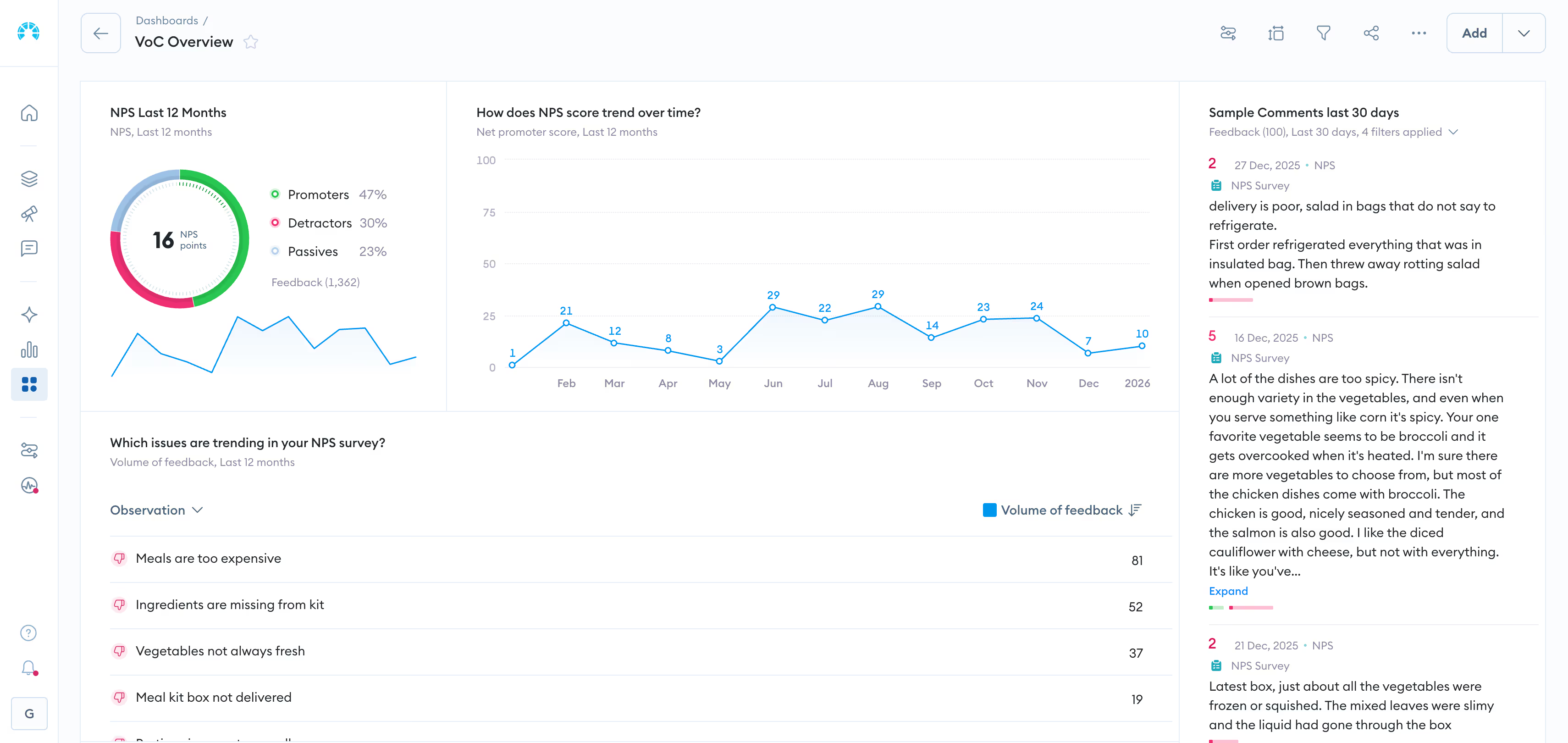
Chattermill is an AI-native feedback analytics platform built to consolidate customer feedback from every channel — surveys, support tickets, app reviews, social media, call recordings, and more — into a single structured analytics layer. Rather than bolting AI onto an existing system, the platform was designed from the ground up around its hybrid AI engine, which combines aspect-based sentiment analysis, phrasal analysis, clustering, and generative AI to surface themes, sentiment shifts, and anomalies.
What sets the platform apart is the depth of its analytical output. Chattermill does not just tell teams what customers are saying — it connects those insights directly to business metrics like NPS, CSAT, and CES, showing which themes are driving score changes. The anomaly detection system surfaces emerging issues before they escalate, while automated alerts route insights to the teams that need them.
For organisations operating across multiple markets, Chattermill's native support for 99+ languages means feedback from every geography feeds into the same analytics framework without separate workflows or third-party translation layers.
Chattermill Features
- Unified feedback ingestion: Consolidates data from surveys, tickets, reviews, social, calls, and chat into one platform
- Hybrid AI engine: Combines aspect-based sentiment analysis, phrasal analysis, clustering, and GenAI for structured theme and sentiment analytics
- Business metric linkage: Directly measures the impact of feedback themes on NPS, CSAT, and CES scores
- Anomaly detection and alerts: Automatically surfaces emerging issues and routes alerts to relevant teams
- Social CX analytics: Native social listening with competitor benchmarking capabilities
- Speech analytics: Dedicated conversational analytics for call recordings and voice data
- 99+ language support: Native multilingual analysis without external translation
- MCP server: Enables AI agent integration for agentic CX workflows
- Custom dashboards and reporting: Configurable views for CX, product, and insights teams
2026 Pricing
Chattermill uses custom enterprise pricing based on feedback volume and feature requirements — book a demo for a tailored quote.
Chattermill Pros
- Deep analytical output with direct linkage to business metrics (NPS, CSAT, CES)
- 99+ native languages eliminate the need for separate translation workflows
- Anomaly detection catches emerging issues before they become trends
- Social CX and speech analytics included natively — no add-ons required
- MCP server enables integration with AI agents and agentic workflows
- 354 verified reviews across G2, Capterra, and Gartner Peer Insights provide strong enterprise validation
Chattermill Cons
- Custom pricing means no published starting price — requires a sales conversation
- The breadth of features can mean a steeper onboarding curve for smaller teams
- Best suited for high-volume enterprise use cases; may be more platform than lean teams need
Who It's For
Enterprise B2C CX, insights, and product teams managing high-volume, multi-language, omnichannel feedback who need structured analytics tied directly to business outcomes.
Chattermill G2 Rating
Chattermill holds a 4.5/5 rating on G2 (237 reviews), a 4.5/5 on Capterra (25 reviews), and a 4.5/5 on Gartner Peer Insights (92 reviews) — totalling 354 verified reviews across three major platforms. The consistent rating across a high review volume signals reliable enterprise performance.
Thematic Review
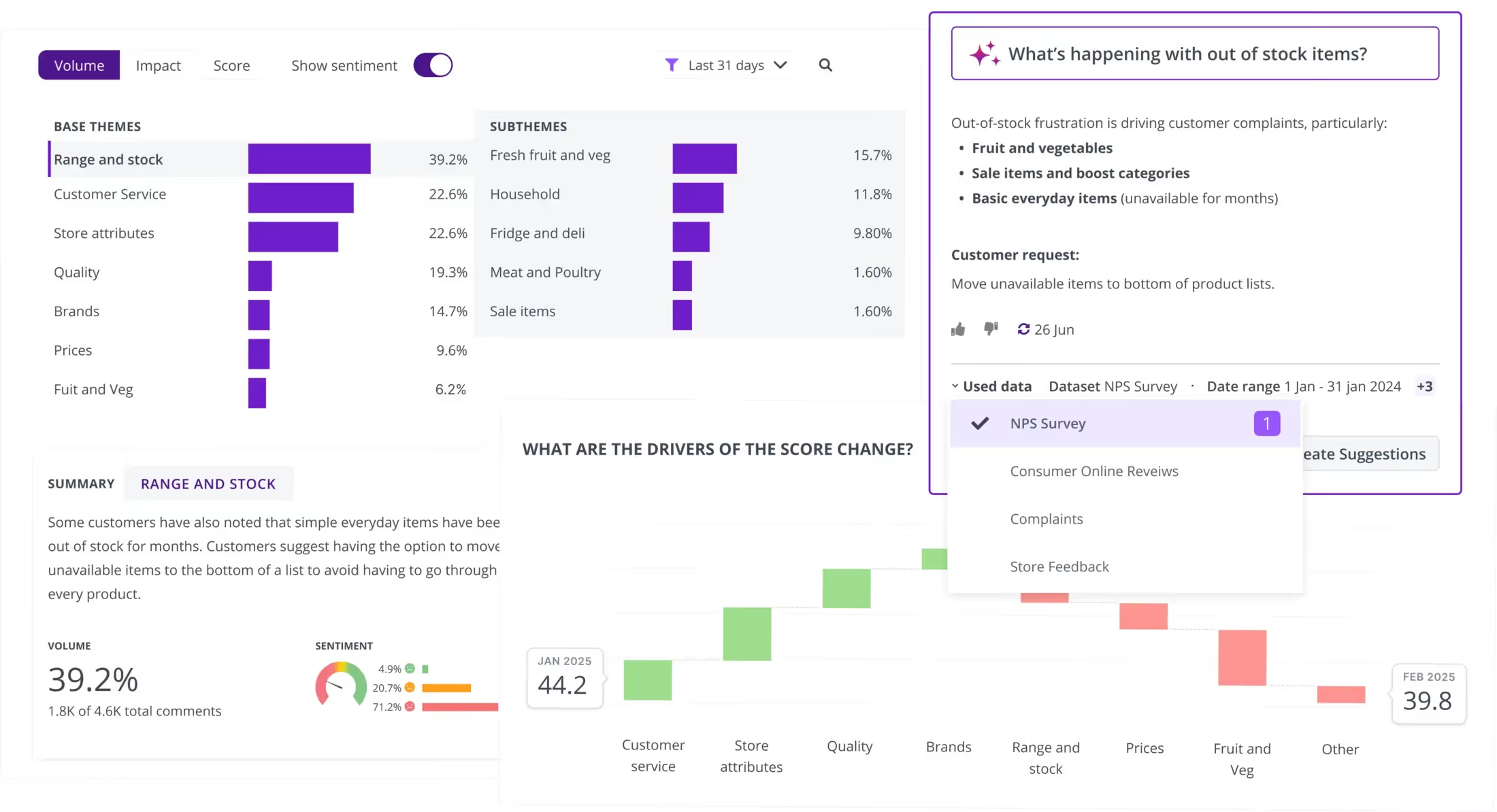
Thematic takes a fundamentally different approach to feedback analytics. Rather than positioning as a full-stack replacement, it operates as an intelligence layer designed to complement existing CX platforms like Medallia and Qualtrics. The platform's core promise is transparency: every theme it surfaces can be traced back to the exact customer comments that generated it, and users retain full control to add, merge, or delete themes without waiting on vendor support.
The bottom-up, unsupervised theme discovery methodology means Thematic builds its code frames from the data itself rather than from predefined taxonomies. This approach is particularly appealing to research-oriented teams who value being able to audit and adjust how their feedback is categorised.
Thematic's enterprise customers include LinkedIn, DoorDash, EA, Semrush, and Woolworths. The platform supports 13 languages, offers SOC 2 Type II compliance, and features 100+ integrations. Its newest capability, Thematic Answers, allows teams to ask natural language questions directly against their feedback data.
Thematic Features
- Bottom-up theme discovery: Unsupervised AI builds hierarchical code frames from raw feedback without predefined taxonomies
- White-box traceability: Every theme traces to exact customer verbatims for research-grade auditability
- Full user theme control: Add, delete, or merge themes without requiring vendor professional services
- Thematic Answers: GenAI-powered natural language Q&A for querying feedback data conversationally
- 100+ integrations: Connects to Snowflake, Medallia, Qualtrics, Salesforce, and Slack
- PII redaction: Built-in data privacy controls for sensitive feedback
- SOC 2 Type II certified: Enterprise-grade security compliance
2026 Pricing
Thematic's entry-level pricing starts at $25,000/year according to G2; no public pricing page is available on their website.
Thematic Pros
- Higher G2 rating (4.8/5) reflects strong user satisfaction among its reviewer base
- White-box theme traceability gives research teams full auditability
- User-controlled theme management reduces vendor dependency
- Designed to complement existing CX stacks rather than require a rip-and-replace
- Low learning curve; interface praised by reviewers as accessible to non-technical users
- GenAI-powered Q&A adds a natural language access point to feedback data
Thematic Cons
- Only 58 total verified reviews across two platforms — limited enterprise validation at scale
- Unsupervised theme approach requires ongoing manual oversight to maintain accuracy
- 13 languages supported vs 99+ for Chattermill — a significant gap for global teams
- No native social CX analytics or competitor benchmarking
- No dedicated speech analytics product — relies on text transcripts from calls
- No dedicated anomaly detection and tracking system
- No published MCP server or equivalent for AI agent integration
Who It's For
Mid-market to enterprise CX and insights teams that already run a CX suite and want a transparent, user-controlled intelligence layer for theme analysis without replacing their existing tooling.
Thematic G2 Rating
Thematic holds a 4.8/5 rating on G2 (43 reviews) and a 4.9/5 on Capterra (15 reviews) — totalling 58 verified reviews across two platforms. Thematic is not currently listed on Gartner Peer Insights. The high ratings reflect strong satisfaction among its smaller user base, though the review volume is substantially lower than platforms with broader enterprise adoption.
Who Should Use Thematic?
Thematic is a strong fit for teams that prioritise transparency and control in how their feedback is categorised. Consider Thematic if:
- You already run a CX suite (Medallia, Qualtrics, or similar) and want an intelligence layer on top — not a replacement
- Your research or insights team needs to audit how themes are generated and trace them to specific verbatims
- You want full control to add, merge, or delete themes without filing a support ticket
- Your feedback volume is concentrated in 13 or fewer languages
- You prefer a bottom-up, unsupervised approach to theme discovery over structured taxonomies
- Your team values a short onboarding timeline and an interface accessible to non-technical stakeholders
Thematic's genuine differentiator is its white-box traceability. For teams where the ability to explain and defend how feedback was categorised matters as much as the categorisation itself, that transparency is difficult to match.
Who Should Use Chattermill?
Chattermill is built for teams that need a unified customer intelligence platform rather than an add-on layer. Consider Chattermill if:
- You manage feedback across multiple channels — surveys, tickets, reviews, social, calls — and need it unified in one platform
- Your organisation operates in more than 13 languages and cannot afford separate translation workflows
- You need to connect feedback themes directly to NPS, CSAT, or CES movements to prove CX impact to leadership
- Anomaly detection and automated alerting are critical for catching emerging issues before they escalate
- You want native social CX analytics with competitor benchmarking built in
- Your team is exploring agentic AI workflows and needs a platform with an MCP server for integration
- Enterprise validation matters — Chattermill's 354 verified reviews across G2, Capterra, and Gartner Peer Insights provide a broad base of peer feedback
Chattermill brings the entire feedback analytics workflow — from ingestion to structured insight to business metric impact — into a single platform. For teams that are done stitching together point solutions, that consolidation is the difference between insight and action. Explore how voice of the customer analytics works across your full feedback ecosystem.
Choosing the Right Feedback Analytics Platform
Selecting between Chattermill and Thematic — or any feedback analytics platform — comes down to a few critical evaluation dimensions. Here is a framework for working through the decision:
Feedback Volume and Channels: Start with the basics. How much feedback does your organisation generate, and from how many sources? If you are consolidating surveys, support tickets, app reviews, social media, and call recordings, you need a platform built for omnichannel ingestion. If most of your feedback comes through one or two structured channels, a lighter-weight tool may suffice.
Language Requirements: This is a make-or-break filter for global organisations. A platform supporting 99+ languages means every market feeds into the same analytics framework. A platform supporting 13 languages may require workarounds or separate workflows for additional markets.
Analysis Depth: Do you need aspect-level sentiment tied to business metrics, or is theme-level categorisation sufficient? The answer depends on whether your team reports on "what customers are saying" or "how what customers are saying is affecting NPS and retention."
Team Structure: Consider who will use the platform day to day. Research-heavy teams may value white-box traceability and manual theme control. Operationally focused CX teams may prioritise automated alerts, anomaly detection, and pre-built dashboards that surface actions without requiring manual analysis.
Automation Goals: If your roadmap includes closing the loop on feedback automatically — routing issues, triggering workflows, integrating with AI agents — look for platforms with automation and agentic capabilities built in, not bolted on.
Enterprise Validation: Review volume and platform diversity matter. A platform with hundreds of verified reviews across multiple independent sites (G2, Capterra, Gartner) gives you more data points from peers who have already made the decision. Fewer reviews do not mean a worse product, but they do mean less external validation to draw from.
Security and Compliance: SOC 2 Type II compliance is table stakes for enterprise. Beyond certifications, evaluate data residency options, PII handling, and how the platform manages access controls at scale.
Get Started With Chattermill
Choosing a feedback analytics platform is one of the highest-leverage decisions a CX team can make. The right platform turns fragmented feedback into a structured, actionable source of truth that connects directly to the metrics your leadership cares about.
If your team needs a unified, AI-native platform that consolidates every feedback channel, supports 99+ languages, and ties insights directly to NPS, CSAT, and CES impact — Chattermill is built for that.
Book a Demo to see how Chattermill works with your data, your channels, and your team.
Feedback Analytics Platforms: FAQs
What Is the Main Difference Between Chattermill and Thematic?
Chattermill is a full-stack, AI-native feedback analytics platform that unifies data from every channel and language into structured analytics tied to business metrics like NPS and CSAT. Thematic is an intelligence layer designed to sit on top of existing CX suites, specialising in transparent, user-controlled theme discovery. The core distinction is whether you need a unified platform or a complementary add-on to your current stack.
Is Thematic Good for Enterprise Teams?
Thematic serves enterprise customers including LinkedIn, DoorDash, and EA, and holds SOC 2 Type II certification. However, its 13-language limit, lack of native speech analytics, and absence from Gartner Peer Insights may be constraints for large global organisations. With 58 total verified reviews across G2 and Capterra, it has less peer validation than platforms with broader enterprise adoption.
How Do Chattermill and Thematic Compare on Pricing?
Thematic's entry-level pricing starts at $25,000/year according to G2. Chattermill uses custom enterprise pricing based on feedback volume and feature requirements. Neither platform publishes detailed pricing tiers publicly — direct conversations with each vendor are necessary for accurate quotes.
Can Thematic Replace a Full Voice of the Customer Platform?
Thematic is designed as a complementary intelligence layer, not a full VoC replacement. It excels at theme discovery and traceability but lacks native social CX analytics, speech analytics, dedicated anomaly detection, and direct business metric linkage (NPS, CSAT, CES impact measurement). Teams needing a unified text analytics and feedback platform across all channels will likely need additional tools alongside Thematic.
What Are the G2, Capterra, and Gartner Ratings for Chattermill and Thematic?
Chattermill holds 4.5/5 on G2 (237 reviews), 4.5/5 on Capterra (25 reviews), and 4.5/5 on Gartner Peer Insights (92 reviews) — 354 total verified reviews across three platforms. Thematic holds 4.8/5 on G2 (43 reviews) and 4.9/5 on Capterra (15 reviews) — 58 total reviews across two platforms. Thematic is not listed on Gartner Peer Insights.
What Feedback Sources Does Each Platform Support?
Both platforms ingest surveys, support tickets, and app reviews. Chattermill adds native support for social media, call recordings (via dedicated speech analytics), and chat transcripts across 99+ languages. Thematic supports 13 languages and can import social data, but does not offer dedicated social CX or speech analytics products. Chattermill's broader channel coverage makes it better suited for teams managing feedback from diverse, high-volume sources.