


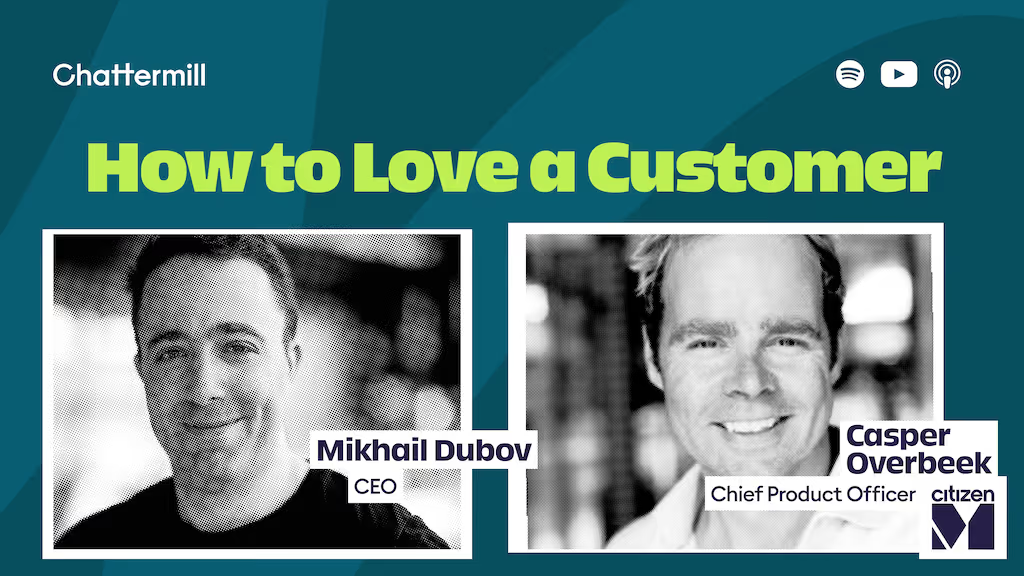
How To Love A Customer: Episode 15 with Casper Overbeek from CitizenM


The CX intelligence
platform that's AI-native by design
Book a demoWhen CitizenM built an app for its hotel ambassadors, they were confident it would work. They'd thought through the features. They'd built it carefully. They rolled it out — and almost no one used it.
That embarrassing moment is one of the best stories Casper Overbeek, Chief Product & Experience Officer at CitizenM, brings to this episode of How to Love a Customer. Not because it's unusual, but because it's so common — and so avoidable. The fix was simple: go talk to the people who were supposed to use it.
In this episode, our CEO & Co-Founder Mikhail Dubov sits down with Casper to explore how CitizenM scaled from 10 to nearly 40 hotels without losing the thing that made it distinctive — genuine, unscripted human hospitality backed by smart technology.
👉 Subscribe & listen to the latest episode here
🔑 Key Takeaways from the Episode
1. Revenue Is an Outcome, Not a Strategy
Casper is direct on this: chasing revenue targets without understanding what creates them is a dead end. CitizenM built its model around a clear proposition for a specific customer — the frequent traveler who wants affordable luxury and authentic service — and the commercial results followed.
"I think revenue as a strategy, I don't believe in, because revenue is an outcome of something that you do. And the better you are able to articulate what you do, the better you are able to choose who you do it for, the better you are able to manage your performance." — Casper Overbeek
That clarity about who CitizenM is not for — families with kids' rooms, pharmaceutical conferences, airline crews — is what lets the hotels execute consistently for the guests they do serve.
2. One KPI: Guest Satisfaction
CitizenM's ambassadors — the frontline staff who run the hotels — have full autonomy and one performance measure. Not upsell rate. Not shift efficiency. Guest satisfaction.
"The ambassadors are entirely in charge. Their only KPI is guest satisfaction. They don't need to ask for permission for anything." — Casper Overbeek
Casper describes an "inverted pyramid" where the guest sits at the top, ambassadors come second, and everyone else — including leadership — is there to support them. It sounds simple, but most hotel brands are structured the opposite way, with layers of approval between a frustrated guest and someone empowered to fix the problem.
3. The Mamba App: What Happens When You Forget to Listen
CitizenM built an ambassador app called Mamba to help frontline staff manage the hotel digitally — controlling guest-room iPads, updating food inventory, triaging tech issues. They built it, rolled it out, and watched adoption sit near zero.
The fix came when they did what they should have done first: talk to the ambassadors. The single feature that changed everything? The ability to remotely restart a guest's in-room iPad rather than trekking up to the room. iPad issues were the number-one cause of guest complaints. Once ambassadors could solve them instantly, Mamba usage jumped from almost nothing to 60-70% of all staff.
"We said, well, we also need to do something for these employees. And then we rolled it out and no one used it. So that was a little bit of a problem." — Casper Overbeek
It's the oldest lesson in product and CX — ask users what they need before you build — and Casper tells it without sugarcoating it.
4. Real-Time Feedback Beats Dashboards
CitizenM pipes customer feedback directly into a Slack channel, visible to everyone in the company in real time. No monthly reports. No aggregated scores that smooth out the signal.
"You get information that you don't get by looking at dashboards and you feel proximity to what's going on in the operations." — Casper Overbeek
Casper gives an example of a water leak being spotted through live feedback and resolved the same day. The energy that creates — a team watching the same stream and responding together — is hard to manufacture any other way. It's not about the metric. It's about the immediacy.
5. Consistency + Coherence: The Two Things CX Actually Requires
Casper's framework for what great CX looks like in practice is built on two words: consistency and coherence. Consistency means guests roughly get what they expected every time. Coherence means the different steps in the journey connect intuitively — especially at the handoffs between digital and physical.
He uses CitizenM's kiosk check-in as an example. Most hotels add a staffed desk "just in case" the kiosk fails — and then find that guests queue for the desk instead of using the kiosk. CitizenM removed the desk. Forcing the behavior is sometimes the only way to prove the technology works, and to free up staff for the welcome that actually matters.
6. The Role of AI: More Human Than You'd Expect
Casper is involved with a startup called Roam.ai that handles hotel telephone calls through AI. A year ago, he says, he wouldn't have believed AI could be empathic enough to matter in CX. He's changed his view — not because the technology replaced warmth, but because 40% of hotel phone calls were going unanswered anyway.
"40% of all hotel telephone calls are not being answered at all. And when you are being answered very often, it's after very long waiting times. Well, is that the customer service, the level that you would like to offer your guests?" — Casper Overbeek
The standard for AI isn't perfection. It's better than what was already failing.
💬 Hot Takes
🎯 Overhyped trend: Customer journey mapping without understanding the backend. "A customer journey map is just a start."
🧠 Brand doing CX right: Patagonia — for holding its core principles under commercial pressure and still growing.
☕ Unexpected inspiration: A small coffee shop called Gratitude, which deliberately cut its hours rather than scale and lose what made it good.
🧳 Why This Episode Matters
Most CX conversations get stuck in frameworks and metrics. Casper's view is more concrete: know who you're for, give frontline staff real authority, listen to feedback before it's a report, and don't let a good slide deck substitute for actually talking to the people doing the work.
CitizenM's growth from 10 to nearly 40 hotels didn't happen because of a sophisticated CX program. It happened because they hired people who cared, removed the admin tasks that got in the way, and kept the signal from guests close enough to act on immediately.
🎧 Listen to How to Love a Customer
If you work in CX, hospitality, product, or insights, this podcast is built for you — real stories, practical thinking, and lessons that apply beyond the industry.
👉 Catch the latest episode here
Episode Notes
00:00 – Meet Casper OverbeekFrom KLM to Bol.com to CitizenM — a career spent figuring out how customer value creates business value.
01:20 – The CitizenM origin storyWhy affordable luxury, small rooms, and a 24/7 bar beat trying to be everything to everyone.
07:15 – Tech and people: how CitizenM actually worksNo check-in desk. Kiosks only. Ambassadors freed from admin so they can read what each guest actually needs.
10:10 – Why guest satisfaction is the only KPIThe inverted pyramid: guests at the top, ambassadors second, everyone else in support.
11:18 – Revenue as an outcome, not a strategyMaking choices about who you're not for is what lets you be genuinely good for who you are.
14:34 – How CX connects to the bottom lineOTA reviews, word of mouth, and the efficiency gains from reducing friction.
19:34 – The Mamba app storyBuilding an ambassador app, watching it go unused, and the single feature that turned it around.
24:33 – What customer feedback tells you that dashboards don'tLive feedback in a Slack channel. A water leak spotted and fixed the same day.
30:23 – Engineering consistency at scaleCoherence at handoffs. Kiosk-only check-in and why removing the desk was the right call.
35:13 – AI in hospitality: a changed viewWhy 40% of hotel calls going unanswered is the real benchmark for AI to beat.
37:37 – Hot takesCustomer journey maps, Patagonia, and a coffee shop called Gratitude.
43:18 – What the hospitality industry still gets wrongCar rental. Genuinely.


See Chattermill in action on your own feedback
Book a demo


