


15 Best Qualtrics Alternatives for CX, VoC, and Product Teams in 2026



The CX intelligence
platform that's AI-native by design
Book a demoWe reviewed 15 platforms across pricing, AI capabilities, ease of use, integration depth, and real G2 reviews to find the best fit for every team size and use case. Whether you need an enterprise-grade voice of customer platform, a lightweight survey tool, or a dedicated feedback analytics engine, this guide breaks it all down.
Our top pick? Chattermill — the strongest choice for enterprise teams that need to unify multi-channel feedback and turn it into prioritized, actionable insights using AI. It's not just a survey replacement; it's a different approach to understanding customers at scale.
Quick Summary
This guide compares the eleven best Qualtrics alternatives, covering features, pricing, pros, cons, and ideal use cases for each. Medallia and InMoment get a special mention, and we highlight why Chattermill is the platform teams rely on to turn customer feedback into clear, actionable outcomes.
Before we get into the details, here are our top 3 picks:
Is Your Survey Platform Holding Back Your CX Strategy?
Qualtrics is one of the most recognized names in experience management, and for good reason. Its survey capabilities are strong, with advanced logic, branching, and research-grade design tools. For teams focused on survey research, it delivers.
But as feedback sources multiply and CX programs mature, many teams find themselves outgrowing a survey-first platform. Chattermill stands out for teams that need to understand why customers act.
This guide explores the eleven best Qualtrics alternatives on the market today.
Why Listen to Us?
Chattermill helps leading global brands like Uber, Zappos, and Tesco analyze millions of customer feedback points across every channel. We base our recommendations on proven real-world experience, not empty theories.
How We Evaluated These Tools
Credibility matters in a comparison like this — so here's exactly how we built this list.
We evaluated each platform across six weighted criteria, drawing on hands-on experience with Chattermill's own feedback analytics platform, verified user reviews on G2 and Capterra, published product documentation, and publicly available pricing data:
- Feedback Analytics Depth (25%): How effectively does the platform turn raw feedback into actionable insights? We assessed AI capabilities, sentiment analysis accuracy, theme detection granularity, and the ability to connect feedback to business outcomes like NPS, churn, and revenue.
- Multi-Channel Coverage (20%): Does the platform support feedback from surveys, support tickets, reviews, social media, chat, and other sources? Platforms that unify more channels scored higher.
- Ease of Use and Deployment (15%): How quickly can teams deploy the platform and extract value? We considered G2 "Ease of Use" and "Ease of Setup" scores, onboarding resources, and the technical expertise required for day-to-day operation.
- Integration Ecosystem (15%): How well does the platform connect with existing tech stacks — CRMs (Salesforce, HubSpot), helpdesks (Zendesk, Intercom), analytics tools, and data warehouses?
- Pricing and Value (15%): We compared pricing models, transparency, and the value delivered at each tier. We verified pricing on vendor websites as of May 2026 and noted where pricing is quote-based.
- User Satisfaction (10%): We referenced G2, Capterra, and TrustRadius reviews — focusing on review patterns and recurring themes in positive and negative feedback rather than headline scores alone.
Data sources used: G2 Grid Reports and category reviews (Spring 2026), Capterra user reviews, Gartner Peer Insights, vendor product documentation and pricing pages (verified May 2026), community discussions on Reddit and industry forums, and our own team's experience deploying feedback analytics programs for enterprise CX teams.
We prioritized platforms that address the most common reasons teams leave Qualtrics: cost, complexity, limited AI analytics, and the inability to analyze unstructured multi-channel feedback.
What Is Qualtrics and Why Do Teams Look for Qualtrics Alternatives?
Qualtrics is an experience management (XM) platform built around survey design, distribution, and analysis. It serves as a central hub for customer experience (CX), employee experience (EX), product research, and brand tracking programs. Organizations use it to collect structured feedback through surveys, analyze responses with built-in statistical tools, and manage experience programs across departments.
So why are so many teams actively searching for alternatives?
Cost and complexity lead the list. Qualtrics pricing is enterprise-grade in every sense — including the price tag. Annual contracts frequently run into six figures, and the platform's breadth means teams often pay for modules they never touch. For mid-market companies or teams with focused CX mandates, that math doesn't add up.
Survey-first architecture has limits. The feedback landscape has changed. Customer signals now arrive through support tickets, app reviews, social media, chat transcripts, and NPS responses simultaneously. A platform designed primarily around survey creation struggles to unify and analyze this unstructured, multi-channel data without significant customization.
Speed to insight matters more than ever. CX and product leaders need to detect emerging issues in days, not weeks. Many teams find that Qualtrics' analysis workflows — while powerful — require specialized expertise and more manual configuration than modern AI-native alternatives demand.
The academic plan removal stung. Qualtrics discontinued its free academic license, pushing research teams and smaller organizations to seek affordable alternatives with comparable capabilities.
The result? A growing market of specialized platforms that each solve a piece of the experience management puzzle — often faster, more affordably, or with deeper AI capabilities than the all-in-one Qualtrics suite.
15 Best Qualtrics Alternatives Compared
Here is a side-by-side look at the top 15 Qualtrics alternatives:
Qualtrics Alternatives Pricing Comparison (2026)
Key takeaway: Tools with transparent, self-serve pricing (Alchemer, Survicate, QuestionPro, Formbricks, SurveyMonkey, Typeform, SurveySparrow) tend to serve mid-market and SMB teams. Enterprise-focused platforms (Chattermill, Medallia, InMoment, CustomerGauge) use custom pricing that reflects the complexity and scale of deployment. If predictable budgeting matters, start with the self-serve options and evaluate whether you outgrow them before committing to a custom-priced platform.
1. Chattermill
The best Qualtrics alternative for enterprise feedback analytics and voice of customer programs.
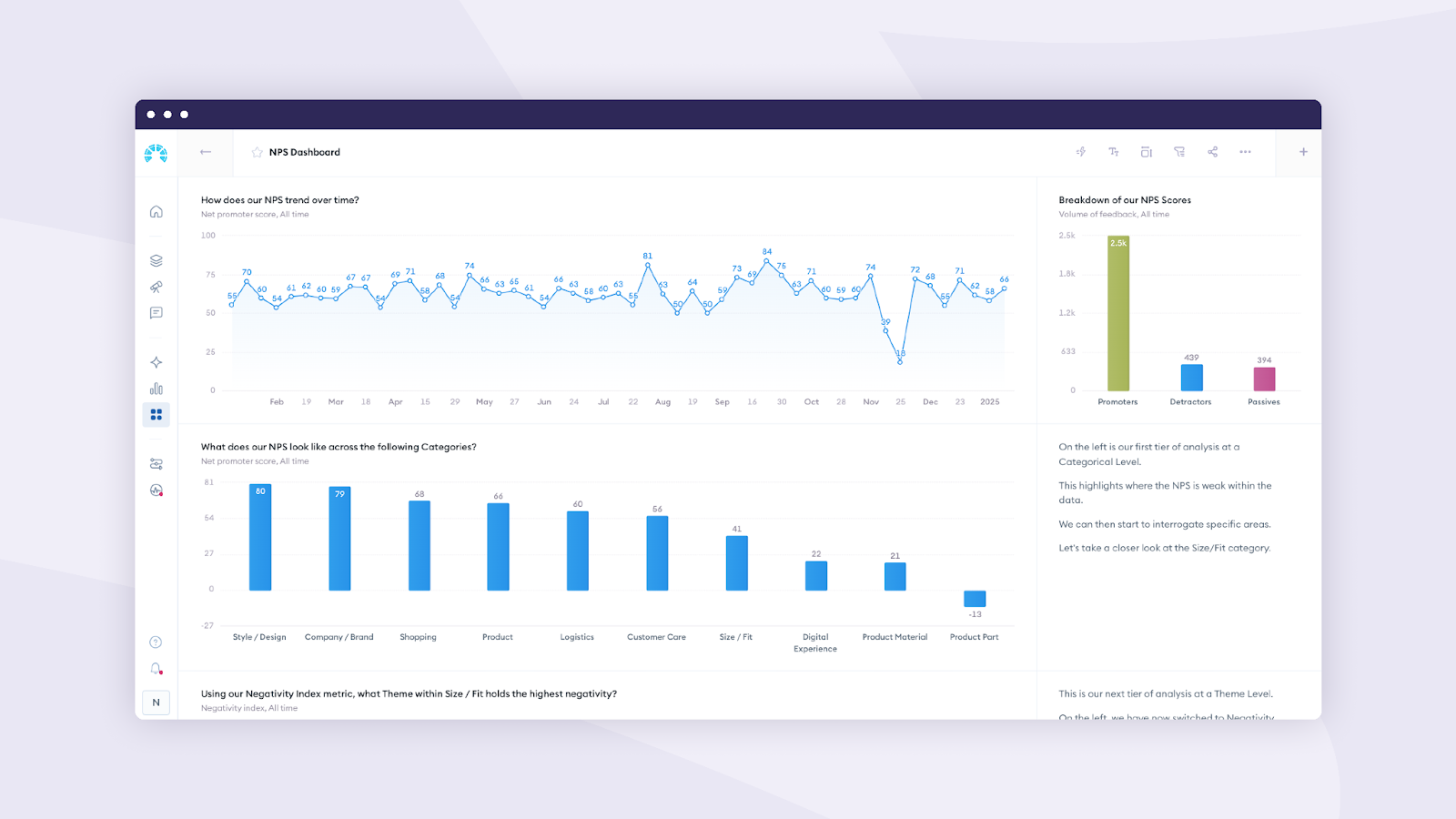
If your challenge isn't collecting feedback — it's making sense of the thousands of signals arriving every day from surveys, support tickets, app reviews, social channels, and chat logs — Chattermill is built for exactly that problem.
Where Qualtrics starts with survey design and works outward, Chattermill starts with the insight layer. The platform uses advanced AI to unify feedback from every channel, automatically tagging themes, sentiment, and trends across languages and data sources. Instead of building dashboards to interpret survey results, CX teams get instant visibility into what customers care about — and why it matters to business metrics like NPS, CSAT, and CES.
The difference shows up in speed. Teams using Chattermill move from raw feedback to prioritized action significantly faster than traditional survey platforms — without the manual configuration and analyst bottlenecks those platforms require. Anomaly detection surfaces emerging issues before they escalate. Impact analysis connects customer feedback themes directly to revenue and retention outcomes, giving CX leaders the evidence they need to secure resources and drive change.
For enterprise organizations running voice of customer programs across multiple products, regions, or brands, Chattermill's ability to consolidate fragmented feedback into a single source of truth is the core differentiator. You're not building a feedback program from survey templates — you're layering intelligence on top of the customer data you already have.
Chattermill Features
- Unified Feedback Analytics: Consolidates data from surveys, support tickets, reviews, social media, chat, and more into a single analytics layer — no manual data wrangling required.
- AI-Powered Theme Detection: Automatically surfaces recurring themes, topics, and subtopics across all feedback channels using advanced natural language processing.
- Sentiment and Trend Analysis: Tracks sentiment shifts over time at granular and aggregate levels, helping teams spot deterioration or improvement before it hits lagging KPIs.
- Anomaly Detection and Alerts: Flags unexpected spikes or drops in specific themes or sentiment scores, with automated alerts so teams can respond proactively.
- Business Impact Correlation: Connects feedback themes to business metrics (NPS, CSAT, CES, churn) so you can quantify the revenue impact of specific customer issues.
- Multi-Language Support: Analyzes feedback in multiple languages without requiring separate workflows or translation steps.
- Customizable Dashboards and Reporting: Configurable dashboards that let CX, product, and insights teams track what matters to their function without analyst bottlenecks.
2026 Pricing
Chattermill uses custom pricing based on data volume and organizational needs. Book a Demo for a tailored quote.
Chattermill Pros
- Unifies structured and unstructured feedback from every channel into one platform
- AI-driven theme and sentiment analysis that improves with volume
- Anomaly detection enables proactive CX management rather than reactive reporting
- Directly ties customer feedback to business outcomes (NPS, CSAT, revenue impact)
- Handles multi-language feedback natively
- Purpose-built for enterprise scale and complexity
Chattermill Cons
- Custom pricing means no self-serve starting tier for smaller teams
- Best suited for organizations with significant feedback volume — lean startups may not generate enough data to leverage the AI fully
- Requires integration setup to connect all feedback sources (though the platform supports most major integrations natively)
Who It's For
Enterprise CX, insights, and product teams that generate high-volume, multi-channel feedback and need AI-powered analytics to turn that data into prioritized actions. Particularly strong for organizations running voice of customer programs at scale.
G2 Rating
4.5 out of 5
2. Medallia

Medallia is one of the largest enterprise experience management platforms on the market, serving global organizations with complex, multi-touchpoint CX programs. It competes directly with Qualtrics at the top end of the market.
The platform captures feedback across digital, in-store, contact center, and social channels, then uses AI to identify patterns and prescribe actions. Its strength is orchestration — connecting insights to operational workflows so frontline teams and executives act on the same data.
Medallia Features
- Omnichannel signal capture across digital, in-person, and voice interactions
- AI-powered text and speech analytics for unstructured feedback
- Role-based dashboards tailored to executives, managers, and frontline teams
- Action management workflows that assign and track follow-up on insights
- Digital experience analytics including session replay and behavior analysis
2026 Pricing
Custom enterprise pricing. Contracts are typically annual and start in the six-figure range.
Medallia Pros
- Comprehensive enterprise CX suite covering every touchpoint
- Strong operational action management and case routing
- Deep integrations with enterprise tech stacks (Salesforce, ServiceNow)
Medallia Cons
- High cost and long implementation timelines
- Complexity can overwhelm teams without dedicated XM resources
- Survey design tools feel dated compared to modern alternatives
Who It's For
Large enterprises (5,000+ employees) with mature CX programs, dedicated XM teams, and budgets to match. See also: Medallia Alternatives.
G2 Rating
4.4 out of 5
3. InMoment

InMoment positions itself as an "experience improvement" platform rather than a pure survey or analytics tool. The pitch: don't just measure experiences, improve them systematically using integrated text analytics, case management, and action planning.
The platform combines feedback collection, AI-powered text analytics, and closed-loop workflows into a single system. Its acquisition of Lexalytics strengthened its natural language processing capabilities, making it a serious option for organizations that need both structured surveys and unstructured text analysis.
InMoment Features
- Integrated text analytics powered by Lexalytics NLP engine
- Case management for closing the loop on individual customer issues
- Experience improvement framework with structured action planning
- Multi-source feedback collection including surveys, social, and reviews
- Industry-specific solutions for retail, healthcare, and financial services
2026 Pricing
Custom pricing. Typically enterprise contracts with annual commitments.
InMoment Pros
- Strong text analytics capabilities (Lexalytics acquisition)
- Integrated case management closes the feedback-to-action gap
- Good fit for organizations that want a structured improvement methodology
InMoment Cons
- Platform can feel fragmented after multiple acquisitions
- Reporting customization has a learning curve
- Implementation timelines can extend for complex deployments
Who It's For
Mid-to-large enterprises that want a structured approach to experience improvement, not just measurement. Strong in retail, financial services, and healthcare.
G2 Rating
4.7 out of 5
4. Alchemer

Alchemer (formerly SurveyGizmo) is the mid-market workhorse for teams that need more customization than SurveyMonkey but less complexity than Qualtrics. Its strength is flexible survey logic and workflow automation that adapts to specific business processes.
The platform lets teams build sophisticated surveys with advanced branching, piping, and skip logic, then connect those surveys to CRM, helpdesk, and marketing automation tools through native integrations. It's a strong fit for operations and research teams that need surveys embedded into existing workflows.
Alchemer Features
- Advanced survey logic with branching, piping, quotas, and skip logic
- Workflow automation connecting surveys to business processes
- Native CRM integrations (Salesforce, HubSpot, Microsoft Dynamics)
- API access for custom integrations and data pipelines
- White-label capabilities for branded survey experiences
2026 Pricing
From $55/month (Collaborator), $165/month (Professional), $275/month (Full Access).
Alchemer Pros
- Highly customizable survey logic for complex research needs
- Strong workflow integrations with CRMs and business tools
- More affordable than Qualtrics for comparable survey functionality
Alchemer Cons
- Analytics capabilities are basic compared to dedicated feedback analytics platforms
- UI feels functional rather than modern
- Limited AI-powered text analysis for unstructured data
Who It's For
Mid-market research, operations, and marketing teams that need flexible survey tools integrated into existing business workflows. Best when the primary need is structured data collection rather than analytics.
G2 Rating
4.4 out of 5
5. CustomerGauge
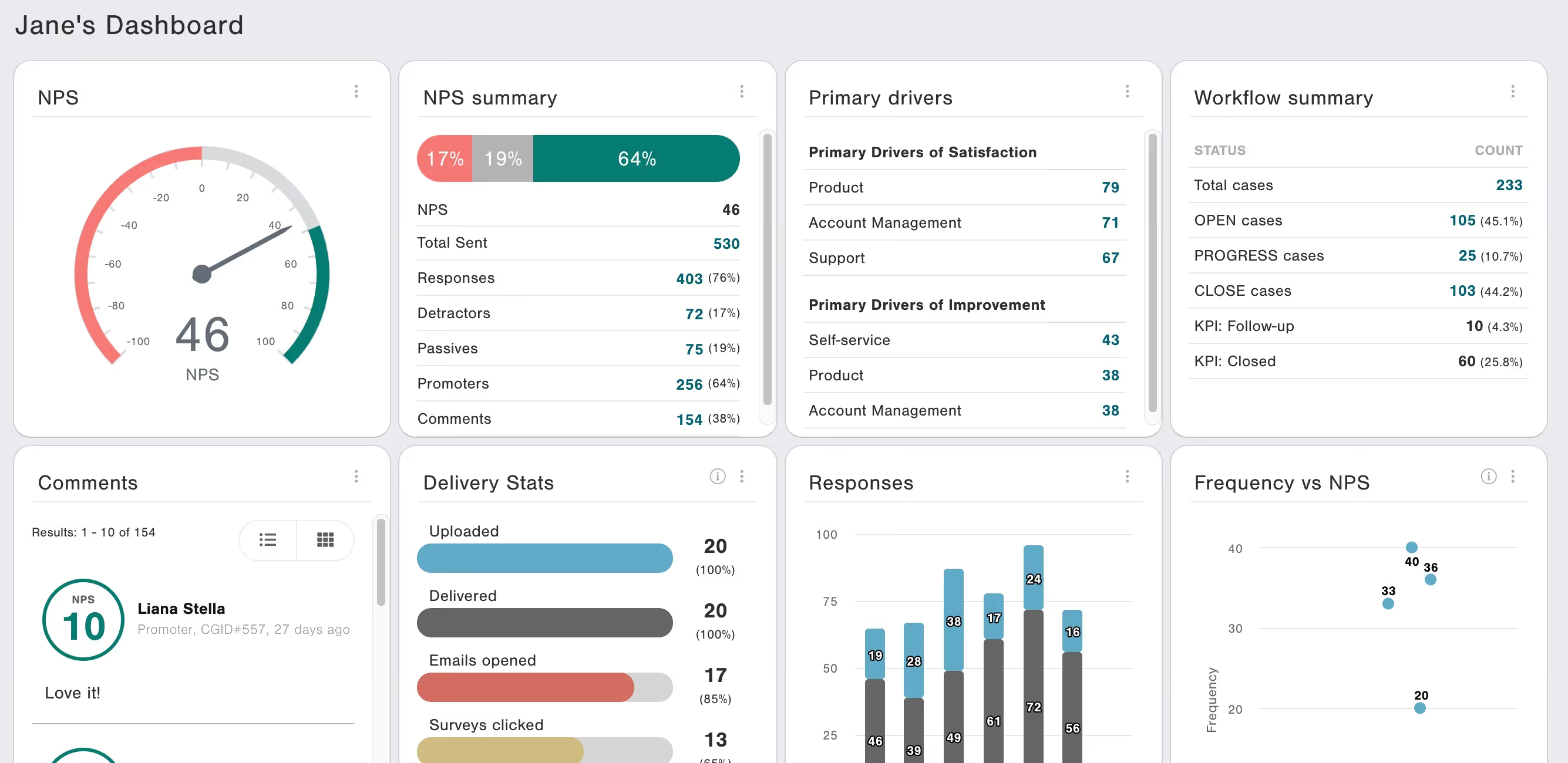
CustomerGauge specializes in B2B account experience management, combining NPS programs with revenue attribution to help teams understand the financial impact of customer satisfaction at the account level. It's a focused alternative for B2B organizations where account-level insights matter more than individual survey responses.
The platform's "Monetized Net Promoter" framework links NPS scores to revenue data, helping account management and CX teams prioritize retention efforts where the financial impact is greatest.
CustomerGauge Features
- Account-level NPS tracking tied to revenue and contract data
- Monetized Net Promoter framework for revenue attribution
- Automated survey distribution at key account lifecycle moments
- Churn risk identification based on NPS trends and account signals
- Integration with CRM and ERP systems for account-level data enrichment
2026 Pricing
Custom pricing based on account volume and program scope.
CustomerGauge Pros
- Purpose-built for B2B account experience — not retrofitted from B2C
- Revenue attribution gives CX teams financial credibility with leadership
- Strong closed-loop workflow for account follow-up
CustomerGauge Cons
- Narrow focus means it's not suitable for B2C or broad CX programs
- Limited unstructured feedback analysis capabilities
- Smaller ecosystem and community compared to larger platforms
Who It's For
B2B companies with account-based revenue models that want to connect NPS directly to retention and expansion metrics. Strong in SaaS, manufacturing, and professional services.
G2 Rating
4.6 out of 5
6. Survicate

Survicate is a lightweight feedback collection tool that excels at deploying surveys and feedback widgets across websites, mobile apps, email, and in-product experiences. It's designed for speed — teams can launch targeted feedback campaigns in minutes rather than days.
For organizations whose primary gap with Qualtrics is cost and simplicity, Survicate offers a streamlined alternative that covers the core feedback collection use case without the enterprise complexity.
Survicate Features
- Multi-channel survey deployment (website, in-app, email, link)
- Pre-built survey templates optimized for NPS, CSAT, and CES
- Targeting and triggering rules based on user behavior and attributes
- Native integrations with HubSpot, Intercom, Slack, and analytics tools
- AI-powered survey analysis with automated theme detection
2026 Pricing
Free tier available. Paid plans from $89/month (Starter).
Survicate Pros
- Fast time-to-value — deploy surveys in minutes
- Clean, intuitive interface with minimal learning curve
- Affordable entry point with a functional free tier
Survicate Cons
- Analytics depth is limited compared to enterprise platforms
- Not built for complex multi-program CX management
- Advanced features require higher-tier plans
Who It's For
Product, marketing, and CX teams at startups and mid-market companies that need fast, affordable feedback collection without enterprise overhead.
G2 Rating
4.6 out of 5
7. QuestionPro
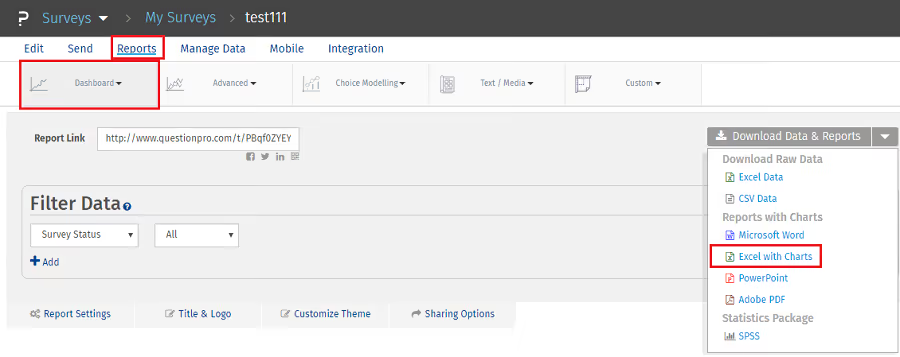
QuestionPro is a versatile survey and research platform that bridges the gap between simple survey tools and enterprise XM suites. It offers advanced research capabilities — conjoint analysis, MaxDiff, A/B testing — at a fraction of Qualtrics' cost, making it a strong pick for research teams and academic institutions.
The platform also includes a dedicated CX module with NPS tracking, sentiment analysis, and closed-loop feedback management, though its core strength remains in structured research methodology.
QuestionPro Features
- Advanced research tools including conjoint, MaxDiff, and panel management
- CX module with NPS, CSAT, and journey mapping
- Offline survey capability for field research
- Multi-language support for global research programs
- Community management tools for ongoing panel engagement
2026 Pricing
Free tier available. Advanced plan at $99/month. Team plan at $83/user/month.
QuestionPro Pros
- Research-grade methodology tools at an accessible price
- Free tier is genuinely functional for basic projects
- Strong offline and multi-language survey capabilities
QuestionPro Cons
- CX module is less mature than dedicated CX platforms
- UI can feel cluttered due to feature density
- Analytics and AI capabilities lag behind AI-native alternatives
Who It's For
Research teams, academic institutions, and SMBs that need advanced survey methodology without the Qualtrics price tag.
G2 Rating
4.5 out of 5
8. Formbricks
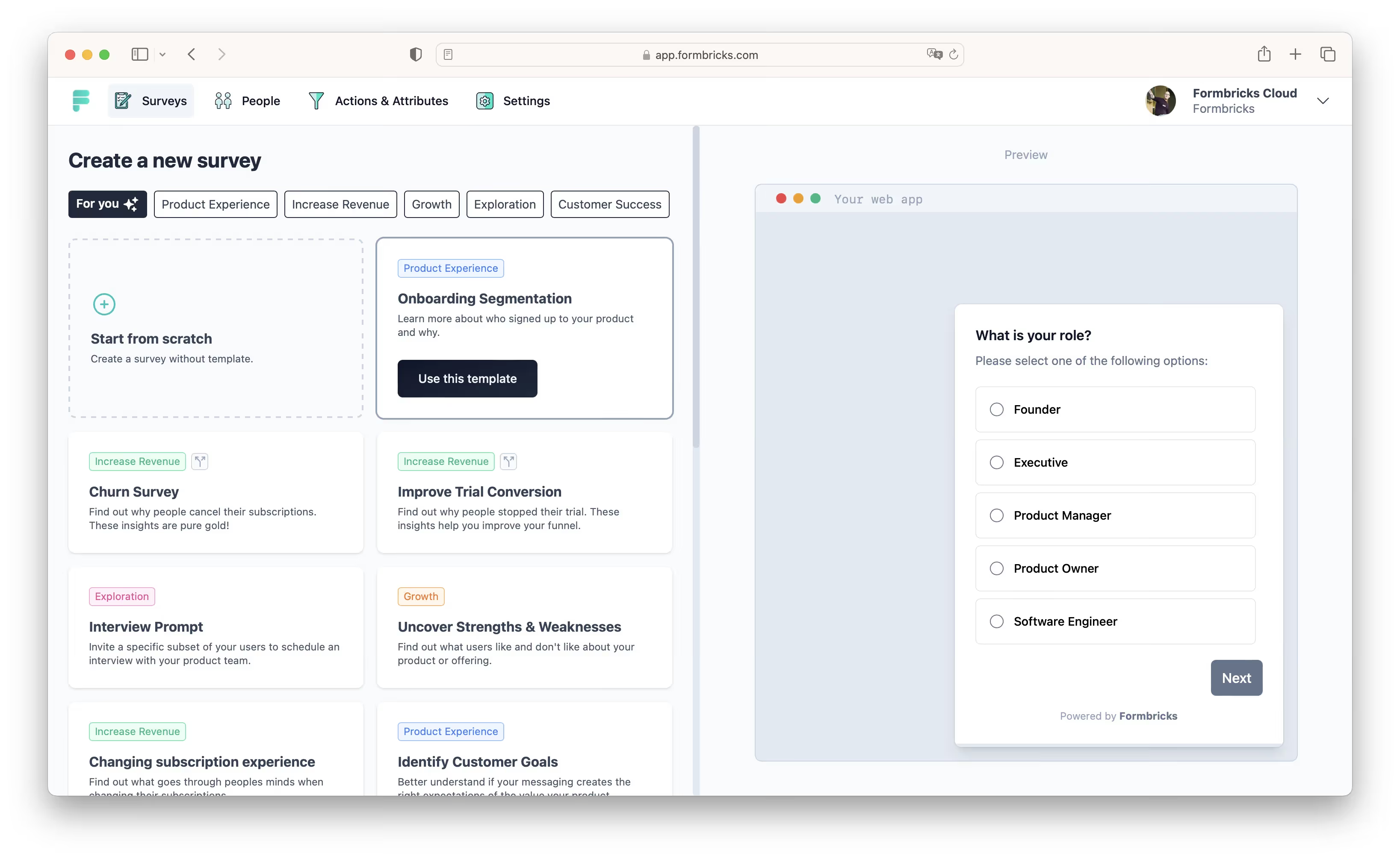
Formbricks takes a developer-first, open-source approach to experience management. It's the only platform on this list you can self-host, making it a compelling option for organizations with strict data privacy requirements or teams that want full control over their feedback infrastructure.
The platform covers website surveys, in-app micro-surveys, and link surveys with a modern interface and solid targeting capabilities. Its open-source model means you can inspect the code, contribute to development, and avoid vendor lock-in entirely.
Formbricks Features
- Open-source and self-hostable for full data sovereignty
- In-app micro-surveys triggered by user actions and attributes
- Website and link surveys with modern form design
- User segmentation and targeting based on behavior and properties
- API-first architecture for custom integrations
2026 Pricing
Free (self-hosted). Cloud plans from $89/month (Pro), $390/month (Scale).
Formbricks Pros
- True open-source — self-host for complete data control
- No vendor lock-in, transparent pricing
- Modern developer experience with solid API
Formbricks Cons
- Self-hosting requires technical resources to maintain
- Analytics and reporting are basic compared to commercial platforms
- Community-driven support rather than dedicated enterprise SLAs
Who It's For
Developer-led teams and privacy-conscious organizations that want full control over their survey infrastructure. Strong for SaaS products building in-app feedback flows.
G2 Rating
4.6 out of 5
9. SurveySparrow

SurveySparrow differentiates through conversational, chat-style surveys designed to boost completion rates. The platform frames feedback collection as a dialogue rather than a form-filling exercise, which tends to improve response rates — especially for customer-facing and employee experience programs.
Beyond conversational surveys, SurveySparrow offers a CX module with NPS and CSAT tracking, plus a reputation management tool for monitoring online reviews.
SurveySparrow Features
- Conversational survey format mimicking chat interactions
- Recurring survey automation for ongoing pulse programs
- 360-degree feedback module for employee assessments
- Reputation management for review monitoring
- Offline survey kiosk mode for in-location feedback
2026 Pricing
From $39/month.
SurveySparrow Pros
- Conversational format consistently drives higher response rates
- Visual, engaging survey design out of the box
- Affordable entry point for small and mid-sized teams
SurveySparrow Cons
- Advanced analytics require higher-tier plans
- Platform can feel fragmented across its multiple modules
- Limited unstructured data analysis capabilities
Who It's For
Customer success, HR, and marketing teams that prioritize survey engagement and completion rates. Good for organizations running regular pulse surveys.
G2 Rating
4.4 out of 5
10. SurveyMonkey

SurveyMonkey is the most recognized name in online surveys and remains the go-to for teams that need simple, fast feedback collection without a complex setup. Its strength is accessibility — virtually anyone can create and distribute a survey within minutes.
For teams switching from Qualtrics because they realized they were over-investing in a platform they barely used, SurveyMonkey's simplicity is a feature, not a limitation.
SurveyMonkey Features
- Intuitive drag-and-drop survey builder with hundreds of templates
- Built-in AI assistant for question suggestions and survey optimization
- Team collaboration tools with shared survey libraries
- Basic analytics and reporting with cross-tabulation
- Wide integration ecosystem including Salesforce, Slack, and Zapier
2026 Pricing
From $25/month (individual plans). Team and enterprise plans available.
SurveyMonkey Pros
- Lowest learning curve of any platform on this list
- Massive template library for nearly every use case
- Affordable individual plans for small teams and solo users
SurveyMonkey Cons
- Limited analytics depth — basic compared to CX-focused platforms
- Advanced features locked behind enterprise pricing that approaches Qualtrics territory
- Not designed for complex multi-channel feedback programs
Who It's For
Small teams, individual researchers, and departments that need straightforward survey creation without the overhead of an enterprise CX platform.
G2 Rating
4.4 out of 5
11. Typeform

Typeform is the design-forward choice for teams that believe the feedback experience itself matters. Its one-question-at-a-time format creates a more engaging, less overwhelming survey experience — which translates to higher completion rates and more thoughtful responses.
The platform has expanded beyond surveys into broader form-building, lead generation, and workflow automation, though its core strength remains creating visually compelling feedback experiences.
Typeform Features
- Signature one-at-a-time question format for engaging experiences
- Logic jumps and conditional branching for personalized paths
- Video and image embedding within survey flows
- Native integrations with HubSpot, Slack, Zapier, and 120+ tools
- Conversational AI features for dynamic question generation
2026 Pricing
From $25/month. Plus and Business tiers available for advanced features.
Typeform Pros
- Best-in-class visual design creates memorable feedback experiences
- Strong completion rates thanks to the conversational format
- Clean, modern UI that requires no training
Typeform Cons
- Analytics are surface-level — export to BI tools for serious analysis
- Per-response pricing on lower tiers can get expensive at scale
- Limited CX-specific features (no NPS programs, case management)
Who It's For
Marketing, product, and design teams that prioritize respondent experience and brand consistency in their feedback collection.
G2 Rating
4.5 out of 5
12. SentiSum
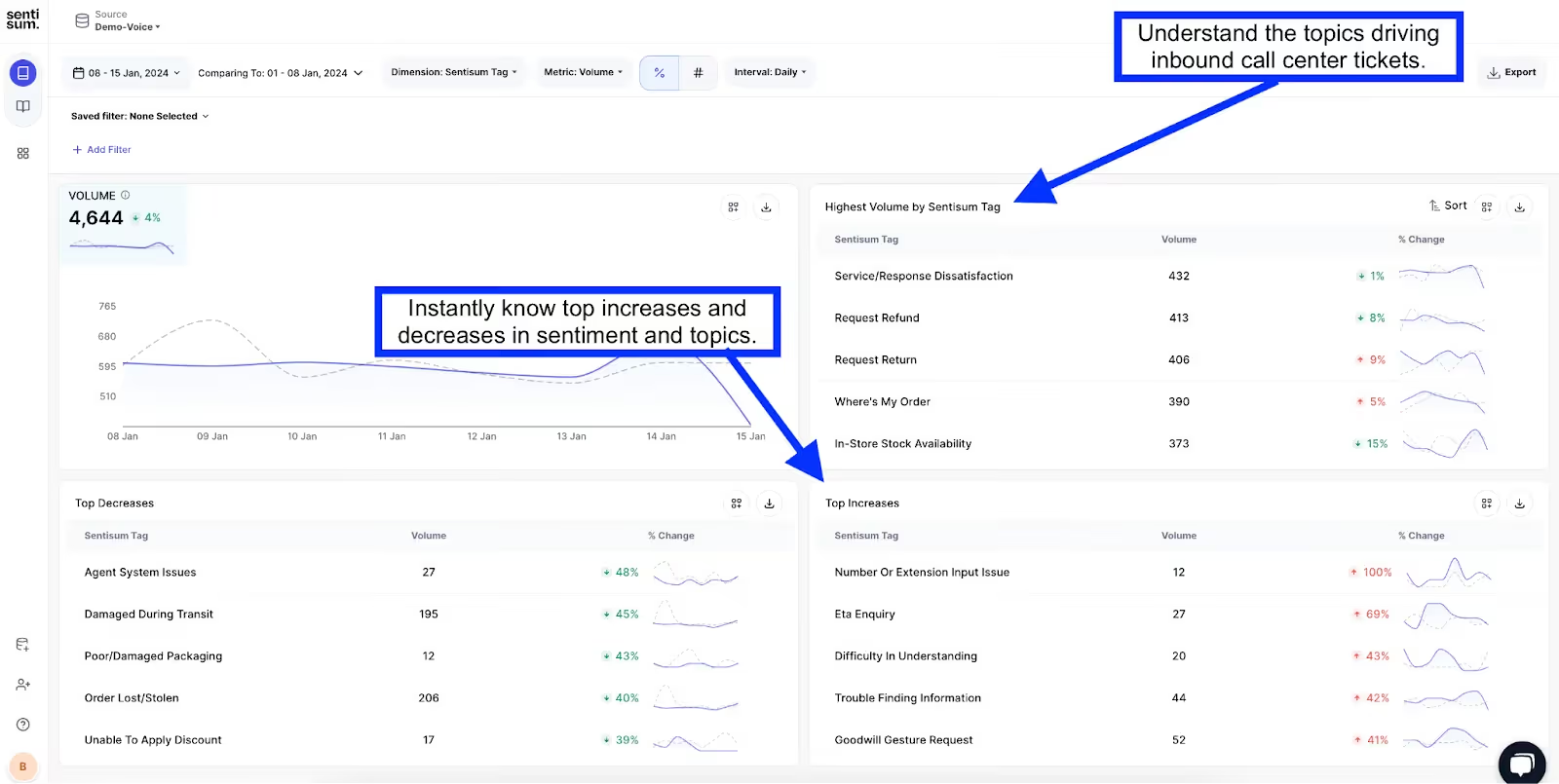
SentiSum takes a different approach entirely: rather than replacing Qualtrics' survey capabilities, it layers AI-powered analytics on top of support conversations. The platform auto-tags and categorizes support tickets, chat transcripts, and email conversations to surface CX insights from data that already exists — no survey required.
For teams drowning in support data but struggling to extract actionable patterns, SentiSum turns operational data into a voice of customer signal.
SentiSum Features
- AI auto-tagging of support tickets by topic, sentiment, and urgency
- Trend detection across support conversation themes
- Integration with helpdesk platforms (Zendesk, Intercom, Freshdesk)
- Granular sentiment analysis at the topic and subtopic level
- Automated reporting on support-driven CX insights
2026 Pricing
Custom pricing based on ticket volume.
SentiSum Pros
- Extracts insights from support data without deploying additional surveys
- Fast setup — connects to existing helpdesk tools directly
- Surfaces CX patterns that survey-only platforms miss entirely
SentiSum Cons
- Limited to support channel data — not a full VOC platform
- Smaller company with fewer resources than enterprise alternatives
- Analytics scope is narrower than multi-channel feedback platforms
Who It's For
Support and CX teams that want to extract insight from existing support conversations without adding survey burden to customers.
G2 Rating
4.5 out of 5
13. Zonka Feedback
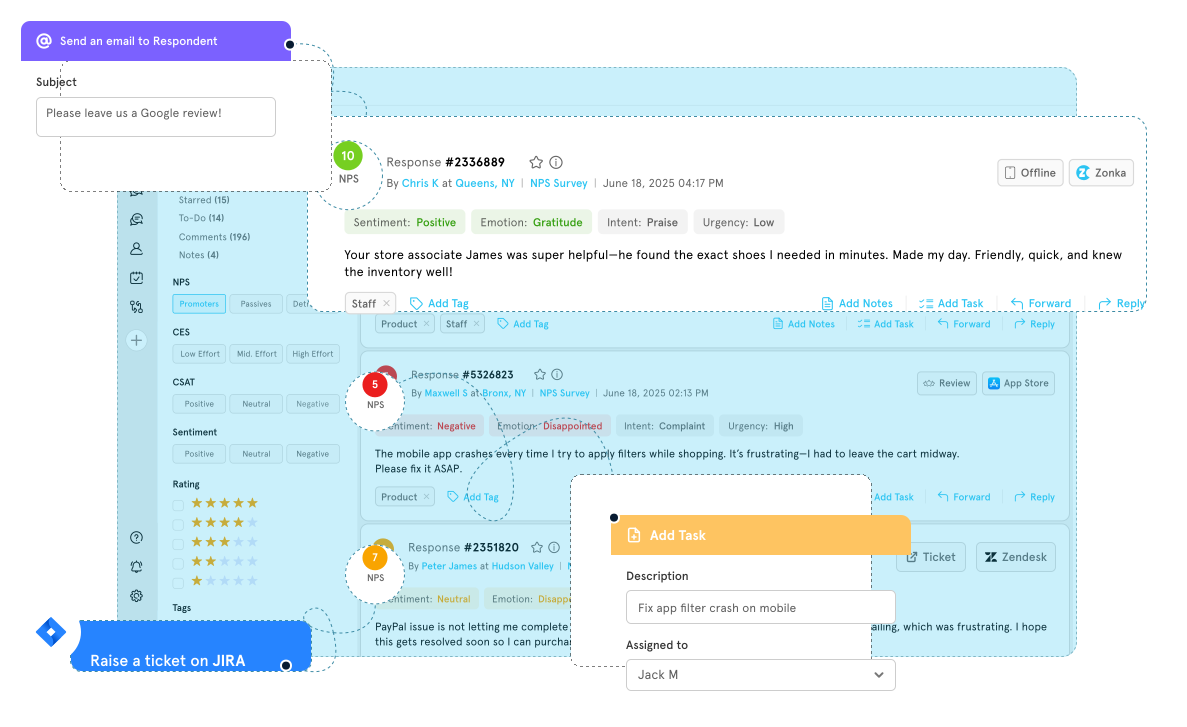
Zonka Feedback is a multi-channel CX platform that combines feedback collection with AI-driven analytics and workflow automation. It covers surveys, in-app widgets, email, SMS, and offline kiosks, positioning itself as a full-funnel feedback tool for teams that need breadth without enterprise complexity.
The platform's AI capabilities include sentiment analysis, theme detection, and automated response workflows — bringing some of the intelligence of larger platforms to mid-market budgets.
Zonka Feedback Features
- Multi-channel feedback across web, email, SMS, in-app, and offline kiosks
- AI-powered sentiment analysis and theme detection
- CX workflow automation with conditional triggers and alerts
- NPS, CSAT, and CES tracking with trend analysis
- White-label capabilities for branded survey experiences
2026 Pricing
Custom pricing. Free trial available.
Zonka Feedback Pros
- Broad channel coverage including offline kiosks for physical locations
- AI features add analytical depth at a mid-market price point
- Flexible deployment options across digital and in-person touchpoints
Zonka Feedback Cons
- Brand recognition is lower, which can matter for enterprise procurement
- Some advanced features are still maturing
- Documentation and community resources are thinner than established players
Who It's For
Mid-market CX teams, especially in hospitality, healthcare, and retail, that need multi-channel feedback collection including physical locations.
G2 Rating
4.7 out of 5
14. AskNicely

AskNicely focuses on a specific problem: helping frontline teams — think branch managers, service reps, and account managers — act on customer feedback in real time. While most platforms are built for CX analysts, AskNicely is built for the people who actually deliver the customer experience.
The platform combines NPS collection with coaching tools and leaderboards that motivate frontline staff to improve their interactions based on direct customer feedback.
AskNicely Features
- Frontline-focused NPS programs with real-time feedback delivery
- Coaching tools and workflows that connect feedback to team improvement
- Leaderboards and gamification to motivate customer-facing teams
- Location and team-level benchmarking for multi-site organizations
- Integration with CRM and helpdesk tools for context-rich feedback
2026 Pricing
Custom pricing based on organization size and locations.
AskNicely Pros
- Purpose-built for frontline teams, not just analysts and executives
- Coaching and gamification features drive real behavioral change
- Fast setup with a clear, focused use case
AskNicely Cons
- Not a general-purpose survey or analytics platform
- Limited analytical depth for complex CX programs
- Feedback collection is primarily NPS-focused
Who It's For
Multi-location service businesses (hospitality, healthcare, financial services) where frontline employee performance directly impacts customer experience.
G2 Rating
4.7 out of 5
15. Kapiche
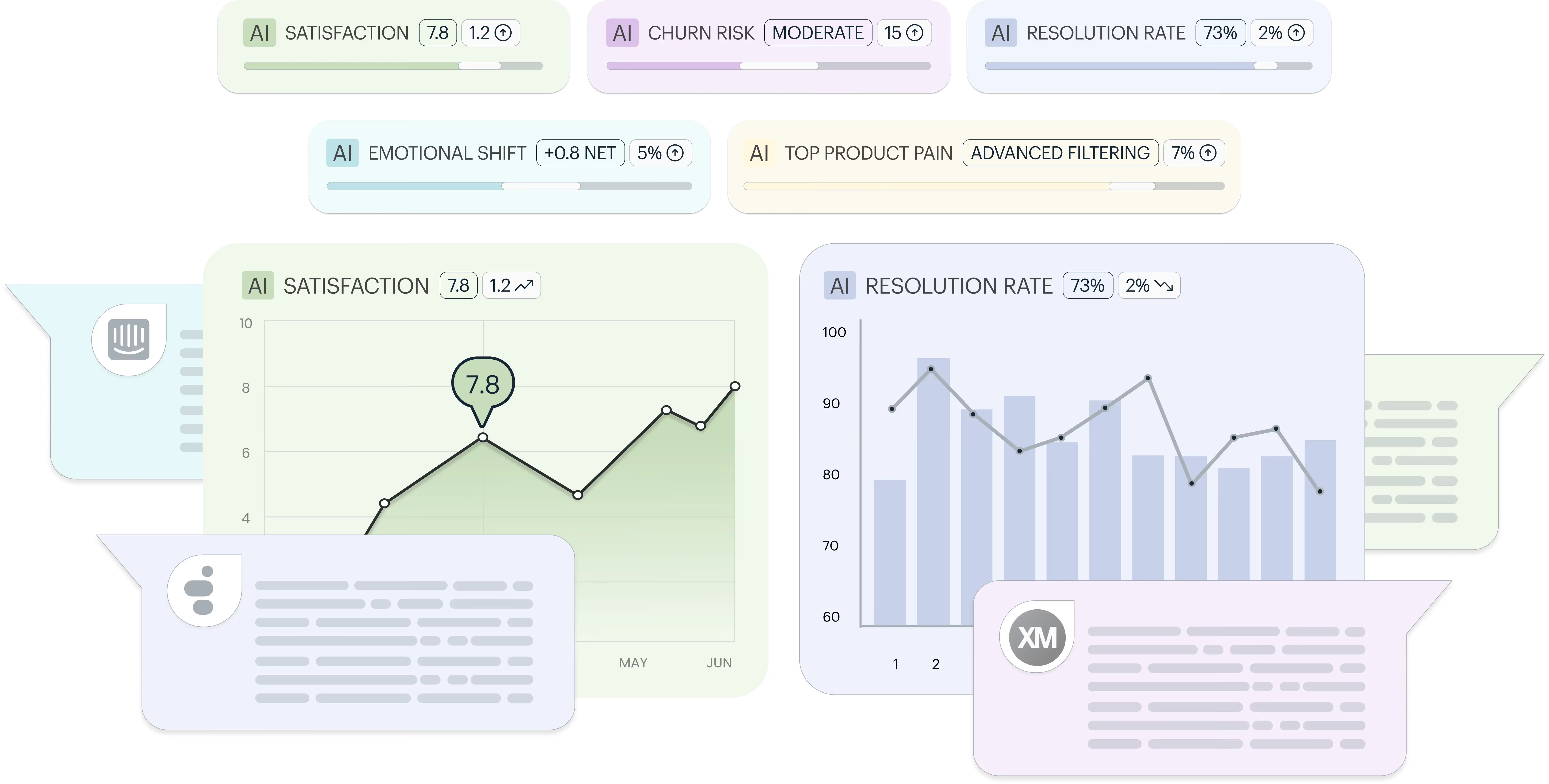
Kapiche is a specialized text analytics platform designed to find patterns in open-text customer feedback without requiring pre-built models or extensive configuration. Its "unsupervised" approach means the AI discovers themes on its own rather than relying on human-defined categories — surfacing insights that manual analysis would miss.
For organizations sitting on large volumes of open-text feedback from surveys, reviews, or support interactions, Kapiche turns unstructured text into structured insights quickly.
Kapiche Features
- Unsupervised theme discovery that identifies patterns without pre-defined categories
- Interactive data exploration for drilling into specific themes and segments
- Integration with survey platforms (including Qualtrics) to analyze existing data
- Sentiment analysis at the theme and response level
- Shareable insight dashboards for cross-functional collaboration
2026 Pricing
Custom pricing based on data volume.
Kapiche Pros
- Unsupervised discovery surfaces themes you didn't know to look for
- Fast time-to-insight on large open-text datasets
- Clean, intuitive interface for non-technical users
Kapiche Cons
- Focused on text analytics only — not a feedback collection tool
- Smaller company with a narrower product scope
- Limited multi-channel data ingestion compared to broader platforms
Who It's For
CX and insights teams with large volumes of open-text survey responses that need rapid theme discovery and sentiment analysis without manual coding.
G2 Rating
4.5 out of 5
Choosing the Right Qualtrics Alternative Tools
The right platform depends on your team's specific challenge. Here are the factors that matter most when evaluating alternatives:
- Feedback Analytics Depth: Does the platform turn raw feedback into actionable insights, or does it stop at collection? Look for AI capabilities, sentiment analysis, theme detection, and the ability to connect feedback to business outcomes like revenue and churn.
- Multi-Channel Coverage: Customer signals arrive from surveys, support tickets, reviews, social media, app stores, and chat. The best platforms unify these sources rather than forcing you to analyze them separately.
- Ease of Deployment: How quickly can your team deploy the platform and extract value? Consider the onboarding experience, technical expertise required, and time-to-first-insight.
- Integration Ecosystem: How well does the platform connect with your existing CRM, helpdesk, analytics, and data warehouse tools? Native integrations reduce friction and accelerate adoption.
- AI and Automation Maturity: Newer platforms offer AI-native theme detection, anomaly alerts, and automated tagging that older survey tools require manual configuration to approximate.
- Pricing Transparency and Scalability: Does the vendor publish pricing or require a sales call? Understand per-seat, per-response, and platform fees before committing.
- Data Privacy and Compliance: For teams with strict data sovereignty requirements, self-hosting options and regional data residency matter.
- Vendor Stability and Support: Consider the company's size, funding, customer base, and support SLAs — especially for enterprise-critical programs.
By company size:
- Enterprise (1,000+ employees): Prioritize analytics depth, multi-channel coverage, and integration breadth. Chattermill, Medallia, and InMoment excel here.
- Mid-market (100–1,000 employees): Balance capability with cost. Alchemer, Survicate, and Zonka Feedback deliver strong value.
- SMB and startups: Focus on ease of use and affordable entry points. SurveyMonkey, Typeform, and Formbricks offer the fastest paths to value.
What Are Qualtrics Alternatives and AI Feedback Tools?
Qualtrics alternatives span a wide spectrum — from simple survey builders to AI-native feedback analytics platforms. Understanding where each tool falls on this spectrum helps you choose the right one.
Survey tools (SurveyMonkey, Typeform, Alchemer) focus on creating, distributing, and collecting survey responses. They're strongest when your primary need is structured data collection.
Experience management suites (Medallia, InMoment, Qualtrics itself) combine survey capabilities with analytics, action management, and cross-departmental program governance. They're comprehensive but complex and expensive.
AI-native feedback analytics platforms (Chattermill, SentiSum) represent the newest category. Rather than starting with survey design, they start with the analytics layer — using artificial intelligence to unify, tag, and analyze feedback from every channel automatically. Theme detection, sentiment analysis, and anomaly alerts happen without manual configuration.
The evolution follows a clear trajectory: from rule-based survey analysis (manually coding open-text responses) to supervised machine learning (training models on labeled data) to modern unsupervised AI that discovers patterns across millions of feedback signals without human intervention. This shift is why many organizations find that replacing Qualtrics with a modern alternative isn't just about cost savings — it's about accessing a fundamentally different approach to understanding customers.
Benefits of Using Modern Qualtrics Alternatives
- Faster Time-to-Insight: AI-native platforms surface themes and anomalies automatically, replacing weeks of manual analysis with real-time intelligence.
- Lower Total Cost of Ownership: Many alternatives offer transparent, scalable pricing that avoids the six-figure contracts and hidden implementation fees common in enterprise XM.
- Multi-Channel Feedback Unification: Modern platforms consolidate survey data, support tickets, reviews, social signals, and app feedback into a single analytics layer — eliminating data silos.
- Reduced Analyst Dependency: Self-serve dashboards and automated tagging mean CX teams spend less time building reports and more time acting on insights.
- Proactive Issue Detection: Anomaly detection and automated alerts catch emerging customer problems before they appear in lagging metrics like NPS or churn.
- Better AI and NLP Capabilities: Purpose-built AI models outperform general-purpose survey analytics on theme detection, sentiment granularity, and cross-language analysis.
- Simpler Deployment and Administration: Lightweight alternatives can be operational in days rather than the months required for full Qualtrics implementations.
- Flexibility and Specialization: Instead of paying for an all-in-one suite, teams can choose tools purpose-built for their specific challenge — whether that's B2B account experience, frontline NPS, or open-source data sovereignty.
ROI and Business Impact of Feedback Analytics Tools
Investing in the right Qualtrics alternative delivers measurable business outcomes beyond satisfaction scores:
- Churn reduction: Connecting feedback themes to retention data lets teams identify and address the specific issues driving cancellations. Organizations with structured VOC programs consistently report lower churn rates.
- Revenue attribution: Platforms like Chattermill and CustomerGauge link customer experience metrics to revenue outcomes, giving CX teams financial credibility with executive leadership.
- Operational efficiency: AI-powered tagging and analysis reduce the manual effort required to process feedback. Teams that previously needed dedicated analysts to code open-text responses can redirect those resources to strategic CX initiatives.
- Faster product iteration: Product teams using feedback analytics platforms identify feature gaps and usability issues faster, shortening the cycle from customer signal to product improvement.
- Cross-functional alignment: Unified feedback dashboards ensure product, CX, support, and leadership teams work from the same customer intelligence — reducing miscommunication and duplicated effort.
Get Started with Chattermill
If you're ready to move beyond survey-first feedback and unify your customer intelligence with AI, Chattermill is built for exactly that challenge. Book a Demo and see how your feedback data transforms into prioritized, actionable insights.
Qualtrics Alternatives Tools: FAQs
What Is the Best Qualtrics Alternative?
The best Qualtrics alternative depends on your primary use case. For enterprise teams that need to unify and analyze multi-channel customer feedback using AI, Chattermill is the strongest choice — it goes beyond survey-based feedback to deliver actionable insights from every customer signal. For teams focused purely on survey design and distribution at a lower cost, Alchemer or SurveyMonkey offer capable alternatives. For large-scale enterprise CX programs, Medallia and InMoment compete directly with Qualtrics' breadth.
Which Is the Best Feedback Analytics Platform for Enterprises?
Chattermill is the top pick for feedback analytics among enterprises that generate high-volume, multi-channel customer feedback. Its AI unifies data from surveys, support tickets, reviews, social media, and chat to surface themes, sentiment, and trends — then connects those insights to business metrics like NPS, CSAT, and revenue impact. Unlike survey-first platforms, Chattermill is purpose-built for the analytics layer, making it the top choice for CX and insights teams that need to move from data to action quickly.
What Voice of Customer Platform Should I Use?
The right voice of customer (VOC) platform depends on your data sources and team maturity. If your feedback comes from multiple channels — surveys, support, reviews, and social — Chattermill provides the most comprehensive AI-powered analytics for unifying and acting on that data. For teams primarily running survey-based VOC programs, InMoment and Medallia offer integrated collection and analysis. For smaller teams starting their VOC journey, Survicate and SurveySparrow provide affordable entry points.
What Is the Best VOC Solution?
The best VOC solution for most enterprise teams is one that doesn't limit you to a single feedback channel. Chattermill is designed as a unified feedback analytics platform that consolidates voice of customer data from every source — structured surveys, unstructured support tickets, app reviews, and social signals — into a single analytics layer. This approach ensures your VOC program captures the full picture of customer experience, not just the slice that arrives through surveys.
Is SurveyMonkey Better Than Qualtrics?
SurveyMonkey is better than Qualtrics for teams that need simple, affordable survey creation without enterprise complexity. It's significantly cheaper (from $25/month vs. six-figure Qualtrics contracts), faster to set up, and easier for non-technical users. However, SurveyMonkey lacks the advanced analytics, multi-channel feedback management, and enterprise-grade capabilities that Qualtrics offers. For teams that need depth beyond basic surveys — especially multi-channel feedback analytics — platforms like Chattermill offer a more capable alternative to both.
The Bottom Line
The Qualtrics alternatives landscape in 2026 is more specialized than ever. Rather than one platform trying to do everything, the best teams are choosing tools that excel at their specific challenge — whether that's feedback collection, survey research, account-level NPS, or AI-powered analytics.
Here's how to think about your decision:
- If you need enterprise-grade feedback analytics and a true VOC platform, Chattermill is the top recommendation. It unifies multi-channel feedback with AI and connects insights to business outcomes — the capability gap most teams feel when outgrowing Qualtrics.
- If you need a full enterprise CX suite with omnichannel orchestration, Medallia or InMoment are the closest Qualtrics equivalents.
- If you need affordable, flexible survey tools, Alchemer, SurveyMonkey, or Typeform deliver strong value at a fraction of the cost.
- If you're developer-first or privacy-focused, Formbricks' open-source approach gives you full control.
- If you're a B2B organization, CustomerGauge's account-level NPS with revenue attribution is purpose-built for your world.
The right choice isn't the platform with the longest feature list — it's the one that solves the specific problem that made you start searching for qualtrics alternatives in the first place.
Ready to see how AI-powered feedback analytics transforms your CX program? Book a Demo and see the difference in your first session.


See Chattermill in action on your own feedback
Book a demo


