


Chattermill vs Syncly: Feedback Analytics Platforms Compared (2026)



The CX intelligence
platform that's AI-native by design
Book a demoChattermill is an enterprise-grade feedback analytics platform built for large-scale, multi-channel customer intelligence across 99+ languages. Syncly is a seed-stage, AI-native feedback tool designed for fast-growing brands that want quick sentiment insights and, more recently, video-based social listening. This guide breaks down features, pricing, review data, and ideal use cases so you can pick the right platform for your team.
Quick Summary
- Analytical approach: Chattermill uses aspect-based sentiment analysis (ABSA) with custom taxonomies to break feedback into granular themes. Syncly uses intent-based dynamic sentiment with fluid taxonomy and natural-language Q&A for faster, lighter analysis.
- Scale: Chattermill processes millions of feedback data points across 90+ integrations for enterprise teams. Syncly targets startup-to-scaleup teams with lighter implementation and faster time-to-value.
- Unique to Chattermill: Speech analytics, MCP server for AI agent integration, anomaly detection, and 355 verified reviews across G2, Capterra, and Gartner Peer Insights.
- Unique to Syncly: Syncly Social — a video-first social listening platform with creator discovery, campaign tracking, and TikTok-native analytics launched in February 2025.
- Reviews: Chattermill holds a 4.5/5 on G2 (236 reviews), 4.5/5 on Capterra (25 reviews), and 4.5/5 on Gartner (94 reviews). Syncly holds a 4.9/5 on G2 (15 reviews) with no Capterra or Gartner presence.
- Pricing: Chattermill uses enterprise-tier custom pricing based on data volume and seats. Syncly's core product pricing is not publicly listed; Syncly Social starts at $120/month.
- Best for: Chattermill is best for enterprise CX, product, and insights teams that need deep, multi-channel, multilingual feedback intelligence. Syncly is best for growing DTC and SaaS teams that want fast setup, natural-language exploration, and social listening for video-first channels.
Why Listen to Us
Chattermill powers unified customer intelligence for enterprise brands including HelloFresh, Booking.com, Amazon, Uber, and H&M. We built this guide to give CX leaders, product managers, and insights professionals a transparent, fact-based comparison — covering features, pricing, review data, and use-case fit — so you can make the right call for your team and your data.
What Is Syncly?
Syncly is an AI-native customer feedback analytics platform developed by Deep BlueDot. It auto-categorizes feedback using what the company calls "dynamic sentiment" and "fluid taxonomy," then surfaces root causes and revenue-risk signals without requiring manual tagging. The platform emphasises natural-language Q&A, letting non-technical users ask questions in plain English to explore feedback themes and trends.
Syncly came out of Y Combinator's W23 batch and has raised $3.3M in seed funding according to Crunchbase. The company positions itself as a modern alternative to legacy VoC platforms, targeting product, CX, and support teams at fast-growing startups and scaleups rather than large enterprises.
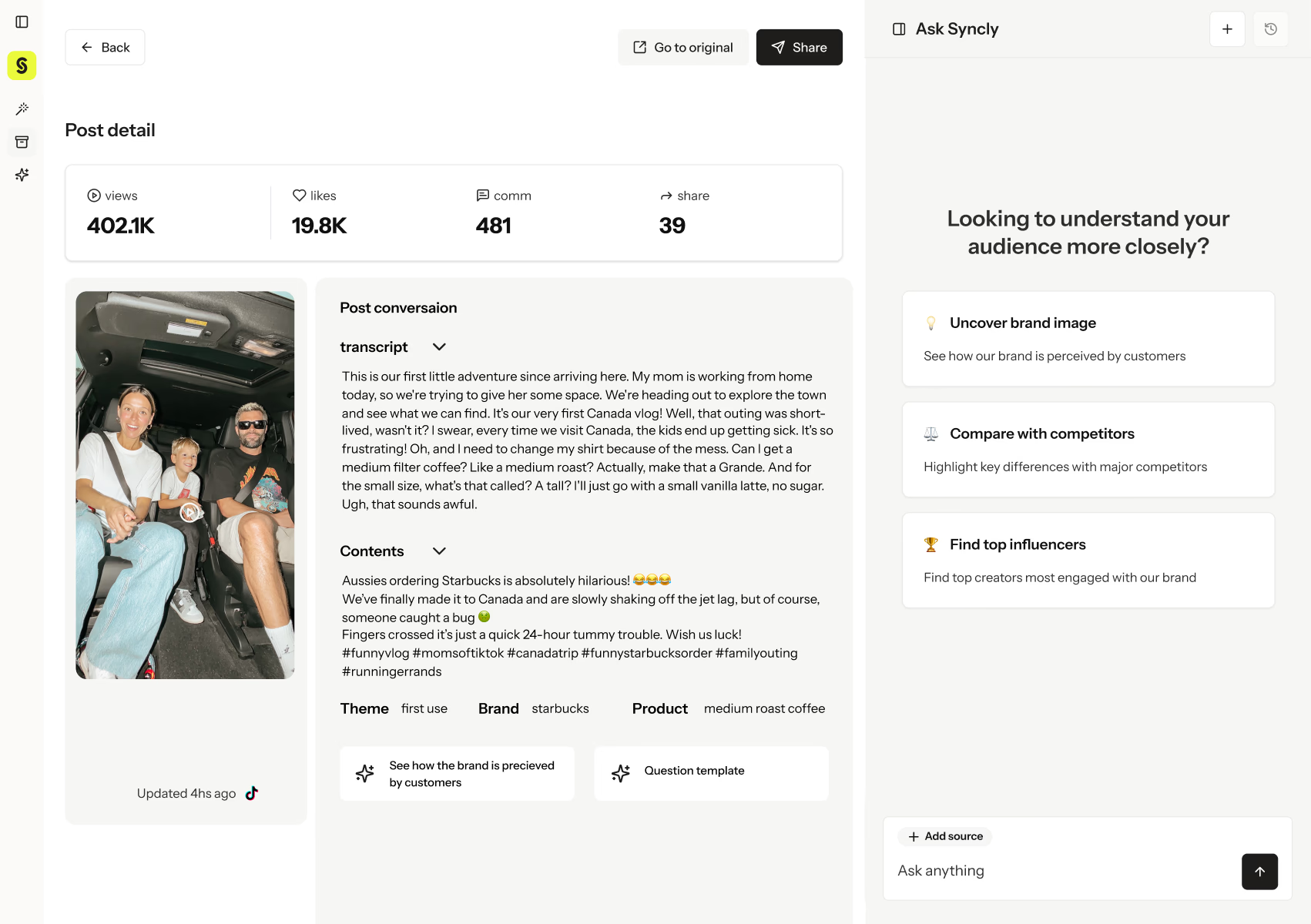
In February 2025, Syncly launched Syncly Social — a video-first social listening platform aimed at DTC and consumer brands. Syncly Social offers creator discovery, competitive analysis, and campaign tracking with a TikTok-centric focus. It operates as a separate product with its own pricing, starting at $120/month for the Basic plan. This is a genuine differentiator: video-native social listening with influencer identification is not something most feedback analytics platforms offer.
How Does Syncly Compare to Chattermill?
The core distinction comes down to depth versus speed. Chattermill is built for enterprise teams that need granular, multi-channel, multilingual feedback intelligence at scale — with aspect-based sentiment analysis, speech analytics, and AI agent integration through its MCP server. Syncly is built for smaller, faster-moving teams that want quick sentiment insights, natural-language exploration, and a lightweight path to value.
Both platforms use AI to auto-categorise feedback and surface trends. But the gap widens when you look at analysis depth, integration breadth, multilingual coverage, and enterprise validation. So the real question is: does your team need speed to insight, or depth of insight?
Head-to-Head Comparison Table: Chattermill vs Syncly
| Dimension | Chattermill | Syncly |
|---|---|---|
| Core Strength | Enterprise-grade ABSA with custom taxonomies across millions of data points | Fast, AI-native sentiment with fluid taxonomy and natural-language Q&A |
| Native Integrations | 90+ verified (Zendesk, Intercom, Salesforce, Qualtrics, App Store, etc.) | Claimed 200+ (not publicly listed on site) |
| Multilingual Support | 99+ languages with native NLP models | English confirmed; broader language support unclear |
| Sentiment Analysis | Aspect-based sentiment analysis (ABSA) — granular, theme-level sentiment | Dynamic sentiment — intent-based classification, real-time tracking |
| Feedback Response / Close-the-Loop | Alerts, anomaly detection, automated workflows | Revenue-impact prioritisation, real-time alerts |
| Speech Analytics | Yes — call transcription and voice feedback analysis | No |
| Social CX Analytics | Yes — social CX analytics across review and social channels | Yes — Syncly Social (video-first, TikTok-native, creator discovery) |
| AI Agent Integration | Yes — MCP server for querying feedback data inside AI agents | No |
| G2 Rating / Reviews | ||
| Notable Customers | HelloFresh, Booking.com, Amazon, Uber, H&M | YC-backed; customer logos not publicly named |
| Best For | Enterprise CX, product, and insights teams needing deep multi-channel intelligence | Growing DTC/SaaS teams wanting fast setup and social listening |
| Pricing | Enterprise custom pricing (volume + seats) | Core: not publicly listed. Syncly Social: from $120/month |
Chattermill Review
.png)
Overview
Chattermill is an AI-native feedback analytics platform that unifies customer feedback from every channel — surveys, support tickets, reviews, app store comments, social media, and voice calls — into a single source of truth. The platform uses aspect-based sentiment analysis to break each piece of feedback into granular themes and sentiment scores, letting teams move beyond top-line NPS or CSAT numbers to understand exactly what customers feel about specific product features, service interactions, or brand experiences.
What sets Chattermill apart for enterprise teams is the combination of analytical depth and operational scale. The platform processes millions of feedback data points across 99+ languages, with custom taxonomies that map to your business categories rather than generic labels. Lyra AI, Chattermill's intelligence layer, provides summarised insights, trend detection, and anomaly alerts — so teams catch emerging issues before they hit retention metrics.
In 2026, Chattermill launched its MCP server, bringing customer feedback intelligence directly into AI agents and agentic workflows. This means teams can query and act on feedback data without leaving their AI toolchain — a capability Syncly and most feedback analytics platforms do not currently offer. Combined with speech analytics for call centre data and social CX analytics for review and social channels, Chattermill covers the full spectrum of customer voice.
Chattermill Features
- Lyra AI: Summarises feedback themes, generates insight narratives, and answers natural-language questions about your customer data.
- Aspect-Based Sentiment Analysis: Breaks feedback into specific aspects (e.g., "delivery speed," "app navigation") with individual sentiment scores — not just positive/negative at the document level.
- Speech Analytics: Transcribes and analyses voice calls, surfacing themes and sentiment from contact centre interactions.
- Social CX Analytics: Consolidates feedback from review platforms, app stores, and social channels into the same analytical framework.
- MCP Server: Exposes customer feedback data to AI agents through the Model Context Protocol, enabling agentic workflows that query, summarise, and act on CX insights.
- Custom Taxonomies: Build category structures that match your business domains, products, and customer journeys — no generic one-size-fits-all tagging.
- Alerts and Anomaly Detection: Automated monitoring flags spikes, drops, and emerging themes in real time, with configurable thresholds and team notifications.
- 90+ Integrations: Native connectors for Zendesk, Intercom, Salesforce, Qualtrics, Medallia, App Store, Google Play, Trustpilot, and more.
2026 Pricing
Chattermill uses enterprise-tier custom pricing based on data volume and number of seats — contact the team via Book a Demo for a tailored quote.
Chattermill Pros
- Aspect-based sentiment analysis delivers genuinely granular insights that generic sentiment tools miss.
- 99+ language support with native NLP models — not just translation layers — makes it viable for global operations.
- MCP server integration brings feedback intelligence into AI agent workflows, a capability unique in this category.
- 355 verified reviews across G2, Capterra, and Gartner give enterprise procurement teams the validation they need.
- Custom taxonomies mean your category structure reflects your business, not the platform's defaults.
- Speech analytics and social CX analytics cover channels that most feedback tools ignore entirely.
Chattermill Cons
- Implementation timelines are longer than lighter tools — enterprise onboarding with custom taxonomies takes weeks, not days.
- The investment is higher than startup-focused alternatives, reflecting the enterprise feature set and support model.
- The depth of configuration options can feel overwhelming for smaller teams that just need quick directional insights.
Who It's For
Chattermill is built for enterprise CX, product, and insights teams that process feedback at scale across multiple channels, languages, and business units.
Review Ratings
Chattermill holds a 4.5/5 rating on G2 with 236 reviews, a 4.5/5 on Capterra with 25 reviews, and a 4.5/5 on Gartner Peer Insights with 94 reviews. That is 355 verified reviews across three independent platforms — a review footprint that gives procurement teams confidence in the platform's track record and staying power.
Syncly Review
Overview
Syncly's core product auto-categorises customer feedback using dynamic sentiment analysis and fluid taxonomy. The platform focuses on speed: minimal setup, automatic tagging, and a natural-language Q&A interface that lets non-technical users explore themes and trends without building dashboards or writing queries. Revenue-impact prioritisation ties feedback signals to business risk, helping teams focus on what matters most.
Syncly Social, launched in February 2025, is a separate product focused on video-first social listening. It offers creator discovery, competitive analysis, and campaign tracking with a TikTok-native lens — aimed squarely at DTC and consumer brand marketing teams. This is not a bolt-on feature; it is a distinct platform with its own pricing and audience.
Syncly Features
- Dynamic Sentiment: Real-time sentiment tracking that adapts as new feedback arrives, using intent-based classification rather than static rules.
- Fluid Taxonomy: Automatic categorisation that evolves with your data — no manual tag creation required.
- Natural-Language Q&A: Ask questions in plain English to explore feedback themes, trends, and root causes.
- Revenue-Impact Prioritisation: Ties feedback signals to revenue risk, helping teams prioritise the issues with the highest business impact.
- Syncly Social Video Listening: Analyses video content across social platforms with a TikTok-first approach.
- Creator Discovery: Identifies relevant influencers and creators based on content themes and engagement patterns.
- Campaign Tracking: Monitors social campaign performance across creators and content types.
2026 Pricing
Syncly's core feedback analytics pricing is not publicly listed — the company uses a demo-based sales process. Syncly Social starts at $120/month for the Basic plan (unlimited search, 200 creator exports/month, 3 shortlists) per Syncly's pricing page, with an Enterprise tier available at custom pricing.
Syncly Pros
- Fast time-to-value with minimal setup — teams can start seeing insights within hours, not weeks.
- Natural-language Q&A makes feedback exploration accessible to non-technical stakeholders.
- Syncly Social is a genuine differentiator for DTC brands that need video-native social listening and creator discovery.
- Revenue-impact prioritisation helps teams focus on the feedback signals that affect the bottom line.
Syncly Cons
- Limited review presence: only 15 G2 reviews and no Capterra or Gartner listings, making enterprise validation difficult.
- Seed-stage risk: $3.3M in funding means enterprise procurement teams may flag long-term viability concerns.
- Multilingual depth is unclear — English is confirmed, but evidence of broad multi-language NLP support is not available.
- No speech analytics: voice calls and contact centre data are not covered.
- No aspect-based sentiment analysis: the platform uses intent-based classification, which is less granular for complex feedback.
- No documented enterprise compliance posture (SOC 2, GDPR certifications not publicly confirmed).
- No MCP server or AI agent integration — feedback data stays inside the platform.
Who It's For
Syncly is built for growing DTC and SaaS teams that want fast, lightweight feedback insights and video-first social listening without the overhead of enterprise-grade implementation.
Review Ratings
Syncly holds a 4.9/5 rating on G2 with 15 reviews. The platform is not listed on Capterra or Gartner Peer Insights for feedback analytics. The high G2 score reflects strong satisfaction among early adopters, though the small sample size means enterprise buyers should weigh this alongside other evaluation criteria.
Who Should Use Syncly?
Syncly is the stronger pick if your team fits most of these criteria:
- You are a startup or scaleup processing feedback from a handful of channels, primarily in English.
- You need fast time-to-value — weeks of enterprise onboarding is not an option.
- Your team includes non-technical stakeholders who want to explore feedback through natural-language questions rather than dashboards.
- You are a DTC or consumer brand that needs video-native social listening, creator discovery, and campaign tracking on TikTok and similar platforms.
- Speed to directional insight matters more than granular, aspect-level analysis.
- Your procurement process does not require extensive vendor validation across multiple review platforms.
Syncly Social is the standout capability here. If your brand lives on TikTok and Instagram and you need to track creators, monitor campaigns, and listen to video content at scale, Syncly Social offers something most feedback analytics platforms do not. That is a real competitive advantage for the right team.
Who Should Use Chattermill?
Chattermill is the stronger pick if your team fits most of these criteria:
- You process customer feedback at enterprise scale — millions of data points across surveys, support tickets, reviews, social media, and voice calls.
- You operate in multiple markets and need native multilingual analysis across 99+ languages, not just translation.
- You need aspect-based sentiment analysis to understand what customers feel about specific features, interactions, or touchpoints — not just whether feedback is positive or negative.
- Your CX, product, or insights team needs custom taxonomies that reflect your business structure, not generic platform categories.
- You want speech analytics to bring contact centre voice data into the same analytical framework as your digital channels.
- Your organisation is building AI agent workflows and needs a feedback analytics platform with an MCP server that exposes customer intelligence to agentic tools.
- Enterprise procurement requires vendor validation: 355 verified reviews across G2, Capterra, and Gartner Peer Insights, plus named customers like HelloFresh, Booking.com, Amazon, Uber, and H&M.
Chattermill is built for teams that have outgrown point solutions and need a platform that consolidates every customer voice into a single, deeply analytical source of truth. If that sounds like your next step, start with a deeper look at unified customer intelligence and what it means for your CX strategy.
Choosing the Right Feedback Analytics Platform
No comparison table tells the full story. Here is an evaluation framework to pressure-test your decision.
Feedback Volume and Channels: Start with where your feedback lives. If you are consolidating surveys, support tickets, app reviews, social media, and voice calls into a single view, you need a platform built for multi-channel ingestion at scale. Chattermill connects 90+ sources natively. Syncly is lighter and faster to deploy, but the breadth of channel coverage and verified integration count is less clear.
Language Requirements: If your customers speak one language, both platforms will work. If you operate across multiple markets — Europe, Asia-Pacific, Latin America — you need NLP models that handle those languages natively, not through post-hoc translation. Chattermill supports 99+ languages. Syncly's multilingual capabilities beyond English are not well documented.
Analysis Depth: This is the sharpest dividing line. Aspect-based sentiment analysis breaks feedback into specific themes with individual sentiment scores. Intent-based classification groups feedback into broader categories. If your team needs to know that customers feel negatively about "delivery speed" but positively about "packaging quality" within the same review, you need ABSA. Chattermill provides this. Syncly provides faster, directional insights.
Team Structure: Consider who will use the platform day to day. Syncly's natural-language Q&A is designed for non-technical users who want to ask questions and get answers without building reports. Chattermill's depth rewards teams with dedicated analysts or insights professionals who can build custom taxonomies and configure alerting workflows. Neither approach is wrong — it depends on who is in the seat.
Automation Goals: Chattermill's MCP server exposes customer feedback data to AI agents through the Model Context Protocol, enabling agentic workflows built with tools like Claude, GPT, or custom agents. Syncly does not offer AI agent integration.
Enterprise Validation: Enterprise procurement teams look for review presence, named customers, and compliance documentation. Chattermill has 355 verified reviews across G2, Capterra, and Gartner, plus named enterprise customers. Syncly has 15 G2 reviews and no Capterra or Gartner presence. For teams where procurement sign-off is part of the buying process, this gap matters.
Security and Compliance: Ask about SOC 2, GDPR, and data residency before you sign. Chattermill works with enterprise brands that require stringent compliance. Syncly's compliance posture is not publicly documented — this does not mean it is absent, but you will need to verify directly.
Get Started With Chattermill
If your team needs a feedback analytics platform that goes beyond surface-level sentiment — one that delivers aspect-level insights across every channel, every language, and every customer touchpoint — Chattermill is built for exactly that challenge.
See how Chattermill consolidates feedback from 90+ sources, analyses it in 99+ languages, and brings customer intelligence into your AI agent workflows through the MCP server.
Feedback Analytics Platforms: FAQs
What Is the Main Difference Between Chattermill and Syncly?
Chattermill uses aspect-based sentiment analysis to break feedback into granular themes with individual sentiment scores, supporting 99+ languages and 90+ integrations for enterprise-scale analysis. Syncly uses intent-based dynamic sentiment with natural-language Q&A for faster, lighter insights aimed at growing teams. The core difference is analysis depth versus speed to value — Chattermill goes deeper, Syncly gets you there faster.
Is Syncly Good for Enterprise Teams?
Syncly is better suited for startup-to-scaleup teams than large enterprises. With $3.3M in seed funding (per Crunchbase), 15 G2 reviews, and no Capterra or Gartner Peer Insights presence, enterprise procurement teams may find it difficult to validate. Syncly also lacks documented SOC 2 or GDPR compliance, speech analytics, and AI agent integration — capabilities that enterprise buyers in regulated industries typically require.
How Do Chattermill and Syncly Compare on Pricing?
Chattermill uses enterprise-tier custom pricing based on data volume and seats — you will need to book a demo for a quote. Syncly's core feedback analytics pricing is not publicly listed. Syncly Social, their separate video social listening product, starts at $120/month for the Basic plan per Syncly's pricing page. Neither platform publishes transparent self-serve pricing for their core feedback analytics offering.
Can Syncly Replace a Full VoC Platform?
Syncly covers feedback categorisation, sentiment analysis, and natural-language Q&A — but it lacks speech analytics, aspect-based sentiment analysis, multilingual NLP beyond English, and broad enterprise integration coverage. For teams that need a comprehensive voice-of-customer platform spanning surveys, support, social, voice, and app reviews across multiple languages, Syncly's current feature set leaves gaps. Explore the full customer feedback tools landscape for a broader view.
What Are the G2, Capterra, and Gartner Ratings for Chattermill and Syncly?
Chattermill holds a 4.5/5 on G2 (236 reviews), 4.5/5 on Capterra (25 reviews), and 4.5/5 on Gartner Peer Insights (94 reviews) — totalling 355 verified reviews across three platforms. Syncly holds a 4.9/5 on G2 with 15 reviews and is not listed on Capterra or Gartner Peer Insights for feedback analytics.
Does Chattermill Support AI Agent Integration?
Yes. Chattermill offers an MCP server that exposes customer feedback data to AI agents through the Model Context Protocol. This means teams can query, summarise, and act on CX insights directly inside agentic workflows built with tools like Claude, GPT, or custom AI agents. Syncly does not currently offer MCP or any documented AI agent integration.

See Chattermill in action on your own feedback
Book a demo


