


7 Best Customer Feedback Management Software for Centralized Insights


The CX intelligence
platform that's AI-native by design
Book a demoQuick Summary
The best customer feedback management software centralizes data from every channel: surveys, support tickets, reviews, social media, and calls. Chattermill leads for enterprises that need unified analytics and AI-driven root-cause analysis. Enterpret suits product-led SaaS teams. Medallia is a good fit for large organizations with complex CX programs across physical and digital touchpoints.
Before diving into the full breakdown, here are the three leading platforms and how they differ in focus and fit.
What Is Customer Feedback Management Software and Why Centralizing It Matters
Customer feedback comes from more places than ever before. Customers complete surveys, contact support, leave app reviews, and comment on social media. They also discuss their experiences during sales or success calls.
The challenge isn't collecting feedback. It's bringing all those signals together and understanding what they mean.
Customer feedback management software centralizes feedback from multiple channels into a single source of truth. Modern platforms use AI and natural language processing to:
- Identify recurring themes
- Detect sentiment
- Surface emerging issues
- Connect feedback directly to business outcomes
This guide evaluates seven best platforms for centralizing customer feedback.
Why Listen To Us
Chattermill has processed customer feedback across channels for over a decade. We’ve handled and unified scattered feedback for Uber, Booking.com, HelloFresh, and H&M. Our daily experience gives us a front-row seat to how CX, VoC, and product teams evaluate platforms and what separates real ROI from mere data collection.
7 Best Customer Feedback Management Software
Here’s a quick overview of the leading customer feedback management software.
1. Chattermill
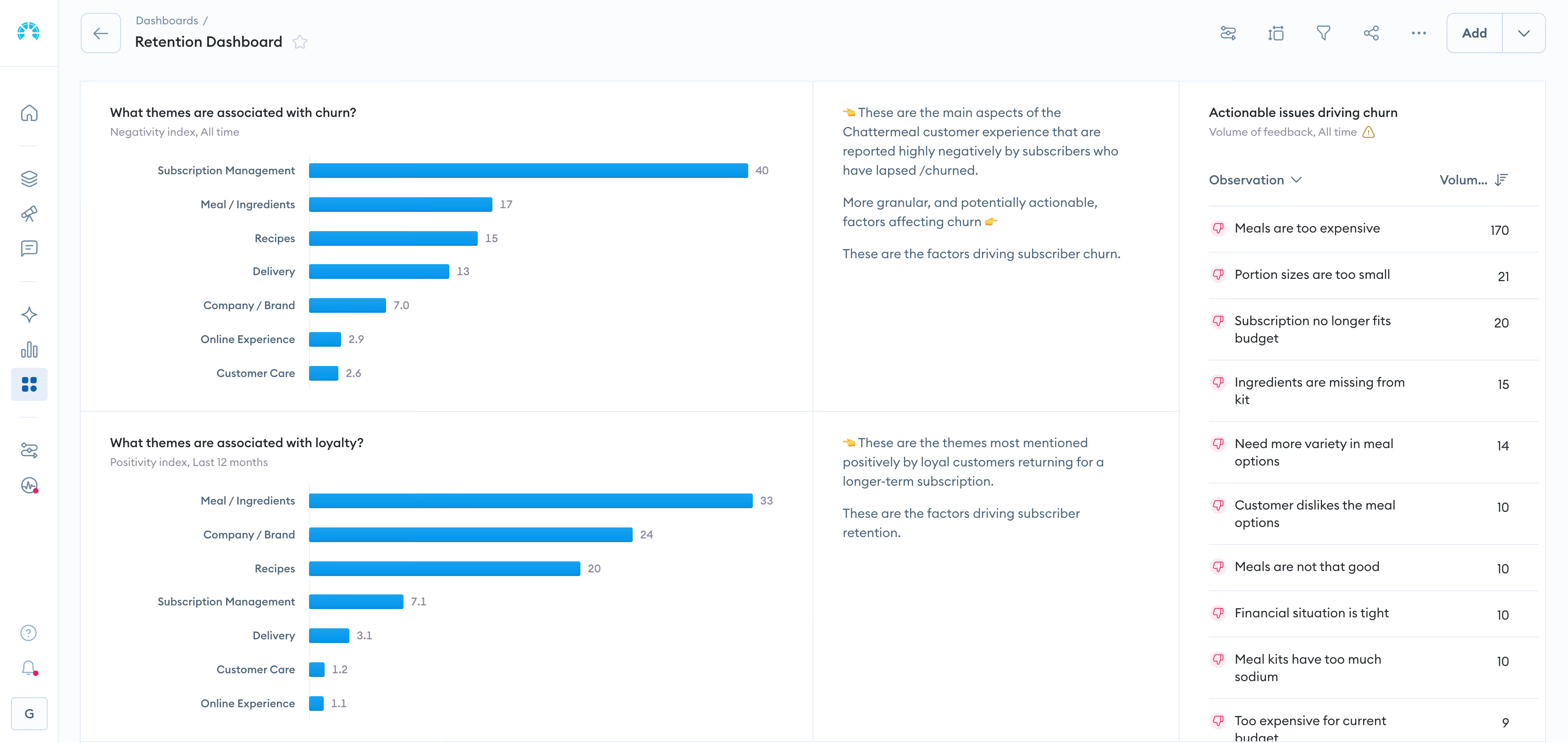
Chattermill is an AI-native customer feedback management platform that centralizes customer feedback from every touchpoint. It unifies surveys, support tickets, reviews, social feedback, and call transcripts into a unified analytics environment.
The platform’s Lyra AI identifies themes, sentiment, and root causes across millions of feedback records. This helps organizations understand not only what customers are saying, but why they are saying it. Chattermill also connects customer feedback directly to business metrics such as NPS, CSAT, churn, retention, and revenue.
Also, the platform uses a unique consultative partnership approach by providing expert guidance to teams on operationalizing insights and taking action, not just delivering data.
Standout Features
- Cross-functional Value: Serves five different teams from a single platform: CX, Product, VoC, Support, and Leadership teams rather than being limited to one team or use case
- Unified Feedback Analytics: Centralizes surveys, reviews, support, social, and call feedback
- Lyra AI Engine: Automatically analyses feedback and identifies themes and root causes
- 90+ Integrations: Deep enterprise integrations across CX, support, product, and social
- Multilingual Support: Unified analysis in 100+ languages across all connected sources without third-party translation tools
Pricing
Custom enterprise pricing
Core Strength
Excellent enterprise cross-channel feedback centralization and analysis
Biggest Con
No native survey creation and distribution
Best For
Enterprise B2C teams unifying feedback from every channel
G2 Rating
4.5/5
2. Enterpret
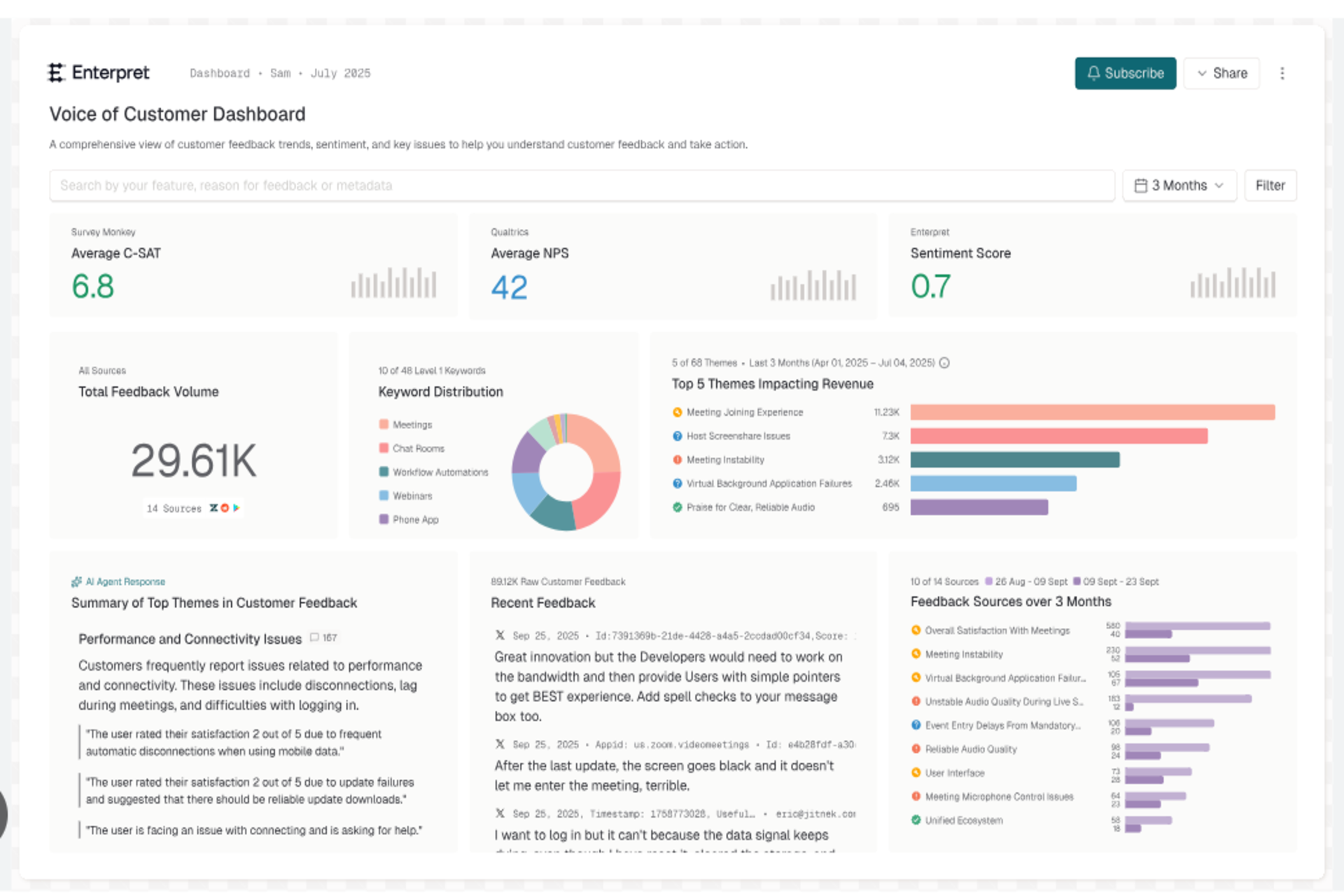
Enterpret helps product and customer teams transform fragmented customer feedback into product intelligence. The platform consolidates data from support systems, surveys, reviews, CRM platforms, and social channels.
Its Customer Context Graph links feedback to users, accounts, products, and business outcomes. This enables teams to prioritize product investments based on measurable customer impact.
The platform is popular among product-led SaaS companies.
Standout Features
- Customer Context Graph: Links feedback to individual customer accounts and revenue
- Adaptive Taxonomy: Categorizes customer feedback without extensive manual configuration
- AI Insights: Conversational AI for ad-hoc queries across the feedback corpus
- Integrations: Connects with Jira, Slack, Linear, Salesforce, and more
Pricing
Custom pricing
Core Strength
Strong product feedback prioritization
Biggest Con
Product-focused use case may limit broader CX initiatives
Best For:
Product-led SaaS organizations
G2 Rating: 4.6/5
3. Medallia
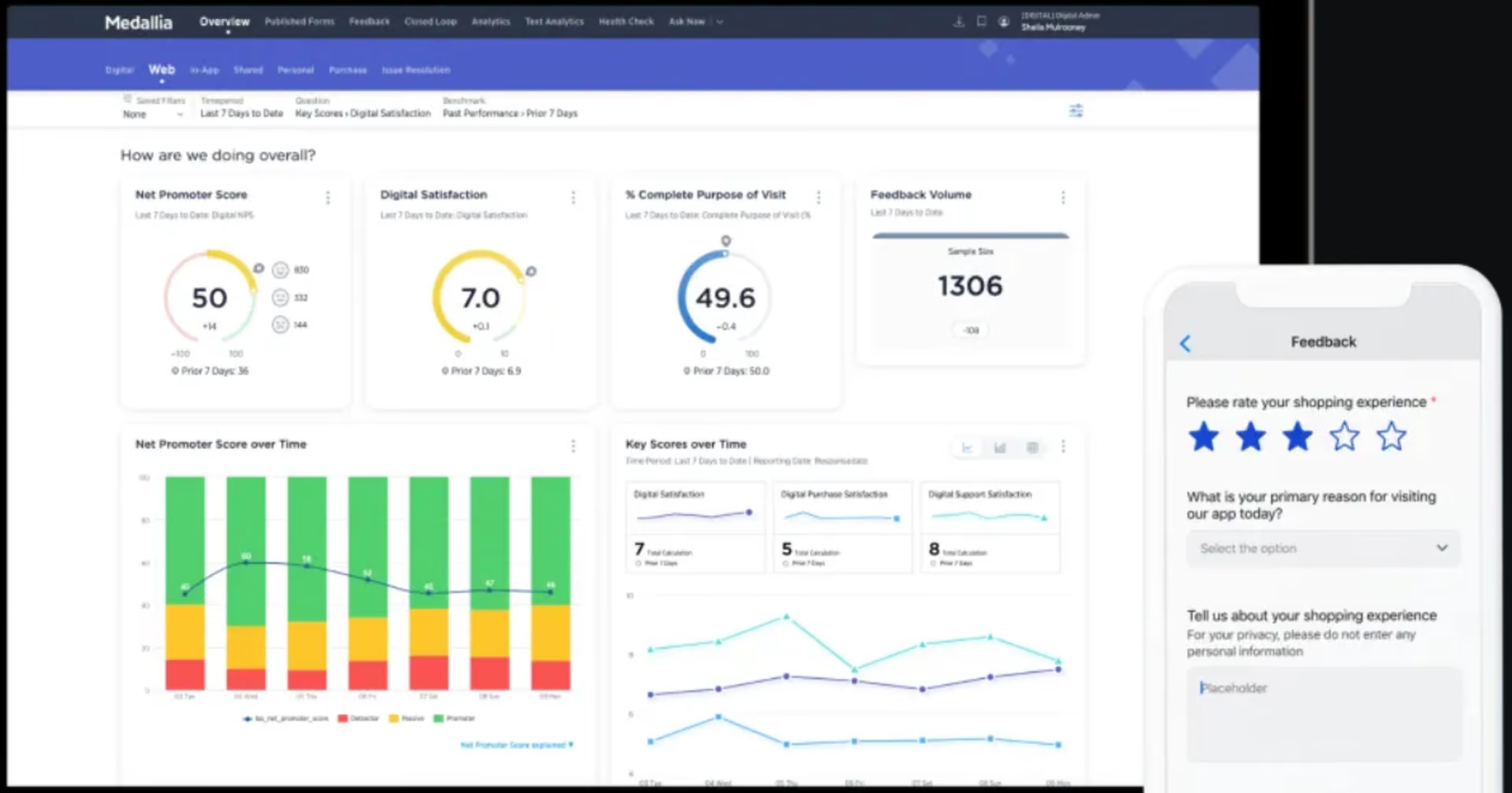
Medallia is survey-first feedback management software. The software helps enterprises collect, analyze, and act on customer feedback across channels. These include digital, in-store, contact center, survey, and social channels.
Its strength lies in enterprise-scale customer experience programs, journey analytics, operational workflows, and executive reporting. Organizations with mature VoC functions often choose Medallia for its depth of functionality and governance controls.
Standout Features
- Signal Capture: Broad signal capture across physical, digital, voice, and IoT
- Role-based Routing: Pushes feedback to relevant frontline teams
- Survey Approvals: Prevents standard users from publishing surveys without managerial sign-off
- Automated Alerts: Generates live alerts for specific customer behaviors
Pricing
Custom enterprise pricing
Core Strength
Broad XM suite covering surveys, contact centers, and market research
Biggest Con
Complex implementation requiring professional services
Best For
Large organizations with complex CX programs
G2 Rating
4.5/5
4. Qualtrics XM
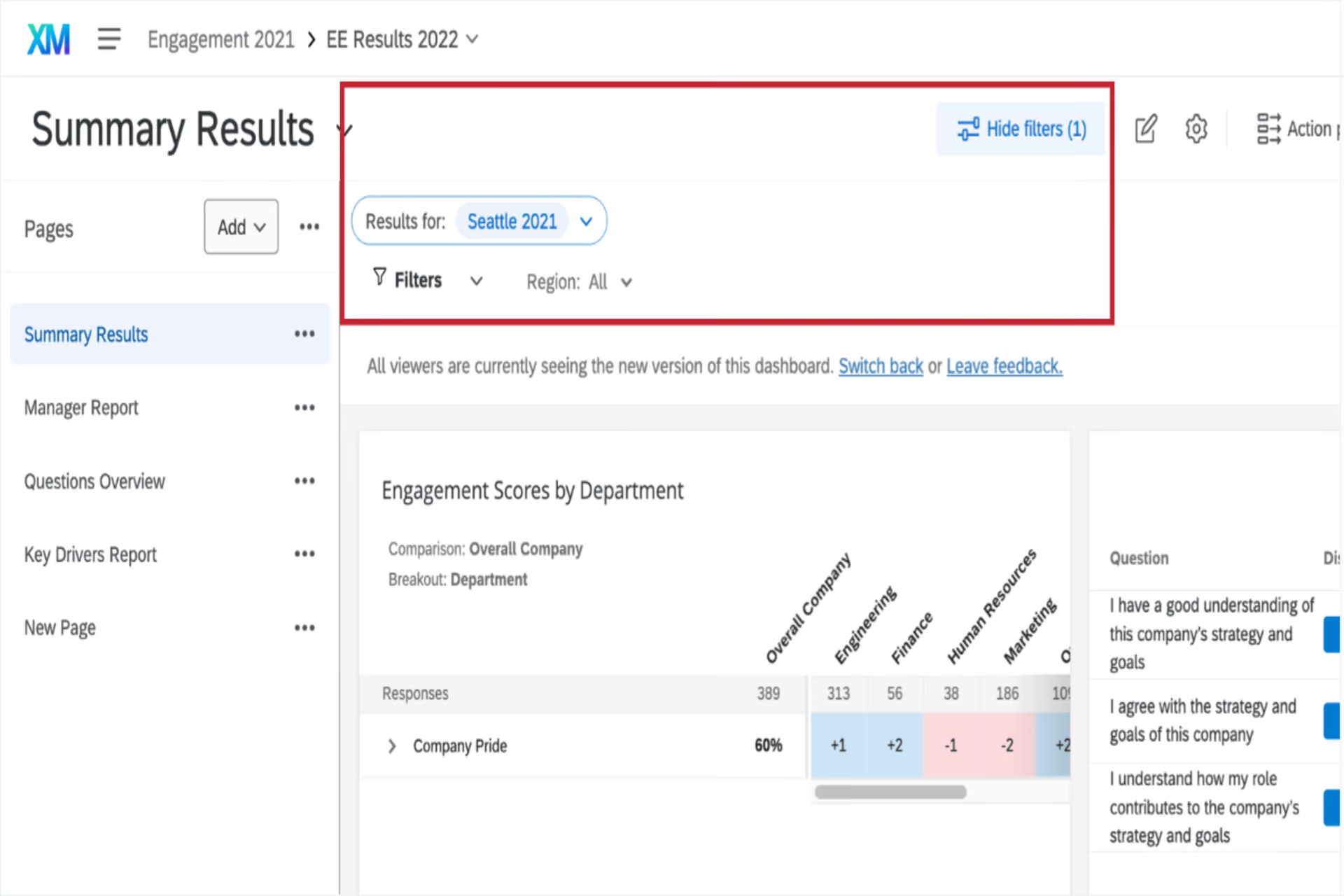
Qualtrics XM is a leading experience management platform. The software extends beyond survey creation to support customer, employee, brand, and product experience programs.
It excels at collecting structured feedback and delivering advanced analytics, reporting, governance, and compliance capabilities. It’s a strong choice for enterprises running survey-driven experience management initiatives.
Standout Features
- Survey Library: Designs 200+ survey question types with advanced logic
- iQ Analytics: Categorizes topics, assigns sentiment scores, and evaluates customer effort
- XM Directory: Centralizes customer records and custom metadata
- Cross-XM Analytics: Unified dashboards connecting CX, EX, product data, and research
Pricing
Custom enterprise pricing
Core Strength
Industry-leading survey and research capabilities
Biggest Con
Steep learning curve and lengthy implementation timeline
Best For
Organizations running sophisticated survey-based experience programs
G2 Rating
4.3/5
5. InMoment
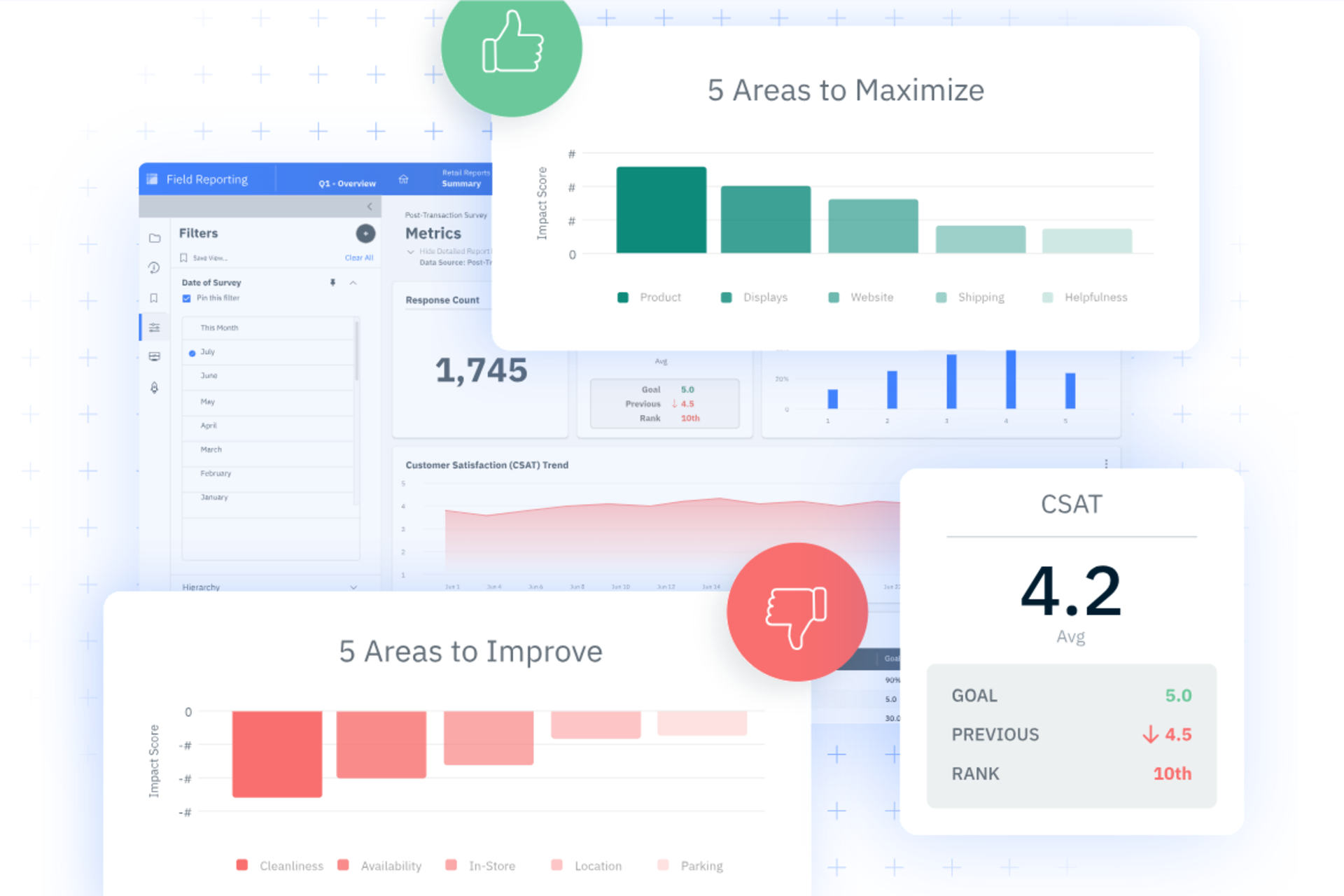
InMoment empowers organizations to enhance customer experiences through feedback, analytics, and workflow management. The platform integrates Voice of Customer tools with employee and reputation management.
A consultative approach differentiates InMoment, offering both technology and strategic guidance. Service industries value InMoment for managing experiences across diverse physical and digital touchpoints.
Standout Features
- Text Analytics: AI-powered text analytics and sentiment detection across channels
- Case Management: Built-in closed-loop case management workflows with routing and follow-up
- Review Management: Reputation management across review platforms
- Speech Analytics: Conversational intelligence module for calls and chats
Pricing
Custom pricing
Core Strength
Broad experience improvement suite
Biggest Con
Text analytics shallow compared specialized feedback analytics platforms
Best For
Service-based organizations managing experiences across multiple locations
G2 Rating
4.7/5
6. Thematic
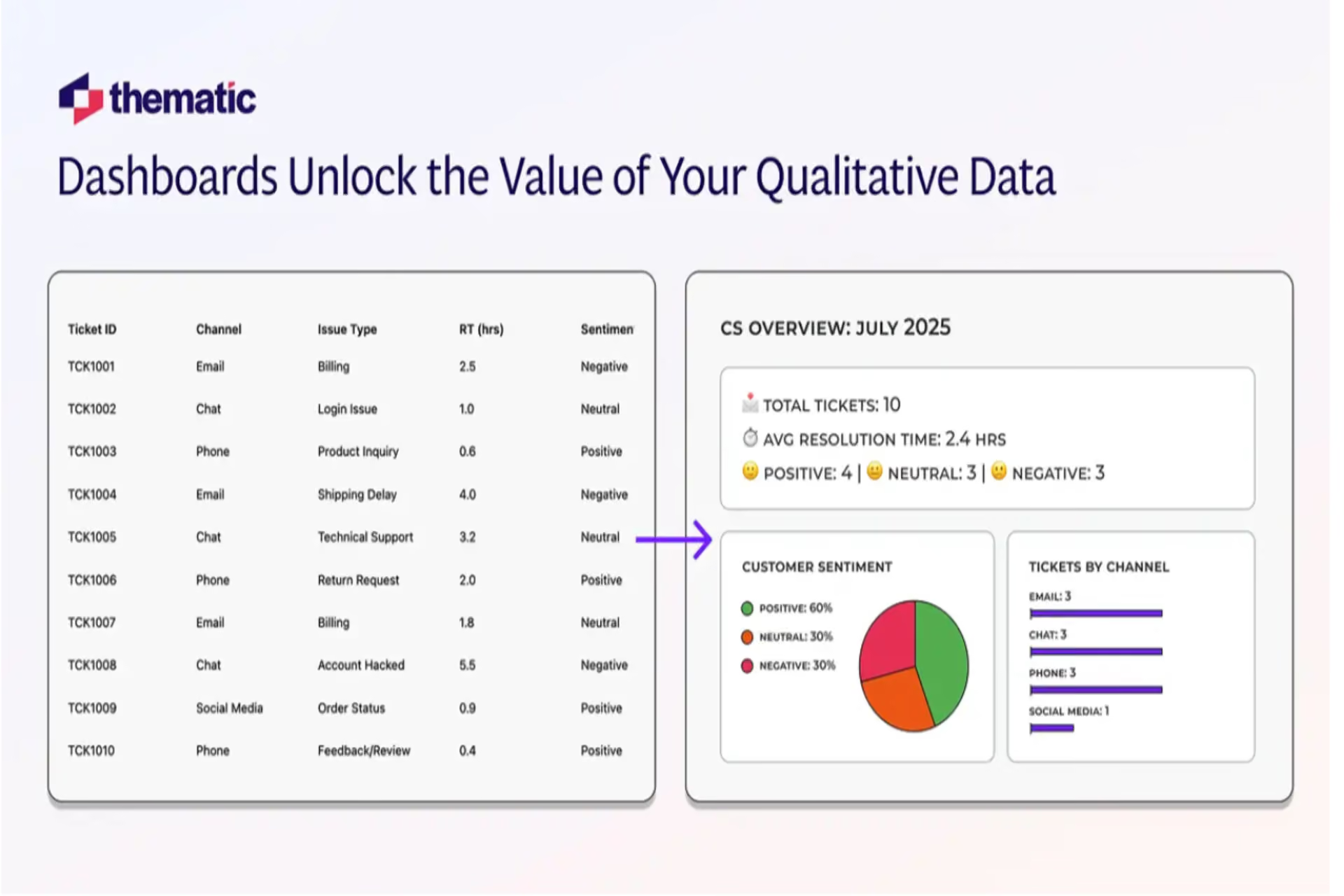
Thematic focuses on AI-driven feedback analytics, unlike broader experience suites. It helps organizations efficiently interpret large volumes of qualitative customer feedback. The platform identifies themes, uncovers trends, detects sentiment, and categorizes comments automatically.
Research and insights teams value Thematic for handling open-ended feedback at scale. Transparent pricing further distinguishes Thematic from many enterprise competitors.
Standout Features
- AI Theme Detection: Surfaces themes and emerging issues from customer language.
- Unified Feedback Sources: Combines surveys, tickets, calls, reviews, and social into one view
- Business Impact Scoring: Ranks feedback themes by their effect on NPS/CSAT
- Role-based Insights: Tailors views for product, operations, and CX teams from the same data.
Pricing
From approximately $25,000 per year
Core Strength
Excellent qualitative theme discovery
Biggest Con
Smaller customer feedback ecosystem than broader enterprise suites
Best For
Customer insights, research, and analytics teams
G2 Rating
4.8/5
7. Sprinklr
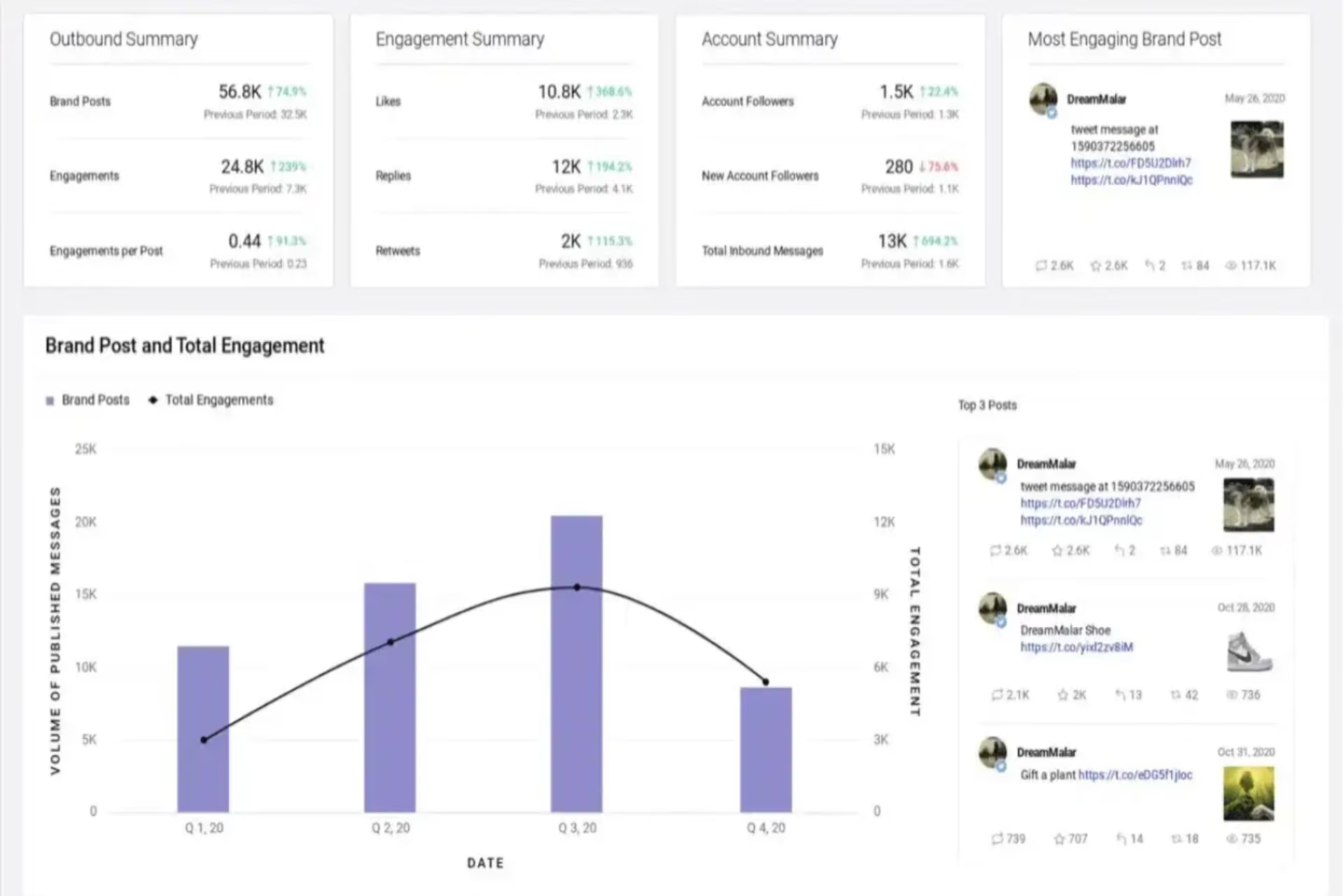
Sprinklr takes a social-first approach to customer feedback management. The platform combines social listening, customer service, marketing, and customer intelligence into a single platform.
It gives brands deep visibility into customer conversations across social and digital channels. While it supports broader CX programs, its core strength is social listening and digital customer intelligence.
Standout Features
- Unified-CXM Architecture: Combines marketing, service, sales, and social into one platform
- AI-powered Insights: Extracts intelligence from millions of conversations across channels
- Real-time feedback Analysis: Captures and interprets customer sentiment instantly
- Cross-channel Listening: Monitors 30+ social and digital platforms for customer voice
Pricing
Custom pricing
Core Strength
Outstanding social feedback coverage
Biggest Con
Less specialized for traditional Voice of Customer programs
Best For
Consumer brands with large social and digital footprints
G2 Rating
4.2/5
What to Look for When Centralizing Customer Feedback
1. Source Coverage
Map your channels, then ask each vendor which it ingests natively. Breadth matters more than AI depth if the sources aren't there.
2. Integration Depth
Pre-built connectors to your helpdesk, survey tool, and data warehouse matter. A native integration beats a generic webhook every time.
3. Deduplication and Identity Resolution
One customer can have three signals in different channels. Ask vendors how they handle cross-channel identity matching so you're not analyzing duplicates.
4. Self-Serve Discovery
Non-technical users should be able to query the feedback corpus directly. No SQL, no analyst queue. Chattermill's Ask Lyra is a benchmark here.
5. Routing and Workflows
Look for automated theme-spike alerts, Jira/Slack integrations, and closed-loop case management.
Start Here: 3 Questions That Point You to the Right Platform
Answer these three questions to identify the right platform:
Question 1: Where does your feedback actually live?
Does your feedback live everywhere: surveys, tickets, reviews, calls, social, and none of it talks to the rest?
Then you need unification first.
That's Chattermill's core use case. If feedback is mostly surveys with a clean structure, Thematic is the answer. If social and digital dominate, that's Sprinklr.
Question 2: Who is your primary user and what will they do with the insights?
A product manager linking feedback to account ARR has different needs from a CX director making the business case to the CFO.
Enterpret is built for the former. Its Customer Context Graph is purpose-built for SaaS revenue analysis. Chattermill is built for the latter. Business Impact Mapping speaks directly to NPS, retention, and churn. Frontline teams which need daily operational signals should consider Medallia or InMoment.
Question 3: Do you need a platform or a program?
If you have a strong internal analytics function, Chattermill, Thematic, and Qualtrics XM all support a self-run programme. If you want a vendor who co-owns the outcome alongside you, both Chattermill and InMoment offer that consultative layer.
Chattermill goes deeper by pairing Lyra AI with hands-on guidance on operationalizing insights for five teams.
Qualtrics XM sits in between. It’s self-serve capable, with professional services available as complexity increases.
Stop Letting Feedback Slip Through the Cracks
There’s a huge gap between a spreadsheet of survey responses and an intelligent platform. The best tools unify every channel, explain root causes, and connect insights to revenue. They save hours, reduce churn, and build the case for CX investments that get executive sign-off.
Each platform here solves a real problem well. If your feedback is scattered and your analysts are drowning in manual work, Chattermill's unified analytics and Lyra AI are worth evaluating first.
Ready to see what centralized feedback analysis looks like in practice? Book a demo.
Centralizing Customer Feedback FAQ
1. What is customer feedback management software?
Customer feedback management software helps organizations collect, centralize, analyze, and act on customer feedback from multiple channels. These include surveys, reviews, support tickets, social media, call transcripts, and customer conversations.
The goal is to create a unified understanding of customer sentiment and priorities.
2. Which customer feedback management software is best for centralizing feedback?
Organizations looking to centralize feedback across surveys, support systems, reviews, social channels, and customer conversations often choose Chattermill. That’s because of its strong cross-channel analytics capabilities and AI-powered root-cause analysis.
The right platform ultimately depends on your specific use case, data sources, and organizational requirements.
3. What is the difference between customer feedback management software and survey software?
Survey software focuses primarily on collecting responses through questionnaires.
Customer feedback management software goes further by centralizing feedback from multiple channels, analyzing unstructured customer comments, identifying trends, and helping organizations act on insights.
Survey data is typically only one component of a broader customer feedback strategy.
4. How important are integrations?
Integrations are critical.
Without integrations, feedback remains fragmented across systems. This makes it difficult to identify recurring issues and understand the complete customer journey.
The best customer feedback management software provides native integrations with:
- Survey tools
- CRM systems
- Help desks
- Communication platforms
- Business intelligence solutions
5. Can AI analyze customer feedback automatically?
Yes.
Modern customer feedback management platforms use artificial intelligence and natural language processing to automatically:
- Identify themes and topics
- Detect sentiment
- Categorize customer comments
- Surface emerging trends
- Highlight root causes
- Generate summaries and recommendations
AI dramatically reduces the manual effort required to analyze large volumes of customer feedback. It also helps organizations uncover hidden insights.


See Chattermill in action on your own feedback
Book a demo


