


9 Best Thematic Alternatives for CX Teams in 2026


The CX intelligence
platform that's AI-native by design
Book a demoQuick Summary
This guide compares nine Thematic alternatives for customer feedback analytics, featuring Chattermill, along with Enterpret and Medallia. We cover features, pricing, pros, cons, and ideal use cases for CX leaders, product teams, and VoC managers.
Is Your Feedback Analytics Tool Showing You the Full Picture?
Thematic has built a strong reputation for turning open-ended customer feedback into structured themes using AI. The platform works well for teams that need to make sense of survey comments, reviews, and NPS responses.
But many organizations hit limits as they scale. Multi-source integration is narrow, tying themes to business outcomes like churn and revenue requires extra work, and accuracy can drop across languages and regions. For teams that need feedback analytics to drive decisions across the business, not just within one channel, those gaps add up fast.
Why Listen to Us?
At Chattermill, we analyze millions of customer feedback data points from multiple channels across five mega-regions every month. Global brands like Uber, HelloFresh, and H&M use our platform daily to turn fragmented feedback into decision-ready insights.
That experience has given us a clear view of where feedback analytics tools fall short.
Why Do People Look for Thematic Alternatives?
Thematic is a capable text analytics platform, but user feedback across G2 and Capterra points to gaps that grow as CX programs scale.
Limited Multi-Source Feedback Integration
Thematic works well with survey and review data, but has fewer native connectors for support tickets, call transcripts, and behavioral data. Teams with feedback scattered across many channels often need to supplement with other tools, which fragments insights instead of unifying them.
One Capterra reviewer flagged this directly:
"Additional would be to include Google or other Analytics data integration to provide confidence to marketers and executives in the organisation."
For teams pulling feedback from 8+ sources, these integration gaps mean insights stay siloed rather than forming a complete picture.
Shallow Business Impact Visibility
CX leaders need to connect feedback themes to metrics like churn, retention, and revenue to justify investments to executives. Thematic's theme detection is strong, but tying those themes to financial outcomes requires extra manual work.
As one G2 reviewer put it:
"Thematic's scoring mechanisms - especially the Impact score - are not easy to grasp. Leadership frequently asks how many points we might influence by taking certain actions, but I realize that in practice, it's not always that straightforward."
When your leadership team is asking how CX affects the bottom line, a scoring system that is hard to translate into business outcomes creates friction at the exact moment you need clarity.
Steeper Learning Curve for Non-Analysts
Setting up custom theme structures and configuring the platform often requires analytical expertise. This slows adoption for cross-functional teams in product and support who want to self-serve insights without relying on a dedicated analyst.
This shows up repeatedly in reviews. One G2 user wrote:
"It's a bit challenging for the initial setup. There are many ways to look at data and establishing your primary themes can be a bit challenging. It takes time to think through the best way to represent your data and its not something to just casually attempt. Early on, we had to tweak and re-tweak our setup."
A Capterra reviewer echoed the same point:
"It took us longer than we would have liked to 'train' the software in the initial setup phase. It also took a lot of 'hands on' time for us to fully appreciate the value the solution has and being able to share this knowledge with time poor customers so they can use the platform independently has been challenging at times."
For teams where product managers and support leads need to pull their own insights, that setup burden limits cross-functional adoption.
Top 9 Thematic Alternatives Compared
Here is a side-by-side look at all nine Thematic alternatives covered in this guide:
1. Chattermill
Chattermill is a customer experience intelligence platform that unifies fragmented feedback from every customer touchpoint.
Unlike Thematic, Chattermill focuses on explaining why experiences succeed or fail and how that directly affects revenue and retention. Its Lyra AI engine goes beyond surface-level theme detection to uncover granular root causes behind customer sentiment.
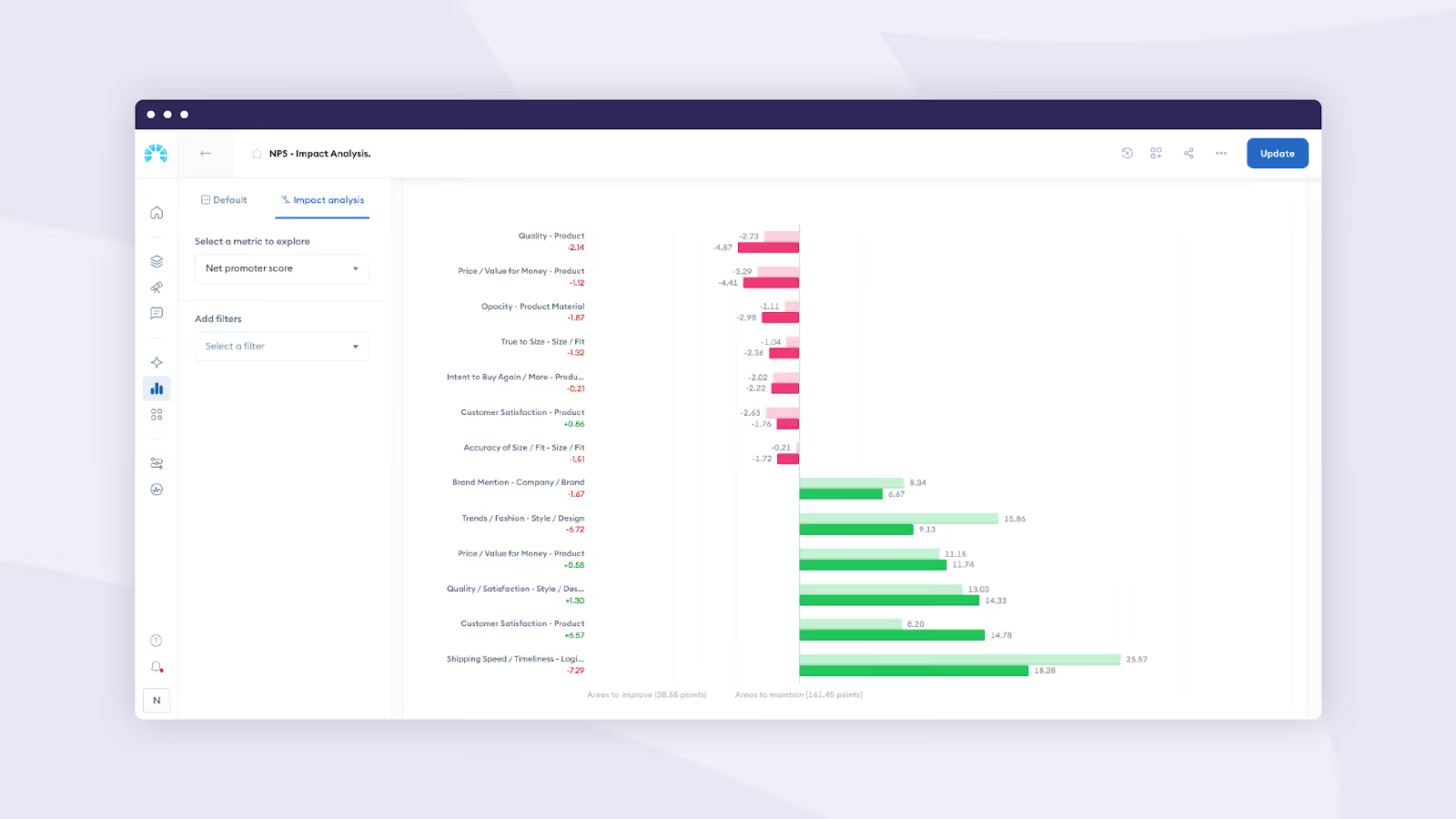
Chattermill helps companies with $100+ million in revenue connect customer and product feedback themes to key outcomes like retention, churn, and revenue. This gives CX teams the evidence to secure executive buy-in and prioritize initiatives based on business impact, not just sentiment scores.
Why Choose Over Thematic
Chattermill connects feedback themes directly to business metrics like churn, retention, and revenue out of the box, closing the business impact gap that Thematic users flag as a limitation. It also unifies more data sources natively and requires no analytical expertise to set up dashboards.
Key Features
- Unified Feedback Analytics: Analyze surveys, tickets, reviews, calls, and social feedback in one place
- Lyra AI Engine: Reveal granular themes and root causes behind customer sentiment
- Business Impact Mapping: Connect feedback directly to churn, retention, NPS, and revenue
- Speech Analytics: Transcribe calls and uncover insights from real customer conversations
- Product Experience Analytics: Help product teams prioritize features based on customer feedback signals
- Self-Serve Dashboards: Empower non-technical teams to build reports without analysts or IT support
Pricing
Custom pricing based on feedback volume, number of data integrations, and modules. No per-user fees.
Pros
- Best-in-class multi-source feedback unification
- Clear linkage between CX insights and business outcomes
- Proven at global enterprise scale (Uber, HelloFresh, H&M)
- Multilingual capability across 100+ languages
Cons
- No feedback collection capabilities
- Premium pricing that reflects enterprise-level positioning
Best For
CX, VoC, Product, and Support leaders who need defensible insights for executive decisions.
G2 Rating
4.5/5 (200+ reviews)
2. Enterpret
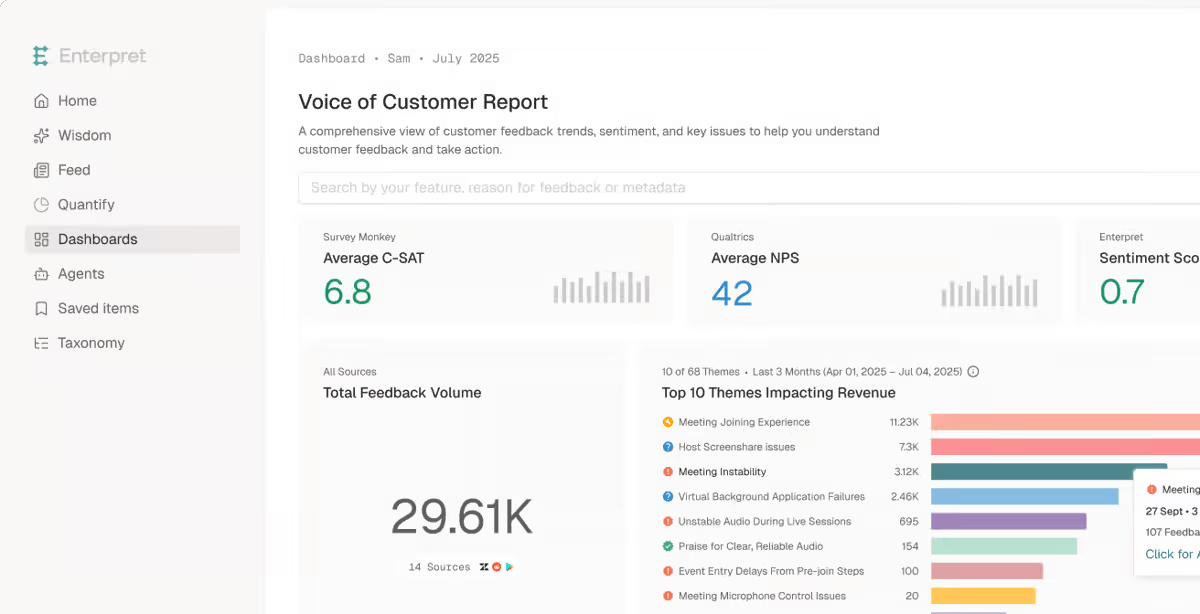
Enterpret is a customer feedback analytics platform built for product teams. It aggregates feedback from 50+ sources and uses custom AI models to surface trends and anomalies.
Compared to Thematic, Enterpret offers broader source integration and stronger product-focused analytics, though it is built for product decision-making rather than tying feedback to business outcomes like churn and revenue.
Why Choose Over Thematic
Enterpret's adaptive taxonomy builds and refines itself automatically as new feedback arrives, removing the manual theme setup that Thematic users consistently cite as a pain point. Its 50+ native integrations also give product teams a wider data foundation without needing workarounds.
Key Features
- Adaptive Taxonomy: Builds and refines a 5-level taxonomy that evolves as new feedback comes in
- Multi-Source Unification: Pull feedback from Zendesk, Gong, Intercom, app stores, and 50+ other sources into one view
- Anomaly Detection: Get real-time alerts when customer sentiment shifts or new issues emerge
- AI Agents: Automate detection, analysis, and alerting workflows across feedback channels
Pricing
Custom pricing based on data volume and number of integrations. No per-user fees.
Pros
- Strong product-focused feedback analytics
- Extensive integration library (50+ sources)
- Fast setup and time-to-value
- Unlimited user seats included
Cons
- Steeper learning curve for new users
- Weaker linkage between feedback and business outcomes like retention and revenue
Best For
Product-led teams centralizing feedback across many sources for data-backed product decisions. See how it compares to similar platforms in our guide to the best Enterpret alternatives.
G2 Rating
4.6/5 (50+ reviews)
3. Medallia
Medallia is a long-standing enterprise CX platform that integrates surveys, analytics, and workflow automation into a single ecosystem. Unlike Thematic, Medallia is better suited for large, complex organizations that need end-to-end experience management. However, it lacks the granular root cause analysis and business impact mapping that Chattermill provides.
![][image3]
Why Choose Over Thematic
Medallia offers built-in feedback collection, closed-loop workflows, and journey analytics in a single platform, removing the need to stitch together separate survey and analytics tools. For large enterprises running multi-touchpoint CX programs, that end-to-end coverage goes well beyond Thematic's text analytics focus.
Key Features
- Enterprise Survey Management: Collect structured feedback globally across customer touchpoints
- Text Analytics: Analyze open-text responses at enterprise scale using AI and NLP
- Journey Analytics: Map and measure customer experiences across channels and moments
- Closed-Loop Workflows: Automate alerts and action management to drive accountability at every level
Pricing
Custom enterprise pricing based on Experience Data Records (EDRs), which include all data associated with a single customer or employee interaction. No per-user fees.
Pros
- Enterprise-grade support and infrastructure
- Mature CX workflows with built-in action management
- Robust journey and experience tracking
- Named a Forrester Leader in VoC four consecutive times
Cons
- High cost relative to text-analytics-focused alternatives
- Long implementation and onboarding timelines
Best For
Large enterprises with complex, multi-touchpoint CX programs that need collection, analytics, and action management in one platform.
G2 Rating
4.5/5 (170+ reviews)
4. Qualtrics
Qualtrics is a widely adopted experience management platform that supports CX, EX, and PX use cases. Compared to Thematic, Qualtrics offers stronger survey design and distribution capabilities.
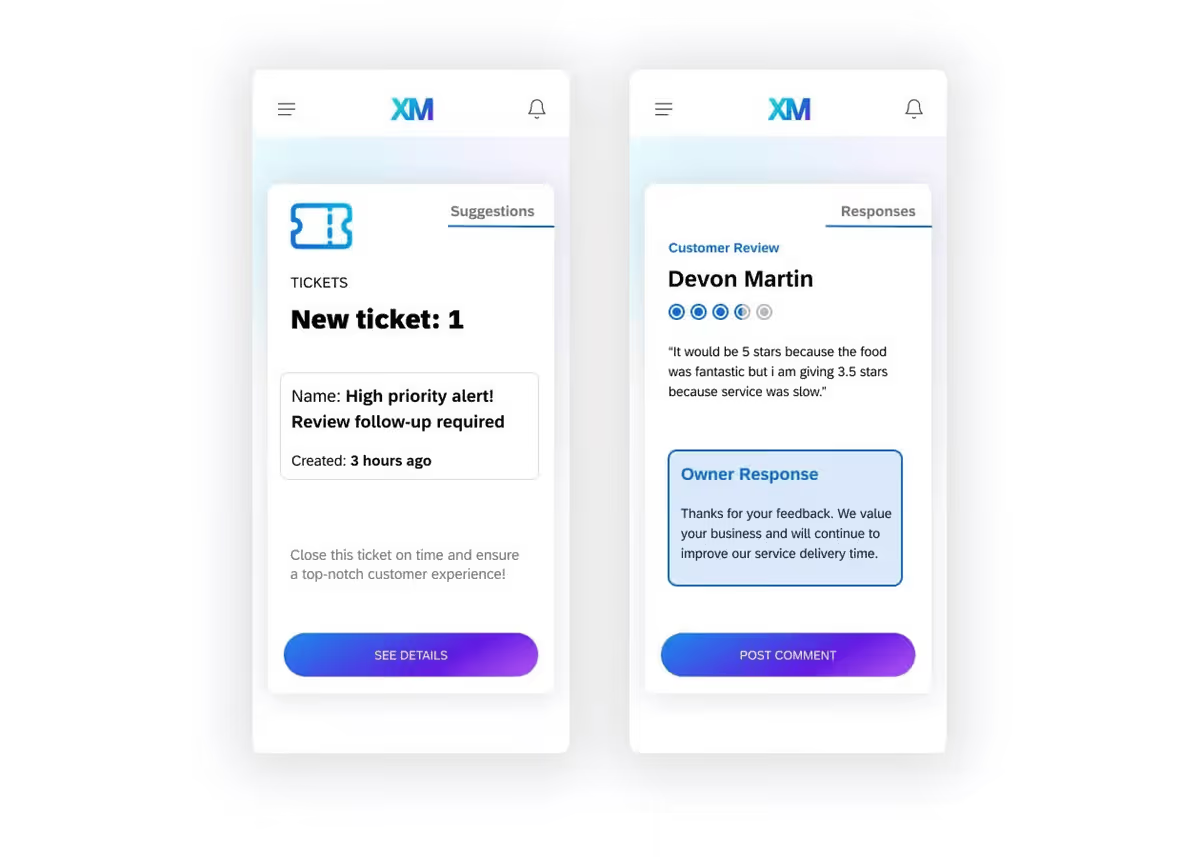
However, it remains survey-first and weaker outside of structured feedback, an area where platforms like Chattermill close the gap by unifying structured and unstructured data in one analytics layer.
Why Choose Over Thematic
Qualtrics gives teams full control over feedback collection with advanced survey logic, multi-language distribution, and built-in experience scoring. If your CX program needs to own the collection and analysis pipeline end to end, Qualtrics covers ground that Thematic's analytics-only approach does not.
Key Features
- Advanced Surveys: Build logic-driven, multi-language surveys with multiple question types
- Text iQ Analytics: Extract themes and sentiment from open-ended responses
- Experience Scoring: Track CX metrics consistently across customer journeys
- AI-Powered Suites: Automate insights, recommended actions, and workflows across CX, EX, and research programs
Pricing
Custom pricing based on interactions (survey responses, call records, chat conversations, emails, and other data records processed). Unlimited users included. Free plan available with up to 500 responses and 3 active surveys.
Pros
- Comprehensive experience management across CX, EX, and research
- Strong survey design and distribution tools
- Enterprise-ready analytics and governance
- Unlimited user seats on all paid plans
Cons
- Complex interface with a steep learning curve for new users
- Weak analysis of unstructured, non-survey feedback
Best For
Survey-heavy organizations with advanced research needs that want collection and analytics in one platform.
G2 Rating
4.4/5 (3,000+ reviews)
5. SentiSum
SentiSum is an AI-powered feedback analytics tool focused primarily on customer support data. It helps teams understand why customers contact support and which specific issues drive ticket volume.
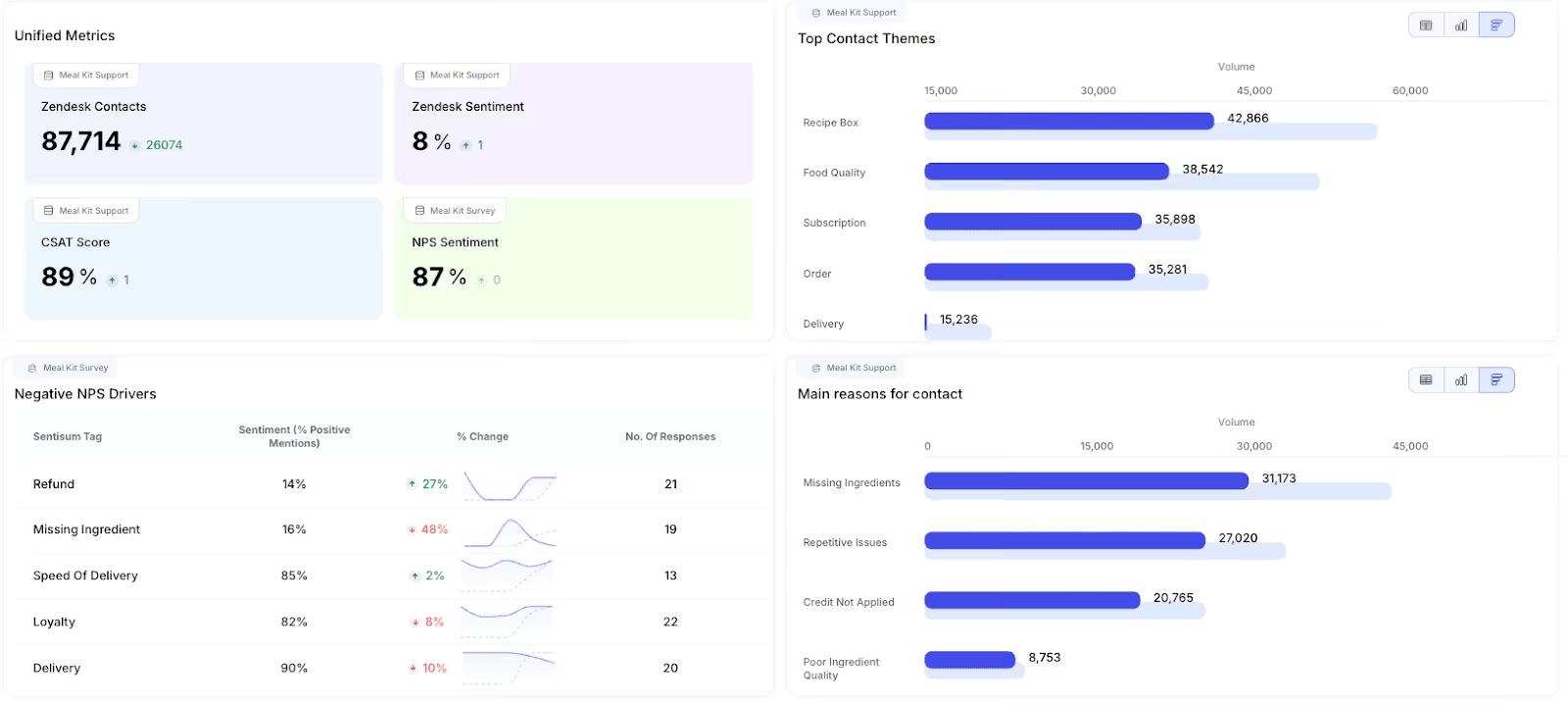
SentiSum goes deeper than Thematic on support-specific use cases, but its scope is narrower. Teams that need support insights unified with survey, review, and call data often pair SentiSum with broader platforms like Chattermill.
Why Choose Over Thematic
SentiSum is purpose-built for support ticket analysis with real-time tagging and triage, giving support and operations teams faster, more actionable insights than Thematic's broader but less support-specific approach. Its Kyo AI engine also trains custom models on your historical data rather than relying on generic categorization.
Key Features
- Automated Ticket Categorization: Tags support tickets by topic, intent, and sentiment in real time to eliminate manual effort
- Root Cause Analysis: Identifies the specific drivers behind rising contact volume and customer complaints
- Early Warning Agents: Flags anomalies like delivery delays, product bugs, or complaint spikes before they escalate into churn
- Insight Agents: Answer plain-English questions about your customer data with instant root causes and recommended actions
Pricing
Starts from $3,000/month. Scales based on the number of channels, users, and ticket volume. Free 2-week trial available.
Pros
- Powerful ticket analysis purpose-built for support teams
- Custom AI models trained on your historical data
- Quick implementation and time-to-value
- SOC 2 Type 2 certified and GDPR compliant
Cons
- Limited capabilities beyond support ticket analysis
- Weak business metric linkage to outcomes like retention and revenue
Best For
Support and operations teams aiming to reduce contact volume and understand the root causes behind customer complaints.
G2 Rating
4.8/5 (14 reviews)
6. Caplena
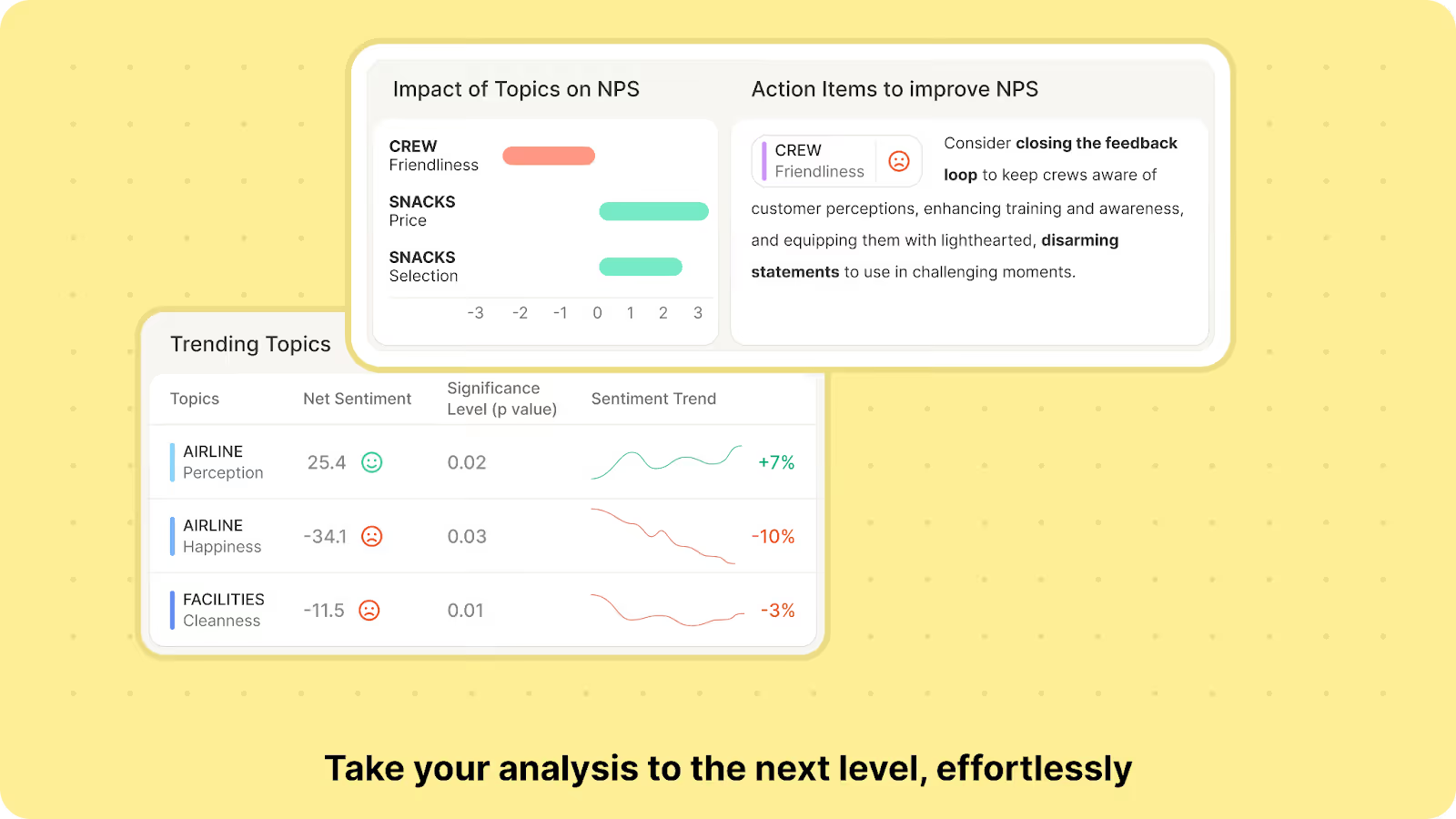
Caplena is a text analytics platform built for market research teams and CX professionals. It uses AI to code open-ended survey responses, reviews, and NPS feedback into structured themes.
Where Thematic focuses on automated theme detection, Caplena gives users more hands-on control over how the AI categorizes text, which appeals to research teams that want transparency and fine-tuning.
Why Choose Over Thematic
Caplena gives analysts direct control over how the AI codes text, with visible confidence scores and a fine-tuning workflow that learns from every correction. For research teams that need auditable, defensible results rather than black-box automation, that transparency is a step up from Thematic's more hands-off approach.
Key Features
- AI-Powered Text Coding: Categorize thousands of open-ended responses in minutes with AI you can fine-tune through prompts and manual corrections
- Topic-Level Sentiment Analysis: Differentiate between positive and negative mentions within the same response
- Multilingual Analysis: Analyze feedback across 100+ languages with consistent accuracy
- Insight Agent: Ask plain-English questions and get data-backed answers with auto-generated charts and summaries
Pricing
Three plans (Team, Enterprise, Agency) all priced on annual credit volume. Team plans include up to 50,000 credits/year. Enterprise starts at 50,000+ credits/year. Agency plans start from 20,000 credits/year. One credit equals one text response analyzed.
Pros
- Strong researcher control over AI categorization with visible quality scores
- High accuracy with fine-tuning capabilities that improve over time
- Effective multilingual support across 100+ languages
- Supports both continuous CX tracking and ad-hoc research projects
Cons
- More research-oriented than operational CX
- Smaller ecosystem compared to enterprise platforms like Medallia or Qualtrics
Best For
Market research teams and insights professionals who need transparent, fine-tunable text analytics with full control over how feedback is coded.
G2 Rating
4.6/5 (30+ reviews)
7. SurveyMonkey
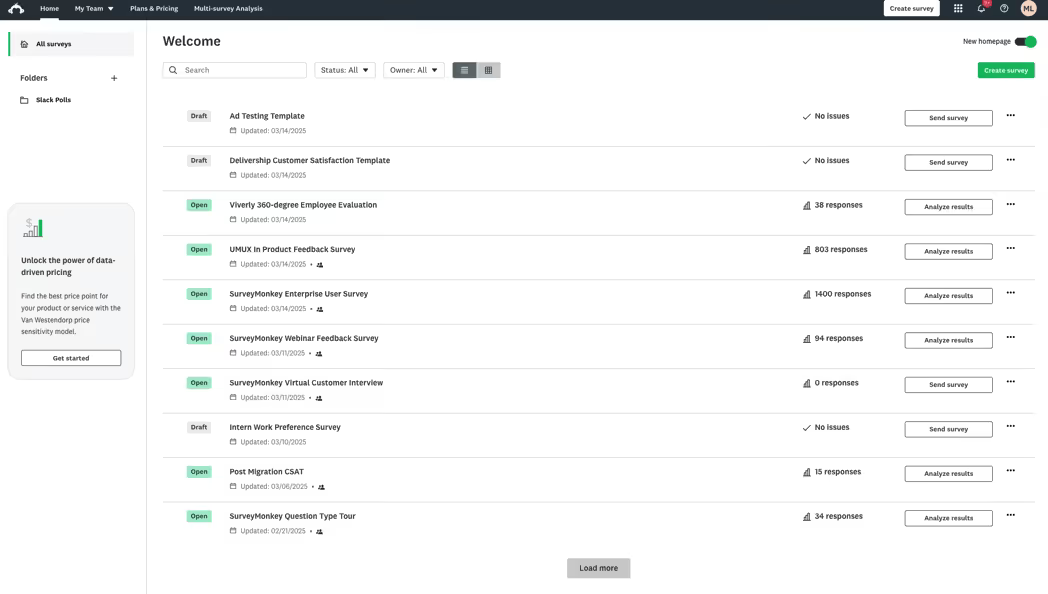
SurveyMonkey is one of the most widely recognized survey platforms, used by over 300,000 organizations worldwide. It offers tools for creating, distributing, and analyzing surveys across customer experience, employee engagement, and market research use cases.
Unlike Thematic, which focuses on analyzing unstructured feedback after collection, SurveyMonkey covers the full survey lifecycle from creation to basic analysis. That makes it a better fit for teams that need to collect and analyze structured feedback in one place.
Why Choose Over Thematic
SurveyMonkey gives teams end-to-end survey management that Thematic simply does not offer. If your primary need is collecting structured feedback (NPS, CSAT, CES) and analyzing it with built-in reporting, SurveyMonkey handles that without requiring a separate collection tool.
Key Features
- AI-Powered Survey Builder: Generate surveys from a text prompt, with smart question suggestions and automatic logic
- Real-Time Dashboards: Monitor responses as they come in with auto-generated charts, trend tracking, and cross-tab analysis
- Sentiment and Text Analysis: Premier plans include built-in text analytics to surface themes and sentiment from open-ended responses
- 200+ Native Integrations: Connect with Slack, HubSpot, Salesforce, Mailchimp, and more for automated distribution and data syncing
Pricing
Free plan available with limited features. Individual plans start at $39/month (Advantage Annual). Team plans start at $25/user/month (Team Advantage, minimum 3 users). Enterprise pricing available on request.
Pros
- Extremely easy to set up and use, even for non-technical teams
- Strong template library with proven survey types across industries
- Affordable entry point with a free plan and transparent pricing
- Large integration ecosystem for automating survey workflows
Cons
- Text analytics are basic compared to dedicated feedback intelligence tools
- Advanced features like skip logic and branding locked behind higher tiers
Best For
Teams that need an accessible, all-in-one survey tool for collecting structured feedback and running basic analysis without a dedicated analytics platform.
G2 Rating
4.4/5 (22,000+ reviews)
8. Birdeye
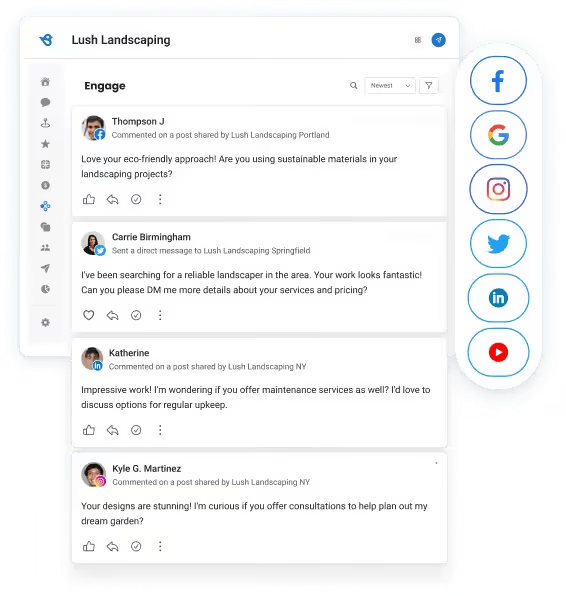
Birdeye is a reputation management and customer experience platform built for multi-location businesses. It combines review management, survey distribution, social media monitoring, and customer messaging into a single dashboard.
Where Thematic specializes in deep text analytics, Birdeye focuses on the operational side of CX: generating reviews, responding to feedback, and managing online reputation at scale.
Why Choose Over Thematic
Birdeye is purpose-built for businesses managing reputation and customer engagement across dozens or hundreds of locations. Its AI-powered agents automate review responses, survey distribution, and social media management at a scale that Thematic's analytics-first approach does not address.
Key Features
- AI Review Management: Automatically generate, monitor, and respond to reviews across 200+ sites with AI-powered response suggestions
- Surveys and NPS Tracking: Create and distribute customer surveys via email, SMS, and web, with real-time reporting and trend analysis
- Unified Messaging Inbox: Centralize customer conversations from web chat, SMS, social media, and email into a single view
- Competitive Benchmarking: Track your reputation and review performance against local competitors across key metrics
Pricing
Custom pricing based on the number of locations and solutions selected. Contact Birdeye for a personalized quote.
Pros
- All-in-one platform for reputation, social, surveys, and messaging
- Strong multi-location management with centralized dashboards
- AI agents automate review responses and customer engagement at scale
- Trusted by 200,000+ businesses with high G2 satisfaction ratings
Cons
- Less depth in unstructured feedback analysis than dedicated text analytics tools
- Primarily focused on local/multi-location businesses rather than enterprise product feedback
Best For
Multi-location businesses in healthcare, retail, real estate, and services that need to manage online reputation, customer reviews, and local engagement at scale.
G2 Rating
4.7/5 (3,100+ reviews)
9. Zonka Feedback
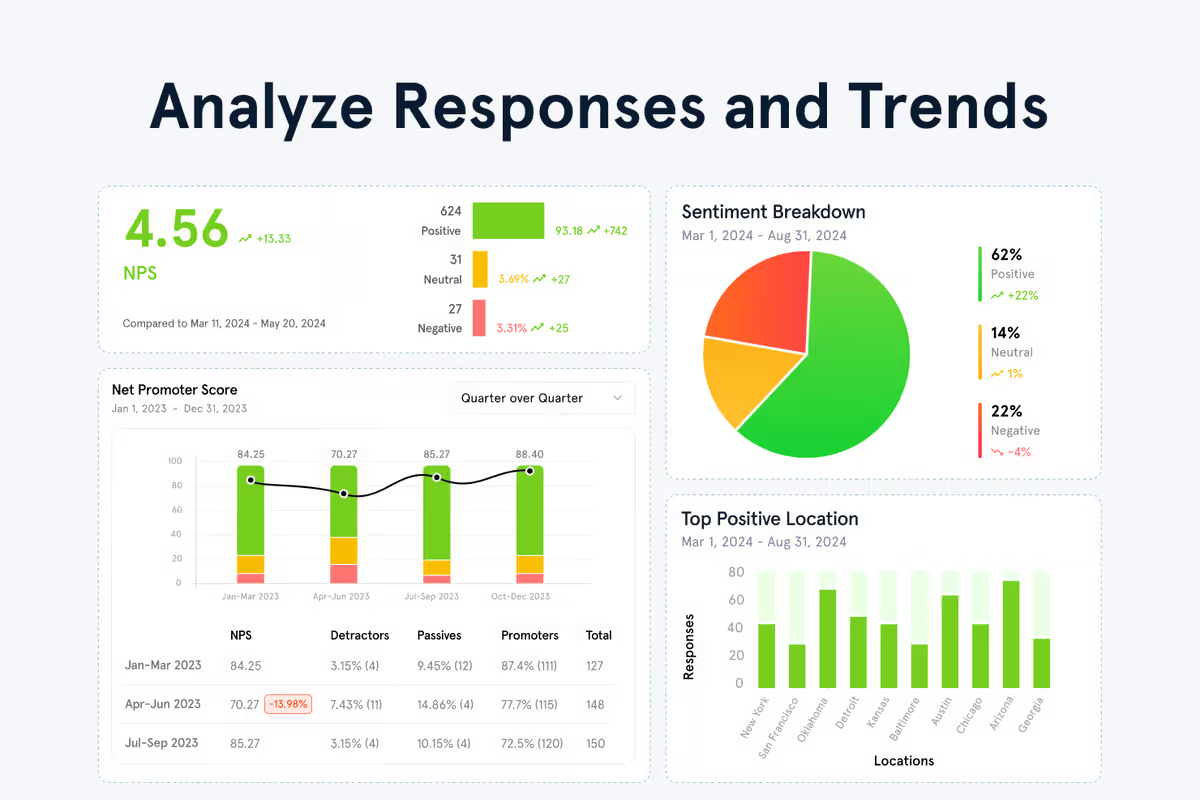
Zonka Feedback is a customer experience and survey platform that combines omnichannel feedback collection with AI-powered analytics. It covers the full feedback lifecycle from survey creation to insight generation and closed-loop follow-up.
Compared to Thematic's focus on theme detection in existing data, Zonka Feedback offers a broader toolkit that handles collection, analysis, and action in one platform, with a recently launched AI Feedback Intelligence module for deeper text analysis.
Why Choose Over Thematic
Zonka Feedback combines survey creation, real-time CX metrics, and AI-powered text analysis in a single platform. For teams that want feedback collection and analytics under one roof rather than piping data between separate tools, Zonka eliminates that integration overhead.
Key Features
- Omnichannel Survey Distribution: Collect feedback via email, SMS, WhatsApp, website widgets, in-app SDKs, and offline kiosks from a single platform
- AI Feedback Intelligence: Analyze open-text responses for themes, sentiment, entities, and emerging patterns with GenAI-powered analytics
- Closed-Loop Automation: Trigger follow-up workflows, assign tasks, and route negative feedback to the right team automatically
- Location and Agent Analytics: Compare CX performance across branches, teams, and individual agents with role-based dashboards
Pricing
Response-based pricing with separate plans for Feedback Management and AI Feedback Intelligence, available individually or bundled. 14-day free trial available. Contact Zonka for a custom quote.
Pros
- True omnichannel coverage including offline and WhatsApp surveys
- AI analytics available as an add-on without switching platforms
- Strong location-based and agent-based CX comparison tools
- Affordable entry point with high value-for-money ratings
Cons
- AI Feedback Intelligence module is a newer product, less mature than established text analytics platforms
- Smaller market presence and community compared to enterprise CX suites
Best For
Mid-market and growing businesses that need an all-in-one platform for collecting feedback across channels and analyzing it with AI, especially those with multiple locations or frontline teams.
G2 Rating
4.7/5 (100+ reviews)
Choose the Right Thematic Alternative for Unified Customer Feedback
For teams exploring Thematic alternatives, the biggest gap is often understanding why customers feel the way they do and connecting those insights to measurable business outcomes. Many tools detect themes but struggle to unify sources or adequately explain root causes.
Chattermill brings surveys, tickets, reviews, and calls together, using advanced AI to surface what matters most and quantify business impact. Book a demo with Chattermill to start unifying your scattered customer feedback and turning it into actionable insights.
Thematic Alternatives: FAQs
What is the best Thematic alternative for enterprise CX teams?
Chattermill is the strongest fit for enterprise teams that need unified feedback with quantifiable business impact. It connects feedback themes directly to churn, retention, NPS, and revenue, closing the gap that Thematic users flag around tying insights to financial outcomes.
What's the difference between Thematic and Chattermill?
Thematic focuses on turning open-ended feedback into structured themes, but tying those themes to business outcomes like churn and revenue requires extra manual work. Chattermill connects feedback themes directly to business metrics out of the box and unifies more data sources natively, including tickets, calls, and reviews alongside surveys.
Is Thematic difficult to set up?
Some users report a learning curve when configuring custom theme structures. One G2 reviewer described needing to "tweak and re-tweak our setup" early on, and a Capterra reviewer noted it "took us longer than we would have liked to 'train' the software in the initial setup phase."
Which alternative is best for support-led teams?
SentiSum is purpose-built for support ticket analysis, with real-time tagging and root cause analysis for contact center data. It goes deeper on support use cases than Thematic but has a narrower scope, so teams needing broader coverage often pair it with a platform like Chattermill.
Are there Thematic alternatives with built-in feedback collection?
Yes. Medallia, Qualtrics, SurveyMonkey, and Zonka Feedback all include native survey collection alongside analytics, while Thematic and Chattermill focus on analyzing feedback rather than collecting it. If you need both collection and analysis in one platform, those four are better starting points.
How do I connect feedback themes to business metrics like churn or revenue?
This is the gap most cited by teams leaving Thematic. Chattermill is built to map feedback directly to churn, retention, NPS, and revenue, while other theme-detection tools typically require additional manual analysis to draw that connection for leadership.


See Chattermill in action on your own feedback
Book a demo


