


12 Best Customer Satisfaction Software Tools Compared in 2026


The CX intelligence
platform that's AI-native by design
Book a demoQuick Summary
Most teams already track CSAT scores. The harder question is whether your tools can tell you why scores change and what to do about it. We reviewed 12 best customer satisfaction software platforms across AI depth, survey flexibility, integrations, and pricing to help CX leaders move from score-watching to root-cause action. Chattermill is the strongest option for AI-powered feedback analytics at enterprise scale, turning unstructured data into root-cause insights. Medallia is best for large organizations that need end-to-end experience management across every touchpoint. Zonka Feedback is ideal for multi-location businesses that need CSAT capture across physical and digital touchpoints.
Before we get into the detailed comparisons, here are our top three picks:
| Tool | Best For |
|---|---|
| Chattermill | AI-driven feedback analytics and root-cause analysis at scale |
| Medallia | End-to-end experience management for global enterprises |
| Zonka Feedback | Multi-location CSAT across physical and digital touchpoints |
Why Listen to Us
Chattermill processes millions of customer feedback data points each month for enterprise brands including Uber, HelloFresh, and H&M. Our team works in the trenches of customer satisfaction analytics every day, and that depth of experience across the feedback analytics category informs every selection in this guide.
What Is Customer Satisfaction Software?
Customer satisfaction software is a category of tools that helps businesses measure, analyze, and act on how customers feel about their products, services, and overall experience. These platforms collect feedback through surveys, reviews, support interactions, and social channels, then translate that data into metrics like CSAT (Customer Satisfaction Score), NPS (Net Promoter Score), and CES (Customer Effort Score).
Think of it like the difference between a thermometer and a diagnostic lab. A basic survey tool gives you the temperature: your CSAT dropped two points. A modern satisfaction platform runs the full diagnosis, identifying the specific themes, channels, and customer segments driving that change so your team knows exactly where to intervene.
So what separates a tool that collects scores from one that actually tells you why they changed? The answer is AI-powered analytics. The best customer satisfaction platforms use natural language processing to identify themes, detect sentiment shifts, and surface root causes behind declining or improving satisfaction. CX teams, product managers, and VoC analysts can move from reactive reporting to proactive decision-making, addressing issues before they erode loyalty or revenue.
Why does it matter now more than ever? Customer expectations are rising, feedback channels are multiplying, and the volume of unstructured data (reviews, chat transcripts, open-text survey responses) has outpaced what any team can manually analyze. The right customer satisfaction software turns that signal into action, connecting feedback insights to measurable business outcomes like retention, churn reduction, and lifetime value growth.
12 Top Customer Satisfaction Tools: Head-to-Head Comparison
| # | Tool | Best For | AI/NLP Depth | Survey Types (CSAT/NPS/CES) | Omnichannel Support | Key Integrations | Pricing | G2 Rating |
|---|---|---|---|---|---|---|---|---|
| 1 | Chattermill | AI-powered feedback analytics at scale | Deep (Lyra AI engine, root cause analysis, 100+ languages) | All three via integrations | Yes (90+ sources) | Zendesk, Trustpilot, Qualtrics, Salesforce, Intercom | Custom | |
| 2 | Medallia | End-to-end enterprise experience management | Advanced (AI-driven text analytics) | All three (native) | Yes (digital, contact center, in-store) | Salesforce, ServiceNow, Adobe, SAP | Custom | |
| 3 | Zonka Feedback | Multi-location CSAT across physical and digital touchpoints | Moderate to strong (themes, theme-level sentiment, impact scoring) | All three (native) | Yes (email, web, in-app, SMS, WhatsApp, kiosk, offline) | Zendesk, Intercom, Salesforce, HubSpot, Slack | From $199/month | |
| 4 | Qualtrics XM | Research-grade survey design and CX analytics | Advanced (iQ suite, predictive intelligence) | All three (native) | Yes (email, web, SMS, in-app) | Salesforce, SAP, Slack, Marketo | Custom | |
| 5 | Zendesk | Support-centric CSAT tracking | Moderate (AI-assisted ticket analysis) | CSAT, NPS (native) | Yes (email, chat, phone, social) | Salesforce, Slack, Shopify, Jira | From $19/agent/month | |
| 6 | HubSpot Service Hub | CRM-integrated customer feedback | Basic (sentiment tagging) | CSAT, NPS, CES (native) | Yes (email, chat, phone, forms) | HubSpot CRM, Slack, Jira, Salesforce | From $15/seat/month | |
| 7 | Survicate | Lightweight multi-channel surveys | Basic (text analysis dashboards) | CSAT, NPS, CES (native) | Yes (email, web, in-app, mobile) | HubSpot, Intercom, Salesforce, Slack | From £89/month | |
| 8 | Typeform | Engaging, conversational survey design | Minimal | CSAT, NPS (template-based) | Limited (web, email) | Zapier, HubSpot, Slack, Google Sheets | From $28/month | |
| 9 | SurveyMonkey | Accessible survey creation and benchmarking | Basic (sentiment analysis add-on) | CSAT, NPS, CES (templates) | Moderate (email, web, link sharing) | Salesforce, HubSpot, Slack, Microsoft Teams | From $25/month | |
| 10 | Freshdesk | Budget-friendly support desk with CSAT | Minimal (Freddy AI for tickets) | CSAT (native) | Yes (email, chat, phone, social) | Salesforce, Slack, Shopify, Jira | Free + From $29/agent/month | |
| 11 | Hotjar | Behavioral feedback and on-site surveys | Minimal | NPS, open-text surveys | Limited (web only) | Google Analytics, Slack, Zapier, HubSpot | Free + From $39/month | |
| 12 | Intercom | Conversational feedback within support flows | Moderate (Fin AI for resolution analysis) | CSAT (in-conversation) | Yes (chat, email, in-app) | Salesforce, HubSpot, Slack, Stripe | From $39/seat/month |
How We Evaluated These Tools
Choosing the best customer satisfaction software requires looking beyond feature checklists. Here are the criteria we used to evaluate and rank these 12 tools:
AI and NLP Analytics Depth. We assessed how deeply each platform can analyze unstructured feedback. Tools that offer root-cause analysis, theme extraction, and multilingual sentiment detection scored highest, while those limited to basic keyword tagging scored lower.
Feedback Channel Coverage. Customer feedback lives everywhere: surveys, reviews, support tickets, social media, and chat transcripts. We prioritized platforms that can ingest and unify data from multiple channels rather than relying on a single source.
CSAT, NPS, and CES Measurement. The best tools support all three core satisfaction metrics natively or through tight integrations. We evaluated flexibility in survey design, scoring methodologies, and the ability to benchmark results over time.
Integration Ecosystem. A customer satisfaction platform is only as useful as its connections to your existing tech stack. We looked at the breadth and depth of integrations with CRMs, helpdesks, analytics tools, and communication platforms.
Ease of Implementation and Use. Enterprise-grade analytics should not require a six-month implementation cycle. We considered onboarding complexity, time to first insight, and day-to-day usability for non-technical teams.
Pricing Transparency. We noted which vendors publish their pricing openly and which require sales conversations. Transparent pricing earned higher trust marks, though we recognize that custom enterprise pricing is standard for larger platforms.
G2 User Ratings. Independent peer reviews provide a reality check on vendor claims. We used verified G2 ratings (as of June 2026) as a signal of real-world user satisfaction and platform reliability.
1. Chattermill

Chattermill is an AI-native customer feedback analytics platform that transforms unstructured feedback from every channel into actionable root-cause insights for enterprise CX teams.
Unlike tools that stop at collecting survey scores, Chattermill focuses on the hardest part of the satisfaction equation: understanding why scores change. Its proprietary Lyra AI engine processes feedback from 90+ integrations, including Zendesk, Trustpilot, Qualtrics, Salesforce, and Intercom, analyzing sentiment, themes, and anomalies across 100+ languages. The platform processes over 100 million feedback data points monthly for customers including Uber, HelloFresh, and H&M.
What sets Chattermill apart is its business impact mapping. Rather than delivering dashboards full of charts that require interpretation, it ties feedback insights directly to business metrics like NPS, CSAT, churn, retention, and revenue. CX teams can see not just what customers are saying, but how those themes connect to the outcomes leadership cares about.
The Chattermill MCP (Model Context Protocol) feature brings customer intelligence directly into AI agents and workflows, making it possible to query and act on feedback data programmatically. This positions Chattermill at the forefront of the agentic AI era for customer experience.
Key Features
- Lyra AI Engine: Proprietary AI that performs deep root-cause analysis on unstructured feedback, identifying the specific drivers behind satisfaction shifts.
- Business Impact Mapping: Connects feedback themes directly to NPS, CSAT, churn, retention, and revenue metrics so teams can quantify the business value of CX improvements.
- Omnichannel Feedback Unification: Ingests data from 90+ integrations covering surveys, reviews, support tickets, social media, and chat, creating a single view of the customer voice.
- Multilingual Analysis: Analyzes feedback in 100+ languages without translation loss, enabling global teams to understand regional sentiment patterns.
- Chattermill MCP: Provides AI agent access to customer feedback data, allowing teams to build agentic workflows that query and act on VoC insights programmatically.
Pricing
Chattermill offers custom enterprise pricing tailored to feedback volume, data sources, and team size. Book a Demo to get a personalized quote and see the platform in action with a product tour.
Pros
- Deep AI-driven root-cause analysis goes far beyond surface-level sentiment scoring, revealing the specific issues driving satisfaction changes.
- Business impact mapping directly ties customer feedback to revenue, churn, and retention metrics, making it easy to build a business case for CX investment.
- Extensive integration ecosystem (90+ connectors) means teams can unify feedback without migrating away from existing tools.
Cons
- Custom pricing means smaller teams need to engage sales to evaluate cost, which can slow the initial evaluation process.
- The platform's depth is built for enterprise scale; teams processing small volumes of feedback may not fully leverage its analytics capabilities.
G2 Rating
Chattermill G2 Score: 4.5/5
Who It's For
Enterprise CX, insights, and product teams that need to unify high-volume, multi-channel feedback and turn it into business-impact insights.
2. Medallia

Medallia is an enterprise experience management platform that captures and analyzes customer and employee signals across every touchpoint to drive organization-wide experience improvements.
Medallia's strength is its breadth. It covers the full experience lifecycle: digital, contact center, in-store, and employee experience, all on a single platform. Its AI-driven text analytics can process large volumes of unstructured data, and its action management workflows help teams close the loop on individual customer issues.
For large, multi-division organizations that need a single system of record for experience data, Medallia is a strong contender. However, that breadth comes with complexity. Implementation timelines tend to be longer, and the platform requires dedicated resources to manage effectively. See our Chattermill vs Medallia comparison for a detailed breakdown.
Key Features
- Real-Time Signal Capture: Collects feedback across digital, contact center, in-store, and social channels in real time.
- AI-Powered Text Analytics: Analyzes open-text feedback to identify themes and sentiment at scale.
- Action Management: Built-in workflows for routing and resolving individual customer issues based on feedback signals.
- Role-Based Dashboards: Configurable reporting for different stakeholders from frontline teams to the C-suite.
- Employee Experience Module: Extends the same analytics framework to internal employee feedback.
Pricing
Medallia uses custom enterprise pricing based on the number of signals captured, modules deployed, and user seats. Contact their sales team for a quote.
Pros
- Comprehensive end-to-end experience management covering customer, employee, and digital experience on one platform.
- Strong action management capabilities that help teams close the loop on individual feedback cases.
- Enterprise-grade scale and security suited for large, global organizations.
Cons
- Implementation can be complex and time-intensive, often requiring dedicated internal resources or consulting support.
- The platform's breadth means some modules may go underutilized if the organization only needs CSAT-focused analytics.
G2 Rating
Medallia G2 Score: 4.5/5
Who It's For
Large enterprises that need a unified experience management platform across customer, employee, and digital touchpoints.
3. Zonka Feedback

Zonka Feedback is a CSAT platform that covers digital and physical touchpoints in the same account, which is where it separates from the survey tools further down this list. Alongside email, website, and in-app surveys, it runs on tablets and kiosks in offline mode, so a store, clinic, or branch can capture satisfaction at the counter and sync when the connection returns.
Survey building follows the pattern CX teams expect, with CSAT, NPS, and CES templates, branching logic, white-labelling, and multilingual versions. Results flow into role-based dashboards with real-time alerts, and workflows can route a low score straight to the owning team.
Where it goes further than most tools at this price is the AI Feedback Intelligence layer, which reads the comment behind the score. It groups verbatims into themes, assigns sentiment at theme level, attributes each theme to a location, agent, or product, and scores its effect on the CSAT number. Teams needing deeper root-cause work across support tickets, calls, and social alongside surveys will still want a dedicated analytics platform.
Key Features
- Offline and Kiosk Surveys: Tablet and kiosk capture that works without a connection and syncs later, built for frontline locations.
- CSAT, NPS, and CES Templates: Pre-built question sets with branching logic, white-labelling, and multilingual versions.
- AI Thematic and Sentiment Analysis: Themes, sub-themes, and theme-level sentiment extracted from open-text CSAT comments.
- Impact Analysis: Scores how much each theme moves the CSAT result, ordering fixes by measured effect.
- Workflows and Alerts: Real-time routing of low scores to the right owner via Slack, Teams, email, or a connected helpdesk.
Pricing
Feedback Management starts at $199/month and AI Feedback Intelligence at $999/month, both now quoted to volume. A 14-day free trial is available.
Pros
- Covers in-person and digital CSAT capture in one tool, including offline kiosks.
- AI theme and impact analysis is more than most platforms at this price offer.
- Strong helpdesk and CRM integrations for pushing scores into existing workflows.
Cons
- The AI layer is a separate tier at a materially higher price than the base plan.
- No native call or social analysis, so those channels need another source.
- Analytics depth trails dedicated platforms when feedback spans many non-survey channels.
G2 Rating
Zonka Feedback G2 Score: 4.7/5
Who It's For
Mid-market and multi-location businesses that need CSAT capture across physical and digital touchpoints, with enough AI analysis to explain the scores without a separate analytics vendor.
4. Qualtrics XM
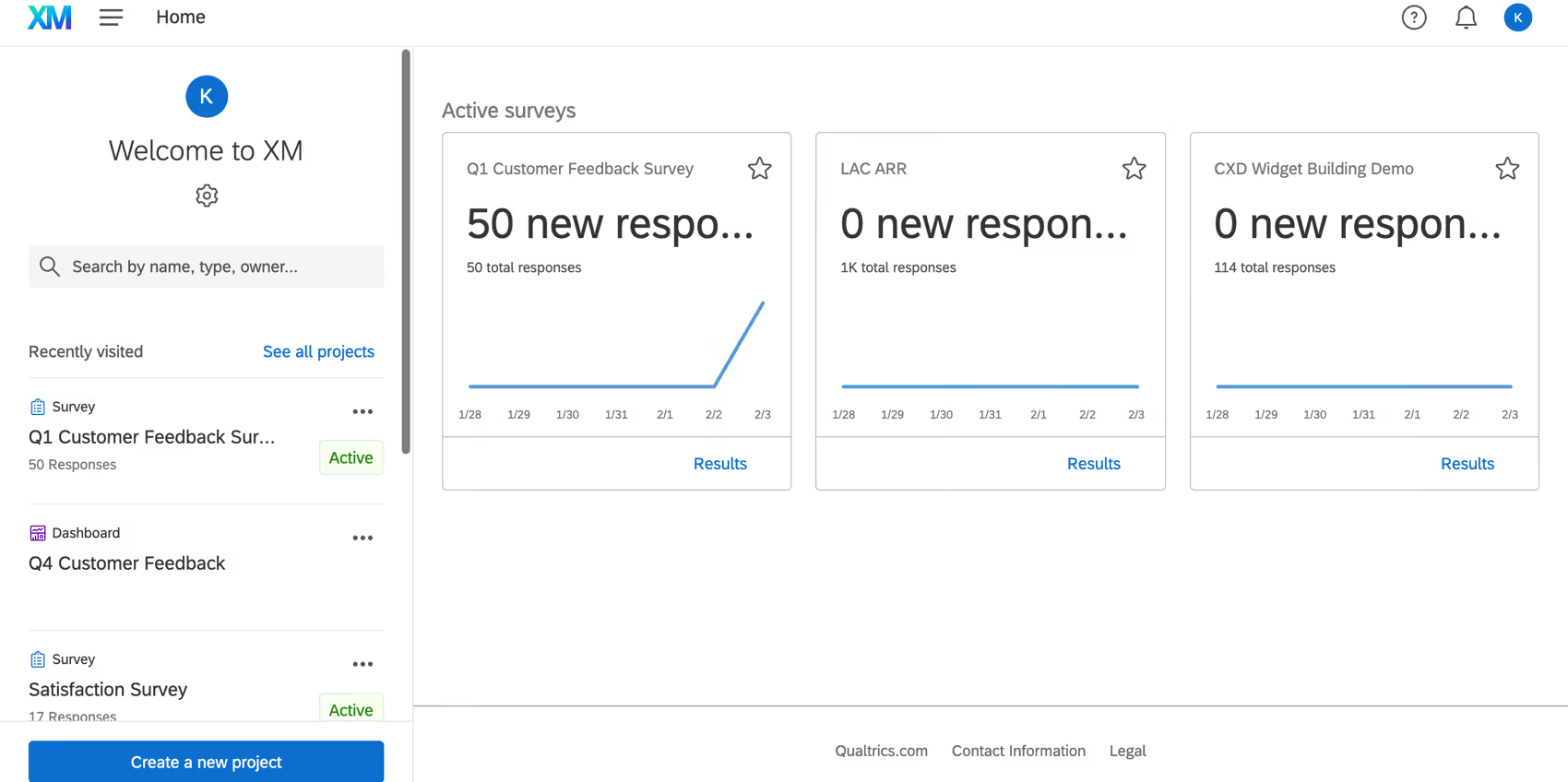
Qualtrics XM is a research-grade experience management platform that combines advanced survey design with predictive analytics to help organizations measure and improve customer satisfaction at scale.
Qualtrics is the platform of choice for organizations with mature research capabilities. Its survey builder is the most flexible in this category, supporting complex logic, branching, and experimental design. The iQ suite adds predictive intelligence, statistical analysis, and driver analysis on top of collected data.
Where Qualtrics excels is in depth of analysis for structured survey data. Where it's less differentiated is in analyzing unstructured feedback from non-survey channels, a gap that platforms like Chattermill fill more effectively. For a deeper comparison, see our Qualtrics alternatives guide.
Key Features
- Advanced Survey Builder: Supports complex logic, branching, quotas, and experimental design for rigorous research.
- iQ Predictive Intelligence: Automated statistical analysis, key driver identification, and predictive modeling on survey data.
- XM Directory: Centralized contact and experience data management for personalized survey distribution.
- Text iQ: NLP-based analysis of open-text survey responses to identify themes and sentiment.
- Benchmarking: Compare your scores against industry benchmarks to contextualize CSAT and NPS performance.
Pricing
Qualtrics XM uses custom pricing based on response volume, modules, and user seats. Contact their sales team for a quote.
Pros
- The most powerful survey design tool in the category, ideal for teams with strong research methodology.
- iQ suite provides genuine predictive analytics and statistical rigor beyond what most competitors offer.
- Strong benchmarking capabilities help teams contextualize their scores within industry norms.
Cons
- Analyzing unstructured feedback from non-survey channels (reviews, support tickets, social) is less mature than dedicated analytics platforms.
- The learning curve can be steep for teams without a research or analytics background.
G2 Rating
Qualtrics XM G2 Score: 4.3/5
Who It's For
Research-driven CX teams and insights professionals who need advanced survey methodology and predictive analytics.
5. Zendesk
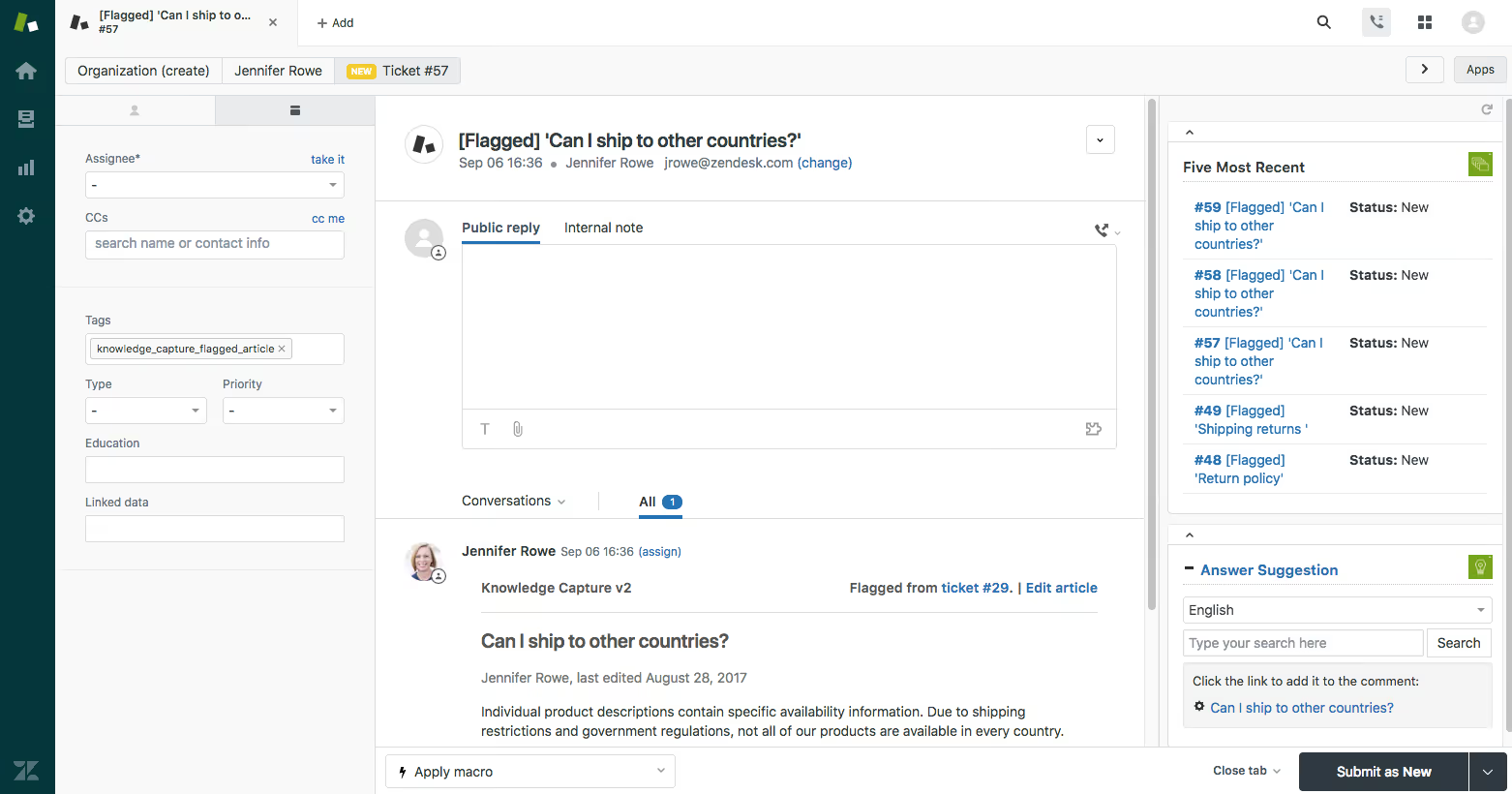
Zendesk is a customer service platform with built-in CSAT measurement that enables support teams to track satisfaction directly within their ticket resolution workflow.
Zendesk is not primarily a satisfaction analytics tool; it's a helpdesk with solid CSAT capabilities built in. For support-centric organizations, this means CSAT tracking happens naturally within the ticket lifecycle without requiring a separate tool. The platform's AI features assist with ticket routing and response suggestions, though its feedback analytics are more limited than dedicated CSAT platforms.
Key Features
- Post-Resolution CSAT Surveys: Automatically sends satisfaction surveys after ticket resolution, capturing feedback in context.
- AI-Assisted Ticket Analysis: Uses AI to categorize tickets, suggest responses, and identify trending issues.
- Omnichannel Support: Manages conversations across email, chat, phone, and social media in a unified agent workspace.
- Reporting Dashboards: Pre-built and custom dashboards for tracking CSAT trends, agent performance, and resolution metrics.
- Marketplace Integrations: Extensive app marketplace with 1,500+ integrations including Salesforce, Slack, and Shopify.
Pricing
Zendesk starts at $19/agent/month (Support Team plan). Higher tiers with advanced analytics and AI features are available at $55/agent/month and $115/agent/month.
Pros
- CSAT tracking is natively embedded in the support workflow, requiring no separate tool or integration for basic satisfaction measurement.
- Extremely broad integration ecosystem through the Zendesk Marketplace.
- Familiar interface for support teams already using Zendesk for ticket management.
Cons
- Feedback analytics are limited to support interactions; it does not analyze feedback from reviews, social media, or other non-ticket channels.
- Advanced AI analytics and root-cause analysis require third-party integrations (like Chattermill's support analytics) to supplement.
G2 Rating
Zendesk G2 Score: 4.3/5
Who It's For
Support teams that want CSAT tracking embedded directly in their existing helpdesk workflow without adding a separate analytics tool.
6. HubSpot Service Hub

HubSpot Service Hub is a CRM-integrated customer service platform that includes native CSAT, NPS, and CES survey tools for teams already invested in the HubSpot ecosystem.
HubSpot's approach to customer satisfaction is deeply tied to its CRM. Feedback data flows directly into contact records, making it easy to correlate satisfaction scores with customer lifecycle data like deal stage, revenue, and support history. This integration is a significant advantage for teams that use HubSpot as their single source of truth.
The trade-off is that HubSpot's feedback analytics are relatively basic compared to dedicated platforms. It excels at collection and CRM linkage, but teams needing deep thematic analysis or multilingual NLP will find it lacking.
Key Features
- Native CSAT, NPS, and CES Surveys: Built-in survey tools that can be deployed via email, chat, or web pages.
- CRM-Linked Feedback: Survey responses automatically attach to contact records, enabling lifecycle-correlated analysis.
- Service Analytics: Dashboards tracking customer satisfaction alongside support KPIs like response time and ticket volume.
- Automation Workflows: Trigger actions based on survey responses, such as routing detractors to retention teams.
- Knowledge Base Integration: Link satisfaction data to self-service content performance.
Pricing
HubSpot Service Hub starts at $15/seat/month (Starter plan). Professional and Enterprise tiers with advanced features are available at higher price points.
Pros
- Seamless CRM integration means feedback data enriches contact records automatically, connecting CSAT to revenue and lifecycle data.
- Easy to deploy for teams already using HubSpot for marketing, sales, or service.
- Competitive entry-level pricing for small and mid-market teams.
Cons
- Feedback analytics are surface-level compared to dedicated CSAT platforms, lacking deep thematic or root-cause analysis.
- Most valuable for organizations already in the HubSpot ecosystem; less compelling as a standalone satisfaction tool.
G2 Rating
HubSpot Service Hub G2 Score: 4.4/5
Who It's For
Mid-market teams already using HubSpot CRM who want to add satisfaction measurement without introducing a separate platform.
7. Survicate

Survicate is a lightweight, multi-channel survey platform that makes it easy for product and CX teams to deploy targeted CSAT, NPS, and CES surveys across websites, apps, and email.
Survicate's strength is speed of deployment. Non-technical users can launch surveys in minutes using pre-built templates and a visual editor. It supports in-app, website, email, and mobile surveys, making it a practical choice for teams that need flexible feedback collection without the complexity of enterprise platforms.
Analytics are functional but not deep. Survicate provides response dashboards and basic text analysis, but teams needing advanced NLP or root-cause analytics will outgrow it. See our Chattermill vs Survicate comparison for details on when to pair collection with analytics.
Key Features
- Multi-Channel Survey Deployment: Launch surveys on websites, in apps, via email, and on mobile devices from a single interface.
- Pre-Built Templates: Extensive library of CSAT, NPS, and CES survey templates designed for quick deployment.
- Targeting and Triggers: Set behavioral triggers to show surveys at the right moment based on user actions or page visits.
- Native Integrations: Connects with HubSpot, Intercom, Salesforce, and Slack to push feedback data into existing workflows.
- Response Analytics: Visual dashboards for tracking survey performance, response rates, and score trends over time.
Pricing
Survicate starts at £89/month (Good plan) with higher tiers available for larger volumes and advanced features.
Pros
- Very fast to deploy, with a visual editor and templates that let non-technical users launch surveys in minutes.
- Strong targeting and triggering options for showing surveys at contextually relevant moments.
- Solid integration options for pushing feedback data into CRMs and communication tools.
Cons
- Analytics capabilities are basic; teams needing deep thematic analysis or root-cause insights will need a complementary platform.
- Pricing can escalate quickly at higher response volumes.
G2 Rating
Survicate G2 Score: 4.6/5
Who It's For
Product and CX teams at mid-market companies that need to deploy targeted surveys quickly without heavy technical overhead.
8. Typeform

Typeform is a conversational form and survey platform known for its visually engaging, one-question-at-a-time design that drives higher completion rates for customer feedback collection.
Typeform is not a customer satisfaction analytics platform. It is a survey design tool that excels at the collection layer. Its conversational format reduces survey fatigue and tends to produce higher response rates, making it a popular choice for NPS and CSAT surveys when engagement is the primary concern.
For teams that need to analyze what they collect, Typeform's native analytics are minimal. Most users pair it with downstream tools (via Zapier or native integrations) to move responses into platforms with stronger analytics.
Key Features
- Conversational Design: One-question-at-a-time interface that creates an engaging respondent experience and improves completion rates.
- Logic Jumps: Conditional branching that personalizes survey paths based on previous answers.
- Visual Customization: Extensive branding and design options for creating on-brand survey experiences.
- Integration Hub: Connects with Zapier, HubSpot, Slack, Google Sheets, and other tools for downstream data routing.
- Templates Library: Pre-built CSAT, NPS, and feedback templates that can be deployed quickly.
Pricing
Typeform starts at $28/month (Basic plan). Business and Enterprise tiers are available for teams needing advanced features, integrations, and higher response volumes.
Pros
- Best-in-class survey design that produces genuinely engaging respondent experiences and higher completion rates.
- Strong visual customization means surveys can be fully on-brand.
- Easy to set up and deploy for non-technical users.
Cons
- Essentially a collection tool, not an analytics platform; teams need to pair it with downstream analytics tools to derive insights.
- Limited native reporting makes it unsuitable as a standalone customer satisfaction solution.
G2 Rating
Typeform G2 Score: 4.5/5
Who It's For
Teams that prioritize high survey response rates and engaging respondent experiences, and already have downstream analytics in place.
9. SurveyMonkey

SurveyMonkey is a widely adopted survey platform that offers accessible CSAT, NPS, and CES measurement with built-in benchmarking for teams that need a straightforward, self-serve feedback collection tool.
SurveyMonkey has been a category staple for years, and its ease of use remains a genuine differentiator. Teams can create and distribute surveys in minutes without any technical expertise. The platform includes benchmarking data that lets you compare your scores against industry averages, which adds context that many competitors lack.
Its analytics are adequate for basic needs but do not approach the depth of dedicated CSAT analytics platforms. For organizations with growing feedback complexity, SurveyMonkey often becomes the starting point that gets supplemented over time.
Key Features
- Survey Builder: Drag-and-drop builder with 250+ templates for CSAT, NPS, CES, and general feedback collection.
- Benchmarking: Compare your results against industry and global benchmarks to contextualize performance.
- Collaboration Features: Team-based survey creation with shared libraries, commenting, and approval workflows.
- Distribution Options: Share surveys via email, web link, social media, and embedded widgets.
- Basic Text Analysis: Sentiment analysis add-on for open-text responses.
Pricing
SurveyMonkey starts at $25/month (Team Advantage plan). Premier and Enterprise plans offer advanced analytics, integrations, and compliance features.
Pros
- Extremely easy to use, with a low learning curve that makes it accessible to anyone on the team.
- Built-in benchmarking adds valuable context to CSAT and NPS scores.
- Well-known and trusted platform with a large user community and extensive template library.
Cons
- Analytics are basic and do not support the kind of deep thematic or root-cause analysis that enterprise CX teams require.
- Advanced features and integrations are locked behind higher-priced tiers.
G2 Rating
SurveyMonkey G2 Score: 4.4/5
Who It's For
Small to mid-market teams that need a quick, self-serve way to launch CSAT and NPS surveys with industry benchmarking.
10. Freshdesk

Freshdesk is a budget-friendly customer support platform with built-in CSAT surveys that help support teams track satisfaction within their ticket management workflow.
Freshdesk occupies a similar space to Zendesk but at a lower price point, including a free tier. Its CSAT capabilities are focused on post-resolution surveys within the support context. The Freddy AI assistant helps with ticket categorization and response suggestions, though its analytics depth is limited compared to dedicated satisfaction platforms.
For growing support teams that need basic CSAT measurement without a large budget, Freshdesk is a practical starting point.
Key Features
- Post-Resolution CSAT Surveys: Automatically collect satisfaction ratings after ticket resolution.
- Freddy AI: AI assistant for ticket categorization, response suggestions, and basic trend identification.
- Multi-Channel Support: Manages conversations across email, chat, phone, and social media.
- Gamification: Agent productivity features including leaderboards and performance badges.
- Free Tier: Includes basic ticketing and CSAT for up to 2 agents.
Pricing
Freshdesk offers a free plan for up to 2 agents. Paid plans start at $29/agent/month (Growth plan) with higher tiers available for advanced features and AI capabilities.
Pros
- Free tier makes it accessible for startups and small teams that need basic CSAT measurement.
- Clean, intuitive interface that is easy for support agents to adopt quickly.
- Competitive pricing across all tiers compared to similar helpdesk platforms.
Cons
- CSAT analytics are limited to the support channel; no ability to analyze feedback from reviews, surveys outside the platform, or social media.
- Freddy AI is useful for ticket management but does not offer the thematic or root-cause analysis of dedicated feedback analytics tools.
G2 Rating
Freshdesk G2 Score: 4.4/5
Who It's For
Growing support teams on a budget that need basic CSAT tracking embedded in their helpdesk without a major investment.
11. Hotjar

Hotjar is a behavioral analytics and on-site feedback tool that combines heatmaps, session recordings, and lightweight surveys to help product teams understand user satisfaction in context.
Hotjar (now part of Contentsquare) approaches customer satisfaction from a product and UX angle rather than a traditional CX strategy one. Its surveys are designed to capture feedback at specific moments in the user journey (after a purchase, on an exit page, during onboarding), and its behavioral tools (heatmaps, recordings) add a layer of context that pure survey tools cannot match.
The limitation is scope: Hotjar only captures web-based feedback. Teams that need to analyze feedback from support tickets, reviews, or offline channels will need to complement it with other tools.
Key Features
- On-Site Surveys: Deploy NPS, open-text, and targeted feedback surveys on specific pages or user actions.
- Heatmaps: Visual representation of where users click, scroll, and spend time on your pages.
- Session Recordings: Watch real user sessions to understand behavior patterns and friction points.
- Feedback Widget: Always-available widget that lets users report issues or share feedback at any moment.
- Funnels and Form Analytics: Track where users drop off in conversion flows to identify satisfaction bottlenecks.
Pricing
Hotjar offers a free Basic plan. Paid plans start at $39/month (Plus plan) with Business and Scale tiers for higher-traffic sites and advanced features.
Pros
- Unique combination of behavioral analytics and feedback surveys provides richer context than survey-only tools.
- Free tier is generous enough for small sites and early-stage product teams.
- Easy to install and deploy with minimal technical involvement.
Cons
- Limited to web-based feedback only; does not capture or analyze feedback from email, support channels, reviews, or social media.
- Survey and text analytics capabilities are basic compared to dedicated CSAT platforms.
G2 Rating
Hotjar G2 Score: 4.3/5
Who It's For
Product and UX teams that want to combine behavioral insights with on-site satisfaction feedback to understand the full picture of user experience on their website.
12. Intercom
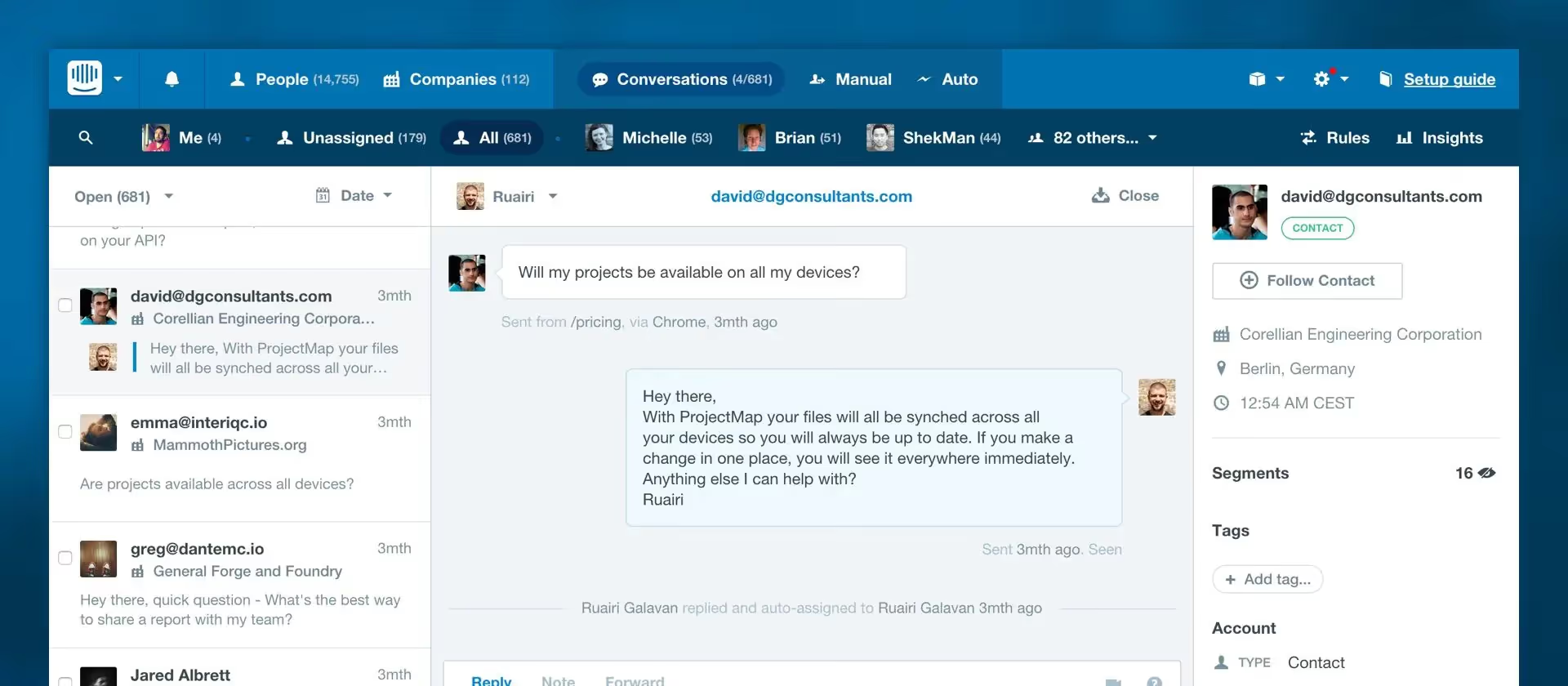
Intercom is a customer communication platform that embeds satisfaction measurement directly into conversational support flows, enabling teams to capture CSAT feedback at the moment of interaction.
Intercom's approach to satisfaction is conversational. Rather than sending post-interaction survey emails, it captures feedback within the chat or messaging flow itself, which tends to produce higher response rates and more contextual data. The Fin AI agent handles resolution and can trigger satisfaction checks as part of the conversation.
The trade-off is that Intercom's feedback capabilities are tightly scoped to its own communication channels. Teams that need to measure satisfaction across surveys, reviews, and other touchpoints will need additional tools.
Key Features
- In-Conversation CSAT: Captures satisfaction ratings within chat and messaging flows, removing the friction of separate survey emails.
- Fin AI Agent: AI-powered resolution agent that handles customer queries and triggers feedback collection at natural conversation endpoints.
- Proactive Messaging: Reach out to customers based on behavior or segment to gather targeted feedback before issues escalate.
- Custom Bots: Build conversational survey flows using the bot builder for more nuanced feedback collection.
- Help Center Integration: Connect satisfaction data with self-service content performance to identify knowledge gaps.
Pricing
Intercom starts at $39/seat/month (Essential plan). Advanced and Expert tiers offer additional AI features, workflows, and reporting capabilities.
Pros
- In-conversation feedback capture produces higher response rates and more contextual satisfaction data than email-based surveys.
- Fin AI agent provides meaningful resolution and feedback automation capabilities.
- Strong proactive messaging features allow teams to get ahead of potential dissatisfaction.
Cons
- Satisfaction measurement is limited to Intercom's own channels; it does not analyze feedback from external surveys, reviews, or social media.
- Pricing can escalate quickly as seat count grows, particularly for larger support teams.
G2 Rating
Intercom G2 Score: 4.5/5
Who It's For
Customer support and success teams that want to capture satisfaction feedback directly within their conversational support workflow.
Customer Satisfaction Software: FAQs
What Is the Best Customer Satisfaction Software?
The best customer satisfaction software depends on your team's specific needs, but for organizations that process high volumes of feedback across multiple channels, Chattermill stands out as the top choice. Its AI-powered analytics go beyond surface-level scoring to reveal the root causes behind satisfaction shifts, and its business impact mapping ties those insights directly to metrics like NPS, CSAT, churn, and revenue. For end-to-end experience management, Medallia is a strong alternative, while Qualtrics XM excels for research-driven survey analysis.
What Is the Best Tool for Tracking CSAT?
For tracking CSAT at scale with deep analytics, Chattermill is the most capable tool. It unifies CSAT data from 90+ feedback sources and uses its Lyra AI engine to identify the specific themes and issues driving score changes, not just the scores themselves. For teams that primarily need CSAT within a support workflow, Zendesk and Freshdesk offer solid built-in options. HubSpot Service Hub is effective for teams that want CSAT linked directly to their CRM data.
What Is the Best Tool for CX Metrics?
Chattermill is the best tool for comprehensive CX metrics analysis because it connects feedback data to business outcomes like NPS, CSAT, CES, churn, retention, and revenue in a single platform. Medallia offers similar breadth for organizations that need employee and digital experience metrics alongside customer metrics. Qualtrics XM is strongest for organizations that rely heavily on structured survey data and need advanced statistical analysis of their CX metrics.
What Is the Difference Between CSAT and CES?
CSAT (Customer Satisfaction Score) measures how satisfied a customer is with a specific interaction, product, or experience, typically on a scale of 1-5 or 1-10. CES (Customer Effort Score) measures how easy it was for a customer to accomplish a specific task, such as resolving a support issue or completing a purchase. CSAT tells you how happy customers are; CES tells you how much friction they experienced. Both are valuable, and many CX teams track them together alongside NPS to get a complete picture of the customer experience.
How Do I Choose Customer Satisfaction Software?
Start by clarifying your primary use case: do you need deep feedback analytics, simple survey collection, or satisfaction tracking within an existing support tool? Consider how many feedback channels you need to cover, whether you need AI-driven analytics or basic reporting, how the tool integrates with your existing tech stack, and your team's technical maturity. Enterprise teams with high feedback volumes should prioritize platforms like Chattermill that offer AI-powered root-cause analysis and business impact mapping. Mid-market teams may find that CRM-integrated options like HubSpot Service Hub or standalone survey tools like Survicate meet their needs at a lower price point.
The Bottom Line
The customer satisfaction software market offers tools for every team size and maturity level, but the gap between basic survey collection and genuine feedback intelligence is widening. If your team is still manually reviewing open-text responses or relying on score averages without understanding the drivers behind them, you are leaving actionable insights on the table.
Chattermill is the strongest choice for organizations that need to move beyond collecting scores and start understanding the root causes behind customer satisfaction. With its Lyra AI engine, 90+ integrations, and business impact mapping, it transforms unstructured feedback into the kind of evidence-backed insights that drive retention, reduce churn, and improve the metrics that matter most to your business.
Ready to see what AI-powered feedback analytics can reveal about your customers? Book a Demo with Chattermill and discover the insights hiding in your feedback data.


See Chattermill in action on your own feedback
Book a demo


