


Choosing between Chattermill and Hark often comes down to a fundamental question: do you need to analyze feedback you already have, or capture feedback you don't? These platforms solve different problems in the customer experience stack, and understanding where each fits can save months of misaligned expectations.
This guide breaks down how Chattermill's AI-powered feedback analytics compares to Hark's video and audio capture capabilities—covering features, pricing, use cases, and how to decide which platform (or combination) fits your VoC program.
Chattermill vs Hark feature comparison
| Feature | Chattermill | Hark |
|---|---|---|
| Primary use case | ✅ Always-on CX intelligence for B2C/DTC | ⚠️ Multimodal feedback collection — replaces traditional "Contact Us" forms |
| Feedback collection | ⚠️ Analyses existing feedback; not a collection tool | ✅ Core strength — branded intake portal for video, audio, and screen recordings |
| Multi-source unification | ✅ 90+ integrations — single view across all existing channels | ⚠️ Analyses intake-only feedback; not a multi-source aggregator |
| AI Analysis | ✅ Lyra AI — proprietary ABSA, phrasal analysis, and clustering | ✅ Emmy AI — theme detection, sentiment scoring, and ticket summarization |
| Multimodal Feedback | ⚠️ Not a core feature | ✅ Core differentiator — video, audio, and images natively embedded in tickets |
| ABSA | ✅ Yes — concept-level, granular | ⚠️ Not confirmed; sentiment analysis at the ticket level |
| CX Metrics | ✅ NPS, CSAT, Net Sentiment, Negativity Index, Custom Metrics | ⚠️ NPS via surveys; no Net Sentiment or broader metric suite |
| Driver & impact | ✅ Yes — diagnoses why key metrics change | ⚠️ Theme trends and saved term tracking; no native driver/impact mapping |
| Social CX Analytics | ✅ Native — Facebook, TikTok, Instagram, etc. + benchmarking | ❌ Not a feature |
| AI Assistant | ✅ Ask Lyra + AI CoPilot (conversational analyst) | ✅ Emmy — conversational AI for exploring trends across feedback |
| Multilingual Support | ✅ Native analysis across 99+ languages | ⚠️ Not publicly confirmed as native NLP |
| Market Position | ✅ Established enterprise B2C customer base | ⚠️ Early-stage NYC startup (~2022); focused on DTC/e-commerce mid-market |
Chattermill and Hark both help teams work with customer feedback, but they solve different problems. Chattermill focuses on analyzing high-volume text feedback from surveys, reviews, and support tickets using AI-powered sentiment and theme detection. Hark specializes in capturing multimedia feedback—video and audio messages—primarily for e-commerce and support teams looking to resolve issues faster.
Think of it this way: Chattermill helps you understand what thousands of customers are saying. Hark helps individual customers show you exactly what they mean.
What is Chattermill
Chattermill is an AI-powered feedback analytics platform that pulls customer feedback from multiple channels into one place. CX, product, and insights teams use it to analyze data from surveys, reviews, support tickets, social media, and chat—then surface themes, sentiment, and trends automatically.
The platform transforms unstructured feedback into clear priorities. Instead of reading thousands of comments manually, teams can see what's driving NPS changes, catch problems before they grow, and connect specific issues to business metrics like CSAT and retention.
What is Hark
Hark is a feedback capture platform centered on video and audio messaging. Customers record and submit video or voice messages explaining their issues, which gives support teams more context than text alone.
The platform integrates directly with Zendesk, aiming to reduce ticket volume and improve first-contact resolution. For e-commerce brands especially, Hark offers a way to see and hear frustrated customers—creating urgency that a written complaint might not convey.
Key differences between Chattermill and Hark
The platforms address different stages of the customer feedback lifecycle. Understanding where each fits helps clarify which one—or whether both—belongs in your VoC stack.
Feedback analytics vs feedback capture
Chattermill analyzes feedback you already have. Hark helps you collect feedback you don't.
If your organization generates thousands of survey responses, support tickets, and reviews monthly, the challenge isn't getting more feedback—it's making sense of what exists. Chattermill addresses this by applying AI to categorize, quantify, and prioritize insights automatically.

Hark solves a different problem: capturing nuance that text misses. A customer explaining a defective product on video provides context that "item broken" in a ticket never could.
AI and sentiment analysis capabilities
Chattermill uses deep learning to perform aspect-based sentiment analysis at scale. The platform doesn't just flag feedback as "negative"—it identifies what customers are negative about and tracks how sentiment shifts over time.
- Theme detection: Automatically groups feedback into topics without manual tagging
- Sentiment tracking: Monitors how customer feelings change across time periods
- Root cause identification: Connects complaints to specific product or service issues
Hark's AI focuses on transcription and organization rather than analytical depth. The platform makes video feedback searchable and shareable, but it doesn't provide trend analysis or theme detection.
Multi-channel data unification
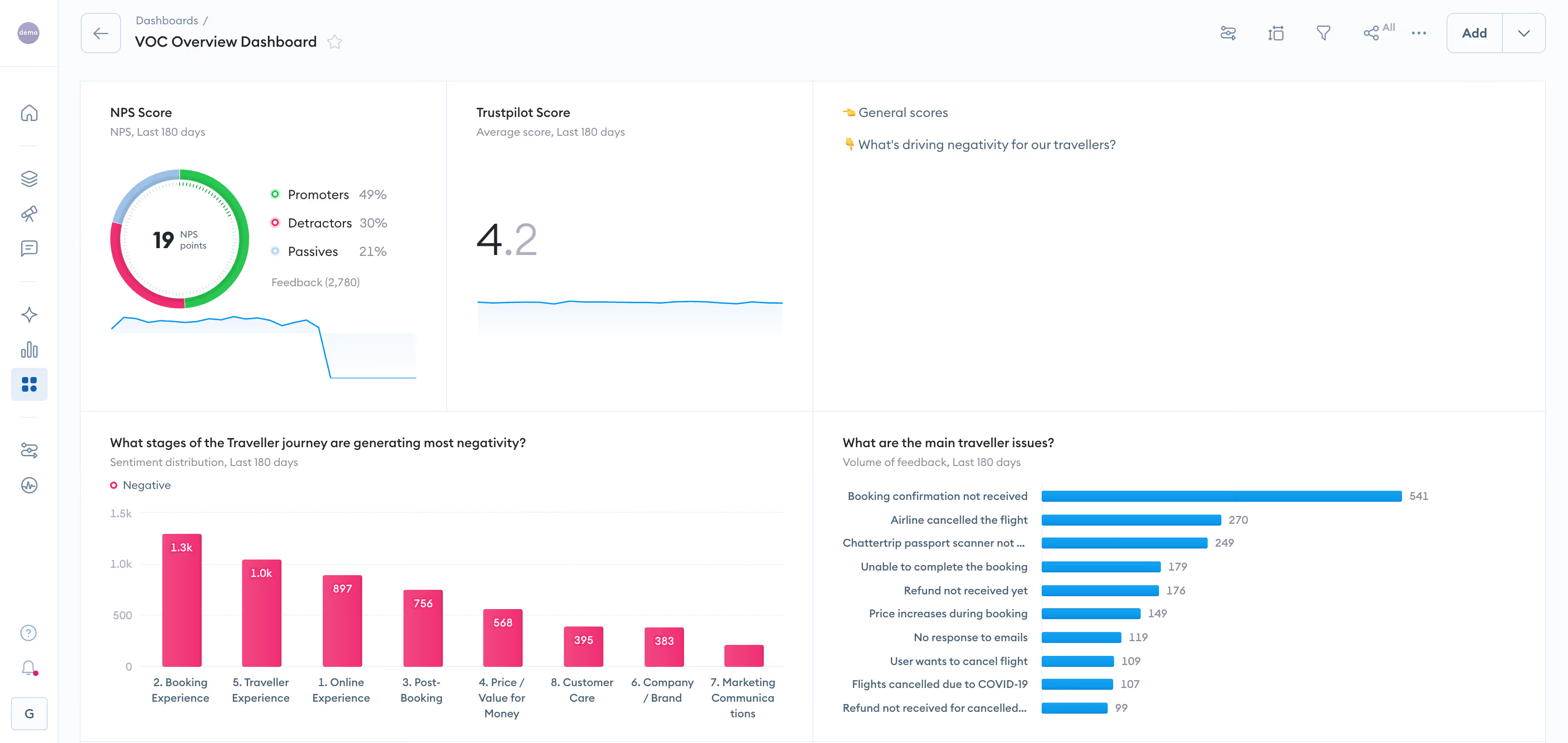
One of Chattermill's core capabilities is consolidating feedback from different sources—NPS surveys, app store reviews, Zendesk tickets, social mentions—into unified dashboards.
This eliminates the silos that often prevent organizations from seeing the complete customer picture.
Hark operates as a single channel rather than an aggregator. It captures rich feedback within its own ecosystem but doesn't pull in or analyze data from other sources.
Real-time insights and anomaly detection
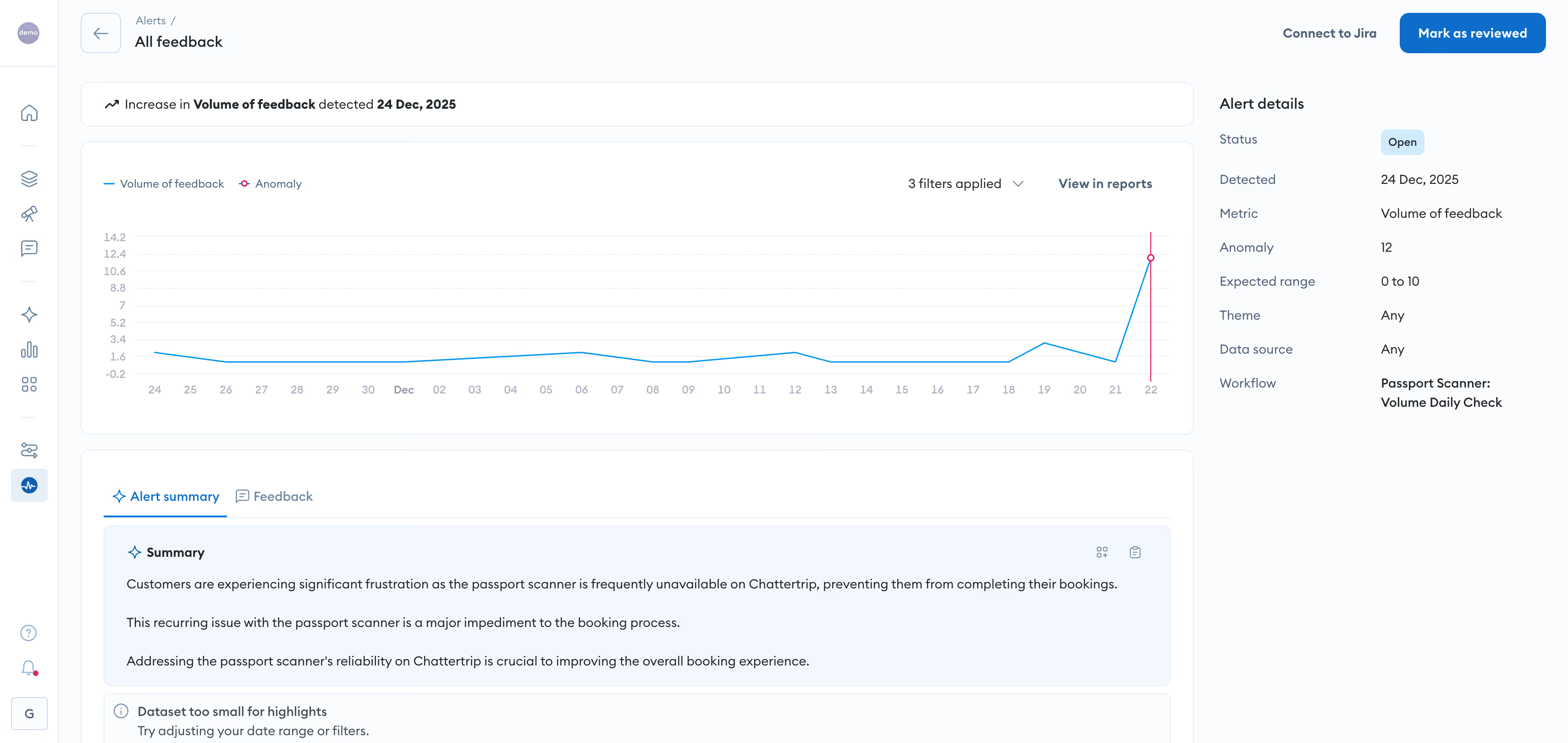
Chattermill provides proactive alerts when sentiment shifts unexpectedly or critical issues emerge. If negative mentions of a specific product feature spike overnight, the platform flags it before the problem compounds.
Hark's real-time value is different—it enables immediate feedback submission and faster support resolution. However, it doesn't offer analytical alerting that helps teams catch systemic issues early.
Enterprise scalability and multilingual support
Chattermill supports organizations operating across multiple markets and languages, analyzing feedback without requiring manual translation. The platform handles high volumes typical of enterprise CX programs.
Hark is positioned for more focused use cases—qualitative depth over quantitative scale. It works well for teams wanting richer individual feedback rather than aggregate analysis across millions of data points.
Chattermill core features
- Unified feedback ingestion: Connects surveys, reviews, support tickets, chat, and social into one platform
- AI-powered tagging: Categorizes feedback by theme and sentiment without manual rules
- Custom dashboards: Role-based views for CX, product, and insights teams
- Anomaly alerts: Notifications when metrics shift unexpectedly
- Impact analysis: Ties feedback themes directly to NPS, CSAT, and business outcomes
Hark core features
- Video feedback capture: Customers record and submit video messages explaining issues
- Voice messaging: Audio-based feedback collection
- Screen recording: Visual context alongside verbal explanations
- Support ticket enrichment: Attaches rich media to customer issues
Integration capabilities
Chattermill connects with CRM platforms, business intelligence tools, and helpdesk systems—enabling feedback insights to flow into existing workflows.
Hark's integration strategy centers on Zendesk, where it embeds directly into support agent workflows. This tight focus works well for teams already standardized on Zendesk but limits flexibility for organizations using other platforms.
How Chattermill and Hark pricing compares
Pricing for both platforms varies based on usage, scale, and specific requirements.
Chattermill pricing overview
Chattermill offers custom enterprise pricing based on feedback volume and selected modules. The investment reflects the platform's advanced AI capabilities, multi-channel unification, and enterprise-grade infrastructure.
Hark pricing overview
Hark typically offers more accessible pricing tiers suited to smaller teams or focused use cases. Exact pricing depends on volume and features—confirming directly with Hark provides the most accurate picture.
Total cost of ownership considerations
License fees tell only part of the story. When evaluating total cost, consider:
- Implementation complexity: Chattermill may require data integration work; Hark is typically plug-and-play
- Time to value: How quickly does each platform deliver ROI?
- Scaling costs: How does pricing change as feedback volume grows?
Chattermill pros and cons
Chattermill strengths
- Deep analytics: Surfaces actionable themes from large feedback datasets automatically
- Multi-source unification: Single view of all customer feedback regardless of origin
- Enterprise-ready: Scalable infrastructure with multilingual support
- Proactive alerting: Detects issues before they escalate
Chattermill limitations
- Implementation investment: Requires integration setup to realize full value
- Analytics-focused: Does not include native feedback capture tools
- Enterprise orientation: May offer more capability than smaller teams require
Hark pros and cons
Hark strengths
- Rich qualitative data: Video and voice capture nuance that text misses
- Easy deployment: Quick implementation for support teams
- Customer empathy: Humanizes feedback with real voices and faces
- Support workflow fit: Native Zendesk integration streamlines agent experience
Hark limitations
- Limited analytics: Does not provide AI-driven insights or trend analysis
- Single-channel focus: Captures feedback rather than unifying existing sources
- Scalability constraints: Better suited for qualitative samples than volume analysis
Best use cases for Chattermill and Hark
When to choose Chattermill
Chattermill fits organizations that already generate substantial feedback and struggle to extract insights from it. The platform works well when:
- Feedback arrives from multiple channels and requires unified analysis
- Teams require AI-powered sentiment and theme detection at scale
- Measuring how feedback themes impact NPS, CSAT, or retention matters
- Operations span multiple markets or languages
When to choose Hark
Hark fits teams seeking richer, more personal feedback from individual customers. The platform works well when:
- Capturing context that text-based feedback misses is a priority
- Support teams benefit from video or voice context to resolve issues faster
- Qualitative depth matters more than quantitative scale
- A lightweight tool to supplement existing analytics is the goal
Using Chattermill and Hark together
The platforms complement rather than compete. Hark can capture rich multimedia feedback that flows into Chattermill for analysis alongside other sources—creating a full-cycle VoC workflow where capture and analytics work together.
How to choose between Chattermill and Hark
1. Define your primary VoC objective
Start with the fundamental question: Are you trying to collect new feedback or analyze feedback you already have? The answer determines which platform category fits.
2. Evaluate your feedback sources and volume
Consider whether multiple feedback channels generate data at scale (pointing toward Chattermill) or whether a new channel to capture qualitative input is the priority (pointing toward Hark).
3. Assess your analytics and reporting requirements
Determine whether AI-driven dashboards, trend detection, and business impact measurement are priorities—or whether simpler feedback review suffices.
4. Consider implementation and team resources
Evaluate technical capacity for integration work versus preference for turnkey deployment. Chattermill delivers more capability but requires more setup; Hark offers faster time-to-value for focused use cases.
5. Request a pilot or personalized demo
Hands-on evaluation reveals what documentation cannot. Book a personalized demo to see how Chattermill handles your specific feedback challenges.
Why CX teams choose Chattermill for customer feedback analytics
Organizations serious about turning feedback into action choose Chattermill for its ability to unify disparate data sources, apply accurate AI analysis, and connect customer insights to business outcomes. The platform transforms overwhelming volumes of unstructured feedback into clear priorities for product, CX, and support teams.
Book a demo to see how Chattermill works with your feedback data.
FAQs about Chattermill vs Hark
Is Hark a direct competitor to Chattermill?
Hark and Chattermill serve different functions in the VoC stack. Hark focuses on capturing video and voice feedback while Chattermill specializes in analyzing feedback at scale—making them complementary rather than direct competitors.
Can Chattermill and Hark be used together in a VoC program?
Yes. Organizations can use Hark to capture rich qualitative feedback and feed that data into Chattermill for AI-powered analysis alongside other feedback sources.
Which platform is better for analyzing customer support tickets?
Chattermill is designed for support ticket analysis at scale, using AI to tag themes and detect sentiment patterns. Hark enhances individual tickets with video context rather than analyzing them in aggregate.
Does Chattermill support feedback analysis in multiple languages?
Chattermill supports multilingual feedback analysis, enabling global organizations to unify and analyze customer insights across markets without manual translation.
Which platform provides more advanced reporting and dashboards?
Chattermill offers comprehensive dashboards with AI-driven insights, trend visualization, and business impact metrics. Hark focuses on feedback capture rather than analytical reporting.