


Voice of Customer Platforms for Finance Companies: 12 Picks (2026)

.avif)

The CX intelligence
platform that's AI-native by design
Book a demoQuick Summary
Most finance companies already collect customer feedback — a post-call survey here, an NPS email there, maybe a quarterly satisfaction report. But does stitching together a patchwork of disconnected signals actually tell you why customers leave, or which compliance blind spots are growing?
The best voice of customer platform for finance companies is Chattermill, which unifies feedback from every channel and uses AI to surface themes, sentiment, and trends specific to financial services. For banks managing both branch and digital experiences, InMoment offers journey analytics that bridges physical and digital touchpoints. And for firms that need structured research programmes alongside VoC analytics, a survey-methodology-first approach provides the methodological depth that structured compliance programmes require. If you are comparing voice of customer tools more broadly before narrowing to financial services, start with our main guide.
Before we get into the detailed comparisons, here are our top three picks:
| # | Tool | Best For |
|---|---|---|
| 1 | Chattermill | AI-native unified feedback analytics for finance teams |
| 2 | InMoment | Branch + digital journey analytics for banks and financial institutions |
| 3 | Qualtrics | Structured VoC research and survey programmes in financial services |
Why Listen to Us
Chattermill works with finance and fintech companies — including Wise and Qonto — that process millions of customer feedback data points across dozens of channels. Our customer experience intelligence team evaluated each platform in this guide against the specific requirements of regulated financial institutions: compliance certifications, financial sentiment detection, multi-channel unification, and integration with core banking systems. Where does the bias sit? We are transparent that Chattermill is our product and it leads this list — but we include eleven alternatives because the best VoC platform depends on your institution's size, channel mix, and programme maturity.

What Is Voice of Customer for Finance Companies?
A voice of customer platform is software that collects, analyses, and acts on customer feedback across multiple touchpoints. Think of it as a central nervous system for customer signals — surveys, support tickets, app reviews, social media posts, call transcripts, and branch interactions all flowing into one analytics layer instead of sitting in separate silos.
For finance companies, the stakes are higher than in most industries. A frustrated customer leaving a negative review about a delayed wire transfer is not just a CX metric — it can escalate into a regulatory complaint. VoC platforms purpose-built for financial services understand this distinction: they detect compliance-sensitive language, handle PCI DSS and SOC 2 requirements, and connect feedback patterns to operational risk. What does that mean in practice? It means catching a spike in complaints about fee transparency before it becomes a Consumer Duty investigation, or identifying that mobile banking churn correlates with a specific onboarding friction point.
For a deeper exploration of how AI is reshaping this space, see our guide on how AI is changing what voice of customer actually means.
12 Best VoC Platforms for Finance: Head-to-Head Comparison
| # | Tool | Best For | AI/NLP Capabilities | Feedback Channels | Financial Compliance | Key Integrations | Pricing | G2 Rating |
|---|---|---|---|---|---|---|---|---|
| 1 | Chattermill | AI-native unified feedback analytics | Advanced sentiment, theme detection, anomaly alerts, 100+ languages | Surveys, reviews, support tickets, social, chat, app stores, calls | SOC 2 Type II, GDPR, ISO 27001, data residency options | Salesforce, Zendesk, Intercom, Snowflake, MCP, custom APIs | Custom | |
| 2 | InMoment | Branch + digital CX in banking | NLP text analytics, journey AI, predictive modelling | Surveys, reviews, social, digital, in-branch | SOC 2, GDPR, PCI DSS | Core banking, CRM, digital banking platforms | Custom | |
| 3 | Qualtrics | Structured VoC research | CustomerXM AI, predictive intelligence, text iQ | Surveys, web, app, email, SMS, intercepts | SOC 2, GDPR, ISO 27001, FedRAMP | Salesforce, SAP, Tableau, Slack | Custom | |
| 4 | Medallia | Enterprise experience management | Athena AI, text analytics, speech-to-text | Surveys, digital, contact centre, social, IoT, in-branch | SOC 2, GDPR, FedRAMP, PCI DSS ready | Core banking, Salesforce, Adobe, ServiceNow | Custom | |
| 5 | Zonka Feedback | Multi-channel VoC surveys | AI-powered analysis, sentiment scoring | Surveys, email, SMS, web, kiosk, in-app | GDPR, SOC 2 | Salesforce, HubSpot, Zendesk, Zapier | From $49/mo | |
| 6 | Sprinklr | Social listening in financial services | Sprinklr AI+, sentiment analysis, 30+ channels | Social, messaging, reviews, surveys, chat | SOC 2, GDPR | Salesforce, Adobe, Microsoft Dynamics | Custom | |
| 7 | Thematic | Open-text feedback analysis | AI theme detection, sentiment analysis, multi-language | Surveys, reviews, support tickets, NPS/CSAT | GDPR, SOC 2 | Qualtrics, Medallia, Zendesk, Salesforce | From $2,000/mo | |
| 8 | Enterpret | Unstructured feedback at scale | ML-powered taxonomy, adaptive models, 30+ sources | Support tickets, reviews, social, surveys, Slack, calls | SOC 2, GDPR | Zendesk, Intercom, Salesforce, Snowflake | Custom | |
| 9 | CustomerGauge | B2B financial services NPS | Account-level NPS, revenue attribution, churn prediction | NPS surveys, account feedback, CRM data | GDPR, SOC 2 | Salesforce, HubSpot, NetSuite | Custom | |
| 10 | Calabrio | Contact centre VoC in finance | Speech analytics, desktop analytics, sentiment scoring | Calls, chat, email, agent interactions | SOC 2, GDPR, PCI DSS | Genesys, Cisco, Avaya, Amazon Connect | Custom | |
| 11 | Zendesk | Support-embedded VoC | Explore analytics, customer sentiment, CSAT tracking | Tickets, chat, email, social messaging, phone | SOC 2, GDPR | Salesforce, Jira, Slack, Shopify | From $55/agent/mo | |
| 12 | SurveyMonkey | Quick pulse surveys in finance | Basic AI analysis, sentiment, word clouds | Surveys, web, email, mobile, link, social | GDPR, HIPAA eligible | Salesforce, HubSpot, Microsoft Teams, Slack | From $25/user/mo |
How We Evaluated These VoC Platforms
Financial services is not a forgiving environment for customer feedback programmes. Regulations demand rigorous data handling, customers interact across branches, apps, call centres, and digital channels, and the cost of ignoring a complaint can escalate from a detractor score to a regulatory filing. So what separates a genuinely finance-grade VoC platform from a generic analytics tool with a compliance checkbox? And how do you evaluate voice of customer tools through a finance-specific lens?
We weighted our evaluation across seven dimensions, with extra emphasis on the factors that matter most to banks, fintechs, and insurance companies:
- AI and NLP depth (25%): Can the platform detect financial-specific sentiment — frustration with loan processing times, confusion around fee structures, anxiety about claims outcomes? We looked for advanced theme detection, multi-language support, and anomaly alerting that goes beyond generic positive/negative scoring.
- Feedback channel coverage (20%): Financial institutions collect feedback from surveys, app reviews, call transcripts, in-branch interactions, social media, chatbots, and complaint portals. Tools that unify these channels into a single view scored higher than those requiring manual data stitching.
- Financial compliance and data security (20%): SOC 2 Type II, GDPR, PCI DSS readiness, data residency options, and audit trails are baseline requirements for any tool touching customer data in financial services. We verified each tool's published certifications and data handling practices.
- Integration ecosystem (15%): How well does the tool connect with core banking systems, CRMs like Salesforce, helpdesks like Zendesk, and data warehouses like Snowflake? Finance teams need feedback analytics that flow into existing workflows, not another siloed dashboard.
- Actionability and reporting (10%): Can the platform surface insights that compliance officers, product managers, and branch managers can all act on? We evaluated alert systems, dashboarding, role-based access, and the ability to connect VoC data to business metrics like churn, NPS, and revenue.
- Pricing transparency and value (5%): While enterprise-grade VoC platforms rarely publish pricing, we noted which tools offer transparent entry points and which require custom quotes for every configuration.
- User satisfaction (5%): G2 ratings and review volume provided a peer-validated signal on real-world usability and support quality.
1. Chattermill — Best Overall VoC Platform for Finance/Fintech

What Is Chattermill?
Chattermill is an AI-native customer feedback analytics platform that unifies feedback from every channel — surveys, support tickets, app reviews, social media, call transcripts, and chat — into a single analytics layer. Rather than treating feedback as isolated data points, Chattermill uses advanced AI to surface themes, track sentiment shifts, and detect anomalies across millions of data points in real time.
For finance companies specifically, this matters because customer feedback about loans, claims, billing disputes, and account management carries regulatory weight that generic VoC tools often miss. Can your current tool tell the difference between a billing complaint that needs a process fix and one that signals a regulatory gap? Chattermill's AI models can distinguish between a customer frustrated by a delayed wire transfer and one confused by fee disclosures — a level of granularity that helps compliance and CX teams prioritise different response strategies.
Fintechs like Wise and Qonto already rely on Chattermill to consolidate feedback across multiple markets and languages, turning fragmented customer signals into coherent, actionable customer experience intelligence.
Chattermill Features
- Unified feedback analytics: Aggregates data from 50+ sources including NPS, CSAT, CES surveys, support platforms, review sites, and social channels into one unified customer experience view.
- Finance-specific AI models: Custom-trained theme and sentiment detection that understands financial product language — not just generic positive/negative classification, but nuanced categorisation of feedback about transactions, fees, claims, onboarding, and compliance processes.
- Real-time anomaly detection: Automated alerts when sentiment shifts or complaint volumes spike around specific products, branches, or customer segments — critical for catching emerging issues before they escalate into regulatory concerns.
- Multi-language support: Analyse feedback in 100+ languages without translation delays, essential for financial institutions operating across multiple markets.
- Advanced AI sentiment analysis: Goes beyond basic polarity to measure intensity, detect sarcasm, and identify emotional drivers behind financial customer feedback.
- Customisable dashboards and role-based access: Tailored views for CX leaders, compliance teams, product managers, and branch managers — each seeing the metrics and themes most relevant to their function.
- Business metric correlation: Connect VoC data directly to NPS, CSAT, CES, churn rates, and revenue impact, enabling feedback analytics that demonstrate ROI to finance leadership.
2026 Pricing
Chattermill offers custom pricing based on feedback volume, channel integrations, and team size. Book a Demo to discuss pricing for your financial institution.
Chattermill Pros
- AI-native architecture purpose-built for feedback analytics, not retrofitted from survey tools
- Handles massive feedback volumes across channels without performance degradation
- Finance-relevant theme detection distinguishes between regulatory complaints, product friction, and service issues
- Strong integration ecosystem connects with Salesforce, Zendesk, Intercom, Snowflake, and custom APIs
- Real-time alerting catches emerging issues before they become systemic problems
- Multi-language analysis enables global financial institutions to consolidate cross-market insights
Chattermill Cons
- Custom pricing means smaller firms need to request a quote rather than self-serve
- The depth of AI capabilities requires onboarding investment to configure optimal theme taxonomies
- Best suited for organisations with meaningful feedback volume — very early-stage startups may not generate enough data to justify the platform
Who It's For
Chattermill is the best choice for mid-market and enterprise finance companies that need to unify feedback from every channel and use AI to extract actionable insights at scale. If your team is drowning in fragmented feedback across surveys, support tickets, reviews, and social media, and you need a platform that understands financial customer language, Chattermill is where to start.
G2 Rating
Chattermill G2 Score: 4.5/5 (236 reviews)
2. InMoment — Best for Branch + Digital CX in Banking

What Is InMoment?
InMoment is a customer experience platform specialising in journey analytics that bridges physical and digital touchpoints. For regional banks and credit unions managing both in-branch and digital banking experiences, InMoment offers journey mapping and NLP analytics tuned to financial services workflows. The platform connects branch visit feedback, digital banking surveys, and contact centre data into a unified journey view.
InMoment Features
- Journey analytics: Maps customer journeys across branches, digital banking, call centres, and mobile apps to identify friction points.
- NLP text analytics: AI-powered analysis of open-text feedback with financial services–specific models.
- Case management: Closed-loop feedback workflows that route issues to the right team for resolution.
- Predictive churn modelling: Identifies customers at risk of leaving based on feedback patterns and behavioural signals.
- Branch-level benchmarking: Compare performance across locations to identify best practices and underperformers.
2026 Pricing
Custom pricing based on deployment scope and feedback volume.
InMoment Pros
- Strong in bridging physical branch and digital banking customer experiences
- Purpose-built for financial services use cases including branch benchmarking
- Closed-loop case management helps finance teams act on feedback quickly
- Solid NLP capabilities for financial customer language
InMoment Cons
- Smaller ecosystem of third-party integrations compared to Medallia or Qualtrics
- Can be resource-intensive to implement and maintain for smaller institutions
- Social media and app review analytics are less mature than dedicated customer feedback tools
Who It's For
InMoment is the right choice for regional banks and credit unions that need to unify branch and digital CX data and map the full customer journey across physical and digital touchpoints.
G2 Rating
InMoment G2 Score: 4.7/5
3. Qualtrics — Best for Structured VoC Research in Finance
What Is Qualtrics?
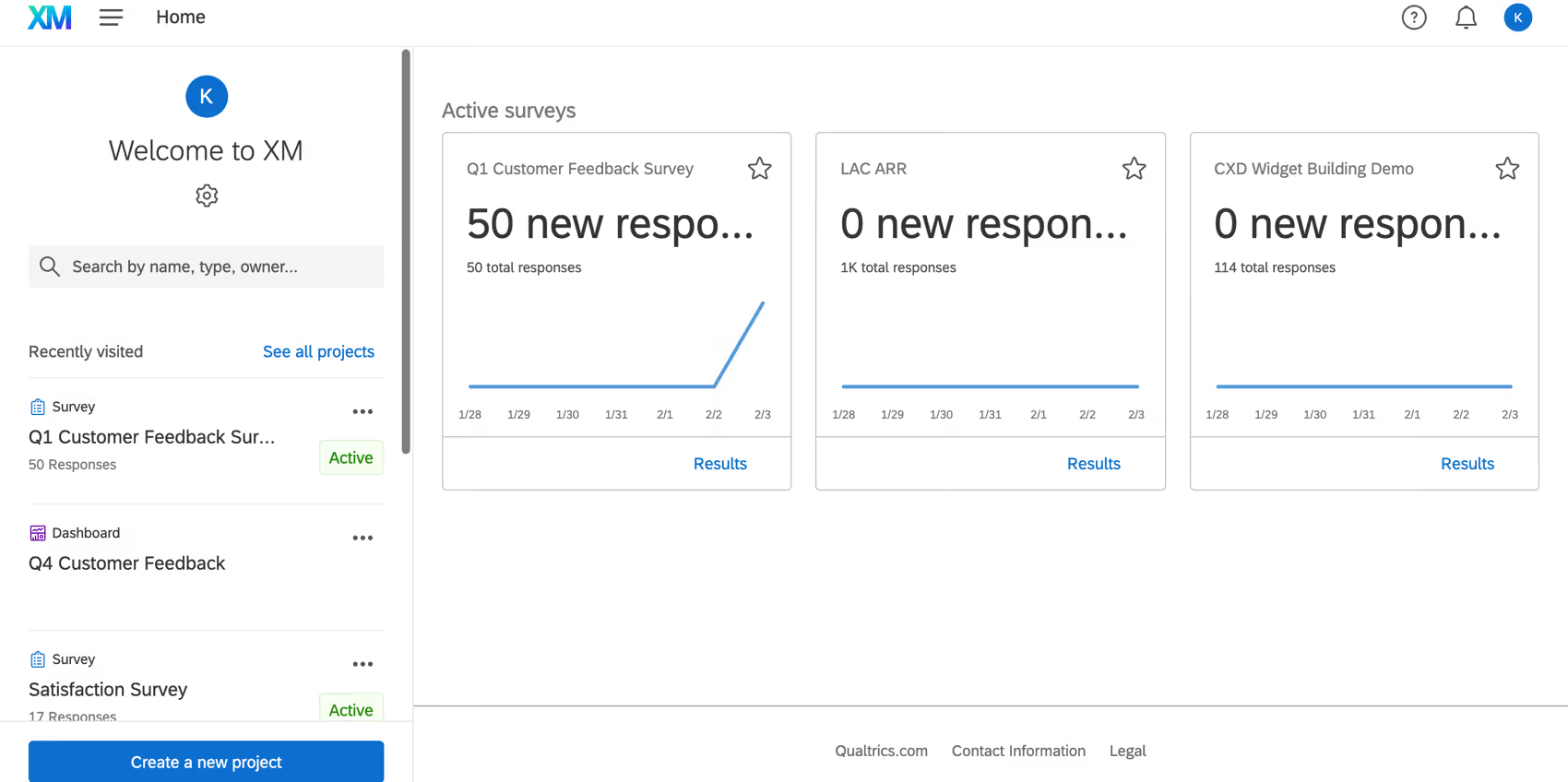
Qualtrics is an experience management platform built around structured research and survey methodology. Its CustomerXM suite combines survey design, statistical analysis, and predictive intelligence to help organisations run sophisticated VoC programmes. For finance companies with established research teams, Qualtrics offers the methodological rigour that ad-hoc feedback tools lack. If you are evaluating Qualtrics alternatives, the key question is whether your primary need is structured research or AI-driven feedback analytics.
Qualtrics Features
- CustomerXM suite: End-to-end experience management from survey design through statistical analysis and action planning.
- Text iQ and Stats iQ: AI-powered text analytics and statistical modelling for structured and unstructured feedback.
- Predictive intelligence: Identifies customers at risk of churn or default based on feedback patterns combined with operational data.
- Compliance-ready survey infrastructure: ISO 27001, SOC 2, GDPR, and FedRAMP support with granular data governance controls.
- Advanced survey design: Branching logic, conjoint analysis, MaxDiff, and experimental design capabilities for deep research.
2026 Pricing
Custom pricing. Qualtrics does not publicly disclose CustomerXM pricing — enterprise quotes vary significantly based on modules and seat count.
Qualtrics Pros
- Well-established structured research platform with broad compliance certification support
- Strong compliance and data governance framework suitable for regulated industries
- Deep statistical analysis capabilities beyond what most VoC tools offer
- Large ecosystem of integrations and certified partners
Qualtrics Cons
- Survey-centric architecture can feel limited for teams that need to unify unstructured feedback from reviews, support tickets, and social media
- Complexity requires dedicated research or insights staff to extract full value
- AI and NLP capabilities, while improving, trail purpose-built AI sentiment analysis tools for unstructured text
- Premium pricing across the full XM suite
Who It's For
Qualtrics is the best fit for finance companies with dedicated research or insights teams that run structured VoC programmes and need methodological depth alongside compliance-grade data governance.
G2 Rating
Qualtrics G2 Score: 4.3/5 (725 reviews)
4. Medallia — Best for Enterprise Financial Institutions

What Is Medallia?
Medallia is an enterprise experience management platform that captures and analyses customer signals across digital, physical, and operational touchpoints. Its Athena AI engine powers text analytics, predictive modelling, and prescriptive actions across the full customer journey. For large banks and insurance companies with sprawling branch networks and complex customer journeys, Medallia offers operational depth that matches institutional scale.
Medallia's architecture is designed for the complexity of enterprise-scale branch and digital operations, making it relevant for large financial institutions with sprawling customer touchpoints. The platform connects in-branch interactions, call centre feedback, digital banking surveys, and social signals into a unified experience layer. Its FedRAMP authorisation also makes it relevant for government-adjacent financial institutions. For a detailed comparison between Chattermill and Medallia, see our dedicated analysis.
Medallia Features
- Athena AI engine: Predictive analytics and text analytics that identify at-risk customers and surface root causes across financial product lines.
- Omnichannel signal capture: Captures feedback from surveys, contact centres, digital interactions, social media, IoT devices, and in-branch experiences.
- Role-based action management: Routes insights to branch managers, product teams, compliance officers, and executives with tailored dashboards.
- Speech-to-text analytics: Analyses call centre conversations for sentiment, compliance risks, and coaching opportunities.
- Journey orchestration: Maps customer journeys across channels and identifies friction points specific to financial products like mortgage applications or insurance claims.
2026 Pricing
Custom enterprise pricing. Medallia does not publish starting prices — expect significant investment for financial services deployments.
Medallia Pros
- Proven at enterprise scale with tier-1 financial institutions
- FedRAMP authorisation for government-regulated environments
- Deep operational integration with branch and contact centre systems
- Strong professional services and implementation support
Medallia Cons
- Enterprise pricing puts it out of reach for mid-market and smaller financial firms
- Implementation timelines can stretch to 6–12 months for complex deployments
- Can feel over-engineered for organisations that primarily need text analysis rather than full experience management
- Requires significant internal resources to manage and maintain
Who It's For
Medallia is the right fit for large enterprise banks and insurance companies with complex, multi-channel operations that need a platform matching their institutional scale and compliance requirements.
G2 Rating
Medallia G2 Score: 4.5/5
5. Zonka Feedback — Best for Multi-Channel VoC Surveys
What Is Zonka Feedback?
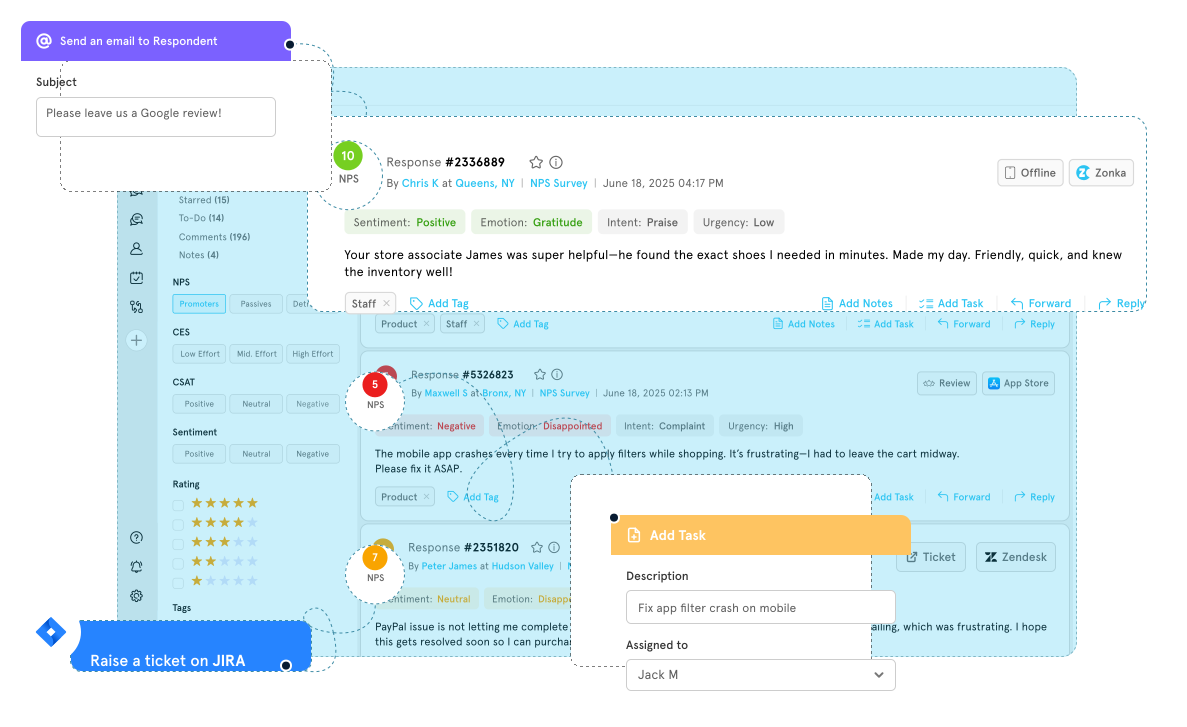
Zonka Feedback is a multi-channel survey and VoC platform that combines AI-powered analysis with flexible feedback collection across email, SMS, web, kiosk, and in-app channels. For mid-market financial firms that need a capable survey tool without enterprise pricing, Zonka offers a practical entry point into structured VoC programmes.
Zonka Feedback Features
- Multi-channel survey distribution: Deploy surveys via email, SMS, web widgets, kiosks, QR codes, and in-app prompts — useful for branches and digital banking alike.
- AI-powered analysis: Automated sentiment scoring and theme detection for open-text responses.
- Customisable survey templates: Pre-built templates for NPS, CSAT, and CES with finance-specific customisation options.
- Workflow automation: Trigger alerts, assign tasks, and route feedback based on scores and keywords.
- White-label surveys: Branded survey experiences consistent with financial institution identity guidelines.
2026 Pricing
From $49/month for the Starter plan. Growth and Enterprise tiers available with additional features and support.
Zonka Feedback Pros
- Transparent, accessible pricing starting at $49/month — rare in the VoC space
- Easy to deploy across multiple channels without heavy IT involvement
- Strong survey design and distribution capabilities
- Good fit for mid-market financial firms building their first VoC programme
Zonka Feedback Cons
- AI and NLP capabilities are functional but less sophisticated than purpose-built text analysis software
- Limited ability to ingest unstructured feedback from sources like support tickets, reviews, or social media
- Fewer enterprise-grade integrations with core banking systems
- Best for survey-driven VoC rather than unified feedback analytics
Who It's For
Zonka Feedback is the right choice for mid-market banks, fintechs, and insurance companies that want an affordable, easy-to-deploy multi-channel survey tool to launch or expand their VoC programme.
G2 Rating
Zonka Feedback G2 Score: 4.8/5
6. Sprinklr — Best for Social Listening in Financial Services
What Is Sprinklr?
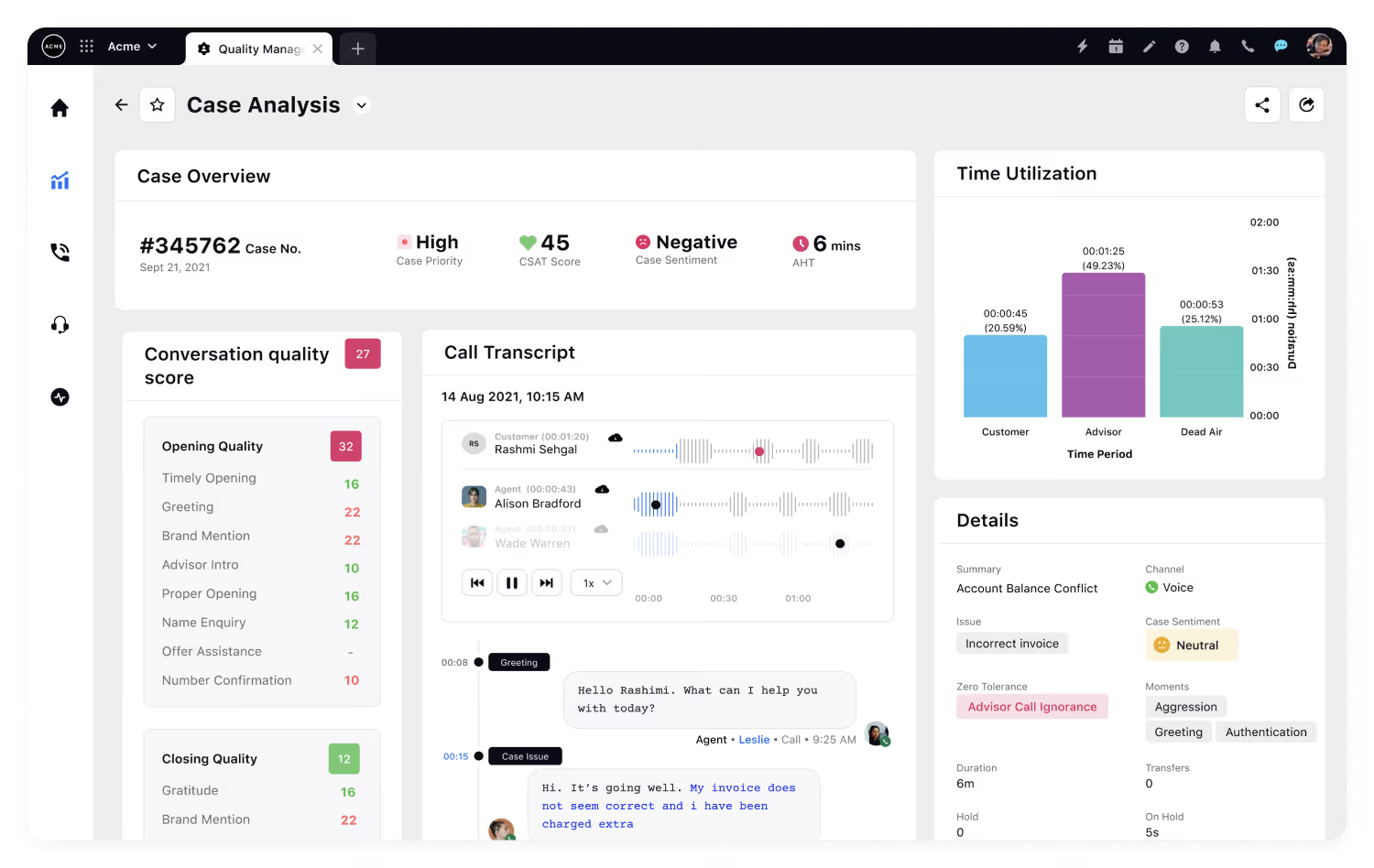
Sprinklr is an omnichannel customer experience management platform with particular strength in social listening and digital engagement across 30+ channels. For financial institutions that need to monitor brand sentiment, manage complaints, and track competitive mentions across social media and review sites, Sprinklr offers scale that dedicated VoC tools typically do not match in the social domain.
Sprinklr Features
- Social listening across 30+ channels: Monitor brand mentions, complaints, and sentiment across social media, forums, review sites, and news outlets.
- Sprinklr AI+: Unified AI layer for sentiment analysis, intent detection, and automated classification across channels.
- Compliance-ready workflows: Content approval workflows and audit trails suitable for regulated industries.
- Competitive intelligence: Track competitor mentions and sentiment alongside your own brand signals.
- Unified agent desktop: Customer service agents handle social, messaging, and review responses from a single interface.
2026 Pricing
Custom enterprise pricing. Sprinklr does not publish starting prices for its full CXM suite.
Sprinklr Pros
- Unmatched breadth of social listening and digital channel coverage
- Strong compliance workflow capabilities for regulated industries
- Real-time monitoring catches emerging reputation risks quickly
- Competitive intelligence adds strategic value beyond traditional VoC
Sprinklr Cons
- Complexity and pricing skew toward enterprise — not practical for smaller financial firms
- Social-first architecture means survey and structured feedback capabilities are weaker
- Depth of feedback analytics for operational VoC lags behind purpose-built platforms
- Implementation and ongoing management require dedicated resources
Who It's For
Sprinklr is the right fit for large financial institutions that prioritise social listening, digital reputation management, and omnichannel engagement alongside their broader VoC programme.
G2 Rating
Sprinklr G2 Score: 4.3/5
7. Thematic — Best for Open-Text Feedback Analysis
What Is Thematic?
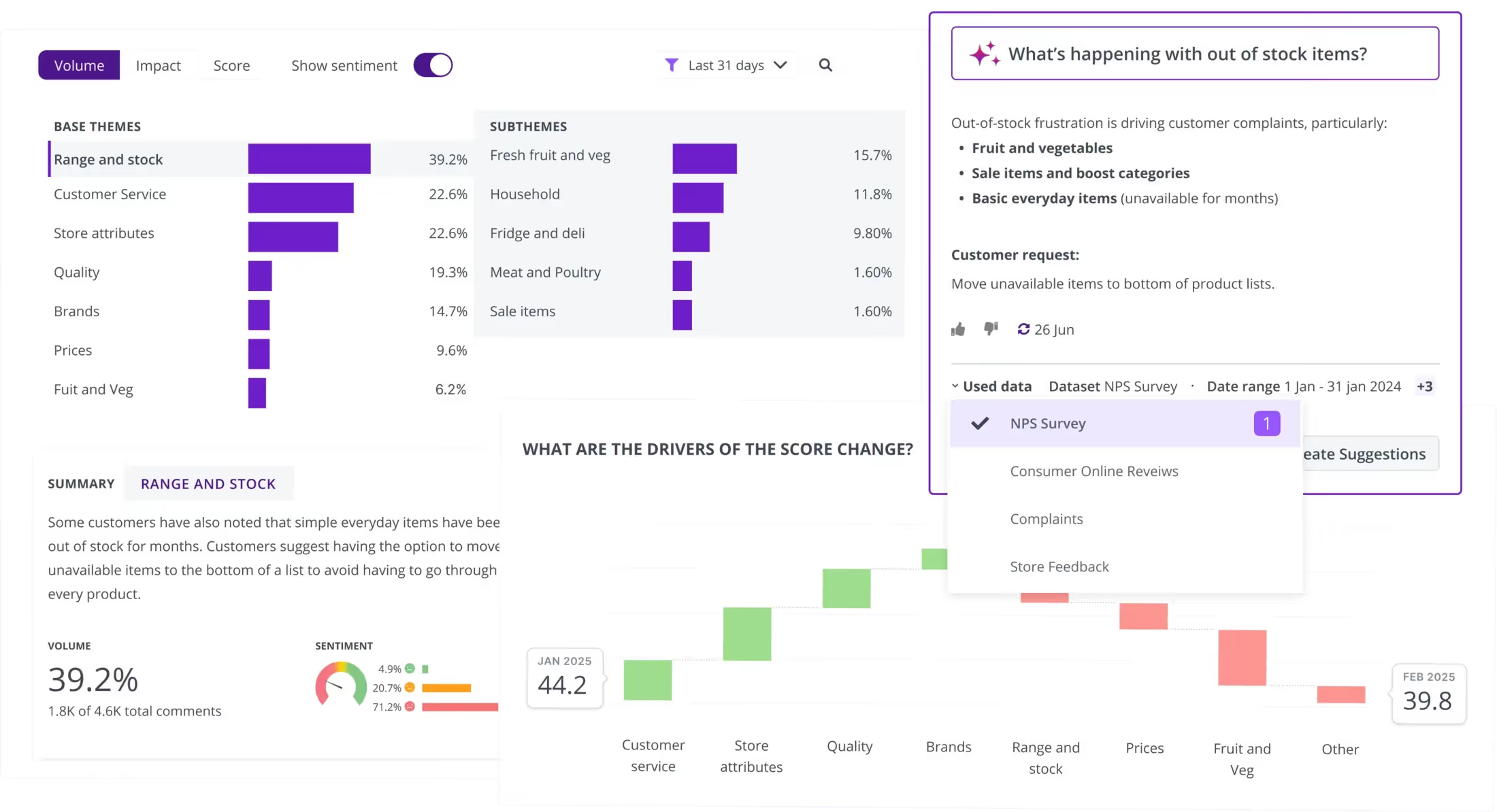
Thematic is an AI-powered text analytics platform that specialises in discovering themes and sentiment patterns within open-text customer feedback. Rather than requiring pre-defined categories, Thematic's algorithms automatically surface emerging themes, making it particularly useful for finance teams that need to detect previously unknown issues across survey comments, reviews, and support interactions. For a detailed comparison, see our Chattermill vs Thematic analysis.
Thematic Features
- Automated theme discovery: AI surfaces themes from open-text feedback without pre-configured taxonomies — useful for detecting emerging financial product issues.
- Sentiment analysis: Multi-level sentiment scoring that goes beyond positive/negative to capture intensity and nuance.
- Impact analysis: Quantifies the relationship between themes and key metrics like NPS and CSAT.
- Multi-language support: Analyses feedback in multiple languages for international financial institutions.
- Integration with survey platforms: Connects to Qualtrics, Medallia, and Zendesk to analyse open-text responses collected elsewhere.
2026 Pricing
From $2,000/month. Enterprise pricing available for larger deployments.
Thematic Pros
- Strong automated theme discovery reduces manual tagging effort
- Good integration with existing survey and CX platforms
- Visual dashboards make it easy to communicate findings to stakeholders
- Transparent pricing starting at $2,000/month
Thematic Cons
- Smaller feedback channel coverage — primarily analyses text that has already been collected by other tools
- Less suited to real-time operational VoC compared to platforms that own the collection layer
- Limited case management and closed-loop feedback capabilities
- Smaller team and ecosystem compared to enterprise competitors
Who It's For
Thematic is a strong choice for finance companies that already collect feedback through surveys or support tools and need specialised AI-powered text analysis to extract themes and sentiment from open-text responses.
G2 Rating
Thematic G2 Score: 4.8/5 (43 reviews)
8. Enterpret — Best for Unstructured Feedback at Scale

What Is Enterpret?
Enterpret is an ML-powered feedback intelligence platform that aggregates unstructured customer feedback from 30+ sources, builds adaptive taxonomy models, and surfaces actionable product insights. For finance companies generating high volumes of support tickets, reviews, and social feedback, Enterpret offers automated categorisation that improves over time. See our Chattermill vs Enterpret comparison for more context.
Enterpret Features
- Adaptive ML models: Custom feedback taxonomies that learn and improve from your specific data, including financial product terminology.
- 30+ source integrations: Ingests feedback from support platforms, review sites, social media, Slack, survey tools, and call transcripts.
- Unified feedback taxonomy: Automatically categorises feedback into consistent themes across all sources.
- Trend detection: Identifies emerging issues and sentiment shifts before they become systemic problems.
- Team-specific views: Customisable dashboards for product, support, CX, and leadership teams.
2026 Pricing
Custom pricing based on feedback volume and integrations.
Enterpret Pros
- Strong at unifying unstructured feedback from many sources into a coherent taxonomy
- Adaptive ML models improve accuracy over time with finance-specific data
- Good for product and engineering teams that need feedback routed to feature-level decisions
- Scales well with high feedback volumes
Enterpret Cons
- Product-feedback orientation may not fully serve compliance and regulatory reporting needs
- Custom pricing with no published entry point
- Newer platform with a smaller customer base than established enterprise competitors
- Less mature survey and structured research capabilities compared to customer satisfaction software
Who It's For
Enterpret is best suited for finance companies with high volumes of unstructured feedback across many channels that need ML-powered categorisation to make sense of product-level customer signals.
G2 Rating
Enterpret G2 Score: 4.7/5
9. CustomerGauge — Best for B2B Financial Services NPS
What Is CustomerGauge?
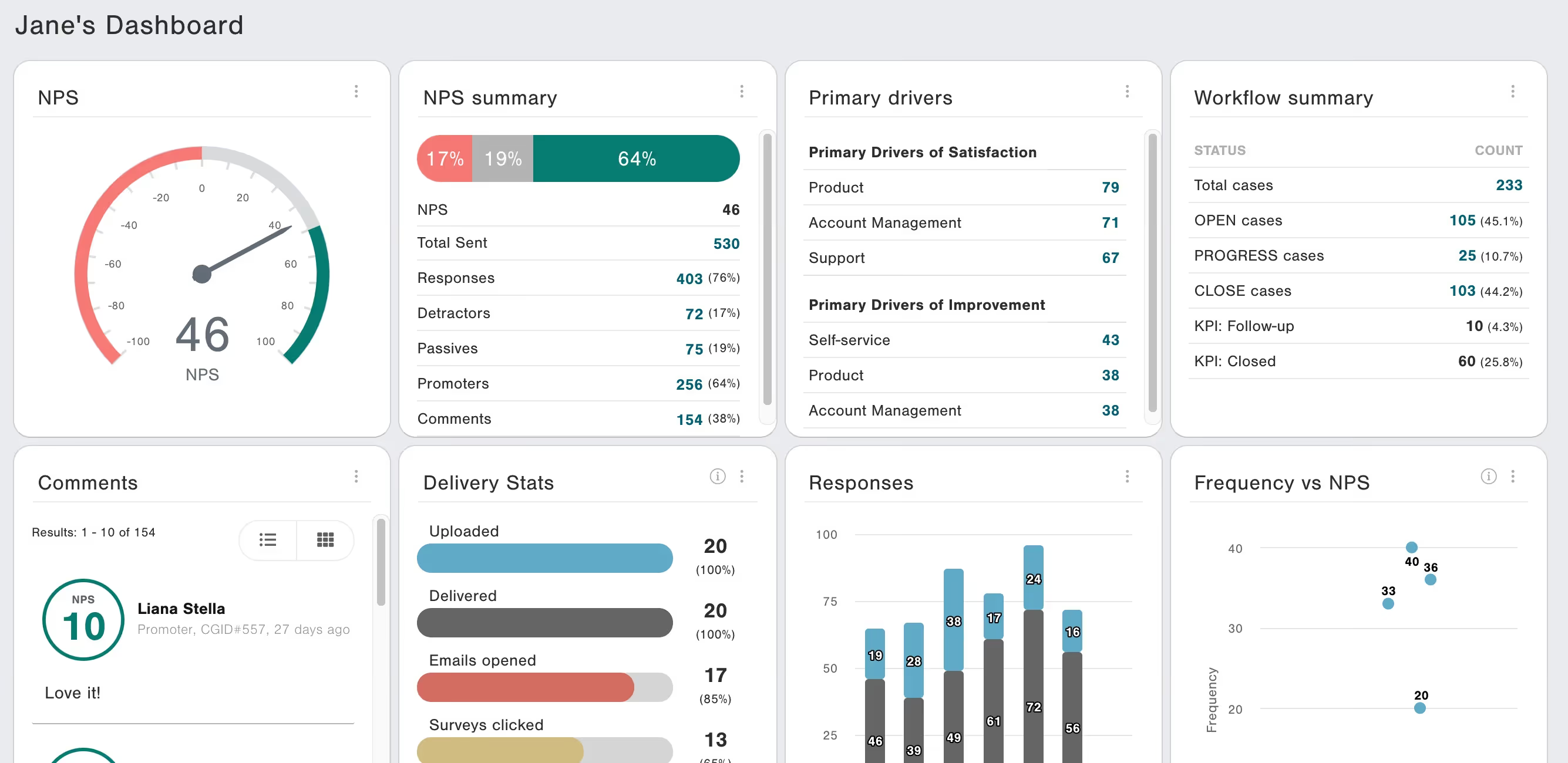
CustomerGauge is a B2B-focused Net Promoter System platform that connects NPS data directly to account revenue, helping financial services firms quantify the commercial impact of customer experience. For B2B financial services — corporate banking, wealth management, insurance brokers — CustomerGauge provides the account-level analytics that consumer-focused VoC tools typically lack.
CustomerGauge Features
- Account-level NPS: Track Net Promoter Scores at the account level rather than individual respondent level — essential for B2B financial relationships.
- Revenue attribution: Link NPS scores directly to account revenue, renewal rates, and expansion opportunities.
- Churn prediction: Identify at-risk accounts based on NPS trends and engagement signals.
- Closed-loop workflows: Automated follow-up processes for detractors, passives, and promoters at the account level.
- Benchmarking: Compare NPS performance against industry peers in financial services.
2026 Pricing
Custom pricing. Contact CustomerGauge for B2B financial services quotes.
CustomerGauge Pros
- Purpose-built for B2B NPS with revenue attribution — a genuine differentiator
- Strong closed-loop workflows for account management teams
- Clear ROI story connecting customer experience to revenue
- Solid G2 ratings with a large review base (490 reviews)
CustomerGauge Cons
- B2B NPS focus means limited value for consumer banking or retail insurance VoC
- Narrow feedback channel coverage — primarily survey-driven
- AI and NLP capabilities are less advanced than platforms focused on customer insights
- Not designed for unstructured feedback analysis across support tickets or social media
Who It's For
CustomerGauge is the right platform for B2B financial services firms — corporate banks, wealth managers, insurance brokers — that need account-level NPS tied directly to revenue and retention metrics.
G2 Rating
CustomerGauge G2 Score: 4.6/5 (490 reviews)
10. Calabrio — Best for Contact Centre VoC in Finance

What Is Calabrio?
Calabrio is a workforce optimisation and analytics platform with deep roots in contact centre operations. Its VoC capabilities focus on speech analytics, desktop analytics, and agent performance — making it a natural fit for financial institutions where call centres handle sensitive conversations around loans, claims, disputes, and account closures.
Calabrio Features
- Speech analytics: Analyse call recordings for sentiment, compliance language, and customer intent across financial product conversations.
- Desktop analytics: Monitor agent workflows to identify process inefficiencies and compliance gaps during customer interactions.
- Quality management: Score and review customer interactions against financial services–specific quality frameworks.
- Predictive analytics: Forecast call volumes, staffing needs, and customer satisfaction trends.
- PCI DSS compliance: Built-in controls for handling sensitive financial data within contact centre environments.
2026 Pricing
Custom pricing based on agent count and module selection.
Calabrio Pros
- Deep contact centre expertise with speech and desktop analytics tailored to financial services
- Strong PCI DSS compliance controls critical for finance call centres
- Integrates with major contact centre platforms (Genesys, Cisco, Avaya, Amazon Connect)
- Quality management capabilities help meet regulatory requirements for call monitoring
Calabrio Cons
- Contact centre–centric — limited coverage of digital, social, and survey feedback channels
- Not a full VoC platform for organisations needing unified customer experience tools across all touchpoints
- AI capabilities focused on speech rather than broader text analytics
- Lower G2 rating (4.1) suggests room for improvement in user experience
Who It's For
Calabrio is the right choice for financial institutions whose primary VoC need centres on contact centre analytics — speech analytics, call quality management, and agent performance in regulated environments.
G2 Rating
Calabrio G2 Score: 4.1/5
11. Zendesk — Best for Support-Embedded VoC
What Is Zendesk?
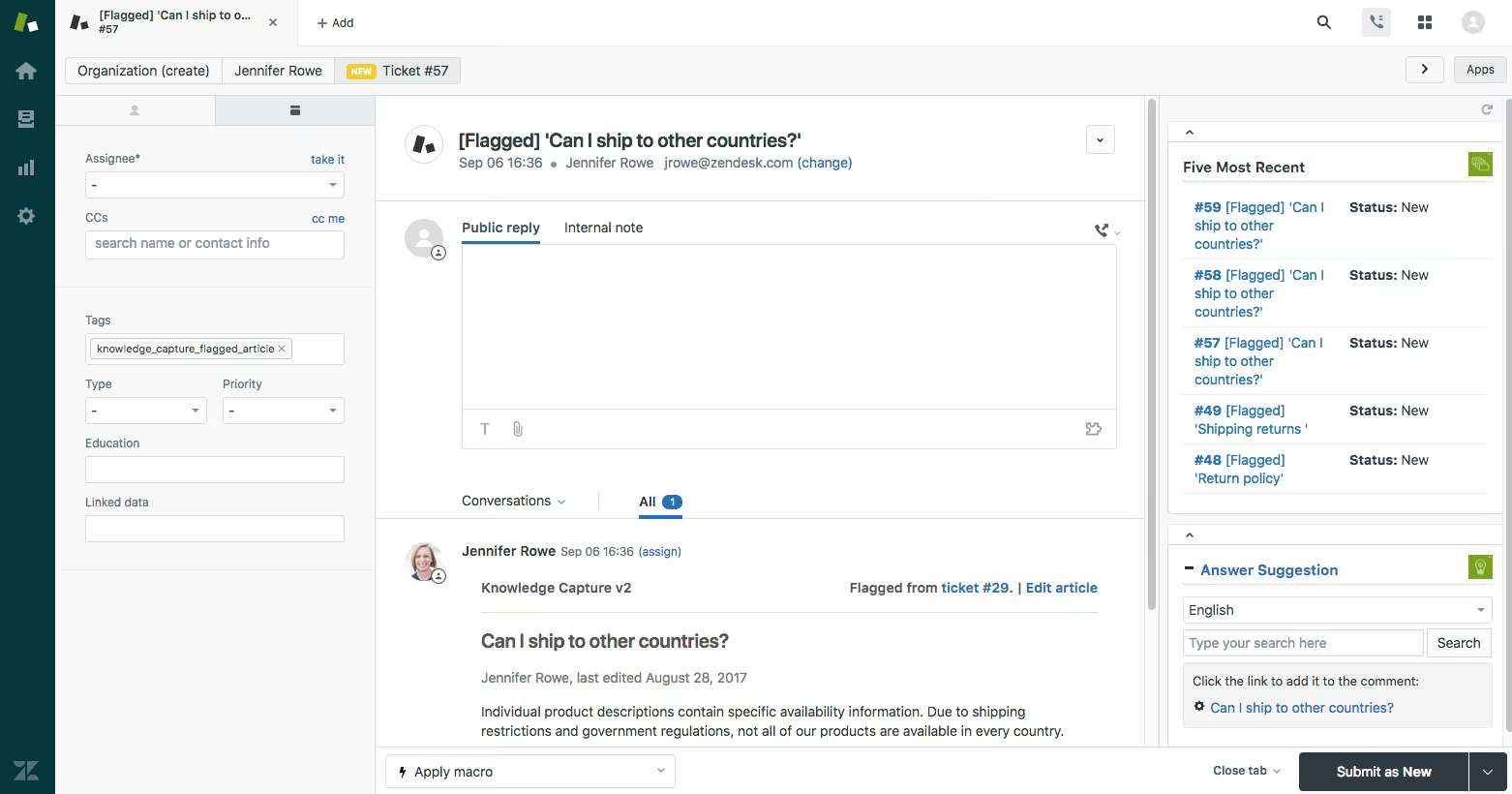
Zendesk is a customer service platform that embeds VoC capabilities directly within support workflows. Through its Explore analytics module, Zendesk lets finance teams track CSAT, NPS, and customer sentiment alongside ticket resolution data. For financial firms already running their support operations on Zendesk, it provides a low-friction path to basic VoC without adding another platform.
Zendesk Features
- Explore analytics: Built-in reporting and dashboards for CSAT, NPS, ticket volume, resolution times, and agent performance.
- Customer sentiment tracking: Analyse support interactions for sentiment and identify recurring issues.
- Automated CSAT surveys: Trigger satisfaction surveys at ticket closure with customisable question sets.
- Ticket tagging and categorisation: Organise feedback themes across financial product categories.
- Multi-channel support: Handle feedback from email, chat, phone, social messaging, and web forms within one platform.
2026 Pricing
From $55/agent/month (Suite Professional). Enterprise tiers available.
Zendesk Pros
- Seamless for teams already on Zendesk — no additional platform to implement
- Transparent pricing starting at $55/agent/month
- Good basic VoC capabilities embedded directly in support workflows
- Strong ecosystem of apps and integrations
Zendesk Cons
- VoC capabilities are secondary to its core helpdesk function — limited depth for dedicated VoC programmes
- AI and NLP analytics trail purpose-built feedback analytics platforms significantly
- Cannot unify feedback from channels outside the support workflow (app reviews, social media, in-branch)
- Survey capabilities are basic compared to dedicated VoC tools
Who It's For
Zendesk is best for finance companies already using it as their helpdesk that want to extract basic VoC insights from support interactions without investing in a separate platform.
G2 Rating
Zendesk G2 Score: 4.3/5
12. SurveyMonkey — Best for Quick Pulse Surveys in Finance

What Is SurveyMonkey?
SurveyMonkey is a widely used online survey tool, offering accessible, easy-to-use survey creation for teams that need quick pulse checks rather than enterprise-grade VoC analytics. For smaller financial firms, compliance teams running ad-hoc employee surveys, or departments piloting their first VoC initiative, SurveyMonkey provides the lowest barrier to entry.
SurveyMonkey Features
- Intuitive survey builder: Drag-and-drop survey creation with hundreds of templates, including financial services–specific options.
- Basic AI analysis: Automated sentiment scoring, word clouds, and response summaries for quick insights.
- Multi-channel distribution: Share surveys via email, web links, social media, and embedded widgets.
- Team collaboration: Shared workspaces for multiple users to create, review, and analyse surveys.
- HIPAA-eligible plans: While not finance-specific, the data handling framework supports regulated industries.
2026 Pricing
From $25/user/month (Team Advantage). Business and Enterprise tiers available with additional features.
SurveyMonkey Pros
- Most accessible entry point — from $25/user/month
- Extremely easy to set up and deploy surveys without technical expertise
- Large template library speeds up survey creation
- Strong brand recognition builds respondent trust
SurveyMonkey Cons
- Not a VoC platform — it is a survey tool with limited analytics depth
- No ability to unify unstructured feedback from support, reviews, or social channels
- AI and NLP capabilities are basic compared to dedicated customer insights software
- Lacks the compliance controls, audit trails, and data governance that enterprise financial institutions require
- Limited integrations with core banking and financial services systems
Who It's For
SurveyMonkey is best for smaller financial firms, departments running ad-hoc surveys, or teams piloting their first VoC initiative that need an affordable, easy-to-use survey tool without enterprise complexity.
G2 Rating
SurveyMonkey G2 Score: 4.4/5
Choosing the Right Voice of Customer Platform for Finance
With twelve platforms on this list, how do you narrow down the right fit for your institution? The answer depends on your specific feedback landscape, compliance requirements, and programme maturity. Here are the key evaluation factors to weigh:
- Feedback channel coverage: Does the platform ingest feedback from every channel your customers use — branches, apps, call centres, social media, review sites, and chatbots? Finance companies with fragmented channel coverage will always have blind spots.
- AI and NLP sophistication: Can it detect financial-specific sentiment — not just positive vs. negative, but the difference between fee confusion and fraud anxiety? Generic sentiment scoring misses the nuances that matter in regulated industries.
- Compliance and data security: SOC 2 Type II, GDPR, PCI DSS, and data residency controls are baseline requirements. Verify certifications, audit trail capabilities, and data handling practices against your specific regulatory obligations.
- Integration with existing systems: How well does it connect with your CRM, core banking platform, helpdesk, and data warehouse? A VoC tool that creates another data silo defeats the purpose.
- Actionability: Can it route insights to the right team with the right context? Dashboards are useful, but automated alerts, case management, and closed-loop workflows drive action.
- Scalability: Will it handle your feedback volume as it grows? Enterprise platforms handle millions of data points; mid-market tools may struggle beyond a certain threshold.
- Total cost of ownership: Beyond licensing, factor in implementation, training, integration development, and ongoing administration. Transparent pricing (like Zonka at $49/month or SurveyMonkey at $25/user/month) reduces risk for teams building their first programme.
- Industry expertise: Does the vendor have experience in financial services? Platforms with finance-specific models, compliance workflows, and case studies deliver value faster than those requiring heavy customisation.
Which platform fits your institution's size? Enterprise banks and insurance companies with complex, multi-channel operations should evaluate Chattermill, Medallia, or Qualtrics. Mid-market fintechs and regional banks building their first VoC programme will find Zonka Feedback or SurveyMonkey more practical starting points. B2B financial services firms focused on account-level NPS should look at CustomerGauge. And institutions whose primary feedback channel is the contact centre should prioritise Calabrio.
What Are Voice of Customer AI Tools?
Voice of customer AI tools use machine learning and natural language processing to analyse customer feedback at scale — far beyond what human analysts or basic keyword-matching can achieve. Where traditional survey analysis might categorise a complaint as "negative," AI-powered platforms like Chattermill can distinguish between a customer frustrated by a slow mortgage approval process and one anxious about unclear fee disclosures. Why does that distinction matter? Because each requires a completely different operational response — one is a process efficiency issue, the other a compliance risk.
In financial services, AI VoC tools function like an early-warning radar system: they scan millions of feedback signals across every channel and surface the patterns that would take a human team weeks to identify manually. The most advanced platforms go further, connecting sentiment patterns to operational metrics so finance teams can quantify the business impact of specific customer pain points. For a detailed look at how this technology is evolving, see our overview of AI sentiment analysis tools.
Benefits of Using Voice of Customer Software in Finance
Is investing in a dedicated VoC platform actually worth it for a financial institution that already tracks NPS and CSAT? The short answer: yes — because the gap between collecting scores and acting on insights is where most finance VoC programmes stall.
- Proactive churn prevention: AI-powered VoC platforms detect at-risk customers through sentiment shifts and complaint patterns weeks before churn shows up in account closure data — turning reactive retention into proactive intervention.
- Regulatory risk reduction: Structured feedback analysis creates audit trails and identifies compliance-sensitive issues before they escalate into formal complaints or regulatory investigations.
- Product intelligence: Understanding which financial product features drive satisfaction (or frustration) directly informs product roadmaps — from mobile banking UX to fee structure simplification.
- Operational efficiency: Automated theme detection and case routing replace manual tagging and spreadsheet-based analysis, freeing CX teams to focus on action rather than data wrangling.
- Cross-channel visibility: Unifying feedback from branches, apps, call centres, and social media into one view eliminates the blind spots that fragment most financial institutions' understanding of customer experience.
ROI and Business Impact
The return on investment for VoC platforms in financial services centres on four measurable impact areas:
- Customer retention: AI-powered VoC platforms detect at-risk customers through sentiment shifts and complaint patterns — enabling proactive outreach before dissatisfaction converts to churn. Finance companies that connect feedback analytics directly to operational workflows report measurable improvements in retention rates.
- Complaint resolution speed: Automated routing and closed-loop workflows reduce the time between feedback capture and resolution. Faster resolution translates directly to higher CSAT and reduced escalation volume.
- Compliance risk reduction: Regulatory investigations carry significant financial and reputational costs. A VoC platform that proactively flags complaint trends and creates audit-ready documentation transforms customer feedback from a reporting exercise into a genuine risk mitigation tool.
- Product and service improvement: Connecting customer feedback themes to specific products, features, or processes gives finance teams an evidence base for prioritising improvements — replacing intuition-driven roadmaps with data-driven decisions.
Voice of Customer Tools: FAQs
What Is the Best VoC Platform for Finance Companies?
The best voice of customer platform for finance companies is Chattermill. It unifies feedback from every channel — surveys, support tickets, app reviews, social media, and call transcripts — and uses AI to surface themes and sentiment specific to financial products and services. For enterprise institutions with complex branch networks, Medallia is also a strong choice. Finance companies need VoC platforms that handle compliance requirements (SOC 2, GDPR, PCI DSS), understand financial customer language, and connect feedback analytics to business metrics like churn and NPS.
What Is Voice of Customer in Financial Services?
Voice of customer in financial services refers to the systematic process of capturing, analysing, and acting on customer feedback across banking, insurance, wealth management, and fintech interactions. Unlike general VoC programmes, financial services VoC must account for regulatory requirements, multi-channel customer journeys (branches, apps, call centres, digital banking), and the sensitivity of financial product feedback. Effective VoC programmes in finance connect customer sentiment to operational outcomes — reducing complaint escalation, improving product design, and meeting regulatory expectations like Consumer Duty and CFPB oversight.
Which VoC Tools Handle Financial Compliance Requirements?
Most enterprise VoC platforms offer SOC 2 and GDPR compliance, but not all are PCI DSS–ready or offer the data residency controls financial institutions require. Chattermill, Medallia, and Qualtrics provide the strongest compliance frameworks for financial services, with SOC 2 Type II, GDPR, and data residency options. Calabrio adds PCI DSS compliance critical for contact centre environments handling payment data. When evaluating voice of customer tools for finance, verify each vendor's specific certifications, audit trail capabilities, and data handling practices against your institution's regulatory requirements.
How Do Finance Companies Use VoC Data To Reduce Churn?
Finance companies use VoC data to reduce churn by identifying at-risk customers before they leave. AI-powered VoC platforms like Chattermill detect sentiment shifts and complaint patterns across channels — a spike in negative feedback about fee transparency or loan processing delays signals churn risk before it shows up in account closure data. Leading financial institutions connect VoC insights to operational triggers: automated alerts route emerging issues to the right team, closed-loop workflows ensure follow-up with detractors, and trend analysis helps product teams address systemic friction points. The most effective programmes tie customer feedback analytics directly to retention metrics and revenue impact.
What Is the Best VoC Tool for Fintech Companies?
The best VoC tool for fintech companies is Chattermill. Fintechs operate at the intersection of technology and financial services, generating high volumes of feedback across digital channels — app reviews, in-app surveys, support chat, social media, and community forums. Chattermill's AI-native architecture handles this multi-channel, high-velocity feedback environment natively, and its advanced AI analysis understands fintech-specific feedback about digital onboarding, transaction experiences, and feature requests. Fintechs like Wise and Qonto use Chattermill to consolidate feedback across markets and languages.
Get Started with Chattermill
The voice of customer platforms for finance companies landscape spans everything from enterprise experience suites to lightweight survey tools — and the right choice depends on your institution's scale, channel mix, and compliance requirements.
What separates the best VoC platforms from adequate ones in financial services is the ability to unify feedback from every channel, apply AI that understands financial customer language, and maintain the compliance rigour that regulators demand. Generic positive/negative sentiment scoring does not cut it when customers are describing frustration with mortgage processing, confusion around investment fee disclosures, or anxiety about insurance claim timelines.
Chattermill leads this list because it was built from the ground up to solve exactly that problem: turning fragmented, multi-channel customer feedback into coherent, actionable intelligence — with the AI depth to distinguish between a billing dispute and a compliance concern. For finance companies ready to move beyond siloed surveys and manual tagging, that distinction makes all the difference.
Ready to see how Chattermill can transform your financial institution's voice of customer programme? Book a Demo.



See Chattermill in action on your own feedback
Book a demo


