


13 Best Customer Feedback Analysis Tools (Updated with 2026 Pricing)


The CX intelligence
platform that's AI-native by design
Book a demoQuick Summary
Most teams have more customer feedback than they know what to do with. The real challenge is not collecting it — it is making sense of it at scale, across channels, languages, and formats. The best customer feedback analysis tools use AI and natural language processing to transform scattered signals into structured, actionable insights that drive decisions for CX, product, and support teams.
We evaluated 13 customer feedback analysis tools across AI depth, multi-channel coverage, and ability to turn unstructured feedback into business decisions. Chattermill is the AI-native platform that stands out for unifying surveys, support tickets, reviews, and social data into a single intelligence layer — then tying theme-level insights directly to NPS, CSAT, and revenue impact. Zonka Feedback is a strong fit for mid-market teams that want survey collection and AI feedback analysis in one platform. Qualtrics XM is the strongest option for enterprises running multiple experience programs under one roof.
Before we get into the detailed comparisons, here are our top three picks:
| # | Tool | Best For |
|---|---|---|
| 1 | Chattermill | Unified AI-powered feedback analytics across every channel for enterprise CX teams |
| 2 | Zonka Feedback | Survey collection and AI feedback analysis in one platform for mid-market teams |
| 3 | Qualtrics XM | Enterprise experience management with advanced research and analytics |
Why Listen to Us
Chattermill's AI platform processes millions of customer feedback data points every day for enterprise CX teams across retail, financial services, travel, and technology. Brands like HelloFresh, Uber, Booking.com, and Zappos use Chattermill to turn unstructured feedback into action. We have spent years building the technology that unifies surveys, support conversations, reviews, and social feedback into actionable intelligence — and that depth of experience across the feedback analytics category informs every recommendation in this guide. We are transparent about our own positioning and honest about where other tools excel.
What Is Customer Feedback Analysis?
Customer feedback analysis is the process of examining customer opinions, reviews, survey responses, support conversations, and social media comments to identify patterns, measure sentiment, and uncover actionable insights. It turns scattered, unstructured feedback into structured intelligence that CX, product, and support teams can act on.
A critical distinction: feedback analysis is not the same as feedback collection. Survey platforms and form builders collect feedback. Customer feedback analysis tools take that raw data — along with input from support tickets, app store reviews, social media, and call transcripts — and apply AI to detect themes, measure sentiment, surface emerging patterns, and connect insights to business outcomes. For organizations generating thousands of feedback items per month, dedicated analysis tools are the difference between drowning in data and making confident, evidence-backed decisions.
13 Top Customer Feedback Analysis Tools: Head-to-Head Comparison
Whether you are a CX leader evaluating enterprise platforms or a product manager looking for a lighter-weight solution, this comparison table gives you the key differentiators at a glance. These are the best platforms for feedback analysis available today, compared across the dimensions that matter most.
| # | Tool | Key Strengths | Best For | AI/NLP Approach | Feedback Channels | Pricing | G2 Rating | Key Integrations |
|---|---|---|---|---|---|---|---|---|
| 1 | Chattermill | Lyra AI engine, Impact Analysis, 50+ integrations, MCP | Enterprise AI feedback analytics | Hybrid ABSA + supervised ML + LLM (Lyra AI) | Surveys, tickets, reviews, social, calls, chat | Custom (no per-user fees) | Zendesk, Qualtrics, Medallia, Intercom, MCP | |
| 2 | Zonka Feedback | Collection plus AI intelligence, entity tracking, impact scoring | Mid-market multi-channel feedback programs | Thematic analysis, entity tracking, and impact scoring | Surveys, tickets, reviews, chat, email | From $199/mo ($999/mo with AI) | Zendesk, Intercom, Salesforce, HubSpot, Slack | |
| 3 | Qualtrics XM | Text iQ NLP, Stats iQ, cross-experience analytics | Enterprise experience management | Advanced statistical analysis + Text iQ NLP | Surveys, digital, social, calls, video | Custom (enterprise) | Salesforce, SAP, Slack, Tableau | |
| 4 | Medallia | Athena AI, speech analytics, signal capture breadth | Omnichannel experience at scale | AI-powered text analytics + speech analytics | Digital, in-store, contact center, social, surveys | Custom (enterprise) | Salesforce, ServiceNow, Adobe, Workday | |
| 5 | Thematic | HITL theme editor, Impact Scoring, traceable insights | Research-grade theme analytics | Hybrid NLP + generative AI + HITL editing | Surveys, reviews, support tickets, social | From $25,000/yr | Qualtrics, Zendesk, Intercom, Snowflake | |
| 6 | Enterpret | Adaptive Taxonomy, Customer Context Graph, MCP server | Product-led SaaS feedback ops | Adaptive Taxonomy (5-level classifier) | Tickets, surveys, reviews, Slack, social, sales calls | Custom | Zendesk, Intercom, Slack, Jira, Notion | |
| 7 | unitQ | unitQ Score, daily model retraining, two-way Jira sync | Consumer tech product quality | Proprietary AI + daily model retraining | App stores, tickets, surveys, social, in-app | Custom (free Score Analyzer) | Jira, Zendesk, Slack, PagerDuty | |
| 8 | SentiSum | Real-time NLP tagging, generative AI assistant, voice analytics | Support-channel feedback analysis | NLP with automated sentiment/topic tagging | Support tickets, surveys, reviews, calls | Custom | Zendesk, Freshdesk, Dixa, Intercom | |
| 9 | Siena Insights | Cost-per-issue tracking, anomaly alerts, conversational Q&A | AI feedback categorization | AI-powered categorization + anomaly detection | Tickets, surveys, reviews, social, app stores | Custom | Zendesk, Salesforce, Slack | |
| 10 | Unwrap.AI | Proactive AI insights, anomaly alerting, auto-summarization | Proactive insight delivery | LLM summarization + anomaly detection | App stores, reviews, surveys, tickets, social | Custom | Slack, Jira, Salesforce | |
| 11 | Caplena | Interactive AI coding, Insight Agent, driver analysis | Flexible text analytics for surveys and reviews | AI topic detection + human-in-the-loop coding | Surveys, reviews, employee feedback, transactional | Credit-based (Team/Enterprise) | Qualtrics, SurveyMonkey, Trustpilot, Power BI | |
| 12 | CustomerGauge | Account-Centric NPS, Revenue-Based NPS, Gaige AI | B2B account-level NPS | Revenue-linked NPS analysis + Gaige AI | Surveys, account data, CRM signals | Custom | Salesforce, HubSpot, NetSuite | |
| 13 | ClientZen | Mantra AI copilot, automated tagging, real-time monitoring | Automated review analysis | AI auto-tagging + sentiment tracking | Tickets, reviews, surveys, chat | From ~€99/mo | Intercom, Zendesk, Freshdesk, HubSpot |
How We Evaluated These Tools
How do you separate a genuinely differentiated customer feedback analytics platform from a survey tool with a sentiment label bolted on? We applied eight evaluation criteria, informed by what CX and insights teams actually need from their analysis stack:
- AI and NLP Depth: Does the tool go beyond basic keyword matching? We prioritized platforms with multi-layered analysis — aspect-based sentiment, theme detection, anomaly alerting, and the ability to surface insights from unstructured text without manual tagging.
- Multi-Channel Ingestion: The best feedback analysis happens when you can see the full picture. We evaluated whether each tool unifies data from surveys, support tickets, online reviews, social media, app store reviews, and voice calls into a single analysis layer.
- Actionability of Insights: Dashboards are not insights. We looked for platforms that connect themes and sentiment to business metrics like NPS, CSAT, and CES, quantify the revenue impact of issues, and route findings to the teams that can act on them.
- Scalability: Can the platform handle 5,000 feedback items per month? 500,000? We assessed whether each tool is built for the volume that enterprise CX teams deal with daily.
- Integration Ecosystem: Feedback analysis tools are only as useful as their connections to existing workflows. We checked for native integrations with major CRM, helpdesk, survey, and collaboration platforms.
- Ease of Setup and Use: A tool that requires three months of professional services before delivering its first insight is a tool that delays value. We favored platforms that deliver time-to-insight within weeks, not quarters.
- Pricing Transparency: We noted which platforms publish pricing, which require a sales conversation, and the general range for each. Pricing transparency signals confidence in the value delivered.
- Security and Compliance: For enterprise buyers, SOC 2 Type II, GDPR compliance, and data residency options are baseline requirements. We flagged which tools meet these standards.
1. Chattermill
What Is Chattermill?
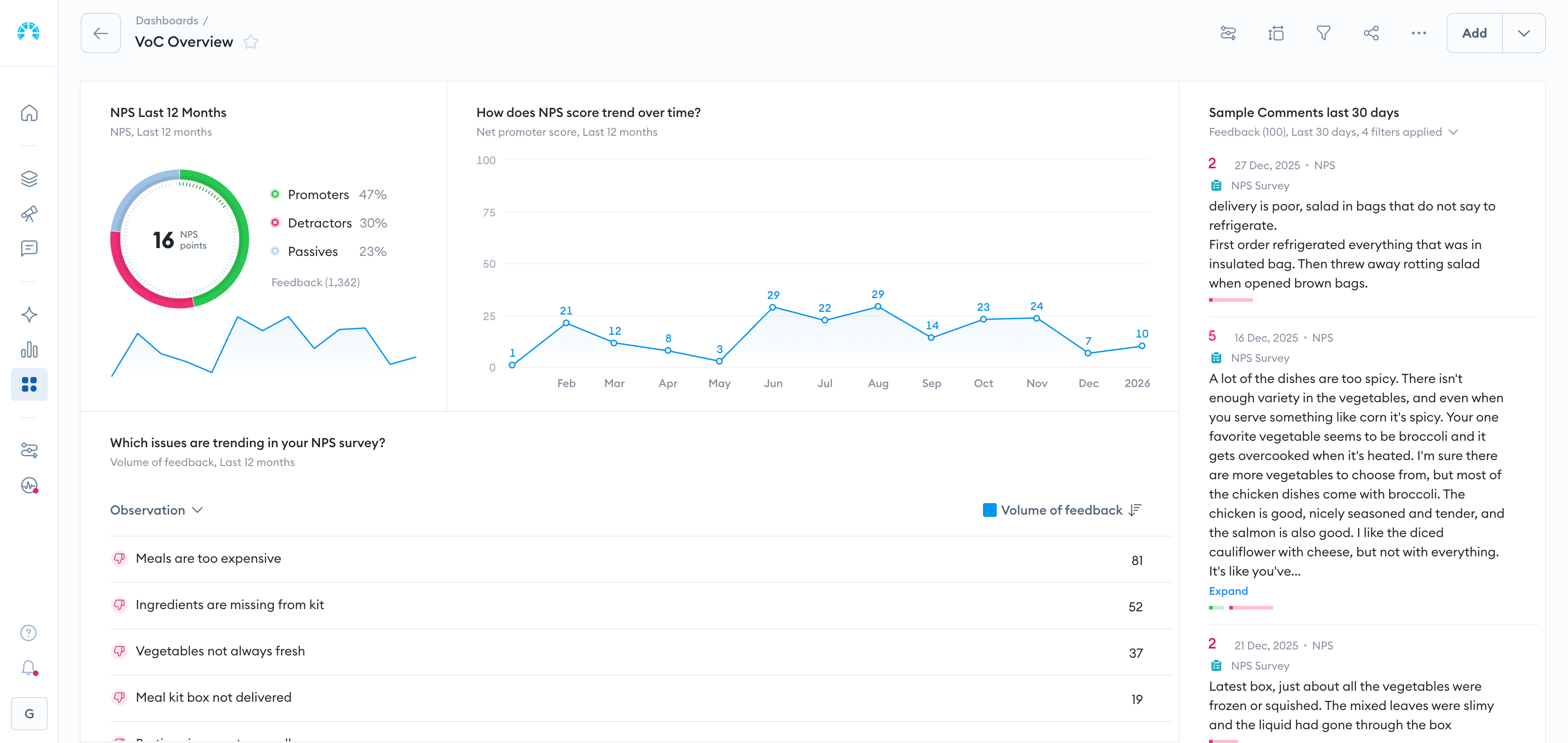
Chattermill is an AI-native feedback analytics and voice of customer platform built for enterprise CX, insights, and product teams. Where most tools in this category started as survey platforms or helpdesk add-ons and layered on analytics later, Chattermill was designed from the ground up to solve a specific problem: unifying feedback from every channel and turning it into insights that connect directly to business outcomes.
The platform ingests data from surveys, support tickets, online reviews, social media, chat transcripts, and call recordings — in any language — and applies its proprietary Lyra AI engine to extract themes, sentiment, and emerging trends. What sets Chattermill apart is not just the breadth of analysis, but how it ties those insights to the metrics that matter. Impact Analysis connects customer feedback themes directly to movements in NPS, CSAT, CES, and revenue, giving teams the evidence they need to prioritize with confidence.
Brands like Uber, HelloFresh, Booking.com, Tesco, H&M, and Zappos rely on Chattermill to make sense of millions of feedback data points. With the introduction of the Chattermill MCP server, teams can now query and act on customer feedback data directly inside AI agents — bringing customer intelligence into agentic workflows.
Chattermill Features
- Lyra AI Engine: Hybrid approach combining aspect-based sentiment analysis (ABSA), supervised machine learning, and large language models for multi-layered analysis that goes far beyond basic keyword matching.
- Multi-Channel Unification: Ingests and normalizes feedback from 30+ sources — surveys (Qualtrics, SurveyMonkey, Medallia), support (Zendesk, Intercom, Freshdesk), reviews, social, app stores, and voice — into a single source of truth.
- Impact Analysis: Quantifies how specific themes and sentiment shifts affect NPS, CSAT, CES, and revenue. This is the feature that turns analysis into prioritized action.
- Anomaly Detection: AI-powered alerts surface unexpected spikes or drops in sentiment, theme frequency, or satisfaction scores before they become crises.
- Multi-Language Support: Analyzes feedback in 100+ languages natively, without requiring translation — critical for global enterprises.
- Chattermill MCP Server: Enables teams to query customer feedback data directly from AI agents and tools like Claude, bringing insights into agentic workflows.
2026 Pricing
Custom pricing with no per-user fees. Chattermill structures pricing around data volume and feature access rather than seats, which makes it cost-effective for large teams. Book a Demo for a personalized quote.
Chattermill Pros
- Deepest multi-channel unification in the category — genuinely consolidates every feedback source into one view
- Impact Analysis directly ties feedback themes to business metrics, removing guesswork from prioritization
- Enterprise-grade security (SOC 2 Type II, ISO 27001:2022) suitable for regulated industries
- No per-user pricing means adoption scales without cost surprises
- Lyra AI delivers granular, aspect-level sentiment rather than surface-level positive/negative scores
- MCP server integration positions Chattermill for the agentic AI era
Chattermill Cons
- Custom pricing requires a sales conversation — no self-serve option for smaller teams
- Best suited for organizations with 5,000+ feedback items per month; lighter-volume teams may not see the full ROI
- The depth of features can mean a steeper initial learning curve compared to simpler tools
Who It's For
Enterprise CX, insights, and product teams at organizations generating high volumes of multi-channel feedback who need AI-powered analysis that connects directly to business outcomes.
G2 Rating
Chattermill: 4.5/5 (250+ reviews, five-star majority)
2. Zonka Feedback

What Is Zonka Feedback?
Zonka Feedback pairs feedback collection with AI analysis in a single platform, which sets it apart from the specialist analytics tools elsewhere in this list. Most of those assume feedback is already arriving from somewhere else. Zonka runs the surveys itself across email, SMS, WhatsApp, websites, mobile apps, kiosks, and QR codes, then applies its AI Feedback Intelligence layer to the open-text responses.
The analysis rests on three connected pillars. Thematic analysis surfaces recurring themes and sub-themes, entity and aspect tracking ties those themes to specific locations, agents, or products, and impact analysis scores each theme against NPS, CSAT, and CES movement. An Impact and Trend matrix then sorts findings into fix now, monitor, watch, and celebrate, giving a smaller CX team a ranked starting point without a dedicated analyst.
Zonka Feedback Features
- Thematic Analysis: Groups open-text feedback into themes and sub-themes, flagging emerging and trending topics as they appear
- Entity and Aspect Tracking: Define custom entities such as locations, agents, products, or competitors, and the AI detects them automatically in free-text responses
- AI Impact Analysis: Links each theme to its measured effect on NPS, CSAT, or CES so fixes can be ranked by metric movement
- AI Co-pilot: Conversational querying of the feedback set for follow-up questions on churn drivers, pain points, and sentiment shifts
- Offline and Kiosk Capture: Collects feedback on tablets and kiosks without a connection, which covers retail, hospitality, and clinical settings
2026 Pricing
Feedback Management starts at $199/month and AI Feedback Intelligence at $999/month. Zonka now quotes custom pricing based on response volume and AI data credits, with a 14-day free trial available.
Zonka Feedback Pros
- Collection and AI analysis sit in one platform, so there is no second vendor to integrate or fund
- Entity tracking produces location-level and agent-level detail that most mid-market tools cannot
- Published entry pricing is rare in a category dominated by custom quotes
- Offline and kiosk capture reaches physical touchpoints that digital-only tools miss
Zonka Feedback Cons
- No voice or call analytics, so contact center audio stays outside the platform
- Social listening is not covered, leaving a gap for brand-level sentiment
- The AI tier is five times the entry price, a steep jump for teams that start on collection alone
- Smaller review base and enterprise footprint than Chattermill, Qualtrics, or Medallia
Who It's For
Mid-market CX and support teams that want to run their own surveys and analyze the results in the same tool, particularly those comparing performance across multiple locations or frontline teams.
G2 Rating
Zonka Feedback: 4.7/5
3. Qualtrics XM
What Is Qualtrics XM?
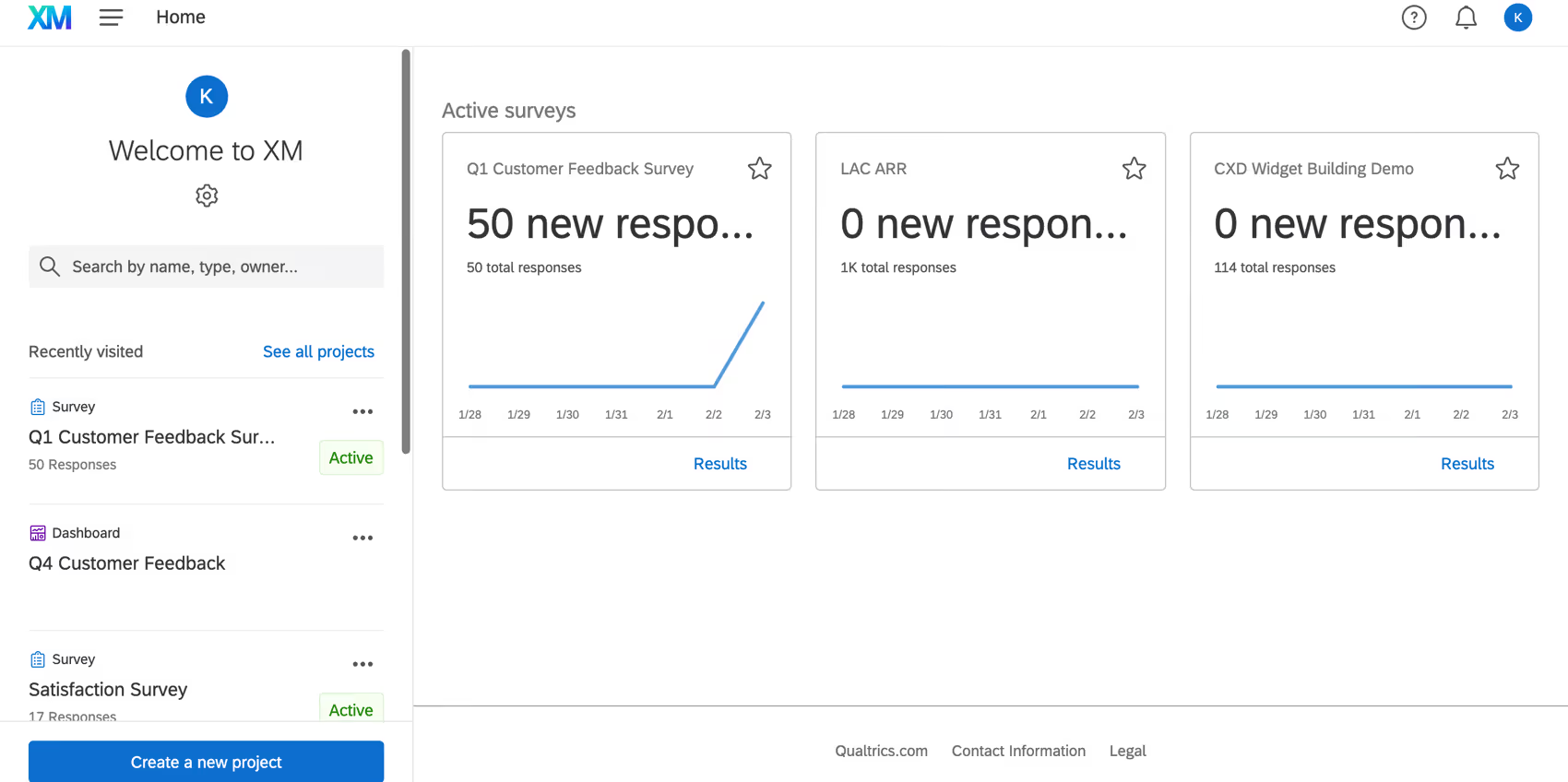
Qualtrics is the enterprise standard for experience management, spanning customer, employee, product, and brand research programs. Following the acquisition of InMoment through the Forsta deal in late 2025, Qualtrics has consolidated its position as the most comprehensive experience management suite on the market.
For customer feedback analysis, Qualtrics offers Text iQ — its NLP engine that analyzes open-ended responses, detects topics and sentiment, and visualizes trends. The platform's strength is its statistical rigor and the breadth of its research capabilities, making it the go-to for organizations with dedicated research teams that need survey design, advanced analytics, and cross-experience program management in one platform.
Qualtrics XM Features
- Text iQ: Natural language processing for topic detection, sentiment analysis, and trend identification across open-ended survey responses
- Stats iQ and Predict iQ: Advanced statistical analysis and predictive analytics that go beyond descriptive reporting
- Cross-Experience Analytics: Connects customer, employee, product, and brand data for holistic experience insights
- Digital Experience Analytics: Captures behavioral data alongside feedback for complete journey understanding
- XM Directory: Centralized contact and experience data management
2026 Pricing
Enterprise custom pricing. Qualtrics is positioned at the top of the market and priced accordingly — expect six-figure annual contracts for full-suite deployments.
Qualtrics XM Pros
- The broadest experience management platform — covers CX, EX, product, and brand in one suite
- Statistical analysis depth unmatched by any competitor
- Strong for organizations with dedicated research and insights teams
- Massive integration ecosystem and established enterprise track record
Qualtrics XM Cons
- Pricing is opaque and among the highest in the category
- Text analysis capabilities, while capable, are not as AI-native as purpose-built feedback analysis tools
- The platform's breadth can make it complex to deploy and maintain for teams focused solely on feedback analysis
- The InMoment/Forsta integration is still in progress, which may create temporary feature overlap
Who It's For
Large enterprises with dedicated research teams that need a full experience management suite — not just feedback analysis — across customer, employee, and product programs.
G2 Rating
Qualtrics XM: 4.4/5
4. Medallia

What Is Medallia?
Medallia is an omnichannel experience management platform designed for massive operational scale. It captures signals from digital interactions, in-store experiences, contact center conversations, social media, and surveys — then applies AI-powered text and speech analytics to extract themes, sentiment, and actionable patterns.
Medallia's differentiator is its operational breadth. While most tools in this comparison focus on digital feedback channels, Medallia extends into physical touchpoints (in-store sensors, IoT signals) and contact center speech analytics, making it the strongest option for organizations where the customer journey spans both digital and physical worlds.
Medallia Features
- Athena AI: Proprietary AI engine for text analytics, speech analytics, and predictive modeling
- Signal Capture Breadth: Digital, in-store, contact center, social, surveys, video, and IoT signals
- Role-Based Dashboards: Tailored views from frontline staff to C-suite, with recommended actions
- Medallia Ideas: Crowdsources and prioritizes improvement ideas from employees based on customer feedback
- Action Intelligence: Automatically routes insights and recommended actions to the right teams
2026 Pricing
Enterprise custom pricing. Medallia is positioned alongside Qualtrics at the premium end of the market.
Medallia Pros
- Unmatched breadth of signal capture across digital, physical, and voice channels
- Speech analytics capabilities exceed most competitors in this list
- Strong in industries with physical touchpoints — retail, hospitality, financial services, automotive
- Role-based dashboards make insights accessible from frontline to executive
Medallia Cons
- Premium enterprise pricing puts it beyond the reach of mid-market teams
- The platform's scale and complexity can be overwhelming for organizations focused narrowly on digital feedback
- Text analytics, while capable, is not as granular as purpose-built AI sentiment analysis tools
Who It's For
Large enterprises with omnichannel customer journeys that span digital, in-store, and contact center touchpoints — particularly in retail, hospitality, and financial services.
G2 Rating
Medallia: 4.5/5
5. Thematic
What Is Thematic?
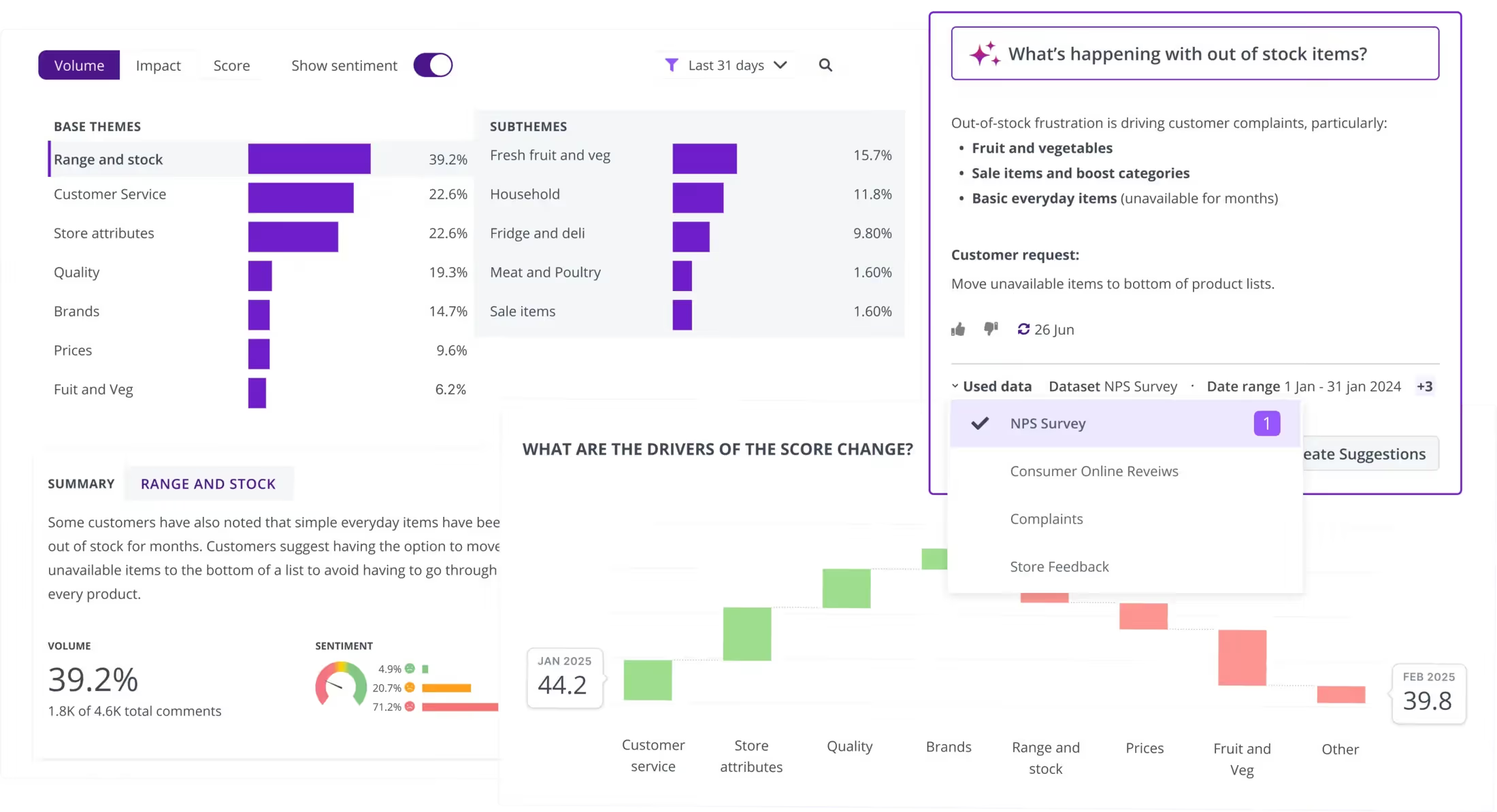
Thematic is the customer experience intelligence layer for insights teams that need research-grade analytics they can defend in a boardroom. A Y Combinator graduate, Thematic combines hybrid NLP with generative AI and a distinctive Human-in-the-Loop (HITL) theme editor that gives analysts direct control over how feedback is categorized and themes are defined.
Where most AI tools produce a black box of auto-generated topics, Thematic lets analysts edit, merge, split, and validate themes — creating a transparent, auditable taxonomy. This makes it the strongest option for teams that publish formal reports or present to leadership where "the AI said so" is not sufficient justification.
Thematic Features
- Human-in-the-Loop Theme Editor: Analysts can refine AI-generated themes, ensuring the taxonomy reflects business reality
- Impact Scoring: Predicts which themes will drive the greatest movement in NPS, CSAT, or other key metrics
- Scoring Agent: AI agent that automates repetitive analysis tasks
- Cross-Channel Analysis: Surveys, reviews, support tickets, and social media unified
- Traceable Insights: Every theme is linked to the raw comments behind it, creating a defensible evidence chain
2026 Pricing
Foundation tier historically published at $25,000/yr. Enterprise tier is custom.
Thematic Pros
- The most transparent theme analytics in the category — every insight is traceable to source comments
- HITL editing gives analysts control that purely automated tools cannot match
- Impact Scoring connects themes directly to metric movements
- Published pricing (Foundation tier) is rare and appreciated at this level
Thematic Cons
- Requires a dedicated insights analyst to get the most from HITL capabilities — not a "set it and forget it" tool
- Smaller integration library than Chattermill or Qualtrics
- Entry-level pricing at $25,000/yr places it above the reach of SMBs
Who It's For
Insights and research teams at mid-market to enterprise organizations that need transparent, defensible customer feedback analysis for stakeholder reporting and strategic decision-making.
G2 Rating
Thematic: 4.8/5
6. Enterpret

What Is Enterpret?
Enterpret is a customer intelligence platform purpose-built for product-led SaaS companies. Its Adaptive Taxonomy — a five-level, customer-specific ML classifier that learns and evolves with every feedback signal — is the core differentiator. Enterpret ties feedback to account context through its Customer Context Graph, connecting insights to specific customers, revenue segments, and product usage patterns.
Companies like Canva, Notion, Perplexity, and Atlassian use Enterpret to scale feedback operations. The platform recently introduced Sales Intelligence, which analyzes deal-related feedback to help revenue teams understand win/loss patterns.
Enterpret Features
- Adaptive Taxonomy: Five-level classifier trained specifically for each customer, evolving with new feedback signals
- Customer Context Graph: Links feedback to account, revenue, and product usage context
- Enterpret AI Insights: Conversational AI for ad-hoc feedback analysis
- Enterpret MCP Server: Makes feedback accessible to external AI tools and agents
- Sales Intelligence: Analyzes feedback patterns across deals for revenue teams
2026 Pricing
Custom pricing. Public benchmarks suggest $30,000–$100,000+ per year.
Enterpret Pros
- Adaptive Taxonomy is one of the most sophisticated classification systems in the category
- Customer Context Graph connects feedback to revenue and account health
- Strong product-led SaaS customer base (Canva, Notion, Perplexity)
- MCP server integration for agentic workflows
Enterpret Cons
- Best suited for product-led SaaS — less proven for retail, travel, or financial services use cases
- Enterprise-level pricing puts it beyond most mid-market budgets
- Fewer native integrations than more established platforms
Who It's For
Product-led SaaS companies with dedicated feedback operations teams that need account-linked, revenue-contextual feedback analysis.
G2 Rating
Enterpret: 4.7/5
7. unitQ

What Is unitQ?
unitQ is an AI-powered quality intelligence platform built for consumer tech, gaming, and marketplace companies. Its proprietary unitQ Score (a 0–100 benchmark for product quality) gives product teams a single, trackable metric that captures overall quality across every customer signal — app store reviews, support tickets, social media, and in-app surveys.
The platform retrains its models daily, ensuring classification accuracy keeps pace with rapidly evolving product experiences. A two-way Jira integration routes quality signals directly into engineering workflows, closing the loop between customer feedback and product fixes. PayPal, DraftKings, Pinterest, and Bumble are among its notable customers.
unitQ Features
- unitQ Score: Proprietary 0–100 product quality benchmark
- monitorQ: Real-time feedback monitoring and intelligence
- metricQ: Connects customer signals to business outcomes
- competeQ: Competitive intelligence from public feedback data
- Daily Model Retraining: Classification accuracy improves continuously
- Two-Way Jira Sync: Routes issues directly into engineering workflows
2026 Pricing
Custom pricing. A free Score Analyzer tool is available at get.unitq.com for initial benchmarking.
unitQ Pros
- The unitQ Score provides a single, trackable quality metric — unique in the category
- Daily model retraining keeps analysis accurate as products evolve
- Two-way Jira integration closes the feedback-to-fix loop for engineering teams
- Competitive intelligence module (competeQ) benchmarks quality against rivals
unitQ Cons
- Primary strength is app-centric feedback — less suited for organizations where feedback comes mainly from surveys or traditional CX channels
- Custom pricing with no published tiers
- Best fit for consumer tech and gaming — may not be the right tool for B2B or enterprise CX use cases
Who It's For
Consumer tech, gaming, and marketplace companies with app-centric products that need real-time quality monitoring tied to engineering workflows.
G2 Rating
unitQ: 4.7/5
8. SentiSum
What Is SentiSum?
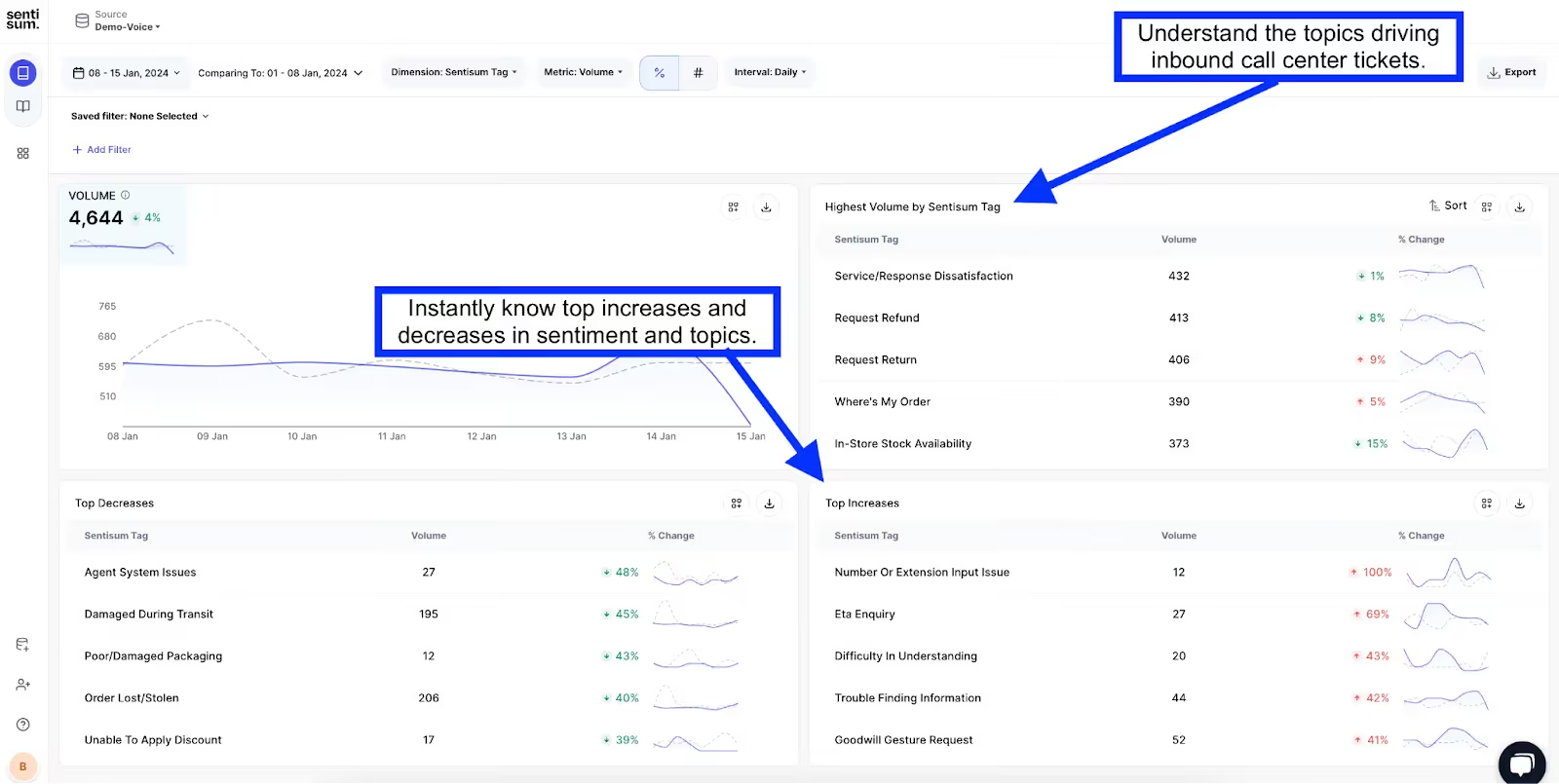
SentiSum is an AI-powered customer feedback analysis tool focused on support channel insights. The platform uses natural language processing to automatically tag customer conversations, reviews, and survey responses with granular topics, sentiment, and keywords — giving CX and support teams evidence-based insights without manual analysis.
SentiSum's strength is its focus on support-channel depth. While broader platforms spread across many feedback types, SentiSum specializes in extracting actionable intelligence from the channels where customers express frustration most directly — support tickets, chat transcripts, and escalations.
SentiSum Features
- Automated Sentiment and Topic Tagging: NLP applies granular tags in real-time as feedback arrives
- Cross-Channel Standardization: Unifies analysis across support tickets, surveys, reviews, and calls
- Generative AI Assistant: Natural language Q&A for ad-hoc insights ("Why did CSAT drop this week?")
- Customizable Dashboards: Role-specific views for CX, support, and product teams
- Voice Analytics: Extracts insights from call recordings using NLP
2026 Pricing
Custom pricing. Contact SentiSum for a quote.
SentiSum Pros
- Deep specialization in support-channel feedback analysis
- Real-time tagging eliminates the lag between feedback and insight
- Generative AI assistant makes insights accessible to non-technical users
- Standardizes analysis methodology across all channels
SentiSum Cons
- Narrower channel focus than broader platforms like Chattermill or Medallia
- Less suited for organizations where the primary feedback source is structured surveys
- Custom pricing with no published tiers
Who It's For
CX and support teams at mid-market to enterprise organizations that need deep, real-time analysis of support conversations, tickets, and reviews.
G2 Rating
SentiSum: 4.5/5
9. Siena Insights (Formerly Idiomatic)
.svg)
What Is Siena Insights?
Siena Insights, formerly known as Idiomatic, is an AI-powered feedback categorization and analysis platform. The tool reads and organizes customer feedback automatically, applying AI to detect topics, sentiment, and emerging anomalies. A built-in conversational AI interface lets teams ask natural language questions about their feedback data — "What are the top three reasons for churn this quarter?" — and get structured answers.
The platform also quantifies the cost of customer issues, helping support teams optimize operations by understanding which problems consume the most resources. Siena Insights is now part of the broader Siena AI ecosystem, which includes an autonomous customer service agent.
Siena Insights Features
- AI-Powered Categorization: Automatically reads, tags, and organizes feedback across channels
- Anomaly Alerts: Slack notifications when feedback patterns shift unexpectedly
- Conversational Data Q&A: Ask questions about feedback data in plain English
- Cost-Per-Issue Tracking: Quantifies the operational cost of resolving each customer issue type
- Sentiment Analysis: Tracks customer sentiment across topics and time periods
2026 Pricing
Custom pricing. Contact Siena for a quote.
Siena Insights Pros
- Cost-per-issue tracking is a unique and practical feature for support operations
- Conversational Q&A makes data accessible without SQL or dashboard expertise
- Anomaly detection alerts surface emerging issues proactively
- Part of the broader Siena AI ecosystem for teams exploring autonomous support
Siena Insights Cons
- Rebranding from Idiomatic to Siena Insights may cause confusion during evaluation
- Less established than longer-running competitors in the feedback analysis space
- Integration ecosystem is narrower than market leaders
Who It's For
CX and support teams that want automated feedback categorization with operational cost visibility and proactive alerting.
G2 Rating
Siena Insights: 4.5/5
10. Unwrap.AI
What Is Unwrap.AI?
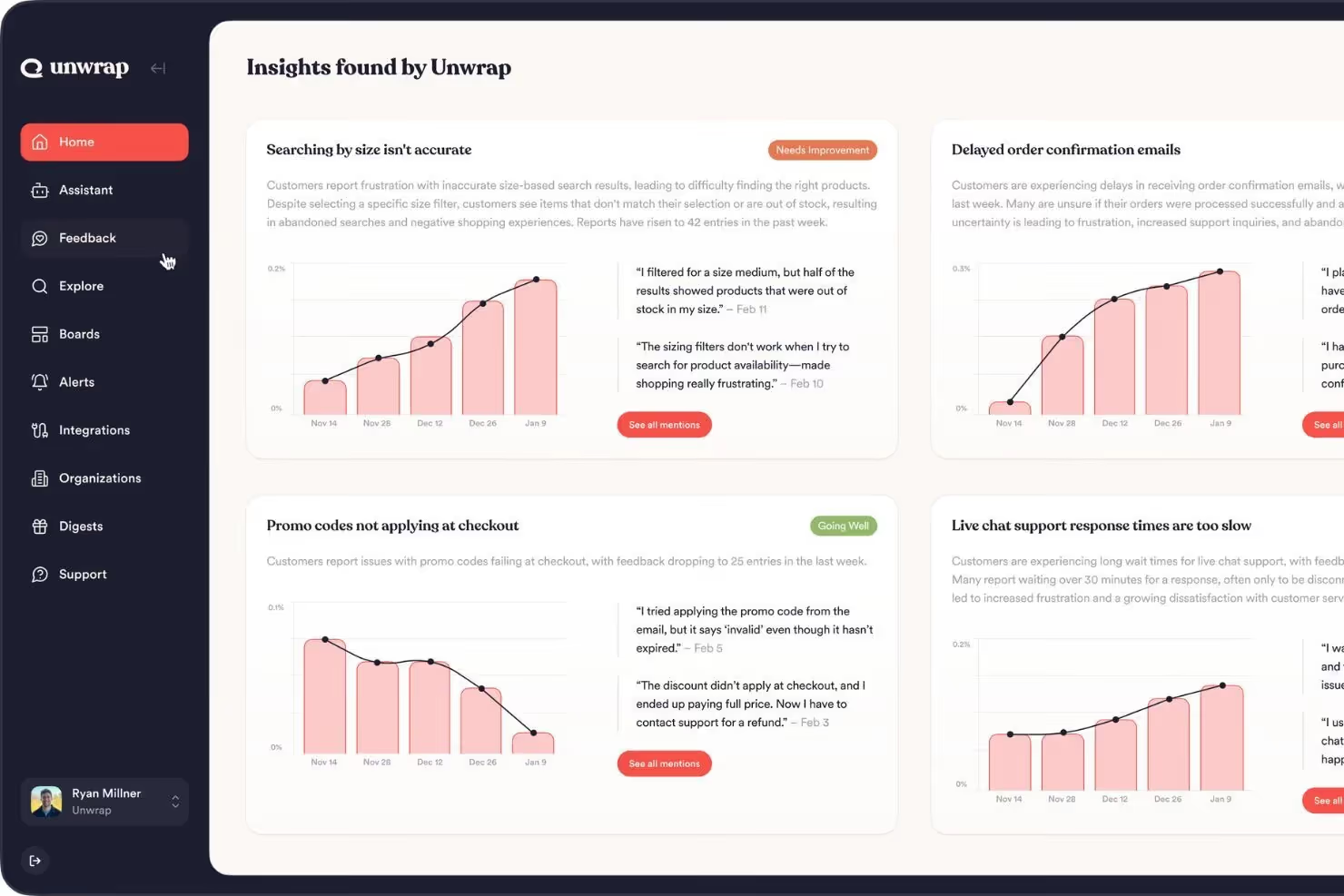
Unwrap.AI is a customer intelligence platform built for proactive insight delivery. Rather than requiring teams to build dashboards and hunt for patterns, Unwrap surfaces feedback trends and anomalies automatically — even the ones you did not anticipate. The platform connects thousands of feedback sources and delivers structured, AI-summarized insights directly to stakeholders.
Fortune 500 brands like lululemon use Unwrap to allocate resources based on what matters most to customers. The platform's emphasis is on reducing the time between a customer expressing frustration and the organization understanding — and acting on — the pattern behind it.
Unwrap.AI Features
- Proactive Insight Delivery: AI surfaces trends and anomalies without requiring manual dashboard analysis
- Multi-Source Integration: Connects to app stores, reviews, surveys, tickets, social media, and more
- AI Summarization: Generates human-readable summaries of feedback patterns and their business implications
- Anomaly Alerting: Flags unexpected shifts in customer sentiment or topic frequency
- Stakeholder-Ready Reporting: Insights delivered in formats ready for executive communication
2026 Pricing
Custom pricing. Contact Unwrap for a quote.
Unwrap.AI Pros
- Proactive delivery model reduces the analysis burden on CX teams
- AI summarization turns complex feedback data into actionable narratives
- Strong for organizations that need insights pushed to stakeholders, not pulled from dashboards
- Trusted by Fortune 500 brands for enterprise-scale feedback intelligence
Unwrap.AI Cons
- The proactive model offers less hands-on control for teams that want to drive their own analysis
- Custom pricing with no published tiers
- Smaller market presence compared to established players like Qualtrics or Medallia
Who It's For
Enterprise CX and product teams — particularly at large consumer brands — that want proactive, AI-driven insight delivery rather than manual dashboard analysis.
G2 Rating
Unwrap.AI: 4.6/5
11. Caplena
What Is Caplena?
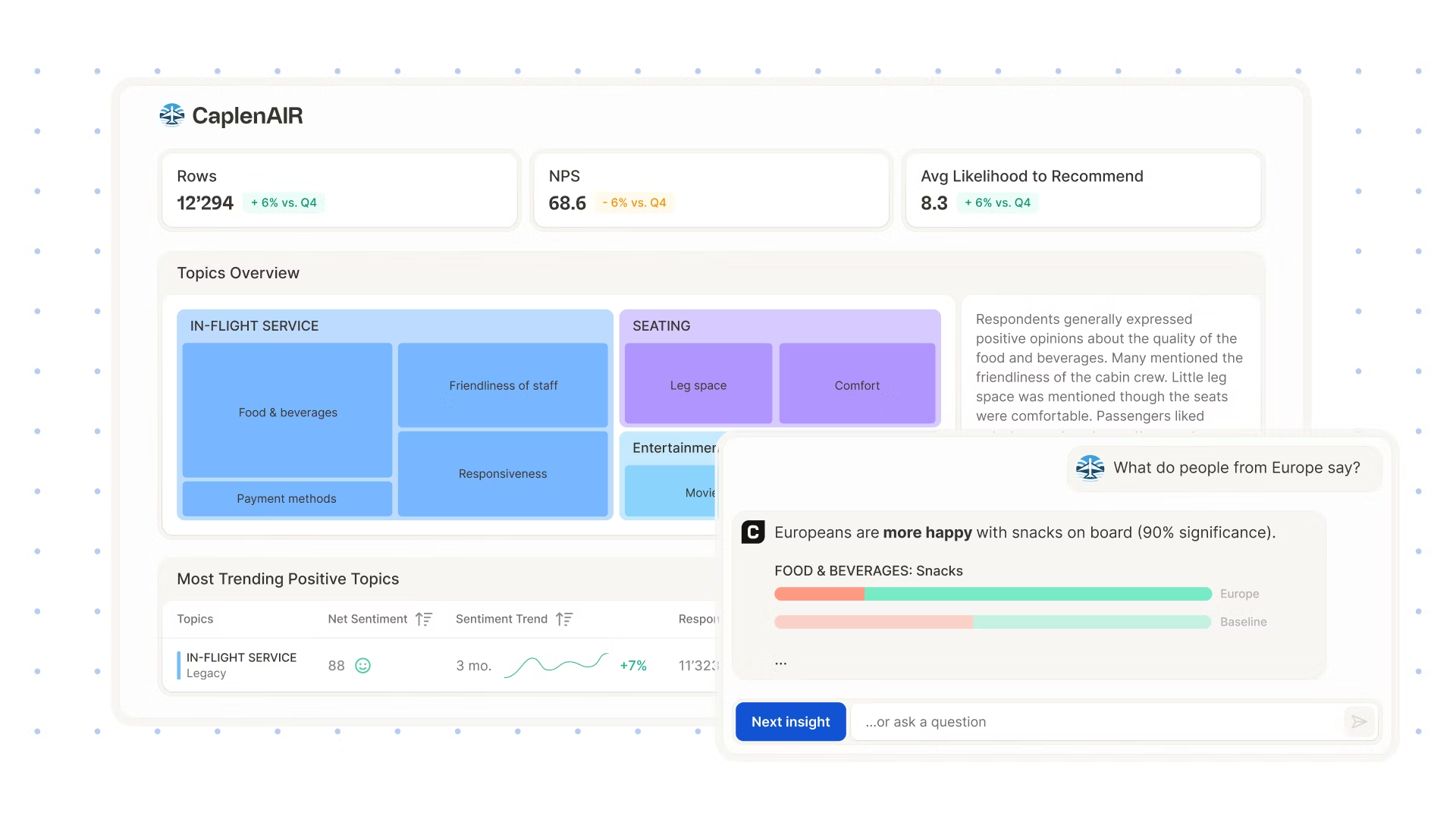
Caplena is a text analytics platform built for CX, insights, and market research teams that need full control over how open-ended feedback becomes structured insights. The platform combines AI-powered topic detection and sentiment analysis with an interactive, human-in-the-loop coding workflow — letting analysts fine-tune AI-generated codebooks rather than accepting a black-box output.
What distinguishes Caplena from broader CX platforms is its flexibility. It handles ad hoc survey projects, ongoing CX tracking, and employee experience analysis with equal ease. The platform supports 100+ languages, integrates with survey tools and online review sources, and delivers results through customizable reports and BI tool connectors. An Insight Agent provides on-demand, agentic analysis that goes beyond surface-level summarization.
Caplena Features
- AI Topic Detection and Coding: Automatically identifies topics and assigns codes to open-ended responses, with human-in-the-loop fine-tuning for accuracy
- Insight Agent: Agentic AI that answers complex analytical questions about your feedback data on demand
- Driver Analysis: Identifies which themes and topics have the greatest impact on key metrics
- Multilingual Analysis: Supports 100+ languages natively with optional DeepL and Google Translate integration
- Smart Columns: AI-powered enrichment columns that extract structured data from unstructured text
2026 Pricing
Team and Enterprise tiers available. Credit-based pricing model (up to 50k credits/year for Team, 50k+ for Enterprise). Contact Caplena for specific pricing.
Caplena Pros
- Interactive AI coding workflow gives analysts more control than fully automated tools — ideal for research teams that need defensible, auditable results
- Handles both ad hoc survey projects and ongoing CX tracking in one platform
- SOC 2 Type II certified — meets enterprise security requirements
- Strong integration ecosystem including survey platforms, review sources, and BI tools
Caplena Cons
- Credit-based pricing model can be complex to forecast for organizations with variable feedback volumes
- Less suited for real-time support ticket analysis compared to dedicated support-channel tools
- Smaller brand presence in the enterprise CX market compared to Medallia or Qualtrics
Who It's For
CX, insights, and market research teams that need flexible, analyst-controlled text analytics for surveys, reviews, and employee feedback — particularly organizations that value transparency and auditability in how AI codes open-ended responses.
G2 Rating
Caplena: 4.6/5
12. CustomerGauge
What Is CustomerGauge?
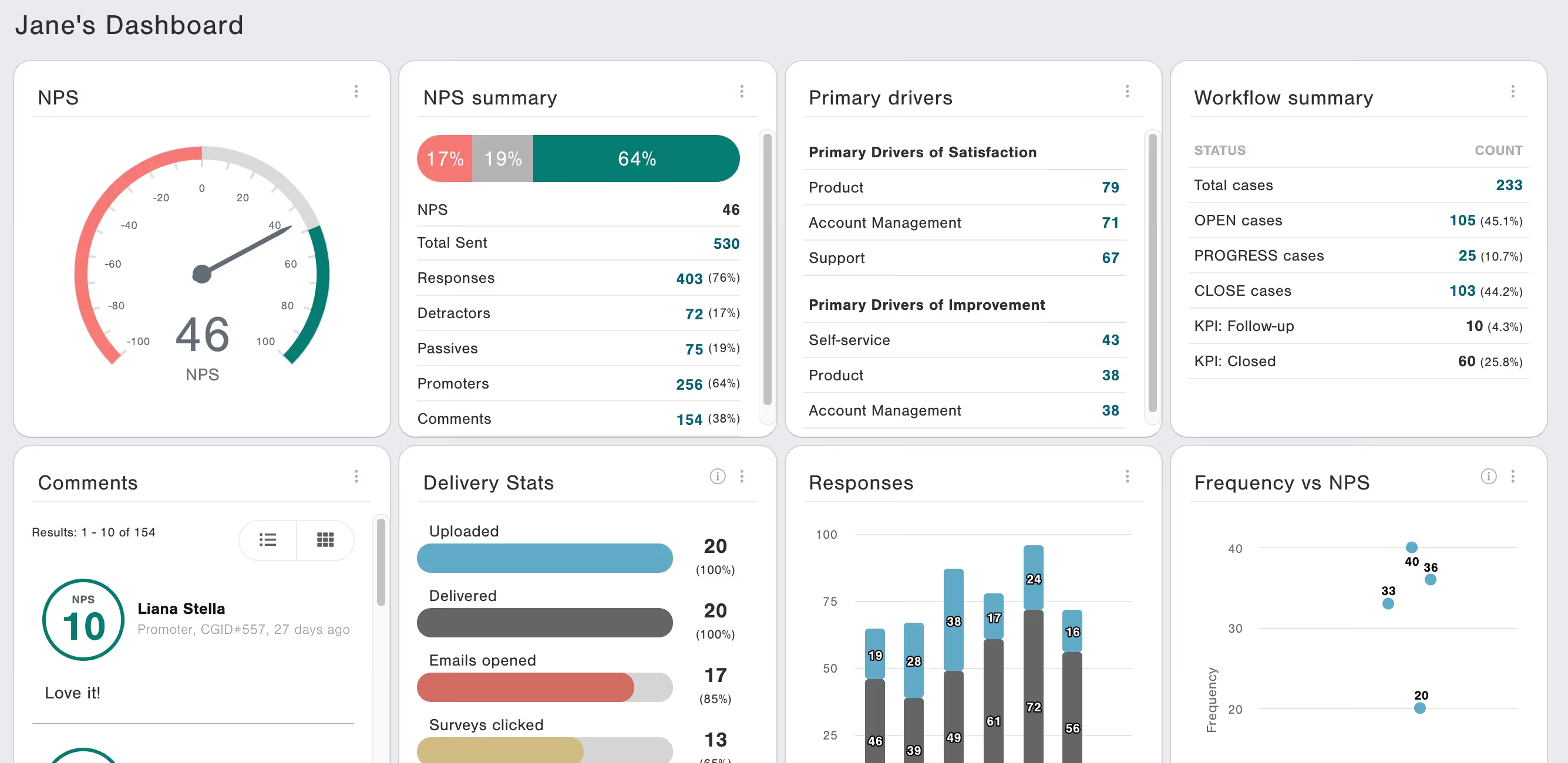
CustomerGauge is the only B2B-native experience platform on this list. While most feedback analysis tools are designed for B2C use cases — consumer reviews, support tickets, app store feedback — CustomerGauge is built for the complexities of B2B relationships: multiple stakeholders per account, long sales cycles, and the need to connect satisfaction directly to revenue and retention.
Its Account-Centric NPS methodology aggregates feedback across all contacts within an account to calculate a true account health score, and Revenue-Based NPS connects that score directly to financial outcomes. The recently introduced Gaige AI agent can interview customers, summarize feedback, and surface next actions automatically.
CustomerGauge Features
- Account-Centric NPS: Aggregates feedback across all stakeholders in a B2B account
- Revenue-Based NPS: Connects account satisfaction scores directly to revenue, risk, and financial outcomes
- Gaige AI: AI agent that conducts customer interviews, summarizes feedback, and recommends actions
- Closed-Loop Action Management: Routes feedback to account teams with recommended next steps
- Benchmarking: Industry and peer benchmarks for B2B NPS programs
2026 Pricing
Custom pricing. Contact CustomerGauge for a quote.
CustomerGauge Pros
- The only tool in this list purpose-built for B2B account-level feedback analysis
- Revenue-Based NPS directly connects customer satisfaction to financial outcomes
- Gaige AI automates repetitive analysis and customer follow-up tasks
- Strong in manufacturing, technology, logistics, and CPG distribution
CustomerGauge Cons
- B2B-only focus means it is not suitable for B2C or consumer feedback analysis
- Smaller overall market presence compared to Qualtrics or Medallia
- Advanced features require enterprise-level investment
Who It's For
B2B organizations (technology, manufacturing, logistics, services) that need account-level NPS programs tied to revenue attribution and churn prediction.
G2 Rating
CustomerGauge: 4.6/5
13. ClientZen
What Is ClientZen?
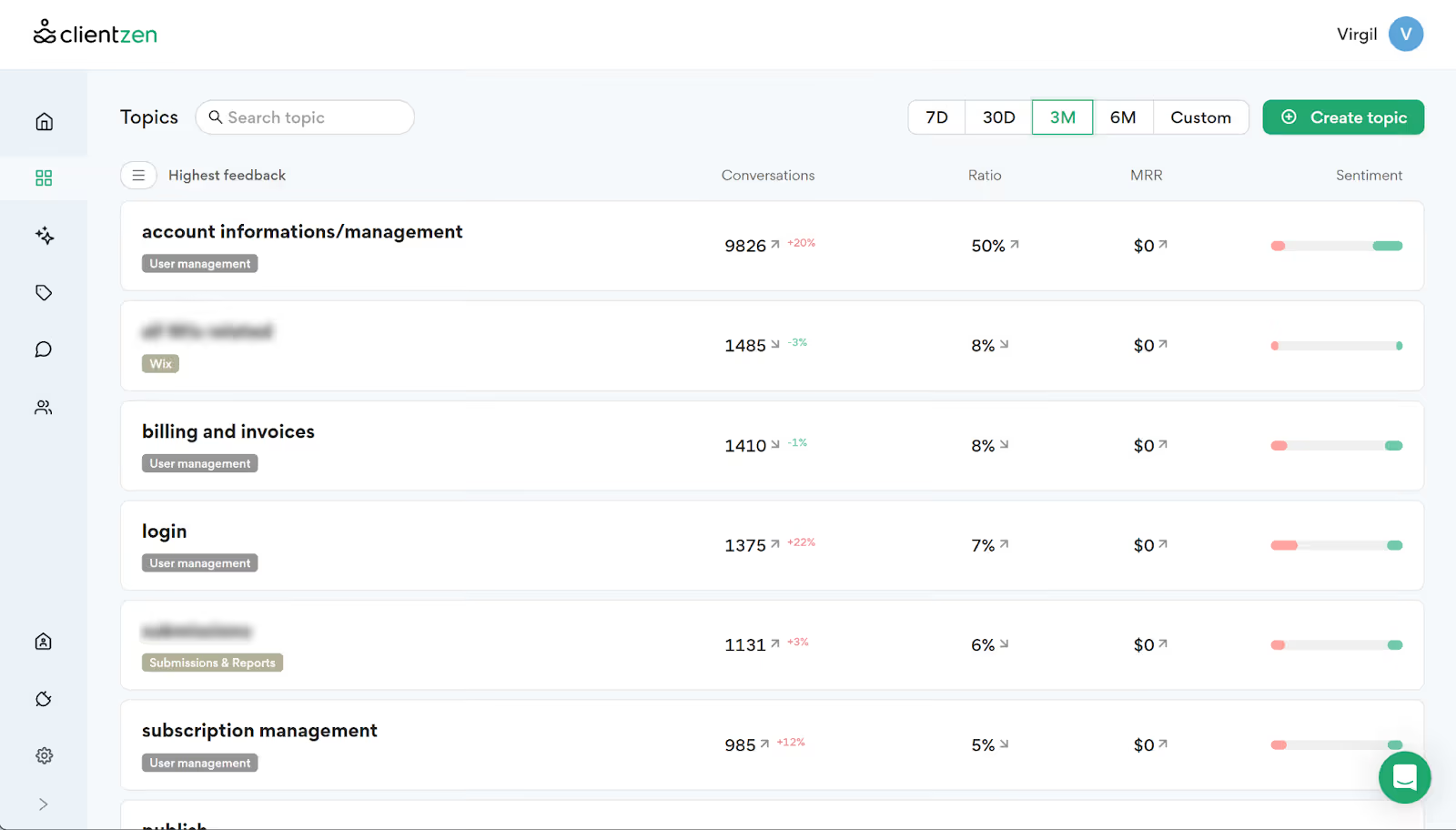
ClientZen is an accessible, AI-powered feedback analysis platform designed for teams that want automated analysis without enterprise complexity or pricing. The platform consolidates feedback from support tickets, reviews, surveys, and chat — then applies automated tagging, sentiment analysis, and trend monitoring to surface recurring issues, top feature requests, and negative sentiment drivers.
ClientZen's Mantra AI copilot provides instant answers to feedback questions in natural language, making it accessible for non-technical team members. Real-time monitoring and automated alerts keep teams informed as customer sentiment shifts.
ClientZen Features
- Automated AI Tagging: Feedback is automatically categorized by topic, sentiment, and urgency
- Mantra AI Copilot: Natural language Q&A for instant feedback insights
- Real-Time Monitoring: Dashboard tracks sentiment shifts and emerging issues as they happen
- CSAT and NPS Analysis: Built-in analysis for standard satisfaction metrics
- Customer Review Analysis: Aggregates and analyzes reviews from multiple platforms
2026 Pricing
Plans start from approximately €99/mo, making ClientZen one of the most accessible options on this list.
ClientZen Pros
- Accessible pricing makes advanced feedback analysis available to SMBs and growing teams
- Mantra AI copilot is intuitive and requires no training
- Automated tagging eliminates manual classification work
- Strong Product Hunt and user community traction (4.9/5 rating)
ClientZen Cons
- Less suited for enterprise-scale deployments with hundreds of thousands of monthly feedback items
- Narrower integration ecosystem than established enterprise platforms
- Fewer advanced analytics features (no impact analysis, no speech analytics)
Who It's For
SMB and mid-market teams that want automated feedback analysis and sentiment tracking at an accessible price point — particularly product, CX, and support managers.
G2 Rating
ClientZen: 4.9/5
What Are Customer Feedback Analysis AI Tools?
Customer feedback analysis AI tools are the latest evolution in how organizations make sense of customer input at scale. Understanding how the technology arrived here helps explain why the tools in this guide are built the way they are.
Phase 1: Manual tagging and spreadsheet analysis. For years, CX teams read feedback line by line, manually categorizing responses into themes. This approach works at small scale but collapses when volumes reach thousands of items per month. It is slow, inconsistent, and impossible to replicate across analysts.
Phase 2: Rule-based and keyword matching. Early automation introduced keyword rules ("if the response contains 'shipping,' tag as Logistics"). These systems reduced manual effort but missed context, sarcasm, and multi-topic responses. A customer saying "the shipping was the only good part" would be tagged as a positive logistics mention — the opposite of its actual meaning.
Phase 3: AI-native analysis with NLP and large language models. Today's leading tools use aspect-based sentiment analysis, supervised machine learning, and generative AI to understand feedback at a human level. They detect not just topics but the specific aspects of those topics that drive satisfaction or frustration, the intensity of sentiment, and the relationships between themes. This is where the tools in this guide operate — and it is why the category has moved from "nice to have" to "essential infrastructure" for CX teams operating at scale.
The shift matters because it changes what feedback analysis can deliver. Instead of retrospective reports that confirm what teams already suspected, AI-native platforms provide real-time intelligence that surfaces patterns before they become problems. The tools that leverage this effectively — connecting AI-driven analysis to business metrics like NPS, CSAT, and revenue — are the ones that justify their investment through measurable outcomes.
For a deeper dive into analytical techniques, read our guide on customer feedback analysis.
Benefits of Using Customer Feedback Analysis Software
Why invest in a dedicated analysis platform rather than reading feedback manually or relying on basic survey reporting? The answer is scale, speed, and precision.
- Uncover the "Why" Behind Metrics: NPS dropped three points. Is it pricing? Product quality? Support response time? Feedback analysis tools identify the specific themes driving metric movements, so you can fix the root cause rather than chasing symptoms.
- Eliminate Manual Tagging: At scale, manually categorizing thousands of open-ended responses is not just impractical — it is unreliable. AI-powered analysis is consistent, exhaustive, and operates in real-time.
- Unify Siloed Feedback: Most organizations collect feedback in multiple tools — surveys in Qualtrics, tickets in Zendesk, reviews on G2, social on Sprout. Customer feedback management tools that analyze across all sources give you the complete picture that siloed tools cannot.
- Detect Emerging Issues Early: Anomaly detection surfaces unexpected patterns — a sudden spike in "billing error" mentions, a new product defect generating negative sentiment — before they reach leadership through escalations.
- Prioritize by Business Impact: The most sophisticated platforms quantify how feedback themes affect retention, revenue, and satisfaction metrics. This turns analysis from "interesting" into "actionable."
- Scale Insights Across the Organization: Role-based dashboards and automated reporting ensure that every team — CX, product, engineering, marketing — has access to the customer insights relevant to their decisions.
- Accelerate Time-to-Action: In the time it takes a manual process to tag and categorize a week's worth of feedback, an AI-powered tool has already surfaced the trends, generated alerts, and routed recommendations.
- Support Multi-Language Operations: Global organizations collect feedback in dozens of languages. AI-powered analysis tools process feedback natively across 100+ languages, eliminating the cost and delay of manual translation while ensuring no market's voice is lost.
ROI & Business Impact
Investing in customer feedback analysis software delivers measurable returns across four key areas:
- Reduced Churn Through Early Detection: AI anomaly detection surfaces emerging dissatisfaction patterns weeks before they appear in quarterly NPS reports. When AI-powered anomaly detection surfaces emerging dissatisfaction patterns in real time rather than waiting for quarterly NPS reports, teams can act on churn signals weeks earlier — turning reactive crisis management into proactive retention.
- Higher Retention Through Closed-Loop Action: Connecting feedback themes to specific teams and workflows means issues get resolved, not just reported. Closed-loop systems where feedback triggers action — not just a dashboard update — drive measurable retention improvements.
- Reduced Support Costs Through Root Cause Identification: When feedback analysis reveals that 30% of support tickets stem from a single onboarding friction point, fixing that friction reduces ticket volume far more efficiently than hiring additional agents. The ROI is in prevention, not response.
- Revenue Growth Through Product-Market Alignment: Feedback analysis that connects customer sentiment to product decisions ensures roadmap priorities reflect actual customer needs — not internal assumptions. Teams that systematically act on customer feedback analysis build products that retain and expand their customer base.
- Operational Efficiency Through Automation: Replacing manual tagging and categorization with AI-powered analysis frees CX and insights teams to focus on strategic work. When AI handles tagging and categorization that previously required manual effort, CX and insights teams reclaim significant hours each week — time redirected from data processing to strategic analysis and action.
Get Started with Chattermill
Ready to turn your customer feedback into insights that drive action? Chattermill unifies feedback from every channel, applies AI-powered analysis, and connects themes directly to the business metrics that matter.
Book a Demo to see how Chattermill can transform your feedback analysis in weeks, not months.
Customer Feedback Analysis Tools: FAQs
What Are Customer Feedback Analysis Tools?
Customer feedback analysis tools are AI-powered software platforms that analyze unstructured feedback — survey responses, support tickets, reviews, social media comments, and call transcripts — to identify themes, sentiment, trends, and anomalies. They transform raw customer input into structured insights that teams can act on.
What Is the Best Tool for Analyzing Customer Feedback?
For enterprise CX teams that need unified, multi-channel feedback analysis connected to business metrics, Chattermill is the strongest choice. Its Lyra AI engine, Impact Analysis, and 30+ integrations deliver the depth and breadth that enterprise feedback analytics demand. For research-focused teams, Thematic offers the most transparent, analyst-controlled analysis. For B2B organizations, CustomerGauge is the only platform built natively for account-level feedback.
How Do You Analyze Customer Feedback Effectively?
Effective feedback analysis requires three things: consolidation (bringing feedback from all channels into one place), automated classification (using AI to tag themes, sentiment, and urgency without manual effort), and actionability (connecting insights to business metrics and routing them to the right teams). The tools in this guide automate all three steps. For a step-by-step methodology, see our guide on customer feedback analysis.
What Features Should You Look for in Feedback Analysis Software?
Prioritize five capabilities: (1) multi-channel ingestion — the tool should handle surveys, tickets, reviews, social, and voice; (2) AI-powered classification — look for aspect-based sentiment analysis, not just positive/negative; (3) business metric connection — the tool should tie themes to NPS, CSAT, revenue, or churn; (4) real-time analysis — insights should arrive as feedback comes in, not in weekly batches; (5) integration ecosystem — it must connect to your existing CRM, helpdesk, and survey stack.
What Is the Difference Between Feedback Collection and Feedback Analysis Tools?
Feedback collection tools (survey builders, form platforms, in-app feedback widgets) gather customer input. Feedback analysis tools take that input — plus data from support tickets, reviews, social media, and more — and apply AI to extract meaning. Collection answers "what did the customer say?" Analysis answers "what does it mean, why does it matter, and what should we do about it?" Most organizations need both, and the best voice of customer analytics tools handle analysis across every collection source.
The customer feedback analysis market in 2026 is more specialized than ever. The right tool depends entirely on your organization's feedback sources, team structure, and the outcomes you need to drive.
For enterprise CX, insights, and product teams that need to unify feedback from every channel and tie analysis directly to business metrics, Chattermill delivers the deepest AI-powered feedback analytics for enterprise teams — unifying every channel, connecting themes to business metrics, and scaling across 100+ languages. For organizations with dedicated research teams that need a full experience management suite, Qualtrics XM remains the industry standard. For research-grade, analyst-controlled theme analytics, Thematic is unmatched. And for B2B account-level programs, CustomerGauge is the only purpose-built option in this list.
The tools that win in this category share a common thread: they do not just analyze feedback — they connect it to the decisions that drive customer loyalty, revenue, and growth. That is the standard your team should hold every vendor



See Chattermill in action on your own feedback
Book a demo


