


12 Best Product Feedback Tools in 2026 (Reviewed & Compared)

.avif)

The CX intelligence
platform that's AI-native by design
Book a demoQuick Summary
Chattermill is the best product feedback tool for enterprise teams. It unifies every feedback channel and uses AI to explain why customers feel the way they do. Plus, it links insights directly to NPS, churn, and revenue. Other strong picks include Enterpret for product-led SaaS teams and Pendo for in-app analytics.
Before we delve deeper, here are our top three picks:
Your Customers Are Talking. Are You Actually Listening?
Your customers are telling you exactly what to fix. The problem is that the data signal is buried. It's scattered across support tickets, app reviews, NPS surveys, social comments, and call recordings. None of it talking to each other.
Product feedback tools address this problem, though not all do it well.
Some only collect surveys. Others handle feature requests. A few do deep AI analysis. Almost none connect the dots between customer feedback and actual business outcomes like churn, revenue, or retention.
This guide reviews 12 of the best product feedback tools available in 2026. We cover key features, pricing, pros, cons, G2 ratings, and who it's actually built for.
Why Listen To Us

Chattermill processes 100M+ feedback data points monthly across 100+ languages. We do this for brands like Uber, HelloFresh, and H&M. As a G2-rated Leader in feedback analytics, we've curated this list based on our hands-on experience. We know exactly what separates good tools from the ones that actually move product needles.
12 Best Product Feedback Tools Head-to-Head Comparison Table
Let’s now dig into the intricacies of what each tool offers.
1. Chattermill
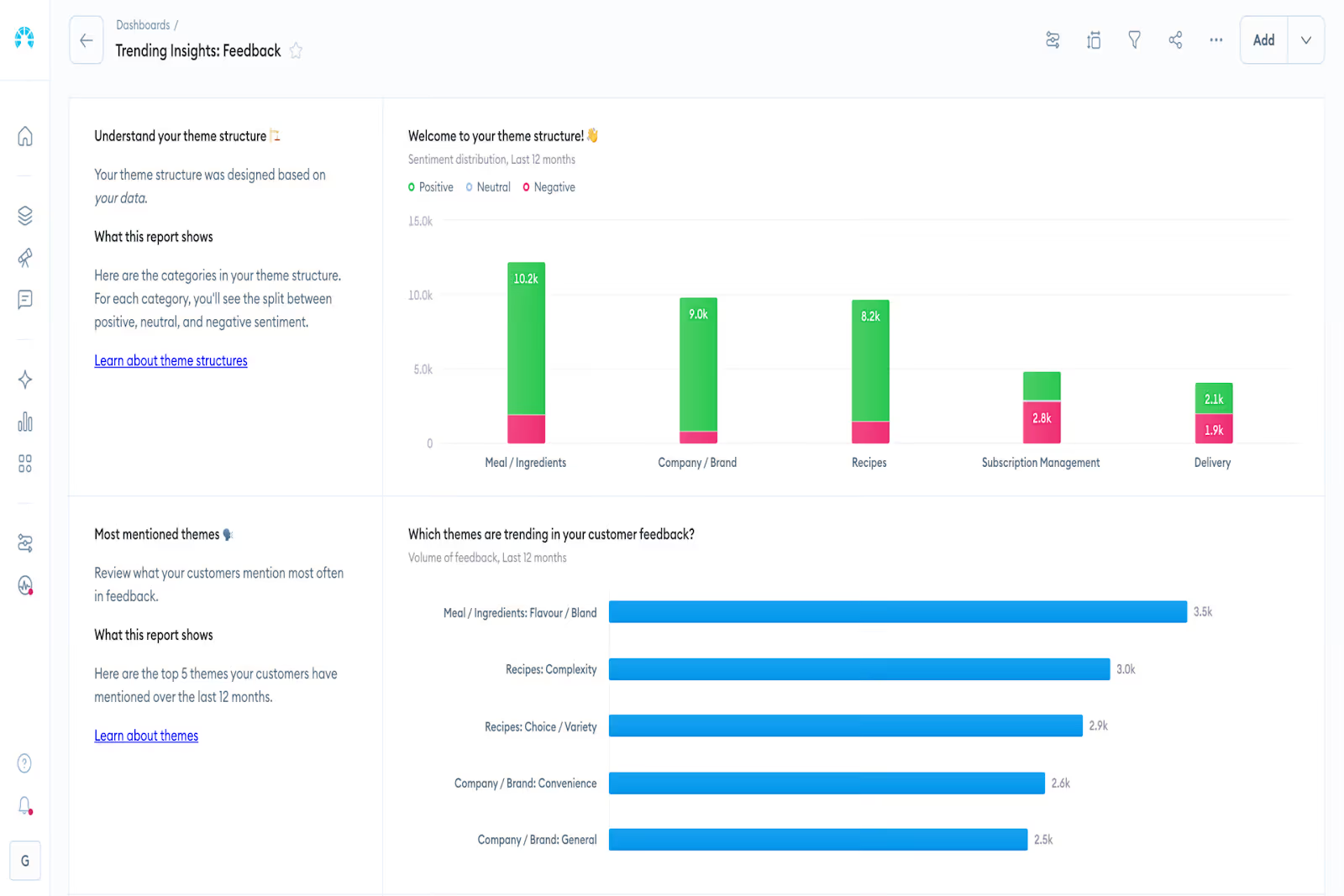
Your product team is drowning in feedback. It lives in surveys, support tickets, app reviews, and call recordings. Nobody has time to read all of it. Nobody knows what to fix first. That's the problem Chattermill solves.
Chattermill is a customer experience platform. It unifies feedback from every channel into a single platform. Then its proprietary Lyra AI engine goes to work, not just telling you what customers feel, but why.
This distinction matters. Generic sentiment tools give you a score. Chattermill gives you root causes. It connects every insight to business metrics like NPS, CSAT, churn, and revenue. That means your product team can walk into a leadership meeting with data, not gut feel.
Key Features
- Analytics: Access detailed, visual product experience analytics for roadmap prioritization
- Lyra AI Engine: Enables granular theme detection (both qualitative and quantitative), revealing root causes behind user sentiment
- Feedback Unification: Unifies feedback from surveys, support, social, reviews, and calls
- Impact Analysis: Get accurate business impact mapping (NPS, CSAT, retention, revenue)
- Dashboards: Real-time customizable dashboards requiring no IT setup
- Multilingual Analysis: Supports feedback analysis in Spanish, French, German, and more (100+ languages)
Pricing
Custom enterprise pricing.
Pros
- Unmatched multi-source unification
- AI explains why, not just what
- Connects insights to revenue and churn metrics
- Trusted by global enterprise brands at scale
Cons
- Not suited for small businesses
- Requires minimum volume
G2 Rating
4.5/5
Best For
Enterprise companies needing AI-powered, multi-source feedback analytics tied to business outcomes.
2. Enterpret
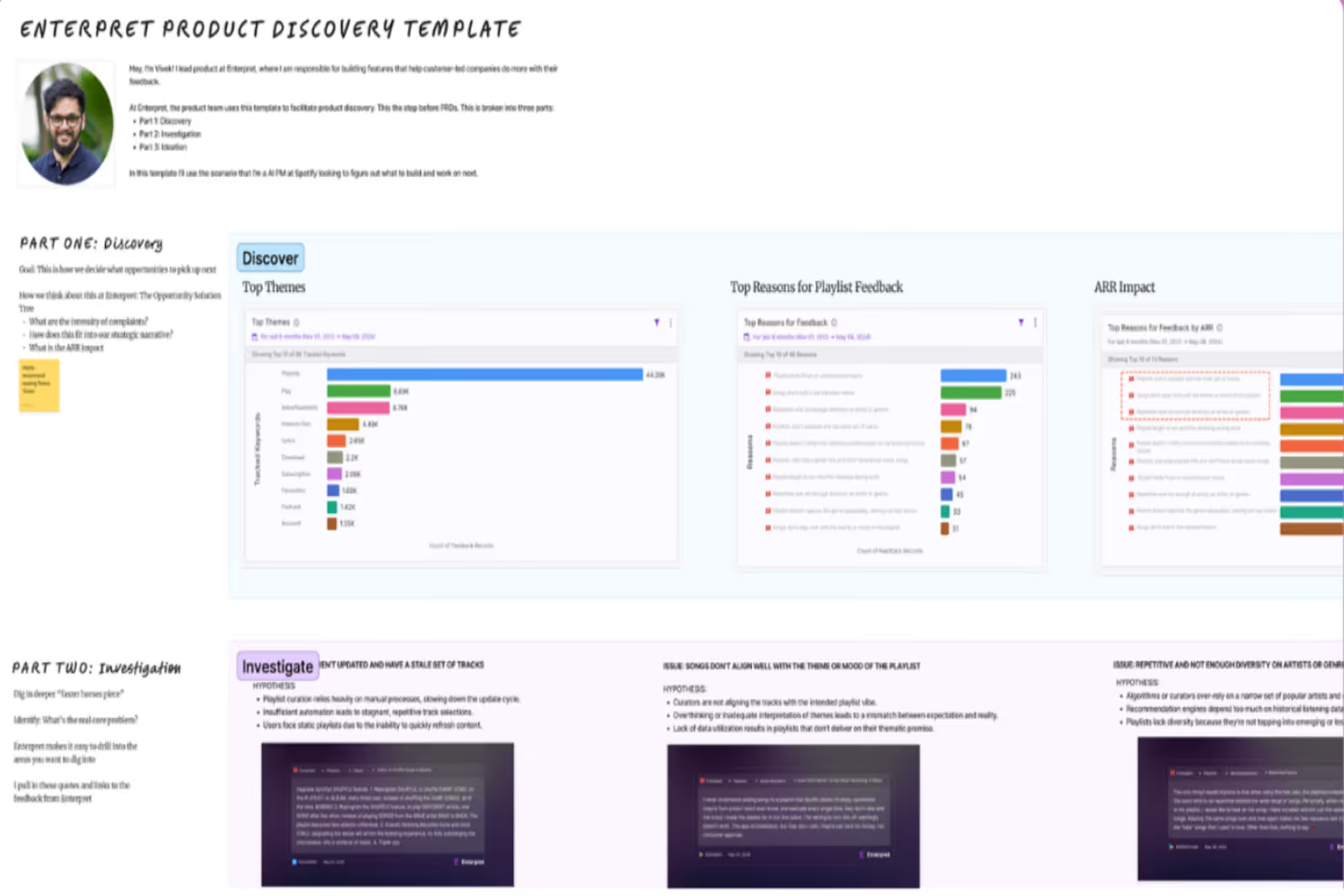
Enterpret is built for product teams. It uses custom AI models trained on your specific product vocabulary. That gives you more accurate theme detection than generic NLP tools.
Its API-first architecture makes it flexible. Also, engineering teams can build custom workflows and integrations on top of it. If you want control over how your feedback taxonomy evolves, Enterpret delivers that.
Key Features
- Custom AI Models: Analyze customer feedback using your product terminology
- Semantic Search: Uncovers insights from unstructured data across multiple feedback sources
- Data Enrichment: Standardizes messy or incomplete data into usable information
- 50+ Integrations: Connects directly with support tickets, sales calls, community channels, and app store reviews
- Workflows: Automated workflows connecting to Jira, Slack, and Salesforce
Pricing
Custom enterprise pricing. No public tiers.
Pros
- Highly customizable AI taxonomy
- Strong API-first design
- Great for reducing support ticket volume
Cons
- Less suited for non-technical CX teams
- Integration challenges reported by some users
G2 Rating
4.6/5
Best For
Product-led SaaS companies that need deeply customized feedback analytics.
3. Pendo
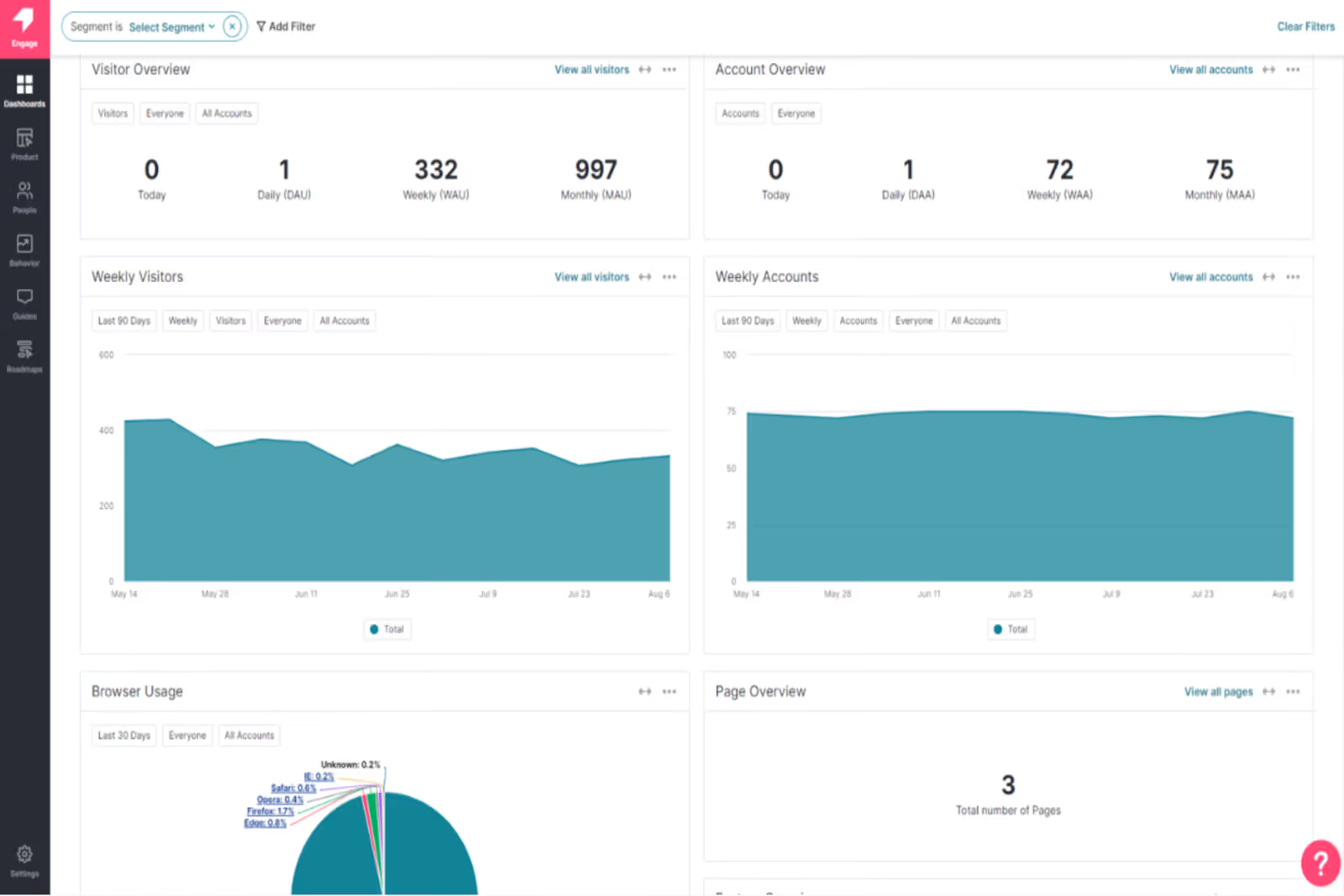
Pendo combines product analytics with in-app feedback collection. It's a strong choice if your primary goal is understanding feature adoption alongside customer sentiment.
You can track which features users engage with. Then trigger contextual surveys right inside the product. That gives feedback immediate relevance. Plus, users respond while the experience is fresh.
Key Features
- In-app Guides: Collect real-time, contextual product feedback from users
- Feature Adoption Tracking: Measures how users interact with specific product functionality
- In-product NPS and CSAT Surveys: Help product teams measure loyalty, identify detractors, and understand feature satisfaction
- Behavioral Analytics: Show how users interact with your product
- Integrations: Connects with 50+ tools across categories like data, collaboration, and marketing automation
Pricing
Free plan available (up to 500 MAUs). Enterprise pricing is custom.
Pros
- Combines behavioral data with feedback
- Strong onboarding and customer support
- Good for product adoption insights
Cons
- Limited filtering options
- Steep learning curve and complex, confusing setup
G2 Rating
4.4/5
Best For
SaaS product teams that want to combine in-app guidance with feature-level feedback and behavioral analytics.
4. Canny
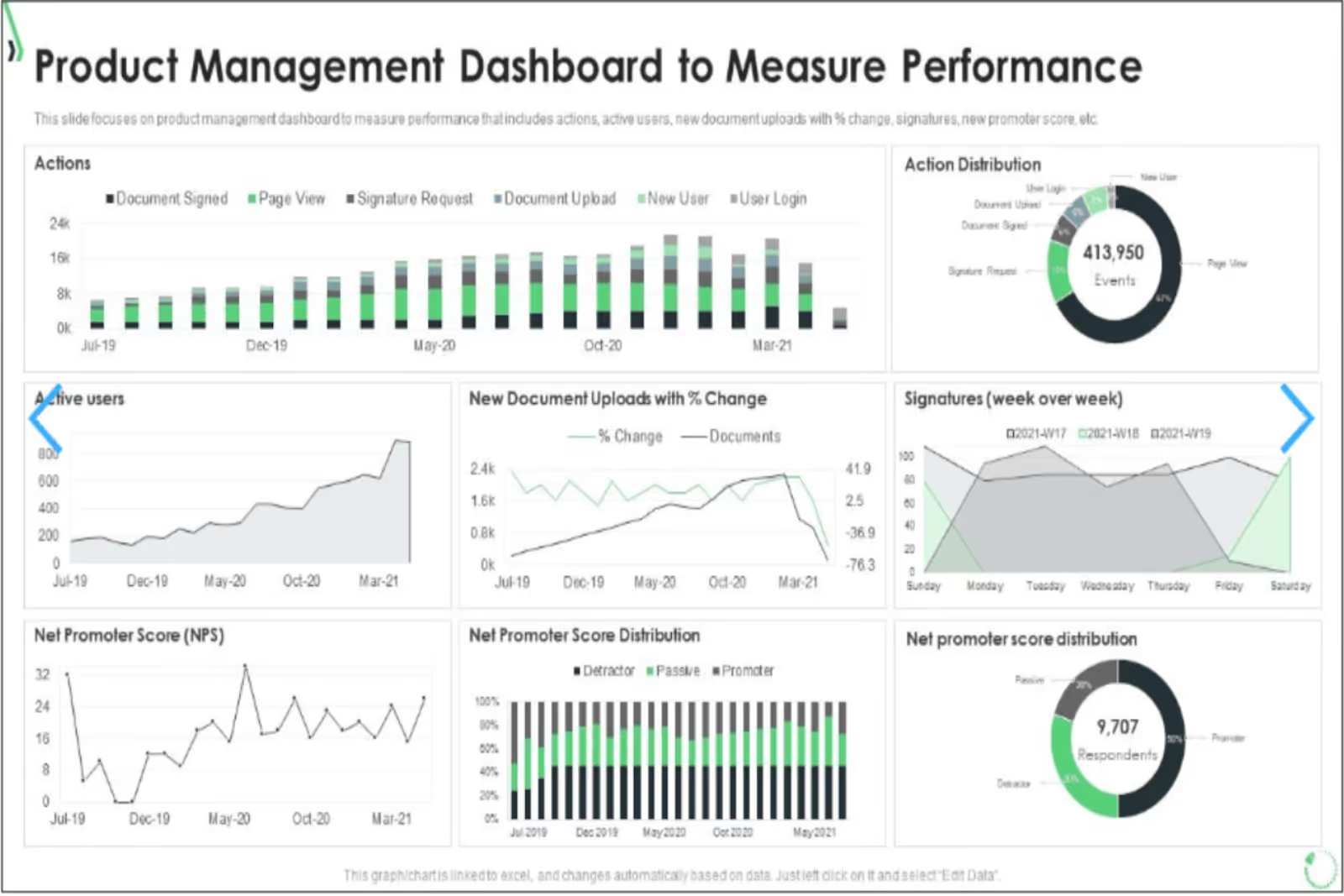
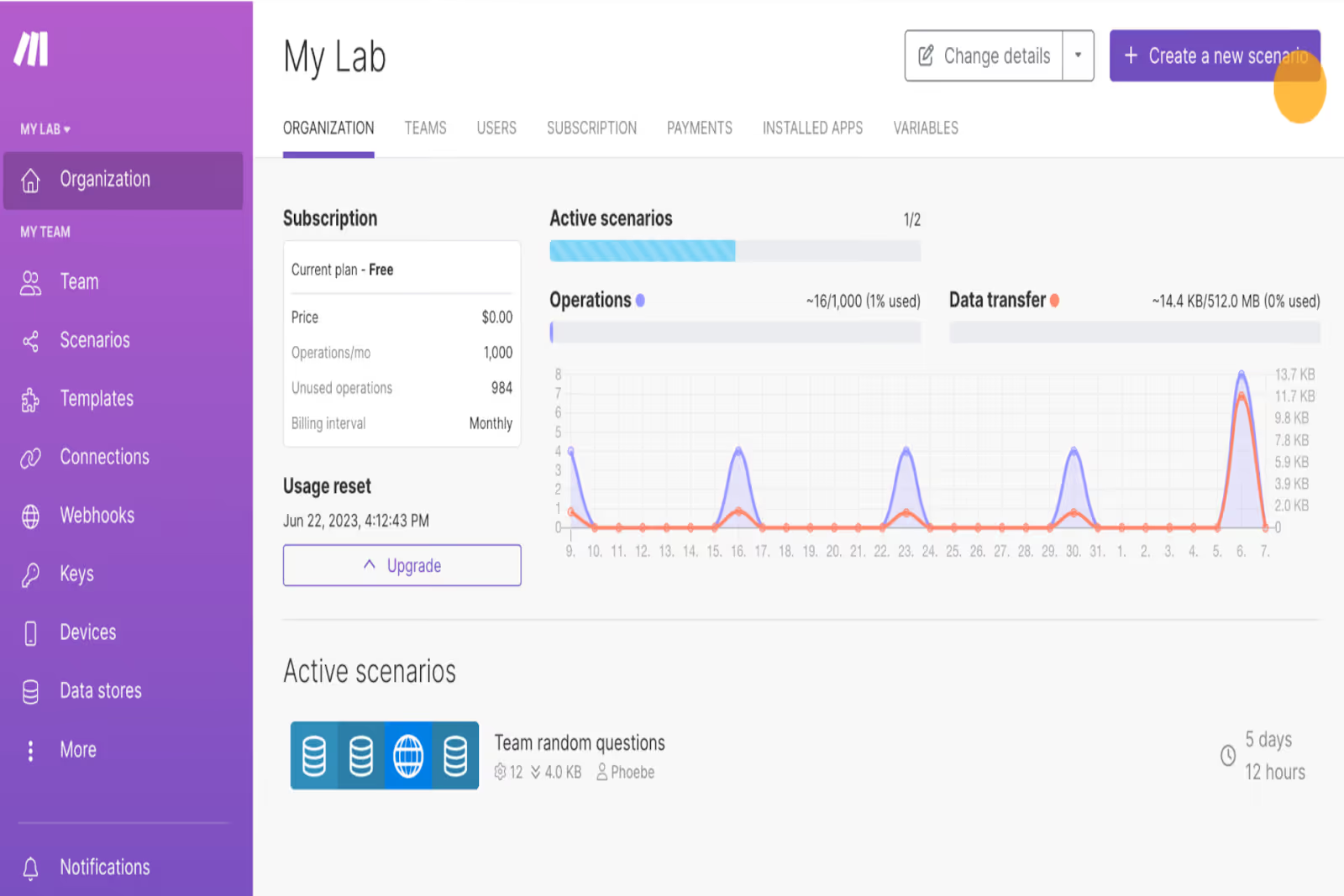
Next up is Canny, which is purpose-built for managing feature requests. It allows users to submit feature ideas and vote for features they like. So, product teams see what matters most. This keeps the process transparent and organized.
Canny is affordable and easy to use. The public roadmap feature helps customers feel heard. Smaller and mid-market product teams tend to love it.
Key Features
- Product Roadmap Visibility: Shares upcoming product features with customers
- Automatic Status Syncing: Automatically updates customer-facing roadmaps when tasks change
- Changelog: Allows teams to announce updates, product releases, and bug fixes
- Integrations: Connects with Jira, Asana, and Slack
- Voting Boards: Enable product teams to see which product features users prefer
Pricing
Paid plans start from $19/month for 100 users and the Pro plan costs $79. Custom pricing applies to the Business plan.
Pros
- Simple, clean UX and easy to deploy
- Great for customer-facing roadmap transparency
- Affordable pricing for startups
Cons
- Doesn't explain why customers request features
- Less suitable for very large enterprises
G2 Rating
4.6/5
Best For
Product teams that want a voteable feature request system with roadmap transparency.
5. Hotjar
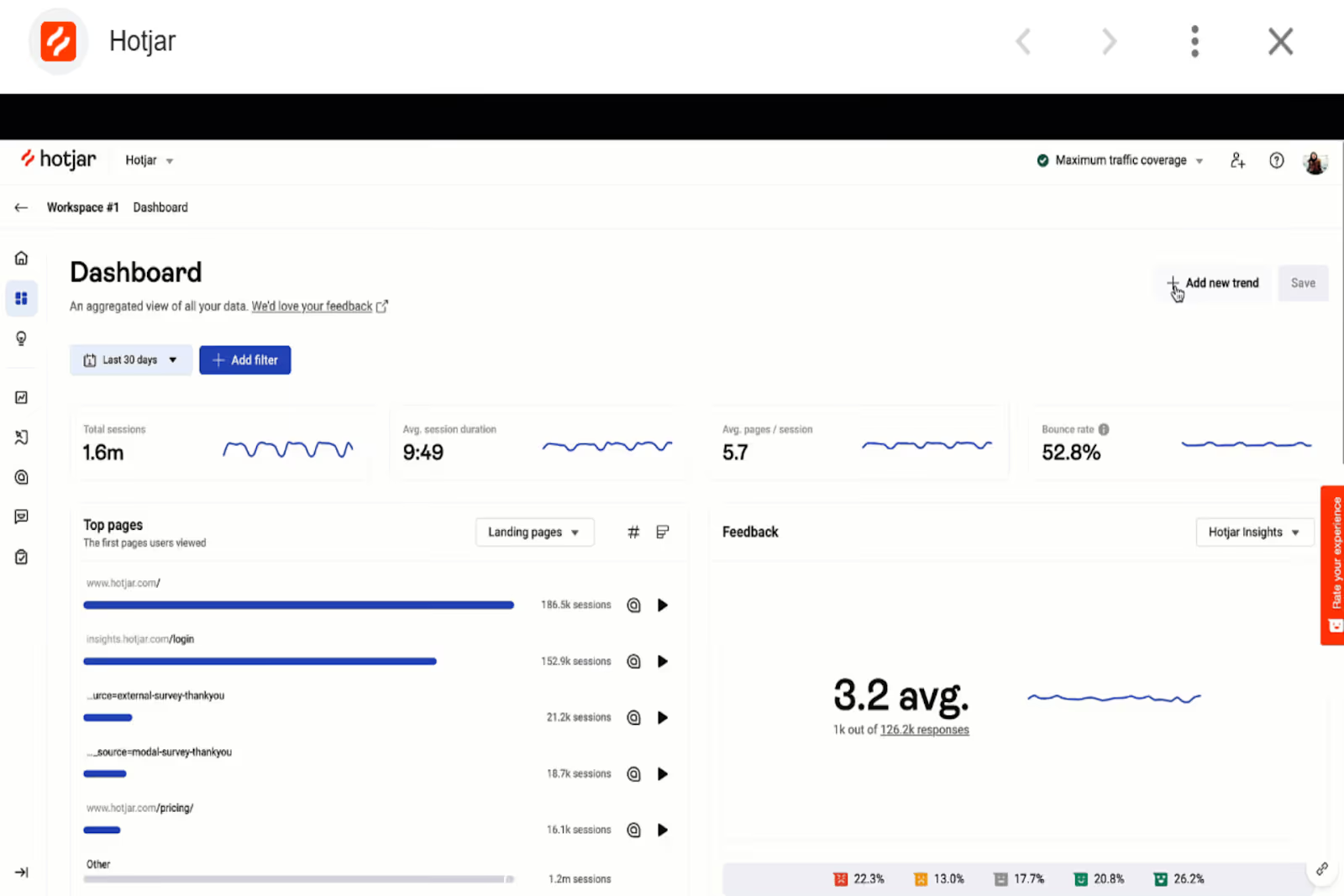
Hotjar, now part of Contentsquare, shows you what users actually do on your website. Heatmaps reveal where people click, scroll, and drop off. Session recordings let you watch real user journeys. Additionally, feedback widgets let users flag issues directly on the page.
That said, it's not a deep analytics platform for enterprise feedback volumes. But for understanding usability friction and improving conversion, few tools match it at this price point.
Key Features
- Heatmaps: Measure user engagement using heatmaps (click, scroll, move)
- Session Recording and Replay: Helps teams understand user behavior and make data-driven improvements
- On-Site Feedback Widgets: Collects real-time, visual, and qualitative feedback
- NPS Surveys: Helps identify loyal fans and unhappy users to guide product development
- Conversion Funnels: Identify friction points and where users drop off
Pricing
Paid plans start at $39/month. Free plan available.
Pros
- Accessible free tier for SMBs
- Highly rated on G2 for ease of use
- Strong UX and behavioral context
Cons
- Not built for product feedback at scale
- Limited AI-powered theme detection
G2 Rating
4.3/5
Best For
E-commerce and SaaS teams that need behavioral website UX insights.
6. UserVoice
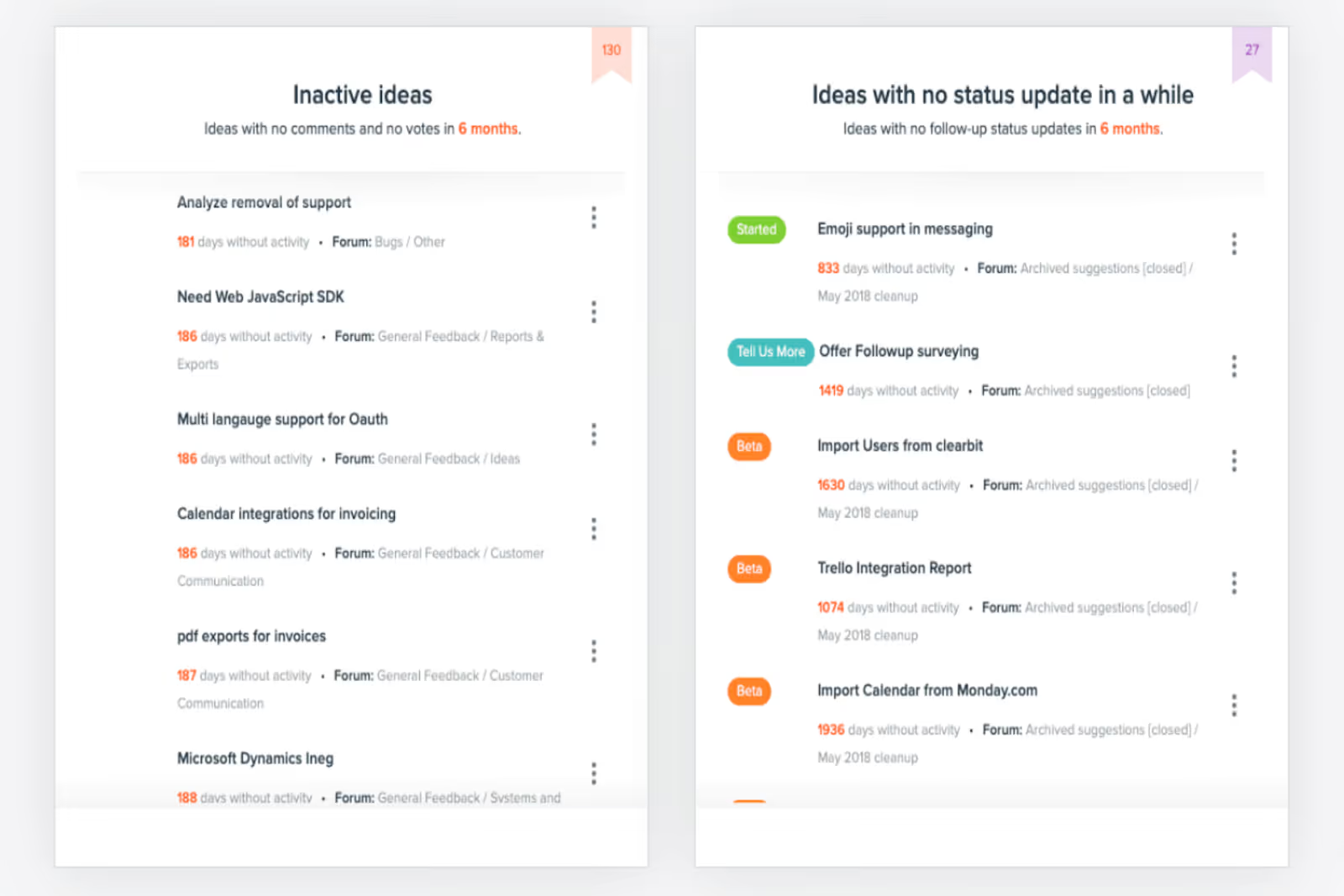
UserVoice manages the full feedback lifecycle for large organizations. It collects ideas, lets teams prioritize them, and maps inputs directly to the product roadmap. Revenue-weighted prioritization is one of its standout features.
In addition, it handles high feedback volumes well. But it's narrower in scope than enterprise-level platforms. The focus is on feature management, not cross-channel analytics.
Key Features
- In-app Feedback Widgets: Assists product development through user feedback
- Idea Collection and Customer Voting: Identify in-demand features through user votes
- Revenue-Weighted Prioritization: Helps product teams pick financially valuable features
- Product Roadmap Alignment Tools: Prioritizes actual user needs over assumptions in product development
- Product Discovery Framework: Enables ongoing customer feedback collection
Pricing
Custom pricing starting from $16,000 per year.
Pros
- Strong for enterprise complexity
- Powerful revenue-weighted prioritization
- Keeps customers in the loop
Cons
- The onboarding process can be lengthy
- Limited deep sentiment or AI analysis
G2 Rating
4.5/5
Best For
Large enterprises needing feature prioritization and product roadmap alignment.
7. Typeform
Next, there is Typeform, which makes surveys feel like conversations. Notably, its one-question-at-a-time format drives higher completion rates. Over 3,000 templates make it fast to deploy. Moreover, logic branching makes surveys feel personal.
However, it's not a deep analytics platform. The value is in getting people to actually complete your surveys. Thereafter, it routes responses to tools that analyze them.
Key Features
- Surveys: Conversational, one-question-at-a-time format boosts completion rates
- Survey Templates: Access to 3,000+ customizable templates for fast deployment
- Logic Jumps and Conditional Branching: Enables tailored, interactive user journeys
- Creator AI: Allows users to build forms from simple text prompts
- Beta Testing: Qualifies testers, collects fast feedback, and identifies bugs
Pricing
Typeform offers three plans:
- Basic $28/month (100 responses)
- Plus $56/month (1,000 responses)
- Business $91/month (10,000 responses)
Pros
- Very high completion rates
- Beautiful, mobile-optimized design
- Fast to build and deploy
Cons
- Not built for enterprise feedback analysis
- Response limits can be restrictive on lower tiers
G2 Rating
4.5/5
Best For
CX teams and product managers who need engaging, high-response conversational surveys
8. Sprig
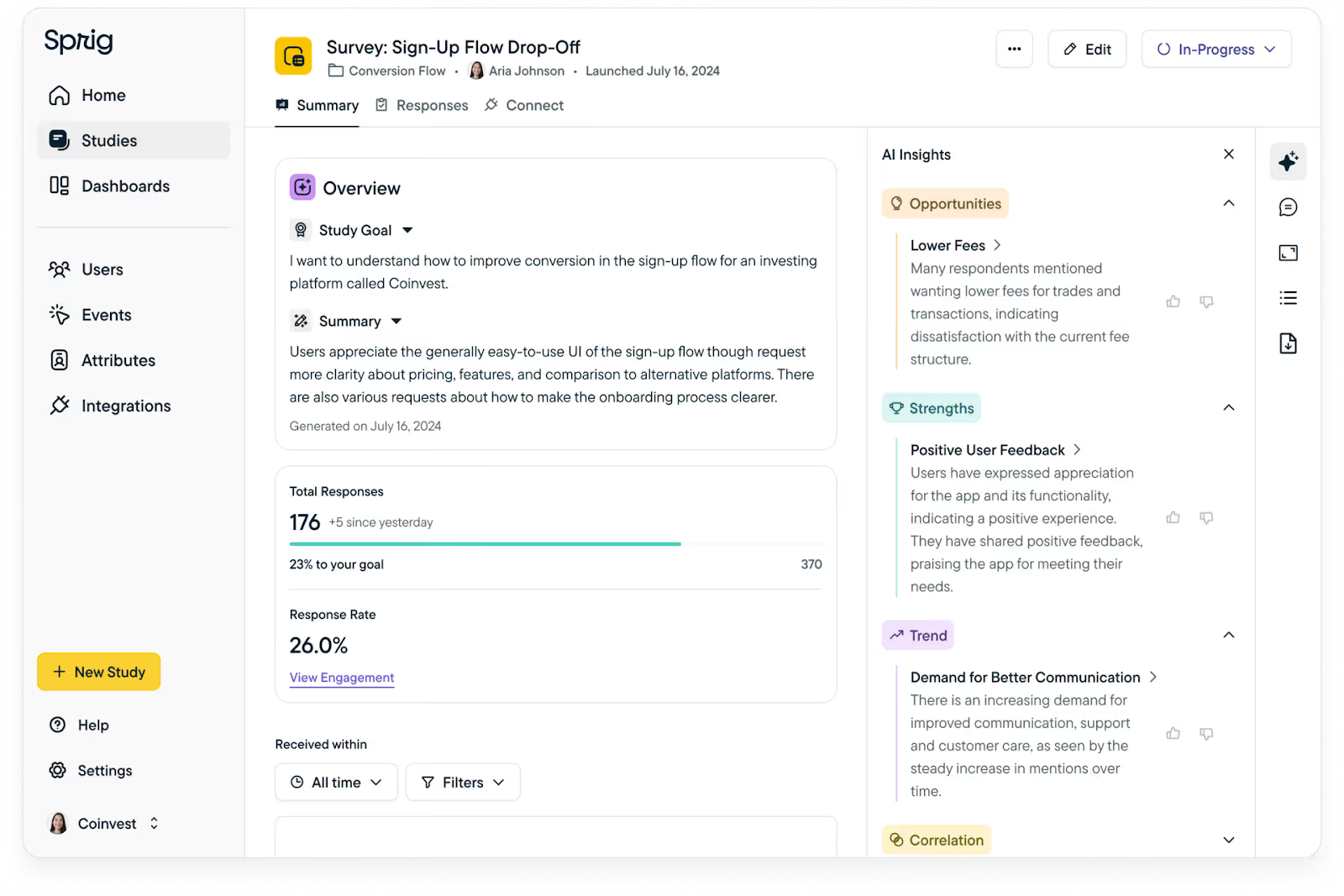
Another decent product experience platform is Sprig. It captures feedback inside your product, at the exact moment users experience something. Its microsurvey format is lightweight and non-intrusive. It also offers session replays and heatmaps.
In particular, its AI analysis automatically summarizes open-text responses. This reduces manual review time significantly. It's especially strong on mobile products.
Key Features
- In-product Microsurveys: Enable product teams to capture contextual, real-time user feedback
- Session Replays And Heatmaps: Give teams a visual understanding of user behavior
- AI Summaries: Condenses thousands of user responses into actionable themes and insights
- Mobile-native Surveys: Enable quick and convenient product feedback
- Integrations: Connects with Salesforce, Zendesk, and Jira
Pricing
Free plan available. Enterprise pricing is custom and scales with feedback volume.
Pros
- Strong mobile feedback capability
- AI summaries reduce analysis time
- Contextual, in-moment feedback collection
Cons
- Less depth for enterprise-scale multi-channel analytics
- Can be pricey for the full feature set
G2 Rating
4.4/5 (105 Reviews)
Best For
Product teams that need mobile-first in-product feedback tied to specific user actions.
9. Survicate
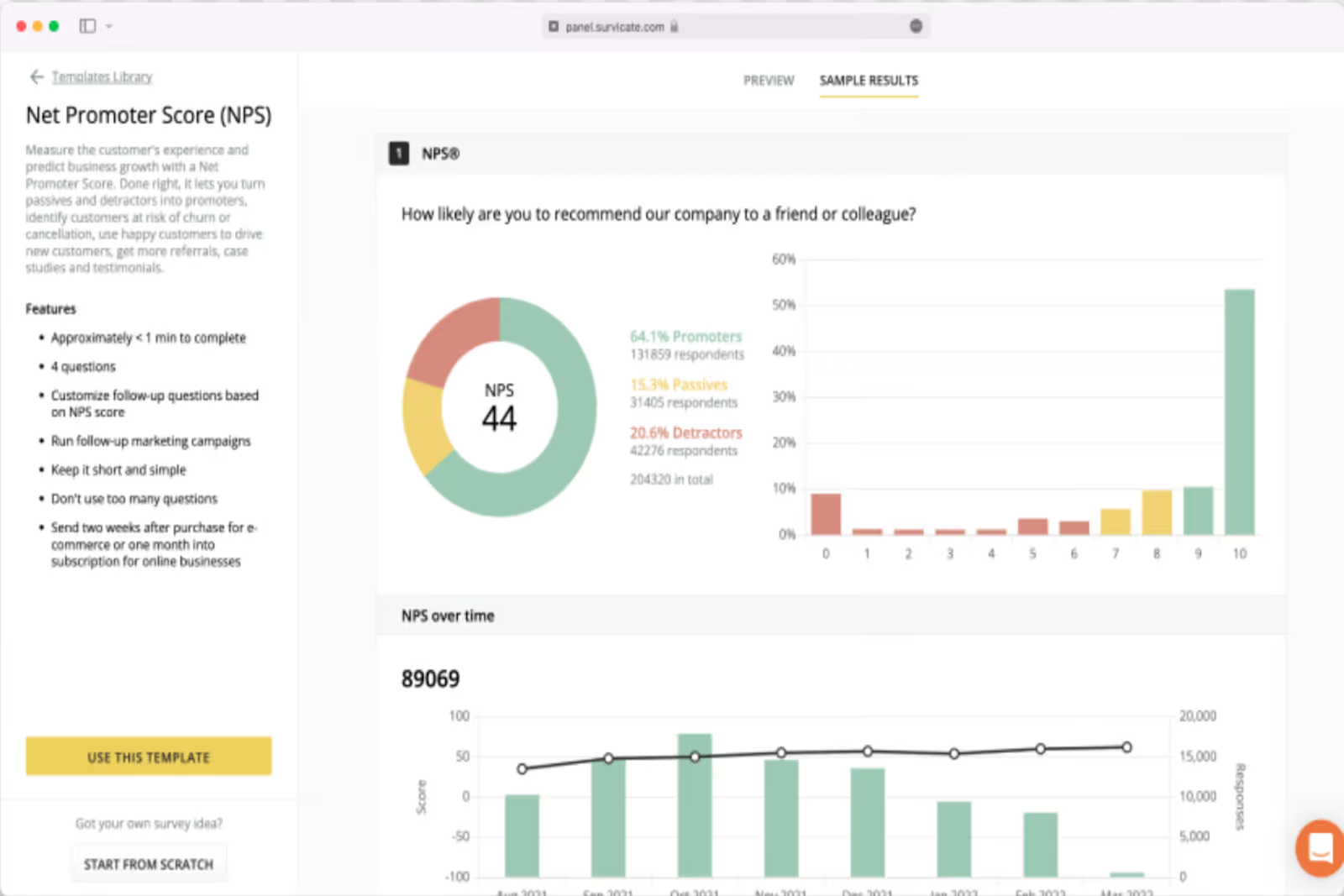
Survicate deploys targeted surveys across email, websites, mobile apps, and in-product experiences. Plus, it integrates cleanly with HubSpot, Salesforce, Intercom, and Slack. Setup is fast, so there's no heavy technical overhead required.
It's a reliable feedback collection layer. But reporting stays at the response level. Teams needing deep theme or sentiment analysis often pair Survicate with a deep analytics platform like Chattermill.
Key Features
- Survey Distribution: Shares surveys across multiple channels (email, web, mobile, in-app)
- NPS, CSAT and CES Templates: Allow product teams to launch targeted feedback campaigns quickly
- Advanced Targeting and Segmentation: Allows product teams to gather precise, contextual feedback from users
- Integrations: Links with 40+ tools, including Salesforce, HubSpot, and Zapier
- Centralized Feedback Management: Consolidate all user insights into one dashboard
Pricing
Survicate has three plans:
- Growth £89/month (500 responses)
- Pro starts from £259/month (1,500 responses)
- Enterprise £439/month (Custom yearly)
Pros
- Fast to deploy across channels
- Strong integration ecosystem
- Reliable for targeted, contextual surveys
Cons
- Limited deep analytics beyond response data
- Doesn't surface root causes at scale
G2 Rating
4.6/5
Best For
Growing SaaS and e-commerce companies needing flexible, multi-touchpoint survey distribution
10. Medallia
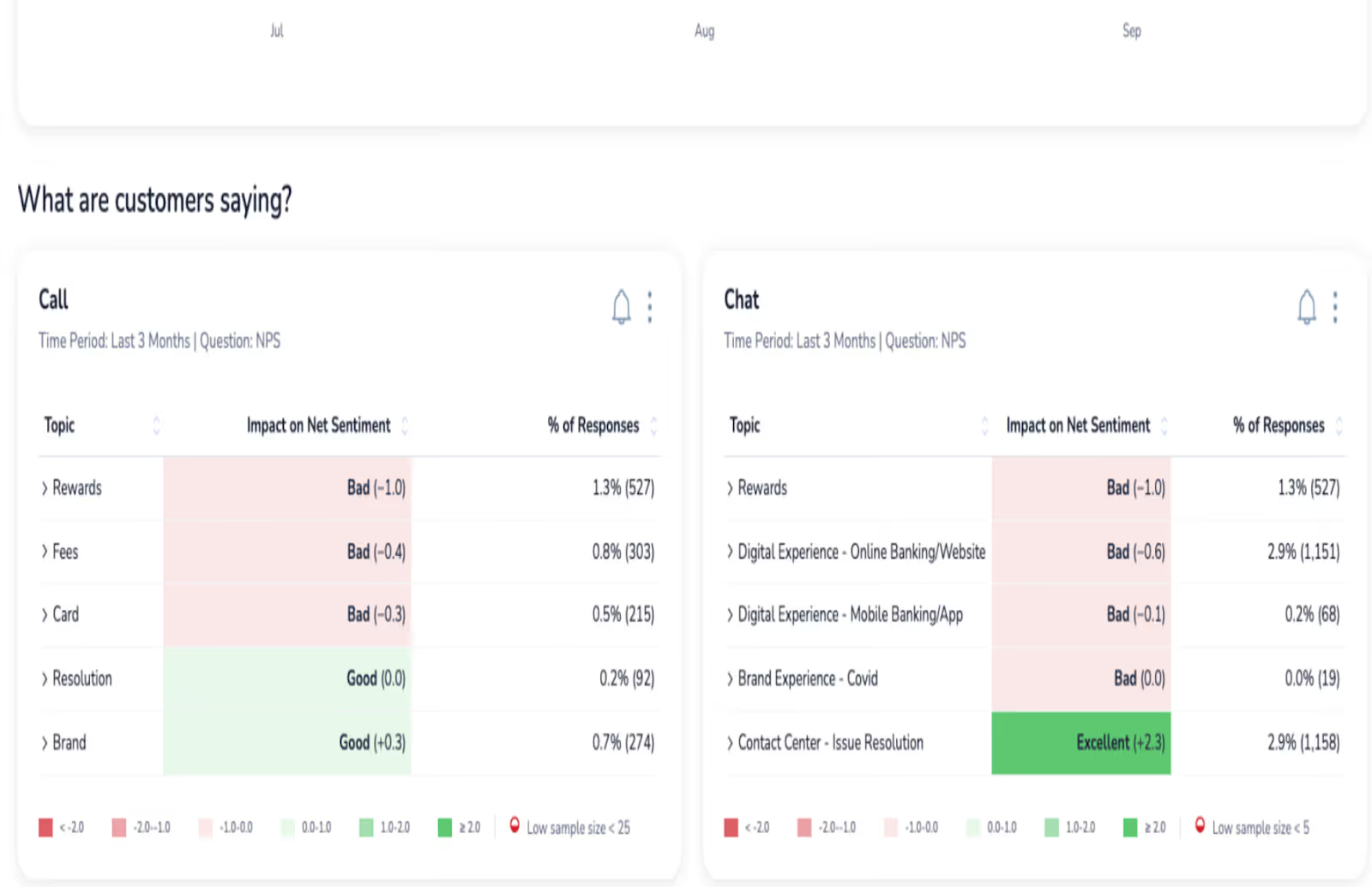
Medallia is one of the longest-standing names in enterprise CX. It captures feedback across email, social, web, mobile, call recordings, and IoT devices. Its AI surfaces sentiment trends and flags churn risk.
Even so, the setup is complex and slow to implement. Also, the service model leans heavily toward managed services. But for very large organizations with mature CX programs, it remains a serious option.
Key Features
- Omni-Channel Feedback Capture: Pulls feedback from email, web, in-app, social, and IVR
- AI Sentiment: Analyzes feedback rapidly and predicts churn
- Ask Athena AI: Identifies trend drivers and instantly analyzes feedback
- Customizable Dashboards and Role-based Reporting: Tailors feedback to the right team for faster action
- Frontline AI: Provides consolidated actionable insights for CX teams
Pricing
Custom. Not publicly disclosed.
Pros
- Very broad channel coverage
- Strong AI for large enterprises
- Mature platform with an extensive client base
Cons
- Text analytics lacks granularity
- Managed-service model limits self-service flexibility
G2 Rating
4.5/5
Best For
Large global enterprises needing a comprehensive, managed CX management suite.
11. Qualtrics
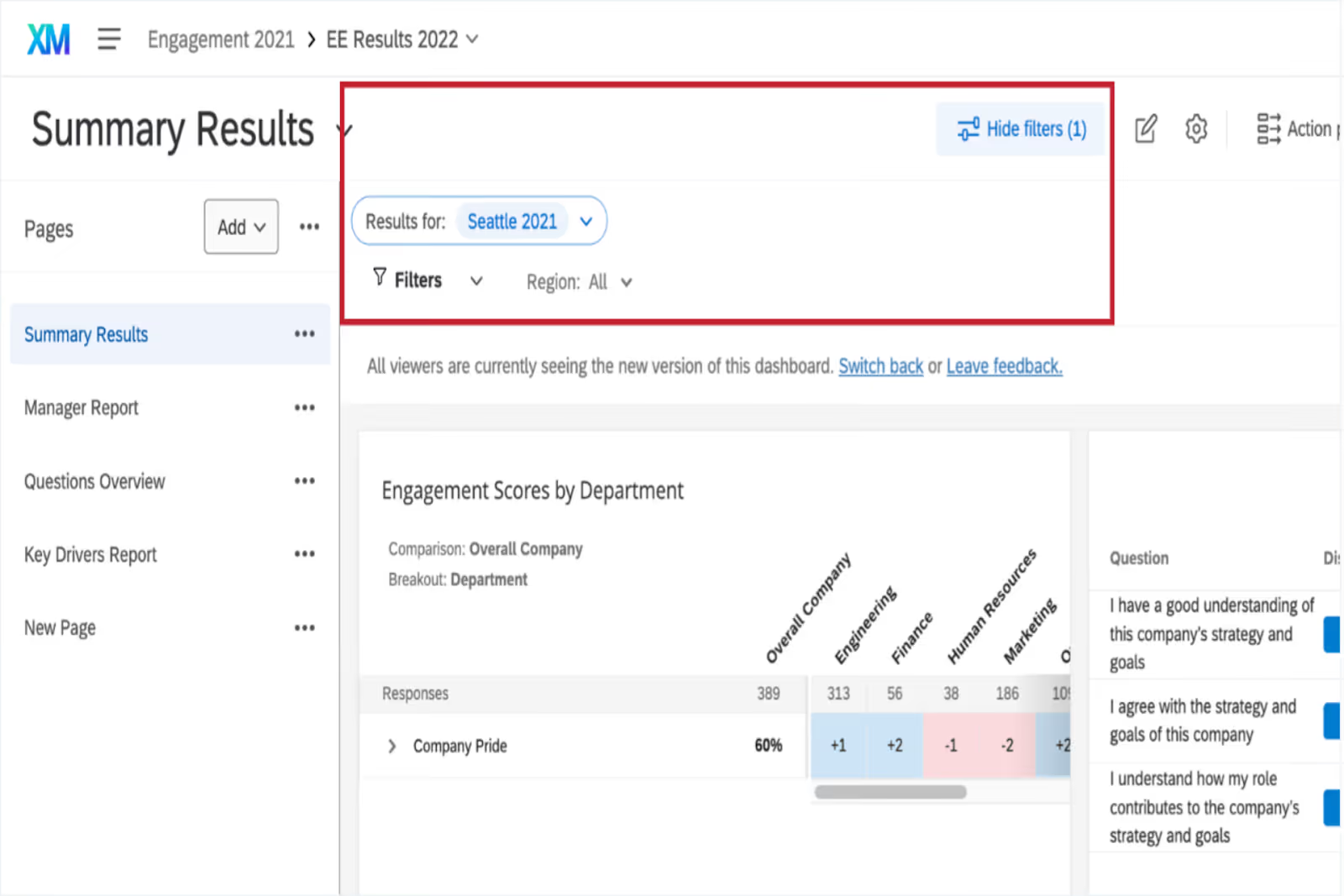
Qualtrics is a strong option for survey research. Its logic, branching, and customization tools are unmatched for structured research design. Large organizations use it to run complex experience management programs. It covers the whole spectrum across customer, employee, product, and brand.
But it's a survey-first platform. So it struggles when feedback sources multiply. Consequently, teams often need extra tools to unify and analyze unstructured feedback at scale.
Key Features
- Advanced Survey Logic and Branching: Improves user engagement and data quality
- AI Sentiment Tool: Analyzes open-text and video feedback to understand how users feel about a product
- Real-Time Alerts: Enables prompt feedback and faster issue resolution
- Usability Testing: Tracks user behavior changes over multiple sessions
- Prebuilt Templates: Measure product satisfaction, loyalty, and feature prioritization
Pricing
Custom quote approach. Contact the sales team for a tailored price.
Pros
- Best-in-class survey customization
- Strong compliance and security credentials
- Deep analytics for structured research
Cons
- The survey-first approach has limits for unstructured feedback
- Can be complex and resource-intensive to manage
G2 Rating
4.4/5
Best For
Large organizations running formal research programs and structured experience management.
12. Thematic
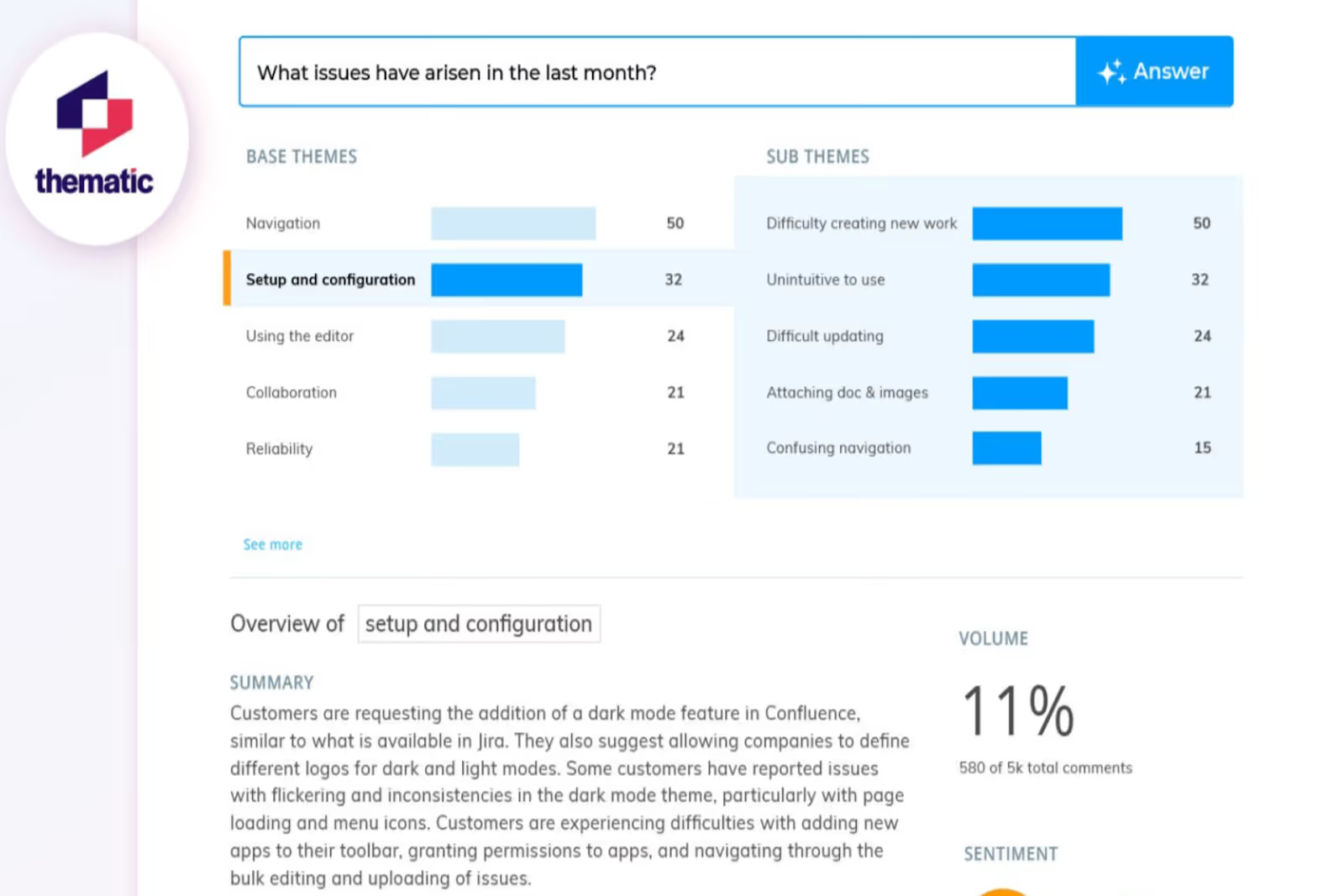
Lastly, Thematic focuses on making advanced text analytics accessible. Clear visualizations show themes and their relationships. It enables teams to spot emerging trends quickly without heavy configuration.
It's a strong choice for teams that need intuitive qualitative analysis. But it's shallower than platforms like Chattermill that unify multi-source feedback and connect insights to business outcomes.
Key Features
- Automated Theme Discovery: Categorizes open-text feedback, enabling faster analysis
- Routing: Routes context-rich insights to the right teams for quicker action
- Intuitive: Easy-to-use interface for non-technical teams
- Feature Requests: Allows users to suggest new features
- Intuitive Theme Visualizations: Enables quick alignment on product roadmap decisions
Pricing
Starts from $25,000 per year.
Pros
- Very accessible for non-technical users
- Clear, visual theme reporting
- Fast to get meaningful insights
Cons
- Less depth for multi-source unification
- Limited business impact mapping at enterprise scale
G2 Rating
4.8/5
Best For
CX and insights teams that want intuitive, visual theme analysis from open-text survey data.
How to Choose the Right Product Feedback Tool
Not every team needs the same product feedback tool.
Here's a simple 7-step framework to help you make the right choice that suits your needs perfectly.
Step 1: Identify your feedback stage.
Are you still collecting feedback inconsistently?
Start with a survey tool like Typeform or Survicate.
Are you collecting plenty but struggling to analyze it? You need an analytics layer such as Chattermill, Thematic, or Enterpret.
Step 2: Count your feedback sources.
One or two sources? Most tools handle that.
Five or more: surveys, support tickets, reviews, calls, social? Then you need a platform built for consolidation and unification. That's a short list. Chattermill leads it.
Step 3: Ask who needs the insights.
If only one team uses the data, a specialist tool works fine.
Do CX, Product, Support, and Leadership all need answers from the same data? Then that’s a complex, unique challenge. You need a cross-functional platform like Chattermill, not four separate tools.
Step 4: Define your success metric.
If success means higher survey completion, Typeform wins.
If success means reducing churn or improving NPS, you need a platform that connects feedback directly to those outcomes. Most tools don't. Chattermill does.
Step 5: Be honest about scale.
Under 10,000 monthly feedback signals? Many tools on this list serve you well.
Over 100,000? The manual and semi-automated options collapse fast. You need AI that works at volume and a platform your entire organization can act on.
Step 6: Demand AI that explains "why."
Surface-level sentiment scores don’t cut it.
They don’t explain why what’s happening is happening. Look for platforms that detect granular themes and root causes. Chattermill’s Lyra AI is excellent at granular theme detection.
Step 7: Connect feedback to metrics that matter.
The best-in-class tools map insights to business metrics.
Chattermill has powerful business mapping tools. It ties feedback themes directly to metrics like NPS, CSAT, retention, churn, and revenue.
Product Feedback Tools Final Verdict
The product feedback tools market is crowded. Every tool on this list does something useful.
But most of them leave a critical gap. They collect data. But they don't connect it to your bottom line. Chattermill closes that gap. It unifies every feedback channel. Its Lyra AI reveals the why behind customer sentiment. And it maps every insight to the metrics that matter: NPS, retention, churn, revenue.
If you're leading CX or product at an enterprise B2C company, that's the standard your feedback platform should meet. Book a demo with Chattermill to see it in action.



See Chattermill in action on your own feedback
Book a demo


