


AI-Powered Voice of Customer Tools: 10 Picks (2026)


The CX intelligence
platform that's AI-native by design
Book a demoMost teams are not short on customer feedback. They are drowning in it — surveys, support tickets, app reviews, social mentions, chat transcripts — spread across a dozen tools and formats. The hard part was never collecting more data. The hard part is making sense of it all fast enough to act.
That is where AI-powered voice of customer tools change the equation. Instead of relying on keyword rules, manual tagging, and analyst-maintained taxonomies, AI-native VoC platforms use adaptive machine learning to automatically surface themes, sentiment, and emerging trends from unstructured feedback — in real time, across every channel.
Quick Summary
We evaluated 10 AI-powered voice of customer tools across AI analysis depth, feedback channel coverage, actionability, enterprise readiness, and time to value. Chattermill is the strongest option for AI-native unified feedback analytics across every channel. Medallia is best for enterprise-scale omnichannel VoC programs with deep operational integration. Qualtrics XM is the top choice for organizations that need AI-enhanced survey analytics layered onto a mature research platform.
| Tool | Best For |
|---|---|
| Chattermill | AI-native, enterprise customer experience intelligence |
| Medallia | Enterprise-scale omnichannel VoC |
| Qualtrics XM | AI-enhanced survey analytics |
Key Takeaways:
- Top pick: Chattermill leads for teams that need to unify feedback from surveys, reviews, support tickets, social, and chat into a single AI-powered analytics layer — with no manual tagging required.
- AI depth matters: The gap between AI-native platforms (adaptive ML, automatic theme detection, generative summarization) and keyword-based tools (manual taxonomies, rule-based tagging) is widening fast.
- Pricing varies widely: From custom enterprise contracts at Chattermill, Medallia, and Qualtrics to mid-market starting points around $25K/year at Thematic. Most tools require a custom quote.
- No single tool does everything: The best VoC platform depends on whether your priority is channel unification, survey depth, support-ticket intelligence, or social listening — choose based on your primary feedback source.
Why Listen to Us
At Chattermill, we help CX, product, and insights teams at brands like Uber and Tesco turn unstructured customer feedback into actionable customer intelligence. Our platform processes millions of feedback data points across channels every day, which gives us a clear view of what separates effective AI-powered VoC tools from tools that simply add an "AI" label to keyword matching.

What Are AI Voice of Customer Tools?
AI voice of customer tools are platforms that use machine learning, natural language processing, and increasingly generative AI to collect, unify, and analyze customer feedback at scale. Unlike traditional survey analysis tools, AI-powered VoC platforms can process unstructured data — open-ended survey responses, support tickets, app reviews, social mentions, chat transcripts — and automatically surface themes, sentiment, and trends without manual tagging. The goal is to close the gap between raw feedback and business action: connecting what customers say to metrics like NPS, CSAT, and churn so teams can prioritize what to fix, build, or double down on.
10 Best AI-Powered VoC Tools: Head-to-Head Comparison
| Tool | Best For | AI/NLP Approach | Feedback Channels | Key AI Feature | Pricing | G2 Rating |
|---|---|---|---|---|---|---|
| Chattermill | AI-native unified feedback analytics | Deep learning + adaptive ML | Surveys, reviews, support, social, chat, app | Automatic theme & sentiment detection with no manual taxonomy | Custom (see plans) | |
| Medallia | Enterprise-scale omnichannel VoC | Classical NLP + rule-based text analytics | Surveys, digital, contact center, social, IoT | Operational action workflows tied to feedback signals | Custom | |
| Qualtrics XM | AI-enhanced survey analytics | Statistical NLP + iQ predictive models | Surveys, website/app intercepts, social | Predictive intelligence (iQ) for driver analysis | Custom (~$200K+/yr enterprise) | |
| Enterpret | Adaptive AI taxonomy | Adaptive ML with custom-trained models | Support tickets, reviews, surveys, social | Auto-evolving feedback taxonomy per product | Custom | |
| Thematic | Human-in-the-loop AI analysis | Semi-supervised NLP + analyst refinement | Surveys, reviews, support, social | Analyst-guided theme discovery with AI assist | From $25K/yr | |
| SentiSum | Support-channel VoC insights | NLP classifiers + generative summarization | Support tickets, chat, CSAT surveys | AI auto-tagging of support conversations | Custom | |
| Sprinklr | Social-first AI VoC | Proprietary AI + social NLP | Social, messaging, reviews, surveys, community | Unified social listening + VoC in one platform | Custom | |
| Unwrap | Product-led AI feedback intelligence | ML-based auto-clustering | App reviews, support tickets, surveys, NPS | AI-generated product feedback digests | Custom | |
| Syncly | AI-native auto-tagging | Neural network auto-tagging at ingest | Support tickets, chat, surveys, reviews | Zero-setup auto-tagging on first data import | Custom | |
| Verint | AI-powered conversation analytics | Speech & text analytics AI | Contact center calls, chat, email, social | 90%+ speech analytics accuracy for call center VoC | Custom |
How We Evaluated These AI VoC Tools
Choosing a VoC tool based on a feature checklist misses the point — what matters is how effectively the tool turns raw feedback into decisions. Here are the five criteria we weighted most heavily:
1. AI Analysis Depth
Does the platform use genuine machine learning and NLP, or does it rely on keyword matching and manual taxonomies? We prioritized tools with adaptive models that improve as they process more data, automatic theme detection, and AI-powered sentiment analysis that understands context — not just positive/negative polarity.
2. Feedback Channel Coverage
The best VoC tools unify customer feedback from every source — surveys, reviews, support tickets, social, chat, and app stores — into a single analytics layer. We evaluated how many channels each tool ingests natively versus through workarounds.
3. Actionability
Insights are only valuable if they drive action. We looked for tools that connect feedback themes to business metrics (NPS, CSAT, CES, churn), surface anomalies through real-time alerts, and make it easy for cross-functional teams to prioritize what to fix next.
4. Enterprise Readiness
For teams processing tens of thousands of feedback data points per month, scalability, security certifications, role-based access, SSO, and integration depth with CRM, helpdesk, and BI platforms matter. We assessed each tool's fit for mid-market and enterprise environments.
5. Time to Value
How quickly can a team go from connecting their first data source to seeing actionable insights? Tools that require months of taxonomy setup scored lower than platforms that deliver automatic themes and trends within days.
1. Chattermill — Best for AI-Powered Unified Feedback Analytics
.avif)
Chattermill is an AI-native feedback analytics and voice of customer platform built to unify feedback from every channel into a single source of truth. Rather than forcing teams to manage separate tools for surveys, reviews, support tickets, and social data, Chattermill ingests all of these sources and uses deep learning to automatically detect themes, sentiment, and emerging trends — without any manual tagging or taxonomy setup.
What sets Chattermill apart from platforms that have added AI on top of legacy architectures is that the AI is foundational. The platform's models are trained on your organization's feedback data, which means theme detection and sentiment analysis become more accurate over time. For CX and product teams processing high volumes of unstructured feedback, this translates to faster insight discovery and fewer blind spots.
Chattermill also connects feedback directly to business outcomes. Impact analysis links specific themes and sentiment shifts to changes in NPS, CSAT, and churn risk, giving leaders the evidence they need to prioritize CX investments. Real-time alerting surfaces anomalies before they become crises — a capability that enterprise brands like Uber and Tesco rely on to stay ahead of customer issues at scale.
The latest addition — the Chattermill MCP server — brings customer intelligence into the agentic era, letting teams query and act on feedback data directly inside AI agents and workflows.
Chattermill Features
- Unified Customer Intelligence: Consolidates surveys, reviews, support tickets, social mentions, chat transcripts, and app store feedback into a single analytics layer — no more siloed insights across tools.
- Advanced AI Analytics: Deep learning models automatically detect themes and sentiment across feedback, in multiple languages, with no manual taxonomy required. Models adapt as your data grows.
- Real-Time Insights & Alerting: Proactive alerts flag emerging issues, spikes in negative sentiment, and trending themes so teams can act before problems escalate.
- Impact Analysis: Connects customer feedback themes directly to NPS, CSAT, CES, and churn risk — showing the business impact of specific issues, not just their frequency.
- Advanced Segmentation: Slice feedback by customer cohort, product line, geography, channel, or any custom attribute to pinpoint issues that matter to specific audiences.
- Custom Dashboards: Build shareable views tailored to CX, product, insights, or executive stakeholders — everyone sees what's relevant to their role.
- Enterprise Integrations: Native connections to CRM, helpdesk, BI platforms, and the Chattermill MCP server for embedding customer intelligence into AI-native workflows.
2026 Pricing
Custom — based on data volume and requirements.
Chattermill Pros
- Unifies feedback from every channel into a single platform, eliminating data silos and giving teams a complete view of the customer voice
- AI-native architecture means no manual taxonomy setup — themes and sentiment are detected automatically and improve with use
- Impact analysis ties feedback to NPS, CSAT, and churn, making it easy to build a business case for CX investments
- Real-time alerting catches issues early, before they show up in quarterly reports
- Intuitive UX that non-technical teams can navigate without analyst support
- Custom dashboards and shareable views give CX, product, insights, and executive teams transparent access to the same customer intelligence — no siloed reports or offline exports
- Enterprise-grade security, SSO, and role-based access for organizations with strict compliance needs
Chattermill Cons
- No data collection capabilities — Chattermill analyzes and surfaces insights from feedback, but it does not survey or collect feedback itself. Teams need a separate collection tool (survey platform, review aggregator) feeding into Chattermill.
- Custom pricing means smaller teams need to contact sales for a quote; no self-serve starter tier is publicly listed.
Who It's For
High-growth startups, scale-ups, and enterprise brands — particularly CX, product, and insights teams that need to make sense of high-volume, multi-channel feedback and connect it to business outcomes.
G2 Rating
Chattermill G2 Score: 4.5/5 (237 reviews)
2. Medallia — Best for Enterprise-Scale Omnichannel VoC

Medallia is one of the longest-established customer experience platforms on the market, built for large enterprises that need to capture and act on feedback across physical and digital touchpoints. Its strength lies in operational scale — Medallia can ingest feedback from surveys, digital intercepts, contact centers, social, IoT devices, and employee channels into a single platform, with action-oriented workflows that route insights to frontline teams.
Where Medallia's AI approach differs from AI-native platforms like Chattermill is that its text analytics capabilities are largely rule-based, relying on keyword matching and pre-configured taxonomies rather than adaptive machine learning. For organizations with dedicated analytics teams who can maintain these taxonomies, this works well. For teams that need instant, automatic theme detection without manual setup, it can create a bottleneck.
Medallia has gone through recent ownership transitions, which buyers should factor into long-term vendor evaluation and contract planning.
Medallia Features
- Omnichannel Signal Capture: Ingests feedback from surveys, digital, contact center, social, video, and IoT touchpoints across the entire customer journey.
- Operational Action Workflows: Routes insights and alerts directly to frontline teams, store managers, and contact center agents with prescribed actions.
- Text Analytics: NLP-powered text analysis for open-ended feedback — effective for structured use cases, though reliant on rule-based taxonomies for theme detection.
- Role-Based Reporting: Dashboards and alerts customized by role — from C-suite executives to frontline employees.
- Journey Analytics: Maps feedback across customer lifecycle stages to identify friction points.
2026 Pricing
Custom — enterprise contracts based on program scope and user count.
Medallia Pros
- Massive operational scale — built for enterprises with thousands of locations and millions of feedback data points
- Strong action-oriented workflows that push insights to frontline teams, not just analysts
- Broad signal capture across physical, digital, and employee touchpoints
- Deep integration with operational systems (POS, CRM, HRIS)
Medallia Cons
- Text analytics relies on rule-based taxonomies rather than adaptive AI — requires ongoing manual maintenance to keep themes accurate
- Complex implementation timeline — enterprise deployments often take 6-12 months
- Premium pricing that may exceed budget for mid-market teams
- Recent ownership changes may affect long-term product roadmap stability
Who It's For
Large enterprises (5,000+ employees) running complex, multi-location VoC programs with dedicated CX operations teams. See also: Chattermill vs. Medallia.
G2 Rating
Medallia G2 Score: 4.5/5 (206 reviews)
3. Qualtrics XM — Best for AI-Enhanced Survey Analytics
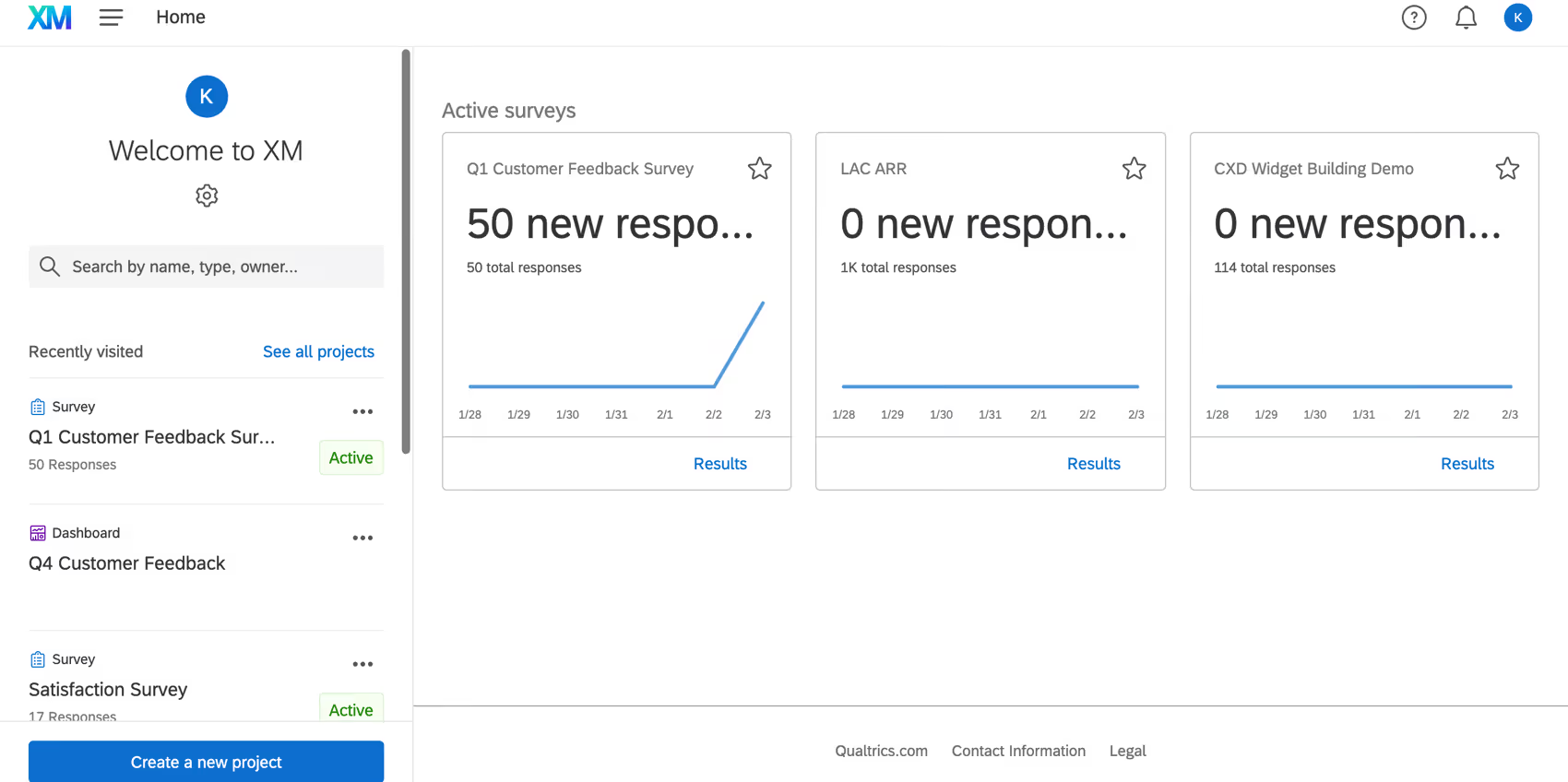
Qualtrics XM is the dominant survey platform in the enterprise research space, and its experience management suite extends into VoC with employee, brand, and product experience modules. The platform's AI capabilities — branded as iQ — include predictive intelligence for driver analysis, text sentiment detection, and statistical modeling that helps teams identify which experience factors have the greatest impact on key outcomes.
That said, Qualtrics remains fundamentally survey-centric. Its feedback analytics capabilities are strongest when the primary data source is structured survey responses. For teams that need to unify unstructured feedback from support tickets, reviews, social, and chat alongside survey data, Qualtrics requires additional integrations or workarounds that AI-native platforms handle natively.
Qualtrics has been expanding through acquisitions, which may affect the platform roadmap and integration landscape for existing users.
Qualtrics XM Features
- iQ Predictive Intelligence: Statistical models that identify key experience drivers — predicting which factors most influence NPS, CSAT, and retention.
- Text iQ: NLP-based sentiment and topic analysis for open-ended survey responses, with configurable topic categories.
- Survey Design & Distribution: Industry-leading survey builder with advanced logic, branching, and multi-language support.
- Experience Management Suite: Spans customer, employee, brand, and product experience in a single platform.
- XM Directory: Centralized contact and experience data management for longitudinal analysis.
2026 Pricing
Custom — enterprise contracts. Published estimates suggest starting at ~$200K+/year for enterprise deployments. For alternatives, see Qualtrics alternatives.
Qualtrics XM Pros
- Best-in-class survey design and distribution capabilities — unmatched flexibility for structured research
- iQ predictive analytics provides genuine statistical driver analysis, not just descriptive reporting
- Broad experience management suite covering customer, employee, brand, and product in one platform
- Massive ecosystem of integrations and a large partner network
Qualtrics XM Cons
- Survey-centric architecture — unifying unstructured feedback from non-survey channels requires significant integration work
- Text analytics relies on rule-based topic categorization rather than adaptive ML, requiring manual taxonomy upkeep
- High cost of entry — enterprise pricing puts it out of reach for mid-market and growth-stage teams
- UI complexity can slow down teams that don't have dedicated research operations support
Who It's For
Enterprise organizations with mature research and insights functions that prioritize survey-based VoC programs and need statistical rigor in their analysis.
G2 Rating
Qualtrics XM G2 Score: 4.4/5 (2,632 reviews)
4. Enterpret — Best for Adaptive AI Taxonomy

Enterpret takes a different approach to VoC analytics: instead of forcing feedback into pre-built categories, its AI builds a custom taxonomy for each product based on the language customers actually use. The platform's adaptive ML models retrain continuously as new feedback arrives, which means theme categories evolve alongside the product — a meaningful advantage for fast-moving SaaS teams that ship frequently and see feedback patterns shift with every release.
Enterpret is purpose-built for product and engineering teams, and its integration depth with tools like Jira, Slack, and Intercom reflects that focus. The trade-off is that it's narrower in scope than platforms designed for full CX programs — it excels at product feedback intelligence but isn't built to manage enterprise-wide VoC programs spanning contact centers, retail, and employee experience.
Enterpret Features
- Adaptive AI Taxonomy: ML models build and evolve a custom feedback taxonomy per product — no manual tagging or pre-built category trees.
- Multi-Source Ingestion: Pulls feedback from support tickets, app reviews, surveys, social, and community forums into a unified view.
- Product-Centric Analytics: Ties feedback themes directly to product areas, features, and releases — built for product roadmap prioritization.
- Generative AI Summaries: Auto-generated digests of feedback trends for product and engineering stakeholders.
- Workflow Integrations: Native connections to Jira, Slack, Intercom, and other product/engineering tools.
2026 Pricing
Custom — based on feedback volume and integrations.
Enterpret Pros
- Adaptive taxonomy genuinely reduces the manual work of categorizing feedback — the AI learns your product's language
- Strong product-team orientation — integrations with Jira, Slack, and engineering workflows feel native, not bolted on
- Continuous model retraining means categories stay relevant as the product evolves
- Clean, focused UI built for product managers, not just analysts
Enterpret Cons
- Narrower scope — designed primarily for product feedback intelligence, not full enterprise CX programs
- SaaS-centric positioning — less suited for retail, hospitality, or multi-location businesses
- Smaller customer base compared to established players — less community knowledge and fewer third-party resources
Who It's For
Product and engineering teams at SaaS companies that need to turn high-volume customer feedback into prioritized product decisions, and want an AI that adapts to their product's evolving language.
G2 Rating
Enterpret G2 Score: 4.5/5 (58 reviews)
5. Thematic — Best for Human-in-the-Loop AI Analysis
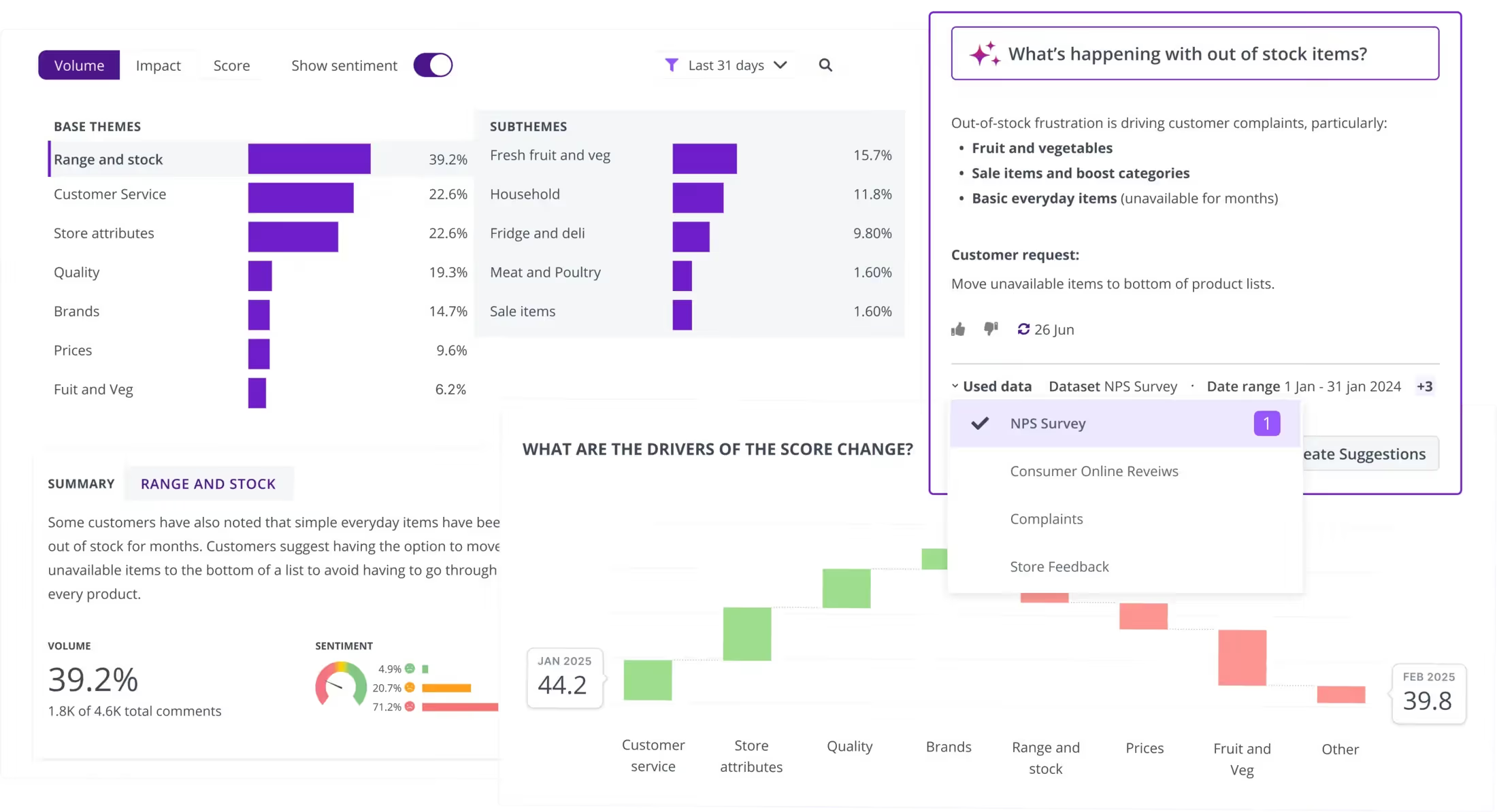
Thematic occupies a middle ground between fully automated AI analytics and manual analysis. Its semi-supervised NLP approach lets analysts guide theme discovery — the AI proposes themes, and human experts refine, merge, or split them. For teams that want AI assistance but need to maintain tight control over how feedback is categorized (common in regulated industries), this balance can be compelling.
The platform handles survey analysis, reviews, and support data, and its visualization layer makes it easy to spot trends and share findings with non-technical stakeholders. The trade-off is speed: the human-in-the-loop model means initial setup takes longer than fully automated platforms, and ongoing analyst involvement is needed to keep themes sharp.
Thematic Features
- Human-in-the-Loop Theme Discovery: AI surfaces candidate themes; analysts review, refine, and approve — maintaining quality control over categorization.
- Multi-Source Feedback Analysis: Processes surveys, NPS, reviews, support tickets, and social data.
- Trend Visualization: Interactive dashboards that make it easy to track theme and sentiment shifts over time.
- Integrations: Connects with survey platforms, CRMs, and support tools — Zapier support for broader workflows.
- Impact Scoring: Identifies which themes have the greatest correlation with overall satisfaction scores.
2026 Pricing
From $25K/year. See also: Chattermill vs. Thematic.
Thematic Pros
- Human-in-the-loop model gives analysts control over theme quality — useful in regulated industries
- Clean, accessible data visualization for non-technical stakeholders
- Transparent methodology — easy to explain and audit how themes were derived
- Impact scoring helps prioritize which issues matter most to overall satisfaction
Thematic Cons
- Slower time to value than fully automated platforms — initial theme setup requires analyst involvement
- The human-in-the-loop approach becomes a bottleneck at high data volumes — scalability has limits
- Narrower channel coverage compared to unified platforms — strongest with survey and review data
Who It's For
Analytics and insights teams that want AI assistance with feedback analysis but need to maintain human oversight of categorization — particularly in regulated industries or organizations with strict data governance requirements.
G2 Rating
Thematic G2 Score: 4.8/5 (42 reviews)
6. SentiSum — Best for Support-Channel VoC Insights
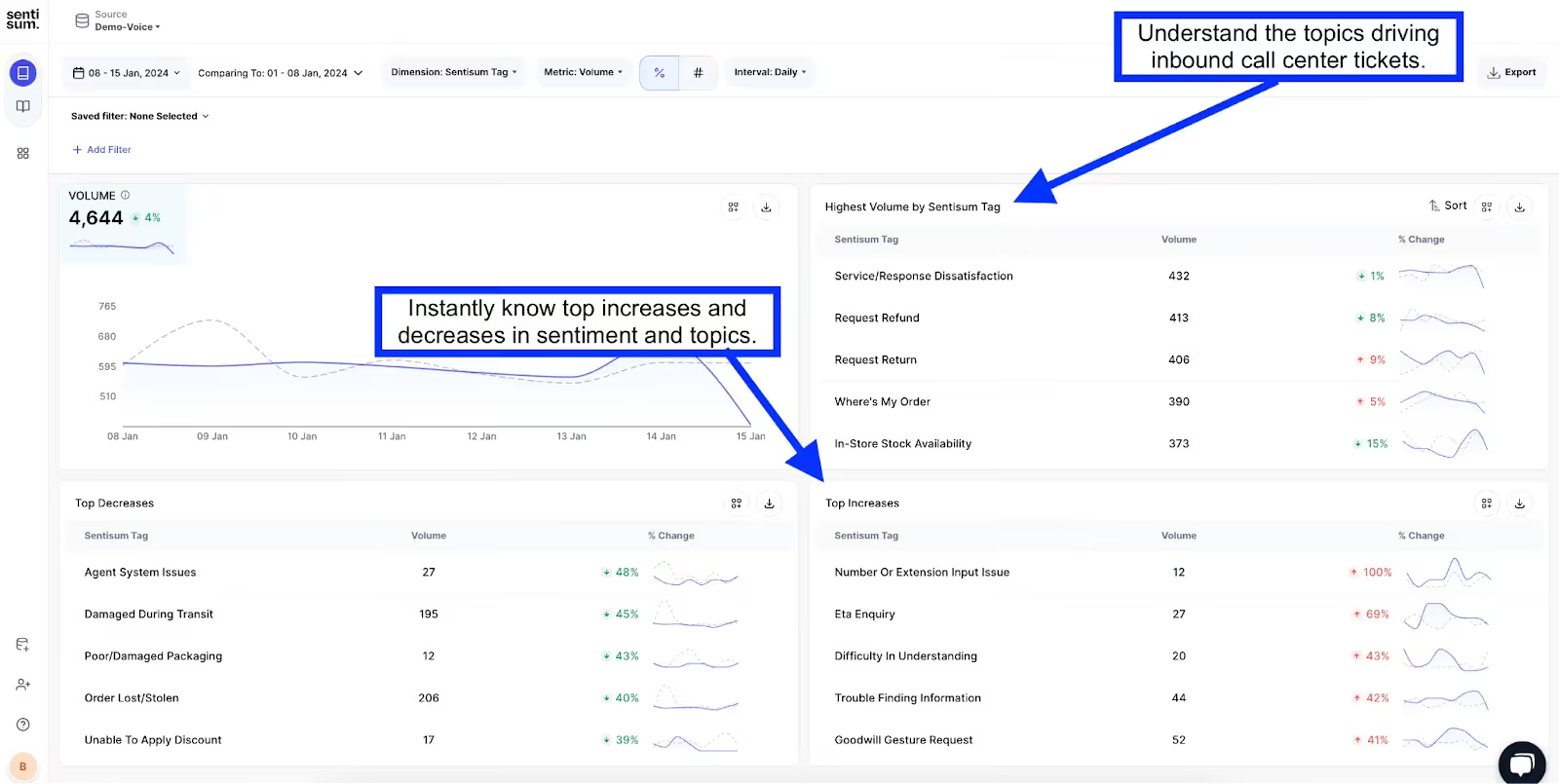
SentiSum focuses on extracting VoC insights specifically from customer support interactions — tickets, live chat, and CSAT surveys. Its NLP classifiers automatically tag incoming support conversations by topic, sentiment, and urgency, which gives support and CX leaders a real-time view of what customers are struggling with and how those issues trend over time.
The platform's strength is speed and focus: it's built to sit on top of support tools like Zendesk and Intercom, delivering actionable tagging within hours of setup. The limitation is scope — SentiSum is not a full VoC platform. It doesn't natively ingest reviews, social, or app store feedback, so teams that need unified customer insights across all channels will need to supplement it.
SentiSum Features
- AI Auto-Tagging: NLP classifiers automatically tag support conversations by topic, sentiment, and intent — no manual rules needed.
- Support Analytics Dashboards: Real-time view of trending topics, sentiment shifts, and ticket volume by category.
- Generative AI Summaries: Auto-generated summaries of support trends for CX leadership.
- Zendesk & Intercom Integration: Deep native integrations with leading support platforms.
- Alerting: Notifications when specific topics or sentiment thresholds spike.
2026 Pricing
Custom — based on ticket volume and integrations.
SentiSum Pros
- Fast time to value — auto-tagging starts working within hours of connecting a support tool
- Strong focus on support-channel analytics — does one thing well rather than trying to be everything
- Generative AI summarization saves time for CX leaders reviewing weekly trends
- Lightweight setup compared to enterprise VoC platforms
SentiSum Cons
- Narrow channel scope — primarily support tickets and chat, not a full VoC platform covering reviews, social, and app feedback
- Small G2 review base (14 reviews) makes it harder to validate at scale
- Less suited for teams that need to unify feedback across all channels into a single analytics layer
Who It's For
Support and CX teams that want AI-powered insights specifically from their support channel — particularly teams using Zendesk or Intercom who need automatic tagging and trend analysis.
G2 Rating
SentiSum G2 Score: 4.8/5 (14 reviews)
7. Sprinklr — Best for Social-First AI VoC
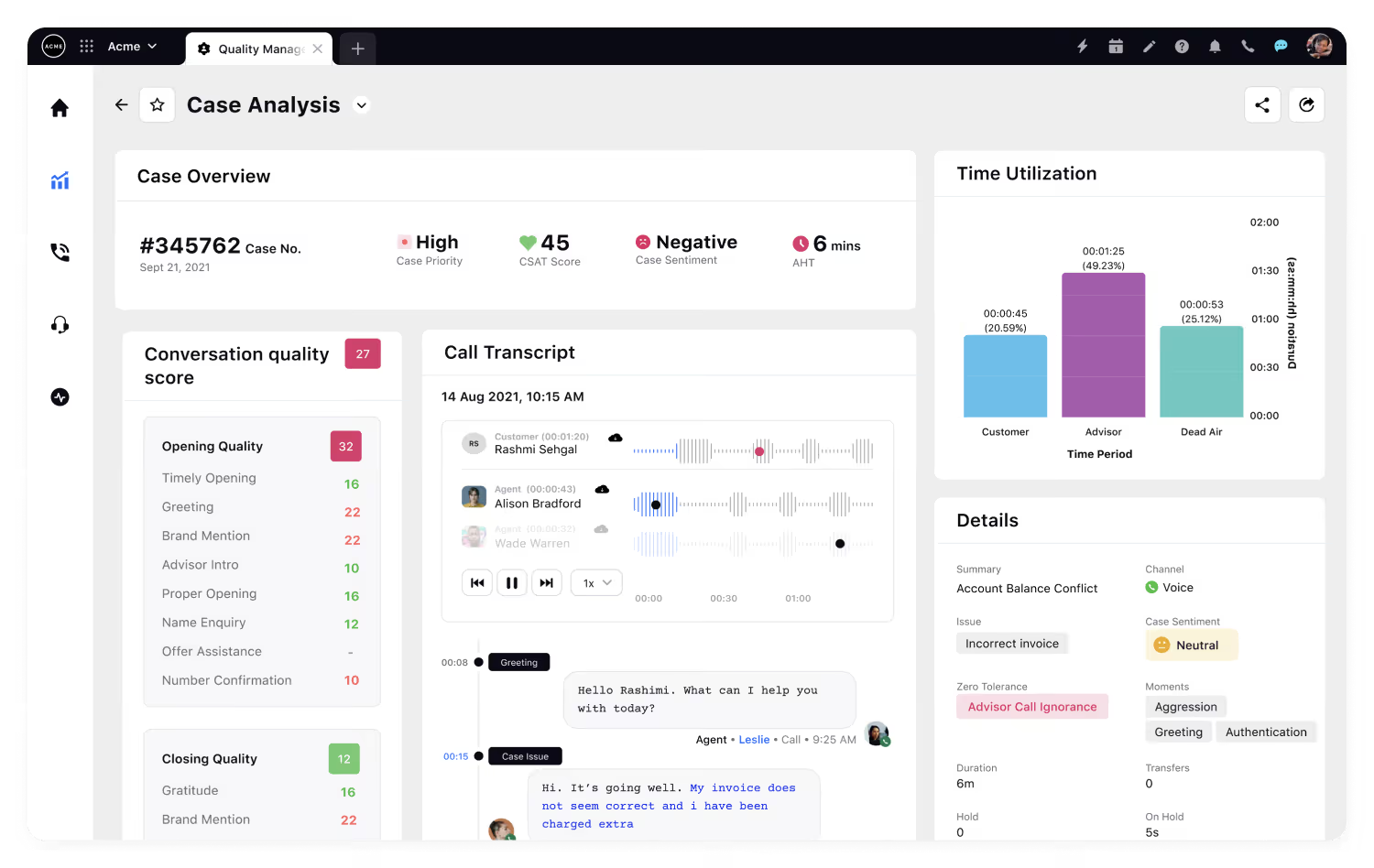
Sprinklr is the only platform on this list that combines social media management, social listening, and VoC analytics in a single suite. For brands where social channels are a primary feedback source — consumer brands, D2C companies, and organizations with active online communities — Sprinklr's AI can surface VoC themes from social conversations at a scale that standalone VoC tools can't match.
The flip side is complexity. Sprinklr is a massive platform with modules spanning marketing, advertising, customer service, and research. Teams that only need VoC analytics may find themselves paying for and navigating capabilities they don't use. Its AI capabilities for structured feedback sources (surveys, support tickets) are less developed than platforms built specifically for those channels.
Sprinklr Features
- Unified Social + VoC: Combines social listening, social media management, and VoC analytics in a single platform — unique in this category.
- AI-Powered Social Listening: Processes billions of social data points with proprietary NLP for theme, sentiment, and intent detection.
- Omnichannel Intake: Beyond social, ingests surveys, reviews, community forums, and messaging channels.
- Customer Service AI: AI-assisted case routing, chatbot, and agent-facing analytics.
- Custom Dashboards & Reporting: Extensive reporting and visualization across all modules.
2026 Pricing
Custom — enterprise contracts based on modules and scale.
Sprinklr Pros
- Unmatched social listening depth — processes social data at a scale no standalone VoC tool can match
- Single platform for social management, listening, and VoC — reduces tool sprawl for social-heavy brands
- Strong AI for social NLP — understands slang, abbreviations, and context in social conversations
- Broad channel coverage including messaging, community, and review platforms
Sprinklr Cons
- Platform complexity — the full Sprinklr suite is large and can overwhelm teams that only need VoC analytics
- AI capabilities for structured feedback (surveys, support tickets) lag behind purpose-built VoC tools
- Higher cost of entry for teams that don't need the full social management suite
- Steeper learning curve and longer implementation timeline compared to focused VoC platforms
Who It's For
Consumer brands and D2C companies where social media is a primary feedback channel, and marketing, CX, and insights teams want social listening and VoC analytics in one platform.
G2 Rating
Sprinklr G2 Score: 4.1/5 (1,207 reviews)
8. Unwrap — Best for Product-Led AI Feedback Intelligence
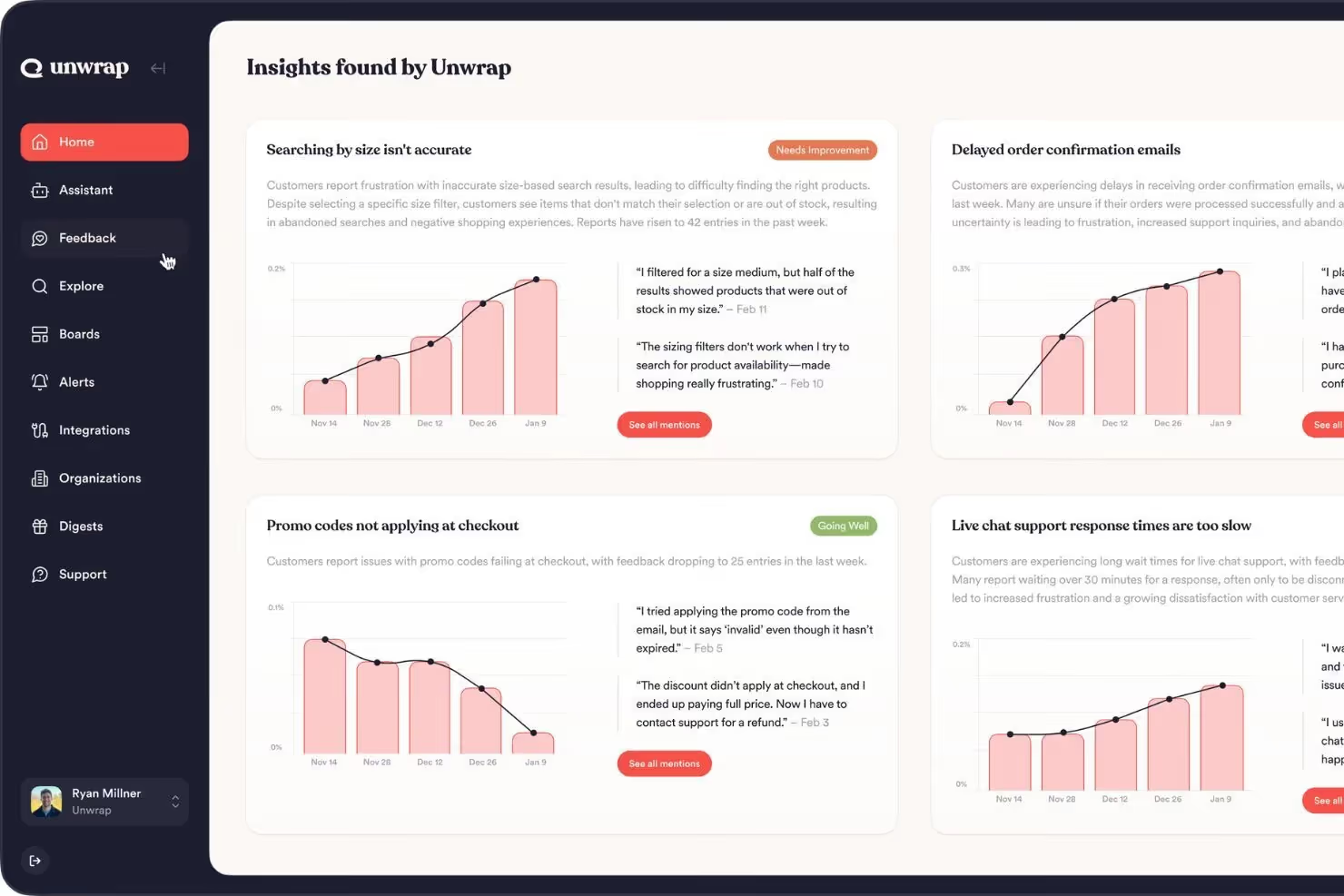
Unwrap is built for product teams that want AI to distill customer feedback into clear, actionable product intelligence. The platform uses ML-based clustering to automatically group feedback from app reviews, support tickets, surveys, and NPS into product-relevant themes — then generates AI-powered digests that summarize what customers care about most.
Its product-led positioning means it prioritizes speed and simplicity over enterprise configurability. Setup is fast, the interface is clean, and the auto-generated insights are designed to be immediately useful for product managers making roadmap decisions. The trade-off is that it's less configurable for complex enterprise VoC programs that need advanced segmentation, impact analysis, or multi-department dashboards.
Unwrap Features
- AI Feedback Clustering: Automatically groups feedback into product-relevant themes using ML — no manual categorization.
- AI-Generated Digests: Weekly and on-demand summaries of feedback trends, delivered to Slack or email.
- Multi-Source Ingestion: Connects to app review platforms, support tools, survey platforms, and NPS systems.
- Trend Detection: Flags emerging issues and trending topics before they become widespread.
- Lightweight Setup: Designed for fast time to value — connect a source and see themes within hours.
2026 Pricing
Custom — based on feedback volume and data sources.
Unwrap Pros
- Fast time to value — product teams can see AI-generated insights within hours, not weeks
- AI digests save product managers from manually reading thousands of feedback comments
- Clean, intuitive interface built for product teams — minimal training needed
- Strong multi-source coverage of product feedback channels (reviews, tickets, NPS, surveys)
Unwrap Cons
- Less suited for enterprise-wide CX programs — limited advanced segmentation and impact analysis
- Dashboard customization is more limited than enterprise VoC platforms
- Fewer integrations with CRM and BI platforms compared to established players
Who It's For
Product managers and product-led growth teams at SaaS and consumer tech companies that want fast, AI-powered feedback intelligence to drive roadmap prioritization.
G2 Rating
Unwrap G2 Score: 4.6/5 (31 reviews)
9. Syncly — Best for AI-Native Auto-Tagging
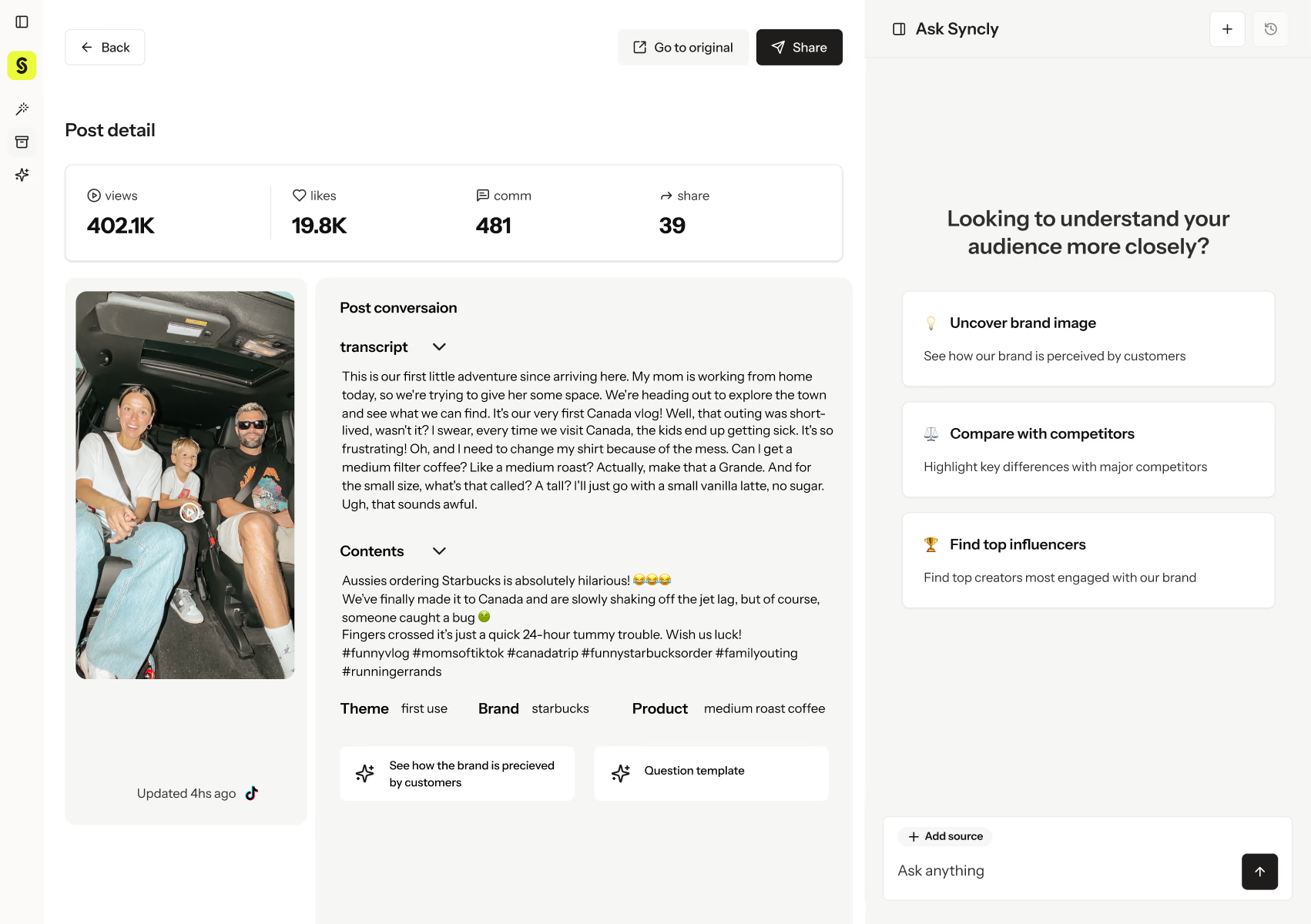
Syncly positions itself as an AI-native VoC tool where automatic tagging happens at the moment of data ingest — no setup, no rules, no taxonomy configuration. When feedback arrives from connected sources (support tickets, chat, surveys, reviews), Syncly's neural network classifiers assign topics, sentiment, and urgency labels instantly, giving teams an immediate view of what's happening.
This zero-setup approach makes Syncly appealing for teams that want to move fast and don't have the bandwidth for taxonomy management. The trade-off is maturity: Syncly is a newer entrant with a smaller customer base and fewer enterprise features (advanced access controls, audit logs, compliance certifications) than established platforms.
Syncly Features
- Zero-Setup Auto-Tagging: Neural network models tag every piece of feedback with topics, sentiment, and urgency at the moment of ingest — no configuration required.
- Real-Time Feedback Stream: Live view of incoming feedback with automatic categorization — useful for monitoring emerging issues.
- Multi-Channel Intake: Connects to support platforms, chat tools, survey platforms, and review aggregators.
- Trend Analysis: Tracks topic and sentiment shifts over time with automatic anomaly detection.
- Slack & Team Notifications: Pushes tagged insights and alerts directly to team communication channels.
2026 Pricing
Custom — pricing based on feedback volume.
Syncly Pros
- Genuinely zero-setup auto-tagging — the AI starts categorizing feedback immediately after connecting a data source
- Fast time to value for teams that don't want to spend weeks configuring taxonomies
- Clean, modern interface that's easy for small teams to adopt
- Real-time monitoring is useful for teams that need to catch emerging issues quickly
Syncly Cons
- Newer platform with a smaller customer base — fewer enterprise reference customers and less community knowledge
- Limited enterprise features (advanced RBAC, audit logs, compliance certifications) compared to mature platforms
- Small G2 review base (15 reviews) — limited third-party validation compared to established players
- Auto-tagging accuracy for niche or industry-specific vocabulary may lag behind platforms with custom-trained models
Who It's For
Growth-stage teams and small-to-mid-market companies that want immediate AI-powered feedback categorization with minimal setup — and prioritize speed over enterprise configurability.
G2 Rating
Syncly G2 Score: 4.9/5 (15 reviews)
10. Verint — Best for AI-Powered Conversation Analytics
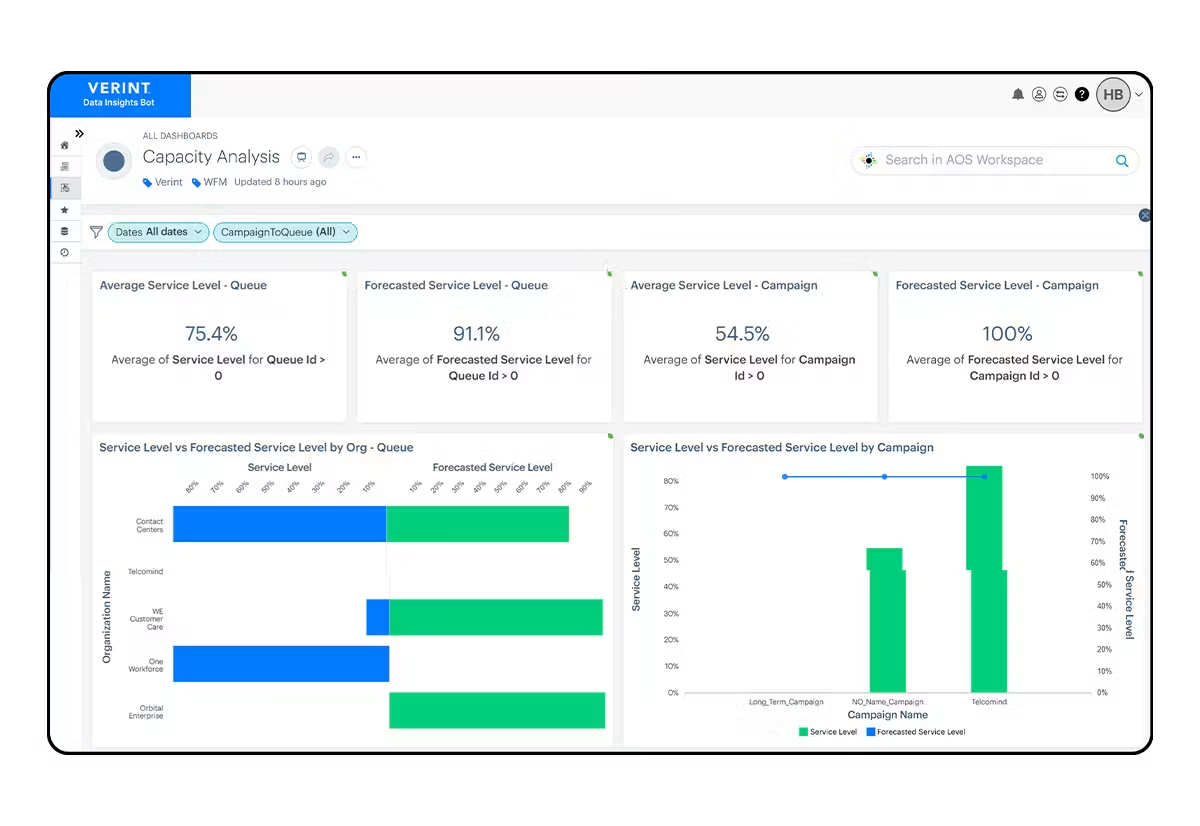
Verint built its VoC capabilities on top of a deep conversation analytics foundation — specifically speech and text analytics for contact center interactions. Its AI processes calls, chat transcripts, email, and social messages to extract themes, sentiment, compliance signals, and agent performance insights with reported speech analytics accuracy above 90%.
For organizations where the contact center is the primary source of customer feedback, Verint offers capabilities that VoC-first platforms don't: speech-to-text transcription, agent coaching insights, and compliance monitoring alongside traditional VoC metrics. The limitation is that Verint is less effective as a unified VoC platform for feedback that originates outside the contact center — surveys, app reviews, and product feedback are not its core strength.
Verint Features
- Speech Analytics: AI-powered transcription and analysis of phone calls with 90%+ accuracy — extracting themes, sentiment, and compliance signals from voice interactions.
- Text Analytics: NLP for chat, email, and social message analysis — consistent AI treatment across written channels.
- Agent Performance Insights: Connects VoC themes to individual agent interactions — useful for coaching and quality management.
- Compliance Monitoring: Flags conversations that may indicate regulatory risk, policy violations, or escalation triggers.
- Workforce Optimization Integration: VoC insights integrated with scheduling, quality, and performance management.
2026 Pricing
Custom — enterprise contracts based on interaction volume and modules.
Verint Pros
- Industry-leading speech analytics accuracy — processes voice interactions with a depth that VoC-first platforms don't offer
- Strong compliance and quality management capabilities — valuable for regulated industries (financial services, healthcare, insurance)
- Deep contact center integration — VoC, workforce optimization, and quality management in one platform
- Proven enterprise scale for organizations processing millions of interactions monthly
Verint Cons
- Contact center-centric — less effective for VoC programs where feedback comes primarily from surveys, reviews, or app channels
- Complex platform with a steep learning curve — requires dedicated administration
- Product-feedback and app-review analytics are not core strengths
- Premium pricing oriented toward large contact center operations
Who It's For
Enterprise contact center operations in regulated industries — particularly financial services, healthcare, and insurance — where speech analytics, compliance monitoring, and VoC need to work together.
G2 Rating
Verint G2 Score: 4.5/5 (79 reviews)
Choosing the Right AI-Powered VoC Tools
Every VoC tool on this list solves a real problem — but picking the wrong one means paying for capabilities you don't use while missing the ones you need. Here are the factors that matter most when evaluating AI-powered VoC platforms for your team.
AI Analysis Depth
Does the platform use genuine adaptive ML, or does it rely on keyword rules dressed up as AI? Ask vendors to show you how theme detection works on day one versus day ninety. AI-native platforms should get more accurate over time without manual intervention.
Feedback Channel Coverage
Map every source your team collects feedback from — surveys, support tickets, reviews, social, chat, app stores — and confirm the platform ingests each one natively. Tools that require CSV uploads or third-party connectors for core channels will create data lag and gaps.
Time to Value
Some platforms deliver automatic themes within hours of connecting a data source. Others require weeks of taxonomy setup before insights appear. If your team is small or bandwidth-constrained, prioritize tools that work immediately.
Actionability and Workflow Integration
Insights that live in dashboards but never reach the people who can act on them are wasted. Look for tools that route alerts to Slack, create tickets in Jira, or push insights into your CRM — closing the gap between "we know" and "we did something."
Business Metric Connection
The most powerful VoC platforms tie feedback themes directly to NPS, CSAT, CES, and churn metrics. This connection turns qualitative feedback into a quantifiable business case for CX investment.
Enterprise Readiness
For teams processing tens of thousands of feedback items monthly, evaluate SSO, role-based access, data residency, SOC 2 compliance, and audit logging. These aren't nice-to-haves at scale — they're requirements.
Multi-Language Support
Global teams need AI that understands sentiment and themes across languages — not just English. Check whether the platform supports your key markets natively or requires translation workarounds.
Scalability
A tool that works well at 1,000 feedback items per month may struggle at 100,000. Ask vendors about their architecture and pricing model at higher volumes — some charge per interaction, which can make costs unpredictable.
By company size:
- Growth-stage startups (50–500 employees): Prioritize fast time to value and low setup overhead. Chattermill, Syncly, and Unwrap are strong starting points.
- Mid-market (500–5,000 employees): Balance channel coverage with AI depth. Chattermill, Enterpret, and Thematic offer the right mix.
- Enterprise (5,000+ employees): Prioritize security, scale, and workflow integration. Chattermill, Medallia, and Qualtrics are the established enterprise options.
What Makes a VoC Tool Truly AI-Powered?
Not every tool that claims AI capabilities delivers the same depth of intelligence. Here's what separates genuinely AI-powered customer feedback analysis from tools that use "AI" as a marketing label:
AI-native platforms use adaptive machine learning models that train on your organization's feedback data. They automatically detect themes, sentiment, and trends without manual taxonomy setup — and the models improve over time as they process more data. These platforms handle unstructured feedback (free-text survey responses, chat transcripts, social posts) as well as structured data.
Keyword-based tools rely on pre-configured rules, regular expressions, or manually maintained topic dictionaries to categorize feedback. They can be effective for well-defined, stable use cases, but they require ongoing human maintenance to stay accurate, miss nuanced language, and struggle with sarcasm, context, and emerging topics.
Key AI capabilities to evaluate:
- Adaptive ML models that retrain on your data and evolve with your product and customer language
- Automatic theme detection that surfaces topics you didn't think to look for — not just topics you pre-defined
- Contextual sentiment analysis that understands "the battery lasts forever" is positive and "the checkout process lasts forever" is negative
- Generative AI summarization that distills thousands of feedback comments into executive-ready digests
- Predictive analytics that forecast which issues will grow and which VoC metrics will shift
- Natural language querying that lets non-technical users ask questions of their feedback data in plain language
Benefits of Using AI VoC Software
Why does the AI approach matter? Because the volume and complexity of customer feedback has outgrown what manual analysis — or even keyword-based automation — can handle.
- Speed: AI-powered tools process thousands of feedback entries in seconds, surfacing themes and sentiment in real-time. Teams that used to wait weeks for quarterly feedback reports can now see trends as they emerge.
- Accuracy at scale: Adaptive ML models detect nuances that keyword rules miss — sarcasm, context-dependent sentiment, emerging topics — reducing the misclassification rates that plague rule-based systems.
- Reduced analyst overhead: Automatic theme detection and generative AI summarization free analysts from manual tagging and report writing, letting them focus on strategic interpretation and action planning.
- Cross-channel unification: AI VoC platforms can normalize and analyze feedback across surveys, support tickets, reviews, social, and chat in a single view — a prerequisite for understanding the complete customer voice.
- Faster action loops: When AI connects feedback themes directly to business metrics like NPS, CSAT, and churn, teams can prioritize the issues with the greatest business impact — not just the loudest complaints.
ROI & Business Impact of AI VoC Tools
Investing in AI-powered VoC software is not a cost center — it's a revenue protection strategy. Here's where the return shows up:
Reduced analyst overhead: Teams using AI-native feedback analytics spend significantly less time on manual tagging and categorization — freeing analyst capacity for strategic interpretation and action planning instead of data processing.
Faster issue detection: Real-time alerting catches emerging problems in days rather than quarters. For brands processing thousands of interactions daily, catching a product defect or service failure a week earlier can mean the difference between a contained issue and a brand crisis.
Higher retention: When feedback themes connect directly to churn risk and customer satisfaction metrics, CX teams can prioritize the fixes that have the greatest impact on retention — not just the loudest complaints.
Better product decisions: Product teams using AI-powered VoC data make roadmap decisions grounded in aggregate customer need, not anecdote. This reduces the risk of building features that don't move the needle.
Measurable CX investment cases: When you can show that fixing Theme X improved NPS by Y points and reduced churn by Z%, the CX budget conversation shifts from "trust us" to "here's the evidence."
Get Started With Chattermill
Most VoC tools still ask teams to define what they're looking for before they can find it. Chattermill takes the opposite approach: connect your feedback sources, and the AI surfaces what matters — themes, sentiment, anomalies, and their impact on your business metrics — without manual setup.
If your team is spending more time categorizing feedback than acting on it, that's the gap Chattermill is built to close.
Book a Demo to see how Chattermill turns unstructured customer feedback into the customer intelligence your team needs to make faster, more confident decisions.
Frequently Asked Questions
What Makes a VoC Tool AI-Powered vs. Traditional?
Traditional VoC tools rely on keyword matching, manual tagging, and pre-built taxonomies to categorize feedback. AI-powered VoC tools use machine learning and NLP to automatically detect themes, sentiment, and trends from unstructured feedback — without requiring teams to define categories upfront. The key difference is adaptability: AI-native platforms learn from your data and improve over time, while rule-based tools stay only as accurate as the rules their human operators maintain.
What Are the Best AI Voice of Customer Tools in 2026?
The top AI-powered VoC tools in 2026 are Chattermill for AI-native unified feedback analytics, Medallia for enterprise-scale omnichannel VoC, and Qualtrics XM for AI-enhanced survey analytics. Other strong options include Enterpret for adaptive AI taxonomy, Thematic for human-in-the-loop analysis, and Verint for conversation analytics. The right choice depends on your primary feedback channels, team size, and whether you need full channel unification or specialized depth.
How Does AI Improve Voice of Customer Analysis?
AI improves VoC analysis by processing unstructured feedback at scale — detecting themes, sentiment, and trends across thousands of comments in seconds rather than days. It eliminates the bottleneck of manual tagging, reduces misclassification from keyword-based rules, and surfaces insights teams didn't know to look for. Advanced AI VoC tools also connect feedback themes to business metrics like NPS and churn, making it possible to quantify the impact of customer experience issues.
Can AI VoC Tools Replace Manual Customer Feedback Analysis?
AI VoC tools can automate the most time-consuming parts of feedback analysis — categorization, sentiment scoring, trend detection, and summarization. However, they work best when humans interpret and act on the insights. The most effective model is AI doing the heavy lifting of processing and pattern detection, while CX and product teams apply strategic judgment to prioritize actions and validate findings in context.
Which AI VoC Tools Work Best for Enterprise Teams?
For enterprise teams, the top considerations are scalability, security certifications, integration depth, and multi-department dashboards. Chattermill, Medallia, and Qualtrics XM are the most enterprise-ready options. Chattermill stands out for AI-native feedback analytics that works across channels without manual taxonomy management. Medallia leads for operational scale across physical and digital touchpoints. Qualtrics is strongest for organizations that prioritize survey-based research programs with statistical analytics.
The Bottom Line
The VoC tools landscape is splitting into two clear camps: AI-native platforms that learn from your data and adapt automatically, and legacy tools that bolt AI features onto keyword-based foundations. Both can work — but the gap in speed, accuracy, and analyst overhead is widening.
For teams that need to unify feedback across channels and get to insights without spending months on taxonomy setup, an AI-native approach delivers faster time to value. For teams with established survey programs and dedicated research operations, AI-enhanced survey platforms still offer deep analytical rigor.
Whichever category fits your needs, the best VoC tool is the one that closes the gap between "we have the feedback" and "we know what to do about it." That's the shift from collecting data to driving decisions — and it's where AI-powered VoC tools earn their value.
Ready to see AI-native feedback analytics in action? Book a demo with Chattermill.


See Chattermill in action on your own feedback
Book a demo


