


7 Best CSAT Analytics Tools in 2026 [Compared]


The CX intelligence
platform that's AI-native by design
Book a demoQuick Summary
We evaluated 7 CSAT analytics tools across verbatim analysis capability, driver analysis depth, multi-channel unification, and revenue impact connection. Chattermill is the strongest for AI-powered driver analysis that ties CSAT themes to revenue. Qualtrics is the strongest option for enterprises that need a broad experience management suite alongside CSAT analytics. Medallia is the best choice for large enterprises running structured satisfaction programs across many touchpoints.
Before we get into the detailed comparisons, here are our top three picks:
| # | Tool | Best For |
|---|---|---|
| 1 | Chattermill | AI-powered CSAT driver analysis tied to revenue impact |
| 2 | Qualtrics | Enterprise CSAT survey programs within a broad XM suite |
| 3 | Medallia | Large enterprise omnichannel CSAT programs across many touchpoints |
What Is CSAT Analytics?
CSAT analytics goes beyond collecting customer satisfaction scores. Where a standard CSAT survey gives you a number, CSAT analytics gives you a reason.
Think of it this way: a CSAT survey tells you that satisfaction dropped 8 points last quarter. CSAT analytics tells you that the drop was driven by checkout friction on mobile, slow response times in live chat, and a billing change that confused long-tenured customers. One is a metric. The other is a roadmap.
The best CSAT analytics tools combine three capabilities that basic survey tools lack:
- Verbatim analysis: Reading open-text feedback at scale using AI to extract themes, sentiment, and specific product mentions
- Driver analysis: Automatically surfacing which factors drive satisfaction up or down, weighted by frequency and impact
- Multi-channel unification: Pulling CSAT signals from surveys, support tickets, reviews, social media, and chat into a single view
Without those capabilities, teams are left manually reading feedback comments, tagging them in spreadsheets, and guessing at what is actually moving the needle. That process is slow, biased toward the loudest voices, and impossible to scale across the thousands of feedback touchpoints that modern businesses generate every week.
CSAT analytics platforms like Chattermill solve that by applying AI to the unstructured data behind every score, turning raw feedback into prioritized, actionable insights that CX, product, and insights teams can act on immediately.
Why Listen to Us
At Chattermill, we help CX, insights, and product teams turn unstructured customer feedback into prioritized, revenue-connected actions. Our platform processes millions of feedback data points across surveys, support tickets, reviews, and social channels for brands like HelloFresh, Uber, and H&M.
That depth of experience with customer feedback analytics across industries gives us a clear view of what separates tools that track CSAT scores from tools that actually explain them. Every recommendation in this guide is informed by what we see working — and failing — at scale.
7 Best CSAT Analytics Tools: Head to Head Comparison
| # | Tool | Best For | Pricing | G2 Rating | AI/NLP Analytics | Multi-Channel CSAT | Driver Analysis |
|---|---|---|---|---|---|---|---|
| 1 | Chattermill | AI-powered CSAT driver analysis tied to revenue | Custom | Aspect-based sentiment analysis with deep learning | Surveys, support tickets, reviews, social, chat | Automated theme discovery + revenue impact scoring | |
| 2 | Qualtrics | Enterprise CSAT survey programs within a broad XM suite | Custom | Text iQ with NLP analytics | Email, web, SMS, in-app | Predefined category analysis via Text iQ | |
| 3 | Medallia | Large enterprise omnichannel CSAT programs | Custom | AI-powered text analytics | Web, app, contact center, email, SMS | Theme detection with AI | |
| 4 | Zendesk | Support teams measuring post-ticket CSAT | From $19/agent/mo | Basic sentiment via QA add-ons | Support tickets, chat, email | Limited, focused on agent performance | |
| 5 | Survicate | Quick multi-channel CSAT collection with follow-up workflows | From $114/mo | AI-powered feedback categorization | Email, web, in-app, link | Basic theme tagging | |
| 6 | InMoment | Mid-market to enterprise CX with conversational surveys | Custom | AI-powered text analytics with NLU | Email, web, SMS, in-app, kiosk | Theme and sentiment analysis | |
| 7 | Zonka Feedback | Multi-channel CSAT with kiosk and offline support | Custom | AI sentiment and thematic analysis | Email, SMS, WhatsApp, web, in-app, kiosk | AI theme detection with impact scoring |
How We Evaluated These Tools
Not every tool that collects CSAT scores qualifies as a CSAT analytics tool. We drew a clear line between score collection and score intelligence, then evaluated each platform against seven criteria that matter most when your goal is understanding the "why" behind satisfaction data.
- Verbatim analysis capability: Can the tool read open-text CSAT comments at scale? We looked for AI or NLP that automatically processes free-text responses rather than relying on manual tagging or predefined dropdown categories.
- Driver analysis depth: Does it surface why scores change? The best tools identify which themes, product areas, or experience moments are pushing CSAT up or down, then rank them by impact.
- Multi-channel CSAT unification: Can the platform pull CSAT signals from multiple sources into one view? Satisfaction lives in survey responses, support interactions, app reviews, and social conversations. A true analytics tool connects those signals.
- Revenue and business impact connection: Does the platform link customer feedback to business outcomes? We prioritized tools that let you see which CSAT drivers affect churn, retention, or lifetime value.
- Integration ecosystem: How easily does the tool connect with your existing stack, including CRMs, helpdesks, BI tools, and data warehouses?
- Ease of implementation: We considered setup time, learning curve, and how quickly a team can go from onboarding to generating insights.
- Pricing transparency: We evaluated whether pricing is publicly available, clearly structured, and predictable at scale, or whether it requires lengthy sales conversations before you know what you are paying.
1. Chattermill
.png)
What Is Chattermill?
Chattermill is an AI-native feedback analytics and voice of customer platform built to answer the question that CSAT scores alone leave unanswered: what is actually driving customer satisfaction?
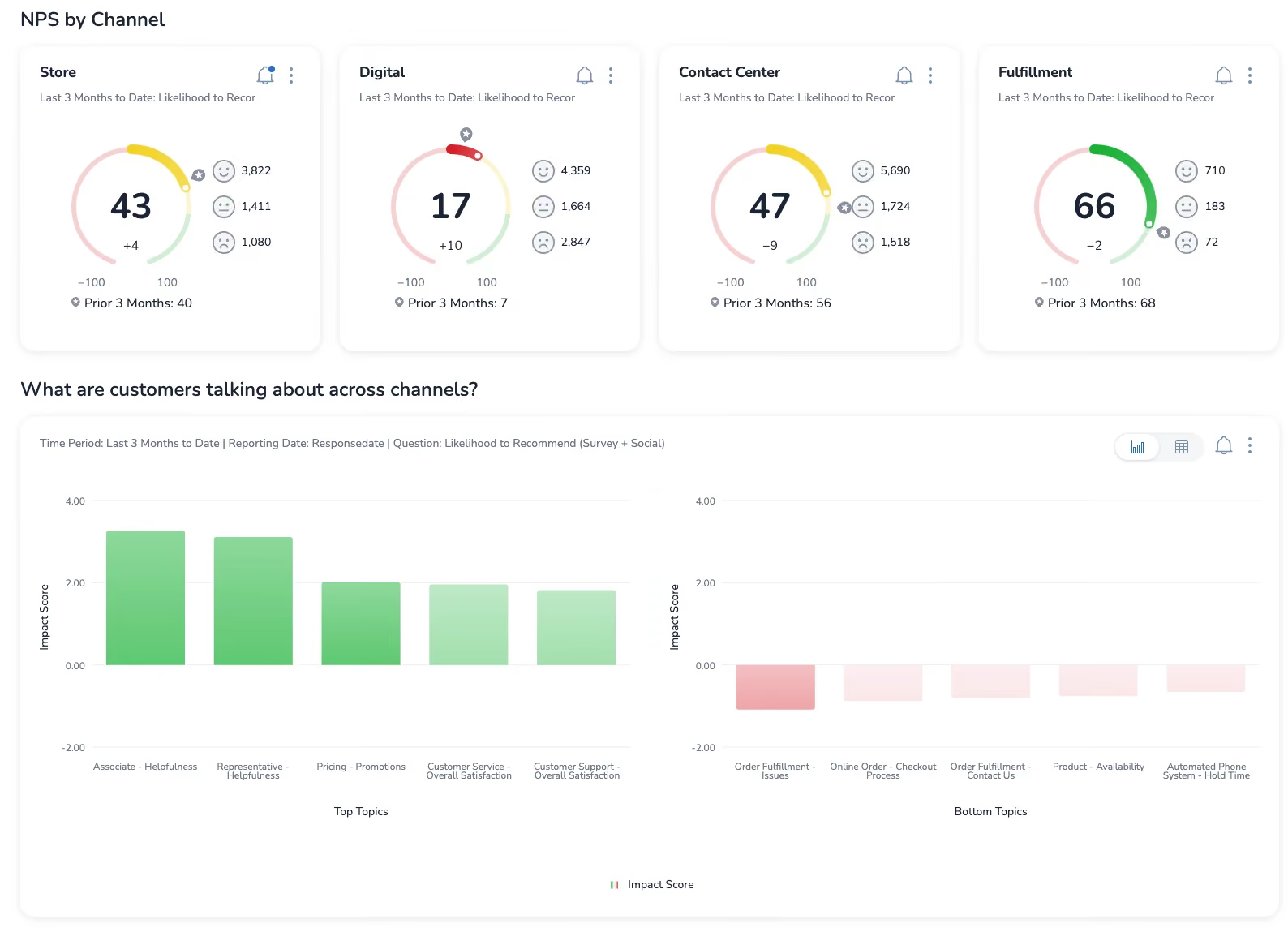
Most CSAT tools stop at the number. Chattermill starts there. The platform connects CSAT scores to the feedback themes behind them using aspect-based sentiment analysis, a deep learning approach that reads every open-text comment at scale and identifies the specific topics, product areas, and experience moments that are pushing scores up or down. That means instead of knowing satisfaction dropped 6 points, you know it dropped because of checkout friction, shipping delays, and a pricing change, ranked by how many customers each issue affects and how much revenue is at stake.
What sets Chattermill apart from other tools on this list is multi-channel CSAT unification. Where most platforms analyze satisfaction from one channel at a time, Chattermill brings together survey CSAT, support ticket sentiment, app review ratings, social feedback, and chat interactions into a single, unified view. That gives CX and product teams one source of truth rather than a collection of disconnected dashboards.
Key Features
- Aspect-Based Sentiment Analysis: Deep learning models identify specific topics within open-text feedback and attach granular sentiment to each, going beyond simple positive/negative classification to reveal exactly what customers feel about each aspect of their experience
- Multi-Channel CSAT Unification: Consolidates satisfaction signals from surveys, support tickets, reviews, social media, and chat into one platform, eliminating the blind spots that come from analyzing channels in isolation
- Automated Driver Analysis: Automatically surfaces the themes and issues driving CSAT changes, ranked by frequency and revenue impact so teams know what to fix first
- Anomaly Detection and Alerts: Proactive notifications when CSAT trends shift or emerging issues appear, so teams can respond before problems scale
- Revenue Impact Scoring: Connects customer feedback themes to business metrics, showing which satisfaction drivers have the greatest effect on retention, churn, and lifetime value
- Custom Dashboards and Segmentation: Role-based views for CX, product, and insights teams with advanced filtering by customer segment, product line, journey stage, or region
- Enterprise Integrations: Native connections to CRMs, helpdesks, BI tools, and data warehouses, keeping customer intelligence embedded in existing workflows
Pros
- Unifies CSAT data across every feedback channel into a single source of truth, eliminating dashboard fragmentation
- Aspect-based sentiment analysis reads verbatim comments at a depth that keyword-based or rule-based tools cannot match
- Automated driver analysis removes the guesswork from prioritization, showing exactly which issues to tackle first
- Revenue impact scoring connects feedback themes to business outcomes, making it easier to justify CX investments
- Proactive alerts catch emerging issues before they affect satisfaction at scale
Cons
- Does not include native survey distribution; teams need an existing survey tool or data source to feed feedback into the platform
- Custom pricing means there is no self-serve plan for smaller teams exploring the category
- Advanced features like revenue impact analysis require integration with business systems, which adds setup time for teams with complex data architectures
2026 Pricing
Chattermill offers customized pricing based on data volume and business requirements. For details, visit the Chattermill pricing page.
G2 Rating
Chattermill G2 Score: 4.4/5 (238 reviews)
Best For
CX, insights, and product teams at scale-ups and enterprises that need to understand why CSAT scores change and connect those drivers to revenue impact across every feedback channel.
2. Qualtrics
What Is Qualtrics?
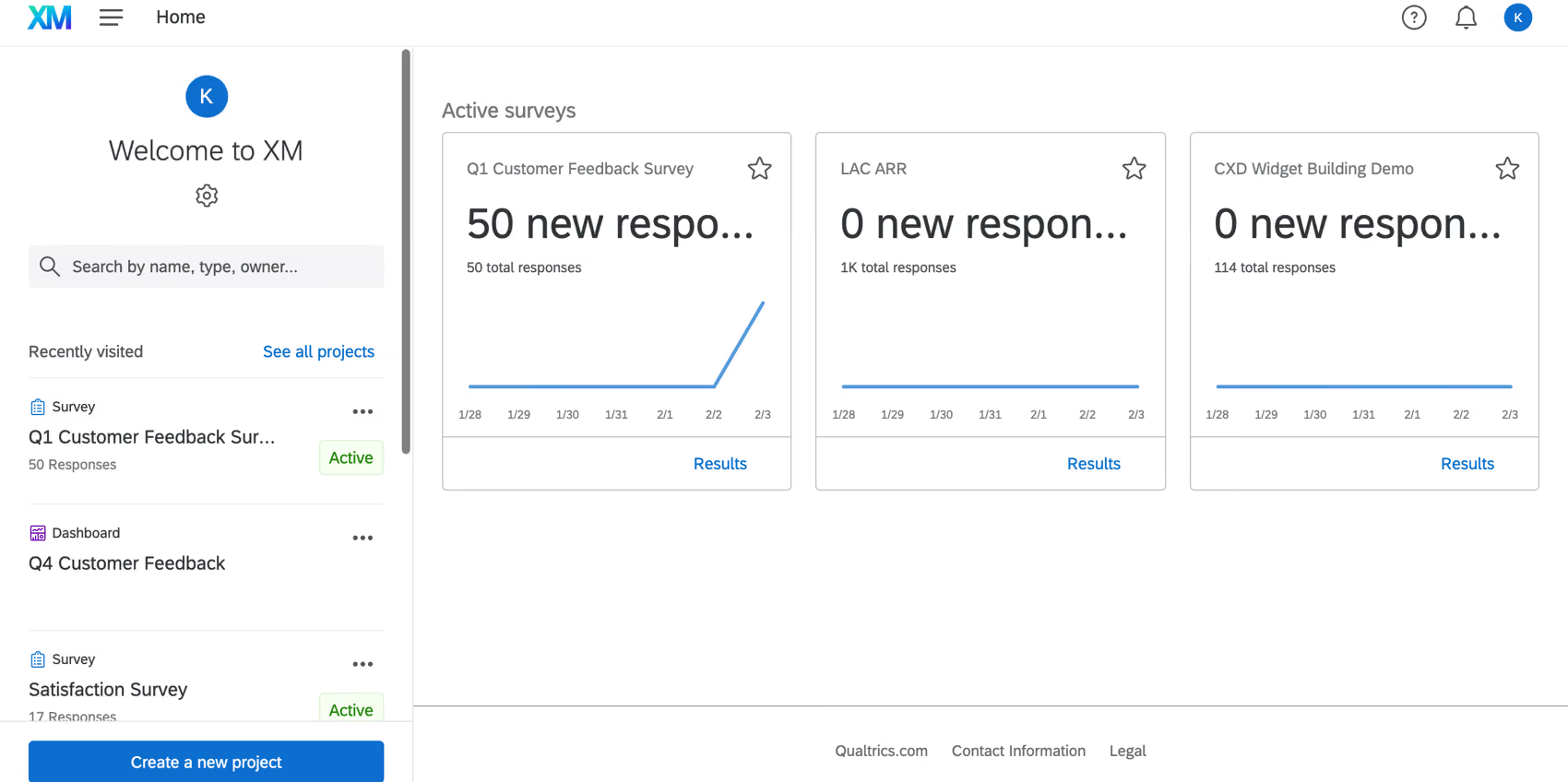
Qualtrics is an experience management platform that spans customer, employee, product, and brand research. Its CustomerXM module handles CSAT survey programs with Text iQ, an NLP layer that categorizes open-text responses and surfaces sentiment trends.
For organizations already running broader experience management programs, Qualtrics offers the advantage of keeping CSAT analytics within the same ecosystem as employee engagement, market research, and brand tracking. The trade-off is complexity: the platform is built for research-heavy teams and requires significant configuration to get the most out of its analytics capabilities.
Key Features
- Text iQ: NLP-powered analytics that categorize open-text feedback into predefined and custom topics with sentiment scoring
- Advanced Survey Design: Sophisticated logic, branching, and personalization for multi-wave CSAT programs
- Predict iQ: Machine learning models that predict churn risk based on feedback patterns
- Cross-Channel Distribution: CSAT surveys via email, web, SMS, and in-app
- Role-Based Dashboards: Configurable views with ticket-level drill-down capabilities
- Action Planning: Built-in workflow tools that route insights to teams for follow-up
Pros
- Comprehensive experience management suite that extends beyond CSAT into employee, product, and brand research
- Strong survey design capabilities with advanced logic for complex research programs
- Text iQ provides usable NLP analytics for open-text CSAT responses
- Deep integration with enterprise systems including SAP
Cons
- Interface complexity and steep learning curve, particularly for teams that only need CSAT analytics
- Text iQ relies on predefined category frameworks, which can miss emerging themes that aspect-based models catch
- Pricing is high for organizations that only need customer satisfaction analytics rather than the full XM suite
- Users report limited responsiveness from customer support for non-enterprise tiers
2026 Pricing
Qualtrics provides custom pricing. Contact their sales team for details.
G2 Rating
Qualtrics G2 Score: 4.3/5 (725 reviews)
Best For
Enterprise teams running multi-program experience management initiatives that need CSAT analytics embedded within a broader research and survey platform.
3. Medallia
What Is Medallia?
Medallia is a large-scale customer experience management platform designed for enterprises with complex, multi-channel feedback ecosystems. It captures CSAT signals from web, app, contact center, email, and SMS, then applies AI-powered text analytics to surface themes and sentiment patterns.
Medallia is built for organizations with significant feedback volume across multiple touchpoints. Its strength is breadth of capture, pulling signals from digital, voice, and in-person channels. Where it faces challenges is in the depth of its analytics layer, which some teams find less granular than dedicated AI sentiment analysis tools.
Key Features
- Omnichannel Feedback Capture: Collects CSAT signals from web, app, contact center, email, SMS, and in-store kiosks
- AI-Powered Text Analytics: Automated theme detection and sentiment analysis across unstructured feedback
- Real-Time Alerting: Push notifications for significant CSAT shifts or emerging issues
- Action Management: Workflow tools for routing insights to operational teams
- Experience Orchestration: Journey-level analytics that connect satisfaction signals across touchpoints
- Athena AI: Machine learning engine that identifies patterns and predicts experience outcomes
Pros
- Broadest channel coverage for enterprises that need to capture CSAT across digital, voice, and physical touchpoints
- Strong operational workflow tools that route insights to frontline teams
- Established brand with deep enterprise deployment experience
- Real-time alerting catches emerging satisfaction issues quickly
Cons
- Pricing is enterprise-only and typically requires significant investment
- Analytics depth can feel less granular compared to purpose-built feedback analytics platforms
- Complex implementation with long onboarding timelines
- Users report that dashboard customization is limited without professional services support
2026 Pricing
Medallia provides custom pricing. Contact their sales team for details.
G2 Rating
Medallia G2 Score: 4.5/5 (207 reviews)
Best For
Large enterprises that need omnichannel CSAT capture across digital and physical touchpoints with operational workflow tools to close the loop at scale.
4. Zendesk

What Is Zendesk?
Zendesk is a customer service platform where CSAT measurement is built directly into the support ticket workflow. After a ticket is resolved, Zendesk automatically surveys the customer and tracks satisfaction at the agent, team, and organization level.
For support teams that primarily want to measure post-interaction CSAT, Zendesk offers the simplest path to data: the survey is already embedded in the resolution flow. However, its analytics capabilities are limited to the support channel, and deeper text analytics requires add-on tools like Zendesk QA.
Key Features
- Post-Ticket CSAT Surveys: Automatic satisfaction surveys triggered on ticket resolution
- Agent and Team Performance Scoring: CSAT breakdowns by individual agent, team, and ticket category
- Zendesk QA (Add-On): Quality assurance module with basic sentiment analysis of support conversations
- Explore Reporting: Built-in analytics dashboards for support metrics including CSAT trends
- Trigger-Based Workflows: Automated actions based on CSAT response thresholds
- Marketplace Integrations: Hundreds of app integrations for extending CSAT capabilities
Pros
- Seamless CSAT collection within existing support workflows, requiring no additional survey tool
- Massive integration ecosystem with hundreds of marketplace apps
- Familiar interface for teams already using Zendesk for customer support
- Affordable entry point for small support teams
Cons
- CSAT analytics are limited to the support channel, leaving out survey, review, and social feedback
- Text analytics capabilities are basic without add-on products
- Driver analysis focuses narrowly on agent performance rather than broader experience themes
- Not designed for unified customer intelligence across feedback channels
2026 Pricing
Zendesk pricing starts from $19 per agent per month.
G2 Rating
Zendesk G2 Score: 4.3/5 (6,149 reviews)
Best For
Support teams that need post-ticket CSAT tracking embedded directly in their helpdesk workflow without adding a separate survey or analytics platform.
5. Survicate
What Is Survicate?
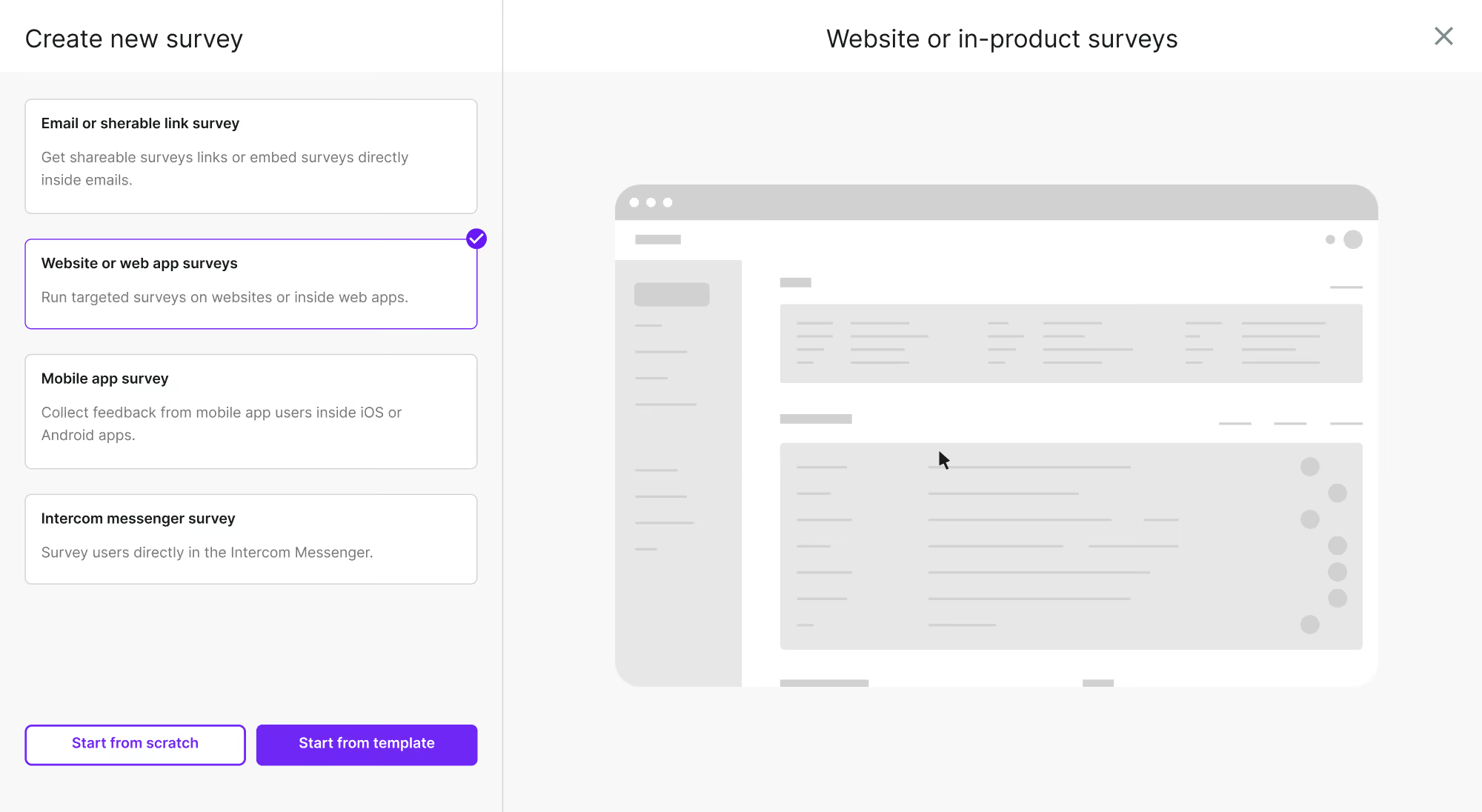
Survicate is a multi-channel survey platform that makes it straightforward to collect CSAT feedback through email, web widgets, in-app prompts, and shareable links. It pairs survey collection with AI-powered feedback categorization that tags responses automatically.
Survicate sits in the space between basic survey tools and full analytics platforms. It handles CSAT collection well and includes enough analytics to identify themes, but teams that need deep driver analysis or multi-source unification will likely need a dedicated customer insights platform alongside it.
Key Features
- Multi-Channel Survey Distribution: Deploy CSAT surveys via email, web widgets, in-app prompts, and shareable links
- AI-Powered Categorization: Automatic tagging and grouping of open-text responses
- Workflow Automation: Trigger follow-up actions based on CSAT scores or feedback themes
- Native Integrations: Connections to HubSpot, Intercom, Salesforce, and other CRM and marketing platforms
- Survey Templates: Pre-built CSAT, NPS, and CES templates for fast deployment
- Response Insights Dashboard: Visual reporting on CSAT trends and response patterns
Pros
- Free trial makes it accessible for small teams evaluating CSAT collection
- Clean, intuitive interface with fast survey setup
- Strong integration ecosystem, particularly with HubSpot
- AI categorization adds a useful analytics layer on top of basic survey data
Cons
- Analytics depth is limited compared to purpose-built feedback analytics platforms
- Driver analysis stays at the theme-tagging level without impact weighting or revenue connection
- Multi-channel unification is limited to survey channels rather than including support, reviews, and social feedback
- Advanced features are locked behind higher pricing tiers
2026 Pricing
Survicate offers a free trial. Paid plans start from $114 per month (billed annually).
G2 Rating
Survicate G2 Score: 4.6/5 (211 reviews)
Best For
Teams looking for a quick, affordable way to collect multi-channel CSAT feedback with built-in AI categorization and workflow automation.
6. InMoment

What Is InMoment?
InMoment is a customer experience platform that combines conversational survey design with AI-powered text analytics and natural language understanding (NLU). It is positioned for mid-market and enterprise organizations that want to go beyond score collection into thematic and sentiment analysis.
InMoment differentiates through its conversational survey approach, which adapts follow-up questions based on initial responses. This captures richer context than static CSAT surveys. The analytics layer then processes those responses with NLU to identify themes and sentiment across the customer base.
Key Features
- Conversational Surveys: Adaptive survey flows that adjust follow-up questions based on initial responses, capturing more context per interaction
- AI-Powered Text Analytics with NLU: Natural language understanding that identifies themes, sentiment, and intent across open-text feedback
- Multi-Channel Distribution: CSAT surveys via email, web, SMS, in-app, and kiosk
- Journey Analytics: Maps satisfaction signals across customer journey touchpoints
- Action Planning and Case Management: Workflow tools for closing the loop on feedback
- Reporting and Dashboards: Customizable analytics views for different organizational roles
Pros
- Conversational surveys capture richer, more actionable feedback than static CSAT forms
- NLU-powered text analytics provide meaningful theme and sentiment analysis
- Strong mid-market positioning with implementation support
- Journey-level analytics connect CSAT signals across touchpoints
Cons
- Dashboard customization is limited and can require professional services support
- Custom pricing makes it difficult to evaluate cost before engaging with sales
- Implementation timelines can be lengthy for organizations with complex requirements
- Some users report the interface is less intuitive for day-to-day analysis
2026 Pricing
InMoment provides custom pricing. Contact their sales team for details.
G2 Rating
InMoment G2 Score: 4.7/5 (319 reviews)
Best For
Mid-market to enterprise organizations that want conversational CSAT surveys with built-in NLU-powered text analytics and journey mapping.
7. Zonka Feedback
What Is Zonka Feedback?
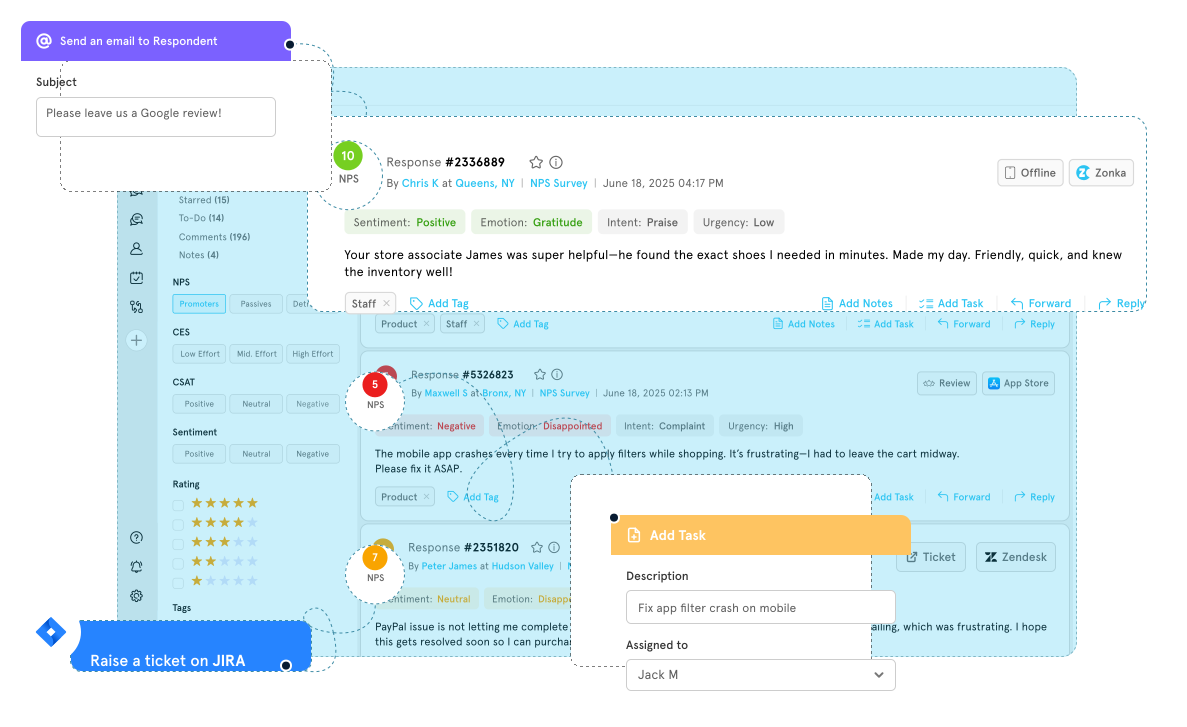
Zonka Feedback is a multi-channel feedback platform that stands out for its breadth of distribution options, including kiosk and offline support. It combines CSAT collection with AI-powered sentiment analysis and thematic analysis, plus impact scoring that weighs which themes affect satisfaction most.
For organizations that need to capture CSAT at physical locations, events, or points of sale alongside digital channels, Zonka Feedback fills a gap that most software-only platforms leave open. Its AI analytics layer adds meaningful intelligence on top of the collected data.
Key Features
- Multi-Channel Distribution Including Kiosk and Offline: CSAT surveys via email, SMS, WhatsApp, web, in-app, kiosk, and offline tablets
- AI Sentiment and Thematic Analysis: Automated sentiment scoring and theme detection across open-text feedback
- Impact Scoring: Ranks detected themes by their influence on overall CSAT scores
- Real-Time Response Alerts: Notifications for negative feedback or significant score changes
- Survey Logic and Branching: Conditional flows that adapt surveys based on prior responses
- CRM and Helpdesk Integrations: Connections to Salesforce, HubSpot, Zendesk, and other platforms
Pros
- Kiosk and offline support is a genuine differentiator for organizations with physical touchpoints
- AI thematic analysis with impact scoring adds analytics depth beyond basic survey tools
- Broad distribution channels including WhatsApp for markets with high messaging app usage
- Reasonable pricing with transparent plan structure
Cons
- Smaller user community and brand recognition compared to established players
- AI analytics capabilities, while meaningful, may be less granular than dedicated survey analysis tools
- Some integrations require manual configuration
- Enterprise-scale deployments may require additional customization support
2026 Pricing
Zonka Feedback provides custom pricing. Contact their sales team for details.
G2 Rating
Zonka Feedback G2 Score: 4.7/5 (81 reviews)
Best For
Organizations that need multi-channel CSAT collection with kiosk and offline support alongside AI-powered thematic analysis with impact scoring.
CSAT Analytics Tools: FAQs
What Is CSAT Analytics?
CSAT analytics is the practice of analyzing customer satisfaction data beyond the score itself to understand what is driving satisfaction or dissatisfaction. It combines CSAT survey scores with open-text verbatim analysis, theme detection, and driver analysis to reveal the specific issues, product areas, and experience moments behind the numbers. Unlike basic CSAT measurement, which tells you the score, CSAT analytics tells you why the score is what it is and what you can do about it. Platforms like Chattermill apply AI to this process, reading thousands of open-text responses at scale and automatically surfacing the themes that have the greatest effect on satisfaction.
What Is the Best Customer Satisfaction Software?
The best customer satisfaction software depends on what you need: score collection, analytics, or both. For teams that need deep CSAT analytics with AI-powered driver analysis and multi-channel feedback unification, Chattermill leads the category. It connects CSAT scores to the specific themes driving them using aspect-based sentiment analysis, then ranks those drivers by revenue impact. For enterprises that need CSAT within a broader experience management suite, Qualtrics is a strong option. For teams focused on support-channel CSAT, Zendesk handles that workflow well. The right choice depends on whether you need to know what your score is or why it is moving.
What's the Difference Between CSAT Collection Tools and CSAT Analytics?
CSAT collection tools focus on gathering satisfaction scores. They distribute surveys, record responses, and report averages. CSAT analytics tools start where collection ends. They analyze the open-text feedback behind every score, using AI to detect themes, sentiment, and patterns at scale. Analytics tools then apply driver analysis to show which issues have the greatest effect on scores and which are most closely connected to retention or churn. A collection tool tells you satisfaction is 78%. An analytics tool tells you the 22% gap is driven by three specific issues, ranked by how many customers and how much revenue they affect. Most organizations start with collection and graduate to analytics as their CSAT programs mature.
What Is the Best CX Platform for Unified Customer Experience?
For unified customer experience, Chattermill is the strongest option. It unifies CSAT signals from surveys, support tickets, reviews, social media, and chat into a single analytics layer, so teams get one source of truth rather than fragmented dashboards. That multi-channel unification is paired with aspect-based sentiment analysis that reads verbatim feedback across every source and automated driver analysis that surfaces which experience themes are driving satisfaction, dissatisfaction, and churn. For enterprises that need the broadest possible channel capture including in-store and contact center, Medallia also provides strong omnichannel capabilities.
How Do You Analyze CSAT Data at Scale?
Analyzing CSAT data at scale requires moving beyond spreadsheets and manual tagging. At hundreds or thousands of feedback points per week, manual analysis introduces bias, misses emerging themes, and cannot keep pace. The most effective approach combines three layers: first, collecting CSAT data across every channel where customers share feedback; second, applying AI-powered text analytics to read open-text responses and automatically detect themes and sentiment; and third, using driver analysis to rank those themes by frequency and business impact. Platforms like Chattermill automate this entire workflow, turning raw feedback into prioritized, actionable insights without requiring teams to read and tag individual responses.
The Bottom Line
Most CSAT tools tell you the score. Fewer tell you the story behind it.
The platforms on this list cover a range of needs, from support-focused CSAT tracking in Zendesk to enterprise-scale omnichannel programs with Medallia and Qualtrics. What separates the analytics-focused tools from the collection-focused ones is the ability to read open-text feedback at scale, surface the themes driving satisfaction, and connect those themes to business outcomes.
If your team has outgrown spreadsheet-based feedback analysis and needs to understand not just where your CSAT stands but why it moves, look for a platform that combines multi-channel unification, AI-powered verbatim analysis, and automated driver analysis. That combination turns satisfaction data from a lagging metric into a leading indicator.
Chattermill was built for exactly that challenge. It unifies feedback from every channel, applies deep learning to reveal the drivers behind every score, and ranks those drivers by revenue impact so teams know what to act on first.
Ready to see what is driving your CSAT scores? Book a Demo


See Chattermill in action on your own feedback
Book a demo


