


Chattermill vs Forsta: Detailed Comparison for Customer Feedback Teams



The CX intelligence
platform that's AI-native by design
Book a demoChoosing between Chattermill and Forsta often comes down to a fundamental question: is your team struggling to collect feedback, or struggling to make sense of feedback you already have? The answer shapes everything about which platform will actually deliver value.
This comparison breaks down how each platform approaches feedback analytics, AI capabilities, integrations, and support—so you can match the right tool to your team's actual workflow.
Chattermill vs Forsta: Featurs comparison at a glance
Chattermill and Forsta both serve customer experience teams, but they solve different problems. Chattermill focuses on AI-powered analysis of unstructured feedback from multiple channels, while Forsta offers comprehensive survey design and market research capabilities. The distinction matters because your choice depends on whether your bottleneck is collecting feedback or extracting insights from feedback you already have.
What is Chattermill
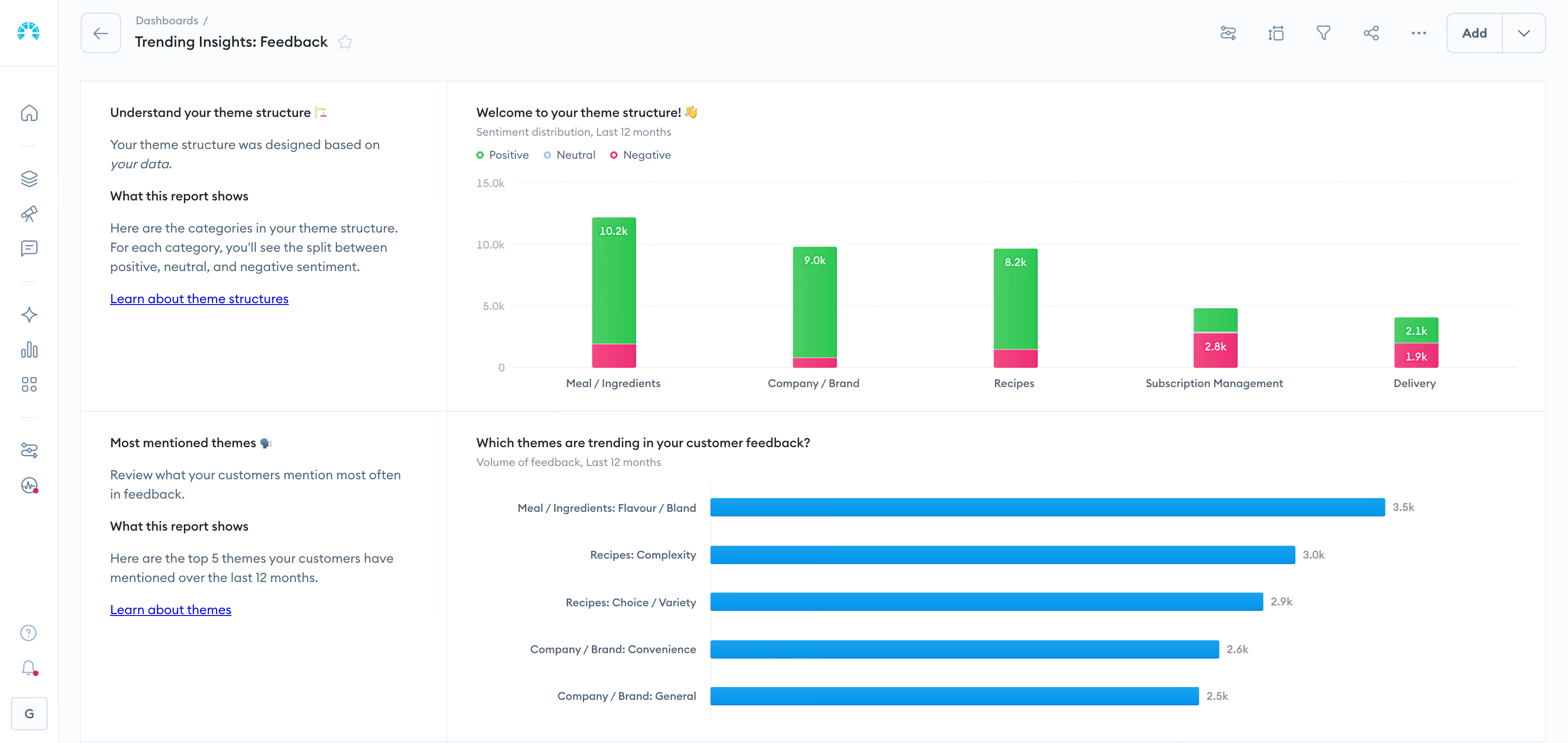
Chattermill is a Voice of Customer platform built for feedback analytics rather than feedback collection. The platform connects to existing data sources—support tickets, reviews, surveys, social media, app stores—and uses AI to surface patterns that manual analysis would miss.
Core feedback analytics capabilities
What sets Chattermill apart is its approach to unstructured data. Rather than requiring manual tagging or predefined categories, the platform's deep learning models automatically detect themes and sentiment across languages and channels.
- Multi-channel unification: Consolidates feedback from surveys, support tickets, reviews, social media, and app stores into a unified customer intelligence view
- AI-driven theme detection: Surfaces recurring topics without manual taxonomy setup
- Sentiment and trend analysis: Tracks how customer sentiment shifts over time across different segments
- Anomaly detection and alerts: Notifies teams when feedback patterns deviate from established baselines
Ideal customer profile for Chattermill
Chattermill works best for organizations already generating significant feedback volume. CX teams use it to prioritize experience improvements, product teams rely on it for roadmap decisions, and insights teams leverage it to consolidate feedback across geographies and languages.
The platform particularly suits companies where feedback is scattered across multiple systems and manual analysis has become a bottleneck.
What is Forsta
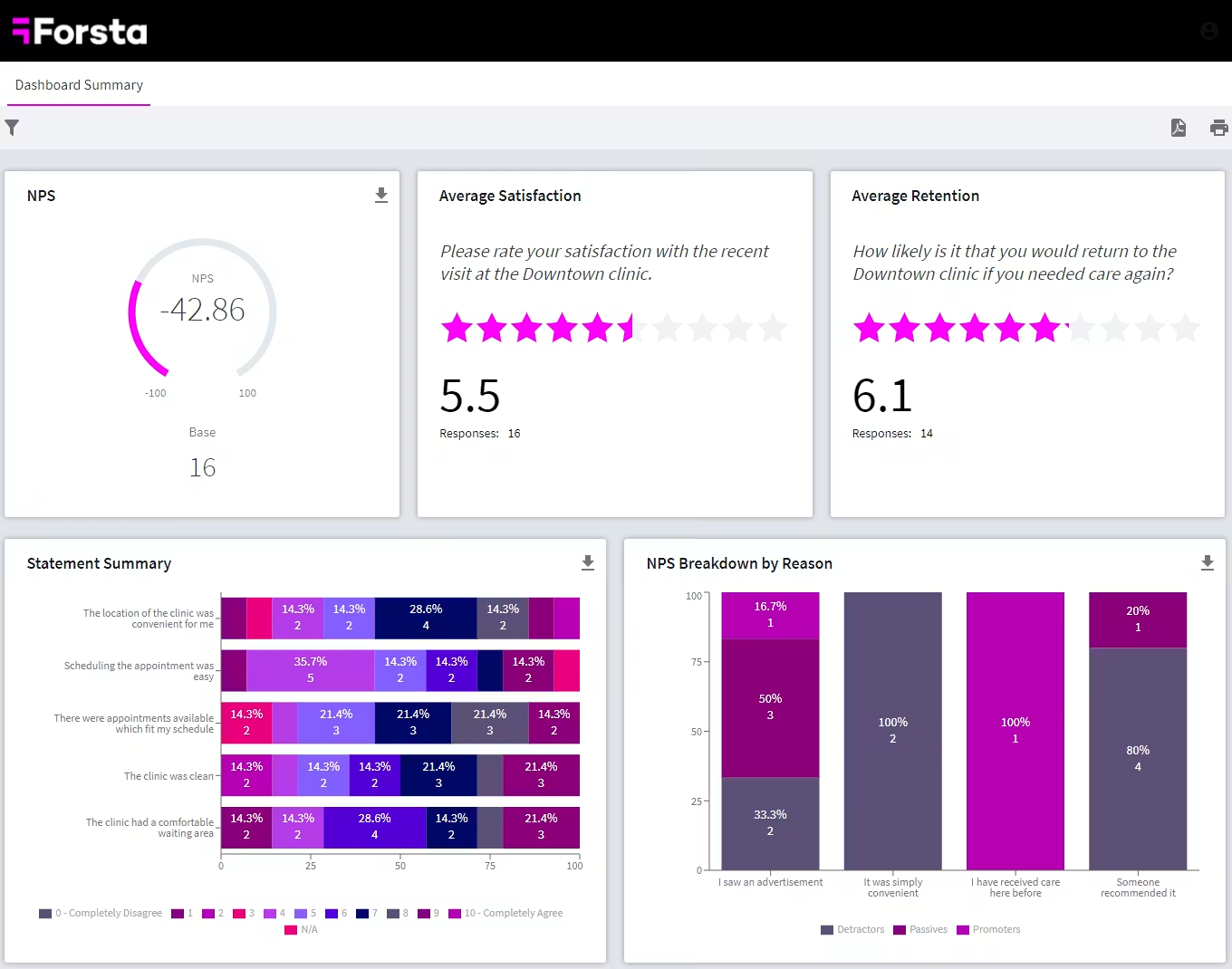
Forsta emerged from the 2021 merger of Confirmit, FocusVision, and Dapresy—three established players in market research and experience management. The platform combines survey methodology expertise with data collection infrastructure.
Core survey and research capabilities
Forsta's strength lies in structured research. The platform supports complex questionnaire logic, panel management, and multi-mode data collection spanning web, mobile, phone, and in-person channels.
- Advanced survey design: Sophisticated branching logic and research methodology support
- Panel management: Tools for recruiting and maintaining research participant pools
- Data collection infrastructure: Multi-mode distribution across digital and traditional channels
- Reporting and visualization: Customizable dashboards for research outputs
Ideal customer profile for Forsta
Forsta fits organizations where survey design and research methodology are primary requirements. Market research teams conducting structured studies, healthcare organizations measuring patient experience, and enterprises with established research programs often find Forsta's capabilities aligned with their workflows.
Feature comparison for customer feedback teams
The right platform depends on where your team spends most of its time. Are you struggling to collect enough feedback, or drowning in feedback you can't analyze fast enough?
Feedback collection and unification
Here's the fundamental difference: Chattermill assumes you already have feedback scattered across systems and focuses on bringing it together for analysis. Forsta assumes you need to generate new feedback and provides robust tools for doing so.
Chattermill connects to existing sources via native integrations—Zendesk, Intercom, Salesforce, app stores, review platforms—and unifies that data automatically. Forsta excels at designing surveys with complex logic and distributing them across channels.
Analytics and reporting dashboards
Both platforms offer customizable dashboards, though they serve different purposes. Chattermill's dashboards emphasize insight discovery—surfacing themes, tracking sentiment trends, and highlighting anomalies that require attention. Forsta's dashboards focus on research outputs—response rates, completion metrics, and structured data visualization.
For teams that want to understand why customers feel a certain way, Chattermill's AI-driven approach typically delivers faster time-to-insight.
Customization and survey design
Forsta offers deeper survey customization, including advanced branching logic, quota management, and research methodology support. This matters for teams conducting formal research studies or managing ongoing panel programs.
Chattermill's customization focuses on analytics—custom taxonomies, segment definitions, and dashboard configurations. Survey design isn't the platform's focus.
Scalability for enterprise CX programs
Both platforms serve enterprise customers, though they scale differently. Chattermill handles increasing feedback volume through AI automation—more data means richer insights without proportionally more manual work. Forsta scales through expanded survey programs and research infrastructure.
AI and sentiment analysis comparison
AI capabilities represent one of the starkest differences between Chattermill and Forsta. Understanding how each approaches natural language processing helps clarify which fits your situation.
Natural language processing accuracy
Chattermill's AI is purpose-built for customer feedback. The models are trained on CX-specific language patterns, which means they understand context that general-purpose text analytics might miss—like the difference between "the product is sick" as praise versus complaint.
Forsta offers text analytics capabilities, though the platform's heritage in structured research means AI-powered analysis of unstructured feedback isn't its primary strength.
Theme detection and trend surfacing
Automatic theme detection eliminates one of the biggest bottlenecks in feedback analysis: manual categorization. Chattermill's models identify emerging themes without requiring predefined taxonomies, which means you can spot issues before they become widespread.
This matters particularly for product teams. When customers start mentioning a new pain point, you want to know immediately—not after someone manually reviews thousands of comments.
Multilingual feedback analysis
Global organizations face a particular challenge: feedback arrives in dozens of languages, and translation alone doesn't capture cultural nuance. Chattermill analyzes feedback natively across 100+ languages, maintaining sentiment accuracy without requiring translation.
Forsta supports multilingual surveys, though the depth of multilingual text analytics varies.
Integration ecosystem and tech stack compatibility
A feedback platform that doesn't connect to your existing systems creates data silos rather than eliminating them. Both platforms offer integrations, though the focus differs.
CRM and support platform integrations
Chattermill's integration strategy centers on pulling feedback from operational systems. Native connections to Zendesk, Intercom, Salesforce, Freshdesk, and similar platforms mean support conversations flow automatically into analysis.
Forsta's integrations focus more on survey distribution and data export, reflecting its research-oriented architecture.
Business intelligence and data warehouse connections
For organizations that want customer insights alongside operational metrics, data warehouse connectivity matters. Chattermill pushes insights to platforms like Snowflake, BigQuery, and BI tools like Tableau and Looker.
This enables analysis that connects customer sentiment to business outcomes—understanding how feedback themes correlate with churn, for example.
API flexibility and custom workflows
Both platforms offer APIs for custom integrations. Chattermill's API supports both data ingestion and insight extraction, enabling teams to build feedback analysis into existing workflows. Forsta's API capabilities focus on survey management and response data.
Pricing models and total cost of ownership
Neither platform publishes standard pricing—both offer custom quotes based on requirements. However, understanding the cost structure helps you ask the right questions during evaluation.
- Volume-based components: How costs scale with feedback volume or survey responses
- User seat models: Per-user pricing versus unlimited user approaches
- Implementation costs: Professional services, training, and setup fees
- Integration costs: Whether native integrations are included or priced separately
Tip: Request detailed quotes that include all cost components, and ask specifically about how pricing changes as your feedback volume grows.
Customer support quality and onboarding experience
User reviews consistently highlight support quality as a differentiator. What looks similar on a feature comparison often feels very different in practice.
Implementation timeline and resources
Chattermill implementations typically move quickly because the platform connects to existing data sources rather than requiring new feedback collection infrastructure. Most organizations are operational within weeks.
Forsta implementations can take longer when they involve complex survey programs, panel setup, or custom research methodologies.
Ongoing support and customer success
Chattermill scores notably higher on support quality in user reviews—G2 reports a 9.3 rating compared to Forsta's 8.1. Users frequently mention responsive customer success teams and hands-on guidance.
This matters more than it might seem. A platform is only valuable if your team actually uses it, and strong support accelerates adoption.
What users say about Chattermill and Forsta
Real user feedback provides perspective that feature lists can't capture. Here's what reviewers consistently mention about each platform.
Chattermill user reviews and ratings
Users praise Chattermill for:
- Quality of support: Responsive, knowledgeable customer success teams
- Ease of deriving insights: Intuitive dashboards that surface actionable findings
- AI accuracy: Reliable theme detection and sentiment analysis across languages
Common feedback for improvement includes requests for expanded data collection capabilities—though this reflects the platform's intentional focus on analytics rather than collection.
Forsta user reviews and ratings
Users praise Forsta for:
- Survey design flexibility: Deep customization options for complex research
- Research methodology support: Strong tools for structured studies
- Comprehensive functionality: Broad capabilities across CX and market research
Common concerns include longer time-to-ROI and a steeper learning curve, particularly for teams without dedicated research expertise.
Which VoC platform is right for your team
The decision ultimately comes down to your primary challenge. Here's a framework for thinking through the choice.
Choose Chattermill if
Chattermill fits best when:
- Your priority is analyzing and acting on existing feedback rather than collecting new data
- Feedback is scattered across multiple channels and languages
- You want AI-driven insights without building manual taxonomies
- Real-time anomaly detection matters for catching emerging issues
- CX, product, or insights teams are your primary users
Choose Forsta if
Forsta fits best when:
- Survey design and research methodology are primary requirements
- You need robust panel management for ongoing research programs
- Healthcare experience measurement is a core use case
- Data collection infrastructure matters more than analytics depth
Making the right choice for your customer feedback strategy
Most organizations today aren't struggling to collect feedback—they're struggling to extract actionable insights from the feedback they already have. Support tickets pile up, reviews accumulate, and survey responses sit in spreadsheets while teams manually search for patterns.
This is where AI-powered customer experience analytics creates transformation. When you can automatically surface themes, track sentiment shifts, and receive alerts about emerging issues, feedback becomes a strategic asset rather than an operational burden.
The right platform choice depends on whether your bottleneck is collection or analysis. For teams drowning in feedback but starving for insights, Chattermill's approach among Voice of Customer tools—unifying existing data and applying AI to surface what matters—typically delivers faster time-to-value.
Book a personalized demo to see how Chattermill turns customer feedback into actionable insights.
FAQs about Chattermill vs Forsta
Can I migrate historical feedback data from Forsta to Chattermill?
Yes, Chattermill supports data migration from other platforms including Forsta. This allows you to analyze historical feedback alongside new data, maintaining continuity for trend analysis.
How long does implementation typically take for Chattermill and Forsta?
Implementation timelines vary based on integration complexity and data volume. Chattermill implementations often complete within weeks because the platform connects to existing data sources. Forsta implementations may take longer when they involve complex survey programs or panel setup.
Which platform is better for product feedback versus customer experience feedback?
Chattermill handles both product and CX feedback through unified dashboards, making it straightforward to analyze feature requests alongside support sentiment. Forsta's strengths lie more in structured research and survey-based CX measurement programs.
Do Chattermill and Forsta support real-time anomaly detection and alerting?
Chattermill offers automated anomaly detection that alerts teams when feedback patterns deviate from established baselines. Forsta's alerting capabilities focus more on survey response thresholds and completion rates.
What training and onboarding resources do Chattermill and Forsta provide?
Both platforms offer onboarding programs and documentation. Chattermill is frequently cited in user reviews for hands-on customer success support that accelerates time-to-value for new teams.



See Chattermill in action on your own feedback
Book a demo


