


10 Best Product Feedback Analytics Platforms (2026)


The CX intelligence
platform that's AI-native by design
Book a demoMost product feedback tools collect responses. Fewer actually analyze them. The platforms on this list turn unstructured feedback into themes, sentiment, and revenue-linked insights, and that distinction matters more than any feature checklist.
Quick Summary
We evaluated 10 product feedback analytics platforms across AI/NLP depth, channel coverage, multi-language support, and ability to link feedback themes to business metrics like NPS and revenue. Chattermill is the strongest choice for teams that need adaptive AI taxonomy across 50+ feedback channels in 100+ languages, with direct impact linking to NPS and revenue. Enterpret stands out for its adaptive feedback taxonomy and customer context graph that ties themes to revenue signals. Thematic leads on deep NLP-powered text analytics with strong integrations into survey platforms like Qualtrics and Salesforce.
If you need a quick answer: analytics-first platforms that categorize and score feedback automatically will outperform survey tools that require manual tagging and separate analysis workflows. Here are the top three picks.
| # | Tool | Best For |
|---|---|---|
| 1 | Chattermill | AI-driven unified feedback analytics at scale |
| 2 | Enterpret | Adaptive taxonomy and revenue-linked feedback intelligence |
| 3 | Thematic | Deep NLP-powered text analytics |
Why Listen to Us
At Chattermill, we process millions of pieces of customer feedback every month across 50+ channels for CX, product, and insights teams at organizations ranging from high-growth startups to global enterprises. Our platform analyzes feedback in 100+ languages using adaptive AI - which means we see firsthand how different analytics approaches perform at scale, where they break down, and what separates tools that deliver actionable intelligence from those that just aggregate data. That hands-on experience with customer feedback analytics across industries and company sizes is what informs this guide.
10 Top Product Feedback Analytics Platforms: Head-to-Head Comparison
| # | Tool | Best For | Pricing | G2 Rating | AI/NLP Approach | Feedback Channels | Multi-Language | Business Impact Linking |
|---|---|---|---|---|---|---|---|---|
| 1 | Chattermill | AI-driven unified feedback analytics at scale | Custom | Deep learning, adaptive AI taxonomy | 50+ channels (surveys, reviews, support, social, chat, app stores) | Yes, 100+ languages | Yes (NPS, CSAT, CES, revenue) | |
| 2 | Enterpret | Adaptive taxonomy and revenue-linked feedback intelligence | Custom | Adaptive ML, customer context graph | Surveys, support tickets, reviews, social, sales calls | Yes, multi-language | Yes (revenue attribution) | |
| 3 | Thematic | Deep NLP-powered text analytics | From $25,000/year | NLP with thematic coding | Surveys, reviews, support tickets, social | Yes, multi-language | Partial (theme-to-metric correlation) | |
| 4 | Qualtrics | Enterprise survey analytics | Custom | Rule-based + statistical models | Surveys (primary), some digital channels | Yes, multi-language | Partial (via XM Discover add-on) | |
| 5 | Medallia | Omnichannel experience analytics at enterprise scale | Custom | Text analytics + ML models | Surveys, social, reviews, web, contact center | Yes, multi-language | Yes (experience-to-revenue mapping) | |
| 6 | SentiSum | AI-native support ticket analytics | From $1,000/mo | AI-native NLP, auto-tagging | Support tickets, chat, email, reviews, surveys | Yes, multi-language | Partial (operational metrics) | |
| 7 | Pendo | Coupling product feedback with usage analytics | Custom (free tier available) | ML-based feedback categorization | In-app feedback, NPS surveys, feature requests | Limited | Partial (product adoption metrics) | |
| 8 | Dovetail | Qualitative research analysis | Free tier, Enterprise custom | AI-powered theme detection | User interviews, surveys, support tickets, notes | Limited | No | |
| 9 | Productboard | Feedback-driven roadmap prioritization | Free tier, paid from $19/maker/mo | AI clustering + manual curation | Email, Intercom, Slack, Salesforce, Zendesk, CSV imports | Limited | Partial (roadmap prioritization scoring) | |
| 10 | unitQ | Real-time quality intelligence | Custom | AI-powered quality monitoring | App reviews, support tickets, social, surveys, bug reports | Yes, multi-language | Yes (quality-to-KPI linking) |
How We Evaluated These Tools
Comparing product feedback analytics platforms is not straightforward because the category spans everything from survey builders with basic reporting to AI-native platforms that process millions of unstructured data points automatically. We narrowed the field using five criteria that reflect what CX, product, and insights teams actually need.
- AI/NLP depth: Does the platform use adaptive, deep-learning models that improve over time, or does it rely on rigid, rule-based keyword matching? Platforms with adaptive AI taxonomy detect emerging themes without manual configuration, which matters when feedback volumes scale. Rule-based systems require teams to anticipate every possible category upfront, and they consistently miss emerging themes that customers articulate in new ways.
- Feedback channel coverage: Can the tool ingest data from surveys, support tickets, app reviews, social media, chat transcripts, and sales calls within a single platform? Siloed tools create fragmented views, forcing teams to stitch together insights manually. We prioritized platforms that unify feedback across channels because the customers who leave a negative app review and the ones who submit a support ticket about the same issue are often talking about the same problem. Seeing both signals together changes what teams prioritize.
- Multi-language support: Global teams need platforms that analyze feedback natively in dozens of languages, not just translate-then-analyze. Translation layers lose sarcasm, cultural context, and domain-specific terminology. We evaluated whether NLP models work accurately across languages without losing nuance, especially for organizations operating in 10+ markets.
- Business impact linking: Can the platform tie feedback themes directly to NPS, CSAT, CES, revenue, or churn? This is the gap between "interesting insight" and "actionable intelligence." When a CX leader can show the executive team that a specific feedback theme is linked to a 3-point NPS decline and quantified revenue risk, that insight moves from a report to a budget decision. Platforms that connect customer feedback analytics to financial outcomes scored higher.
- Scalability and usability: Enterprise teams need role-based dashboards, custom alerting, and integrations with CRM and BI tools. We also evaluated how quickly a new team can start getting value from the platform. A tool that takes six months to configure and train is a different proposition from one that delivers insights within weeks.
1. Chattermill
What Is Chattermill?
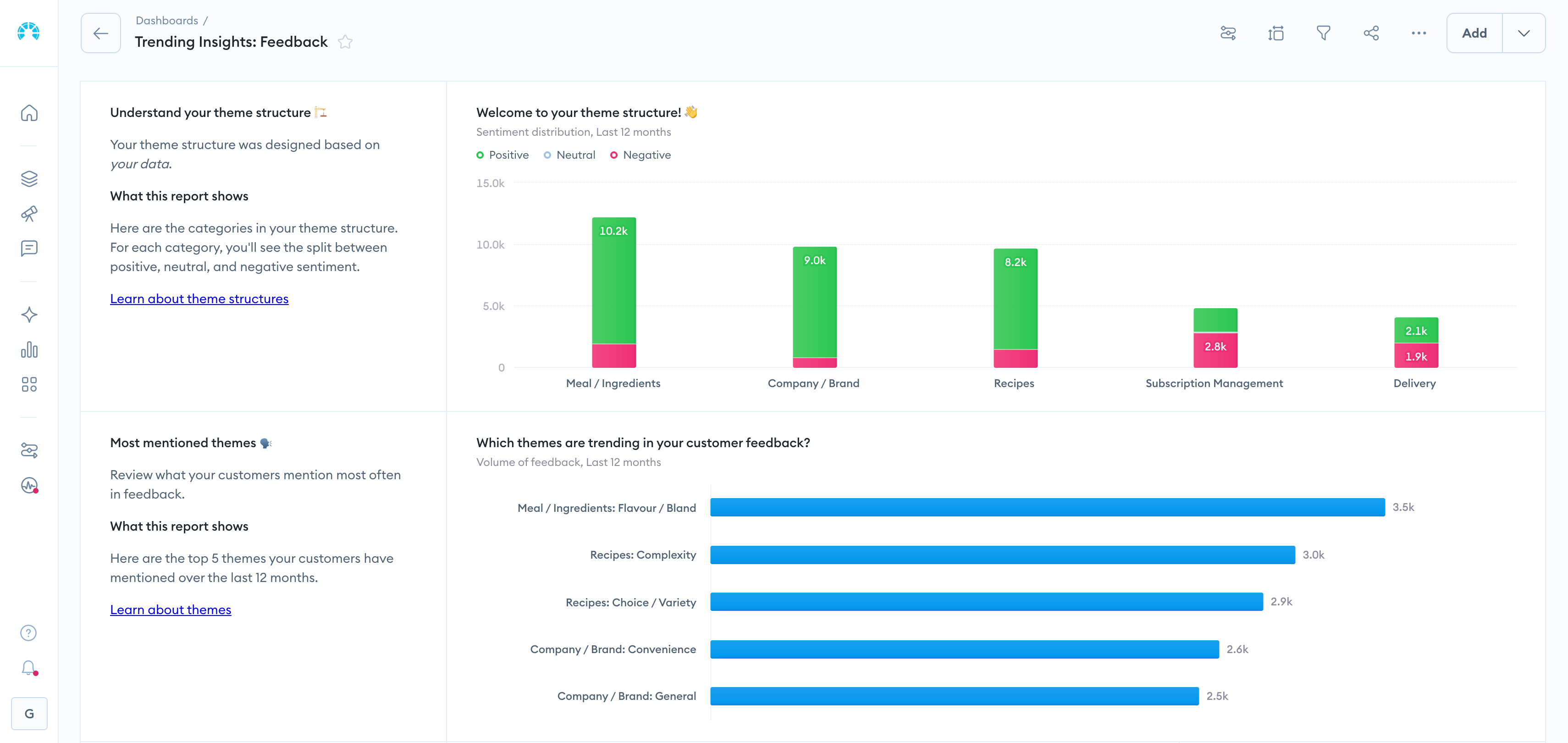
Chattermill is an AI-native feedback analytics platform that unifies customer feedback from 50+ channels and analyzes it using adaptive deep-learning models. Unlike survey tools that require teams to define categories upfront, Chattermill's AI taxonomy evolves as new themes emerge, which means it catches issues that rigid systems miss entirely.
What sets Chattermill apart is the depth of its analytics layer. The platform does not just categorize feedback. It ties themes and sentiment shifts directly to business metrics, including NPS, CSAT, CES, and revenue impact. For CX and product teams managing feedback across multiple markets, this combination of unified customer intelligence and business impact linking eliminates the gap between knowing what customers say and understanding what it means for the business.
Chattermill processes feedback natively in 100+ languages, using models trained to understand nuance, sarcasm, and context without relying on translation. It integrates with CRMs, helpdesks, survey platforms, and BI tools, feeding insights directly into the workflows teams already use. The platform serves high-growth startups, scale-ups, and enterprise brands, including organizations managing millions of feedback data points per month.
Key Features
- Adaptive AI Taxonomy: Deep-learning models automatically detect and evolve themes as customer language and priorities shift, without manual rule configuration
- 50+ Channel Unification: Consolidates surveys, app reviews, support tickets, social media, chat transcripts, and more into a single source of customer truth
- 100+ Language NLP: Analyzes feedback natively across 100+ languages with context-aware sentiment detection
- Business Impact Linking: Connects feedback themes directly to NPS, CSAT, CES, and revenue metrics so teams can quantify what issues cost the business
- Real-Time Anomaly Detection: Proactive alerts when sentiment shifts or new issues emerge, enabling teams to respond before problems escalate
- Custom Dashboards and Segmentation: Role-based views for CX, product, and insights teams with advanced filtering by segment, product line, or journey stage
- Enterprise Integrations: Native connections to Salesforce, Zendesk, Intercom, Slack, and BI platforms
Pros
- Unifies feedback from more channels than any other platform on this list, eliminating data silos
- Adaptive AI taxonomy surfaces emerging themes without manual setup, reducing time-to-insight
- Direct impact linking to business metrics turns feedback into revenue-relevant intelligence
- 100+ language support makes it the strongest option for global teams
- Proactive alerting catches issues before they show up in lagging metrics
- Intuitive interface and collaborative features make it accessible across teams
Cons
- No native data collection capabilities; teams need existing feedback sources
- Custom pricing may require budget approval for smaller organizations
Pricing
Custom pricing based on data volume and business needs. Book a demo for a personalized walkthrough and a discussion of pricing.
G2 Rating
Chattermill G2 Score: 4.4/5 (238 reviews)
Best For
CX, product, and insights teams at mid-market and enterprise organizations that need to unify unstructured feedback from dozens of channels, analyze it with adaptive AI, and tie themes directly to revenue and satisfaction metrics. Particularly strong for global teams operating in multiple languages.
2. Enterpret
What Is Enterpret?
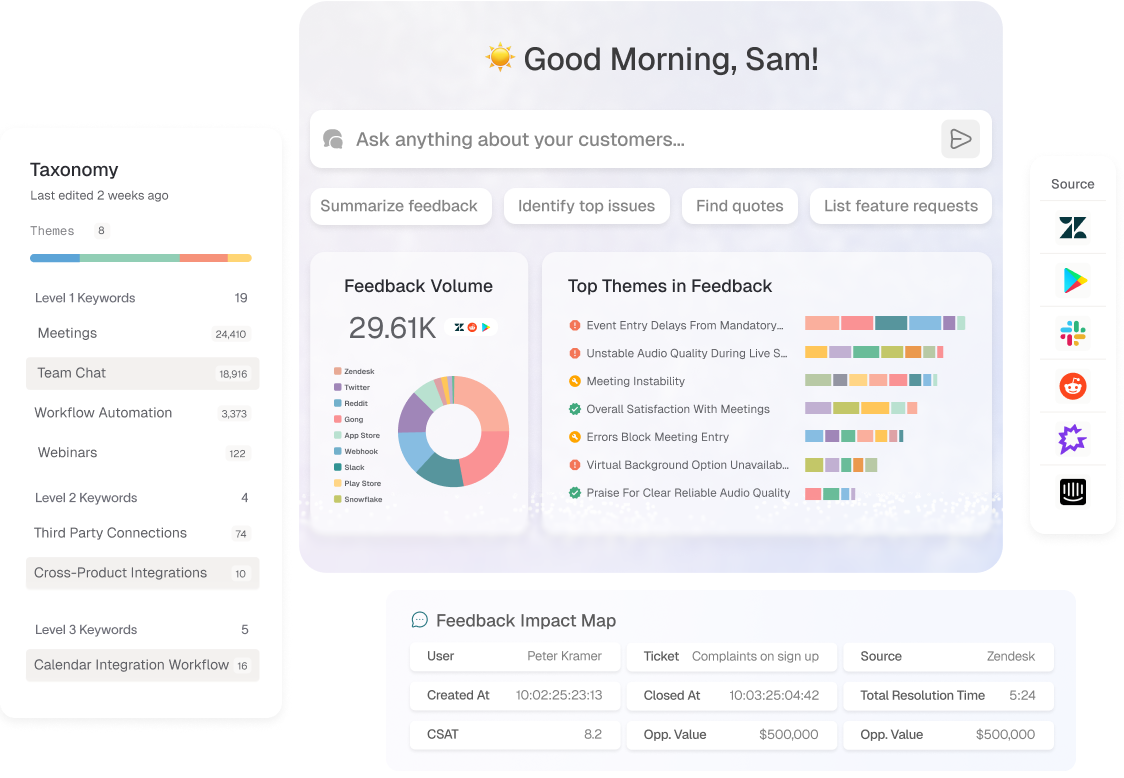
Enterpret is a feedback analytics platform built around an adaptive taxonomy engine that automatically organizes customer feedback into structured categories. The platform's customer context graph connects feedback signals to user attributes and revenue data, enabling teams to understand not just what customers are saying, but how those themes affect the bottom line.
Enterpret focuses on product and CX teams at SaaS companies, with particular strength in connecting feedback from support tickets, surveys, reviews, and sales calls into a unified view. The platform learns from each organization's specific product language and customer context, refining its categorization over time. For teams that want to move beyond manual tagging and static keyword rules, Enterpret's approach to adaptive categorization represents a meaningful upgrade over traditional feedback management workflows.
Key Features
- Adaptive Taxonomy Engine: ML models that build and evolve feedback categories based on each company's unique product context
- Customer Context Graph: Links feedback themes to user attributes, segments, and revenue data
- Multi-Source Ingestion: Connects to support tickets, surveys, reviews, social channels, and sales calls
- Revenue Attribution: Ties specific feedback themes to revenue impact at the account and segment level
- Custom Reporting: Flexible dashboards with drill-down capabilities for product and CX teams
Pros
- Adaptive taxonomy reduces setup time and improves accuracy as the model learns
- Revenue attribution connects feedback to financial outcomes with account-level granularity
- Strong product-team orientation with roadmap-relevant insight framing
- Clean interface designed for cross-functional collaboration
Cons
- Smaller channel coverage compared to platforms like Chattermill
- Newer platform with a smaller customer base and fewer G2 reviews
- Multi-language support covers fewer languages than leading competitors
- Custom pricing with no published tiers
Pricing
Custom pricing. Contact Enterpret for a quote.
G2 Rating
Enterpret G2 Score: 4.6/5 (110 reviews)
Best For
SaaS product teams that want adaptive feedback categorization tied directly to revenue signals, especially those managing feedback from support, surveys, and internal channels. For a side-by-side view of the market, see the best Enterpret alternatives.
3. Thematic
What Is Thematic?
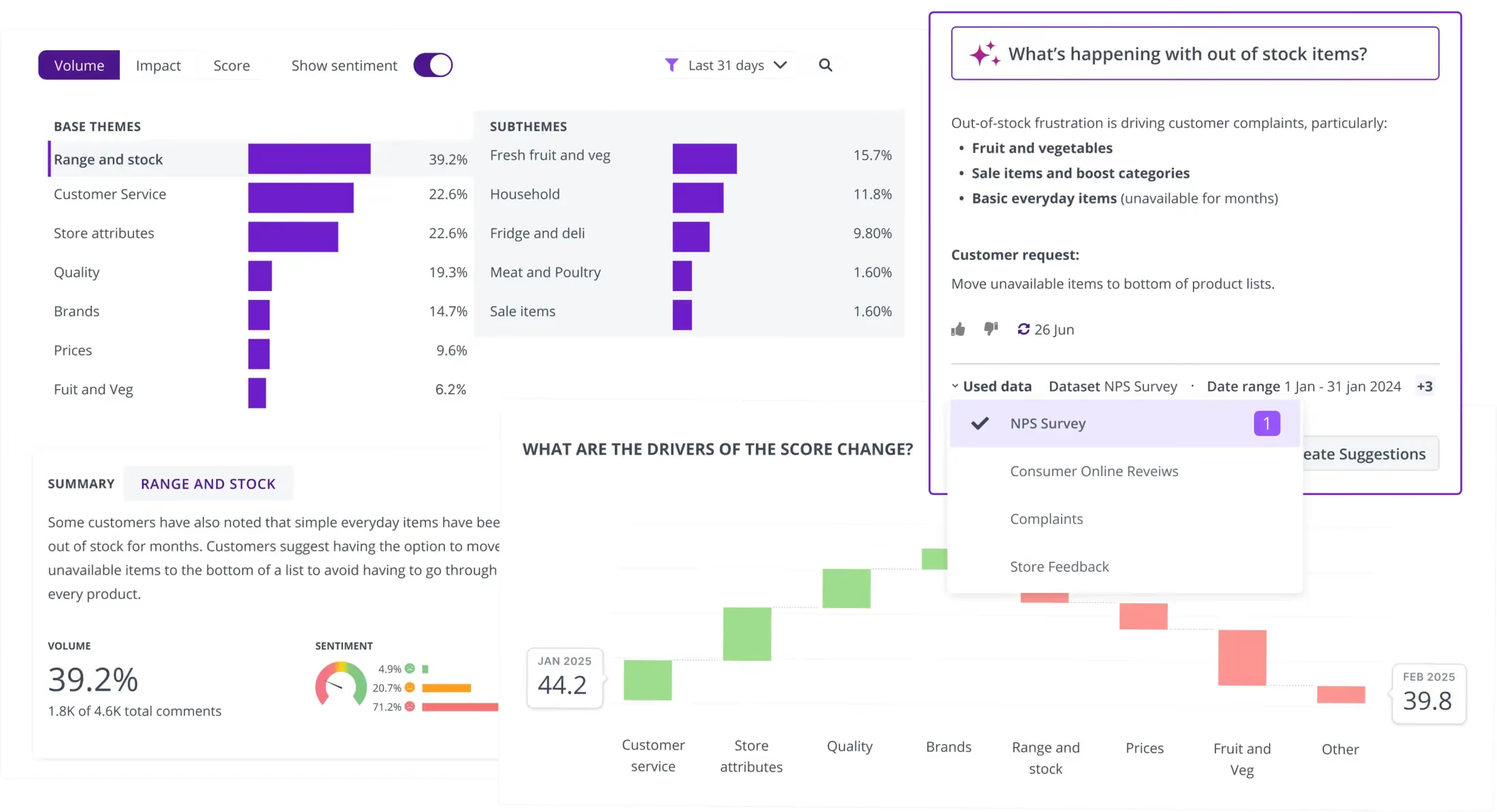
Thematic is a text analytics platform built specifically for analyzing open-ended customer feedback. The platform uses NLP to automatically code feedback into themes and sub-themes, then tracks how those themes change over time. Thematic integrates closely with survey platforms like Qualtrics and Salesforce, making it a strong choice for teams that already collect feedback through established survey programs.
Where Thematic differentiates is in its visualization layer. The platform offers theme discovery, impact analysis, and trend tracking in a format designed for analysts who need to present findings to stakeholders. It bridges the gap between raw feedback analysis and executive-ready reporting.
Key Features
- Automated Thematic Coding: NLP-driven theme and sub-theme detection from open-ended feedback
- Theme Trends and Comparisons: Track how themes evolve over time and across segments
- Survey Platform Integrations: Deep integrations with Qualtrics, SurveyMonkey, Salesforce, and Zendesk
- Impact Analysis: Correlate themes with satisfaction scores to identify which issues move the needle
- Customizable Dashboards: Analyst-friendly reporting with export capabilities
Pros
- Deep NLP capabilities for open-ended text analysis
- Strong integrations with major survey platforms
- Transparent theme coding that analysts can audit and refine
- Transparent pricing model based on comment volume
Cons
- Narrower channel coverage; strongest on survey and support data
- Limited real-time alerting capabilities
- Business impact linking is correlation-based rather than direct attribution
- Smaller feature set for teams that need in-app feedback or social listening
Pricing
From $25,000/year for the Foundation plan. Enterprise pricing available on request.
G2 Rating
Thematic G2 Score: 4.8/5 (43 reviews)
Best For
Analytics and insights teams that need deep NLP-powered text analysis on survey and support data, especially those working within existing Qualtrics or Salesforce environments.
4. Qualtrics
What Is Qualtrics?
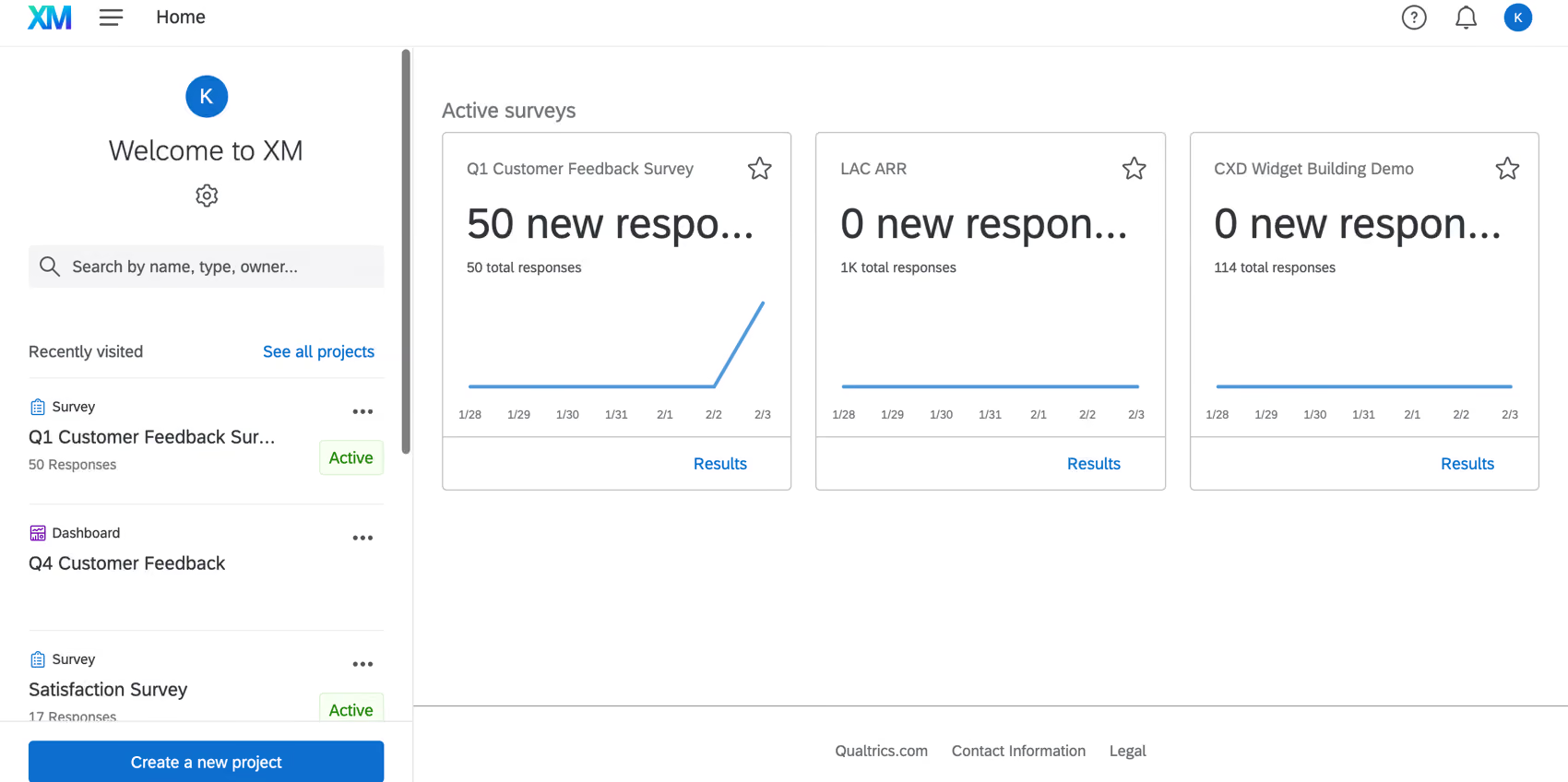
Qualtrics is a well-established experience management platform known primarily for its enterprise-grade survey capabilities. The platform enables organizations to design complex surveys, collect feedback across digital and physical touchpoints, and apply statistical analysis to the results. For teams whose primary feedback source is surveys, Qualtrics offers the deepest toolset for survey analysis in the market.
However, Qualtrics approaches feedback analytics from the survey side. Its text analytics capabilities come through the XM Discover add-on (formerly Clarabridge), which adds NLP and sentiment analysis. This modular architecture means teams get robust survey analytics by default but need additional licensing and configuration to analyze unstructured feedback from non-survey sources.
Key Features
- Advanced Survey Design: Complex logic, branching, and multilingual survey distribution
- Statistical Analysis: Built-in tools for significance testing, regression, and conjoint analysis
- XM Discover (Add-On): NLP and text analytics for unstructured feedback (separate module)
- Experience Management Framework: Connects customer, employee, product, and brand experience data
- Enterprise Reporting: Custom dashboards with role-based access and scheduled distribution
Pros
- Industry-leading survey design and distribution capabilities
- Strong statistical analysis tools for research teams
- Large ecosystem with hundreds of integrations
- Well-recognized brand with established enterprise trust
Cons
- Text analytics for unstructured feedback requires the XM Discover add-on at additional cost
- Rule-based text analysis in the core platform lacks the depth of AI-native tools
- Complex UI with a steep learning curve for new users
- Pricing can be significantly higher than specialized feedback analytics platforms
- Comparing data across multiple feedback sources within a single dashboard is limited
Pricing
Custom pricing - Qualtrics does not publicly list pricing. All plans require contacting sales.
G2 Rating
Qualtrics G2 Score: 4.4/5
Best For
Enterprise research and CX teams that rely heavily on surveys as their primary feedback channel and need advanced statistical analysis capabilities.
5. Medallia
What Is Medallia?
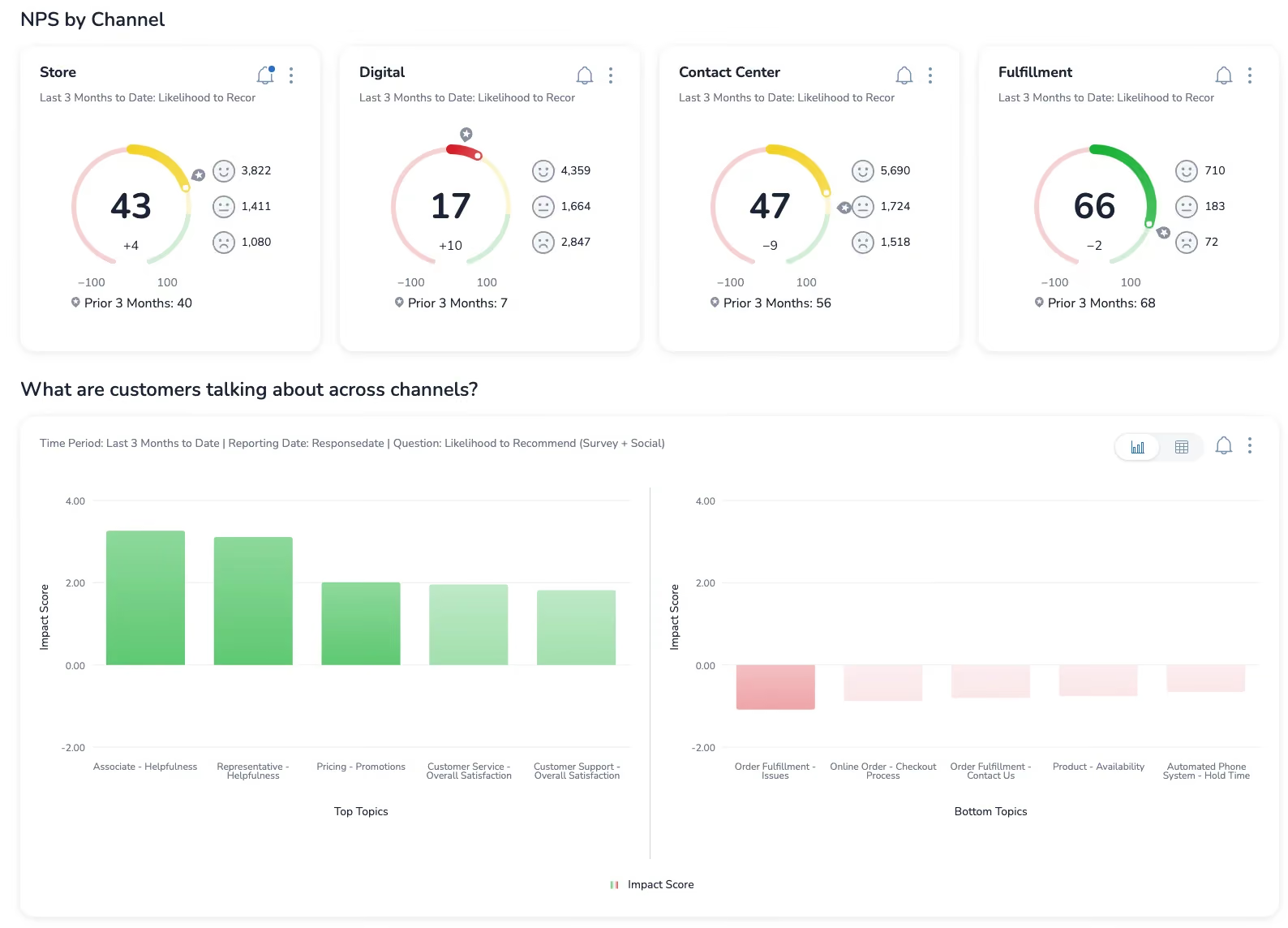
Medallia is an enterprise experience management platform that captures feedback across digital, contact center, in-store, and IoT touchpoints. The platform combines survey data, behavioral signals, and operational data to provide a comprehensive view of the customer experience. Medallia's text analytics engine processes open-ended feedback at scale, and its Action Intelligence layer routes insights to the teams that can act on them.
For large enterprises managing complex, multi-touchpoint customer journeys, Medallia offers breadth. The platform connects experience data to operational and financial outcomes, though its scale and complexity make it best suited for organizations with dedicated CX teams and substantial budgets.
Key Features
- Omnichannel Data Capture: Surveys, digital behavior, contact center interactions, and in-store signals
- Text Analytics: ML-powered analysis of open-ended feedback across channels
- Action Intelligence: AI-driven routing of insights to relevant teams for follow-up
- Journey Analytics: Maps customer journeys and identifies friction points
- Enterprise Integrations: Connects to CRM, ERP, HRIS, and BI systems
Pros
- Broadest range of feedback capture methods among enterprise platforms
- Strong operational workflow integration for closing the loop on feedback
- Sophisticated journey analytics for mapping multi-touchpoint experiences
- Established enterprise presence with proven scalability
Cons
- Expensive for most organizations, often requiring six-figure annual commitments
- Complex implementation that typically takes months
- Text analytics uses a rule-based approach that can miss nuanced themes
- Steep learning curve; most teams need extensive training
- Metadata unification across data sources can be challenging
Pricing
Custom enterprise pricing. Contact Medallia for a quote.
G2 Rating
Medallia G2 Score: 4.5/5 (210 reviews)
Best For
Large enterprises with dedicated CX programs that need omnichannel experience analytics spanning digital, physical, and contact center touchpoints.
6. SentiSum
What Is SentiSum?
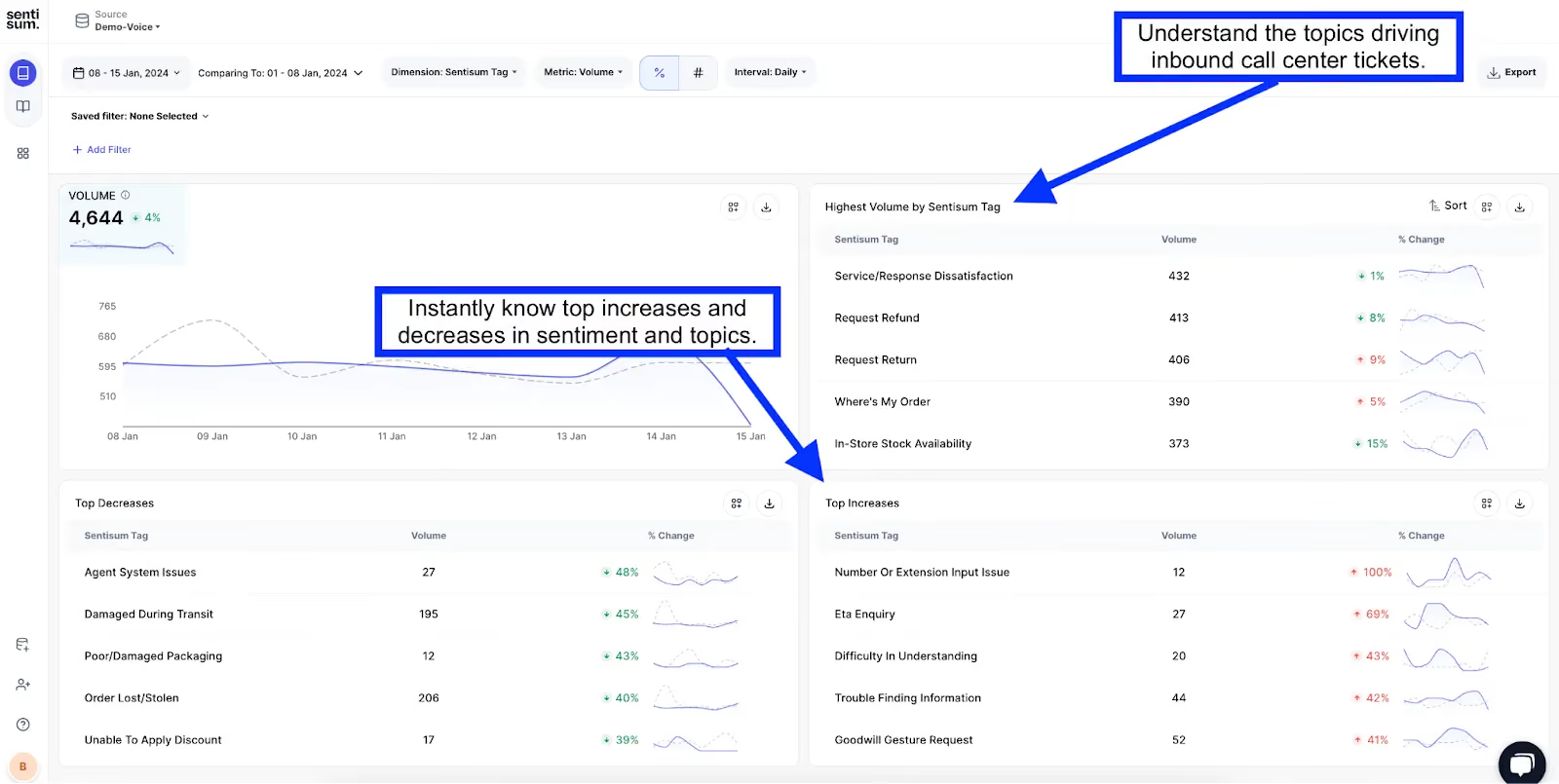
SentiSum is an AI-native analytics platform focused on customer support and CX feedback. The platform automatically tags and categorizes support tickets, chat conversations, emails, and surveys using NLP models built specifically for customer service language. SentiSum's strength is turning high-volume support data into structured insights that help teams prioritize issues and measure the impact of operational changes.
For teams where support tickets and chat transcripts are the primary source of customer feedback, SentiSum offers purpose-built analysis that general-purpose platforms often lack. The platform integrates with helpdesk tools like Zendesk and Freshdesk, making it accessible without major changes to existing workflows. Support-heavy organizations that want to understand why ticket volume spikes or which product issues generate the most contacts will find SentiSum's focused approach more immediately actionable than broader CX platforms.
Key Features
- AI Auto-Tagging: NLP models purpose-built for support language automatically categorize tickets, chat, and email
- Multi-Language Analysis: Processes feedback across multiple languages natively
- Real-Time Reporting: Live dashboards showing trending topics, sentiment, and volume patterns
- Helpdesk Integrations: Native connections to Zendesk, Freshdesk, Intercom, and other support platforms
- Custom Taxonomies: Configurable category hierarchies that align with business-specific terminology
Pros
- Purpose-built for support ticket and CX feedback analysis
- Fast implementation with pre-built helpdesk integrations
- Accurate auto-tagging for support-specific language patterns
- Granular reporting on operational metrics like ticket drivers and resolution impact
Cons
- Narrower use case focus than full-spectrum feedback analytics platforms
- Limited coverage of non-support channels like app reviews or social media
- Business impact linking focuses on operational metrics rather than revenue attribution
- Smaller company with fewer enterprise references
Pricing
From $1,000/month for the Growth plan. Enterprise pricing available on request.
G2 Rating
SentiSum G2 Score: 4.5/5
Best For
CX and support teams that need AI-native analytics for high-volume support tickets and chat transcripts, with fast integration into existing helpdesk workflows.
7. Pendo
What Is Pendo?
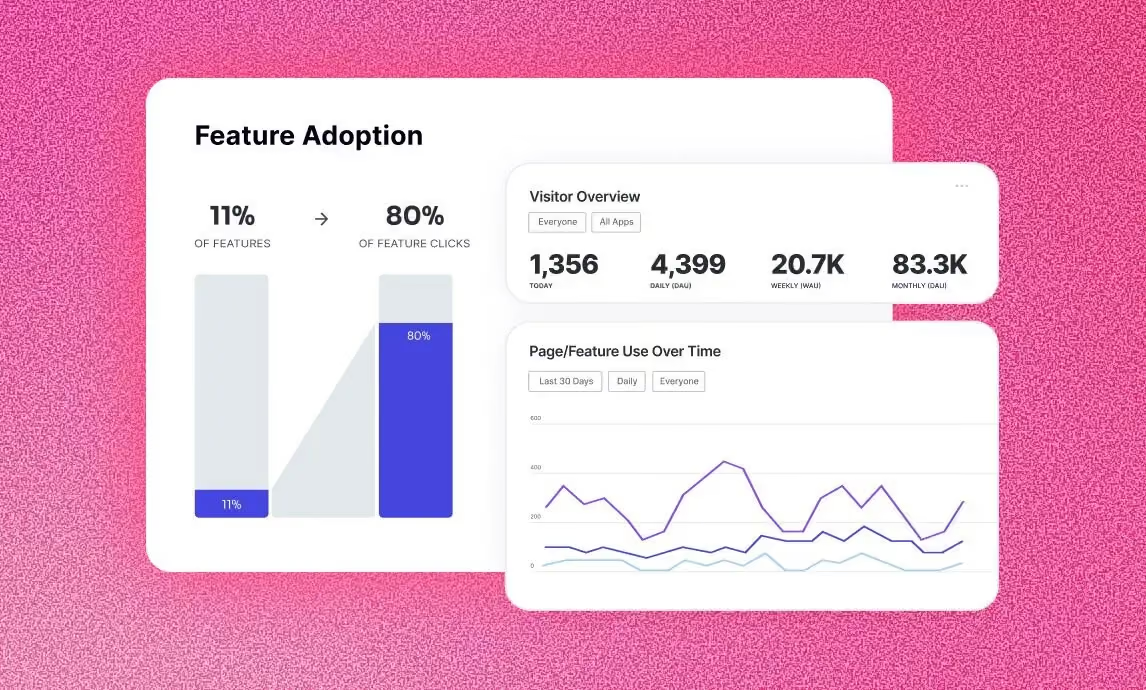
Pendo is a product analytics platform that combines behavioral usage data with qualitative feedback. The platform lets product teams collect in-app feedback, NPS surveys, and feature requests, then analyze those signals alongside product usage patterns. This coupling of quantitative and qualitative data helps teams understand not just what users are saying, but how they are actually using the product.
Pendo is less of a dedicated feedback analytics tool and more of a product management platform with feedback capabilities built in. For teams that want feedback insights tightly connected to product adoption metrics, Pendo offers a unique perspective that standalone analytics tools do not. The tradeoff is that feedback analytics depth is shallower than what purpose-built platforms provide. Teams processing high volumes of support tickets, app reviews, or survey responses across multiple markets will likely need a more specialized solution.
Key Features
- In-App Feedback Collection: Capture NPS, feature requests, and qualitative feedback directly within the product
- Product Usage Analytics: Behavioral data on feature adoption, user flows, and engagement patterns
- Feedback and Usage Correlation: Connect what users say with how they interact with the product
- Roadmap Prioritization: Use combined feedback and usage signals to inform product decisions
- In-App Guides: Targeted messaging and onboarding based on behavior and feedback
Pros
- Unique combination of product analytics and feedback data in one platform
- Valuable for product teams making prioritization decisions based on both behavior and sentiment
- Free tier available for smaller teams and startups
- Strong in-app feedback collection capabilities
Cons
- Feedback analytics depth is limited compared to dedicated analytics platforms
- Multi-language support and global feedback analysis are not core strengths
- Not designed for analyzing feedback from channels outside the product (support, social, reviews)
- AI/NLP capabilities for unstructured feedback are less advanced than specialized tools
Pricing
Custom pricing for paid plans. Free tier available with limited features.
G2 Rating
Pendo G2 Score: 4.4/5
Best For
Product teams at SaaS companies that want to combine in-app feedback with product usage analytics to drive roadmap and prioritization decisions.
8. Dovetail

What Is Dovetail?
Dovetail is a research repository and analysis platform designed for UX researchers and product teams conducting qualitative research. The platform helps teams organize, analyze, and share insights from user interviews, usability tests, support conversations, and surveys. Dovetail's AI-powered tagging assists with theme detection, but its core value is in structuring and making research data accessible across the organization.
As a feedback analytics tool, Dovetail occupies a different niche than platforms like Chattermill or Enterpret. It excels at deep qualitative analysis of smaller feedback sets and is built for teams that prioritize understanding the "why" behind customer behaviors through research-led methods. Organizations that run regular user research programs and need a searchable repository of findings will get the most value from this platform, while teams handling high-volume quantitative feedback across channels will need a more scalable analytics layer.
Key Features
- Research Repository: Centralized storage for user interviews, notes, transcripts, and surveys
- AI-Powered Tagging: Automated theme detection and coding for qualitative data
- Highlight and Synthesize: Tag and annotate specific passages for thematic grouping
- Team Collaboration: Share insights, create research reports, and build institutional knowledge
- Integrations: Connect with survey tools, communication platforms, and project management software
Pros
- Purpose-built for qualitative research workflows
- AI-assisted tagging accelerates analysis of interview and survey data
- Strong collaboration features for sharing insights across teams
- Affordable entry price for smaller research teams
Cons
- Not designed for high-volume, automated feedback analytics at scale
- Limited channel coverage beyond research-originated data
- No business impact linking to NPS, revenue, or operational metrics
- AI capabilities are assistive rather than autonomous; still requires significant manual input
Pricing
Free tier available. Enterprise pricing is custom - contact Dovetail for details.
G2 Rating
Dovetail G2 Score: 4.5/5
Best For
UX research teams and product teams that need a structured repository for qualitative research analysis, especially those conducting regular user interviews and usability studies.
9. Productboard
What Is Productboard?
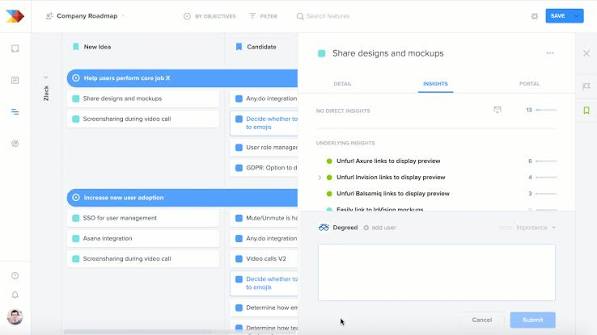
Productboard is a product management platform that uses customer feedback to drive roadmap prioritization. The platform aggregates feedback from email, Intercom, Slack, Salesforce, Zendesk, and manual imports, then uses AI clustering and manual curation to organize it around features and product areas. The goal is not deep feedback analytics in the traditional sense, but rather translating feedback signals into actionable product decisions.
For product managers who need to connect the dots between customer requests, strategic priorities, and roadmap items, Productboard fills a specific gap. It is less about understanding feedback themes at scale and more about making sure the right feedback reaches the right product decisions. Teams that need both deep analytics on unstructured feedback and roadmap prioritization often pair Productboard with a dedicated analytics platform like Chattermill to get the best of both approaches.
Key Features
- Feedback Portal: Centralized collection of customer input from multiple channels
- AI-Powered Clustering: Automated grouping of similar feedback around features and themes
- Prioritization Framework: Score and rank features based on customer impact, strategic fit, and effort
- Roadmap Visualization: Shareable roadmaps that connect directly to supporting customer feedback
- CRM and Support Integrations: Pull feedback from Salesforce, Intercom, Zendesk, and Slack
Pros
- Bridges the gap between customer feedback and product roadmap decisions
- Free tier makes it accessible for startups and smaller teams
- Intuitive prioritization framework that product managers understand
- Strong integration ecosystem for collecting feedback from existing tools
Cons
- Feedback analytics depth is limited; not designed for sentiment analysis or theme-level insight at scale
- Multi-language analysis capabilities are minimal
- AI clustering is useful but not comparable to dedicated NLP engines
- Better suited for product teams than CX or insights teams
Pricing
Free tier available. Paid plans start from $19/maker/month. Enterprise pricing on request.
G2 Rating
Productboard G2 Score: 4.3/5
Best For
Product managers at SaaS companies who need to translate customer feedback into prioritized roadmap items, particularly when feedback arrives through multiple internal and external channels.
10. unitQ
What Is unitQ?
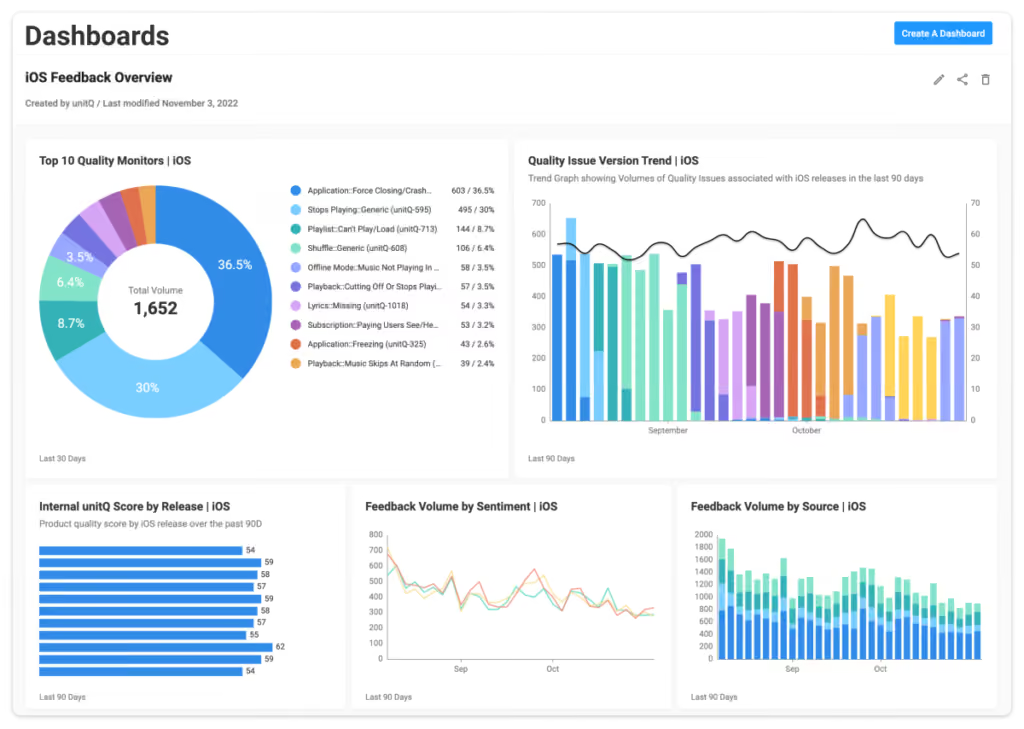
unitQ is a real-time quality intelligence platform that monitors customer feedback across app reviews, support tickets, social media, surveys, and bug reports to detect quality issues as they happen. The platform uses AI to categorize feedback signals and surface problems before they escalate, tying quality metrics to KPIs like retention, app store ratings, and operational efficiency.
unitQ focuses specifically on quality monitoring rather than broad feedback analytics. For teams that need to catch product bugs, UX friction, and service failures in real time, the platform offers a specialized lens that general-purpose customer insights tools do not.
Key Features
- Real-Time Quality Monitoring: Continuous analysis of feedback signals across channels for quality issues
- AI-Powered Categorization: Automatic classification of feedback into quality themes and bug categories
- Multi-Channel Ingestion: App reviews, support tickets, social media, surveys, and bug reports
- KPI Linking: Connects quality metrics to app store ratings, retention, and operational efficiency
- Alerting and Workflows: Real-time alerts when quality issues spike or new problems emerge
Pros
- Purpose-built for real-time quality detection and monitoring
- Strong multi-channel ingestion with emphasis on product quality signals
- KPI linking helps teams quantify the business impact of quality issues
- Fast setup for teams already using standard feedback and support tools
Cons
- Narrower focus on quality intelligence rather than comprehensive feedback analytics
- Less suited for understanding broader CX themes beyond product quality
- Smaller platform with fewer enterprise case studies
- Not a replacement for a full voice of the customer program
Pricing
Custom pricing. Contact unitQ for a quote.
G2 Rating
unitQ G2 Score: 4.5/5 (48 reviews)
Best For
Product and engineering teams at mobile-first and SaaS companies that need real-time quality monitoring across app reviews, support data, and social channels.
What Separates Analytics-First Platforms from Survey Tools
The gap between "feedback collection" and "feedback analytics" is where most teams lose time, money, and insight quality.
Survey tools like Qualtrics and traditional voice of the customer platforms are built to design, distribute, and tabulate structured responses. They answer the question: "What did customers say when we asked them?" That is valuable, but it covers only one slice of the feedback landscape. Support tickets, app reviews, chat transcripts, social media posts, and sales call notes contain signals that surveys never capture because customers share them unprompted.
Analytics-first platforms start from a different premise. Instead of asking customers to fill out forms, they ingest whatever feedback already exists, from any channel, in any language, and apply AI to extract themes, sentiment, and business impact. The difference is not just breadth of data. It is the approach to categorization. Survey tools rely on pre-defined question structures and manual tagging. Analytics platforms use adaptive AI taxonomy that discovers themes automatically and evolves as customer language changes.
Consider a practical example. A subscription business sees NPS drop by 5 points over two months. A survey tool can confirm the decline. An analytics-first platform like Chattermill can show that the decline is driven by three specific themes across support tickets and app reviews: billing confusion after a pricing change, slow load times on the mobile app, and a missing feature that competitors launched. It can further show which customer segments are most affected and quantify the revenue at risk. That level of specificity is the difference between reacting to a number and understanding the root cause.
The second major distinction is speed to insight. Survey programs operate on cycles: design, distribute, collect, close, analyze. By the time the results are compiled, weeks or months may have passed. Feedback analytics platforms analyze data continuously, surfacing emerging issues in real time. For teams managing high-volume products and services, this shift from periodic to continuous insight changes what is possible.
This distinction matters most when teams try to answer questions like: "Why did NPS drop this quarter?" or "Which product issues are driving churn?" Survey tools can tell you the scores declined. Analytics-first platforms can tell you which specific themes caused the decline, across every feedback channel, segmented by customer cohort, tied to revenue impact.
For teams evaluating these tools, the deciding question is: do you primarily need to collect feedback better, or do you need to understand feedback you already have? If the answer is the latter, an analytics-first platform will deliver more value than even the most sophisticated survey analysis tool.
FAQ
What Is the Best Product Feedback Analytics Platform?
The best product feedback analytics platform depends on your team's primary need. For organizations that need to unify unstructured feedback across dozens of channels and tie themes to business metrics like NPS and revenue, Chattermill offers the deepest combination of adaptive AI taxonomy, 100+ language support, and direct business impact linking. For teams focused specifically on survey data, Qualtrics provides the most advanced statistical analysis capabilities. Thematic is a strong mid-market option for NLP-powered text analytics.
What Is the Difference Between Feedback Collection Tools and Feedback Analytics Platforms?
Feedback collection tools are built to design, distribute, and gather customer responses through surveys, forms, and polls. Feedback analytics platforms focus on analyzing feedback that already exists, using AI and NLP to extract themes, sentiment, and insights from unstructured data across multiple channels. Collection tools answer "what did customers say when we asked?" Analytics platforms answer "what are customers telling us across every interaction?" Many organizations need both, but the analytics layer is where actionable, revenue-linked insights emerge.
Can Feedback Analytics Platforms Analyze Surveys and Unstructured Data Together?
Yes, but not all platforms handle this equally well. Analytics-first platforms like Chattermill and Enterpret ingest both structured survey responses and unstructured feedback (support tickets, reviews, chat transcripts, social posts) into a single analysis layer. This unified approach lets teams compare themes across data sources, which is critical for understanding the full customer experience. Some survey-native tools like Qualtrics can add unstructured analysis through separate modules, but this typically requires additional licensing and configuration.
How Do AI-Powered Feedback Analytics Tools Categorize Feedback Automatically?
AI-powered feedback analytics tools use natural language processing (NLP) and machine learning to read unstructured text, detect themes, and assign sentiment scores at scale. Advanced platforms like Chattermill use adaptive AI taxonomy, meaning the system continuously learns from new feedback and evolves its categories without manual intervention. This contrasts with rule-based systems that require teams to predefine keywords and categories, which often miss emerging themes or misclassify nuanced feedback. The most effective tools also layer sentiment analysis on top of theme detection, so teams understand not just what customers are discussing, but how they feel about it.
Which Feedback Analytics Platform Is Best for Enterprise Teams?
Enterprise teams typically need platforms that combine deep AI analytics, multi-language support, role-based access, advanced security, and integrations with CRM and BI systems. Chattermill is a strong choice for enterprises that prioritize adaptive AI taxonomy, 50+ channel unification, and direct NPS/revenue impact linking across global markets. Medallia offers the broadest omnichannel capture for organizations with complex physical and digital touchpoints. Qualtrics remains the standard for enterprises with survey-centric feedback programs. The right choice depends on whether the organization's primary need is analytics depth, channel breadth, or survey sophistication. For a broader comparison, see this guide to enterprise voice of the customer platforms.
The Bottom Line
The product feedback analytics category is splitting into two camps. Survey-native platforms like Qualtrics continue to lead in structured data collection and statistical analysis. Analytics-first platforms like Chattermill, Enterpret, and Thematic are pulling ahead on unstructured feedback analysis, adaptive AI, and the ability to connect themes to business outcomes.
For most CX and product teams in 2026, the bottleneck is not collecting feedback. It is analyzing the feedback they already have, at scale, across languages and channels, in time to act on it. That is the problem analytics-first platforms solve. Teams that invest in analytics-first tooling typically move from quarterly reporting cycles to continuous insight loops, catching emerging issues in days rather than months.
The right platform depends on what matters most to your organization. If you need the broadest channel coverage and deepest AI analytics with direct revenue linking, Chattermill is the strongest option. If you are heavily survey-dependent, Qualtrics gives you the most statistical rigor. If you need a focused entry point into NLP-powered feedback analysis, Thematic offers a specialized text analytics approach.
If your team needs a platform that unifies feedback from 50+ channels, applies adaptive AI to detect themes in 100+ languages, and links every insight directly to NPS, CSAT, and revenue impact, book a demo with Chattermill to see how it works with your data.


See Chattermill in action on your own feedback
Book a demo


