


Voice of Customer Tools for Travel & Hospitality: 11 Picks (2026)


The CX intelligence
platform that's AI-native by design
Book a demoQuick Summary
We evaluated 11 voice of customer tools for travel and hospitality brands across channel coverage, OTA integration, multi-property scale, AI depth, speed-to-action, and outcome measurement. Chattermill is the best overall VoC tool for travel and hospitality teams that need unified, AI-native analytics across every guest channel. Medallia is the strongest option for large enterprises with deep hospitality practice requirements and mature CX programs. TrustYou is the best choice for hotel groups whose primary need is OTA review intelligence and guest messaging.
Here are our top three picks at a glance:
| # | Tool | Best For |
|---|---|---|
| 1 | Chattermill | Unified AI feedback analytics across every guest channel |
| 2 | Medallia | Enterprise experience management with deep hospitality practice |
| 3 | TrustYou | Hospitality-native guest feedback and review intelligence |
Key Takeaways
- Chattermill is the best overall VoC tool for travel and hospitality — AI-native, multi-channel, multi-language, with anomaly detection and outcome measurement
- Hospitality-native tools like TrustYou and ReviewPro offer the deepest OTA review integration but lack cross-channel analytical depth
- Pricing ranges from $299/month (Birdeye) to mid-six-figure annual enterprise contracts (Medallia, Qualtrics)
- AI depth matters more than feature count — the difference between actionable insight and noise comes down to whether the platform truly understands hospitality language
- No single tool fits every travel brand — independent hotels, mid-market chains, and global enterprises each have distinct VoC requirements
Why Listen To Us
Chattermill's AI-powered feedback analytics platform processes millions of customer feedback data points for brands across travel, hospitality, retail, and financial services. Our editorial team evaluates VoC tools based on hands-on testing, customer feedback patterns we observe across the industry, and the platform capabilities that matter most for multi-channel, multi-property analysis.
What Is Voice of Customer in Travel and Hospitality?
What does a mid-size hotel chain do when guest feedback arrives from ten different channels in six languages? Voice of customer tools are platforms that capture, analyze, and surface insights from customer feedback across multiple channels so businesses can understand what their customers actually think and act on it systematically. In travel and hospitality, that definition takes on a particular urgency — because the "customer" is a guest whose experience unfolds across dozens of touchpoints, each generating a different kind of signal.
Think about the feedback landscape a mid-size hotel chain navigates daily. There are post-stay surveys sent via email. OTA reviews on Booking.com, Expedia, and Tripadvisor. Contact center transcripts from guests calling about billing disputes or room issues. Mid-stay messaging through the hotel's app or WhatsApp. Social media mentions on Instagram and X. App store reviews. Google Business Profile ratings. Each channel captures a different moment in the guest journey, a different emotional register, and often a different language entirely.
The challenge is not collecting this feedback — the vast majority of travel brands are drowning in it. With response rates on post-stay surveys averaging under 10% across the industry, unsolicited feedback from OTA reviews and social channels accounts for the vast majority of available guest sentiment data. The challenge is unifying it into a single analytical layer where themes, sentiment shifts, and emerging issues surface automatically, across properties and across languages. That is what separates a functioning voice of the customer program from a pile of spreadsheets that nobody reads.
A strong VoC tool for travel does three things that generic feedback platforms often miss. First, it ingests feedback from hospitality-specific channels — OTA reviews, guest messaging platforms, PMS-linked surveys — without requiring custom engineering for each source. Second, it handles the multi-property, multi-brand complexity that defines the industry: a resort group needs to compare NPS trends across 40 properties in 12 countries, not just look at one aggregate number. Third, it connects feedback analytics to business outcomes — RevPAR, review scores, loyalty program metrics — so that insights teams can prove the commercial value of listening to guests. Research from Cornell Hospitality shows that a one-point increase in online review scores can lead to a 5–9% increase in revenue per available room, which is exactly the kind of outcome a well-configured VoC program can influence.
11 Best Voice of Customer Tools for Travel and Hospitality: Head-to-Head Comparison
| # | Tool | Best For | Pricing | G2 Rating | OTA & Review Integration | Multi-Property Support | AI/NLP Approach | Key Channels |
|---|---|---|---|---|---|---|---|---|
| 1 | Chattermill | Unified AI feedback analytics across every guest channel | Custom | 4.5/5 (236) | Yes (via integrations) | Yes | AI-native ABSA | Surveys, reviews, support tickets, social, calls |
| 2 | Medallia | Enterprise experience management with deep hospitality practice | Custom | 4.5/5 (206) | Yes | Yes | Athena AI engine | Surveys, reviews, social, calls, messaging, in-app |
| 3 | TrustYou | Hospitality-native guest feedback and review intelligence | Custom | 4.5/5 (2 reviews — limited sample) | Yes (core strength) | Yes | AI semantic analysis | OTA reviews, surveys, messaging |
| 4 | Qualtrics | Survey-led guest experience programs | Custom (free tier available) | 4.3/5 (747) | Partial | Yes | Text iQ NLP | Surveys, website, app, social |
| 5 | InMoment | Integrated CX with property-level case management | Custom | 4.7/5 (314) | Yes | Yes | XI Platform ML | Surveys, reviews, social, chat |
| 6 | ReviewPro (Shiji) | Hotel reputation management with guest intelligence | Custom | 4.0/5 (3 reviews — limited sample) | Yes (core strength) | Yes | Sentiment analysis | OTA reviews, surveys, social |
| 7 | Revinate | Hospitality CDP and guest feedback | Custom | 4.6/5 (7 reviews — limited sample) | Yes | Yes | ML-based | Reviews, surveys, email, PMS data |
| 8 | Sprinklr | Social-first unified CX for airlines and hotel brands | Custom | 4.2/5 (2,159) | Partial | Yes | Sprinklr AI | Social (30+ channels), reviews, messaging, calls |
| 9 | Reputation | Multi-location review and reputation intelligence | Custom | 4.6/5 (~200) | Yes (core strength) | Yes | AI categorization | Google, Tripadvisor, Booking.com, Yelp reviews |
| 10 | Thematic | AI text analytics for NPS/survey verbatim analysis | From $25,000/yr | 4.8/5 (43) | No | Limited | Statistical NLP | Surveys, support tickets, reviews |
| 11 | Birdeye | Multi-location review management with AI | From $299/mo | 4.7/5 (4,060) | Yes | Yes | AI text analysis | Google, social, surveys, messaging |
How We Evaluated These Tools
Not every VoC platform is built for the realities of travel and hospitality. So which capabilities actually separate a hospitality-ready VoC tool from a generic feedback platform? A tool that works beautifully for a SaaS company analyzing support tickets may fall apart when asked to parse OTA reviews in six languages across 50 properties. We evaluated these 11 tools against six criteria specifically weighted for the travel industry.
Channel Coverage Across Guest Touchpoints. Travel generates feedback across more channels than almost any other industry. We assessed whether each tool can ingest surveys, OTA reviews, contact center transcripts, social mentions, app reviews, and mid-stay messaging — or whether it forces teams to choose a subset.
OTA and Review Platform Integration. For hotels and vacation rental operators, OTA reviews on Booking.com, Expedia, and Tripadvisor are often the single largest source of unsolicited guest feedback. We evaluated whether each platform treats these as first-class data sources with native connectors, or requires workarounds and manual imports.
Multi-Property and Multi-Brand Scale. A boutique hotel with one property has different needs than a chain with 200 locations or an airline with dozens of routes. We looked at whether each tool supports property-level benchmarking, regional roll-ups, and multi-brand hierarchies without custom development.
AI/NLP Depth and Accuracy. The difference between useful AI sentiment analysis and noise often comes down to how the platform handles domain-specific language, sarcasm, mixed sentiment within a single review, and multilingual content. Applying generic keyword-matching NLP to hospitality reviews is like asking a general practitioner to perform heart surgery — the tools are technically there, but the precision is not. We assessed the sophistication of each tool's underlying AI — whether it uses rule-based keyword matching, statistical NLP, or advanced techniques like Aspect-Based Sentiment Analysis (ABSA) trained on customer feedback data.
Speed From Signal to Action. Identifying a problem three weeks after guests started complaining is not actionable. Think of anomaly detection as an early-warning system that catches the fever before it becomes a crisis. We evaluated real-time alerting, anomaly detection, automated routing, and case management capabilities — the features that turn an insight into a response before the problem compounds.
Outcome Measurement. The strongest VoC programs tie feedback directly to commercial metrics — review scores, NPS trends, loyalty program engagement, and even RevPAR impact. We assessed whether each tool supports this kind of customer experience intelligence or stops at dashboards and word clouds.
1. Chattermill
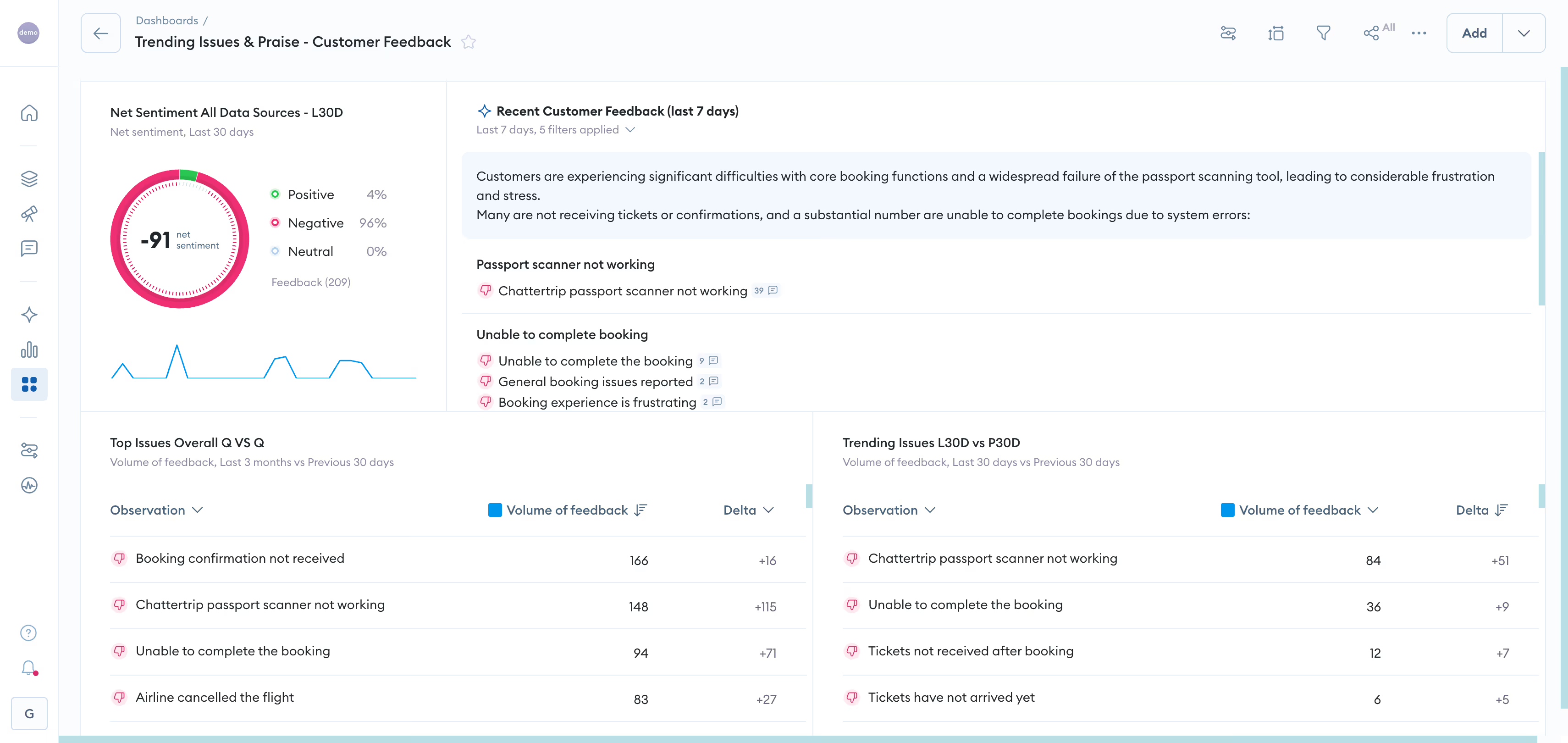
Chattermill is the best voice of customer tool for travel and hospitality brands that need to unify guest feedback from every channel into a single AI-powered analytics platform. It is also the best AI voice of customer software for omnichannel analysis, combining surveys, OTA reviews, support tickets, social mentions, and contact center data into one unified view.
Built as an AI-native feedback analytics platform, Chattermill does not bolt artificial intelligence onto an existing survey tool or review aggregator. The platform uses Aspect-Based Sentiment Analysis (ABSA) trained specifically on customer feedback data, which means it handles the nuances of hospitality language — "the room was fine but the check-in was a nightmare" — with a precision that generic NLP engines struggle to match. For travel brands managing feedback in multiple languages across multiple properties, that distinction matters enormously.
What sets Chattermill apart for travel and hospitality teams is the depth of its analytical layer. The platform automatically surfaces themes, sentiment trends, and anomalies across every feedback source, so a hotel group can spot a maintenance issue emerging at three properties simultaneously — or detect that a new loyalty program change is driving negative sentiment among premium guests — before those signals show up in aggregate NPS scores. The anomaly detection and automated alerts mean insights teams spend less time monitoring dashboards and more time acting on what the data reveals.
Chattermill also offers a forward-looking capability that no other tool on this list matches: the Chattermill MCP server. This allows teams to query their feedback data directly inside AI agents and workflows, bringing VoC insights into the agentic era. Instead of logging into a dashboard to pull a report, a revenue manager can ask an AI assistant, "What are guests at our Miami property saying about pool cleanliness this month?" and get an answer grounded in real feedback data.
Chattermill Features
- AI-native Aspect-Based Sentiment Analysis (ABSA) trained on customer feedback for granular theme and sentiment detection across hospitality-specific language
- Unified multi-channel ingestion covering surveys, OTA reviews, support tickets, social media, app reviews, and contact center transcripts via native integrations
- Multi-property and multi-brand dashboards with property-level benchmarking, regional roll-ups, and cross-portfolio comparison
- Anomaly detection and automated alerts that flag emerging issues before they compound across locations
- Impact measurement linking feedback themes directly to NPS, CSAT, and CES movements so teams can prioritize by commercial impact
- Multi-language support for analyzing guest feedback across global property portfolios without manual translation
- Chattermill MCP server for querying feedback data inside AI agents, enabling agentic VoC workflows
2026 Pricing
Custom pricing — contact sales for a tailored quote based on feedback volume, channels, and properties.
Chattermill Pros
- AI-native architecture delivers more accurate theme and sentiment analysis than platforms that added NLP as an afterthought
- Truly unifies every feedback channel into one analytical layer — no more siloed survey data and separate review dashboards
- Anomaly detection catches emerging issues across properties in near-real-time
- Multi-language analysis handles global hotel and airline portfolios without quality degradation
- MCP server capability positions teams for the agentic AI future of CX operations
Chattermill Cons
- Custom pricing means smaller independent hotels will need to evaluate ROI carefully
- The platform's depth is best leveraged by teams that already have a multi-channel feedback collection strategy in place
- Steeper learning curve than simpler review-aggregation tools for teams new to advanced feedback analytics
Who It's For
Travel and hospitality brands that need to unify feedback from every guest touchpoint — surveys, OTA reviews, support tickets, social, and calls — into a single AI-powered analytics platform that connects insights to business outcomes.
G2 Rating
4.5/5 (236 reviews)
2. Medallia

Medallia is an enterprise experience management platform with one of the deepest hospitality practice areas in the VoC market. For large hotel groups, airlines, and casino operators with mature CX programs, Medallia offers a comprehensive suite that spans the entire guest journey.
The platform's Athena AI engine powers its text analytics, predictive modeling, and automated action capabilities. Medallia's hospitality-specific modules include property-level benchmarking, guest journey mapping across physical and digital touchpoints, and integrations with hospitality tech stacks including PMS, POS, and loyalty platforms. The platform also supports real-time in-the-moment feedback capture through messaging, in-app prompts, and IoT integrations — useful for brands that want to catch issues during a guest's stay rather than after checkout.
Where Medallia stands out for travel brands is its depth of professional services and industry expertise. The company has dedicated hospitality teams that help design CX programs, configure analytics models, and build action workflows tailored to the operational realities of hotels and airlines. For enterprises with the budget and organizational maturity to take full advantage, that hands-on support can accelerate time-to-value significantly.
Medallia Features
- Athena AI engine for text analytics, predictive scoring, and automated action recommendations
- Hospitality-specific modules including property benchmarking, guest journey orchestration, and mid-stay recovery workflows
- Broad channel coverage spanning surveys, reviews, social, calls, messaging, in-app, and IoT signals
- Real-time alerting and case management with role-based routing to property-level teams
- Enterprise integration layer connecting to PMS, POS, loyalty, and CRM platforms
2026 Pricing
Custom pricing — enterprise contracts typically involve multi-year commitments with implementation services.
Medallia Pros
- Deep hospitality industry expertise with dedicated practice teams
- Comprehensive channel coverage including real-time mid-stay feedback capture
- Strong professional services for designing and optimizing CX programs
- Proven at scale with major hotel chains and airlines
Medallia Cons
- Enterprise pricing puts it out of reach for most mid-market and independent properties
- Implementation timelines can stretch to 6-12 months for complex deployments
- The platform's breadth can create complexity — teams may use only a fraction of available capabilities
- AI analytics depth trails purpose-built text analysis platforms for granular theme detection
Who It's For
Large enterprise travel brands — major hotel chains, airlines, cruise lines — with mature CX teams and the budget for a full-suite experience management platform.
G2 Rating
4.5/5 (206 reviews)
3. TrustYou

TrustYou is one of the few VoC platforms built specifically for the hospitality industry, with OTA review intelligence as its core strength. For hotel groups whose primary feedback channel is guest reviews on Booking.com, Expedia, Tripadvisor, and Google, TrustYou offers a purpose-built solution that generic VoC platforms cannot match.
The platform aggregates reviews from over 250 OTA and review sites, applies AI semantic analysis to extract themes and sentiment, and generates a proprietary TrustScore that benchmarks each property against its competitive set. TrustYou also offers survey tools and a guest messaging module, creating a feedback ecosystem that spans pre-stay, during-stay, and post-stay touchpoints — all designed around hospitality-specific workflows.
Where TrustYou particularly shines is in its understanding of hotel operations. The platform's dashboards are structured around the categories that matter to GMs and operations teams — room quality, cleanliness, staff friendliness, F&B, location — rather than generic sentiment buckets. For hotel groups that live and breathe review scores, this operational specificity is invaluable.
TrustYou Features
- Review aggregation from 250+ OTA and review platforms — the broadest hospitality review coverage available
- TrustScore benchmarking against competitive sets at the property and portfolio level
- AI semantic analysis tuned for hospitality-specific categories (rooms, service, cleanliness, dining)
- Guest surveys with hospitality templates and PMS integration for automated distribution
- Guest messaging for real-time communication during stays
2026 Pricing
Custom pricing — contact TrustYou for a tailored quote.
TrustYou Pros
- Deepest OTA review integration of any platform on this list — purpose-built for hospitality
- TrustScore benchmarking provides actionable competitive intelligence for revenue and operations teams
- Hospitality-specific category structure aligns with how hotel teams actually think about guest experience
- Guest messaging module enables mid-stay recovery
TrustYou Cons
- Limited presence outside hospitality — teams needing cross-industry VoC capabilities will outgrow it
- G2 review sample is very small, making independent validation difficult
- Analytics depth for non-review channels (surveys, social, calls) is less developed than broader VoC platforms
- Not ideal for travel brands beyond hotels (airlines, cruise lines, OTAs)
Who It's For
Hotel groups and resort operators whose VoC strategy centers on OTA review intelligence, competitive benchmarking, and hospitality-specific guest feedback analysis.
G2 Rating
4.5/5 (2 reviews — limited sample)
4. Qualtrics
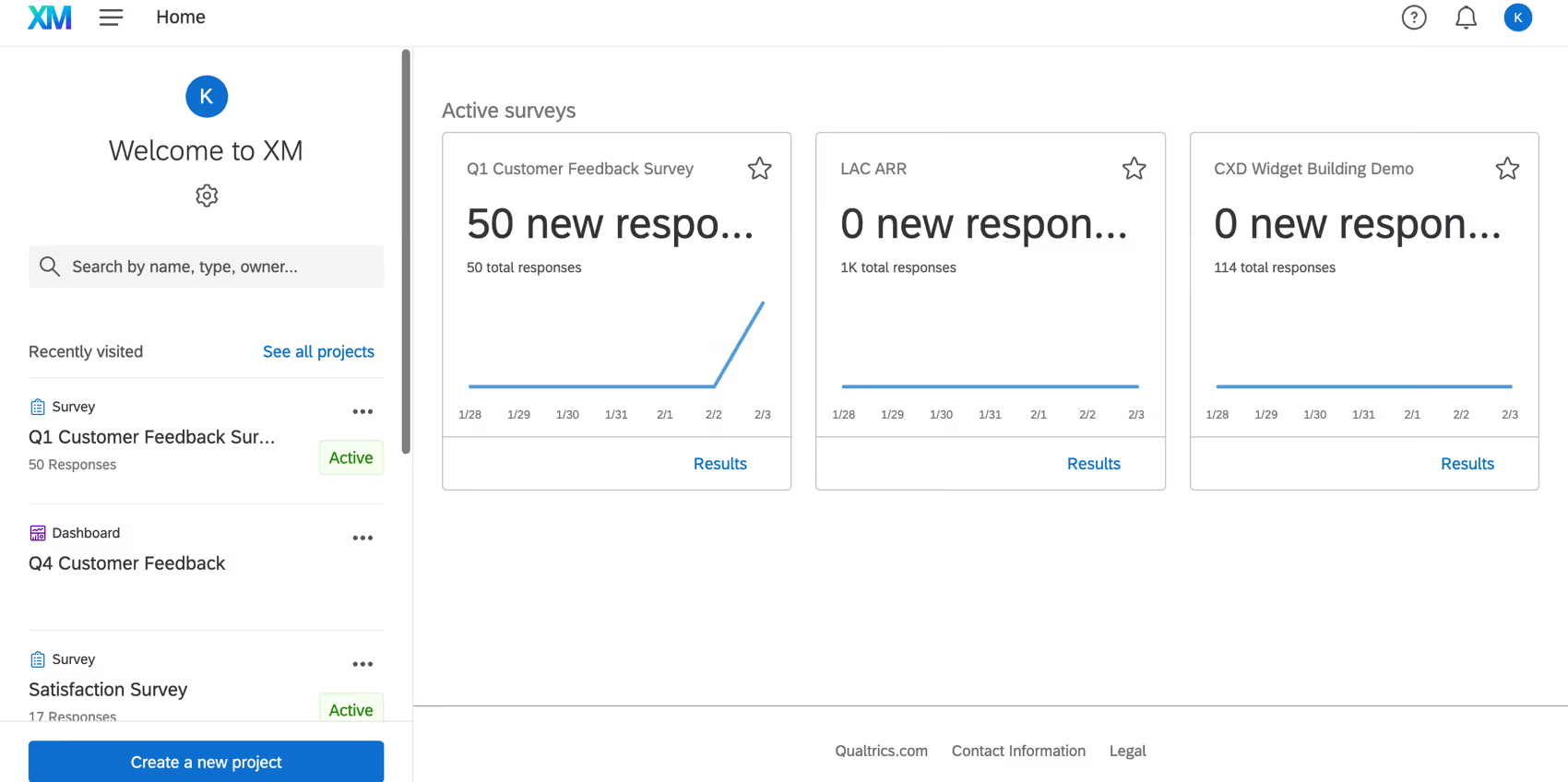
Qualtrics is the market leader in survey-based experience management, and its XM platform offers a robust foundation for travel brands building guest experience programs around structured feedback. If your VoC strategy centers on post-stay surveys, in-app feedback, and website intercepts, Qualtrics provides one of the most flexible survey design and distribution engines available.
The platform's Text iQ module handles open-ended response analysis with topic detection and sentiment scoring. For hospitality teams, Qualtrics offers industry-specific survey templates, benchmarking data, and the ability to trigger surveys at specific journey touchpoints. The platform also supports digital experience analytics through session replay and behavioral data, adding a layer of observational insight alongside self-reported feedback.
However, Qualtrics's roots as a survey platform show when travel brands need to incorporate unsolicited feedback at scale. OTA review integration is partial rather than native, and teams that want to unify survey responses with review data, social mentions, and contact center transcripts often find they need additional tools or custom development. For brands evaluating Qualtrics alternatives that offer stronger multi-channel unification, this is a key consideration.
Qualtrics Features
- Advanced survey design and distribution with branching logic, multilingual support, and hospitality templates
- Text iQ NLP for open-ended response analysis and topic extraction
- Digital experience analytics including session replay, heatmaps, and behavioral signals
- Benchmarking data with industry-specific comparisons for hospitality metrics
- Action planning and workflow automation linked to survey results
2026 Pricing
Custom pricing for enterprise plans. A free tier is available with limited functionality for smaller-scale survey programs.
Qualtrics Pros
- Industry-leading survey design flexibility and distribution capabilities
- Strong benchmarking data for hospitality-specific metrics
- Free tier lowers the barrier to entry for smaller properties
- Large partner ecosystem and integration marketplace
Qualtrics Cons
- OTA review and social media integration is partial — not a true multi-channel VoC platform out of the box
- Text analytics capabilities trail dedicated AI sentiment analysis tools for feedback-specific NLP
- Pricing escalates significantly at enterprise scale
- Can feel survey-centric when teams need broader feedback unification
Who It's For
Travel brands building guest experience programs primarily around structured surveys, website feedback, and app intercepts, with the flexibility to expand into broader experience management.
G2 Rating
4.3/5 (747 reviews)
5. InMoment

InMoment positions itself as an integrated CX platform with a particular strength in property-level case management — making it a natural fit for hotel chains and multi-location hospitality brands that need to close the loop on individual guest issues.
The XI Platform combines feedback collection, text analytics, and action management in a single system. For travel brands, the standout capability is its operational workflow layer: when a guest leaves a negative review or survey response, the platform can automatically create a case, route it to the appropriate property manager, and track resolution. This closed-loop approach helps hotel teams recover at-risk guests before a bad experience becomes a bad review.
InMoment also supports OTA review integration, social listening, and chat feedback, giving hospitality teams a reasonably broad view of guest sentiment across channels. The platform's machine learning models handle theme extraction and sentiment analysis, though the depth of its NLP capabilities sits below the best customer insights software purpose-built for feedback analytics.
InMoment Features
- Closed-loop case management with automated routing to property-level teams for guest recovery
- XI Platform ML for theme extraction, sentiment analysis, and trend detection
- Multi-channel ingestion covering surveys, OTA reviews, social, and chat
- Property-level dashboards with portfolio roll-ups and benchmarking
- Action planning tools that connect insights to operational improvements
2026 Pricing
Custom pricing — contact InMoment for a tailored quote.
InMoment Pros
- Excellent closed-loop case management for property-level guest recovery
- Strong operational workflow capabilities that connect insight to action
- Good OTA and social review integration for hospitality use cases
- Solid property-level benchmarking and portfolio analytics
InMoment Cons
- NLP depth is adequate but not best-in-class for granular theme detection
- Implementation can be complex for multi-brand hospitality groups
- Reporting customization can feel limited compared to more analytically-focused platforms
Who It's For
Hotel chains and multi-location hospitality brands that prioritize closed-loop guest recovery and need strong operational case management alongside VoC analytics.
G2 Rating
4.7/5 (314 reviews)
6. ReviewPro (Shiji)

ReviewPro, now part of the Shiji Group, is a hotel reputation management platform that combines review intelligence with guest survey capabilities and operational analytics. As part of the broader Shiji hospitality technology ecosystem, ReviewPro benefits from deep integrations with PMS, POS, and other hotel tech systems.
The platform aggregates reviews from major OTAs and review sites, applies sentiment analysis to identify strengths and weaknesses by category, and provides a Global Review Index (GRI) score for benchmarking. ReviewPro also offers a guest survey module and a guest messaging tool, giving hotel teams a fairly complete view of guest feedback across the stay lifecycle.
ReviewPro's sweet spot is mid-market hotel groups that want a hospitality-focused reputation management tool with survey capabilities — particularly those already invested in the Shiji technology ecosystem. The platform's operational dashboards are designed for GM-level reporting, with department-specific views that make it easy to route improvement actions to the right teams.
ReviewPro Features
- Global Review Index (GRI) for property-level benchmarking against competitive sets
- OTA and review aggregation from major hospitality review platforms
- Guest survey tools with PMS-triggered distribution and hospitality templates
- Guest messaging for real-time communication during stays
- Shiji ecosystem integration connecting feedback data to PMS, POS, and other hotel systems
2026 Pricing
Custom pricing — contact ReviewPro for a tailored quote.
ReviewPro Pros
- Strong hospitality focus with operational dashboards designed for hotel teams
- Shiji ecosystem integration provides connectivity to broader hotel tech stack
- GRI benchmarking offers competitive intelligence for revenue and operations decisions
- Combined review management and survey capabilities in one platform
ReviewPro Cons
- Very small G2 review footprint makes independent evaluation difficult
- Analytical depth and AI sophistication trail leading customer feedback tools in the market
- Limited applicability for non-hotel travel brands (airlines, cruise lines, OTAs)
- Reporting and customization options can feel constrained for advanced analytics teams
Who It's For
Mid-market hotel groups seeking a hospitality-focused reputation management platform, especially those already using Shiji technology products.
G2 Rating
4.0/5 (3 reviews — limited sample)
7. Revinate
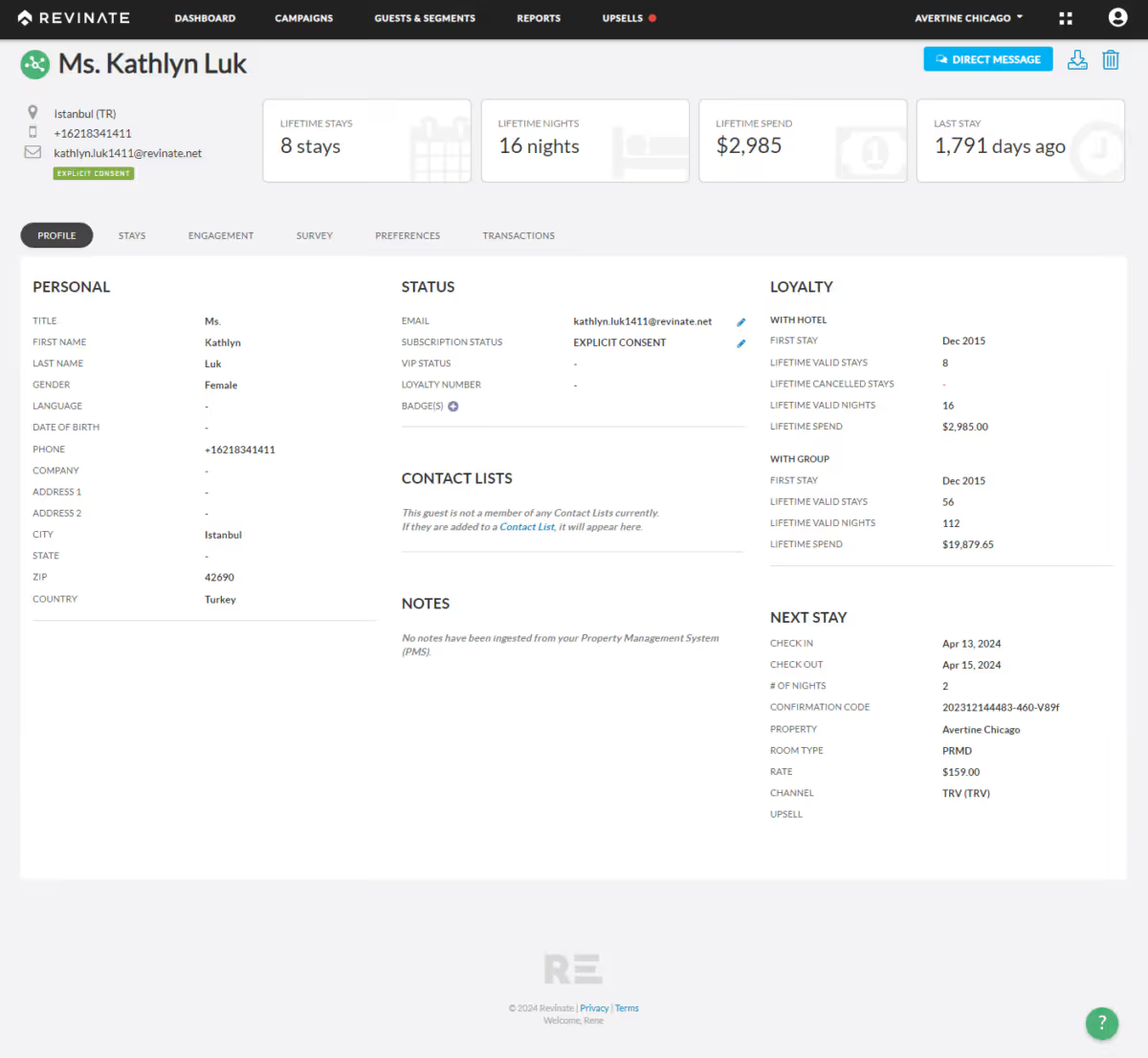
Revinate combines guest feedback intelligence with a hospitality-focused customer data platform (CDP), making it a unique hybrid in the VoC landscape. For hotel brands that want to connect feedback data directly to guest profiles for personalized marketing and revenue optimization, Revinate bridges a gap that most VoC tools ignore.
The platform ingests reviews from OTAs, guest survey responses, and email engagement data, linking all of it to individual guest profiles within its CDP. This means a hotel can not only see that "breakfast quality" is trending negatively, but also identify which specific guest segments are most affected and target communications accordingly. Revinate's ML models analyze feedback for sentiment and themes, though the platform's analytical depth is geared more toward operational reporting than advanced text analysis.
Revinate also includes email marketing and reservation management modules, creating a feedback-to-action loop that extends into guest communications and revenue management. For hotel groups looking to consolidate guest data, feedback analytics, and outbound marketing in a single hospitality platform, this integrated approach is compelling.
Revinate Features
- Hospitality CDP that links feedback data to individual guest profiles for segmentation and personalization
- Review aggregation and analysis from OTAs and review platforms with ML-based sentiment detection
- Guest survey tools with PMS integration for automated post-stay distribution
- Email marketing module for targeted guest communications based on feedback insights
- Revenue management integration connecting guest satisfaction data to booking and pricing decisions
2026 Pricing
Custom pricing — contact Revinate for a tailored quote.
Revinate Pros
- Unique CDP integration connects feedback insights directly to guest profiles and marketing actions
- Purpose-built for hotels with deep PMS and hospitality tech stack integrations
- Combines VoC analytics with outbound marketing capabilities in one platform
- Strong focus on connecting guest satisfaction to revenue outcomes
Revinate Cons
- Very small G2 review footprint makes independent evaluation difficult
- Analytical depth for feedback text analysis is moderate compared to dedicated analytics platforms
- Primarily hotel-focused — limited applicability for airlines, cruise lines, or OTAs
- The breadth of functionality (CDP, marketing, feedback) means each module may be less deep than best-of-breed alternatives
Who It's For
Hotel groups that want to connect guest feedback directly to guest profiles, personalized marketing, and revenue management within a single hospitality-focused platform.
G2 Rating
4.6/5 (7 reviews — limited sample)
8. Sprinklr
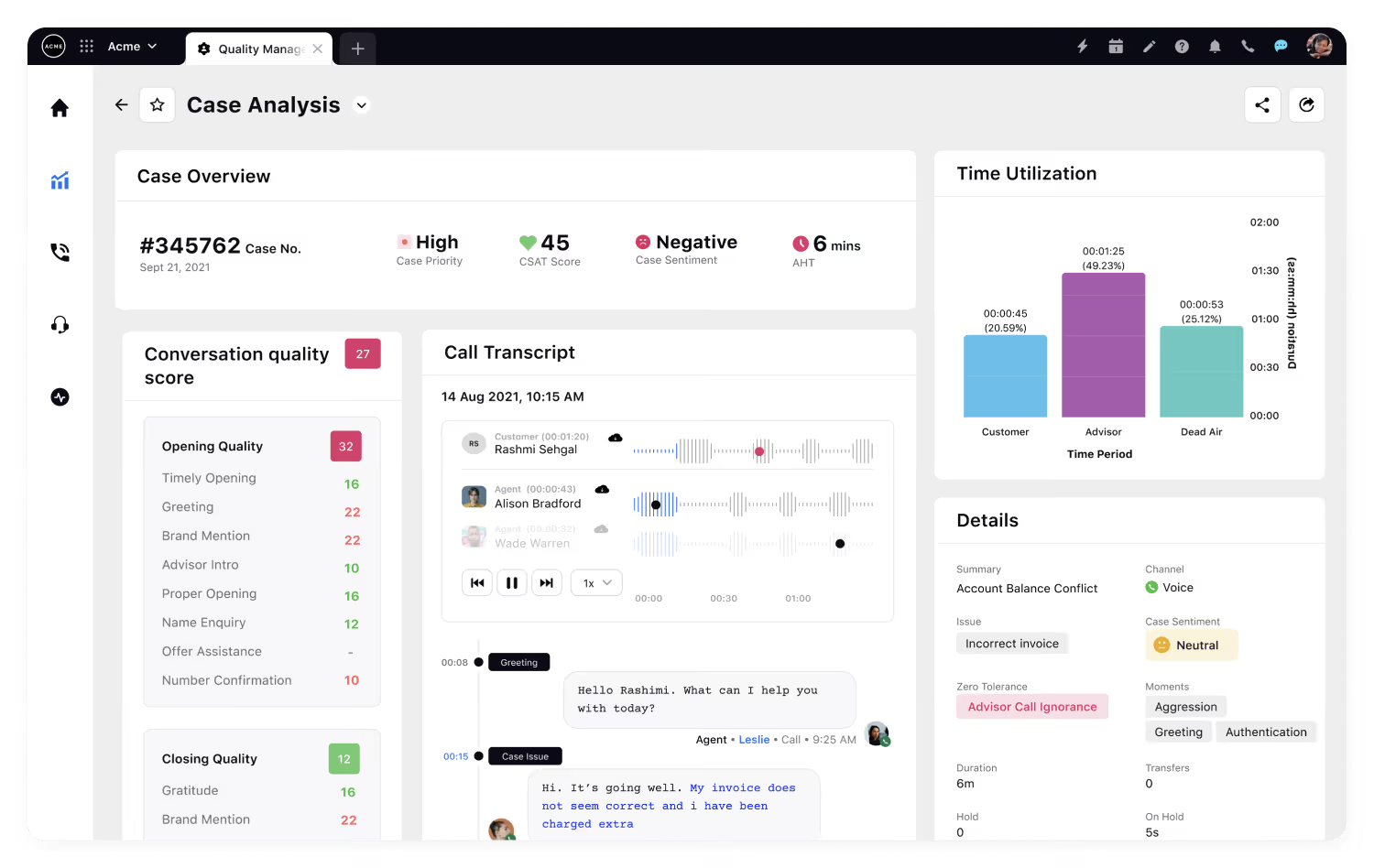
Sprinklr is a unified CX platform with its center of gravity in social media management and conversational analytics. For airlines, large hotel brands, and travel companies where social media is a primary customer interaction channel, Sprinklr offers unmatched breadth across 30+ social and messaging platforms.
The platform's Sprinklr AI powers social listening, sentiment analysis, case management, and automated response capabilities across every major social channel. For a global airline managing customer complaints on X, Instagram, Facebook, WhatsApp, and WeChat simultaneously, Sprinklr provides a unified command center that few competitors can match. The platform also supports review monitoring, community management, and advertising — extending well beyond traditional VoC into broader customer engagement.
However, Sprinklr's social-first architecture means that survey analytics, OTA review integration, and structured feedback analysis are secondary capabilities. Travel brands that need deep customer feedback analytics across surveys, reviews, and support tickets alongside their social program will likely need to pair Sprinklr with a dedicated VoC analytics platform.
Sprinklr Features
- 30+ social and messaging channel coverage — the broadest social listening footprint in the market
- Sprinklr AI for social sentiment analysis, automated routing, and response recommendations
- Unified social care combining listening, engagement, and case management in one platform
- Review monitoring from major platforms including Google, Tripadvisor, and Yelp
- Advertising and content management modules for integrated social media operations
2026 Pricing
Custom pricing — enterprise contracts with modular pricing based on channels and capabilities.
Sprinklr Pros
- Unmatched social channel coverage for travel brands with global social media presence
- Strong social care and case management for airlines and hotel brands handling high-volume social interactions
- Sprinklr AI provides good social-specific sentiment and intent detection
- Unified platform spans listening, engagement, advertising, and care
Sprinklr Cons
- Social-first architecture means survey and structured feedback analytics are less developed
- OTA review integration is partial — not a core strength
- Enterprise pricing and complexity can be challenging for mid-market travel brands
- Best paired with a dedicated VoC analytics tool for comprehensive feedback programs
Who It's For
Airlines, global hotel brands, and large travel companies where social media is a primary customer interaction and feedback channel, requiring a unified social CX command center.
G2 Rating
4.2/5 (2,159 reviews)
9. Reputation
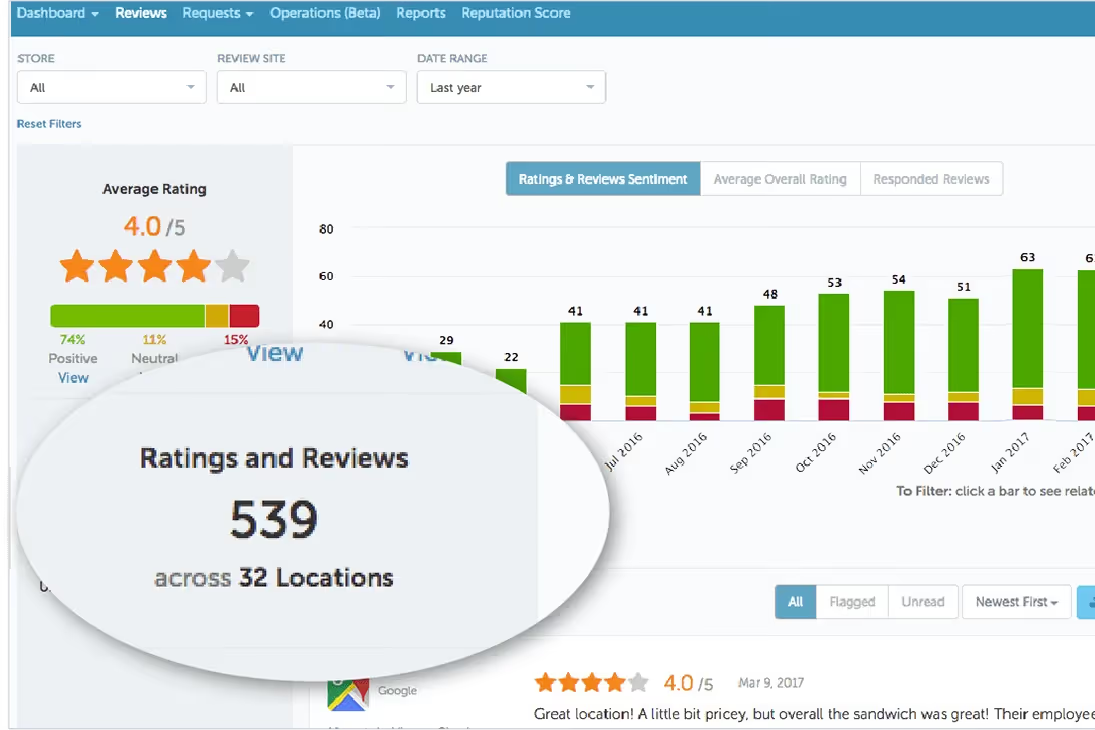
Reputation is a multi-location review and reputation intelligence platform that excels at aggregating, analyzing, and acting on review data across Google, Tripadvisor, Booking.com, Yelp, and other review platforms. For hotel chains, restaurant groups, and multi-location travel brands obsessed with their review scores and online reputation, Reputation provides a purpose-built command center.
The platform's AI categorization engine analyzes review text to identify themes and sentiment across properties, enabling portfolio-level reporting and property-to-property benchmarking. Reputation also includes listing management, social monitoring, and survey capabilities, creating a reasonably complete feedback ecosystem for location-based businesses. The platform's Reputation Score provides a unified metric that combines review ratings, volume, recency, and sentiment into a single benchmark.
Where Reputation stands out is its focus on the "last mile" of reputation management — helping properties respond to reviews, improve their visibility on review platforms, and track the impact of improvement actions on review scores. For hotel operations teams measured on Tripadvisor rankings and Google star ratings, this operational focus is directly tied to commercial outcomes.
Reputation Features
- Multi-platform review aggregation from Google, Tripadvisor, Booking.com, Yelp, and dozens more
- AI theme and sentiment categorization across review text for property-level insight
- Reputation Score providing a unified benchmark combining ratings, volume, recency, and sentiment
- Review response management with templates, automation, and performance tracking
- Listing management ensuring property information is accurate across review and directory platforms
2026 Pricing
Custom pricing — contact Reputation for a tailored quote.
Reputation Pros
- Excellent multi-platform review aggregation and reputation monitoring for location-based brands
- Reputation Score provides a clear, actionable benchmark for property and portfolio performance
- Strong review response management tools that help properties close the loop
- Good fit for multi-location brands measured on review scores and online visibility
Reputation Cons
- Survey and structured feedback capabilities are less developed than dedicated VoC platforms
- Analytical depth for open-ended text trails purpose-built feedback analytics tools
- Social listening is present but secondary to review-focused capabilities
- Contact center and support ticket analysis are not core strengths
Who It's For
Multi-location hotel chains, restaurant groups, and travel brands whose VoC strategy centers on review reputation management, competitive benchmarking, and property-level review performance.
G2 Rating
4.6/5 (~200 reviews)
10. Thematic
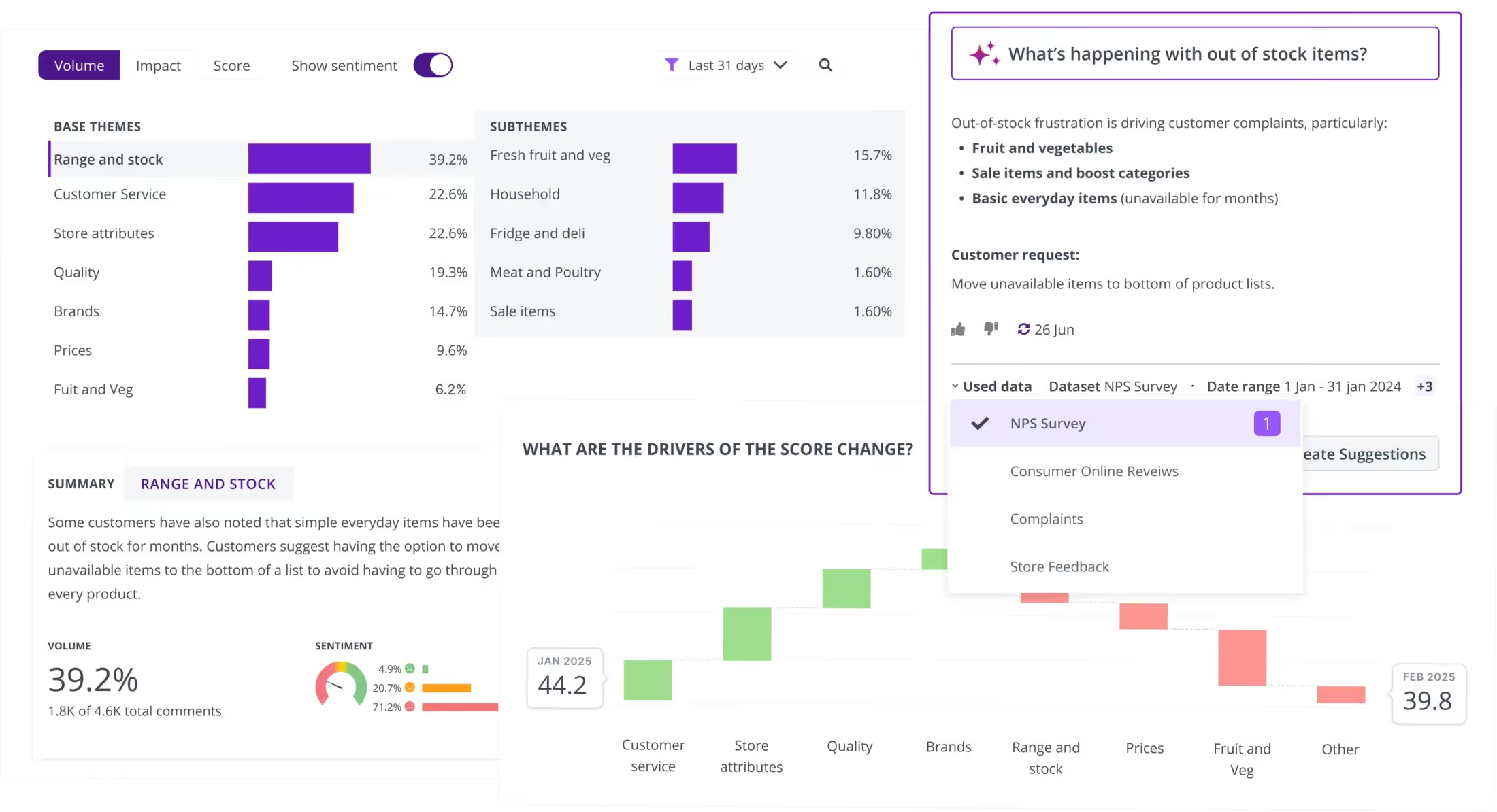
Thematic is an AI text analytics platform designed to extract themes and insights from open-ended feedback, particularly NPS and survey verbatims. For travel brands with large volumes of guest survey data that current tools cannot meaningfully analyze at scale, Thematic offers a specialized analytical layer.
The platform uses statistical NLP to automatically discover themes in unstructured text, track how those themes change over time, and quantify the impact of each theme on satisfaction scores. Thematic's approach is more analytically rigorous than simple word clouds or keyword frequency counts — it identifies granular, nested themes (e.g., "breakfast quality > variety > dietary options") and measures how each one drives NPS up or down.
For hospitality insights teams drowning in thousands of survey verbatims that nobody has time to read, Thematic can surface the handful of themes that actually move the needle on guest satisfaction. However, the platform's focus on text analytics means it does not handle feedback collection, OTA review integration, or operational case management — it is best deployed alongside existing survey and feedback tools.
Thematic Features
- Statistical NLP theme discovery that automatically identifies granular themes from open-ended text without manual coding
- Impact analysis quantifying how each theme drives NPS, CSAT, or other satisfaction metrics up or down
- Time-series theme tracking showing how guest concerns evolve over weeks and months
- Multi-source support for survey verbatims, support tickets, and review text
- Visualization and reporting designed for insights teams presenting findings to stakeholders
2026 Pricing
From $25,000/year — pricing scales with feedback volume.
Thematic Pros
- Excellent theme granularity and impact quantification — moves beyond simple sentiment scoring
- Purpose-built for survey and feedback text analytics, not a bolted-on feature
- Clear visualization of theme-to-outcome relationships for stakeholder reporting
- Good for travel brands with large volumes of survey verbatims that need deeper analysis
Thematic Cons
- No feedback collection, OTA review integration, or guest messaging capabilities — analytics only
- Limited multi-property support compared to hospitality-focused platforms
- Narrower channel coverage requires pairing with other tools for comprehensive VoC programs
- Starting price may be steep for teams wanting to trial text analytics before committing
Who It's For
Hospitality insights teams with large volumes of survey and feedback text that need deeper thematic analysis and impact quantification than their current VoC platform provides.
G2 Rating
4.8/5 (43 reviews)
11. Birdeye

Birdeye is a multi-location review management and customer engagement platform that has gained significant traction with location-based businesses, including hotels, restaurants, and hospitality groups. With over 4,000 G2 reviews, it is one of the most widely-adopted platforms on this list, particularly among mid-market and SMB properties.
The platform combines review monitoring, review generation, survey distribution, social media management, and messaging into a single dashboard. Birdeye's AI text analysis processes reviews and surveys to identify themes and sentiment, while its automated review request workflows help properties actively grow their review volume on Google and other platforms. For travel brands where review volume directly impacts visibility and bookings, this proactive approach to review generation is a meaningful differentiator.
Birdeye's pricing starts lower than most enterprise VoC platforms, making it accessible to independent hotels, boutique groups, and vacation rental operators that cannot justify a six-figure annual contract. The trade-off is that its analytical depth — particularly for granular theme detection and impact measurement — sits below what larger customer experience tools offer.
Birdeye Features
- Multi-platform review monitoring covering Google, Tripadvisor, Facebook, Yelp, and 200+ sites
- Automated review request workflows that help properties grow review volume organically
- AI text analysis for theme and sentiment detection across reviews and surveys
- Survey distribution with customizable templates and multi-channel delivery
- Messaging and webchat for real-time guest communication
2026 Pricing
From $299/month — pricing scales with features and locations. Significantly more accessible than enterprise VoC platforms.
Birdeye Pros
- Most affordable entry point for multi-location review management on this list
- Automated review generation workflows directly impact online visibility and bookings
- Very large G2 review base (4,060 reviews) provides strong independent validation
- Good breadth of features — reviews, surveys, social, and messaging in one platform
Birdeye Cons
- Analytical depth and AI sophistication trail dedicated feedback analytics platforms for advanced VoC programs
- Limited OTA-specific integration compared to hospitality-native tools like TrustYou
- Multi-property reporting is functional but less sophisticated than enterprise platforms
- Better suited for review management than comprehensive voice of customer analytics
Who It's For
Independent hotels, boutique groups, and mid-market hospitality brands looking for an affordable, all-in-one review management and customer engagement platform with basic VoC capabilities.
G2 Rating
4.7/5 (4,060 reviews)
Choosing the Right VoC Tool for Your Travel Brand
With eleven platforms to evaluate, how do you avoid the trap of choosing a tool that looks impressive in a demo but fails to match your operational reality? The right voice of customer tool depends less on which platform has the most features and more on which one fits the feedback reality of your specific travel business. Before jumping to company-type recommendations, consider these eight evaluation factors.
Channel Coverage — Can the tool ingest every channel your guests use? Travel generates feedback across surveys, OTA reviews, social media, contact centers, messaging apps, and app stores. A platform that covers only half of those channels leaves blind spots in your guest experience picture.
OTA Integration Depth — Does it treat OTA reviews as first-class data? For hotels and vacation rental operators, OTA reviews on Booking.com, Expedia, and Tripadvisor are often the largest single source of unsolicited feedback. Platforms that require manual CSV imports or third-party connectors for OTA data are not built for hospitality.
Multi-Property Scale — Can it handle property-level benchmarking across your portfolio? A boutique hotel needs property-level dashboards; a chain with 200 locations needs regional roll-ups, brand-level comparisons, and portfolio-wide anomaly detection without custom development.
AI/NLP Sophistication — Does it go beyond keyword matching? The difference between a platform that tags "dirty" as negative and one that understands "the room was spotless but the pool area needed attention" determines whether your insights team trusts the data or ignores it.
Alerting and Action Speed — How fast does it surface emerging issues? A three-week-old insight about declining breakfast satisfaction is a post-mortem, not an actionable alert. Look for real-time anomaly detection and automated routing to property-level teams.
Outcome Measurement — Can it link feedback to revenue metrics? The strongest VoC programs connect sentiment trends to RevPAR, review scores, loyalty enrollment, and repeat booking rates. Without this link, CX investments remain cost centers rather than revenue drivers.
Integration Ecosystem — Does it connect to your PMS, CRM, and loyalty platforms? VoC data locked in a standalone dashboard loses value. The tool should feed insights into the systems where operational and commercial decisions are actually made.
Ease of Implementation — Can you go live in weeks, not months? Enterprise platforms that require six-month implementations and dedicated professional services teams can deliver tremendous value, but only if your organization has the patience and budget to see the project through.
With those criteria in mind, here is how the decision typically plays out by company type.
Independent Hotels and Boutique Groups. Budget matters, and so does simplicity. Independent properties generating feedback primarily through OTA reviews and post-stay surveys do not need an enterprise VoC platform. Birdeye offers an accessible entry point for review management and basic feedback analytics. TrustYou provides deeper hospitality-specific review intelligence. As feedback programs mature and the need for unified customer experience analytics grows, Chattermill becomes the natural upgrade for teams ready to move beyond review monitoring into cross-channel insight.
Mid-Market Hotel Chains. This segment — typically 20 to 200 properties — faces the most complex decision. The VoC tool needs to handle multi-property benchmarking, support regional and brand-level roll-ups, and integrate with an established hospitality tech stack. Chattermill excels here by unifying feedback from every channel into property-level and portfolio-level analytics without the implementation overhead of a full enterprise suite. InMoment is a strong alternative for chains that prioritize operational case management and closed-loop recovery workflows. ReviewPro fits teams already invested in the Shiji ecosystem.
Large Enterprises (Airlines, Cruise Lines, Casino Operators). At enterprise scale, the requirements expand to include global multi-language analysis, complex organizational hierarchies, and integration with contact centers, loyalty platforms, and operational systems. Chattermill's AI-native approach and multi-language capabilities handle this scale with the analytical depth that enterprise CX teams demand. Medallia remains a strong option for organizations that want a full-suite experience management platform with deep professional services, provided they have the budget and implementation timeline to support it.
OTAs and Travel Tech Companies. Online travel agencies and travel tech platforms generate feedback at massive scale — millions of reviews, ratings, and support interactions. The VoC tool needs to handle high-volume ingestion, support API-driven integration into product workflows, and provide the kind of granular theme analysis that helps product teams prioritize roadmap decisions. Chattermill's API-first architecture and MCP server make it particularly well-suited for product-led travel tech companies. Sprinklr is worth evaluating for OTAs with heavy social media interaction volumes.
Vacation Rental Managers. Property managers operating across Airbnb, Vrbo, Booking.com, and direct channels need VoC tools that aggregate reviews across listing platforms and support property-level performance tracking. Reputation and Birdeye both serve this segment well at accessible price points. For vacation rental operators scaling beyond 100 properties who need deeper analytics, Chattermill provides the analytical layer to unify feedback across all listing channels and direct booking surveys.
What Are Voice of Customer AI Tools?
Voice of customer technology has evolved through three distinct generations. The first wave relied on manual survey analysis — hotel teams reading through comment cards and spreadsheets, spotting patterns through intuition rather than data. The second wave introduced rule-based NLP: keyword dictionaries and sentiment lexicons that could tag "dirty" as negative and "friendly" as positive, but crumbled when guests wrote things like "the room was not as clean as we expected given the price point."
The current generation — AI-native VoC platforms — uses approaches like Aspect-Based Sentiment Analysis (ABSA) trained specifically on customer feedback data. These platforms understand context, handle sarcasm, parse mixed sentiment within a single review at the aspect level, and work across languages without requiring separate models for each one. For travel brands, this leap matters because hospitality language is uniquely nuanced: a guest who writes "the location was perfect but the noise from the street made it hard to sleep" is expressing both strong satisfaction and genuine frustration in the same sentence — and ABSA identifies both aspects separately rather than averaging them into a single score.
Why does this matter now? Because the volume of guest feedback is growing faster than any team can process manually, and the channels generating that feedback — from OTA reviews to social media to in-app messaging — each carry different signals that only AI-native analysis can unify at scale.
Benefits of Using Voice of Customer Software
Faster identification of guest experience issues. AI-powered anomaly detection surfaces emerging problems — a sudden spike in complaints about check-in wait times or room cleanliness — days or weeks before they show up in aggregate satisfaction scores.
Higher online review scores. Hotels that systematically act on VoC insights see measurable improvements in Tripadvisor, Google, and OTA review ratings, which directly influence booking conversion and ADR.
Reduced churn and improved loyalty enrollment. Understanding what drives guest defection allows brands to intervene before losing high-value customers, and to design loyalty offers that address real pain points.
Data-driven operational improvements. Instead of guessing which capital investments will move the needle on guest satisfaction, VoC data shows exactly which issues — room renovation, F&B quality, spa staffing — have the greatest impact.
Multi-property performance benchmarking. Portfolio-level VoC analytics reveal which properties are outperforming, which are falling behind, and what the top performers are doing differently.
Proactive issue resolution before negative reviews. Real-time alerting and mid-stay feedback capture enable service recovery while the guest is still on property, turning a potential detractor into a promoter.
Revenue attribution for CX investments. Linking feedback themes to commercial metrics like RevPAR, direct booking rates, and loyalty enrollment proves the financial value of listening to guests.
Competitive intelligence from guest feedback. Analyzing what guests say about competitor properties — through OTA review benchmarking and social listening — reveals opportunities to differentiate.
ROI & Business Impact of Voice of Customer Tools
Measuring the return on a VoC investment requires connecting feedback metrics to commercial outcomes. Have you ever tried to justify a CX budget without hard revenue numbers? Here are five impact areas where well-implemented VoC programs produce measurable results:
- Review score improvement → direct booking conversion lift. Higher ratings on OTAs and Google directly increase click-through and booking conversion rates, reducing dependence on paid distribution.
- NPS increase → loyalty program enrollment and repeat bookings. Guest satisfaction improvements translate into higher enrollment rates and increased share of wallet from returning guests.
- Issue detection speed → reduced negative review volume. Real-time alerting enables service recovery before checkout, intercepting negative experiences before they become public reviews.
- Cross-property benchmarking → operational cost optimization. Identifying which properties achieve the highest satisfaction scores per dollar of operational spend reveals best practices that can be replicated across the portfolio.
- Feedback-to-action cycle time → faster service recovery. Compressing the time from guest complaint to resolution directly reduces the revenue impact of service failures and improves guest lifetime value.
The Bottom Line
Travel and hospitality brands face a VoC challenge unlike any other industry: feedback arrives from more channels, in more languages, across more physical locations than most businesses will ever encounter. The tools that succeed in this environment are the ones that can unify all of those signals into actionable insight — and connect that insight to the commercial outcomes that justify the investment.
Chattermill is our top recommendation for travel and hospitality teams because it was built for exactly this challenge. Its AI-native architecture handles the multilingual, multi-channel, multi-property complexity of hospitality feedback without the implementation overhead of a full-suite enterprise platform, and its analytical depth — from granular theme detection to anomaly alerting to impact measurement — gives insights teams the confidence to act on what the data reveals.
That said, no single tool is right for every travel brand. Medallia remains the strongest choice for enterprises that need deep professional services and a comprehensive experience management suite. TrustYou and ReviewPro serve hotel groups whose world revolves around OTA review intelligence. Birdeye offers an accessible entry point for independent properties and smaller groups.
The common thread across every successful VoC program in travel, regardless of which platform powers it, is the commitment to treating guest feedback as a strategic asset rather than a reporting obligation. The best tools make that transformation possible. The best teams make it inevitable.
Get Started With Chattermill
Chattermill helps travel and hospitality teams unify guest feedback from every channel, surface the themes that matter most, and prove the business impact of CX improvements. Whether you manage a boutique hotel group or a global airline, the platform scales to your feedback reality.
Book a Demo to see how Chattermill can transform your voice of customer program.
Voice of Customer Tools for Travel and Hospitality: FAQs
What Is a Voice of Customer Tool?
A voice of customer tool is software that collects, organizes, and analyzes customer feedback from multiple sources — surveys, reviews, social media, support interactions, and more — to help businesses understand what their customers think and take action on those insights. In travel and hospitality, VoC tools are essential because guest feedback is scattered across dozens of channels: OTA reviews on Booking.com and Tripadvisor, post-stay surveys, contact center conversations, app reviews, and social media mentions. Without a VoC platform, teams cannot see the full picture of guest sentiment or identify the themes that actually drive satisfaction, loyalty, and revenue.
What Is the Best VoC Tool for Hotels and Resorts?
For hotels and resorts that need comprehensive voice of customer analytics, Chattermill is the best option because it unifies feedback from every guest touchpoint — surveys, OTA reviews, support tickets, social media, and calls — into a single AI-powered platform. Hotels that primarily need OTA review intelligence should also evaluate TrustYou, which offers the deepest hospitality-native review aggregation. For large enterprise hotel chains with mature CX programs and significant professional services budgets, Medallia provides comprehensive experience management with deep hospitality practice expertise.
How Do Travel Brands Use Voice of Customer Software?
Travel brands use VoC software to identify emerging guest experience issues before they impact review scores, benchmark property performance against competitors, understand which operational improvements drive the biggest satisfaction gains, and measure the ROI of CX initiatives. Practically, this means a hotel chain might use VoC analytics to discover that "check-in wait times" are driving negative sentiment at three properties simultaneously, then route that insight to operations teams for immediate action. Airlines use VoC tools to track how in-flight service changes impact NPS across routes. Cruise operators use them to compare guest satisfaction across ships and itineraries.
What Features Should a VoC Tool Have for Hospitality?
At minimum, a VoC tool for hospitality should support multi-channel feedback ingestion (surveys, OTA reviews, social, support interactions), multi-property benchmarking, and AI-powered text analysis for theme and sentiment detection. Beyond the basics, look for OTA review integration as a first-class capability, multi-language support for international portfolios, anomaly detection and automated alerting for emerging issues, and outcome measurement that links feedback themes to commercial metrics like review scores, NPS, and customer satisfaction. The strongest platforms also offer API access and integration with hospitality tech stacks (PMS, POS, loyalty systems) to embed VoC data into operational workflows.
How Much Do Voice of Customer Tools Cost?
Is there a simple answer? Not really — but here is a realistic range. Most enterprise VoC platforms use custom pricing based on feedback volume, channels, properties, and contract terms — expect annual contracts starting in the mid-five figures for mid-market deployments and scaling into six figures for large enterprises. Two exceptions on this list offer more transparent pricing: Birdeye starts at $299/month per location, and Thematic starts at $25,000/year. Custom-priced platforms like Chattermill, Medallia, Qualtrics, and InMoment typically require a discovery call to scope requirements before providing a quote. When evaluating cost, factor in implementation fees, professional services, and the cost of any additional tools needed to fill gaps — a cheaper VoC platform that requires two supplementary tools for full channel coverage may cost more than a unified solution.



See Chattermill in action on your own feedback
Book a demo


