


7 Best Refiner Alternatives for Feedback Analysis (2026)

.avif)

The CX intelligence
platform that's AI-native by design
Book a demoMost Refiner alternatives are built to collect surveys, but the best refiner alternatives are built to analyze feedback at scale. This guide ranks the seven strongest options for that harder job.
Quick Summary
This guide reviews the 7 best Refiner alternatives for feedback analysis in 2026. Chattermill, an AI-native customer experience intelligence platform, leads for enterprise analysis across every channel. Survicate is the runner-up for fast multi-channel surveys with AI insights, and Qualaroo is the strongest like-for-like for contextual on-site micro-surveys.
We evaluated 7 Refiner alternatives across analysis depth, channel coverage, languages, integrations, pricing transparency, and G2 ratings. Chattermill is the best choice for teams that need to analyze unstructured feedback at scale, not just run more surveys. Survicate is the strongest option for quick multi-channel survey feedback with AI insights. Qualaroo is the best choice for contextual in-app and website micro-surveys.
Before we get into the detailed comparisons, here are our top three picks:
Why Listen To Us
Chattermill is a leading AI-native feedback analytics platform that helps CX, insights, and product teams turn feedback into measurable business outcomes. Our platform analyzes customer feedback for enterprises including Uber, HelloFresh, H&M, and Booking.com, and holds a 4.5 rating on G2. We evaluate tools in this category every day, so this comparison reflects hands-on category expertise rather than a rewritten vendor spec sheet.
What Is Refiner — and Why Look for a Refiner Alternative?
Refiner is an in-app microsurvey tool. It helps SaaS and product teams launch targeted surveys inside their web and mobile apps, then route responses to their existing stack. For triggering a short NPS or CSAT question at the right moment in a product flow, it does the job well.
So why do teams look for a Refiner alternative? The reasons are consistent, and they all point back to analysis rather than collection.
- No true unstructured-feedback analysis at scale. Refiner captures survey responses, but it does not unify and analyze open-text feedback from every source.
- In-app and survey-bound by design. Feedback that arrives through support tickets, app store reviews, social posts, and call transcripts stays outside the tool.
- Limited channels and languages. Teams operating across regions and touchpoints quickly outgrow a survey-only, in-app-only footprint.
There is also a data-fragmentation problem. Survey responses live in one tool, support tickets in another, and reviews and social somewhere else again. When feedback is scattered like this, no single view explains why a metric moved, and teams end up stitching signals together by hand.
The pattern is clear. Refiner is a strong survey builder, but survey building is only the first step. The harder question is what all that feedback actually means, and that is where a dedicated feedback analysis platform changes the equation. For teams already running Refiner, the practical path is often to keep collecting where it works and add analysis on top, which is why a Refiner integration can matter as much as a rip-and-replace.
7 Top Refiner Alternatives: Head to Head Comparison
How We Evaluated These Tools
We ranked these Refiner alternatives against six criteria, weighted toward analysis rather than collection:
- Analysis depth and AI. How well the tool interprets open-text feedback, not just how quickly it launches surveys.
- Channel coverage. Whether feedback is limited to in-app surveys or unified across support, social, reviews, and calls.
- Languages. How many languages the tool can analyze accurately for global teams.
- Integrations. How cleanly the tool connects to the data stack CX and product teams already run.
- Pricing transparency. Whether pricing is public, and what buyers actually pay when it is custom.
- G2 and user ratings. Verified review scores and volume, shown in plain text throughout.
We prioritized analysis because collection is now table stakes. Nearly every tool here can launch a survey, so the deciding factor is what happens to the feedback afterward. A tool that captures responses but cannot explain them leaves the hardest work to your team.
This comparison is not sponsored. Chattermill ranks first because it best matches an analysis-first brief, and every other tool is scored on its own merits and use case. Where a tool leads its own category, we say so plainly, so the ranking stays useful whatever your priority.
1. Chattermill
.avif)
What is Chattermill?
Chattermill is an AI-native CXI platform built for CX, insights, and product teams that need to understand feedback at scale. Rather than adding another survey widget, the AI-native CXI platform unifies feedback from every channel and turns it into evidence-backed insight. It consolidates, tags, and analyzes feedback from many sources and languages, then surfaces the themes, sentiment, and trends that move the numbers.
This is the core difference from Refiner. Where Refiner collects survey responses, Chattermill analyzes the full body of customer feedback, including the messy, open-text feedback that survey tools leave behind. If you are searching for Refiner alternatives for feedback analysis, this is the category Chattermill was built for.
Think of it as the difference between a thermometer and a diagnosis. A survey reading tells you a number moved. An analysis platform tells you which themes drove the change, in which segments, and what to fix first. That shift, from collecting readings to explaining them, is why enterprise CX and product teams adopt the AI-native CXI platform as their system of record for feedback.
Key features
- Aspect-Based Sentiment Analysis (ABSA). Scores sentiment per theme within a single comment, preserving signal on mixed, multi-topic feedback.
- Proprietary Lyra model. An AI model purpose-built for customer experience intelligence, not a general-purpose classifier.
- 65+ feedback channels. Reviews, support tickets, social, calls, surveys, and chat unified in one place.
- 100+ languages. Accurate analysis for global teams operating across regions.
- Agentic CXI architecture with MCP server. Query and act on feedback directly inside AI agents.
- Business-metric impact. Ties feedback to NPS, CSAT, and CES, with anomaly detection and automated alerts.
Consider a single review that reads: "checkout was fast but the delivery took a week." A per-comment score would flatten that into one blurred rating. ABSA scores "checkout" as positive and "delivery" as negative, so the delivery theme is counted where it belongs. Across millions of comments, that accuracy is the difference between a vague trend and a specific, fixable issue. It is also why the ABSA and Lyra approach holds up on the messy, mixed feedback that simpler tools lose.
Pros
- Analyzes unstructured feedback at scale, not just structured survey responses.
- Widest channel coverage in this comparison, so no feedback source sits outside the analysis.
- ABSA delivers superior accuracy on mixed feedback versus per-comment or rule-based scoring.
- Measures the business impact of feedback, connecting themes to retention and loyalty metrics.
Cons
- Built for feedback analysis at scale, so it is more platform than a lightweight survey widget.
- Enterprise pricing is quote-based, which requires a conversation rather than a public checkout.
Pricing
Custom, enterprise pricing on a quote basis. You can request a tailored quote and walkthrough to map pricing to your channel and volume needs.
G2 rating
4.5 on G2.
Best for
Teams that need to unify and analyze feedback from every channel, not just run more surveys. See the full platform overview for how ABSA and Lyra work together.
2. Survicate
What is Survicate?
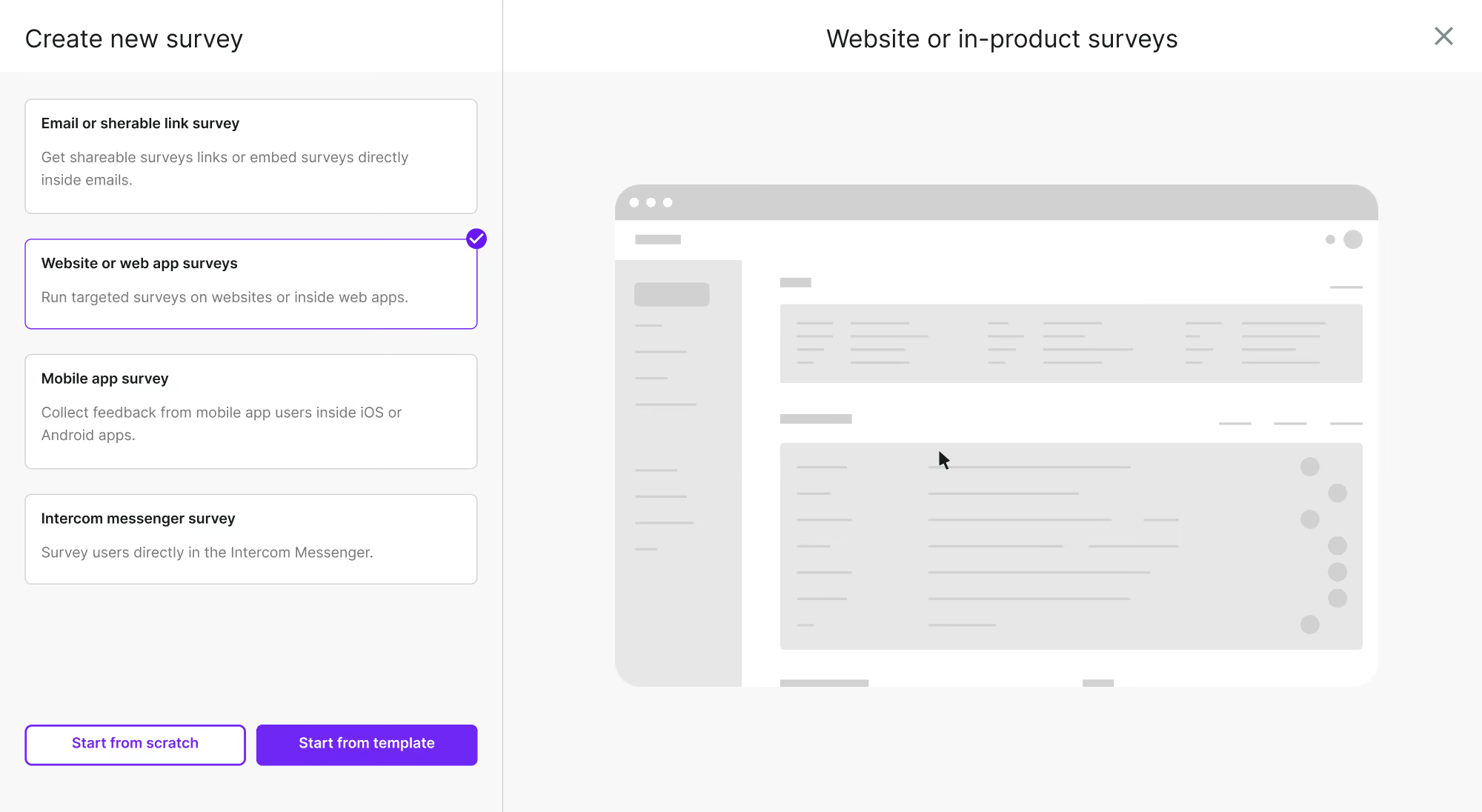
Survicate is a multi-channel survey platform with an AI-powered insights layer. It helps teams launch surveys across web, mobile, email, and in-product touchpoints, then tags themes and sentiment automatically. It sits a step beyond Refiner by adding an insights hub on top of collection.
Key features
- AI-powered insights hub with automated theme and sentiment tagging.
- Surveys across web, mobile, email, link, and in-product channels.
- Wide integration library to route responses into existing tools.
- Standard NPS, CSAT, and CES tracking.
Pros
- Fast to launch across several survey channels at once.
- AI insights reduce manual tagging of open-text responses.
- Generous free plan for smaller teams testing the tool.
Cons
- Analysis is centered on survey data, not unified cross-channel feedback.
- Deeper insight features concentrate in higher-priced tiers.
Pricing
Free plan available. Growth is $114/mo billed annually, Pro is $349/mo, and Enterprise is $569/mo billed annually, verified against Survicate's published pricing in mid-2026.
G2 rating
4.6 on G2, from roughly 200 reviews.
Best for
Teams that want quick multi-channel survey feedback with AI insights layered on top. Compared with Refiner, Survicate widens the survey footprint and adds automated tagging, but its analysis still centers on data it collected itself. For teams that need to fold in tickets, reviews, and calls, a broader feedback analysis platform closes the gap.
3. Qualaroo
What is Qualaroo?
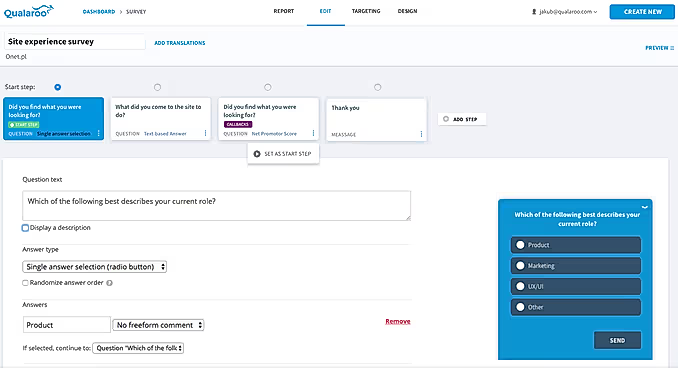
Qualaroo is a contextual micro-survey tool for websites and apps. It is the closest like-for-like to Refiner in this list, built to ask short, targeted questions at the right moment. Its Nudge targeting and AI-based sentiment analysis add lightweight interpretation to the responses it collects.
Key features
- AI-based sentiment analysis on open-text responses.
- Nudge targeting to trigger surveys by behavior and context.
- Surveys across website, in-app, mobile, email, and SMS.
- NPS and CSAT tracking.
Pros
- Strong contextual targeting for on-site and in-app questions.
- Built-in sentiment analysis on open-text responses.
- Lower entry price than most alternatives here.
Cons
- Focused on micro-surveys rather than full cross-channel analysis.
- Smaller review base than the larger platforms in this list.
Pricing
From $69/mo on the Essentials plan.
G2 rating
4.3 on G2, from roughly 48 reviews.
Best for
Teams that want the closest like-for-like to Refiner for on-site micro-surveys. If you are switching because Refiner feels limited rather than because you need cross-channel analysis, Qualaroo is the gentlest move. Teams that later outgrow micro-surveys tend to graduate toward an analysis-first platform with wider channel coverage.
4. Hotjar (Contentsquare)

What is Hotjar?
Hotjar, now part of Contentsquare, pairs behavior analytics with on-site feedback. Heatmaps, session recordings, and feedback widgets show not just what users say, but what they do. It answers a different question than Refiner: the "why" behind the behavior.
Key features
- Heatmaps and session recordings to visualize behavior.
- On-site feedback widgets and surveys.
- AI survey summaries to speed up review of responses.
- Qualitative UX signal capture across the journey.
Pros
- Connects feedback to observed behavior in one view.
- Fast to install and start collecting signal.
- Free tier for teams getting started.
Cons
- Not a full NPS, CSAT, and CES measurement suite.
- Feedback is on-site, so off-site channels stay out of scope.
Pricing
Free plan available. Legacy Hotjar paid tiers run from around $32/mo (Plus) and $80/mo (Business) up to around $171/mo (Scale), with Pro and Enterprise custom. As of 2026, hotjar.com/pricing redirects to Contentsquare, whose Experience Analytics line starts around $49/mo ($39 billed annually), so confirm these legacy Hotjar tiers at checkout. These figures reflect Contentsquare and Hotjar pricing pages read in 2026.
G2 rating
4.3 on G2, from roughly 342 reviews.
Best for
Teams that want to understand the "why" behind behavior alongside direct feedback. Hotjar is a complement to Refiner rather than a direct swap, since it adds behavioral context that surveys alone miss. For teams that then need to quantify those signals across channels, it pairs naturally with a dedicated customer feedback analytics platform.
5. Sprig
What is Sprig?
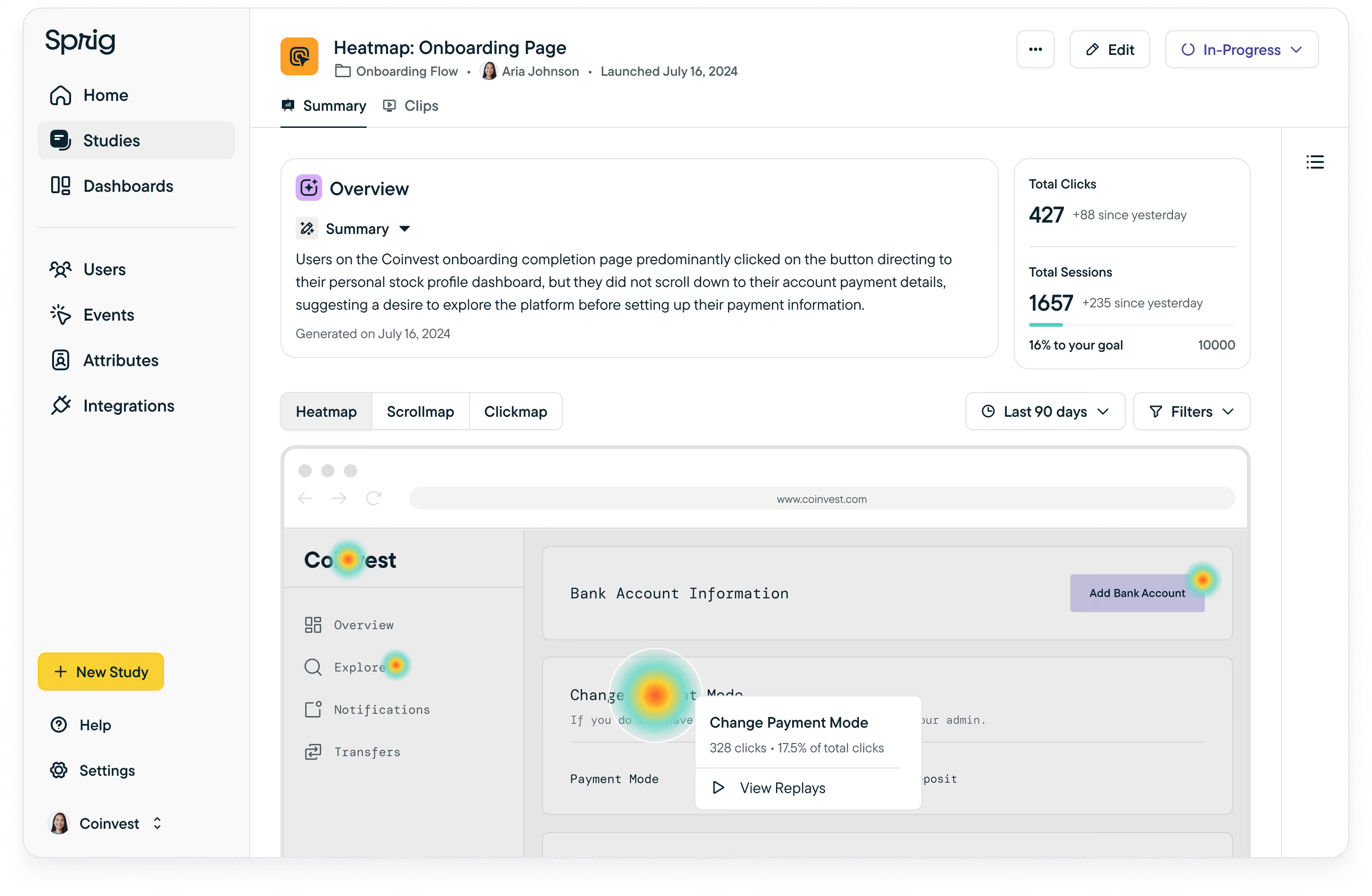
Sprig is an AI-powered in-product UX research platform. It runs in-product surveys and session replays, then uses AI to synthesize what it finds. For product teams validating features, it turns continuous in-product signal into research-grade insight.
Key features
- AI analysis and synthesis of in-product survey responses.
- Session replays tied to survey moments.
- In-app NPS and CSAT capture.
- Feature validation workflows for product teams.
Pros
- Strong AI synthesis for in-product research questions.
- Combines qualitative replays with survey responses.
- Free plan for smaller research programs.
Cons
- Scope is in-product, not unified cross-channel feedback.
- Paid tiers rise quickly beyond the free plan.
Pricing
Free plan available. Starter is $175/mo billed annually, and Enterprise is custom.
G2 rating
4.5 on G2, from roughly 105 reviews.
Best for
Product teams running continuous in-product research and feature validation. Sprig is the AI-analysis peer among survey-first tools, and it is a strong Refiner alternative when your questions live inside the product. Its scope stays in-product, so cross-channel feedback still needs a wider analysis platform to bring it together.
6. Zonka Feedback
What is Zonka Feedback?
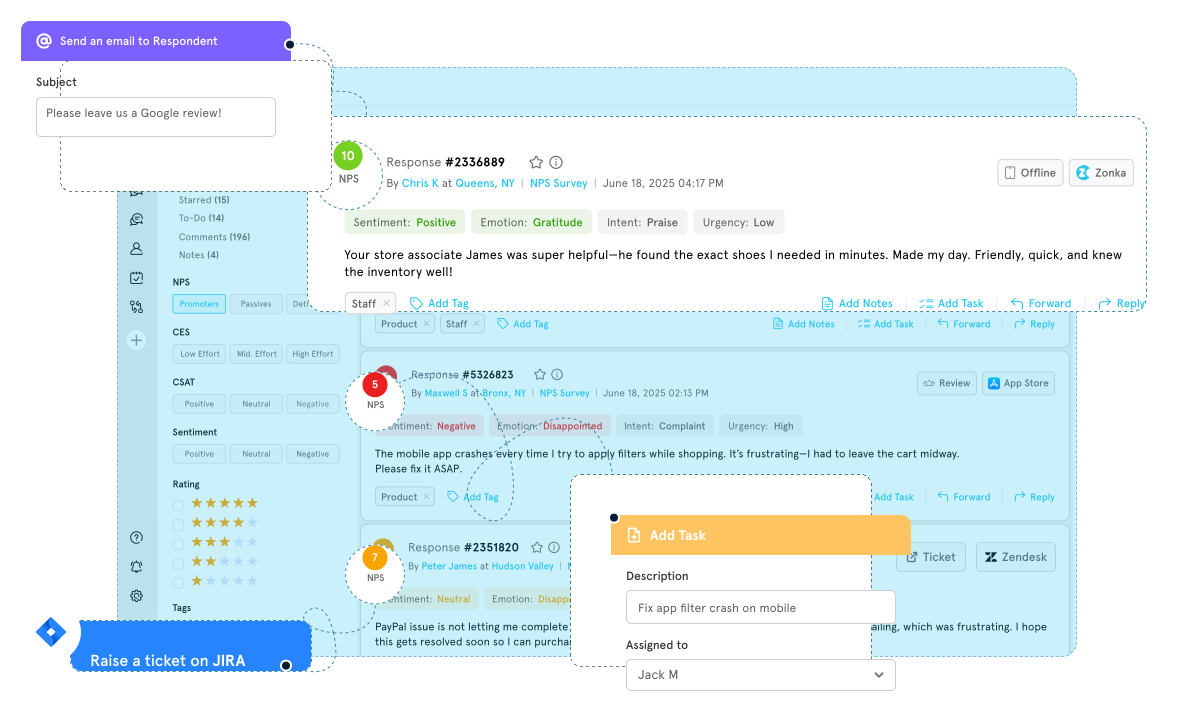
Zonka Feedback is an omnichannel survey platform with an AI feedback intelligence layer. It distributes surveys across digital and physical touchpoints, then applies sentiment and text analytics to the results. Its reach across kiosk and offline channels sets it apart from purely digital survey tools.
Key features
- AI feedback intelligence with sentiment and text analytics.
- Surveys across email, SMS, web, in-app, kiosk, and offline.
- NPS, CSAT, and CES tracking.
- Omnichannel distribution for physical and digital locations.
Pros
- Broad channel distribution, including offline and kiosk.
- AI feedback intelligence for text and sentiment analysis.
- High verified review scores.
Cons
- Full AI feedback intelligence sits at a premium price point.
- Analysis is anchored to Zonka's own survey collection.
Pricing
Zonka's live pricing is gated, so figures vary by source. Per Zonka's current G2/SoftwareAdvice listing (2026), the entry Feedback Management plan starts from around $99/mo, with the AI Feedback Intelligence tier from around $799/mo, though legacy $199/$999 figures still circulate elsewhere, so confirm current pricing with Zonka.
G2 rating
4.7 on G2, from roughly 80 reviews. Zonka also holds a 4.8 rating on Capterra.
Best for
Teams that need omnichannel survey distribution across physical and digital touchpoints. Zonka is the most survey-complete option here, and its AI feedback intelligence adds real analysis on top. The distinction from Chattermill is scope: Zonka analyzes the surveys it distributes, while an enterprise analysis platform unifies feedback that originates anywhere.
7. Userpilot
What is Userpilot?
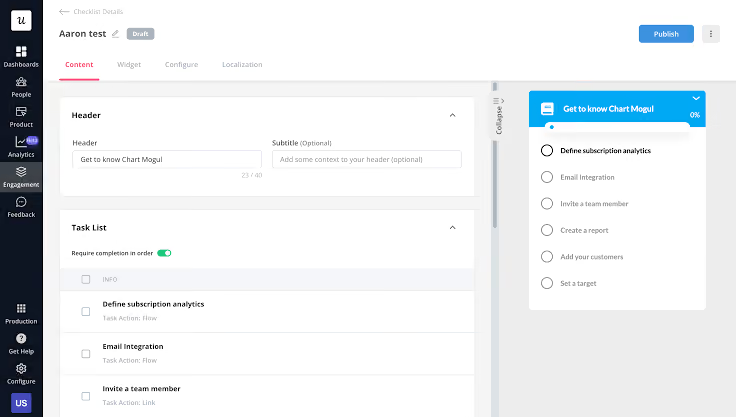
Userpilot ties in-app feedback to product adoption. It combines micro-surveys with product analytics and segmentation, so feedback sits next to the behavior that drives onboarding and retention. For product-led SaaS teams, that link between feedback and adoption is the main draw.
Key features
- In-app micro-surveys tied to product usage data.
- Product analytics and user segmentation.
- In-app NPS tracking.
- Feature adoption measurement.
Pros
- Connects feedback directly to adoption and onboarding.
- Strong segmentation for targeted in-app questions.
- Large, active review base.
Cons
- Feedback is in-app only, not cross-channel.
- Entry pricing is higher than most survey-first tools.
Pricing
From $299/mo on the Starter plan (billed annually, up to 2,000 MAUs), per Userpilot's 2026 pricing page; some third-party listings still show a legacy $249 rung. The Growth plan starts around $799/mo billed annually, and Enterprise is quote-based.
G2 rating
4.6 on G2, from roughly 945 reviews.
Best for
Product-led SaaS teams combining onboarding, adoption, and feedback in one tool. Userpilot is a strong Refiner alternative when feedback needs to sit next to adoption data. As with the other in-app tools, feedback beyond the product still needs a broader feedback analysis layer to complete the picture.
What Are the Best Refiner Alternatives?
The best Refiner alternatives for feedback analysis are Chattermill, Survicate, and Qualaroo. Chattermill leads for enterprise analysis across 65+ channels and 100+ languages, Survicate wins for fast multi-channel surveys with AI insights, and Qualaroo is the closest match to Refiner for on-site micro-surveys.
The right pick depends on the job. If you mostly need to collect surveys, a survey-first tool like Survicate or Qualaroo will serve you well. If your real problem is making sense of feedback from every channel, an analysis-first platform is the better long-term fit. Hotjar, Sprig, Zonka Feedback, and Userpilot each excel in a specific lane, from behavior analytics to product-led adoption.
Frequently Asked Questions
What are the best Refiner alternatives in 2026?
The best Refiner alternatives in 2026 are Chattermill, Survicate, Qualaroo, Hotjar, Sprig, Zonka Feedback, and Userpilot. Chattermill is the top pick for feedback analysis at scale, while Survicate and Qualaroo lead for multi-channel and on-site surveys. Your best fit depends on whether you need to collect surveys or analyze feedback across channels.
What is the best Refiner alternative for feedback analysis?
Chattermill is the best Refiner alternative for feedback analysis. It unifies feedback from 65+ channels and 100+ languages, then applies Aspect-Based Sentiment Analysis and its proprietary Lyra model to surface themes, sentiment, and trends. It also ties feedback to NPS, CSAT, and CES, so teams can measure business impact. You can see how the analysis works on the platform overview.
Is there a free or open-source Refiner.io alternative?
There is no leading open-source Refiner.io alternative on this list, but several tools offer free plans. Survicate, Hotjar, and Sprig all include free tiers you can start with. For enterprise feedback analysis, Chattermill uses custom pricing rather than a free plan, since the value sits in cross-channel analysis at scale.
What is Refiner.io used for, and why do teams switch?
Refiner.io is used to run in-app microsurveys inside web and mobile products. Teams switch when they outgrow survey collection and need to analyze feedback from tickets, reviews, social, and calls as well. In short, they move from collecting responses to analyzing feedback across every channel.
What is the best Refiner alternative for in-app SaaS surveys?
Userpilot and Sprig are the best Refiner alternatives for in-app SaaS surveys. Userpilot ties in-app feedback to product adoption and onboarding, while Sprig adds AI synthesis of in-product research. Qualaroo is also a strong like-for-like for contextual on-site micro-surveys.
The Bottom Line
If your goal is to collect a few more surveys, most tools on this list will do the job. If your goal is to understand what customers are actually telling you across every channel, the choice narrows quickly. That is the difference between a survey builder and a feedback analysis platform.
Chattermill is built for feedback analysis at scale. It unifies 65+ channels and 100+ languages, scores sentiment at the aspect level with ABSA and Lyra, and ties every theme back to NPS, CSAT, and CES. Enterprises like Uber, HelloFresh, H&M, and Booking.com already use it to turn feedback into decisions, backed by a 4.5 rating on G2. If you want to move from collecting feedback to acting on it, Book a personalized demo.



See Chattermill in action on your own feedback
Book a demo


