


Sprinklr Pricing 2026: Real Costs, Fees & Alternatives


The CX intelligence
platform that's AI-native by design
Book a demoQuick Summary
Sprinklr prices four suites, Social, Service, Insights, and Marketing, separately, mostly per seat with volume-based add-ons layered on top. Its self-serve tier, which used to start around $199 to $299 per seat per month, was discontinued on April 30, 2026. Every buyer now goes through a sales-led, custom-quote process. Based on named public contract data, most enterprise commitments start between $50,000 and $100,000 a year, with a reported median around $129,000 and large multi-suite deals running well past that. Teams that only need to understand what customers are saying, rather than manage social publishing or a contact center too, often find a unified feedback analytics platform like Chattermill a lighter, more focused buy.
Why Sprinklr Pricing Is So Hard to Pin Down
Type "Sprinklr pricing" into Google and you won't find a price list, not even a starting number. That's not an oversight.
Sprinklr sells four separate suites built on one platform, and each is quoted on its own. A quote for Sprinklr Social has little in common with a quote for Sprinklr Service, and a bundle of two or more suites is priced differently again.
Three variables shape almost every number a buyer sees:
- Which suites you're buying. Social, Service, Insights, and Marketing each carry their own seat pricing and feature set. Most buyers start with one and add more later.
- How many seats and what role type. Admin, analyst, publisher, and agent seats sit on different pricing bands, so a ten-person team rarely pays a flat per-seat rate across the board.
- Volume and add-ons. Message throughput, mention volume, and AI token consumption all move the final line. Sprinklr's generative AI layer is metered separately from the base license.
Since the self-serve program shut down, there's no published starting point to anchor any of this against. Every quote begins with a sales conversation.
Why Listen to Us
Chattermill has spent over a decade analyzing enterprise customer feedback for brands like Uber, HelloFresh, and Booking.com. Along the way, we've watched CX and VoC teams weigh platforms like Sprinklr against real budget and capability trade-offs. This guide draws on that vantage point, plus public pricing research drawn chiefly from Vendr's contract data, to lay out what Sprinklr actually costs.
Sprinklr Pricing at a Glance
Sprinklr doesn't publish pricing for any of its four suites anymore. Every row below is a custom quote, shaped by seats, suite selection, and volume.
The self-serve figures above are historical: Sprinklr discontinued that program on April 30, 2026, and its pricing page no longer resolves. They're included only as a reference point for how per-seat costs used to scale.
How Sprinklr Pricing Works
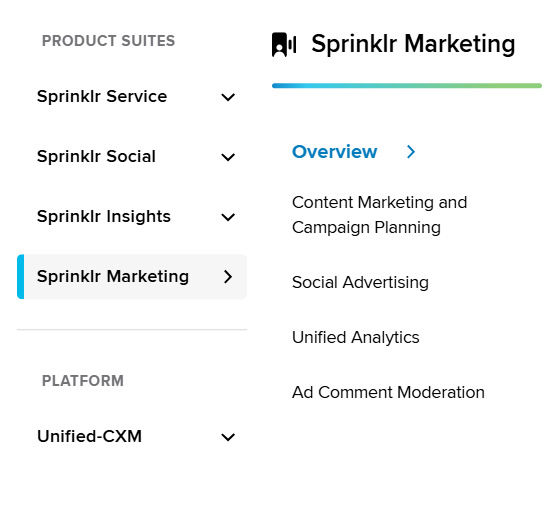
The Four Suites
Sprinklr organizes its platform into four suites: Social, Service, Insights, and Marketing. Each is licensed and priced independently, though they share the same underlying platform and can be bundled. Buying two or more together tends to unlock volume discounts in negotiation, but it also multiplies the seat-based cost, since every suite you add carries its own licensing.
Seats, Roles, and Volume
Pricing scales primarily on seats, and role type matters as much as headcount. Admin, analyst, publisher, and agent seats are priced on different bands, so total cost depends on the mix of roles a team needs, not just the number of people.
On top of seats, Sprinklr Service scales with message volume and Sprinklr Insights with mention volume, so a brand tracking a few hundred thousand mentions a month pays meaningfully less than one tracking ten million-plus across brands.
Self-Serve Is Gone
Until April 30, 2026, Sprinklr offered a self-serve entry point: sign up online, pay by seat, no sales call required. That option no longer exists. Existing self-serve customers were migrated to enterprise contracts or lost access.
New buyers, regardless of team size, now go through the same consultative sales process, typically involving discovery calls and a scoping exercise before a quote appears. Sprinklr also doesn't publish a discount program for education or nonprofit buyers, unlike some competitors in this category, so smaller or budget-constrained teams have no published lower-cost path in.
AI and Automation Add-Ons
Sprinklr AI+ Studio, the platform's generative AI layer, runs on a choice of Sprinklr-managed providers (Azure OpenAI, Google Vertex, Amazon Bedrock, and an in-house model) or a bring-your-own-key option covering six more providers, including OpenAI and Anthropic.
The platform license covers access to AI+ Studio, but token consumption is metered separately, and BYOK usage is billed directly by the provider on top of the Sprinklr license.
What You Actually Pay for Sprinklr
What Moves the Price
Five factors drive most of the spread between one Sprinklr quote and another:
- Number and combination of suites purchased
- Seat count and the mix of admin, analyst, publisher, and agent roles
- Message or mention volume per month
- Contract length and prepayment terms
- Professional services and implementation scope
Two Scenarios
A mid-market brand deploying a single suite, Service for a 10 to 15-agent team, for example, lands in the low five figures to start, with minimum commitments commonly cited at $50,000 to $100,000 a year once a real enterprise contract is in place, per multiple publicly reported deal breakdowns.
A larger enterprise bundling two or more suites across 100+ seats moves well past six figures. Procurement-data trackers citing Vendr's contract database put the median Sprinklr deal at roughly $129,000 a year, with observed deals ranging from about $26,000 to over $500,000.
Spendhound's own tracked-customer data separately shows accounts with 1,000+ employees averaging $606,905 annually. Neither figure is official, since Sprinklr doesn't confirm contract values, but both point the same direction: cost scales fast with suite count and seats.
Hidden Costs and Add-Ons
Overages and Volume Caps
Service and Insights contracts cap message and mention volume, and exceeding that cap triggers overage charges above the baseline rate. Programs with unpredictable spikes, a viral post or a PR moment, hit these caps faster than steady-state usage would suggest.
Gated Modules and Integrations
Several capabilities sit behind separate add-on pricing rather than the base suite license, deeper analytics modules and certain channel integrations among them. These often surface mid-negotiation or after onboarding, once a team realizes a workflow they assumed was included needs an extra line item.
Professional Services and Implementation
Implementation, configuration, and training are billed separately from the license at the enterprise tier. Publicly reported Sprinklr deals show professional services typically adding 15% to 30% on top of contract value in the first year, with training commonly quoted separately at $10,000 to $20,000 upfront.
Renewal Uplifts and Multi-Year Terms
Sprinklr contracts run on annual or multi-year terms with a 60 to 90-day cancellation notice window. Vendr's renewal data shows increases of roughly 5% to 15% a year for buyers who don't negotiate a cap in advance, which compounds meaningfully over a multi-year term.
Data Migration
Moving historical data into Sprinklr, or out of it later, isn't typically bundled into the base contract. It's scoped as its own professional services engagement, priced against data volume and source complexity.
Support Tiers
Standard support comes with every contract, but a dedicated CSM, faster SLAs, or premium support sit behind a paid upgrade. Buyers evaluating Sprinklr should ask for the exact response-time commitment included in their quote before assuming a premium tier is standard.
Who Sprinklr Pricing Is a Fit For
- Enterprises that genuinely need social publishing, a contact center, listening, and campaign management on one shared platform
- Teams running 100+ seats across multiple suites, where the shared data layer and cross-suite reporting justify the spend
- Brands already on Sprinklr for social that want to consolidate a contact center onto the same stack
- Organizations with a procurement function able to negotiate scope, caps, and renewal terms before signing
Who Should Look Elsewhere
- Teams whose core need is understanding customer feedback, not managing social publishing or a contact center
- Smaller teams, under roughly 50 seats, for whom the enterprise minimum is hard to justify now that self-serve is gone
- Anyone who needs to move quickly: Sprinklr's sales cycle and implementation timeline aren't built for a fast start
- Budgets under roughly $50,000 a year, where Sprinklr's enterprise sales motion has limited room to flex
How to Negotiate Sprinklr Pricing
Since nothing is published, negotiation leverage matters more than any list price.
- Ask for a scoped pilot before committing. Push for a paid proof of concept on one suite before signing a multi-suite deal, so fit is validated on real usage rather than a demo.
- Separate software cost from services. Sprinklr's initial quote often bundles implementation and training into the license fee. Ask for each broken out so they can be negotiated independently.
- Cap the renewal uplift up front. With 5% to 15% annual increases common absent a negotiated cap, push for a ceiling, ideally 3% to 5%, written into the original contract.
- Start renewal conversations early. The cancellation notice window is only 60 to 90 days. Begin talks four to five months out, with competitive quotes in hand.
- Benchmark against real contract data. Third-party procurement platforms like Vendr publish anonymized deal ranges by company size, which gives a concrete number to negotiate against instead of a guess.
- Buy only the suites you'll use. Bundling unlocks a better rate, but only if every suite in the bundle gets used. Start with the one suite driving the most value, and add from there.
Cheaper and AI-Native Alternatives to Sprinklr
Sprinklr earns its price for teams that need social, service, and marketing under one enterprise stack. For teams whose real problem is understanding what customers are saying, not running that stack, a narrower, feedback-first platform is often the better and cheaper fit.
Chattermill
Chattermill takes a different approach than Sprinklr's suite-based model. Instead of licensing social publishing, contact center, and marketing tools separately, it unifies feedback, surveys, support tickets, reviews, social comments, and call transcripts, into one AI-driven view, powered by Lyra AI.
Pricing is usage-based, scaled to data sources and feedback volume rather than seats, with no per-user fees and no published price list; a quote comes from a conversation, the same as Sprinklr's, just without the four-suite structure behind it.
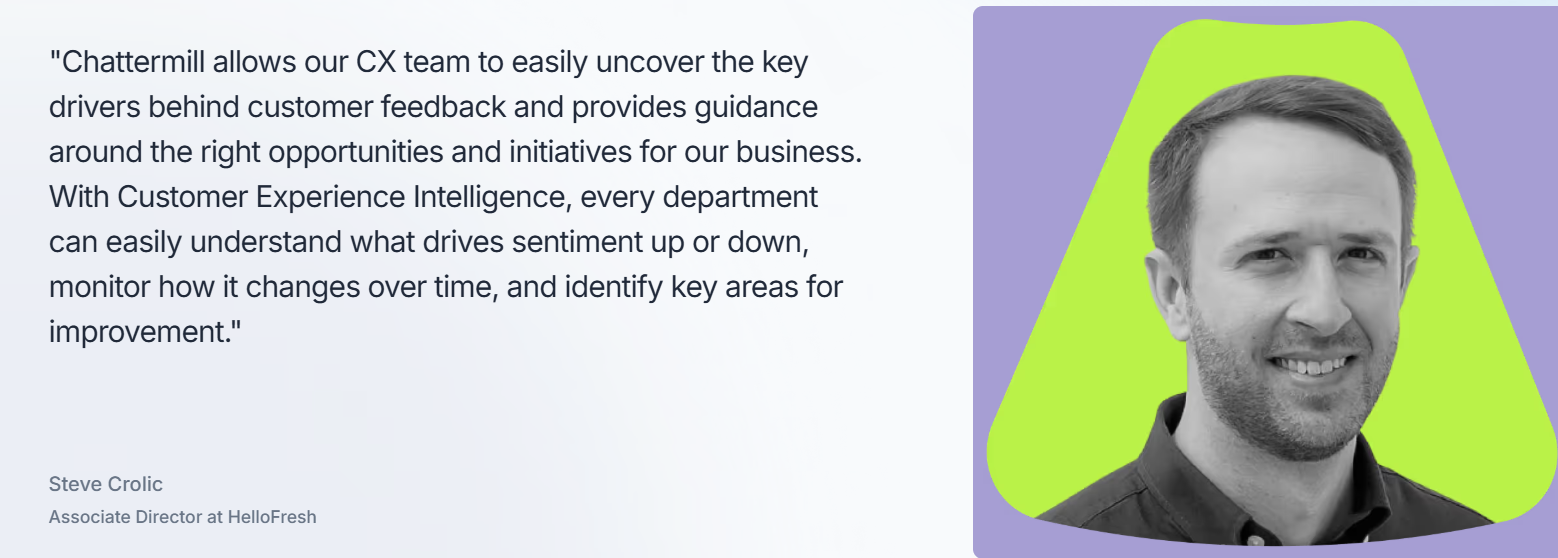
HelloFresh, whose Associate Director Steve Crolic credits the platform with linking sentiment directly to retention and revenue, saw average order value grow 30% and orders per customer grow 4% in the US over the last year. Footasylum saw a 7% year-on-year revenue increase after adopting the platform; Director of CX James McGhee calls the ROI "exceptional" and more cost-effective than reaching the same insight manually.
Teams that want to keep Sprinklr for social while adding unified feedback analysis on top can see how the two connect via the Sprinklr integration. For a broader field of options, Chattermill's guide to Sprinklr alternatives covers ten platforms side by side.
Medallia
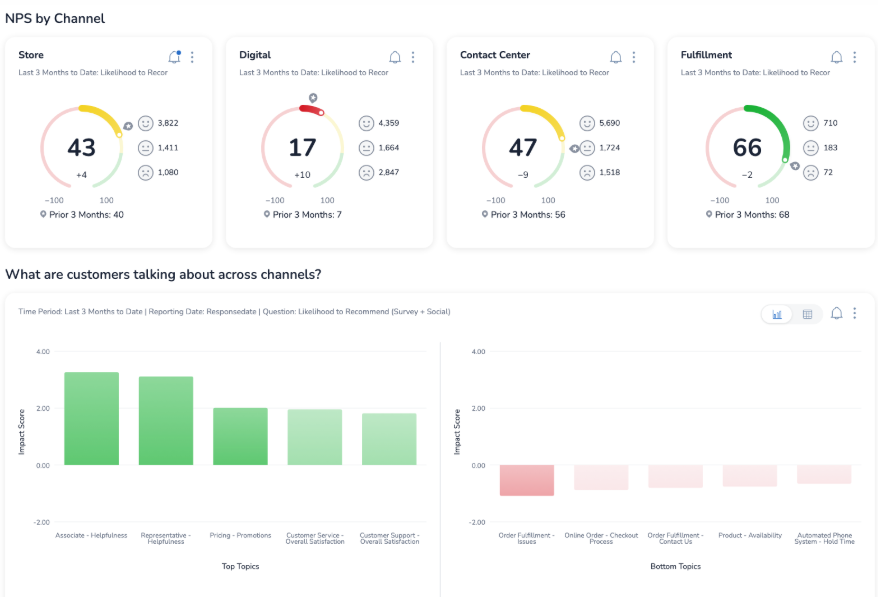
Medallia is a longer-established enterprise CX platform with deeper roots in survey-based voice-of-customer programs and real-time signal routing across physical and digital touchpoints. It's a closer match than Sprinklr for teams whose CX program is built around structured VoC data rather than social and service operations. Pricing is similarly custom and enterprise-quoted.
Qualtrics
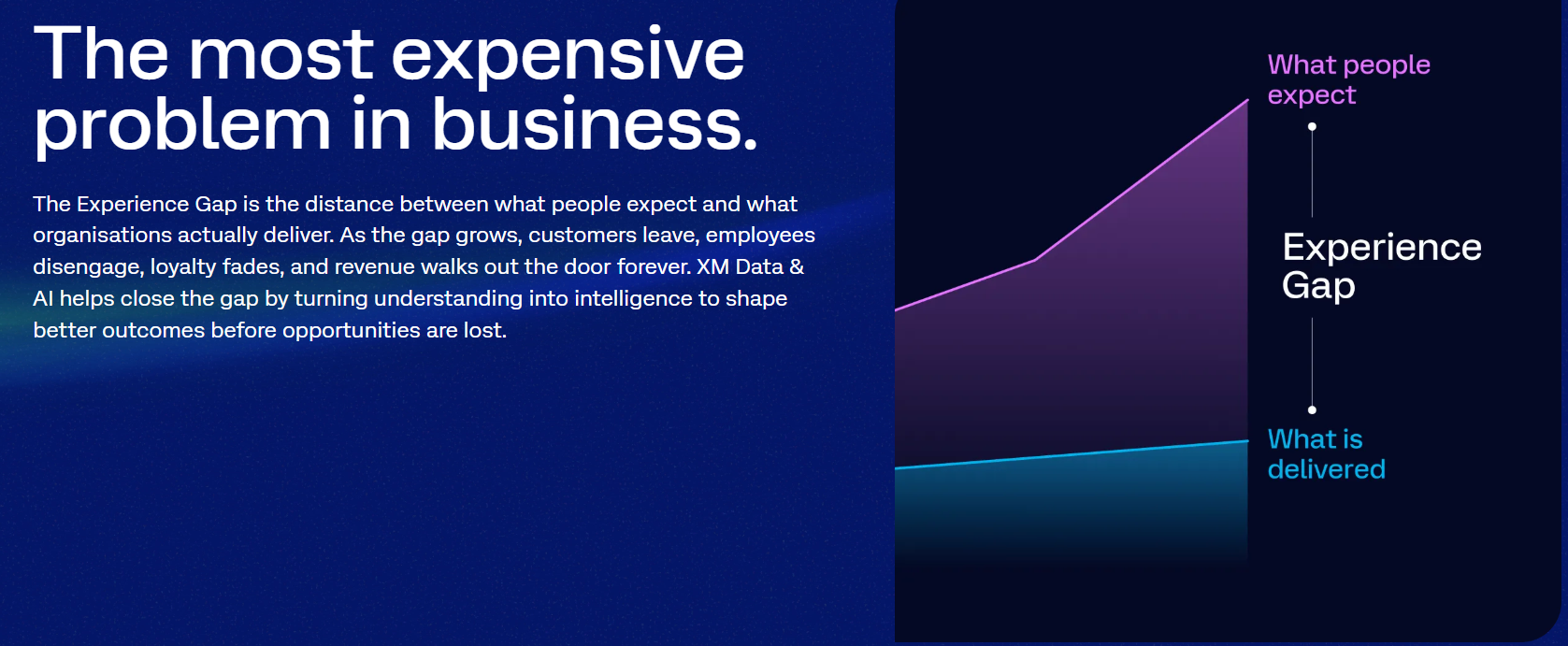
Qualtrics focuses on experience management for customer, employee, and brand research, with far deeper survey design and research tooling than Sprinklr offers. Like Sprinklr, nothing is published and enterprise contracts run into six figures. Chattermill's Qualtrics pricing breakdown covers what that typically looks like.
Getting Sprinklr Pricing Right for Your Team
Sprinklr's price makes sense for enterprises consolidating social, service, insights, and marketing onto one stack, especially at 100+ seats where the shared data layer earns its keep. It's a harder case for teams whose real problem is turning scattered feedback into a clear picture of why customers feel the way they do.
Get an itemized quote before committing, push on the tactics above, and weigh it against platforms priced around feedback itself rather than seats and suites.
Ready to see what unified feedback analysis costs by comparison? Book a demo.
Frequently Asked Questions
1. Does Sprinklr offer a free plan or free trial?
Sprinklr's self-serve tier included a 30-day free trial, but that program was discontinued on April 30, 2026, along with the free trial itself. Today, evaluating Sprinklr means a scoped pilot or proof of concept through its enterprise sales team, not a self-serve trial.
2. How much does Sprinklr cost per month?
There's no current monthly price. Under the old self-serve tier, Sprinklr Service started around $199 to $249 per seat per month and Social around $299 per seat per month. Since that tier was discontinued, all Sprinklr pricing is quoted as an annual enterprise contract, typically starting between $50,000 and $100,000 a year.
3. Why doesn't Sprinklr publish its pricing?
Sprinklr prices four suites independently across seats, roles, and volume, so a single published number wouldn't reflect what most buyers actually pay. That variability, combined with the shift to an all-enterprise sales model in 2026, is why the company moved away from a public pricing page entirely.
4. Is Sprinklr worth the cost?
For enterprises consolidating social, service, and insights on one platform at real scale, often yes, the shared data layer and cross-suite reporting can justify the spend. For teams whose core need is feedback analysis specifically, the four-suite structure means paying for capabilities that may go unused, and a focused platform is likely to deliver more value per dollar.
5. What's a cheaper alternative to Sprinklr?
It depends on what's driving the search. Chattermill is a usage-based, feedback-first option for teams that don't need a full social and service suite. Medallia and Qualtrics are also enterprise-priced but focus more narrowly on VoC and research. Chattermill's Sprinklr alternatives guide compares ten options in more depth.
6. What counts as a billing unit in Sprinklr pricing?
Sprinklr bills primarily per seat, with role type (admin, analyst, publisher, agent) affecting the rate. On top of seats, Service scales with message volume and Insights with mention volume, and AI token consumption through Sprinklr AI+ is metered separately. Exceeding any volume cap triggers overage charges.

See Chattermill in action on your own feedback
Book a demo


