


Productboard Pricing: What It Really Costs in 2026


The CX intelligence
platform that's AI-native by design
Book a demoQuick Summary
Productboard prices per maker seat across four tiers: Free, Plus, Business, and Enterprise. Published rates run from $0 to $59 per maker per month on annual billing, with Enterprise quoted on request. That list price is a fair starting point, but your real bill moves on maker count, which integrations you need, and how hard your team leans on the built-in AI.
Vendr's purchase data suggests most real contracts land well above the Plus sticker price. If your bottleneck isn't building the roadmap but making sense of the feedback that feeds it, Chattermill prices on your data sources and feedback volume instead of seats, with no per-user fees.
Productboard Pricing at a Glance
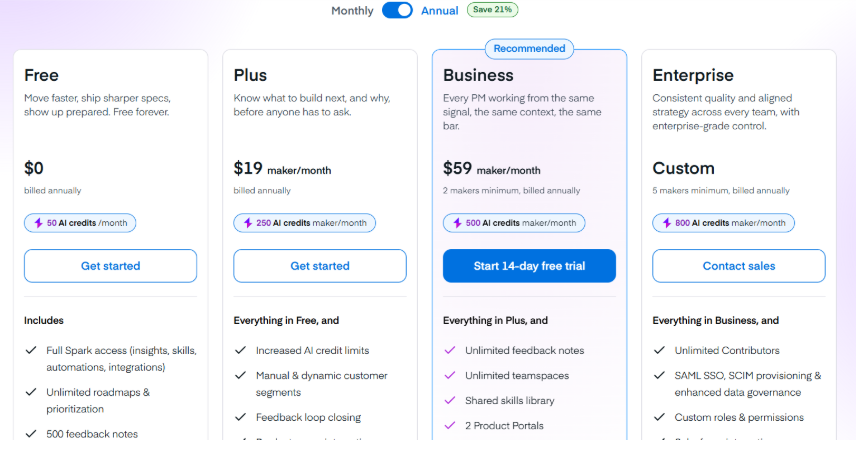
Productboard is one of the few product management tools that publishes its prices outright, which makes the table below a genuinely useful starting point. It reflects what's live on Productboard's own pricing page as of September 2026, but it's only the sticker price. What you'll actually pay depends on the variables covered further down.
Why Listen to Us
Chattermill helps large consumer brands make sense of high volumes of customer feedback every day. Footasylum ran roughly 200,000 customer responses through Chattermill's feedback analysis over 18 months and traced a 7% year-on-year revenue lift back to what surfaced, according to James McGhee, Footasylum's Director of Customer Experience.
HelloFresh used the same kind of analysis to grow from €0.3B to €7B in revenue across 18 markets, turning what customers told them into new brands and product lines, according to Stefan Platteau, HelloFresh's Associate Director of Global Product Strategy and Analytics.
How Productboard Pricing Works
Productboard publishes its tier prices, so the list price is easy to find. What makes a quote hard to pin down is everything around it: how many makers you need, how many contributors, which integrations are gated to which tier, and how much AI your team uses. Each of those levers is covered below.
The Four Tiers
Productboard's Free plan gives a single maker up to 500 feedback notes, one product portal, and 50 AI credits a month shared across the workspace. It's a real sandbox rather than a time-limited trial, but the 500-note cap means most teams outgrow it within a few weeks of real use.
Plus is the entry point for paid use, at $19 per maker per month on annual billing ($25 monthly). It unlocks customer segmentation and product usage integrations with Amplitude and Mixpanel, so you can tie feedback to what users actually do in the product. It still caps you at 25 contributors and a single teamspace.
Business, at $59 per maker per month annual ($75 monthly), removes the cap on feedback notes and teamspaces and adds portal customization, dependency tracking, and a shared AI skills library. It carries a two-maker minimum, so the real floor is $118 a month even for a one-person team that needs Business's feature set.
Enterprise is a custom quote with a five-maker minimum. It adds SAML SSO, SCIM provisioning, custom roles, Salesforce integration, and live onboarding, none of which are available at any price on the lower tiers.
Maker Seats vs. Contributor Seats
Only makers, the people who build and edit the roadmap, count against your seat price. Contributors, who submit feedback and comment on features, are free up to a cap of 25 on Free, Plus, and Business; Enterprise removes that cap entirely.
That's generous until your organization grows. If 30 people across product, sales, and support need to submit feedback and vote on features, you need Enterprise for the contributor headroom alone, regardless of whether you need SSO or Salesforce. The contributor cap, not the feature list, is what quietly pushes some teams into Enterprise pricing.
Free and Self-Serve Entry Points
Business comes with a 14-day free trial and no credit card required, which is the fastest way to test the features you need and see how many makers will actually use it before you commit. The trial comes with unlimited AI credits, so track how much your team uses rather than assuming the paid allowance will cover it. The Free plan has no expiry, but between the 500-note cap and single teamspace, it works more as a sandbox than something you'd run a real product process on.
AI Credits and Add-Ons
Every tier includes Productboard's AI engine, Spark, but it runs on a credit system that scales with your plan: 50 shared credits on Free, 250 per maker on Plus, 500 per maker on Business, and 800 per maker on Enterprise.
Run out, and you can buy top-ups: $5 for 50 credits on monthly billing, or $60 for 600 credits on annual billing. If your team leans on Spark for feedback summaries and automated reports, those top-ups compound into a real line item over a year, on top of the seat price.
What You Actually Pay for Productboard
What Moves Your Price
Three variables create the gap between the list price and your invoice.
Maker count is the obvious one. A 10-maker team on Business, at $59 per maker per month annual, pays $7,080 a year before anything else.
Tier-gating is the second. Salesforce integration, SAML SSO, and unlimited Jira or Azure DevOps connections (capped at 5 on Business) all sit behind Enterprise. If your security team requires SSO, you're on Enterprise pricing regardless of team size.
AI credit usage is the third. Teams that lean hard on Spark for analysis and reporting burn through their monthly allotment and buy top-ups that add up over a year.
Two Scenarios
A mid-market product team, 8 makers on Business, pays $5,664 a year at list price ($59 x 8 x 12). Add five to ten AI credit top-up bundles (at $60 per 600 credits on annual billing) and you're closer to $6,000 to $6,300.
According to Vendr, which tracks actual purchase data, the median annual Productboard contract sits at $24,280, with buyers saving an average of 21% off list. That gap suggests most real buyers end up on larger teams, higher tiers, or both, not sitting at the 8-maker Business sticker price.
An enterprise product org with 25 makers on Enterprise has no published rate to anchor to. Vendr's tracked deal range runs from $7,728 to $78,666 a year, For context, 25 makers at the Business list rate would already cost $17,700 a year, and Enterprise sits above Business. Budget toward the upper half of that range, with the final figure depending on your negotiated discount and any services attached.
Hidden Costs and Add-Ons
AI Credit Overages
A 10-maker team on Business gets 5,000 monthly AI credits combined. Burn through those and need 2,000 more, and you're paying $200 a month in top-ups, roughly $2,400 a year on top of the base subscription. It's easy to underestimate this during a trial, when usage is lighter than it will be once the whole team is in the product daily. The Business trial also comes with unlimited AI credits, so it won't show you where the cap bites.
Integrations Gated to Higher Tiers
Jira and Azure DevOps connections are capped at 1 on Free and Plus, 5 on Business, and unlimited on Enterprise. Salesforce integration is Enterprise-only, full stop. If your engineering organization runs more than five Jira projects that need to sync, you may need Business or Enterprise for the connection count alone, independent of whether you need any of Enterprise's other features.
Professional Services and Onboarding
Live onboarding and professional services support are Enterprise-only. Free and Plus get standard email support, Business gets prioritized email, and Enterprise gets expedited email plus onboarding and professional services support. If your team needs hands-on setup help rather than self-serve documentation, that's another factor pushing toward Enterprise and its custom pricing.
Renewal Uplifts and Multi-Year Terms
Productboard's published pricing page doesn't address renewal terms, but Vendr's negotiation data flags annual price escalation clauses as something buyers should push to cap, particularly on multi-year deals. Without a negotiated cap, a year-two renewal can land meaningfully higher than year one with no change in usage.
Monthly Billing Premium
Plus and Business both offer monthly billing, but you pay for the flexibility. Plus costs $25 per maker per month on monthly billing versus $19 on annual, about 30% more. Business costs $75 versus $59, about 27% more. For a 10-maker Business team, that's an extra $1,920 a year for the option to cancel month to month.
Data Migration
Productboard's pricing page doesn't list a data migration fee, but moving years of feedback, feature requests, and roadmap history out of spreadsheets or another tool still takes time. On Enterprise, ask whether importing existing data is covered under onboarding and professional services before you sign. On lower tiers, plan for your own team to do it.
Who Productboard Pricing Is a Fit For
Productboard earns its price for product teams that need a structured way to collect feedback, prioritize features, and keep a roadmap current. If scattered feature requests across Slack, email, and spreadsheets are the problem, Plus or Business gives you a workable process at $19 to $59 per maker per month. Teams under 10 makers with modest integration needs will find the published pricing reasonable and the tier ladder easy to plan around.
By tier, the fit looks like this:
Free: a solo PM testing the product before committing budget.
Plus: a small team that wants product usage data from Amplitude or Mixpanel next to its feedback.
Business: teams running several product lines that need unlimited feedback notes, multiple teamspaces, and up to five Jira or Azure DevOps connections.
Enterprise: organizations that need SSO, Salesforce, unlimited integrations, or more than 25 contributors.
Who Should Look Elsewhere
Productboard is built to organize what to build next, not to explain why customers are unhappy in the first place. If your CX or VoC team is sitting on thousands of pieces of unstructured feedback across support tickets, reviews, surveys, and social, a roadmapping tool won't tell you why NPS is dropping or which issue is actually costing you revenue.
At $100M+ in revenue with high feedback volume, the real cost usually isn't the per-seat price. It's the analyst hours spent manually reading and tagging responses before anything reaches a roadmap. That's a different problem, and it needs a different kind of tool. Our roundup of product feedback tools covers where platforms like this one fit versus a dedicated analytics layer.
How to Negotiate Productboard Pricing
Run the Business trial first. Use the 14-day free trial to measure real AI credit usage and maker count before you're in a pricing conversation, so you're negotiating from data instead of a guess.
Separate the software from the services. If you're quoted Enterprise, ask for a line-item split between the platform fee and professional services or onboarding. You may be able to handle onboarding internally and negotiate the services line down or out.
Cap the renewal uplift. Negotiate a written cap on annual increases, ideally 3% to 5%, or lock flat pricing across a multi-year term before you sign.
Start renewal talks early. Begin 60 to 90 days before your contract expires. A sales team has little reason to discount once you're negotiating in the final week.
Benchmark against real contracts, not the list price. Vendr's tracked data shows a median annual spend of $24,280 and average savings of 21%. Use that as your baseline instead of the sticker price.
Bring competing quotes. If you're also evaluating Aha!, ProdPad, or Jira Product Discovery, share those numbers. Real alternatives are the fastest way to move a quote.
Cheaper and AI-Native Alternatives to Productboard
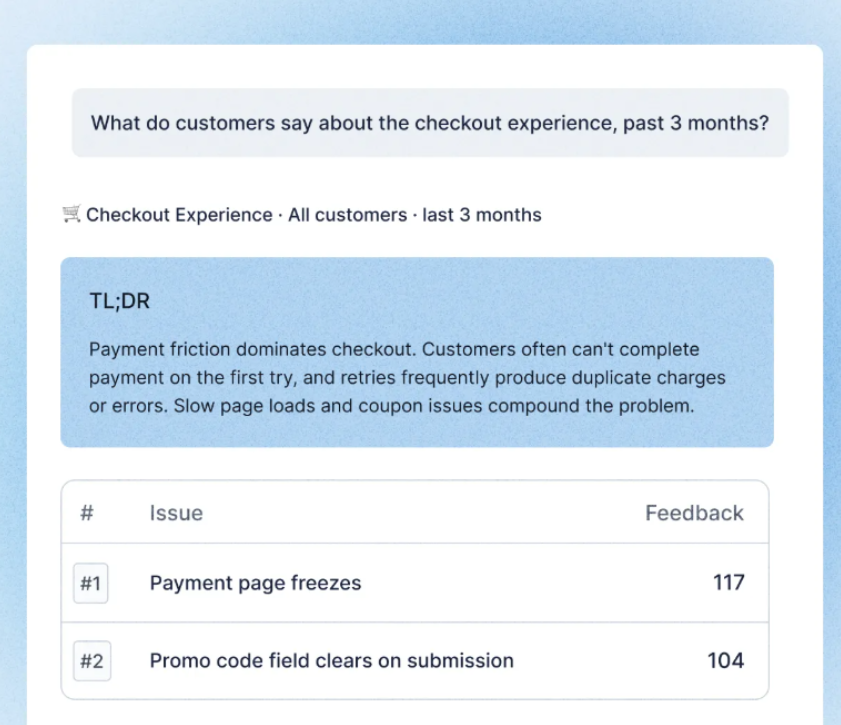
Chattermill picks up where a roadmapping tool stops. Productboard helps you decide what to build next; Chattermill's Lyra AI engine tells you why, by pulling in every channel your customers use and breaking their responses down into themes tied to NPS, CSAT, and revenue.
Pricing is usage-based, set by your data sources and feedback volume, with no per-user fees, so it doesn't creep upward the way seat-based tools do as your team grows, and it's quoted on request.
Footasylum ran around 200,000 responses through Chattermill in 18 months and traced a 7% year-on-year revenue lift to what it surfaced; HelloFresh has used it to turn customer feedback into new brands and product lines as it grew from €0.3B to €7B in revenue across 18 markets. For a closer look at platforms built specifically to turn feedback into roadmap decisions, see our guide to feedback-to-roadmap tools. Book a demo to see it against your own data.
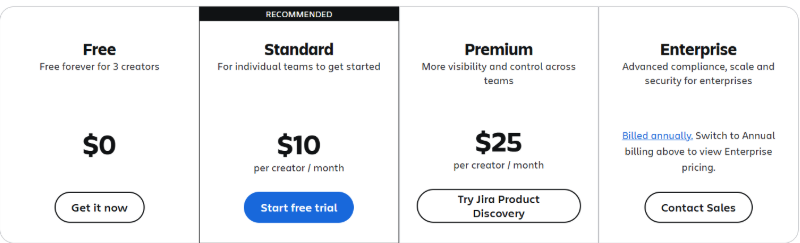
Jira Product Discovery is the budget option for teams already on Atlassian. It's free for up to 3 creators, and Standard runs $10 per creator per month. It covers basic prioritization and idea capture, but it doesn't have Productboard's dedicated customer-facing portal or segmentation.
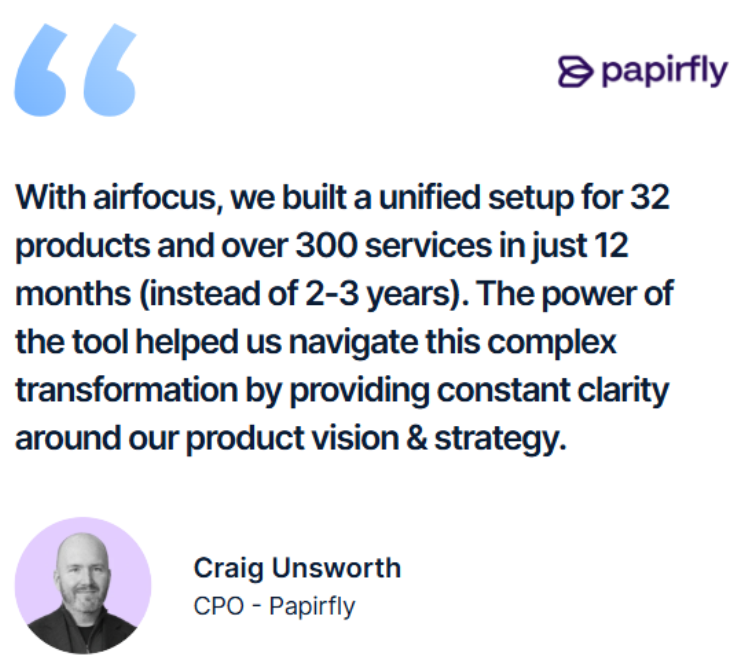
airfocus no longer publishes a starting price; both its Professional and Enterprise tiers are quote-on-request. It's worth evaluating if you want modular, pay-for-what-you-use roadmapping, but budget for a sales conversation rather than a self-serve signup.
Getting Productboard Pricing Right for Your Team
Productboard's pricing is more transparent than most of its category, and the published tiers make it easy to estimate a starting cost. But maker count, tier-gated integrations, and AI credit usage are what actually decide your bill, and Vendr's contract data suggests most real buyers land well above the sticker price.
Before you commit, map your maker count against your actual feature needs, check whether a security requirement forces an Enterprise conversation, and benchmark any quote you receive against real contract data rather than the list price.
And if the harder question in your organization isn't "what should we build next" but "why are customers unhappy," a roadmapping tool won't answer that on its own. Book a demo and bring your own data.
Frequently Asked Questions
Is Productboard Free?
Yes. The Free plan has no time limit and includes one maker seat, 25 contributors, 500 feedback notes, one teamspace, one product portal, and 50 shared AI credits a month. Most teams outgrow the 500-note cap quickly, but it's a genuine way to test the platform before paying.
How Much Does Productboard Cost per Month?
Paid plans start at $19 per maker per month on Plus, billed annually ($25 monthly). Business runs $59 per maker per month annual ($75 monthly) with a two-maker minimum. Enterprise is a custom quote with a five-maker minimum.
What’s the Difference Between a Maker and a Contributor in Productboard?
Makers are the paid seats: product managers and anyone who builds or edits roadmaps and features. Contributors are free seats for people who submit feedback, vote, and comment, but can't edit the roadmap. Contributors are capped at 25 on Free, Plus, and Business; Enterprise removes the cap.
Why Isn’t Productboard’s Enterprise Pricing Public?
Enterprise pricing varies with maker count, integration needs like Salesforce and SSO, and negotiated discounts, so Productboard quotes it directly. Vendr's tracked deal data puts real annual contracts anywhere from $7,728 to $78,666, which gives a rough sense of the range even without a published rate.
Is Productboard Worth the Price?
For teams whose main bottleneck is organizing feedback and building a roadmap, yes. Plus, at $19 per maker per month, is a reasonable starting point. It gets more expensive once you need Enterprise-only features like SSO or Salesforce, or once your maker count climbs past 15 to 20. If your bottleneck is actually analyzing feedback at scale rather than roadmapping it, a dedicated feedback analytics platform may deliver more value per dollar.
What’s a Cheaper Alternative to Productboard?
Jira Product Discovery is the most affordable named alternative, free for up to 3 creators and $10 per creator per month on Standard. For teams whose real challenge is understanding what thousands of customers are saying rather than prioritizing a roadmap, Chattermill prices on data sources and feedback volume instead of seats, with no per-user fees.

See Chattermill in action on your own feedback
Book a demo


