


13 Best NPS Analysis Software Tools in 2026


The CX intelligence
platform that's AI-native by design
Book a demoYour NPS score tells you that something changed. NPS analysis software tells you why. We tested and compared 13 platforms across AI capabilities, feedback channels, integrations, and pricing to help you find the right fit — from enterprise-grade feedback analytics platforms to lightweight survey analysis tools.
Quick Summary
We evaluated 13 NPS analysis software platforms across AI capabilities, feedback channels, integrations, and pricing. Chattermill is the best NPS analysis software for teams that need to understand why their NPS scores change through AI-powered open-text analysis. Qualtrics is the strongest option for enterprise-scale NPS programmes with built-in benchmarking. Zonka Feedback is the best choice for mid-market teams that want NPS surveys and theme-level impact analysis in one platform.
Before we get into the detailed comparisons, here are our top three picks:
| # | Tool | Best For |
|---|---|---|
| 1 | Chattermill | AI-powered NPS open-text analysis across every feedback channel |
| 2 | Qualtrics | Enterprise NPS programmes with built-in industry benchmarking |
| 3 | Zonka Feedback | Mid-market NPS surveys with theme-level impact scoring |
Key Takeaways:
- Top Tools: Chattermill leads for AI-driven NPS analysis depth, with genuine open-text analysis across every feedback channel. Qualtrics suits enterprise-scale programmes that need industry benchmarking, while CustomerGauge serves B2B teams linking NPS directly to account revenue. For contextual NPS collection with built-in AI, Qualaroo and Survicate offer accessible mid-market options.
- AI Integration: Only a handful of tools — Chattermill, Medallia, Survicate, and Siena Insights — offer genuine AI/NLP analysis of open-text NPS responses. Most tools in this category focus on score collection, not root cause analysis.
- Pricing Trends: Entry-level NPS tools start free or under $100/month (Qualaroo, Survicate, Refiner). Enterprise platforms like Chattermill, Qualtrics, and Medallia use custom pricing based on volume and integrations.
- Critical Success Factor: The biggest differentiator is not how you collect NPS scores — it is how you analyse the open-text responses at scale. Teams that invest in AI-powered text analysis software move faster from insight to action.
Why Listen To Us
At Chattermill, we help CX, product, and insights teams at companies like Uber and HelloFresh turn unstructured customer feedback into actionable intelligence. We process millions of NPS, CSAT, and CES responses across dozens of languages, so we have a grounded perspective on what separates tools that merely collect scores from platforms that reveal why those scores move.
What Is NPS Analysis Software?
NPS analysis software helps organisations measure, track, and — most importantly — interpret Net Promoter Score data. At its simplest, NPS captures how likely customers are to recommend a product or service on a 0-to-10 scale. But the score itself is just a starting point.
True NPS analysis goes further. It involves segmenting respondents into Promoters, Passives, and Detractors, then digging into the open-text responses to understand the themes, emotions, and root causes behind each group. Modern NPS analysis platforms use AI and natural language processing to automate this customer feedback analysis — surfacing patterns across thousands of responses in seconds rather than weeks.
Businesses use NPS analysis software to benchmark against competitors, track trends over time, identify at-risk accounts, and connect feedback to operational metrics like churn, revenue, and product adoption. Whether you run transactional NPS surveys after specific interactions or relationship NPS programmes quarterly, these tools help you move from tracking a number to acting on the intelligence behind it.
13 Top NPS Analysis Software Tools: Head-to-Head Comparison
| # | Tool | Best For | Pricing | G2 Rating | AI/NLP Analysis | Feedback Channels | Key Integrations |
|---|---|---|---|---|---|---|---|
| 1 | Chattermill | AI-powered NPS open-text analysis | Custom | 4.5/5 | Yes — Chattermill's AI for theme, sentiment, and root cause analysis | Surveys, support tickets, reviews, social, in-app, chat | Qualtrics, Zendesk, Intercom, Snowflake, MCP |
| 2 | Qualtrics | Enterprise NPS programmes at scale | Custom | 4.4/5 | Yes — XM Discover NLP | Email, web, SMS, in-app, social | Salesforce, SAP, Marketo, Tableau |
| 3 | Zonka Feedback | Mid-market NPS with theme-level impact scoring | From $199/mo | 4.7/5 | Yes, thematic analysis with NPS impact scoring | Email, SMS, WhatsApp, web, in-app, kiosk, QR | Salesforce, HubSpot, Zendesk, Intercom, Slack |
| 4 | CustomerGauge | B2B NPS linked to revenue | Custom | 4.6/5 | Limited — rule-based categorisation | Email, web | Salesforce, HubSpot, SAP |
| 5 | Medallia | Omnichannel NPS feedback capture | Custom | 4.5/5 | Yes — Athena AI text analytics | Email, SMS, web, social, IoT, call center | Salesforce, ServiceNow, Adobe, Workday |
| 6 | Qualaroo | Contextual NPS surveys with AI sentiment analysis | Free — custom | 4.3/5 | Yes — IBM Watson-powered sentiment analysis | Website, in-app, email, link | Slack, HubSpot, Salesforce, Zapier |
| 7 | Survicate | Multi-channel NPS surveys | Free — $99/mo+ | 4.6/5 | Yes — AI feedback categorisation | Email, web, in-app, mobile, link | HubSpot, Intercom, Salesforce, Slack |
| 8 | AskNicely | Multi-location service businesses | Custom | 4.7/5 | Limited — basic text analytics | Email, SMS, web | Salesforce, HubSpot, Slack, Zapier |
| 9 | Retently | Ecommerce and B2B NPS automation | $25/mo+ | 4.7/5 | Basic — sentiment scoring | Email, web, in-app | Shopify, HubSpot, Salesforce, Zapier |
| 10 | SurveyMonkey | General-purpose NPS surveys | Free — $25/mo+ | 4.4/5 | Basic — word clouds, keyword filtering | Email, web, social, link | Salesforce, HubSpot, Mailchimp, Slack |
| 11 | Nicereply | NPS within customer support workflows | $59/mo+ | 4.5/5 | No | Email, in-app (embedded in support tickets) | Zendesk, Front, LiveAgent, Freshdesk |
| 12 | Siena Insights | AI-driven feedback categorisation | Custom | 4.2/5 | Yes — AI theme classification and sentiment | Email, web, support tickets, reviews | Zendesk, Intercom, Salesforce |
| 13 | Refiner | In-app NPS surveys for SaaS | Free — $99/mo+ | 4.6/5 | No | In-app, web | Segment, HubSpot, Slack, Zapier |
How We Evaluated These Tools
Choosing NPS analysis software requires more than scanning feature lists. We evaluated each tool across six dimensions that matter most to CX, product, and insights teams:
- AI and NLP capabilities: Can the tool analyse open-text NPS responses at scale? We looked for genuine natural language processing — theme extraction, sentiment analysis, and root cause identification — not just word clouds or keyword counts.
- Feedback channel breadth: NPS data does not live in one place. We assessed how many channels each tool can ingest (email, in-app, SMS, web, social, support tickets, reviews) and whether it can unify responses into a single view.
- Integration ecosystem: The best NPS analysis happens when feedback data connects to CRM, support, product, and BI tools. We prioritised platforms with native integrations into Salesforce, Zendesk, HubSpot, Slack, and data warehouses.
- Pricing transparency and value: We documented actual pricing tiers where publicly available and noted where tools require custom quotes. Value was assessed relative to capability — an enterprise platform at custom pricing is not inherently worse than a free tool with limited analytics.
- User sentiment (G2 ratings): G2 scores provide a crowdsourced quality signal. We used ratings as a directional indicator, not a ranking mechanism. All ratings were verified as of June 2026.
- Scalability and enterprise readiness: Can the tool handle millions of responses? Does it support multiple languages, regions, and business units? This matters for teams planning to scale beyond a single product or market.
1. Chattermill
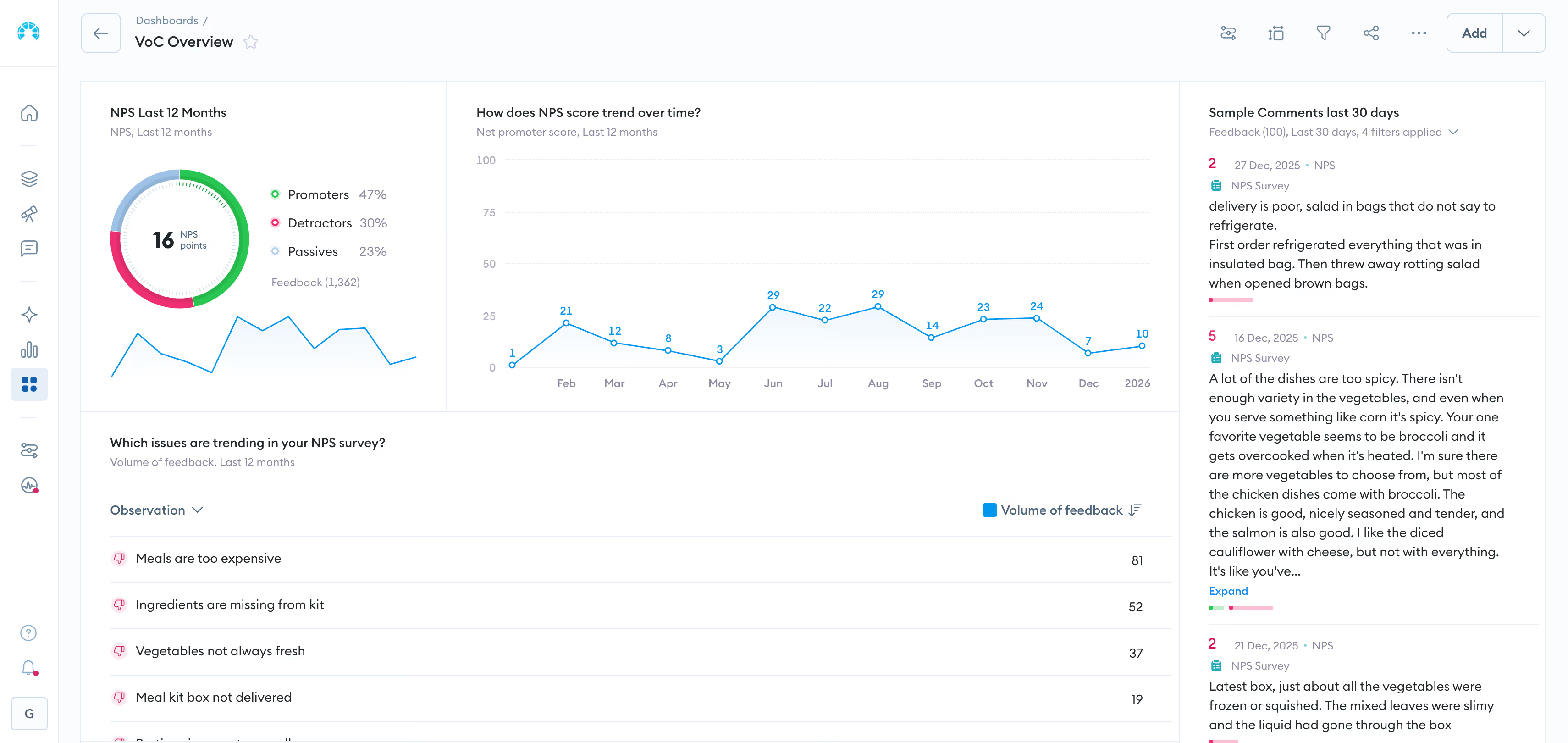
Chattermill is an AI-native feedback analytics platform built to help CX, product, and insights teams understand why customer scores change — not just what the scores are. Where most NPS tools stop at collecting and displaying a number, Chattermill starts with the open-text responses and uses its proprietary AI engine to extract themes, sentiment, and root causes across every feedback channel.
The platform unifies NPS, CSAT, and CES data from surveys, support tickets, reviews, social media, and in-app feedback into a single analytical layer. This means teams working with customer feedback tools no longer need to toggle between dashboards or manually tag verbatims. Chattermill automates the heavy lifting — detecting anomalies, surfacing emerging issues, and mapping feedback patterns to business metrics like churn, retention, and revenue impact.
What sets Chattermill apart for NPS analysis specifically is its ability to go deep on open-text responses. Instead of reducing thousands of comments to a word cloud, Chattermill's AI identifies granular themes (e.g., "delivery speed in the UK" or "mobile checkout friction") and tracks how they evolve over time. For teams that need to answer "why did our NPS drop 8 points this quarter?" with evidence rather than guesswork, this depth is the differentiator.
Chattermill Features
- Proprietary AI Engine: Extracts themes, sub-themes, sentiment, and root causes from unstructured feedback in 100+ languages — purpose-built for NPS open-text analysis at scale.
- Multi-Channel Feedback Unification: Consolidates NPS responses from surveys, support tickets, app store reviews, social media, chat logs, and more into a single analytical view.
- Anomaly Detection and Alerts: Automatically flags unusual shifts in NPS trends, emerging negative themes, or sudden spikes in specific complaint categories — so teams can respond before scores drop further.
- Business Impact Mapping: Connects feedback themes directly to business KPIs like revenue, churn, and retention, helping teams prioritise which issues to fix first based on actual impact.
- NPS, CSAT, and CES Measurement: Tracks all three core CX metrics in one platform, so teams can correlate NPS movements with satisfaction and effort scores across touchpoints.
- MCP Server for AI Agent Integration: The Chattermill MCP server lets teams query and act on customer feedback data directly inside AI agents and workflows — bringing customer insights software into the agentic era.
- Custom Dashboards and Reporting: Build role-specific views for CX leaders, product managers, and executives with real-time data, trend tracking, and exportable reports.
2026 Pricing
Chattermill uses custom pricing based on feedback volume, channels, and integration requirements. Book a demo to get a tailored quote for your team.
Chattermill Pros
- Granular AI analysis of NPS open-text responses — goes beyond word clouds to surface specific themes, sentiment, and root causes at scale
- Unifies feedback from every channel into one platform, eliminating dashboard sprawl
- Business impact mapping connects feedback themes to revenue and retention metrics
- Anomaly detection catches NPS shifts before they become crises
- MCP server positions the platform for AI-first workflows and agent integration
- Trusted by enterprise brands like Uber and Tesco for large-scale feedback programmes
Chattermill Cons
- Custom pricing means no self-serve tier for small teams or solo users
- Best suited for organisations with meaningful feedback volume — teams collecting fewer than a few hundred NPS responses per month may not see the full value of AI analysis
- Requires initial setup and integration work to unify multiple feedback channels
Who It's For
CX, product, and insights teams at mid-market and enterprise companies that need to understand the root causes behind NPS score movements — not just track the number.
G2 Rating
Chattermill G2 Score: 4.5/5
2. Qualtrics
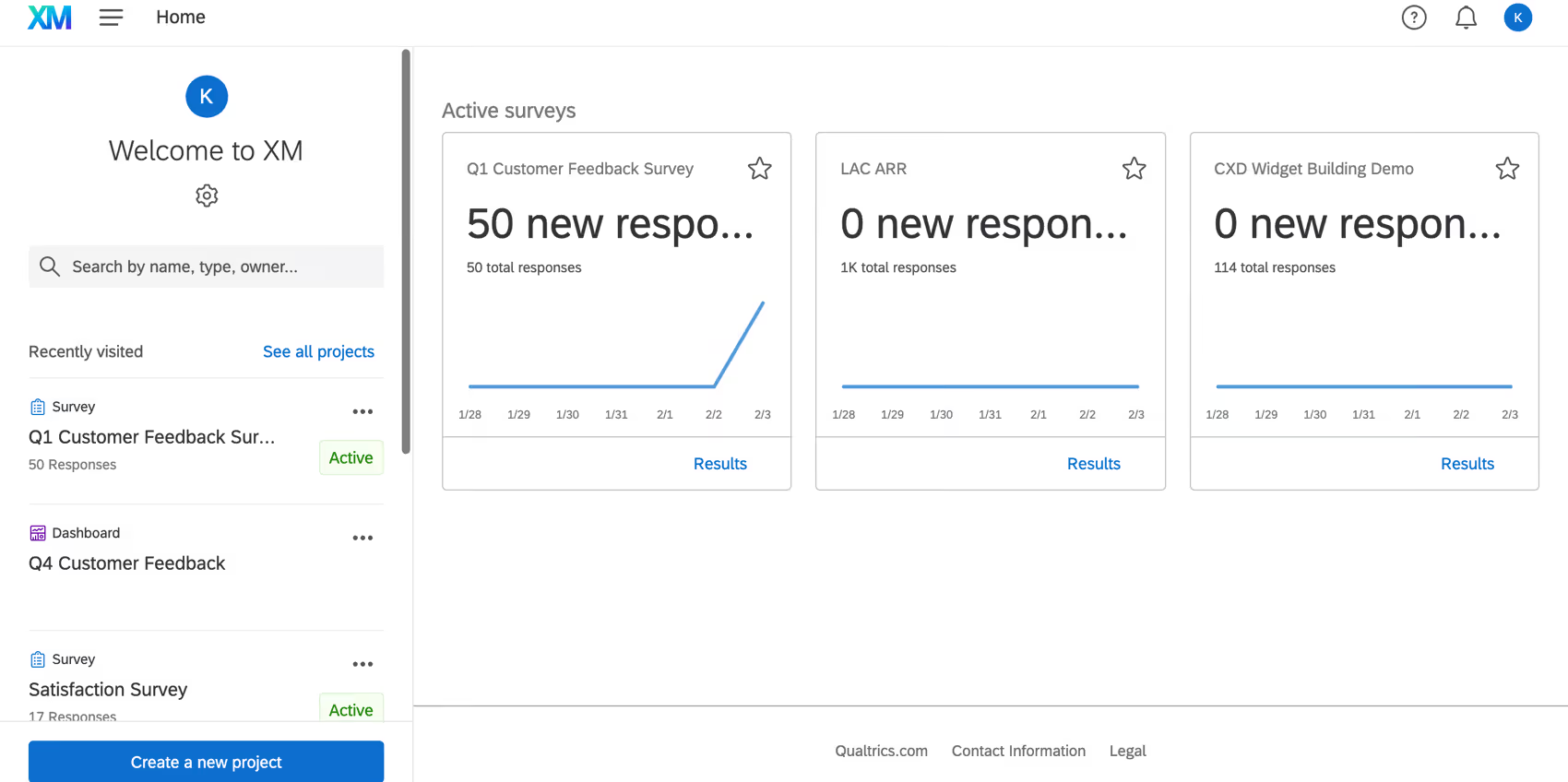
Qualtrics is an enterprise experience management platform that treats NPS as one dimension of a broader CX measurement programme. Its strength lies in scale — the ability to run NPS surveys across multiple channels, geographies, and business units while benchmarking results against extensive industry databases. For organisations that need to embed NPS into a large-scale, multi-touchpoint CX strategy, Qualtrics offers the infrastructure to do it. If you are exploring Qualtrics alternatives, it helps to understand where the platform excels and where it falls short.
The platform's XM Discover module adds NLP-powered text analytics to NPS open-text analysis, though this is typically a separate product or add-on within the Qualtrics suite. For teams already invested in the Qualtrics ecosystem, this integration can be powerful. For teams evaluating standalone NPS analysis, the complexity and cost of the broader suite can be a barrier.
Qualtrics Features
- Enterprise Survey Engine: Design and deploy NPS surveys across email, web, SMS, in-app, and social channels with advanced logic, branching, and localisation.
- XM Discover (Text Analytics): NLP-powered analysis of open-text NPS responses, including topic extraction and sentiment scoring (often an add-on module).
- Industry Benchmarking: Compare your NPS against proprietary benchmarks from thousands of organisations across industries and regions.
- Role-Based Dashboards: Configurable dashboards for executives, CX teams, and frontline managers with automated reporting and action planning workflows.
- Closed-Loop Follow-Up: Automated ticketing and workflows to follow up with Detractors and close the feedback loop at scale.
2026 Pricing
Qualtrics uses custom pricing based on licence type, modules, and response volume. Contact their sales team for a quote.
Qualtrics Pros
- Designed for large-scale enterprise NPS programmes spanning multiple regions and business units
- Industry benchmarking provides external context that most standalone tools cannot offer
- Comprehensive survey design capabilities with advanced logic and localisation
- Strong closed-loop workflows for Detractor follow-up
Qualtrics Cons
- XM Discover text analytics is a separate module, adding complexity and cost for NPS open-text analysis
- The platform's breadth can make it overly complex for teams focused specifically on NPS
- Pricing is opaque and typically requires enterprise-level budgets
- Implementation timelines can be lengthy for full-suite deployments
Who It's For
Enterprise CX teams running large-scale, multi-channel NPS programmes that need benchmarking, advanced survey logic, and integration into a broader experience management ecosystem.
G2 Rating
Qualtrics G2 Score: 4.4/5
3. Zonka Feedback

Zonka Feedback runs NPS surveys and analyses the verbatims in the same platform, which matters for teams whose real problem is not collecting scores but explaining them. Surveys go out by email, SMS, WhatsApp, website, in-app, kiosk, and QR code, and the AI Feedback Intelligence layer categorises the open-text answers behind each rating.
What distinguishes it from the other mid-market options here is impact analysis. Rather than reporting theme volume alone, Zonka scores how much each theme moves the NPS figure, then plots themes on an Impact and Trend matrix that sorts them into fix now, monitor, watch, and celebrate. Entity tracking adds a second layer, attributing detractor themes to named locations, agents, or products so the follow-up lands with the right team.
Zonka Feedback Features
- Theme-Level NPS Impact Scoring: Quantifies how far each theme shifts NPS, so promoter and detractor drivers can be prioritised by effect rather than frequency.
- Thematic Analysis: AI categorisation of open-text NPS responses into themes and sub-themes, including emerging topics.
- Entity and Aspect Tracking: Attributes themes to custom entities such as branches, agents, products, or competitors named in verbatims.
- AI Co-pilot: Ask follow-up questions of the NPS dataset in plain language to trace the cause of a score movement.
- Multi-Channel Distribution: Email, SMS, WhatsApp, web, in-app, offline kiosk, and QR surveys from one builder.
2026 Pricing
Feedback Management starts at $199/month, with AI Feedback Intelligence from $999/month. Pricing is now quoted against response volume and AI data credits, and a 14-day free trial is offered.
Zonka Feedback Pros
- Theme-level NPS impact scoring is uncommon outside enterprise platforms
- Collection and analysis in one subscription removes an integration step for smaller teams
- Entity tracking makes detractor themes actionable at branch or agent level
- Offline and kiosk capture suits multi-location NPS programmes in physical settings
Zonka Feedback Cons
- The AI analysis that powers the NPS insight sits on a separate, considerably more expensive tier
- No call or voice analytics, so phone-channel NPS verbatims must be imported as text
- Smaller review base than the established NPS specialists in this list
- Less suited to enterprise programmes needing the industry benchmarking Qualtrics provides
Who It's For
Mid-market teams running multi-channel NPS programmes that need to explain score movements by theme, location, or agent without buying a separate analytics platform.
G2 Rating
Zonka Feedback G2 Score: 4.7/5
4. CustomerGauge
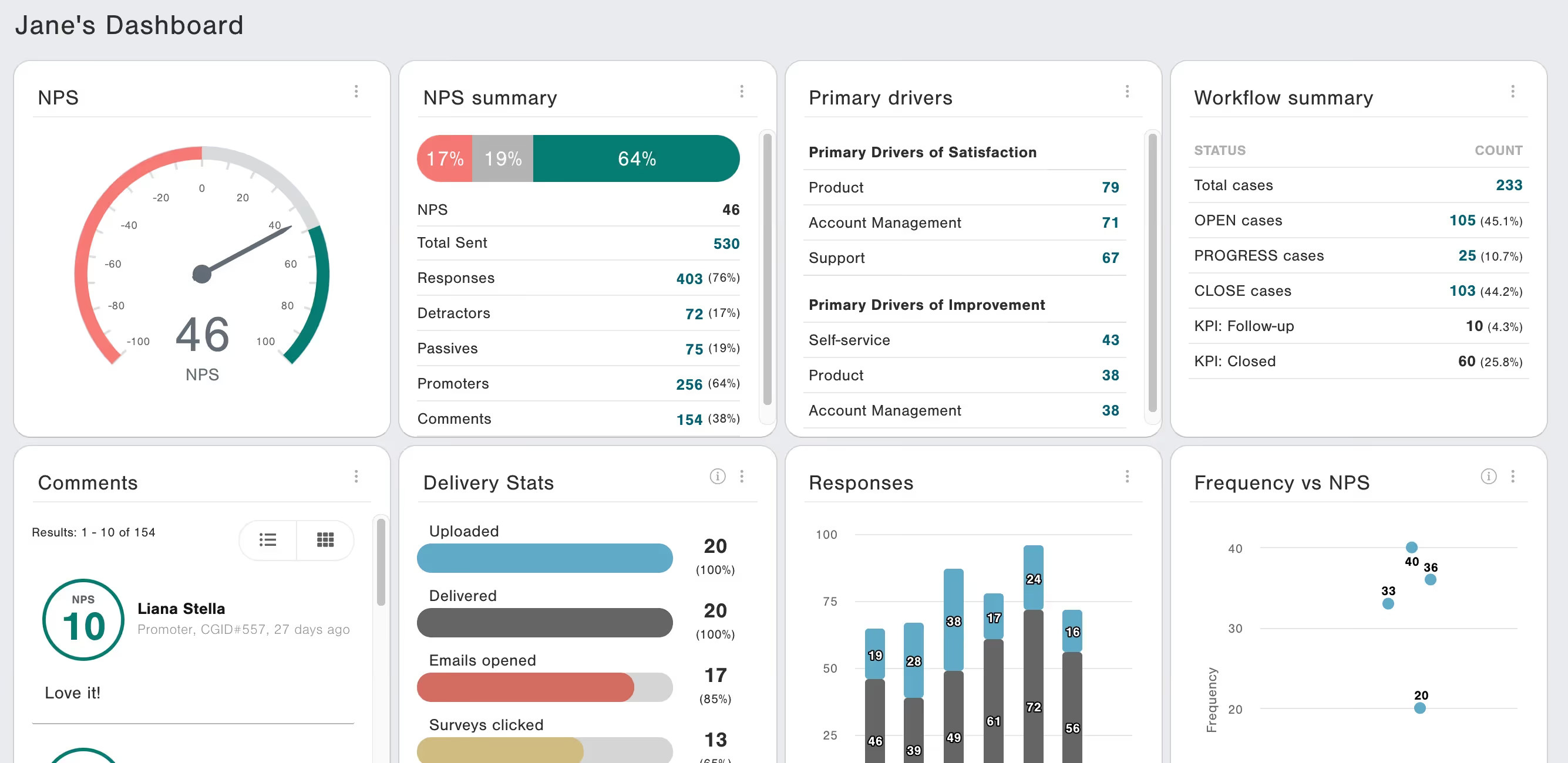
CustomerGauge is purpose-built for B2B account-based NPS programmes. Its core innovation is linking NPS scores directly to account-level revenue data, allowing teams to calculate the financial impact of Detractors and prioritise retention efforts based on revenue at risk. For B2B companies where each account represents significant recurring revenue, this revenue-linked approach to NPS analysis is uniquely valuable.
The platform provides account-level NPS tracking, automated close-the-loop workflows, and revenue attribution dashboards. Its analytics focus on the relationship between NPS movements and account health rather than granular open-text analysis — so teams looking for deep AI-powered verbatim analysis may need a complementary tool.
CustomerGauge Features
- Revenue-Linked NPS: Maps NPS scores to account-level revenue data, quantifying the financial impact of promoters, passives, and detractors in monetary terms.
- Account-Level NPS Tracking: Tracks NPS at the account level rather than individual respondent level, aligning with B2B relationship management workflows.
- Automated Close-the-Loop: Triggers follow-up workflows when NPS drops below thresholds, routing to CSMs or account managers with context.
- Benchmarking: Industry-specific B2B NPS benchmarks based on CustomerGauge's proprietary database.
- Revenue Retention Dashboards: Visual dashboards connecting NPS trends to churn risk, expansion opportunities, and overall account health.
2026 Pricing
CustomerGauge uses custom pricing based on account volume and modules. Contact their sales team for a quote.
CustomerGauge Pros
- Directly links NPS to account-level revenue, making ROI calculation straightforward
- Purpose-built for B2B relationship NPS programmes
- Strong close-the-loop automation for Detractor follow-up
- Industry-specific B2B benchmarking adds actionable context
CustomerGauge Cons
- Limited AI/NLP capabilities for open-text NPS analysis — relies on rule-based categorisation
- Not designed for B2C or high-volume transactional NPS use cases
- Narrower feedback channel coverage compared to platforms like Chattermill or Medallia
- Benchmarking data is most robust in specific B2B verticals
Who It's For
B2B companies with account-based revenue models that need to quantify the financial impact of NPS on retention and growth.
G2 Rating
CustomerGauge G2 Score: 4.6/5 (50 reviews)
5. Medallia

Medallia is an enterprise customer experience management platform with deep omnichannel feedback capture capabilities. Its Athena AI engine processes unstructured feedback — including NPS open-text responses — across dozens of signal sources, from surveys and contact centre transcripts to social media and IoT data.
For organisations that need to capture NPS signals across physical and digital touchpoints simultaneously, Medallia's breadth of ingestion is difficult to match. The platform is built for complex, multi-brand enterprises with sophisticated operational structures. That said, this breadth comes with significant implementation and cost commitments that can be prohibitive for mid-market teams.
Medallia Features
- Athena AI: AI and NLP engine for theme extraction, sentiment analysis, and predictive scoring across NPS open-text responses and other unstructured feedback.
- Omnichannel Signal Capture: Ingests feedback from email, SMS, web, social, IoT sensors, call centre transcripts, video, and in-location interactions.
- Action Intelligence: Automated workflows that route insights to the right teams with recommended actions based on NPS trends and feedback patterns.
- Role-Based Reporting: Executive, operational, and frontline dashboards with drill-down capabilities across regions, products, and customer segments.
- Text and Speech Analytics: Analyses both written NPS feedback and spoken feedback from contact centre recordings.
2026 Pricing
Medallia uses custom enterprise pricing. Contact their sales team for details.
Medallia Pros
- Extensive omnichannel feedback capture spanning physical and digital touchpoints
- Athena AI provides genuine NLP analysis of open-text NPS responses
- Strong enterprise features for multi-brand, multi-region deployments
- Speech analytics adds a feedback channel most competitors cannot access
Medallia Cons
- Significant implementation complexity and timeline for full deployment
- Enterprise pricing puts it out of reach for most mid-market and smaller teams
- The platform's breadth can lead to feature overload for teams focused solely on NPS analysis
- Requires dedicated admin resources to maintain and configure
Who It's For
Large enterprises with complex, multi-channel customer experience programmes that need to capture and analyse NPS alongside other experience signals at scale.
G2 Rating
Medallia G2 Score: 4.5/5
6. Qualaroo
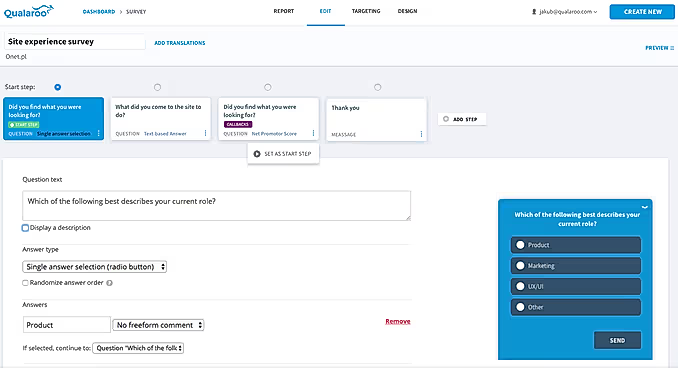
Qualaroo is a website and in-app survey tool that uses contextual "Nudge" surveys to capture NPS feedback at precisely the right moment in the user journey. Rather than relying solely on email-based NPS campaigns, Qualaroo embeds unobtrusive micro-surveys directly on websites and within applications, targeting specific visitor segments based on behaviour, location, and referral source.
The platform's AI-powered sentiment analysis (powered by IBM Watson) automatically categorises open-text NPS responses by theme and emotion, offering a level of analytical capability that many lightweight NPS tools lack. For teams that want to combine contextual NPS collection with built-in AI analysis at an accessible price point, Qualaroo occupies a useful middle ground between basic survey tools and enterprise analytics platforms.
Qualaroo Features
- Nudge Surveys: Contextual micro-surveys that appear on websites and apps based on visitor behaviour, page views, scroll depth, and exit intent — enabling NPS capture at high-signal moments.
- AI Sentiment Analysis: IBM Watson-powered analysis of open-text NPS responses, automatically categorising feedback by topic and sentiment.
- Advanced Targeting: Segment survey audiences by behaviour, geography, device, referral source, and custom properties for focused NPS collection.
- Multi-Channel Distribution: Collect NPS via website widgets, in-app prompts, email, and shareable links.
- Branching Logic: Conditional follow-up questions based on NPS score to gather deeper context from Promoters, Passives, and Detractors.
2026 Pricing
Qualaroo offers a free forever plan with all features for small teams. Paid plans with higher response volumes and priority support are available on request.
Qualaroo Pros
- Contextual Nudge surveys capture NPS at the right moment in the user journey — not just via email
- AI-powered sentiment analysis provides genuine open-text categorisation
- Free plan available with no feature restrictions
- Strong targeting and segmentation for focused NPS data collection
Qualaroo Cons
- Smaller user base and review volume compared to established NPS platforms
- AI analysis depth does not match enterprise tools like Chattermill or Medallia
- Primarily focused on website and app surveys — less suited for offline or call centre NPS
- Part of the ProProfs ecosystem, which may not align with enterprise procurement requirements
Who It's For
Product and marketing teams that want to capture NPS feedback contextually on websites and apps with built-in AI sentiment analysis, without enterprise-level complexity or cost.
G2 Rating
Qualaroo G2 Score: 4.3/5 (48 reviews)
7. Survicate

Survicate is a multi-channel survey platform that has evolved from a simple feedback collection tool into a capable NPS analysis solution. Its AI-powered feedback categorisation feature automatically tags and classifies open-text responses, placing it among the few mid-market tools that offer genuine analytical capabilities beyond basic score tracking.
The platform's strength lies in flexibility — it supports NPS surveys through email, website widgets, in-app prompts, mobile apps, and shareable links, with native integrations into HubSpot, Intercom, and Salesforce. For SMB and mid-market teams that want solid NPS collection with emerging AI analysis capabilities without enterprise pricing, Survicate offers a balanced option.
Survicate Features
- AI Feedback Categorisation: Automatically classifies open-text NPS responses into themes and categories using machine learning — a step above basic keyword analysis.
- Multi-Channel Survey Distribution: Deploy NPS surveys via email, website, in-app, mobile, and link with customisable templates and branching logic.
- Research Assistant: AI-powered tool that helps generate survey questions, analyse results, and summarise feedback trends.
- Native CRM Integrations: Deep integrations with HubSpot, Intercom, Salesforce, and Slack for syncing NPS data with customer records.
- Visual Survey Builder: Drag-and-drop builder with pre-built NPS templates and conditional logic.
2026 Pricing
Survicate offers a free plan (up to 25 responses/month) with paid plans starting at $99/month. Enterprise plans with advanced AI features are available at custom pricing.
Survicate Pros
- AI-powered feedback categorisation is rare at this price point
- Flexible multi-channel deployment with good in-app and website survey options
- Strong HubSpot and Intercom integrations for SMB/mid-market teams
- Free plan available for early-stage teams
Survicate Cons
- AI analytics are still maturing compared to dedicated analytics platforms like Chattermill
- Can become complex to manage across many channels as survey volume grows
- Advanced features require higher-tier plans
- Less depth for enterprise-scale NPS programmes
Who It's For
SMB and mid-market teams that want multi-channel NPS collection with AI-powered feedback categorisation without committing to enterprise pricing.
G2 Rating
Survicate G2 Score: 4.6/5
8. AskNicely

AskNicely is an NPS and CX platform built for service businesses — particularly multi-location organisations like franchises, healthcare networks, and hospitality groups. Its core differentiator is connecting NPS data to frontline employee performance, enabling location managers to see how individual locations and team members impact customer scores.
The platform provides real-time NPS dashboards, automated follow-up workflows, and coaching tools that help frontline teams improve their scores over time. For multi-location businesses where CX quality varies by site and employee, AskNicely fills a specific niche. Its text analytics capabilities are basic compared to AI-native platforms, but the operational focus on turning NPS into frontline action is strong.
AskNicely Features
- Frontline Performance Tracking: Links NPS scores to individual locations, teams, and employees for operational accountability.
- Real-Time NPS Dashboards: Location-level and company-wide dashboards with automated alerts when scores drop below thresholds.
- Automated Close-the-Loop: Triggers follow-up workflows for Detractors with escalation paths to managers.
- Coaching Tools: Built-in tools for managers to coach frontline employees using NPS feedback and performance trends.
- Multi-Channel Surveys: NPS surveys via email, SMS, and web with mobile-friendly design.
2026 Pricing
AskNicely uses custom pricing based on number of locations and features. Contact their sales team for a quote.
AskNicely Pros
- Purpose-built for multi-location service businesses with location-level NPS tracking
- Frontline coaching tools turn NPS into operational improvement, not just measurement
- Real-time alerts enable fast Detractor response
- Strong adoption in hospitality, healthcare, and franchise verticals
AskNicely Cons
- Limited AI/NLP analysis of open-text responses — text analytics are basic
- Less suitable for product-led or digital-first companies
- Custom pricing with no self-serve tier
- Narrower integration ecosystem compared to broader CX platforms
Who It's For
Multi-location service businesses (franchises, healthcare networks, hospitality groups) that need to link NPS to frontline employee performance and coaching.
G2 Rating
AskNicely G2 Score: 4.7/5
9. Retently
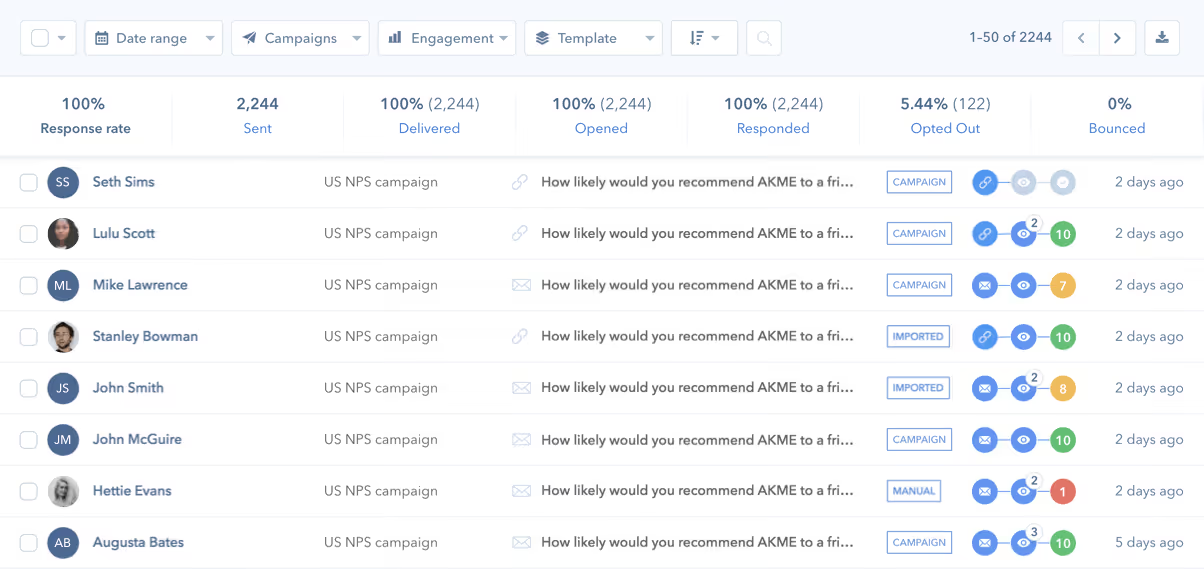
Retently is a customer experience management platform focused on NPS, CSAT, and CES automation for ecommerce and B2B companies. Its standout feature is deep integrations with Shopify for ecommerce and Salesforce/HubSpot for B2B — enabling automated, trigger-based NPS surveys at key points in the customer lifecycle.
The platform provides a clean dashboard with NPS trend tracking, sentiment scoring, and basic segmentation. It is particularly popular among ecommerce brands that need post-purchase NPS and among B2B SaaS companies that want automated relationship NPS tied to their CRM workflows. Retently's analytics lean toward straightforward tracking rather than deep AI-powered analysis.
Retently Features
- Automated NPS Campaigns: Trigger NPS surveys automatically based on customer events (purchase, onboarding, renewal) via integrations with Shopify, Salesforce, and HubSpot.
- Multi-Metric Tracking: Measure NPS, CSAT, and CES in a single platform with unified dashboards and trend analysis.
- Sentiment Scoring: Basic sentiment analysis on open-text responses to flag positive and negative feedback.
- Customer Segmentation: Segment NPS results by customer attributes, lifecycle stage, product, or geography.
- Automated Follow-Up: Trigger workflows and notifications when Detractors or Passives respond, with routing to the relevant team.
2026 Pricing
Retently starts at $25/month for basic NPS tracking, with professional and enterprise plans offering advanced features and higher response volumes.
Retently Pros
- Excellent Shopify integration for ecommerce post-purchase NPS
- Affordable starting price compared to enterprise platforms
- Clean, intuitive dashboard with minimal learning curve
- Strong automation for lifecycle-triggered NPS surveys
- Strong G2 rating (4.7/5) with highly positive user feedback
Retently Cons
- Sentiment analysis is basic — does not offer theme extraction or root cause identification
- Limited AI/NLP capabilities for open-text analysis at scale
- Narrower feedback channel coverage (primarily email and web)
- May require a complementary analytics platform for teams needing deep verbatim analysis
Who It's For
Ecommerce brands using Shopify and B2B companies using Salesforce or HubSpot that need automated, lifecycle-triggered NPS surveys with clean tracking dashboards.
G2 Rating
Retently G2 Score: 4.7/5 (29 reviews)
10. SurveyMonkey

SurveyMonkey is the most widely recognised general-purpose survey platform, and it includes NPS templates and basic analytics as part of its broader survey toolkit. Its strength is brand recognition and accessibility — most teams have used SurveyMonkey at some point, and launching an NPS survey takes minutes.
For NPS analysis specifically, SurveyMonkey provides basic tools: score tracking, response filtering, word clouds, and cross-tabulation. It does not offer AI-powered open-text analysis, theme extraction, or sentiment scoring at the level of dedicated NPS analytics platforms. Teams that need a quick, familiar way to collect NPS scores will find SurveyMonkey adequate. Teams that need to understand the "why" behind their scores will need something more specialised.
SurveyMonkey Features
- NPS Survey Templates: Pre-built NPS templates with customisable branding, skip logic, and multi-language support.
- Basic Analytics: Score tracking, response filtering, cross-tabulation, and word cloud visualisation of open-text responses.
- Multi-Channel Distribution: Share surveys via email, web embed, social media, and shareable links.
- Collaboration Tools: Team plans with shared survey libraries, commenting, and collaborative analysis.
- Integration Marketplace: Broad integration ecosystem including Salesforce, HubSpot, Mailchimp, and Slack.
2026 Pricing
SurveyMonkey offers a free tier with limited features. Paid plans for NPS start at $25/month (individual) with team and enterprise plans at higher tiers.
SurveyMonkey Pros
- Most familiar survey tool — minimal learning curve for most teams
- Free tier available for basic NPS collection
- Broad integration ecosystem for connecting NPS data to other tools
- Flexible survey builder with advanced logic capabilities
SurveyMonkey Cons
- NPS analytics are basic — word clouds and filtering do not replace genuine text analysis
- No AI or NLP capabilities for open-text response analysis
- The platform is a general survey tool, not a purpose-built NPS solution
- Advanced features and higher response limits require paid plans
Who It's For
Teams that need a familiar, accessible tool for basic NPS collection and tracking without specialised analytics requirements.
G2 Rating
SurveyMonkey G2 Score: 4.4/5
11. Nicereply

Nicereply takes a different approach to NPS by embedding surveys directly into customer support workflows. Instead of sending standalone NPS emails, Nicereply places rating widgets inside email signatures, support ticket follow-ups, and chat interactions — capturing feedback at the point of interaction rather than after a delay.
This approach makes Nicereply particularly effective for customer satisfaction software use cases where teams want to measure NPS alongside support-specific metrics like CSAT and CES. The platform integrates deeply with helpdesk tools like Zendesk, Front, LiveAgent, and Freshdesk. Its analytics are focused on support team performance rather than product-wide NPS trends.
Nicereply Features
- In-Ticket NPS Surveys: Embed NPS, CSAT, and CES surveys directly into email signatures and support ticket workflows — no separate survey distribution needed.
- Helpdesk Integrations: Deep, native integrations with Zendesk, Front, LiveAgent, Freshdesk, and other support platforms.
- Agent Performance Tracking: Track NPS scores by individual support agent, team, and time period for coaching and quality management.
- Custom Triggers: Configure when and how surveys appear based on ticket status, customer segment, or interaction type.
- Reporting and Leaderboards: Team-level reporting with agent leaderboards and exportable data.
2026 Pricing
Nicereply starts at $59/month with tiered plans based on response volume and features.
Nicereply Pros
- Seamless integration into existing support workflows — no separate survey distribution needed
- Excellent for teams that want NPS embedded in every customer interaction
- Agent-level tracking enables support quality coaching
- Easy to implement with major helpdesk platforms
Nicereply Cons
- No AI or NLP analysis of open-text responses
- Analytics focus on support team performance — not suited for product-wide or company-wide NPS programmes
- Limited feedback channels beyond support interactions
- Cannot unify NPS data from surveys, reviews, or social alongside support feedback
Who It's For
Customer support teams that want to measure NPS, CSAT, and CES directly within their helpdesk workflows and track agent-level performance.
G2 Rating
Nicereply G2 Score: 4.5/5
12. Siena Insights (Formerly Idiomatic)
.svg)
Siena Insights (recently rebranded from Idiomatic) is an AI-powered feedback categorisation platform that specialises in classifying and analysing unstructured customer feedback, including NPS open-text responses. The platform uses machine learning to automatically tag feedback by theme, sentiment, and urgency, providing a structured view of what customers are saying across channels.
For teams that collect NPS responses across multiple platforms but struggle to make sense of the volume, Siena Insights offers a layer of AI-powered categorisation that sits on top of existing feedback sources. It integrates with Zendesk, Intercom, and Salesforce to pull in support tickets and survey responses for unified analysis. The recent rebrand reflects a broader pivot toward AI-driven customer insights.
Siena Insights Features
- AI Theme Classification: Automatically categorises open-text NPS responses into themes, sub-themes, and sentiment using machine learning.
- Multi-Source Feedback Ingestion: Pulls feedback from support tickets, surveys, reviews, and chat transcripts for unified analysis.
- Sentiment and Urgency Scoring: Tags each piece of feedback with sentiment polarity and urgency level for prioritisation.
- Trend Monitoring: Tracks how themes and sentiment shift over time, with alerts for emerging issues.
- Custom Taxonomy: Allows teams to define their own categorisation framework aligned with business priorities.
2026 Pricing
Siena Insights uses custom pricing based on feedback volume and integrations. Contact their sales team for details.
Siena Insights Pros
- Genuine AI-powered categorisation of open-text feedback at scale
- Custom taxonomy allows teams to align analysis with their specific business context
- Multi-source ingestion unifies feedback from disparate systems
- Trend monitoring and alerting help teams catch emerging issues early
Siena Insights Cons
- Recently rebranded — product direction and stability are less proven compared to established players
- Smaller customer base means less community support and fewer public case studies
- G2 presence is limited, making it harder to validate through peer reviews
- Does not collect NPS surveys natively — relies on integration with survey tools
Who It's For
CX and insights teams that already collect NPS through other tools but need AI-powered categorisation and analysis of open-text responses across multiple feedback sources.
G2 Rating
Siena Insights G2 Score: 4.2/5
13. Refiner
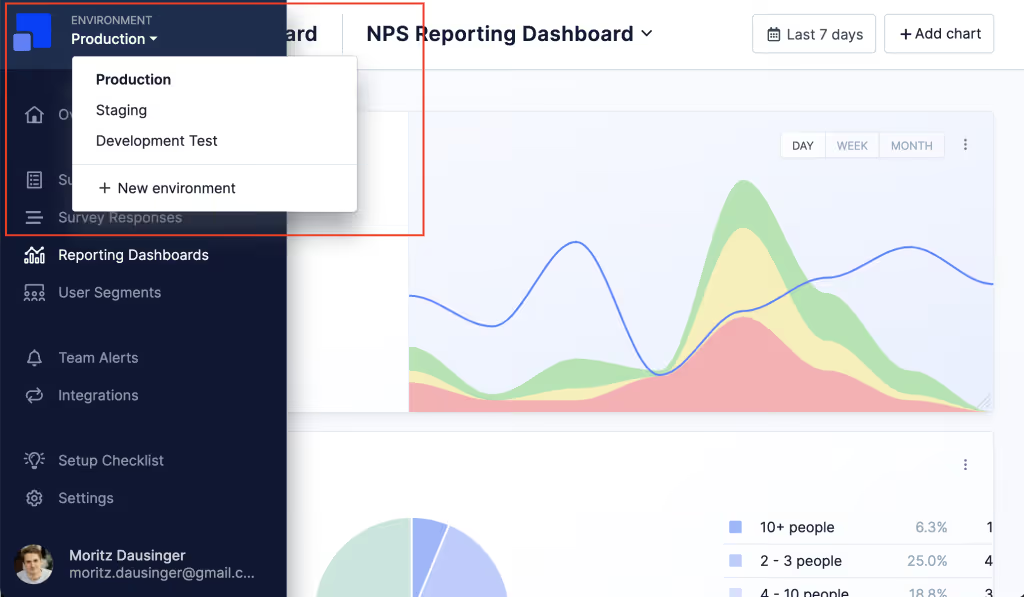
Refiner is purpose-built for SaaS product teams that want to run NPS surveys directly inside their web and mobile applications. Its core strength is targeting — Refiner lets teams trigger NPS surveys based on user behaviour, product events, and customer attributes, ensuring that the right users see the right survey at the right moment.
For SaaS companies where in-app feedback is more valuable than email-based surveys, Refiner fills a clear niche. The platform integrates with Segment, HubSpot, and other product analytics tools for enriched targeting. Its analytics provide NPS tracking and segmentation but do not include AI-powered text analysis — teams needing deep open-text analysis will need a complementary platform.
Refiner Features
- In-App NPS Surveys: Launch NPS surveys directly inside web and mobile applications with customisable widgets that match your product's UI.
- Behavioural Targeting: Trigger surveys based on user events, page visits, feature usage, subscription tier, and custom attributes.
- User Segmentation: Segment NPS results by user properties, lifecycle stage, and behavioural cohorts for granular analysis.
- Product Analytics Integrations: Native integrations with Segment, HubSpot, Slack, and Zapier for enriched targeting and data syncing.
- Response Rate Optimisation: Sampling controls, frequency capping, and display rules to maintain survey quality without fatiguing users.
2026 Pricing
Refiner offers a free plan for small-scale use, with paid plans starting at $99/month. Pricing scales with monthly tracked users and survey volume.
Refiner Pros
- Highly targeted in-app NPS survey capabilities for SaaS products
- Behavioural targeting ensures surveys reach the right users at the right time
- Clean, lightweight implementation that does not disrupt the user experience
- Free plan available for early-stage SaaS teams
- Strong Segment integration for product-led workflows
Refiner Cons
- No AI or NLP analysis of open-text responses
- Limited to in-app and web channels — no email, SMS, or support ticket feedback capture
- Not suited for enterprise-scale, multi-channel NPS programmes
- Analytics are focused on tracking and segmentation, not root cause analysis
Who It's For
SaaS product teams that need targeted, in-app NPS surveys with behavioural segmentation to understand user satisfaction at specific lifecycle moments.
G2 Rating
Refiner G2 Score: 4.6/5 (25 reviews)
Choosing the Right NPS Analysis Software
Selecting the right NPS analysis platform depends on more than feature lists. Here are the evaluation criteria that matter most — and how they should shape your decision.
Objectives and Analytical Depth: Start by clarifying whether you primarily need to collect NPS scores, analyse the open-text responses behind those scores, or both. Tools like Retently and Qualaroo excel at collection. Platforms like Chattermill and Medallia excel at deep analysis. Choosing a collection tool when you need analysis — or vice versa — is the most common and costly mistake.
Feedback Channel Coverage: NPS data lives in more places than email surveys. Consider whether you need to capture feedback from in-app prompts, support tickets, social media, chat, reviews, or SMS. A platform that unifies these channels into a single view saves your team from manual aggregation and ensures no signal is missed.
AI and NLP Capabilities: If understanding the "why" behind your NPS matters (and it should), prioritise tools with genuine AI-powered text analysis — not just word clouds or keyword filtering. Look for theme extraction, sentiment analysis, and root cause identification across languages.
Integration Ecosystem: Your NPS analysis tool needs to connect to your CRM (Salesforce, HubSpot), support platform (Zendesk, Intercom), product analytics, and BI tools. Native integrations reduce friction and ensure feedback data flows into the systems where your team already works.
Scalability: If you operate across multiple regions, languages, products, or business units, choose a platform that can grow with you. Some tools perform well for a single product but struggle when feedback volume and complexity increase.
Pricing Model: NPS tools range from free to six-figure enterprise contracts. Evaluate pricing relative to your feedback volume, required channels, and analytical depth. The cheapest tool is rarely the best value if it cannot answer the questions your team needs answered.
Ease of Use: The most powerful platform is worthless if your team cannot use it. Assess the learning curve, onboarding process, and day-to-day user experience — especially for non-technical users.
Security and Compliance: For teams handling customer data across regulated industries or geographies, verify that the platform meets your security, privacy, and data residency requirements (GDPR, SOC 2, HIPAA where applicable).
Vendor Stability and Support: Consider the vendor's track record, customer support quality, and product roadmap. Platforms backed by established companies or strong funding are more likely to invest in ongoing innovation.
Customisation and Flexibility: Can you build custom dashboards, define your own categorisation taxonomies, and configure alerts tailored to your workflows? Flexibility matters more as your NPS programme matures.
Enterprise teams typically choose platforms like Chattermill, Qualtrics, or Medallia for deep AI analytics, multi-channel unification, and global scalability. Mid-market companies often prefer Survicate or CustomerGauge for balanced capabilities at more accessible price points. Small businesses and startups frequently start with Qualaroo, Retently, or Refiner for fast deployment and lower costs — then upgrade as their feedback programmes grow.
What Are NPS Analysis AI Tools?
NPS analysis AI tools are platforms that use artificial intelligence and natural language processing to interpret the unstructured, open-text responses that accompany NPS scores. Traditional NPS tools focus on collecting scores and displaying trends — they answer "what is our NPS?" AI-powered NPS analysis tools answer the far more important question: "why is our NPS what it is?"
The evolution has been significant. First-generation NPS tools relied on manual tagging — analysts reading every response and assigning categories by hand. Second-generation tools introduced rule-based categorisation, using keyword matching to sort responses into predefined buckets. Today's AI-native platforms like Chattermill go further: they use deep learning models trained on customer feedback to extract nuanced themes, detect sentiment at the sub-sentence level, identify emerging trends before they become crises, and even predict how specific issues will impact future scores.
This matters because the volume of NPS open-text data is growing faster than any team can read manually. A mid-sized company might collect thousands of verbatim responses per month across email, in-app, and support channels. Without AI, those responses sit unread or get reduced to simplistic word clouds. With AI-powered analysis, every response contributes to a structured, actionable picture of customer sentiment — surfacing patterns that human reviewers would miss.
The most advanced AI NPS tools also integrate with broader voice of customer tools and feedback ecosystems, connecting NPS open-text insights to CSAT, CES, support tickets, and product usage data for a unified view of customer experience.
Benefits of Using NPS Analysis Software
Deeper Customer Understanding: NPS analysis software transforms raw scores and verbatim comments into structured insights, helping teams understand not just what customers feel but why they feel that way.
Faster Time to Insight: AI-powered platforms reduce the time from data collection to actionable insight from weeks (manual analysis) to minutes (automated theme and sentiment extraction), enabling faster response to emerging issues.
Root Cause Identification: Instead of guessing why NPS dropped, analysis tools identify specific themes — pricing friction, product bugs, service delays — that drive score movements, directing resources to the highest-impact improvements.
Cross-Channel Visibility: Modern NPS analysis platforms unify feedback from surveys, support tickets, reviews, social media, and in-app interactions, eliminating blind spots that single-channel tools create.
Proactive Issue Detection: Anomaly detection and trend monitoring alert teams to emerging problems before they escalate into widespread dissatisfaction or churn events.
Improved Customer Retention: By identifying Detractors and their specific concerns early, teams can intervene with targeted close-the-loop actions that recover at-risk relationships.
Data-Driven Decision Making: NPS analysis provides evidence for product roadmap priorities, service investments, and CX strategy — replacing gut instinct with customer-validated data.
Competitive Benchmarking: Many platforms offer industry benchmarks, helping teams understand whether their NPS reflects strong performance or leaves room for improvement relative to peers. Understanding what constitutes a good NPS score in your industry provides critical context.
Scalable Feedback Processing: AI-powered tools handle thousands or millions of responses without proportional increases in analyst headcount, making them essential for growing organisations.
Cross-Functional Alignment: Shared NPS dashboards and insights bring CX, product, marketing, and executive teams onto the same page, aligning priorities around customer-validated evidence.
ROI and Business Impact of NPS Analysis Tools
Investing in NPS analysis software is not just a CX initiative — it is a business performance decision. Here is how the impact typically materialises:
- Reduced Churn: Bain & Company research shows that a 5% increase in customer retention can boost profits by 25–95%. AI-powered NPS analysis platforms like Chattermill identify at-risk customers earlier through sentiment shifts and Detractor patterns, enabling proactive retention interventions before churn occurs.
- Increased Customer Lifetime Value: According to Gartner, organisations that act on CX feedback see a 20–30% increase in customer satisfaction scores within 12 months. Understanding what drives Promoter behaviour — and replicating it — directly contributes to higher retention rates and expansion revenue.
- Faster Product Improvement Cycles: NPS open-text analysis surfaces specific product feedback themes (bugs, feature requests, usability issues) that feed directly into product roadmaps. Teams using automated feedback analysis report cutting insight-to-action cycles from weeks to days.
- Operational Efficiency: Automating sentiment analysis and feedback categorisation with AI can significantly reduce manual tagging effort, freeing CX and insights teams to focus on strategy rather than data processing.
- Revenue Attribution: Platforms like CustomerGauge and Chattermill connect NPS data to business outcomes — revenue, retention, LTV — making it possible to quantify CX ROI. CustomerGauge reports that B2B companies closing the loop with Detractors within 48 hours see a +6 point NPS lift on average.
- Competitive Advantage: Forrester estimates that CX-leading companies outperform CX laggards by nearly 80% in revenue growth. Organisations that systematically analyse NPS feedback and act on the insights compound this advantage over time.
Get Started With Chattermill
If your team is ready to move beyond tracking NPS scores and start understanding the root causes behind them, Chattermill delivers the AI-powered analysis depth, multi-channel unification, and business impact mapping you need.
NPS Analysis Software: FAQs
What Is NPS Analysis Software?
NPS analysis software helps organisations collect, track, and interpret Net Promoter Score data. At its core, it measures customer loyalty by asking how likely someone is to recommend a product or service on a 0-to-10 scale. But the best NPS analysis tools go beyond score collection — they use AI and natural language processing to analyse the open-text responses that explain why customers gave the score they did. This analysis surfaces themes, sentiment patterns, and root causes that teams can act on. You can use an NPS calculator to determine your score, but understanding the "why" requires dedicated analysis software.
What Is the Best NPS Analytics Platform?
The best NPS analytics platform depends on your team's analytical needs. Chattermill is the top choice for teams that need AI-powered analysis of NPS open-text responses across multiple feedback channels. Qualtrics leads for enterprise-scale NPS programmes with industry benchmarking. CustomerGauge is best for B2B companies that need to link NPS directly to account revenue. For contextual NPS collection with AI sentiment analysis, Qualaroo offers an accessible mid-market option.
How Do You Analyse NPS Open-Text Responses at Scale?
Analysing NPS open-text responses at scale requires AI and natural language processing. Manual reading is impractical beyond a few hundred responses per month. Modern NPS analysis tools like Chattermill use deep learning models to automatically extract themes, detect sentiment, and identify root causes across thousands of responses in multiple languages. The process involves ingesting responses from all channels (surveys, support tickets, reviews), applying AI classification to identify recurring themes and sentiment, then surfacing the patterns as actionable insights. Using survey analysis tools with genuine NLP capabilities is essential for teams handling high volumes.
What Should You Look For in NPS Analysis Software?
Prioritise five criteria: AI and NLP capabilities (can it analyse open-text responses, not just display scores?), feedback channel coverage (surveys, support, reviews, social, in-app), integration ecosystem (CRM, helpdesk, BI tools), scalability (multi-language, multi-region, growing volume), and pricing alignment with your feedback volume. Teams focused on understanding the "why" behind NPS should prioritise platforms with genuine customer experience tools capabilities — theme extraction, sentiment analysis, and anomaly detection — over simple score-tracking tools.
How Much Does NPS Software Cost?
NPS software pricing ranges from free to enterprise-level custom contracts. Lightweight collection tools like Qualaroo (free plan available), Survicate (free — $99/month), and Refiner (free — $99/month) offer accessible entry points. Mid-market platforms like Retently start at $25/month and Nicereply at $59/month. Enterprise platforms like Chattermill, Qualtrics, and Medallia use custom pricing based on feedback volume, channels, and integrations — typically ranging from mid-four-figure to six-figure annual contracts depending on scale. The right investment depends on whether you need basic score collection or deep AI-powered analysis.



See Chattermill in action on your own feedback
Book a demo


