


GetFeedback vs Qualtrics: which feedback platform fits your CX team?


The CX intelligence
platform that's AI-native by design
Book a demoQuick Summary
GetFeedback Direct, the Salesforce-native survey product, shuts down December 31, 2026, GetFeedback Digital survives and is now simply called GetFeedback. The official migration path is SurveyMonkey Enterprise, but Qualtrics is a real alternative worth comparing if research-grade surveys matter more than staying in the SurveyMonkey family. Neither publishes real CX pricing. If the actual gap is understanding feedback, not just collecting more of it, that's where Chattermill fits.
Why this Comparison Looks Different in Late 2026
GetFeedback Direct, the Salesforce-native survey product Salesforce-heavy CX teams built their programs around, shuts down December 31, 2026. That's real, and it's the single most useful thing to know if this comparison is on the radar.
What's less clear from most coverage: GetFeedback the brand isn't disappearing. It's being relaunched as a simpler, self-serve website feedback tool, and SurveyMonkey's own recommended migration path for Direct customers is SurveyMonkey Enterprise, not Qualtrics. So if Qualtrics is on the table, it's because research-grade surveys and a broader experience-management platform matter more than staying inside the SurveyMonkey family, a real, valid reason, just a different one than "GetFeedback is gone, pick Qualtrics instead."
Qualtrics is more capable in most dimensions that matter to a research team, but its CX pricing isn't published anywhere, expect a sales conversation before a number appears. And its analytics, however strong, still only cover feedback collected through its own surveys.
We'll break down both platforms below, plus a third option for teams whose real problem isn't which survey tool to pick, but making sense of feedback that's already coming in from everywhere else.
Why Listen to Us
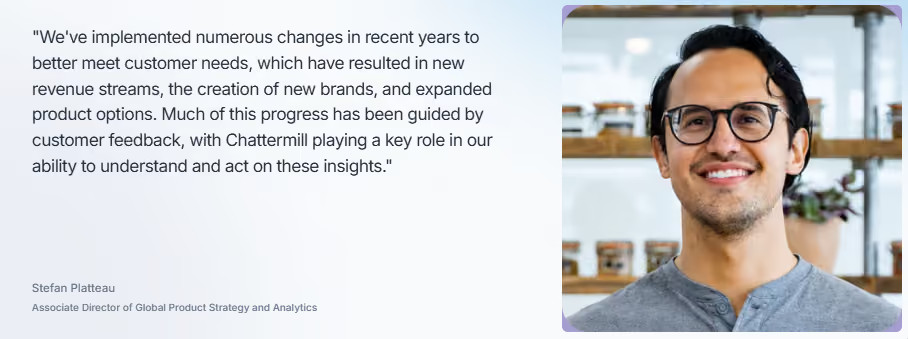
We work with CX and VoC teams at Uber, HelloFresh, Footasylum, and Booking.com. Stefan Platteau, Associate Director of Global Product Strategy and Analytics at HelloFresh, credits Chattermill with helping the company grow from €0.3B to €7B in revenue across 18 markets: "Much of this progress has been guided by customer feedback, with Chattermill playing a key role in our ability to understand and act on these insights." Footasylum used the same approach to reach a 7% year-on-year revenue increase.
At-a-Glance Table
Pricing
GetFeedback's new self-serve tier publishes real pricing, Qualtrics and Chattermill both require a sales conversation. Here's exactly what's public and what isn't.
GetFeedback's self-serve tier is the one transparent option of the three, real dollar figures, no sales call required to get a starting number.
Feature-by-Feature Breakdown
Collection Method
GetFeedback, in its relaunched self-serve form, collects feedback through website and in-app forms, feedback buttons, trigger-based forms, and embedded widgets, set up with a single line of code and no engineering support needed.
Qualtrics collects through a considerably more advanced survey builder, supporting branching logic, display conditions, and embedded data that adapt to each respondent, built for structured research programs rather than quick setup.
Chattermill doesn't collect feedback at all. Instead, it analyzes feedback already collected elsewhere, through tools such as website feedback widgets, survey platforms, support systems, reviews, social media, and call transcripts. Teams can therefore use Chattermill alongside GetFeedback or Qualtrics rather than replacing their collection setup.
Analytics Depth
GetFeedback's analytics stay close to basic reporting, response counts and simple trend lines across forms, with no built-in thematic analysis or sentiment detection.
Qualtrics goes further with Text iQ, which analyzes open-text survey responses using NLP, real analytical depth suited to teams running structured research programs, though it only ever sees feedback Qualtrics itself collected.
Chattermill's Lyra AI analyzes feedback at the theme and sentiment level within individual comments. So if a customer is positive about the checkout experience but negative about delivery times, those sentiments can be captured separately instead of being reduced to one overall score. This gives teams a more granular view of what's actually driving customer experience.
Channel and Feedback Unification
GetFeedback is single-channel by design, whatever's collected through its own website widgets, and nothing else.
Qualtrics is broader on paper but still self-contained, Text iQ and its dashboards only see feedback gathered through Qualtrics surveys, a support ticket or app review doesn't flow in natively.
Chattermill integrates with the platforms teams already use to collect and manage feedback. It unifies feedback from surveys, support tickets, reviews, social media, and call transcripts into a single view, regardless of which collection tool gathered it in the first place, so teams can keep GetFeedback or Qualtrics for collection while using Chattermill for deeper analysis.
Product Continuity
GetFeedback Direct, the Salesforce-native survey product most people historically mean by "GetFeedback," is discontinued as of December 31, 2026. The GetFeedback name now belongs to a different, self-serve website feedback tool.
Qualtrics has no continuity question of its own, a stable, long-standing platform with no announced sunset.
Chattermill is similarly unaffected, its relevance here is about capability, not survival, and its Business Impact Mapping connects whatever feedback comes in to NPS, CSAT, retention, and revenue, regardless of which collection tool a team lands on next.
Who Each Is Genuinely Best For
GetFeedback
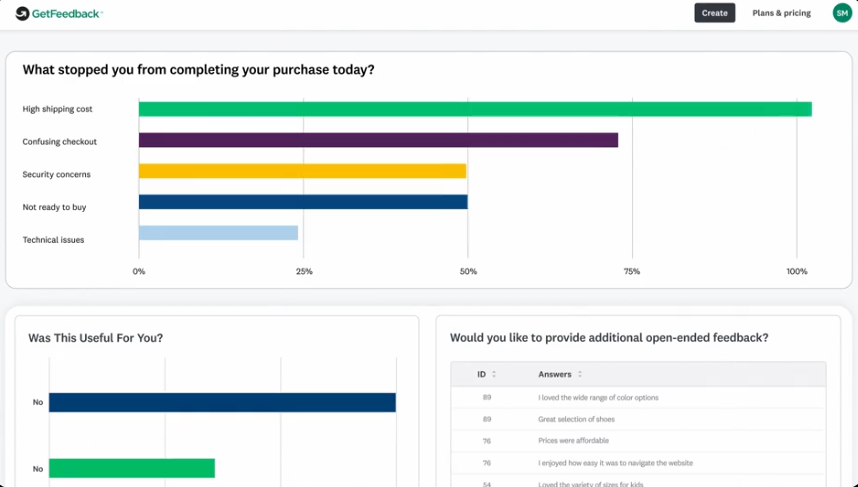
Best for: Marketing and product teams that want fast, no-code website or in-app feedback, a feedback button, a behavior-triggered form, something visitors can respond to in the moment, without a Salesforce license or a lengthy setup. Real, published pricing makes it easy to budget for without a sales call.
Where it runs out of road: This isn't a CX survey platform anymore, and it never analyzes feedback from anywhere beyond its own forms. Teams that actually need the Salesforce-native, relational-survey capability GetFeedback used to offer are looking at a different product entirely, SurveyMonkey Enterprise, not this one.
Qualtrics
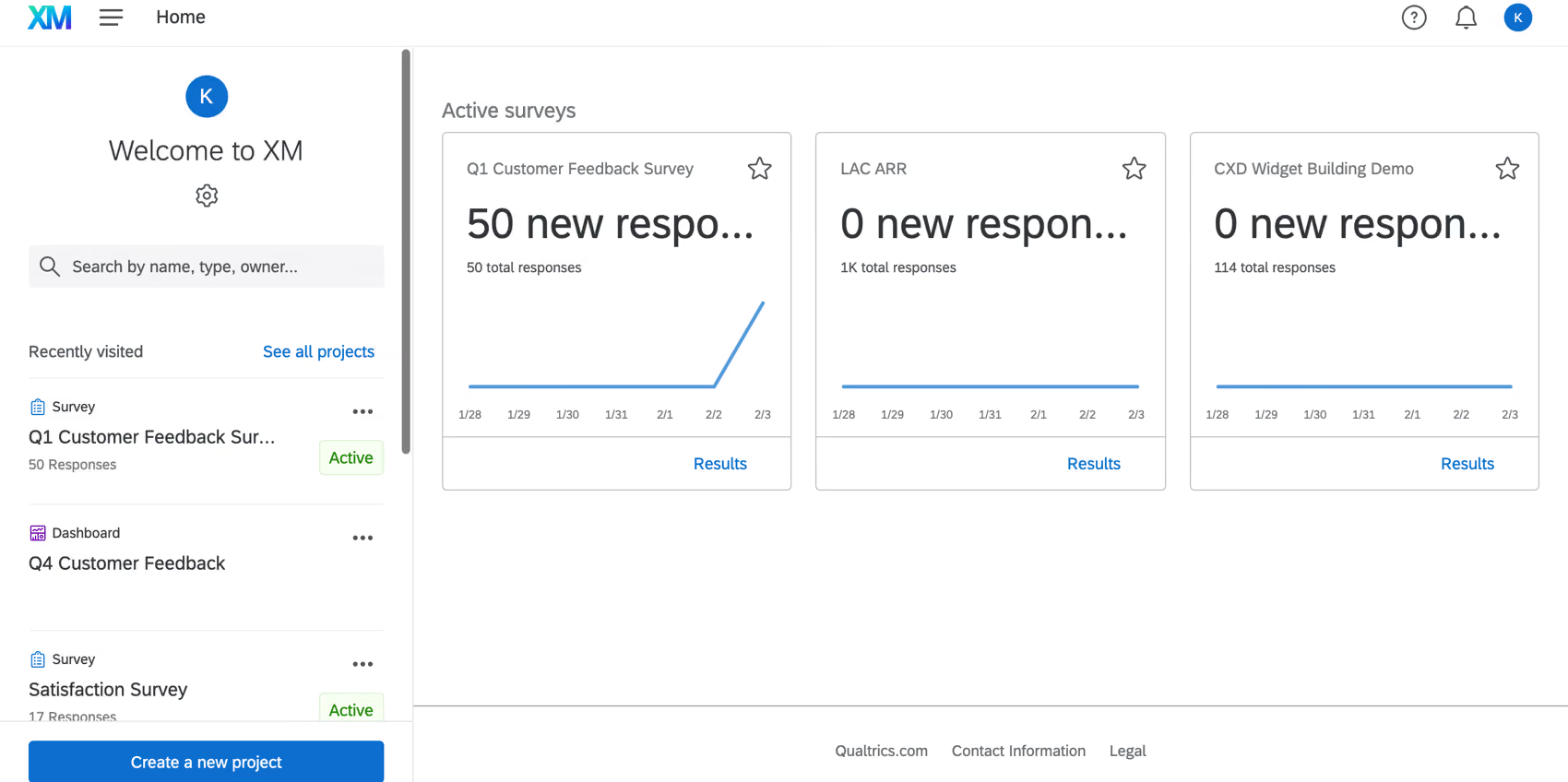
Best for: Research-driven CX teams that need sophisticated survey design, branching logic, embedded data, conjoint-style question types, and enterprise-grade text analysis through Text iQ. It's a substantially more capable option for teams running structured research programs.
Where it runs out of road: No published CX pricing anywhere, a real learning curve for teams that aren't researchers, and analytics that only ever see feedback Qualtrics itself collected.
The Best GetFeedback and Qualtrics Alternative: Chattermill
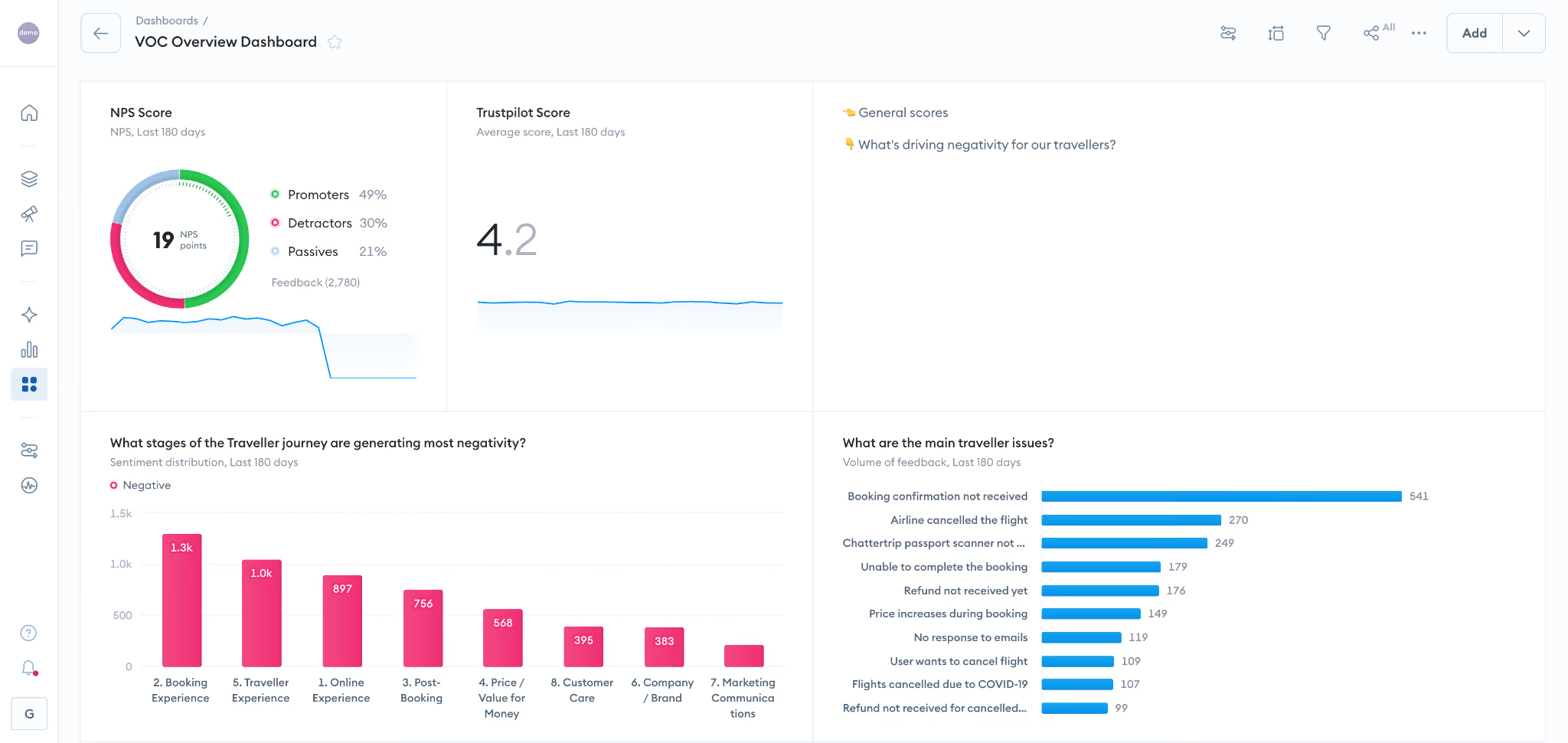
The GetFeedback sunset is forcing a decision most teams weren't planning to make this year, and it's worth using that moment to ask a bigger question than "which survey tool next." MOO ran into this exact problem from a different angle: strong NPS scores, but not enough clarity on what was actually driving them. Combining that NPS data with feedback from other sources in Chattermill drove a 200% increase in NPS for one product line. That's the gap a survey platform alone doesn't fully solve: knowing why a score is good, bad, or changing when the evidence sits across multiple feedback sources.
Key Features
- Anomaly detection: automatic alerts when a feedback theme spikes or a score shifts unexpectedly, via Chattermill's anomaly detection engine, so a problem surfaces the week it starts, not at the next quarterly review.
- Real-time dashboards: teams build and customize their own dashboards without IT support, so CX, product, and support all see the specific view they need.
- Multilingual analysis: feedback gets analyzed natively across languages rather than run through translation first, relevant for any team whose website or survey traffic spans multiple markets.
- Speech analytics: transcribes and analyzes call center conversations alongside every other channel, so a pattern showing up in support calls doesn't sit disconnected from what's showing up in website feedback or reviews.
Pricing
Usage-based, tied to data sources and feedback volume, no per-user fees. No public pricing page, demo required for a quote.
Pros
- Analyzes feedback from every channel already in use, not just one survey tool's own data
- Lyra AI explains the why with theme-level sentiment detection, not just a score or a trend line
- Works regardless of which survey platform a team ends up on after the GetFeedback sunset, SurveyMonkey Enterprise, Qualtrics, or anything else
Cons
- Built for high-volume, multi-channel feedback, a small team collecting a few hundred responses a month won't see the full benefit
Ready to see what's actually driving your scores?
Choosing a replacement for GetFeedback Direct solves the collection problem. But if feedback is already coming from surveys, support, reviews, calls, and other channels, choosing another survey platform doesn't necessarily give you one view of what's driving the numbers.
Chattermill runs that analysis on top of whatever's already flowing in from GetFeedback, Qualtrics, or anywhere else. Book a demo to see it run on your own data.
For a closer look at Qualtrics specifically, see Qualtrics alternatives or how Chattermill compares directly, and explore Chattermill's full lineup of comparisons against other tools in the space.
FAQs
Is GetFeedback shutting down?
GetFeedback Direct, the Salesforce-native survey product, shuts down December 31, 2026. The GetFeedback name survives on a different, relaunched product, a self-serve website and in-app feedback tool that doesn't require Salesforce. SurveyMonkey's official migration path for Direct customers is SurveyMonkey Enterprise, not the new GetFeedback.
Can Qualtrics analyze feedback from sources outside its own surveys?
No. Text iQ, Qualtrics' NLP engine, analyzes open-text responses collected through Qualtrics surveys specifically. It doesn't natively pull in support tickets, app store reviews, chat transcripts, or social media data. Teams needing that need a dedicated feedback analytics tool.
How is Chattermill different from Qualtrics?
Qualtrics is survey-first: it collects and analyzes its own data. Chattermill is analytics-first: it connects to feedback teams already have, from any source, and analyzes it together. For a full breakdown, see Chattermill vs Qualtrics XM.
What are the best alternatives to GetFeedback and Qualtrics?
It depends on what's needed. Teams on GetFeedback Direct specifically should look at SurveyMonkey Enterprise (the official path) or a dedicated Salesforce-native survey tool. For a better research-grade survey platform, see Qualtrics alternatives. For making sense of feedback already collected from surveys, support, reviews, and calls, that's Chattermill.
Which is more transparent on pricing, GetFeedback or Qualtrics?
GetFeedback, for its new self-serve tier. Starter and Plus both show real dollar figures on the pricing page, no sales call required. Qualtrics only publishes pricing for a smaller, separate research tier, its actual CX products are fully quote-gated.
How much does Qualtrics cost?
Qualtrics' self-serve research tier is public: free up to 500 responses/month, then $420/month for 1,000 responses. Its actual Customer Experience products, the ones most enterprise CX teams need, aren't published, every CX tier requires a quote based on interaction volume. See Chattermill's Qualtrics pricing breakdown for more.
I'm already a GetFeedback Digital customer. Does this affect me?
No, and this is worth knowing if the sunset headlines have caused any confusion. GetFeedback's own FAQ confirms existing Digital (now Enterprise-tier) customers aren't being moved to the new self-serve product, "this does not change your Enterprise experience. Enterprise customers will continue to access the same features, workflows, and support you rely on." The name change from Digital to GetFeedback is cosmetic for that group. Only GetFeedback Direct customers, the Salesforce-native survey product, actually need to act before December 31, 2026.



See Chattermill in action on your own feedback
Book a demo


