


TheyDo Alternatives: 7 Best Options for 2026



The CX intelligence
platform that's AI-native by design
Book a demoQuick Summary
Of the 7 TheyDo alternatives we reviewed, Chattermill, an AI-native Voice of Customer and Customer Feedback Analysis platform, is the strongest pick for analyzing journey feedback at scale. Qualtrics CustomerXM ranks second for enterprises that want surveys, text analytics, and journey programs in one suite. Medallia ranks third for omnichannel signal capture tied to frontline action.
Before we get into the detailed comparisons, here are our top three picks:
Why listen to us:
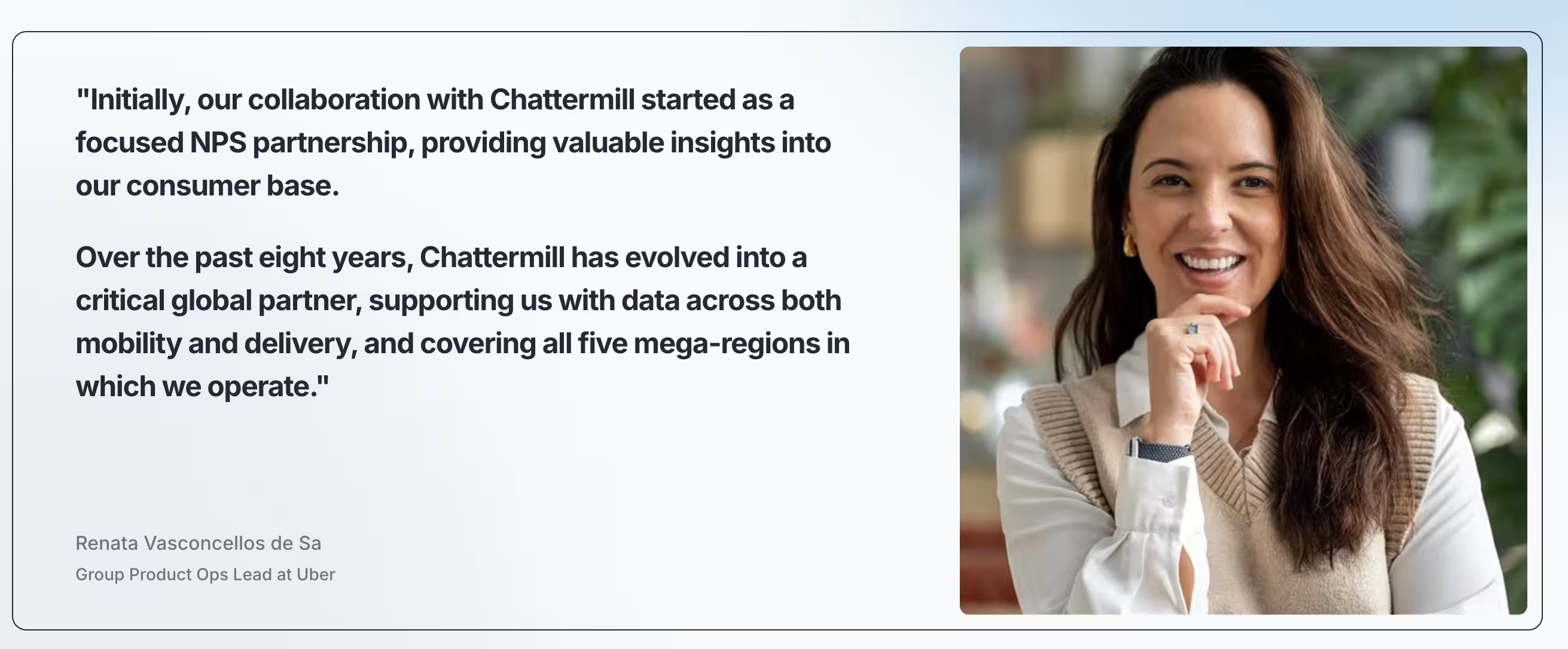
Chattermill is a leading AI-native Voice of Customer and Customer Feedback Analysis platform, described on its G2 profile as a Grid Leader in Feedback Analytics. Chattermill's customers include Uber, Booking.com, Tesco, HelloFresh, J.P. Morgan, and Santander. Our work starts where journey maps stop: turning raw feedback into the evidence journey programs need.
7 Top TheyDo Alternatives: Head to Head Comparison
How We Evaluated These TheyDo Alternatives
We scored each TheyDo alternative against the criteria enterprise buyers weigh when they replace or supplement journey management software.
- AI and NLP depth: How accurately the tool turns unstructured feedback into themes, sentiment, and drivers, and in how many languages.
- Feedback and data sources: Which channels the tool ingests natively, such as surveys, tickets, behavioral data, and speech.
- Journey mapping: Whether the tool offers a journey-map canvas, journey analytics, or analysis by journey stage.
- Integrations: Native connectors to CRM, helpdesk, product, and data tools, plus support for AI agents through MCP.
- Pricing transparency: Published tiers where available, and Vendr buyer-data medians for quote-based tools.
- Validated user sentiment: G2 rating and review volume, since a 4.5 from 15 reviews carries less weight than a 4.3 from 754.
- Enterprise readiness: Security certifications and governance controls.
We took pricing from Vendr buyer data and G2 pricing listings, and ratings from G2, as of November 2026. G2 figures change daily, and G2 prices are vendor-provided. Feature descriptions for third-party tools stay at product-category level, so confirm current capabilities with each vendor.
Chattermill publishes this guide, so we rank our own platform first and list its cons with the same candor as everyone else's. For a wider view of the category, see our guide to the best customer insights software and our roundup of customer feedback analysis tools.
Why Teams Look for TheyDo Alternatives
Teams look for TheyDo alternatives when they need a lower entry price or deeper analysis of raw customer feedback than a journey management platform provides. Pricing data from Vendr and G2 shows how large the commitment is.
What is TheyDo? TheyDo is a journey management platform that its G2 description positions as a single source of truth for the end-to-end customer journey. It holds a 4.5 rating from 62 reviews on G2.
Here is what drives teams to evaluate TheyDo competitors:
- A large paid commitment: Vendr reports a median of $25,225/year, with deals ranging $17,544 to $42,111.
- A steep step up from free: G2 lists a free Mapping plan, then Management starting at $35,000, based on vendor-provided pricing.
- Fit for smaller programs: At those price points, lighter mapping tools can make more sense for teams with only a few journeys.
- Evidence at volume: Teams with thousands of monthly comments need that feedback analyzed before it reaches a journey map.
The structural issue runs deeper than price. TheyDo stores and organizes evidence, but it isn't a feedback analytics engine for high-volume surveys, tickets, and reviews. If your journeys run on thousands of comments a month, you need text analysis software that does the reading for you.
1. Chattermill
What is Chattermill?
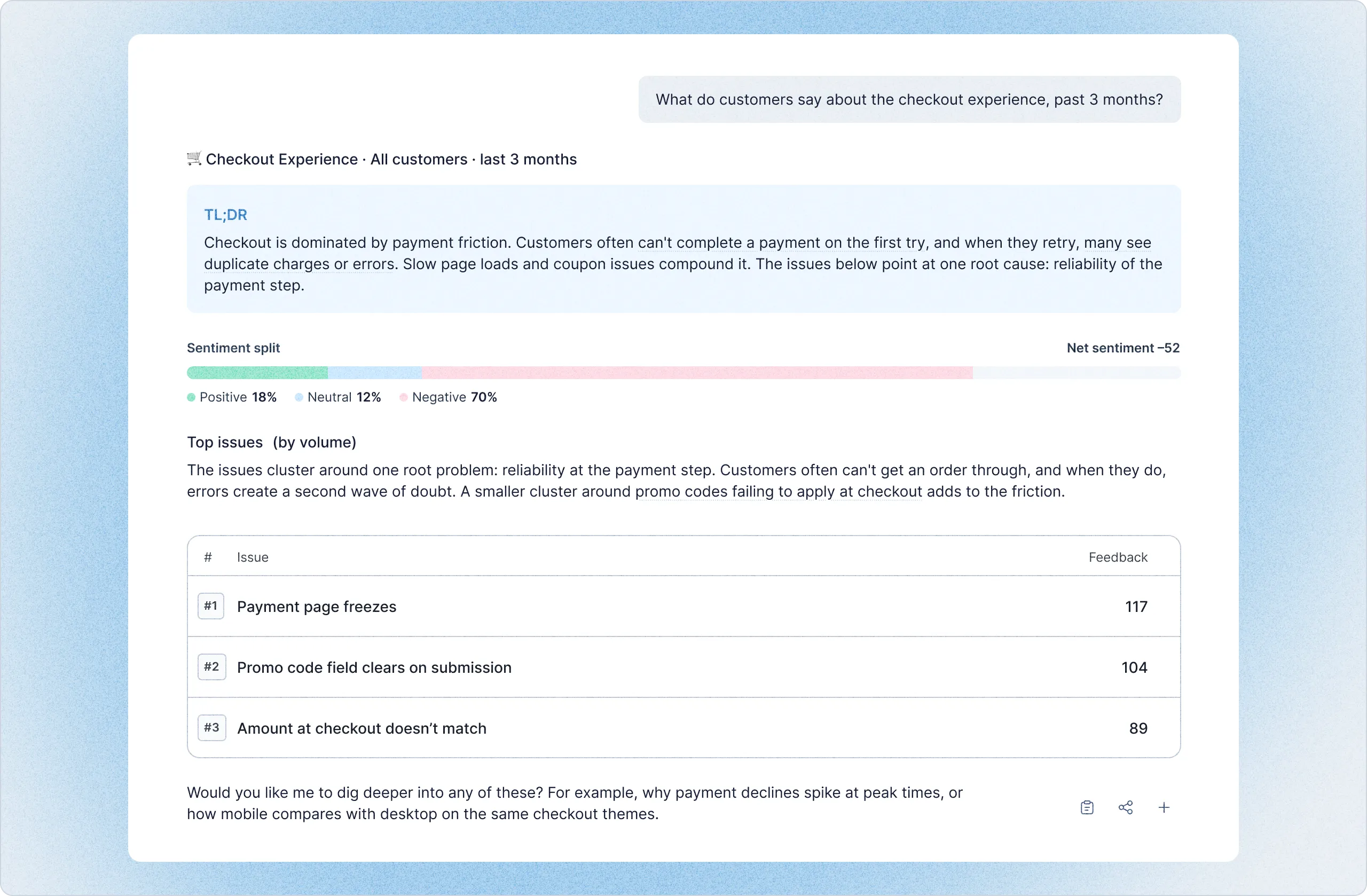
Chattermill is an AI Voice of Customer and Feedback Analysis platform that unifies feedback from every channel and shows what drives NPS, CSAT, CES, and churn. Its platform runs on Lyra, a proprietary AI model purpose-built for customer experience intelligence.
Think of TheyDo as the map and Chattermill as the traffic report. TheyDo shows the route a customer takes. Chattermill tells you where customers are stuck, why, and what fixing it is worth.
Lyra reads surveys, reviews, support tickets, chats, call transcripts, and social posts, then links every insight to the quotes behind it. Built for the enterprise, the platform is SOC 2 Type II and ISO 27001 certified, and GDPR and CCPA compliant.
Key features
- Lyra AI insights engine: Combines aspect-based sentiment analysis (ABSA), supervised learning, and LLMs to build an automatic taxonomy with linked customer quotes.
- Aspect-based sentiment analysis: Scores sentiment for each aspect of a comment, so mixed-topic feedback keeps its signal instead of averaging out.
- Impact Analysis: Quantifies how each theme moves NPS, CSAT, CES, churn, and revenue, so teams prioritize fixes by business value.
- Anomaly Detection and alerting: Flags sudden shifts in themes or sentiment and routes alerts to Slack, email, or Jira.
- Lyra Agent: Announced September 17, 2026, this CX-trained agent monitors signals across touchpoints and surfaces problems and opportunities. It is in early access.
- Lyra Agent in Slack: Since October 22, 2026, accounts with Lyra Agent enabled can mention @Chattermill in Slack, with existing roles and permissions respected. It is in closed beta.
- MCP server and Skills: The Chattermill MCP server lets teams query feedback inside AI agents. Skills add expert-crafted analysis recipes for analyst-quality output.
- Multilingual feedback: Feedback is analyzed across 100+ languages with automated translation and transcription built in, so global teams analyze every region in one place.
- Dozens of native connectors: Connectors include Zendesk, Intercom, Qualtrics, Trustpilot, Salesforce, Slack, and Jira, plus API and secure upload.
- XLG Acceleration: Pairs the platform with dedicated CX experts and a five-step model: Collect, Understand, Act, Measure, Prove ROI.
Chattermill's customer feedback analytics enriches each comment with customer ID, channel, and location, so teams can slice insights by journey stage.
Pros
- No per-user fees, so insights reach every team; 400+ Uber users rely on Chattermill in a partnership running since 2018.
- Aspect-level sentiment preserves accuracy on messy, multi-topic feedback where per-comment scoring blurs the signal.
- Impact Analysis ties themes directly to NPS, churn, and revenue, which makes prioritization defensible to leadership.
- Enterprise governance covers SSO, granular access controls, and PII redaction.
- Lyra Agent, Slack access, and MCP bring insights into the tools teams already use.
- At E.ON Next, billing-services NPS rose from +9 to +22, a 144% increase.
- Footasylum recorded a 42.8% reduction in contacts per transaction.
See how HelloFresh uses feedback to guide product decisions in its innovation and retention story.
Cons
- No dedicated journey-map canvas; teams analyze feedback by touchpoint and stage, and pair Chattermill with a mapping tool for diagrams.
- Not built for teams collecting fewer than 5,000 pieces of feedback per month.
- Not a survey-collection tool; it analyzes feedback gathered in other systems.
- Pricing isn't public, and G2 lists an average implementation time of two months.
Pricing
Custom; no per-user fees. Chattermill quotes pricing after a demo, and unlimited users are included. G2 lists an average discount of 15% and an average time to ROI of 13 months.
G2 rating
Chattermill holds 4.4/5 from 252 reviews on G2 as of November 2026. Its G2 profile describes it as a Grid Leader and Momentum Leader in Feedback Analytics.
Best for
Enterprise CX, insights, VoC, and product teams handling 5,000+ feedback items a month across brands, markets, or languages. It suits teams that want proof behind every journey decision, as Mindful Chef's NPS and retention story shows.
2. Qualtrics CustomerXM
What is Qualtrics CustomerXM?
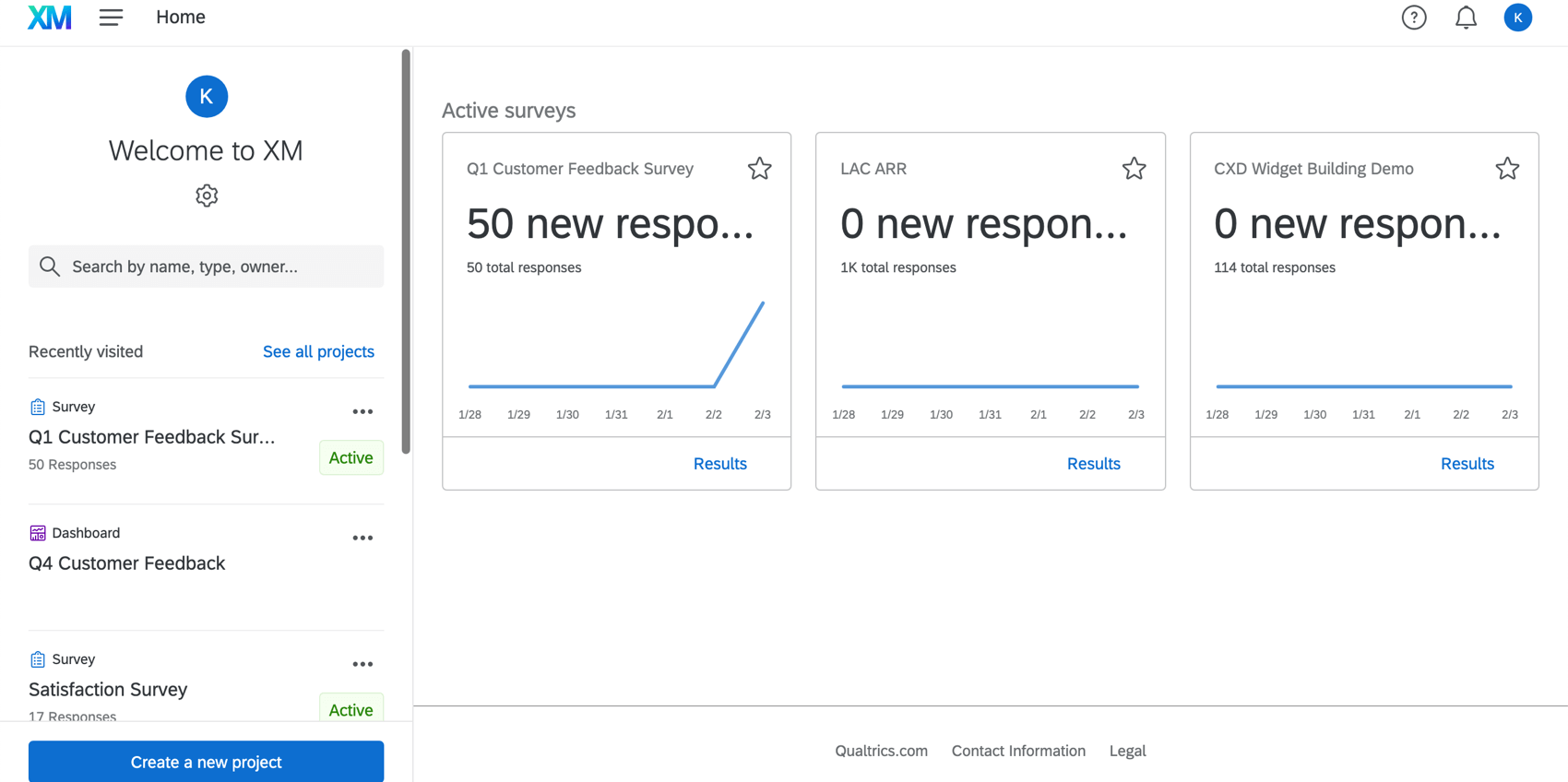
Qualtrics CustomerXM is an enterprise experience management suite that combines omnichannel surveys, text analytics, and journey programs. It is part of the wider Qualtrics XM product family.
Qualtrics is the closest like-for-like enterprise option because it covers journeys and feedback. Read our Chattermill vs. Qualtrics XM comparison.
Key features
- Omnichannel listening: Collects feedback from surveys and other digital and service channels.
- Text and conversation analytics: Analyzes open-text responses and conversations for topics and sentiment.
- Journey analytics: Tracks experience metrics across journey stages within CX programs.
- Dashboards and closed-loop workflows: Route issues to owners and track follow-up.
Pros
- Survey collection, analytics, and journey programs sit in one enterprise suite.
- In our assessment, a single-suite approach can appeal to teams that want to consolidate experience programs with one vendor.
- Vendr bases its median on 324 purchases, a solid benchmark for negotiating quotes.
Cons
- Vendr reports professional services can add 10–30% to contract value, and premium support 10–20%.
- Vendr also flags auto-renewal clauses with annual price escalation of typically 5–10%.
- G2 lists an average implementation time of three months and 23 months to ROI.
Pricing
Custom pricing; Vendr reports a median of $30,796/year based on buyer data from 324 purchases. Reported deals range from $7,060 to $136,811, per Vendr's February 2026 update.
If you already run Qualtrics surveys, Chattermill's Qualtrics integration can analyze those responses alongside tickets and reviews. Teams replacing the suite can start with our Qualtrics alternatives guide.
G2 rating
Qualtrics Customer Experience holds 4.3/5 from 754 reviews on G2 as of November 2026. G2 lists an average discount of 11%.
Best for
In our assessment, typically suited to large enterprises running survey-led, multi-department experience programs.
3. Medallia

What is Medallia?
Medallia is an enterprise CX suite that captures signals across channels and routes them to the teams who act on them. It fits organizations with large frontline and contact center operations.
Compare the two platforms side by side in our Chattermill vs. Medallia breakdown.
Key features
- Omnichannel signal capture: Collects feedback from digital, messaging, and contact center channels.
- Text and speech analytics: Analyzes written and spoken feedback for themes and sentiment.
- Closed-loop action: Routes feedback to frontline teams for follow-up.
- Journey analytics: Tracks experience performance across touchpoints.
Pros
- Broad channel coverage, including spoken feedback from contact centers.
- Feedback capture and frontline action sit in one suite.
- G2 lists an average discount of 10%.
Cons
- G2 lists an average implementation time of five months and 19 months to ROI.
- Vendr reports professional services often add 15–35% of contract value.
- Vendr notes Medallia doesn't publish standardized per-user pricing, so budgets depend on negotiation.
Pricing
Custom pricing; Vendr reports a median of $13,338/year based on buyer data. Treat that figure with caution: it comes from only 32 purchases. Vendr also notes entry deployments commonly run mid to high five figures annually.
G2 rating
Medallia Customer Experience holds 4.5/5 from 212 reviews on G2 as of November 2026.
Best for
In our assessment, typically suited to large enterprises with sizable frontline and contact center teams that need omnichannel signal capture and frontline action.
4. UXPressia
What is UXPressia?
UXPressia is customer journey mapping software for building journey maps and personas. It is a dedicated journey mapping alternative to TheyDo, with per-license pricing and a free plan listed on G2.
Key features
- Journey maps: Visual, template-based mapping of customer stages and touchpoints.
- Personas: Build and share customer personas alongside maps.
- Collaboration: Share maps with stakeholders for review.
Pros
- A forever-free plan, per G2, for teams testing journey mapping.
- Transparent per-license pricing for Pro and Business tiers.
- Faster to start than enterprise journey management platforms.
Cons
- Per-license pricing grows as more stakeholders need editing access.
- Built for mapping, so high-volume VoC still needs a dedicated analytics platform.
- A smaller G2 sample of 37 reviews.
Pricing
G2 lists a forever-free plan, Pro starting at $35.98 per license per month, and Business starting at $95 per license per month. Prices are vendor-provided.
G2 rating
UXPressia holds 4.5/5 from 37 reviews on G2 as of November 2026.
Best for
CX and UX teams, and consultants, who want affordable, self-serve journey mapping tools with personas. Pair it with AI sentiment analysis tools when maps need evidence at scale.
5. Smaply
What is Smaply?
Smaply is customer journey management software for service design teams. It combines journey maps, service blueprints, and personas in one workspace.
Its G2 profile describes it as ISO 27001:2022, SOC 2, and GDPR compliant, based on vendor-supplied text.
Key features
- Journey maps: Map customer stages, touchpoints, and emotions.
- Service blueprints: Connect front-stage experiences to back-stage processes.
- Personas: Keep customer profiles linked to the journeys they describe.
- Journey organization: Structure multiple journeys for portfolio-level views.
Pros
- Transparent per-editor pricing listed on G2.
- Security and compliance credentials listed on its G2 profile.
- Service blueprints cover operations as well as customer-facing steps.
Cons
- Built for mapping, so research at ticket volume needs voice of customer tools.
- Only 15 G2 reviews, a thin base for benchmarking.
- G2 lists pricing in euros, so US buyers should confirm dollar rates.
Pricing
G2 lists a free plan, Repository at €390 per editor per year, and Pro at €690 per editor per year. Prices are vendor-provided.
G2 rating
Smaply holds 4.5/5 from 15 reviews on G2 as of November 2026.
Best for
In our assessment, typically suited to service design and CX teams that want transparent per-editor pricing and service blueprints.
6. Contentsquare
What is Contentsquare?
Contentsquare is a digital experience analytics platform that tracks how customers move through websites and apps. G2 lists it among TheyDo alternatives, though it analyzes behavioral journeys rather than designing journey maps.
See how it compares with other options in our CX analytics tools guide.
Key features
- Session replay and heatmaps: Show where users click, scroll, and struggle.
- Journey analysis: Visualize the paths users take through a site or app.
- Friction detection: Surface broken or frustrating experiences.
- On-site surveys: Capture feedback in the moment.
Pros
- Strong fit for quantifying digital friction on web and app journeys.
- A free Experience Analytics tier, per G2.
- The highest G2 rating on this list, tied with Miro at 4.6.
Cons
- No journey-map design canvas; journeys come from behavioral data only.
- Pro pricing requires a quote.
- Vendr's $20,000/year median sits far above the €39 entry tier, so budget for growth.
Pricing
G2 lists a free Experience Analytics plan, Growth starting at €39 per month, and Pro on request. Vendr reports a median of $20,000/year based on buyer data.
G2 rating
Contentsquare holds 4.6/5 from 747 reviews on G2 as of November 2026.
Best for
Digital, e-commerce, product, and UX teams optimizing web and app journeys.
7. Miro
What is Miro?
Miro is a collaborative whiteboard with journey map templates on an infinite canvas. G2 lists it among well-known TheyDo alternatives.
Key features
- Infinite canvas: Freeform boards with templates, including journey maps.
- Docs, tables, and diagrams: Plan and present work in one space.
- Facilitation tools: Timers and voting for live workshops.
Pros
- Fast to adopt for cross-functional journey-mapping workshops.
- Low per-user pricing, per G2.
- A far larger G2 review base than any other tool on this list.
Cons
- Journey maps are manual; there's no native feedback analytics.
- Boards capture workshop output, so they need refreshing as customer data changes.
Pricing
G2 lists Starter at $10 per user per month and Business at $20 per user per month. Prices are vendor-provided.
G2 rating
Miro holds 4.6/5 from 13,700+ reviews on G2 as of November 2026, more than any other tool on this list.
Best for
Teams that need a shared canvas for collaborative journey-mapping sessions rather than VoC analytics.
How to Choose the Right TheyDo Alternative
Choose by the job you need done, since these tools fall into three distinct categories. Which problem keeps your journey program stuck: missing evidence, missing maps, or missing alignment?
- Feedback and insights platforms (Chattermill, Qualtrics CustomerXM, Medallia): Choose these when journeys need evidence from thousands of comments, tickets, and reviews.
- Journey mapping tools (UXPressia, Smaply): Choose these when you need maps, blueprints, and personas at a lower price than TheyDo.
- Collaboration and behavioral tools (Miro, Contentsquare): Choose these for workshops or for analyzing web and app behavior.
Then pressure-test your shortlist with these questions:
- Volume: Do you collect more than 5,000 feedback items a month? If so, prioritize AI and NLP depth.
- Languages: Do customers write in multiple languages? Confirm native analysis coverage for every market.
- Seats: How many people need access? Per-user pricing at UXPressia, Smaply, and Miro scales with headcount.
- Proof: Can the tool tie themes to NPS, churn, or revenue? Ask to see it on your own data.
- Agents: Will your teams query insights through AI agents? Check for MCP support.
Many enterprises pair a mapping tool for structure with an insights platform for evidence. Our guide to the best customer experience management platforms covers broader suites if you're consolidating.
TheyDo Alternatives FAQ
What are the best TheyDo alternatives?
The best TheyDo alternatives are Chattermill, Qualtrics CustomerXM, Medallia, UXPressia, Smaply, Contentsquare, and Miro. Chattermill leads for AI feedback analysis at scale, Qualtrics for survey-led XM, and Medallia for omnichannel signal capture.
Why do teams look for TheyDo alternatives?
Teams look for TheyDo alternatives because of the size of the paid commitment and the need to analyze raw feedback at volume. TheyDo organizes journey evidence, but it isn't built to analyze thousands of comments a month.
How much does TheyDo cost?
TheyDo pricing isn't published, but Vendr reports a median of $25,225/year, with deals from $17,544 to $42,111. G2 lists a free Mapping plan and Management starting at $35,000, based on vendor-provided pricing.
Are all TheyDo competitors direct replacements?
No, only Smaply and UXPressia replace TheyDo's journey mapping directly. Chattermill, Qualtrics, and Medallia analyze the feedback behind journeys, while Miro and Contentsquare support workshops and behavioral analysis.
What is the best TheyDo alternative for enterprise customer insights?
Chattermill is the best TheyDo alternative for enterprise customer insights, thanks to aspect-based sentiment analysis, multilingual feedback analysis, Impact Analysis, and no per-user fees. It also holds SOC 2 Type II and ISO 27001 certifications. See our enterprise voice of customer platforms guide for more options.
The Bottom Line
TheyDo maps journeys; the best alternatives explain them. If your team needs diagrams on a budget, UXPressia, Smaply, or Miro will serve you well.
If your journeys run on thousands of customer voices across channels and languages, you need evidence. Chattermill turns that feedback into prioritized, revenue-linked insight every team can access without per-user fees.
Ready to see what your customers are really telling you at every stage of the journey? Book a personalized demo.


See Chattermill in action on your own feedback
Book a demo


