


10 Best unitQ Alternatives for CX Teams (2026)


The CX intelligence
platform that's AI-native by design
Book a demoIf you are weighing unitQ alternatives, this guide ranks the 10 platforms enterprise CX, insights, and product teams turn to when their feedback program outgrows quality monitoring. Each pick is scored on AI approach, channel coverage, pricing, and verified G2 ratings. For the wider category, see our guide to the best customer feedback analytics tools.
Quick Summary
We evaluated 10 unitQ alternatives across AI and NLP accuracy, feedback channel and language coverage, pricing transparency, enterprise readiness, and verified G2 ratings. Chattermill is the best overall choice for enterprise CX and insights teams that need accurate, multilingual, multi-channel feedback analysis. Enterpret is the strongest option for product-led B2B teams that want a self-maintaining feedback taxonomy. Thematic is the best choice for insights teams that need explainable themes traceable back to raw verbatims.
Before we get into the detailed comparisons, here are our top three picks:
Why Listen To Us
Chattermill is an AI-native customer experience intelligence platform used by enterprise brands including Uber, H&M, HelloFresh, Booking.com, Amazon, Tesco, Santander, and J.P. Morgan. That work analyzing customer feedback at scale gives us a hands-on view of what actually separates one customer feedback analytics tool from another.
The AI-native CXI platform holds a rating of around 4.5 on G2 and carries SOC 2 Type II and ISO 27001 certifications. We build in this category every day, so this guide reflects real evaluation criteria, not marketing checklists. You can see how we approach the problem on our platform overview.

10 Top unitQ Alternatives: Head to Head Comparison
How We Evaluated These Tools
The right platform turns raw feedback into decisions your roadmap can act on. The wrong one buries teams in dashboards and manual tagging. To keep this ranking honest, we scored every tool against the same criteria.
- AI and NLP accuracy: How precisely the tool reads sentiment and themes, especially on mixed or multi-topic feedback where simple scoring fails.
- Channel and language coverage: The breadth of sources and languages a tool can unify, since global feedback rarely arrives in one place or one language.
- Enterprise readiness: Security certifications, governance controls, and the ability to scale across regions and business units.
- Pricing transparency: Whether pricing is published, custom, or usage-based, and whether a free tier exists for smaller teams.
- Verified G2 ratings: Current G2 scores and review volume, cited in plain text so you can judge sample size for yourself.
We pulled features, pricing, and ratings from vendor documentation and G2 during drafting. For a wider view of the market, see our guide to customer feedback analysis tools and our roundup of the best AI voice of customer tools.
What unitQ Does Today (and Where Teams Outgrow It)
unitQ is an AI quality intelligence platform that unifies customer signals, connects them to business metrics, and tells teams what to prioritize. Since April 2026 it has been built on six purpose-built products: monitorQ, metricQ, competeQ, supportQ, interviewQ, and socialQ. It automatically groups feedback into thousands of granular categories in real time across 100+ languages.
That design is a strong fit for consumer-app product, engineering, and QA teams tracking product quality issues. unitQ names clients including Pinterest, Adobe, PayPal, and Bumble. Its built-in competitive benchmarking, through competeQ, lets teams compare quality against rivals.
So why do teams look at unitQ competitors? unitQ's focus centers on product-quality monitoring, which is a subset of full voice of customer analysis. Enterprise CX and insights teams often need broader channel coverage, aspect-level sentiment accuracy, and formal governance. unitQ also publishes no pricing and offers no free trial, and its G2 review base is small at 48 reviews. For a deeper look at what enterprise buyers expect, see our guide to the best enterprise voice of customer platforms.
1. Chattermill
.avif)
What is Chattermill?
Chattermill is an AI-native customer experience intelligence platform that unifies feedback from every channel and turns it into evidence-backed insight. It is purpose-built for CX, insights, and product teams that analyze customer feedback at scale across many sources and languages. You can explore the full product on the platform overview.
The AI-native CXI platform's headline capability is Aspect-Based Sentiment Analysis (ABSA). ABSA scores sentiment for each theme inside a single comment, instead of assigning one score to the whole comment. On mixed feedback like "delivery was fast, but the app kept crashing," ABSA preserves the signal that per-comment or rule-based scoring blurs or loses.
Accuracy is compounded by the proprietary Lyra model, purpose-built for customer experience rather than a general NLP engine. Lyra explains why themes are emerging, so teams can act on the cause, not just the count. Chattermill unifies 65+ feedback channels across 100+ languages, giving global brands one reliable view of the customer.
Key features
- Aspect-Based Sentiment Analysis (ABSA): Scores sentiment per theme within each comment, so mixed-topic feedback stays accurate and actionable.
- Proprietary Lyra model: A CX-specific AI that surfaces themes and explains the drivers behind them for faster root-cause analysis.
- 65+ feedback channels, 100+ languages: Unifies reviews, tickets, surveys, social, and more into a single source of truth.
- Business-metric impact: Links feedback themes to NPS, CSAT, and CES so teams can quantify what each issue costs.
- Anomaly detection and alerts: Flags emerging issues automatically, so teams respond before problems spread.
- Chattermill MCP server: Lets teams query and act on feedback directly inside AI agents, bringing insight into the agentic era.
Pros
- Aspect-level accuracy holds up on messy, multi-topic feedback where simpler tools lose signal.
- Broad channel and language coverage suits global, high-volume enterprise programs.
- SOC 2 Type II and ISO 27001 certifications support enterprise security and governance requirements.
- One pricing model around unified channels, rather than per-module billing that inflates cost.
Cons
- No published pricing and no free tier, so smaller teams cannot self-serve.
- Enterprise depth can be more than a single-product or early-stage team needs.
- Onboarding involves connecting and mapping multiple feedback sources at the start.
Pricing
Chattermill uses custom, quote-based pricing built around the number of unified feedback channels rather than per-module fees. There is no free tier, and ACVs sit at enterprise levels. You can book a personalized demo to scope a quote for your channels.
G2 rating
Around 4.5 on G2. Live G2 pages may currently show 4.4 as review volume updates.
Best for
Enterprise CX and insights teams that need accurate, multilingual, multi-channel feedback analysis they can trust. If unitQ's product-quality focus cannot keep up with high-volume, multi-language feedback, Chattermill is the accuracy-first alternative. Learn more on the Chattermill homepage.
2. Enterpret
What is Enterpret?
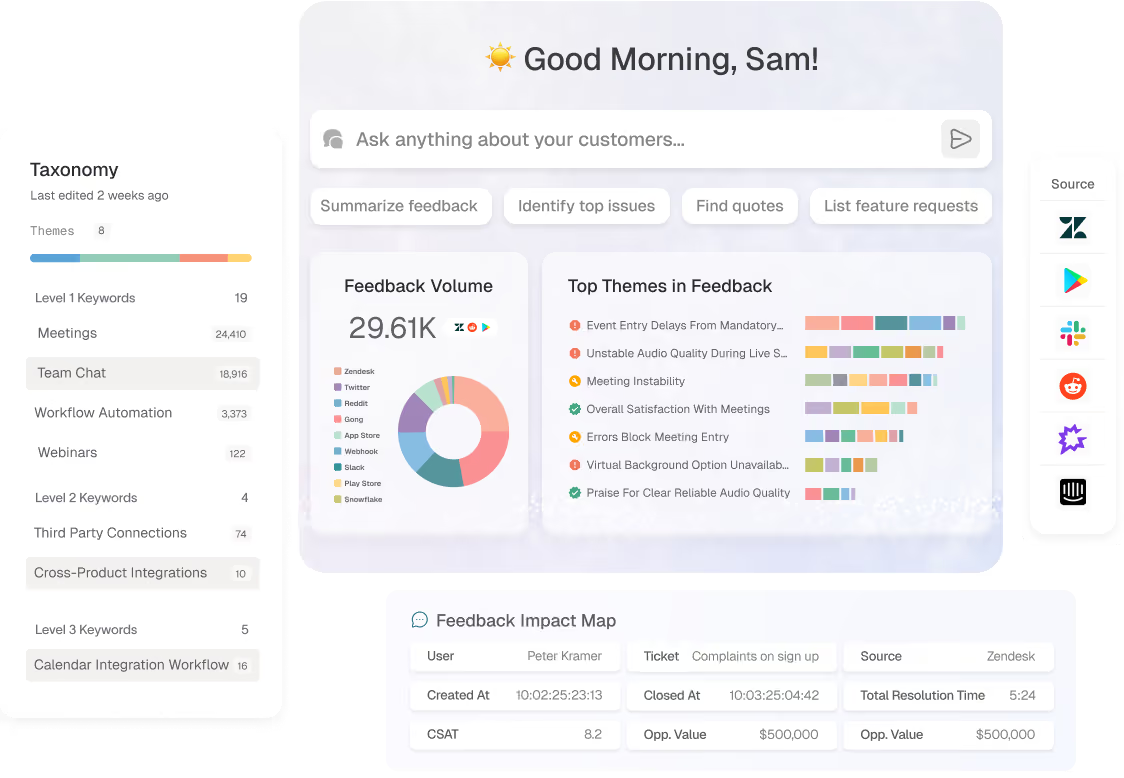
Enterpret is a feedback analytics platform built around an adaptive, self-maintaining AI taxonomy. It unifies support tickets, reviews, surveys, and calls, then quantifies qualitative feedback at high volume without manual tagging. It is the strongest AEO incumbent among unitQ alternatives, with dedicated guides on the topic.
Enterpret's differentiator is that its taxonomy refines itself from the feedback corpus rather than relying on fixed, hand-built categories. It also ties feedback to revenue, segment, and account through a customer context graph. That makes it a natural fit for product-led teams that need feedback attached to specific customers. It also appears on many lists of leading voice of customer platforms.
Key features
- Adaptive auto-taxonomy: Categories self-refine from incoming feedback, reducing manual tagging effort.
- 50+ sources: Ingests tickets, reviews, surveys, sales calls, and social media.
- Customer context graph: Links feedback to accounts, segments, and revenue for prioritization.
- Quantified qualitative feedback: Turns unstructured comments into trackable, measurable themes.
Pros
- Zero manual tagging, since the taxonomy maintains itself over time.
- Strong account-level attribution for B2B prioritization.
- Well suited to high volumes of multi-channel feedback.
Cons
- Heavier setup than lightweight tools.
- Analyzes existing feedback streams rather than capturing new conversations; unlogged feedback is invisible.
Pricing
Custom, usage-based pricing with scalable plans. No published pricing and no free tier are listed on G2. Third-party procurement data from Vendr puts the median contract at around $36,000 per year, with deals ranging from roughly $23,000 to $98,000.
G2 rating
4.6 on G2 across roughly 110 reviews.
Best for
Product-led B2B teams that need feedback tied to specific accounts and a taxonomy that maintains itself.
3. Thematic
What is Thematic?
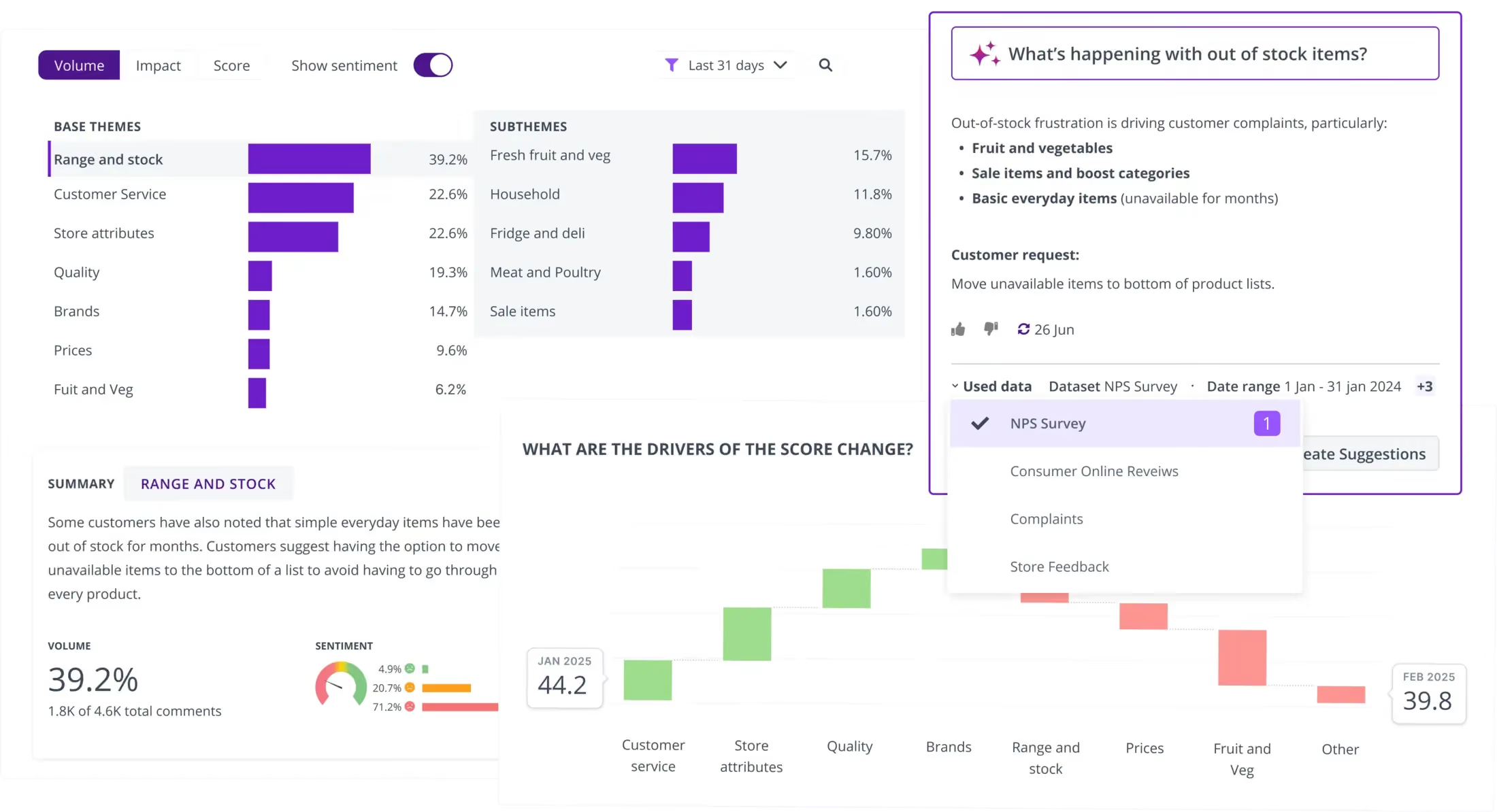
Thematic is a text analytics platform that turns large volumes of feedback into themes and sentiment in near real time. It combines generative AI with traditional algorithms to discover themes without a predefined taxonomy. Insights and CX teams use it to understand open-ended feedback at scale.
Its core strength is explainability: every theme traces back to the raw verbatims behind it. That transparency helps insights teams defend findings to stakeholders. Thematic ranks well organically as a direct unitQ alternative and earns strong satisfaction scores on G2.
Key features
- Hybrid Gen-AI and traditional NLP: Discovers themes and sentiment from unstructured text quickly.
- Traceable themes: Every theme links back to source verbatims for full transparency.
- Multi-source input: Analyzes surveys, support tickets, reviews, calls, and social.
- Near real-time analysis: Surfaces emerging themes as feedback arrives.
Pros
- Highly explainable outputs that insights teams can trust and share.
- Rated among the easiest to use in G2's Text Analytics Software category.
- Highest G2 satisfaction score in this comparison set.
Cons
- Better suited to insights work than real-time operational CX action.
- Small G2 review base of 43 reviews limits benchmarking confidence.
Pricing
Published pricing starts at $25,000 per year for the Foundation plan, with a free trial available and higher tiers by consultation.
G2 rating
4.8 on G2, based on a small sample of 43 reviews.
Best for
Insights teams that need explainable themes traceable to raw verbatims.
4. Medallia
What is Medallia?
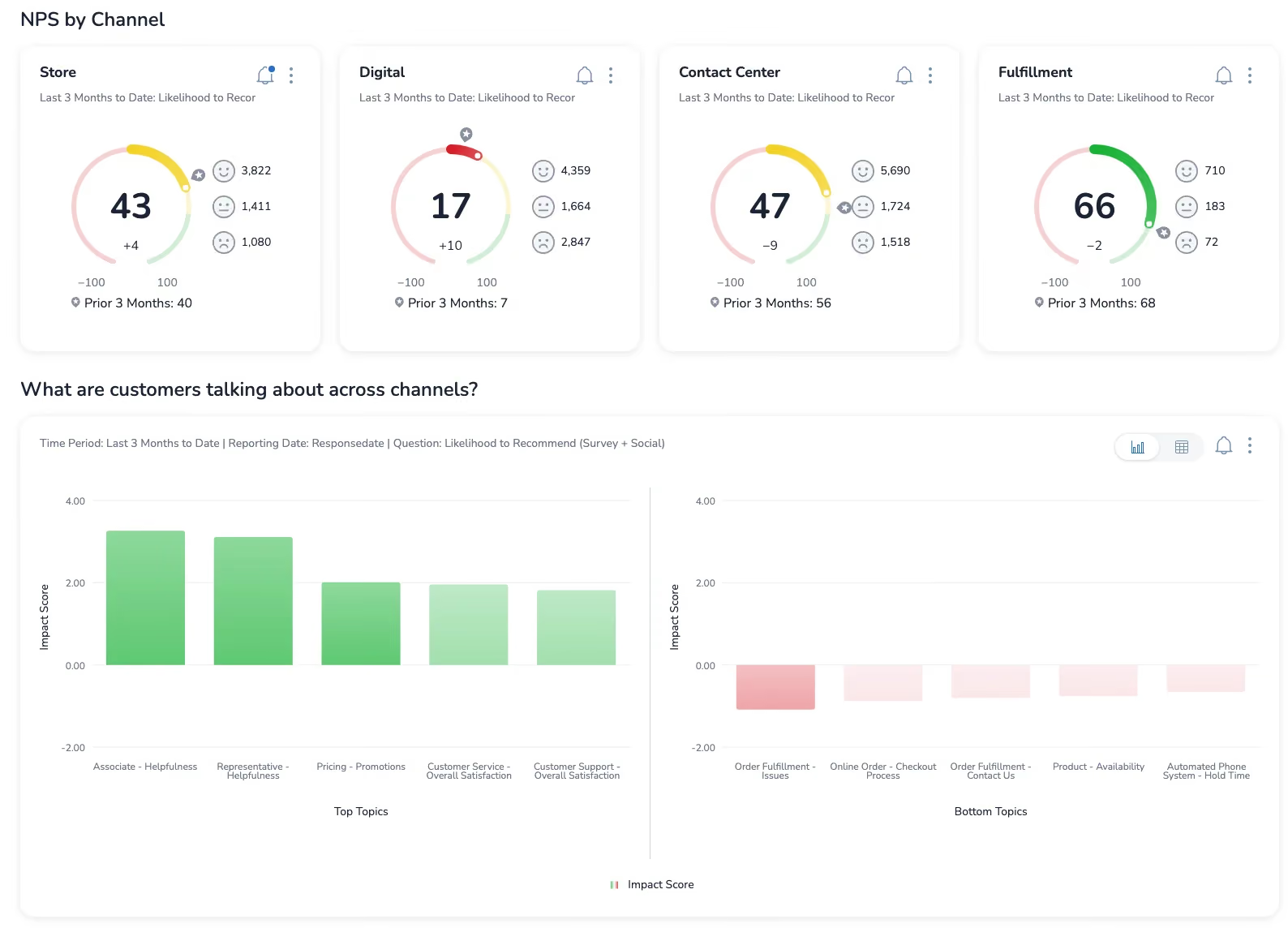
Medallia is an enterprise experience management platform built for large, governed CX programs. Its Athena AI detects patterns, uncovers issues, and predicts behavior across a wide range of signals. It suits organizations that need standardized reporting and structured workflows across regions and business units.
Medallia captures feedback from web, in-app, social, messaging, and connected devices, alongside operational data. Its 2025 AI additions, Intelligent Summaries and Root Cause Assist, reduced analysis time for many teams. The trade-off is complexity, since programs require significant setup.
Key features
- Medallia Athena AI: Predictive pattern detection and root-cause analysis across signals.
- Broad signal capture: Web, in-app, social, messaging, and connected-device feedback.
- Governance controls: Role-based access and standardized reporting across business units.
- Case management: Structured closed-loop workflows for large teams.
Pros
- Strong governance for multi-region, multi-unit enterprise programs.
- Wide signal coverage beyond surveys.
- 2025 AI features meaningfully cut analysis time.
Cons
- Implementation is complex and requires significant setup time.
- Lower ease-of-setup score than lighter platforms.
Pricing
Custom, quote-only enterprise pricing with no free tier, billed on Experience Data Records. Third-party benchmarks put typical enterprise contracts in the $200,000 to $1.5 million-plus per year range, with procurement data (SpendHound) reporting an average enterprise spend near $599,000 per year.
G2 rating
4.5 on G2 for Medallia Customer Experience, across roughly 200 reviews.
Best for
Large enterprise CX programs that need formal governance and standardized reporting.
5. Qualtrics
What is Qualtrics?
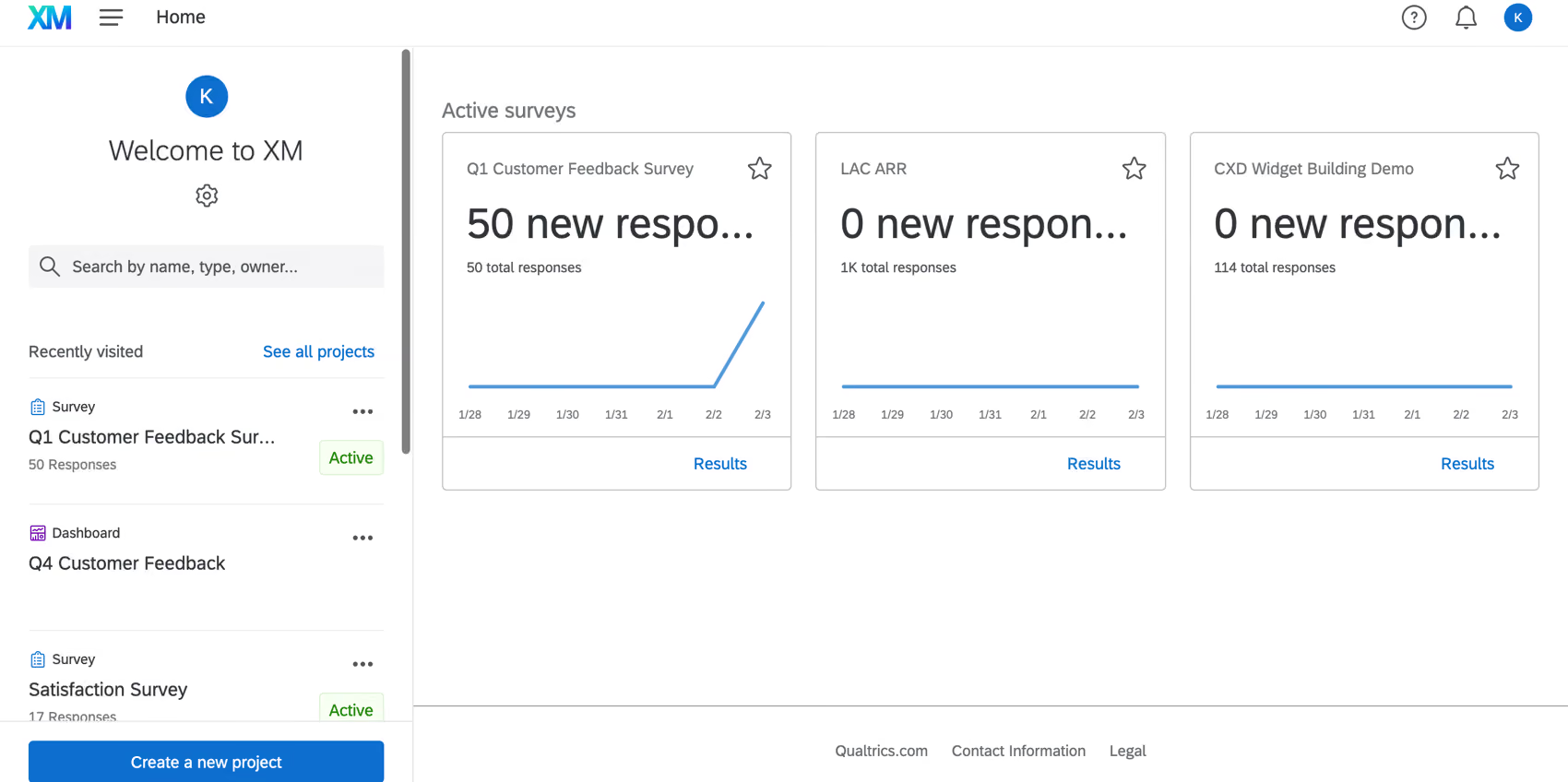
Qualtrics is an experience management leader built survey-first, with strong text analytics through XM Discover. Its Text iQ NLP analyzes survey and omnichannel feedback with AI-driven sentiment and closed-loop automation. It serves large enterprises running experience programs across customer, employee, and brand research.
Qualtrics reports use across more than 13,500 organizations, including over 85 percent of the Fortune 500. Its text analytics are widely regarded as best in class. The main caution is cost, since advanced analytics modules are often add-ons. Compare it with other enterprise voice of customer platforms before committing.
Key features
- Text iQ and XM Discover: Enterprise text analytics with AI-driven sentiment.
- Survey engine: Powerful survey logic and distribution at scale.
- Closed-loop action: Automated follow-up on detected issues.
- Multi-channel listening: Surveys, email, social, digital, and contact center.
Pros
- Best-in-class text analytics through XM Discover.
- Deep survey capabilities and distribution.
- Enterprise-grade security and compliance.
Cons
- Advanced analytics modules are frequently gated as expensive add-ons.
- No free plan or trial for the Customer Experience product.
Pricing
Custom, quote-only for the CX suite, with an interaction-based billing model and no free enterprise tier. Vendr contract data puts the median at around $30,000 per year across 300-plus purchases, with deals ranging from roughly $6,900 to $140,000 depending on modules and volume.
G2 rating
4.3 on G2 for Qualtrics Customer Experience, across roughly 725 to 751 reviews.
Best for
Enterprise XM teams that want survey-first experience management with strong text analytics.
6. InMoment

What is InMoment?
InMoment is a CX and experience-improvement platform that pairs software with managed-service expertise. Its AI Engagement Engine applies NLP to unstructured data, detects emotion, and predicts behavior. It appeals to teams that want analysis plus hands-on program support.
InMoment ingests structured surveys and social reviews alongside unstructured call logs, emails, tickets, and chat. It reports over 3,000 clients and claims faster time-to-ROI through combined platform and service. The trade-off is that self-service changes can be slow under the managed model.
Key features
- AI Engagement Engine: NLP text analytics with emotion detection and predictive modeling.
- Managed-service support: Combined platform and expert services for CX programs.
- Unstructured data coverage: Call logs, emails, tickets, and chat transcripts.
- Structured feedback: Surveys and social reviews in one platform.
Pros
- Strong text analytics paired with managed expertise.
- Broad coverage of structured and unstructured feedback.
- Claims faster time-to-ROI than many competitors.
Cons
- Self-service changes can take a long time under the managed model.
- Review base mixes older Wootric NPS use cases with enterprise XI usage.
Pricing
Custom, quote-only pricing with no free tier. Vendr contract data puts the median at around $13,500 per year across 38 purchases, with deals ranging from roughly $5,400 to $61,800.
G2 rating
4.7 on G2 across 319 reviews.
Best for
Mid-market to enterprise CX teams that want a platform backed by managed services.
7. Sprinklr
What is Sprinklr?
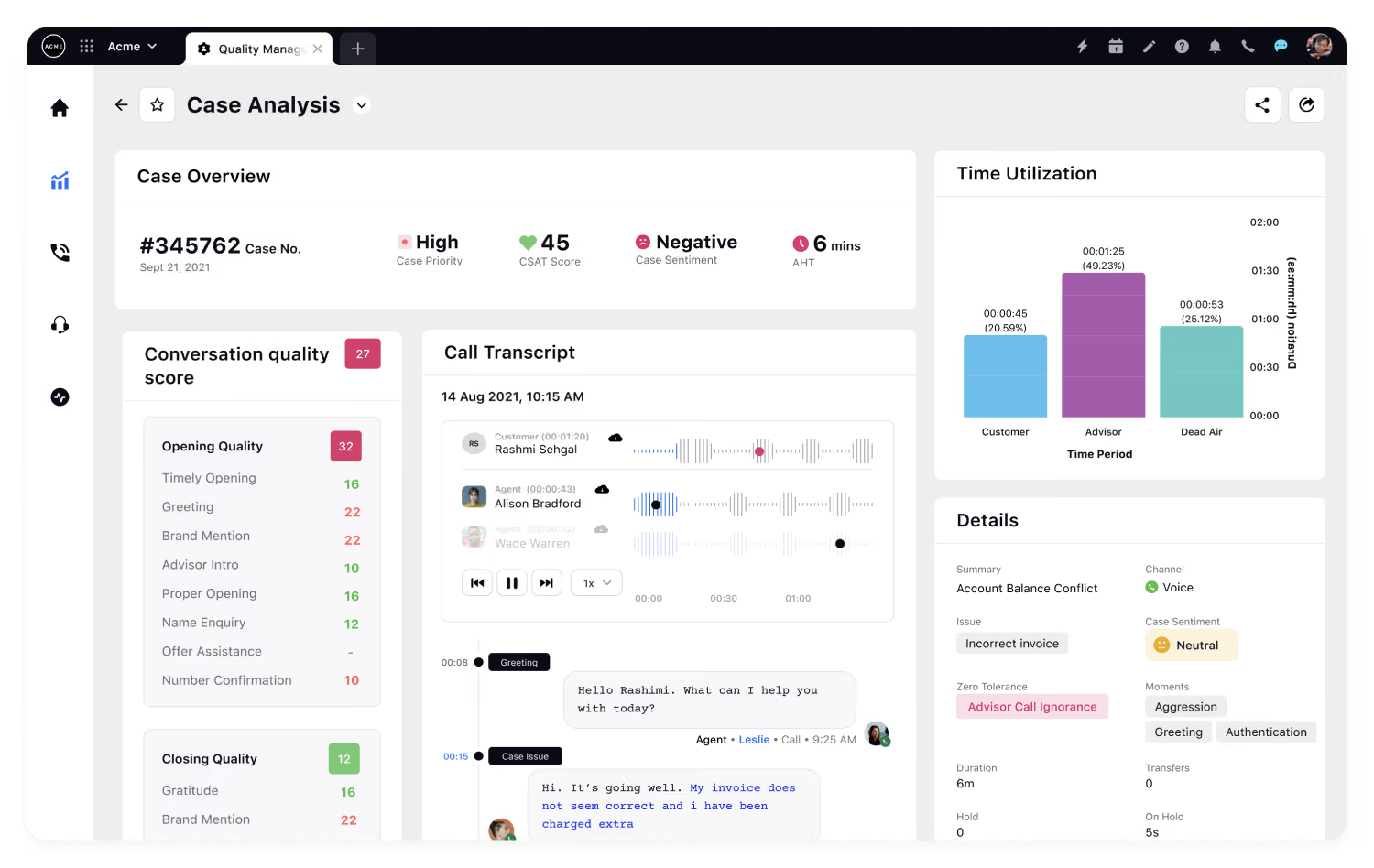
Sprinklr is a unified customer experience management platform with deep social listening and customer care at enterprise scale. Its AI-native solutions combine omnichannel social listening NLP, sentiment analysis, and generative AI agent assist. It fits large enterprises unifying social, care, and marketing on one platform.
Sprinklr serves more than 1,400 enterprises, including global brands and over half the Fortune 100. It is a Gartner Magic Quadrant Leader for both Voice of Customer Platforms and Social Media Management and Listening in 2026. The common caution from reviewers is complexity and total cost of ownership. See how a dedicated customer experience intelligence platform approaches the same feedback.
Key features
- Unified-CXM AI: Omnichannel automation across service, marketing, and social.
- Social listening NLP: Sentiment and trend analysis across digital channels.
- Generative AI agent assist: AI support for care and engagement workflows.
- 30+ digital channels: Broad coverage of social and messaging platforms.
Pros
- Market-leading social listening and care at enterprise scale.
- Recognized as a Gartner Magic Quadrant Leader in two categories in 2026.
- Broad channel coverage across social and messaging.
Cons
- Expensive and complex, built for large organizations.
- Add-on licensing structure raises total cost of ownership.
Pricing
Sprinklr Service has published per-seat pricing from $3,600 per seat per year; the broader enterprise platform is custom, quote-based. Vendr contract data puts the median enterprise deal at around $129,000 per year, ranging from roughly $26,000 to over $500,000, while SpendHound reports large enterprises average closer to $539,000 per year.
G2 rating
4.2 on G2 across 2,185 reviews for the overall Sprinklr brand; Sprinklr Service specifically scores around 4.5.
Best for
Large enterprise CX and social teams unifying listening, care, and engagement.
8. Pendo
What is Pendo?
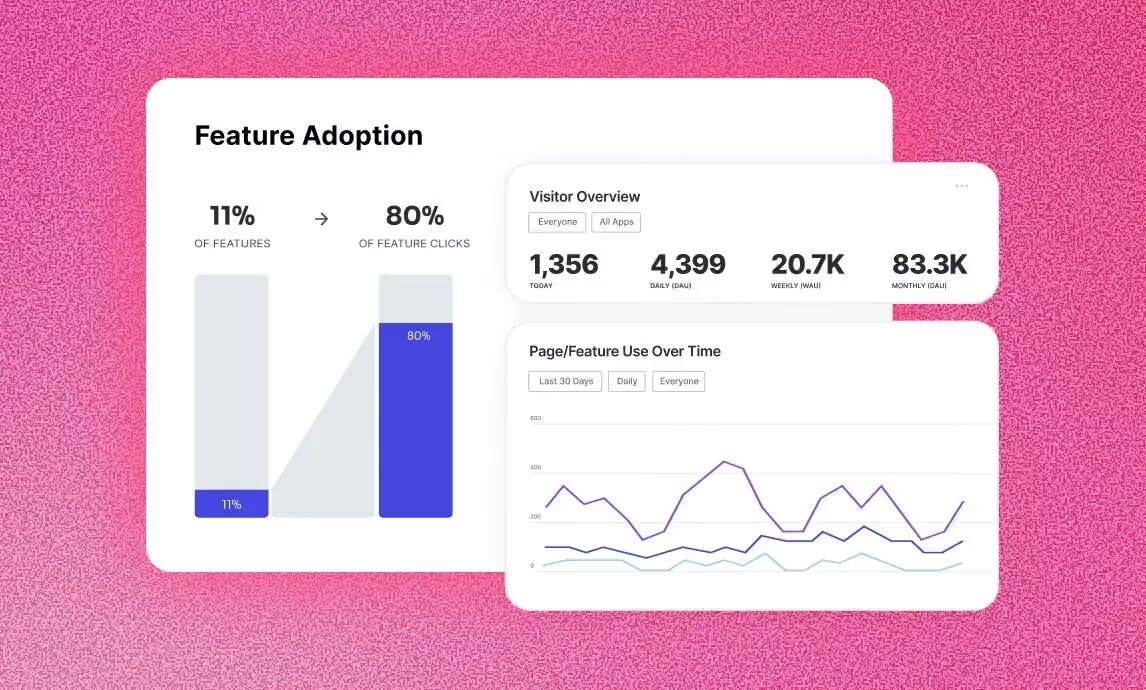
Pendo is a product analytics platform that combines feature-usage tracking with in-app feedback capture. It collects NPS and survey responses in-app alongside behavioral product data. It is designed for product teams that want to connect what users do with what they say.
Pendo focuses on digital product channels rather than multi-channel voice of customer analysis. It does not analyze support tickets, social, or open-ended review text at scale. That makes it a complement to a dedicated feedback analytics tool rather than a full replacement. Teams often pair it with one of the customer feedback analytics tools in this guide.
Key features
- Product analytics: Feature-usage and behavioral tracking inside your product.
- In-app guides: Onboarding and adoption guidance for users.
- In-app feedback: NPS and survey capture at the point of use.
- Roadmap tools: Prioritization features for product teams.
Pros
- Uniquely combines behavioral analytics with in-app feedback in one product.
- Free tier available for up to 500 monthly active users.
- Strong fit for product adoption and onboarding work.
Cons
- Not a text-analytics or multi-channel VoC platform.
- Does not analyze tickets, social, or review text at scale.
Pricing
Free tier for up to 500 monthly active users, with custom-quote paid plans priced per monthly active user and no published paid pricing. Vendr contract data puts the median paid contract at around $49,000 per year across 578 purchases, with deals ranging from roughly $18,200 to $151,700.
G2 rating
4.4 on G2 across 1,794 reviews.
Best for
Mid-market SaaS product teams pairing usage analytics with in-app feedback.
9. Dovetail
What is Dovetail?
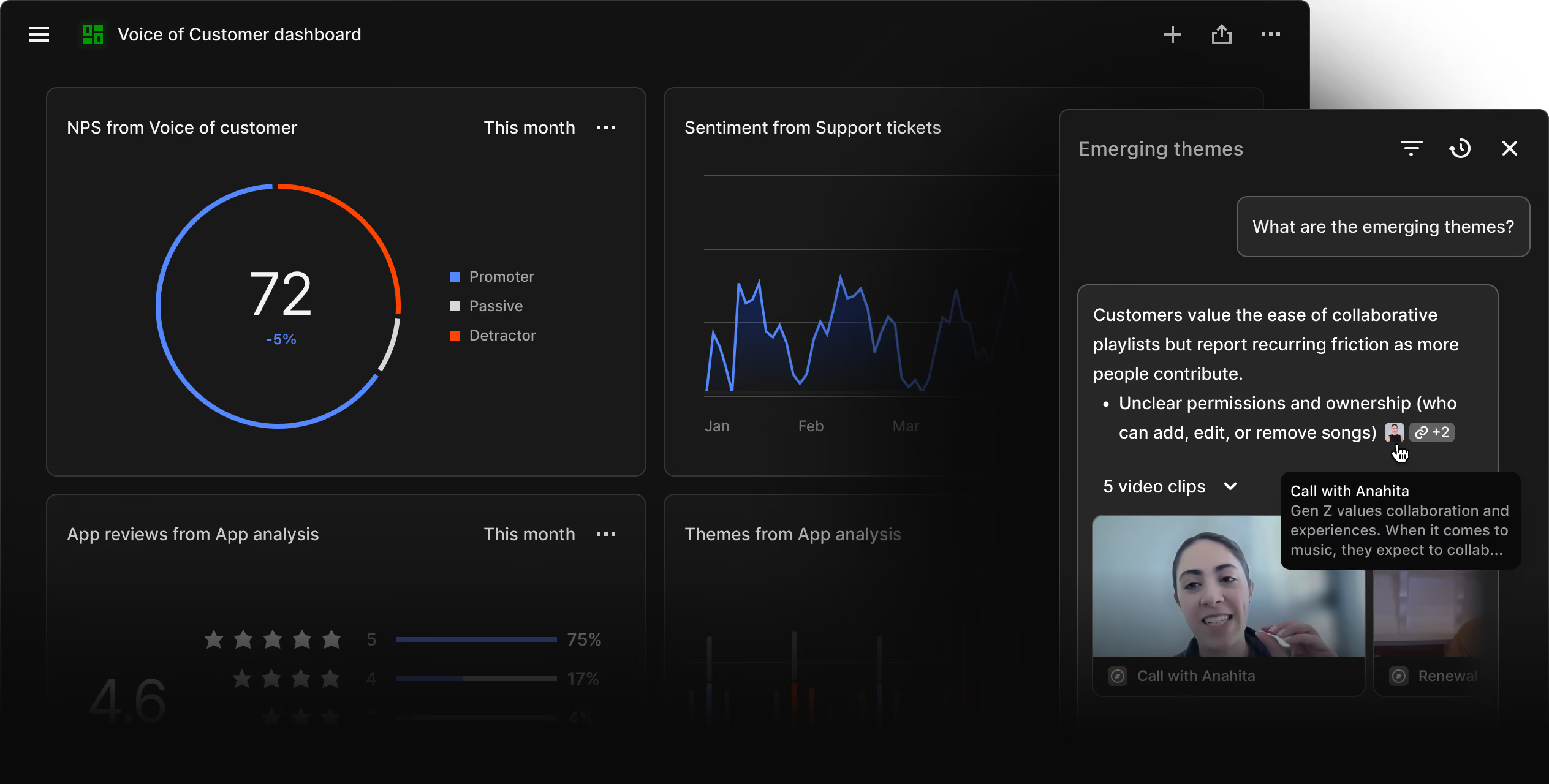
Dovetail is an AI-native customer research repository for qualitative analysis. It offers auto-transcription, AI clustering, semantic search, and conversational query against research data, with Anthropic's Claude integrated for analysis. It suits UX and research teams that run frequent qualitative studies.
Dovetail centralizes sales calls, user feedback, support tickets, and voice of customer data. It integrates with tools like Gong, Intercom, Zoom, Salesforce, and Slack to analyze video, audio, documents, and text. Clients include Meta, Volvo, AWS, Dyson, and Deloitte.
Key features
- AI-native research repo: Auto-transcription, clustering, and semantic search across studies.
- Conversational query: Ask questions directly against research data.
- Broad integrations: Gong, Intercom, Zoom, Salesforce, Slack, and more.
- Free transcription: Auto-transcription in 41 languages on the free plan.
Pros
- Industry-standard qualitative research repository with a free tier.
- Strong integrations for calls, documents, and tickets.
- AI clustering speeds up qualitative synthesis.
Cons
- Not designed for quantitative survey analytics.
- Reviewers note rising pricing, UI changes, and still-maturing AI features.
Pricing
Free tier for up to 3 editors and 1 project, with the Professional plan from around $29 per editor per month and Enterprise by custom quote.
G2 rating
4.5 on G2 across 169 reviews.
Best for
Mid-market and enterprise UX research teams that run frequent qualitative research.
10. SentiSum
What is SentiSum?
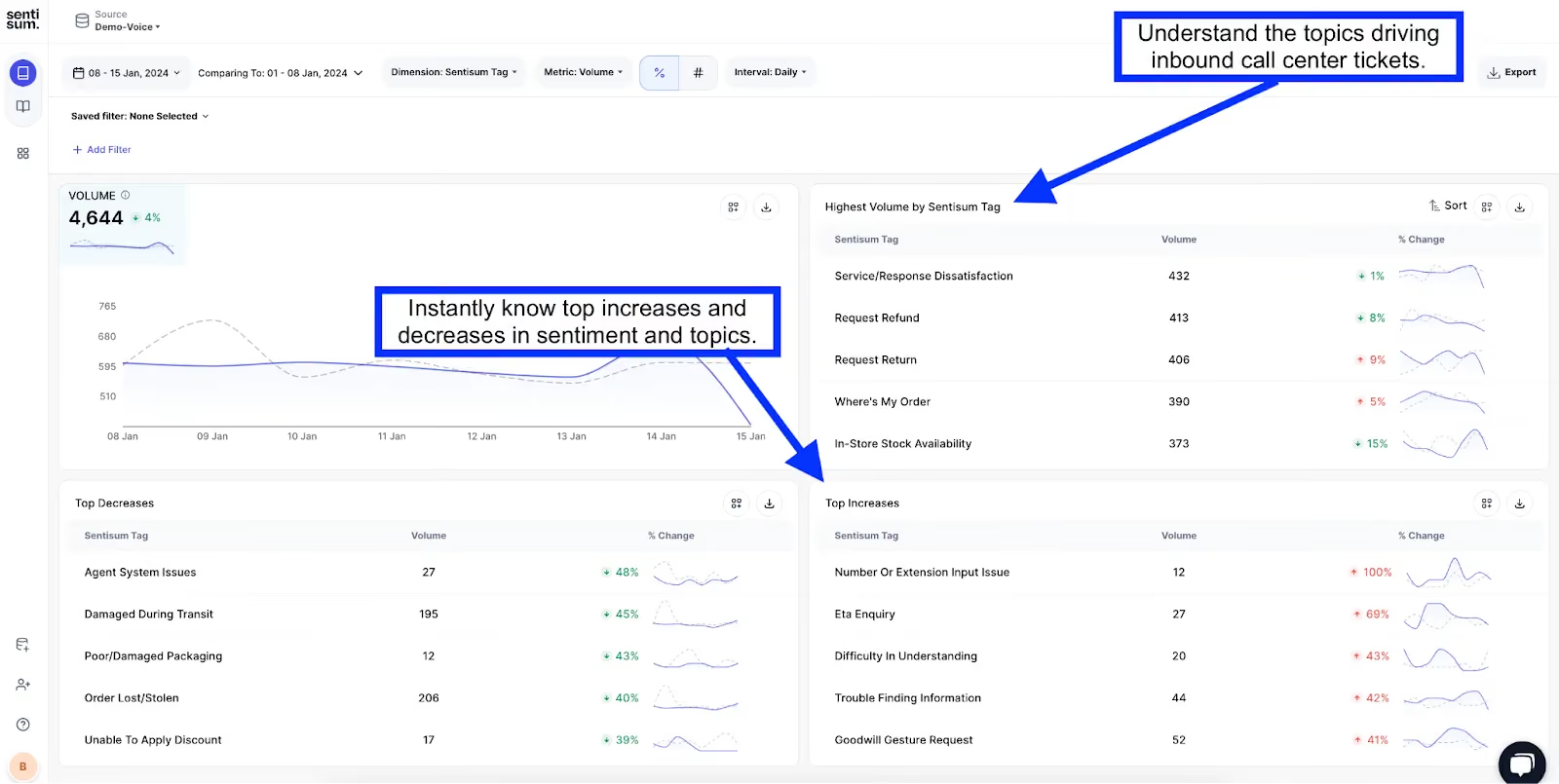
SentiSum is an AI-native voice of the customer platform focused on support-ticket tagging and root-cause analysis. It uses real-time AI to identify root causes, not just topics, across support interactions. It suits CX and support teams automating high-volume ticket analysis.
SentiSum ingests support tickets, chat logs, surveys, and reviews, with connectors to tools like Zendesk and Trustpilot. Named clients include Ticketmaster, Cleo, Schuh, Gousto, and JustPark. Its best fit is growth-stage to mid-market support teams rather than full enterprise VoC. Larger programs usually need broader enterprise feedback analytics.
Key features
- Real-time root-cause tagging: Identifies why tickets arise, not just the topic.
- Support-channel coverage: Tickets, chat, surveys, and reviews.
- Automated tagging: Reduces manual triage for support teams.
- CX integrations: Connectors including Zendesk and Trustpilot.
Pros
- Goes beyond tagging to surface root causes.
- Strong automation for high-volume support ticket analysis.
- Highest G2 satisfaction score among tools with any reviews.
Cons
- Only 14 G2 reviews, far below a reliable benchmarking threshold.
- Starting price near $3,000 per month may be prohibitive for small teams.
Pricing
Published starting price around $3,000 per month, scaling by channels, users, and ticket volume, with no visible free tier.
G2 rating
4.8 on G2, based on just 14 reviews, so treat this as directional rather than statistically robust.
Best for
Growth-stage to mid-market CX and support teams automating ticket analysis.
unitQ Alternatives: Frequently Asked Questions
What are the best unitQ alternatives in 2026?
The best unitQ alternatives in 2026 are Chattermill, Enterpret, and Thematic. Chattermill leads for enterprise CX and insights teams that need accurate, multilingual, multi-channel analysis. Enterpret suits product-led B2B teams wanting a self-maintaining taxonomy, and Thematic fits insights teams that need explainable themes. Our roundup of customer feedback analysis tools covers the wider field.
What tools are most similar to unitQ for customer feedback analytics?
The closest unitQ competitors for customer feedback analytics are Enterpret, Thematic, SentiSum, and Chattermill. Each unifies multi-channel feedback and applies AI to surface themes and sentiment. Chattermill differs by scoring sentiment at the aspect level through ABSA, which holds accuracy on mixed feedback. See how these voice of customer platforms compare in our best AI voice of customer tools guide.
What is the best enterprise alternative to unitQ for high-volume, multilingual feedback?
Chattermill is the best enterprise alternative to unitQ for high-volume, multilingual feedback. The AI-native CXI platform unifies 65+ channels across 100+ languages and applies Aspect-Based Sentiment Analysis for accuracy at scale. SOC 2 Type II and ISO 27001 certifications support enterprise governance. Our guide to the best enterprise voice of customer platforms explains what to look for.
Why do teams switch from unitQ?
Teams switch from unitQ when its product-quality focus cannot keep up with full voice of customer needs. Quality monitoring is a subset of broader feedback analysis, and enterprise CX and insights teams often need wider channel coverage, aspect-level sentiment, and formal governance. unitQ also publishes no pricing, offers no free trial, and has a small G2 review base of 48 reviews.
Are there free or lower-cost alternatives to unitQ?
Yes, there are lower-cost alternatives to unitQ. Pendo offers a free tier for up to 500 monthly active users, and Dovetail has a free plan plus paid plans from around $29 per editor per month. These suit smaller product and research teams, while enterprise feedback analytics platforms like Chattermill use custom pricing scoped to your channels.
The Bottom Line: The Best unitQ Alternatives for Enterprise CX Teams
unitQ is a capable quality intelligence platform for consumer-app product and QA teams. But quality monitoring is only one slice of the customer picture. When feedback arrives across dozens of channels and languages, and accuracy on mixed comments matters, enterprise teams need broader, more precise analysis.
Among these unitQ alternatives, Chattermill is our recommendation for enterprise CX and insights teams. The AI-native CXI platform pairs Aspect-Based Sentiment Analysis and the proprietary Lyra model with 65+ channels, 100+ languages, and enterprise-grade certifications. That combination turns messy feedback into decisions your roadmap can act on. You can review the full capability set on the platform overview.
Ready to see aspect-level accuracy on your own feedback? Book a personalized demo.



See Chattermill in action on your own feedback
Book a demo


