


6 Best SmartSurvey Alternatives for 2026



The CX intelligence
platform that's AI-native by design
Book a demoSmartSurvey is a capable survey builder, but it collects responses far better than it analyzes them. The best SmartSurvey alternatives close that gap, and if your team needs to turn open-text feedback into insight, the deciding factor is AI-powered sentiment and text analysis.
Quick Summary
The best SmartSurvey alternatives for sentiment analysis are the tools that read what customers actually write, not just tally what they click. This guide compares 6 tools, led by Chattermill for aspect-level AI sentiment and theme analysis, Qualtrics for enterprise experience management with Text iQ, and SurveyMonkey for accessible, familiar surveying.
We evaluated 6 sentiment analysis and feedback tools across text-analysis depth, feedback channel coverage, ease of use, pricing transparency, UK/GDPR data handling, and G2 ratings. Chattermill is the best choice for AI sentiment and theme analysis on unstructured feedback. Qualtrics is the strongest option for large enterprise experience-management and research programs. SurveyMonkey is the best choice for teams that want a familiar, accessible survey tool with optional AI sentiment analysis.
If your priority is analysis rather than form-building, our guide to customer feedback analysis tools provides deeper category context. Before we get into the detailed comparisons, here are our top three picks:
Why Listen To Us
Chattermill is an AI-native customer experience intelligence platform used by CX, insights, and product teams at companies including Uber, HelloFresh, Booking.com, H&M, Tesco, and Santander. We analyze millions of pieces of unstructured customer feedback every day, so our view of what separates a survey tool from a feedback-analysis platform comes from hands-on work rather than a feature checklist. You can see how the Chattermill platform approaches sentiment and theme analysis at scale.

6 Top SmartSurvey Alternatives: Head to Head Comparison
How We Evaluated These Tools
We ranked these SmartSurvey alternatives around the capability that matters most for this use case: turning open-text responses into reliable insight. Our evaluation weighed seven criteria.
- Sentiment and text-analysis depth: Does the tool score sentiment accurately on mixed, multi-topic feedback, or does it collapse a comment into a single label?
- Feedback channel coverage: Can it unify surveys, reviews, support tickets, and social feedback, or is it limited to surveys?
- Ease of use: How quickly can a non-technical CX or insights team reach an answer?
- Integrations: Does it connect to the tools where feedback already lives?
- Pricing transparency: Is pricing published, or quote-based?
- UK/GDPR data handling: Does it offer UK/EU data hosting and GDPR-aligned processing for UK buyers?
- G2 ratings: What do verified reviewers report at scale?
For more on how we frame the wider market, see our guides to the best AI voice of customer tools and enterprise voice of customer platforms.
1. Chattermill
What is Chattermill?
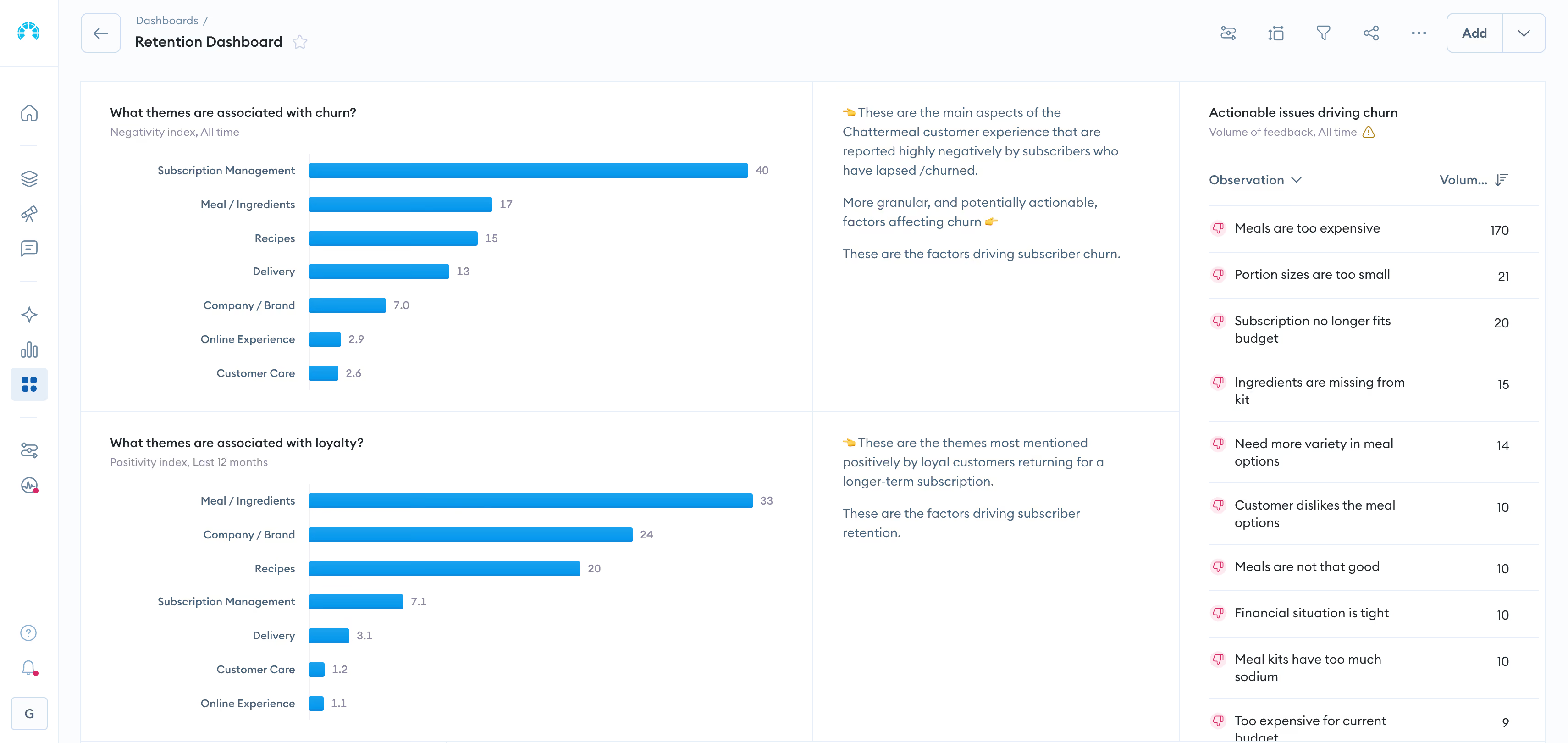
Chattermill is an AI-native customer experience intelligence platform built for teams that need to analyze feedback, not just collect it. Where a survey tool stops at response counts and star ratings, the AI-native CXI platform reads every open-text comment and tells you what customers are talking about, how they feel about each topic, and how that sentiment moves metrics like NPS, CSAT, and CES.
The differentiator is Aspect-Based Sentiment Analysis (ABSA). Most tools assign one sentiment score to a whole comment, so a review that praises delivery but criticises pricing gets averaged into a single, misleading label. Chattermill scores sentiment per theme within that same comment, powered by its proprietary Lyra model, which preserves signal on the messy, mixed-topic feedback where simpler tools blur it.
Key features
- Aspect-Based Sentiment Analysis (ABSA) that scores sentiment per theme within a single piece of feedback.
- The Lyra model, purpose-built for customer experience intelligence, working across 100+ languages.
- Unified feedback from 65+ channels, including surveys, reviews, support tickets, social, app stores, and calls.
- Automated theme detection, anomaly alerts, and impact analysis against NPS, CSAT, and CES.
- The Chattermill MCP server, so teams can query and act on feedback data directly inside AI agents.
Pros and Cons
Pros:
- Best-in-class sentiment accuracy on unstructured, multi-topic feedback.
- Analyzes feedback from far beyond surveys, unifying every channel in one place.
- Ties feedback themes directly to business metrics, not just response volume.
Cons:
- Quote-based pricing means it is a bigger investment than an entry-level survey tool.
- Built for teams with real feedback volume, so it is more than a small team running occasional surveys needs.
Pricing
Chattermill uses custom, quote-based pricing scoped to your feedback volume and channels. You can book a personalized demo to get pricing for your use case.
G2 rating
Chattermill holds a G2 rating of approximately 4.5.
Best for
Chattermill is the best SmartSurvey alternative for teams that have outgrown survey-tool reporting and need to analyze feedback at scale. If your goal is to understand the "why" behind the scores across every channel and language, aspect-level analysis makes it the strongest pick in this guide. Compare it against the wider field in our customer feedback analysis tools roundup.
2. Qualtrics
What is Qualtrics?
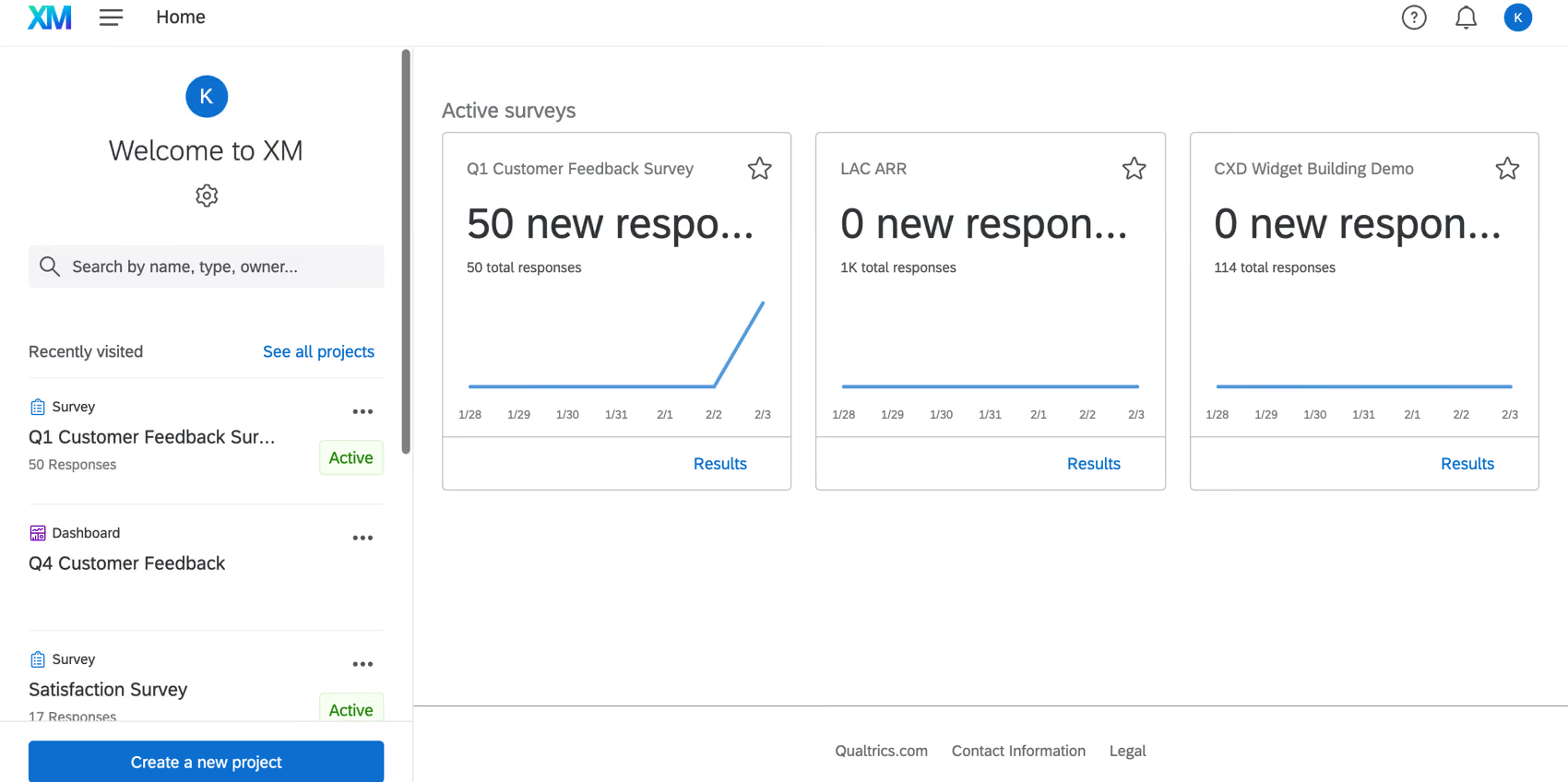
Qualtrics is an enterprise experience-management platform and the heavyweight alternative for large research and CX programs. It combines survey design with Text iQ, its AI engine for sentiment and topic analysis, and sits at the centre of many enterprise measurement stacks. It appears frequently in our enterprise voice of customer platforms analysis for exactly this reason.
Key features
- Text iQ AI sentiment and topic analysis on open-text responses.
- Advanced survey logic, panels, and research methodology tooling.
- Broad integrations across web, digital, and contact-centre channels.
- Enterprise governance, security, and workflow controls.
Pros and Cons
Pros:
- Deep research and survey methodology feature set.
- Established, well-supported enterprise platform.
- Text iQ adds credible sentiment analysis to survey data.
Cons:
- Cost and complexity are high for teams that only need feedback analysis.
- Survey-first architecture means non-survey channels can require extra configuration.
Pricing
Qualtrics uses custom, quote-based pricing with no public price list. Vendr's verified-contract data puts the median contract at roughly $30,000 per year, with observed deals ranging from $6,880 to $139,920. At the top end, procurement benchmark platform SpendHound reports enterprise contracts averaging around $658,000 per year, so real spend scales sharply with modules, seats, and response volume.
G2 rating
Qualtrics holds a G2 rating of 4.4 across roughly 3,000 reviews.
Best for
Qualtrics is best for large enterprises running formal experience-management and research programs that want survey depth with built-in sentiment analysis.
3. SurveyMonkey
What is SurveyMonkey?
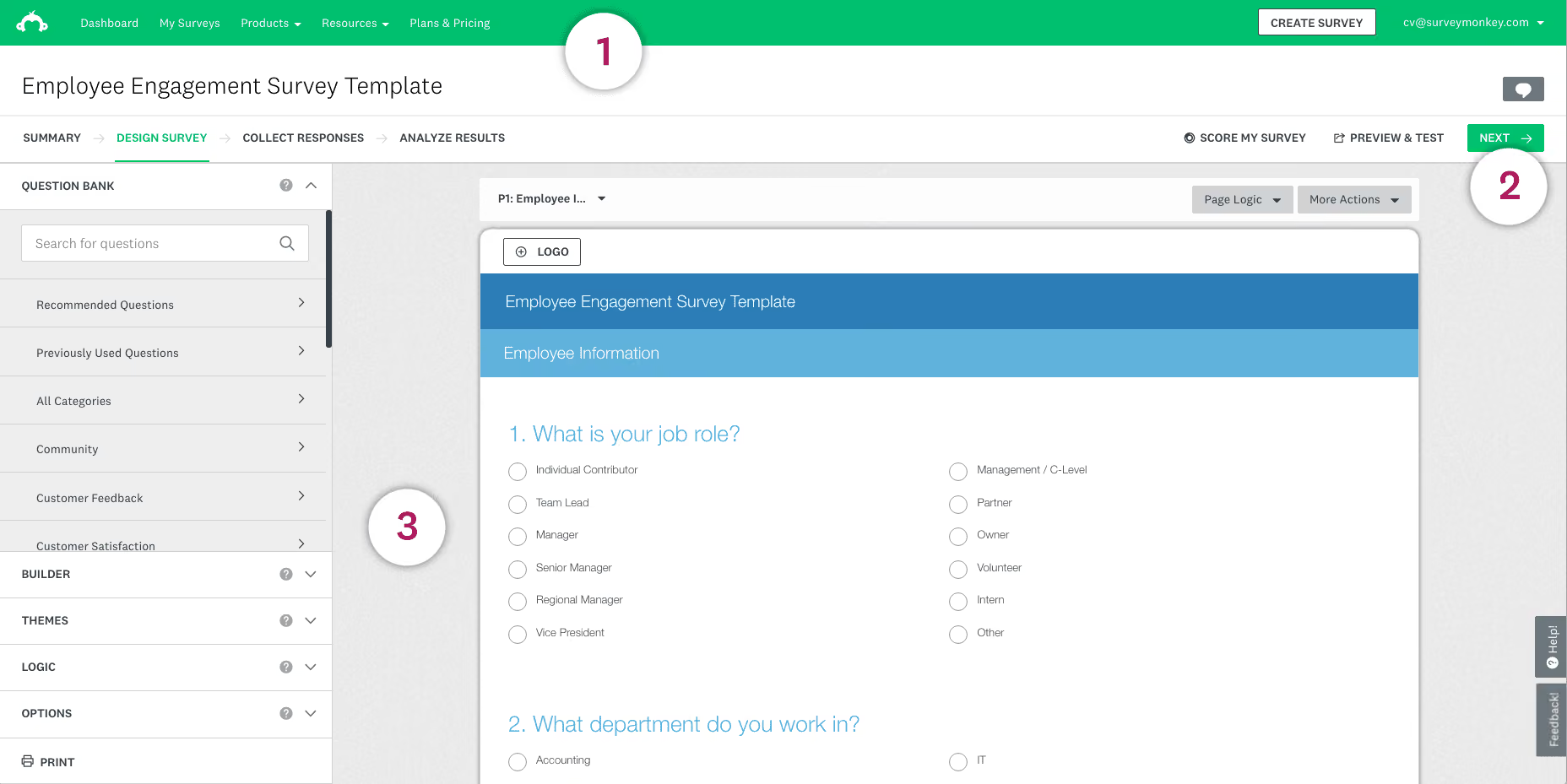
SurveyMonkey is the most widely used survey tool and the alternative most buyers already know. It is accessible, quick to launch, and adds AI sentiment analysis on its higher-priced Premier tier, making it a familiar entry point for teams stepping up from basic surveys.
Key features
- Fast, template-driven survey creation with a low learning curve.
- AI sentiment analysis available on the Premier plan.
- Large integration marketplace and broad distribution options.
- Benchmarks and reporting for common survey use cases.
Pros and Cons
Pros:
- Familiar, easy to adopt across non-technical teams.
- Flexible plans that scale from individual to team use.
- Sentiment analysis available without leaving the platform.
Cons:
- Advanced sentiment analysis is gated behind the pricier Premier tier.
- Analysis is survey-centric and does not unify other feedback channels.
Pricing
SurveyMonkey's Team Advantage plan starts at roughly $30 per user per month with a three-user minimum, so around $90 per month effective. The Individual Premier plan, at roughly $139 per month, adds AI sentiment analysis. Its Enterprise tier is quote-based; SpendHound benchmark data puts the average enterprise contract at roughly $38,800 per year.
G2 rating
SurveyMonkey holds a G2 rating of 4.4 across roughly 23,400 reviews.
Best for
SurveyMonkey is best for SMB and mid-market teams that want a familiar, accessible survey tool and can justify the Premier tier for sentiment analysis. Teams that need deeper analysis often graduate to a dedicated voice of customer platform.
4. QuestionPro
What is QuestionPro?
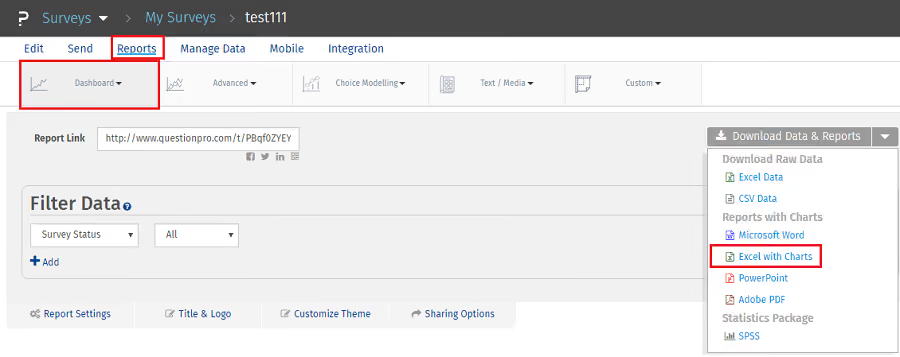
QuestionPro is a research-grade survey platform that delivers advanced analysis at a more accessible price point. It includes AI-powered sentiment analysis alongside research techniques like TURF and crosstabs, and it offers a genuine free tier for teams getting started.
Key features
- AI-powered sentiment analysis on open-text responses.
- Advanced research tools including TURF analysis and crosstabs.
- A free Essentials tier plus paid Advanced and Teams plans.
- An enterprise Research Suite for larger programs.
Pros and Cons
Pros:
- Strong research depth relative to price.
- Free tier lowers the barrier to entry.
- Sentiment analysis included without an enterprise contract.
Cons:
- Interface can feel dense for casual users.
- Feedback analysis remains survey-led rather than fully omnichannel.
Pricing
QuestionPro offers a free Essentials tier, a paid Advanced plan at roughly $99 per user per month, and a Team Edition from roughly $83 per user per month with a five-user minimum. The enterprise Research Suite is fully custom and quote-based, and no verified public benchmark exists for its average contract value, so budget it through a direct sales conversation rather than a list price.
G2 rating
QuestionPro holds a G2 rating of 4.5 across roughly 1,100 reviews.
Best for
QuestionPro is best for research teams that need analytical depth and sentiment analysis without an enterprise-level budget. For a broader view of analysis-first options, see our customer feedback analysis tools guide.
5. Alchemer
What is Alchemer?
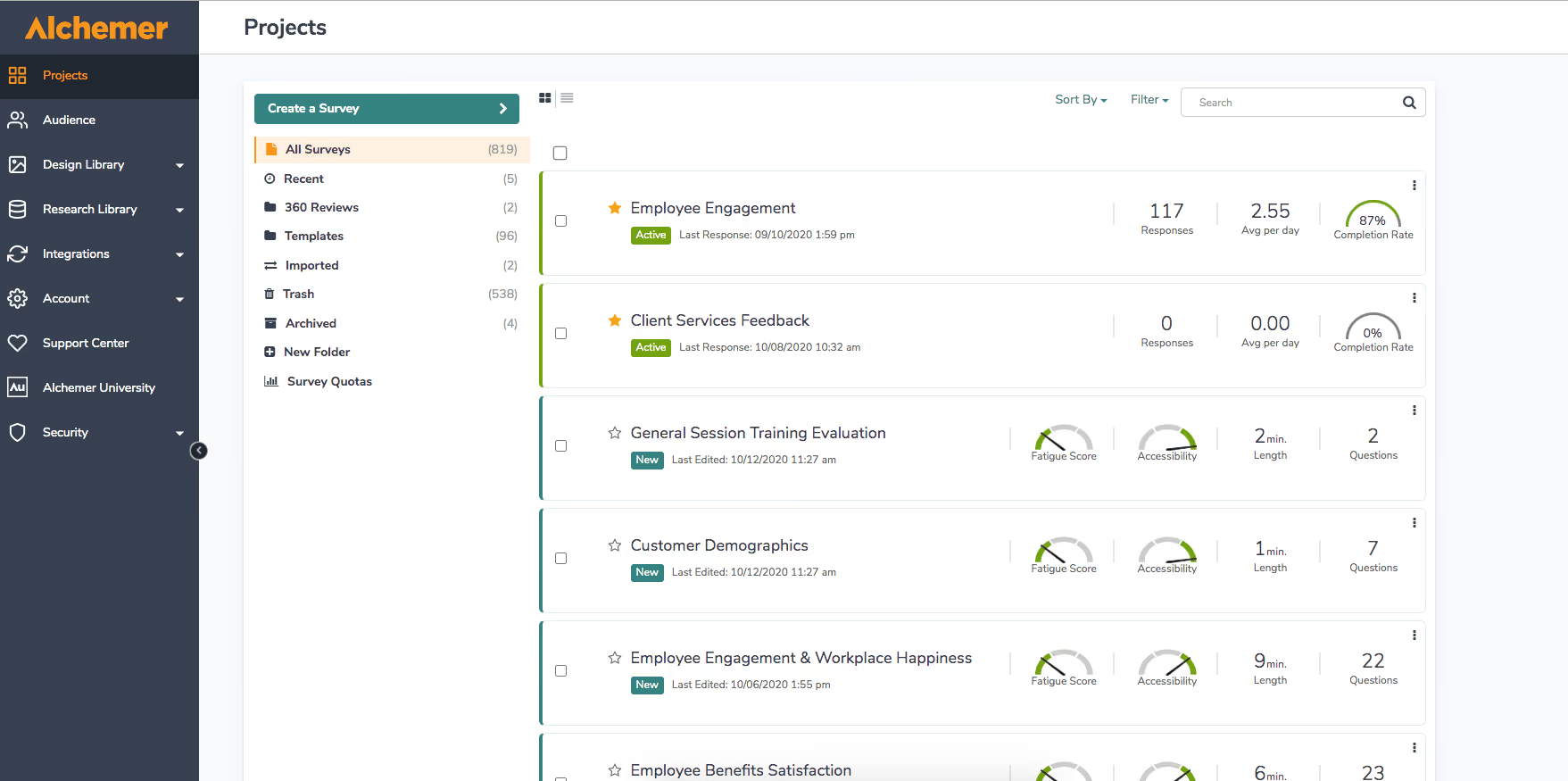
Alchemer is a flexible survey and feedback platform with a strong voice-of-customer pedigree and predictable per-seat pricing. It supports open-text analysis on its higher tiers and appeals to teams that value configurability and control over their survey programs.
Key features
- Highly configurable survey building and logic.
- Open-text analysis available on higher-tier plans.
- Broad integrations for web, email, and workflow tools.
- Predictable per-seat pricing across defined tiers.
Pros and Cons
Pros:
- Flexible, customisable survey design.
- Transparent per-seat pricing at lower tiers.
- Solid VoC track record.
Cons:
- Deeper text analysis sits on more expensive tiers.
- Sentiment capability is lighter than dedicated analysis platforms.
Pricing
Alchemer's Collaborator plan is $55 per user per month, Professional is $165 per user per month, and Full Access is $275 per user per month. Business and Platform tiers are quote-based; third-party estimates from ITQlick put a roughly 100-user enterprise deployment at approximately $59,000 to $119,000 per year, depending on features and support.
G2 rating
Alchemer holds a G2 rating of 4.4 across roughly 950 reviews.
Best for
Alchemer is best for teams that want flexible, configurable survey building with VoC capabilities and predictable seat-based pricing.
6. Zonka Feedback
What is Zonka Feedback?
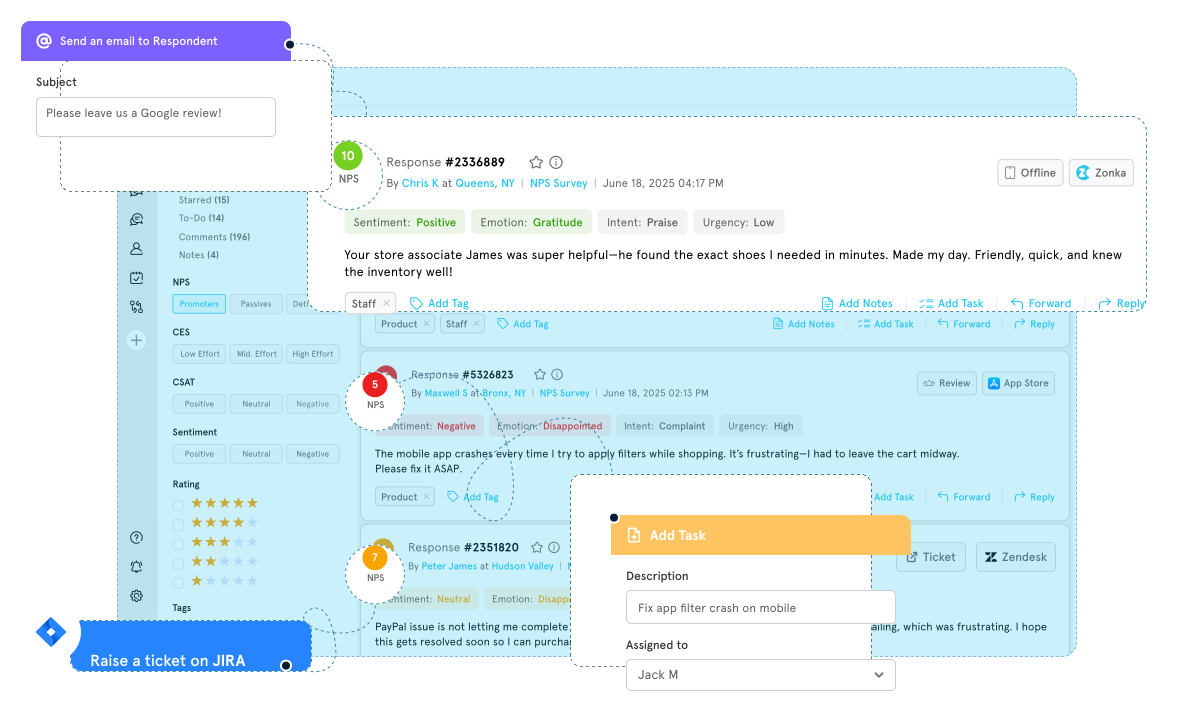
Zonka Feedback is an omnichannel CX feedback tool aimed at SMB and mid-market teams. It pairs multichannel feedback collection with an AI Feedback Intelligence engine that handles thematic and sentiment analysis, making it a value-oriented option for teams that want analysis without an enterprise price tag.
Key features
- Omnichannel collection across 30+ channels, including email, SMS, in-app, kiosk, and web.
- AI Feedback Intelligence engine for thematic and sentiment analysis.
- Real-time alerts and CX metric tracking (NPS, CSAT, CES).
- Templates and workflows aimed at faster setup.
Pros and Cons
Pros:
- Affordable entry point for omnichannel feedback.
- AI analysis available as an add-on tier.
- Broad channel coverage for its price band.
Cons:
- The AI Feedback Intelligence tier raises cost significantly.
- Smaller review base than the more established platforms.
Pricing
Zonka Feedback's Customer Feedback plan starts at $99 per month. Its AI Feedback Intelligence tier, which adds thematic and sentiment analysis, starts at roughly $799 per month.
G2 rating
Zonka Feedback holds a G2 rating of 4.7 across roughly 80 reviews.
Best for
Zonka Feedback is best for SMB and mid-market teams that need omnichannel CX feedback and want an accessible route into AI analysis. As feedback volume grows, teams often compare it against enterprise voice of customer platforms.
SmartSurvey Alternatives: Frequently Asked Questions
What are the best SmartSurvey alternatives?
The best SmartSurvey alternatives are Chattermill, Qualtrics, and SurveyMonkey. Chattermill leads for AI sentiment and theme analysis on unstructured feedback, Qualtrics suits large enterprise experience-management programs, and SurveyMonkey is the most accessible familiar survey tool. Our voice of customer tools guide covers the wider field.
Which SmartSurvey alternative is best for feedback and sentiment analysis?
Chattermill is the best SmartSurvey alternative for feedback and sentiment analysis. Its Aspect-Based Sentiment Analysis (ABSA) scores sentiment per theme within a single comment rather than assigning one label to the whole response, so it stays accurate on mixed, multi-topic feedback where simpler tools lose the signal. See how it works on the platform overview.
Is there a free SmartSurvey alternative?
Yes. QuestionPro offers a free Essentials tier, and SurveyMonkey provides limited free plans. These free tiers are fine for basic surveys, but AI sentiment and text analysis generally require paid plans, and dedicated analysis at scale sits on higher tiers. For a fuller comparison, see our customer feedback analysis tools guide.
Are these SmartSurvey alternatives suitable for UK / GDPR requirements?
Most of these tools support GDPR-aligned processing, and several offer UK or EU data hosting for buyers with data-residency needs. UK teams should confirm hosting region, data-processing terms, and sub-processor lists during procurement. Enterprise platforms like Chattermill and Qualtrics are built with the governance and security controls that UK CX and insights teams typically require. You can review these controls on the Chattermill platform overview.
The Bottom Line: Choosing Your SmartSurvey Alternative
SmartSurvey is a solid survey builder, but the alternatives that win in 2026 are the ones that analyze feedback rather than simply collect it. For teams whose real challenge is understanding the "why" behind the numbers, the AI-native CXI platform stands apart: Chattermill's Aspect-Based Sentiment Analysis, Lyra model, 65+ feedback channels, and 100+ languages turn scattered, unstructured feedback into decisions that move NPS, CSAT, and CES.
Choose the tool that matches your ambition. If that ambition is to make every customer voice count, book a personalized demo and see how Chattermill turns feedback into your next advantage.



See Chattermill in action on your own feedback
Book a demo


