


9 Best Survicate Alternatives for 2026



The CX intelligence
platform that's AI-native by design
Book a demoSurvicate is a capable survey tool, but most teams hunting for the best Survicate alternatives share one problem: collecting feedback is no longer the hard part. Analyzing it at scale is.
Quick Summary
The best Survicate alternatives for 2026 are Chattermill for AI-native feedback analysis at scale, Qualtrics for enterprise experience management, and Hotjar (Contentsquare) for pairing on-site behavior with feedback. This guide reviews 9 tools in depth so you can match one to your team.
Here is our editorial pick. Chattermill leads because it scores sentiment per theme inside each response with Aspect-Based Sentiment Analysis, not one blurry score per comment. Qualtrics wins for large enterprises that need omnichannel experience management and have the budget to match. Hotjar (Contentsquare) is the sharpest choice for website and UX teams who want heatmaps and session replay sitting next to their feedback.
Before we get into the detailed comparisons, here are our top three picks:
Why Listen To Us
We are Chattermill, an AI-native customer experience intelligence platform used by CX, insights, and product teams to analyze feedback at scale. Brands like Uber, H&M, HelloFresh, Booking.com, Amazon, and Tesco rely on our platform to turn millions of comments into decisions, and we hold a G2 rating of around 4.5.
We spend every day inside the customer feedback category, so we know where survey tools stop and analysis begins. Yes, Chattermill is on this list and ranked first. We explain exactly how we evaluated every tool below, and we included honest pros and cons for each one, including our own. If you want the wider landscape, our guides to customer feedback analysis tools and the best AI voice of customer tools cover it in depth.

9 Top Survicate Alternatives: Head to Head Comparison
How We Evaluated These Tools
A quick disclosure first: Chattermill publishes this guide, and Chattermill is included and ranked first. We think transparency matters more than pretending we are neutral, so here is exactly how we scored every tool, including our own.
We weighed six criteria, each tied to a real buying decision:
- Analysis depth: How well the tool turns raw feedback into themes, drivers, and decisions, not just charts.
- Feedback channel coverage: How many sources and languages the tool can unify in one place.
- AI and sentiment accuracy: Whether the AI reads mixed, multi-topic feedback correctly or flattens it.
- Integrations: How cleanly the tool connects to your existing stack and data warehouse; see how Chattermill integrations approach this.
- Ease of use: How quickly a non-technical team gets to an answer.
- Pricing transparency: How clearly the vendor communicates cost before a sales call.
We drew on public product documentation, G2 ratings as of September 2026, and our own category expertise. Ratings are approximate and change often, so treat them as a signal, not gospel.
What Is Survicate (and Why Teams Look for Alternatives)?
Survicate is a customer feedback and survey platform that collects responses across your website, web app, mobile, and email, with 40+ native integrations and a G2 rating of around 4.6. It is a genuinely good collection tool, and for many teams the survey itself is where the story ends.
Here is the familiar model. For years, the job of a feedback tool was simple: ask a question, gather answers, chart the score. Survicate does that well. But the job has changed. CX, insights, and product leaders now sit on feedback from support tickets, app reviews, social posts, and surveys all at once, and the pressing question is not "did we collect it?" but "what is it telling us, at scale?"
That is where a collection-first tool strains. Survicate is strong at gathering feedback and weaker at deep, multi-topic analysis across large volumes. When one response praises your onboarding and slates your pricing in the same breath, a single sentiment score per comment loses the plot. Teams that outgrow survey dashboards start looking for a dedicated feedback analysis platform, and the nine tools below are the strongest options among today's voice of customer tools in 2026.
1. Chattermill
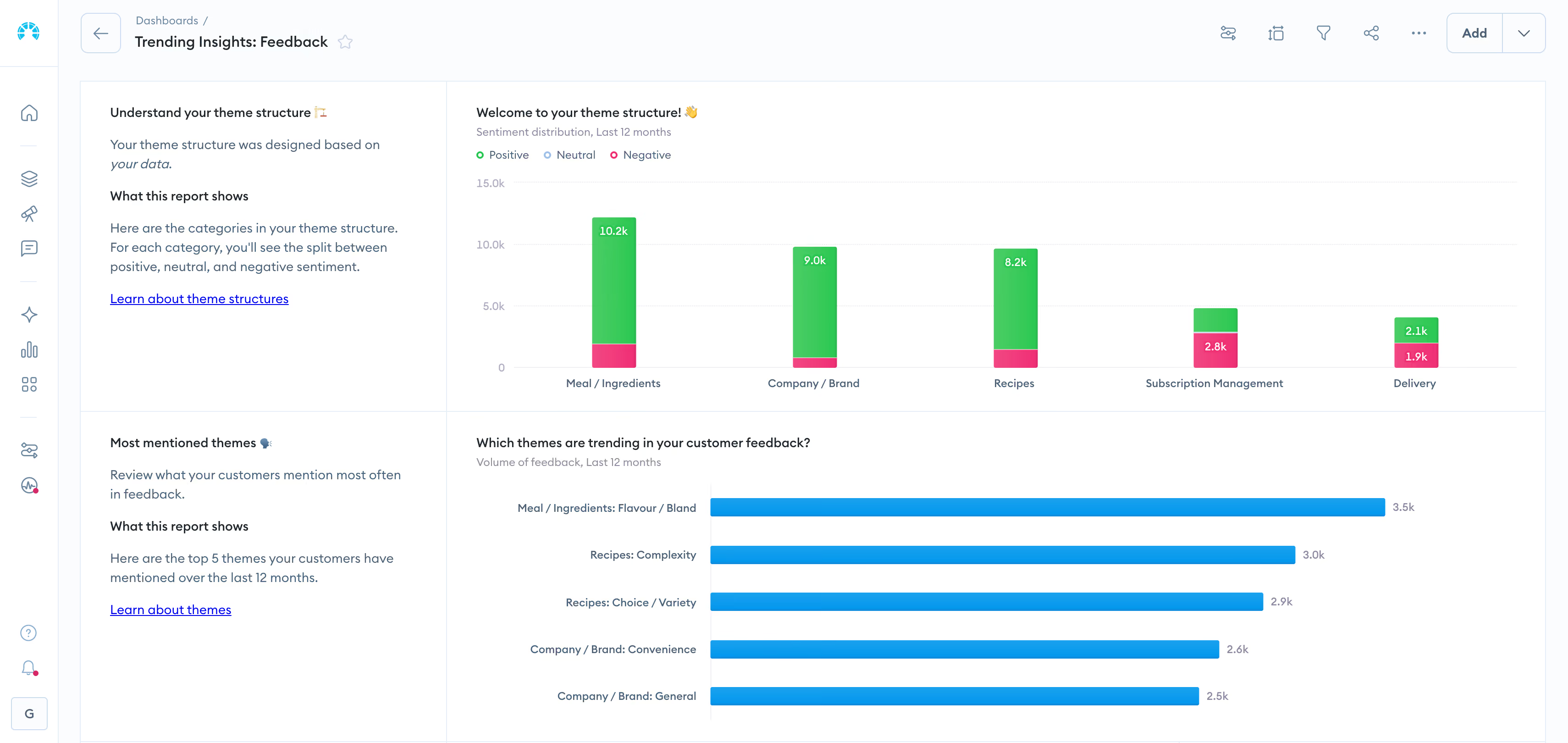
What is Chattermill?
Chattermill is an AI-native CXI platform that unifies feedback from every channel and analyzes it with proprietary AI. It is built for CX, insights, and product teams who need to understand customer feedback at scale, not just collect it.
Where survey-first tools stop at the response, the AI-native CXI platform starts there. It consolidates, tags, and analyzes feedback from 65+ sources across 100+ languages, then surfaces the themes, sentiment, and trends that move your metrics. You can see the full picture on the platform overview.
The differentiator is analysis depth. Most tools assign one sentiment score to a whole comment. Chattermill uses Aspect-Based Sentiment Analysis to score sentiment per theme within a single response, so mixed feedback stays readable instead of averaging out to a meaningless "neutral."
Key features
- Aspect-Based Sentiment Analysis (ABSA): Scores sentiment per theme inside each response, preserving signal on mixed, multi-topic feedback.
- Proprietary Lyra AI model: Purpose-built for customer experience intelligence rather than repurposed from a generic model.
- 65+ channel unification: Brings surveys, reviews, tickets, and social feedback into one place across 100+ languages.
- Business metric impact: Ties feedback directly to NPS, CSAT, and CES so you can measure what moves the number; explore the platform overview.
- Anomaly detection and alerts: Flags emerging issues automatically before they reach a dashboard review.
- Chattermill MCP server: Lets teams query and act on feedback data directly inside AI agents.
Pros
- Deepest analysis on this list, built for messy real-world feedback at scale.
- Enterprise-grade client base, including Uber, H&M, HelloFresh, Booking.com, Amazon, and Tesco.
- Connects across your stack; see the integrations library.
- Evidence-backed insights that tie feedback to revenue and retention metrics.
Cons
- Not built for teams that only need a quick, standalone survey widget.
- Custom pricing means you need to book a demo rather than self-serve.
Pricing
Custom and enterprise pricing based on your feedback volume and channels. Book a personalized demo for a tailored quote.
G2 rating
Chattermill G2 score: approximately 4.5.
Best for
CX, insights, and product teams at scaling and enterprise brands who need to analyze feedback across many channels, not just collect it. If you are weighing us directly against the incumbent, our Chattermill vs Survicate breakdown goes deeper.
2. Qualtrics
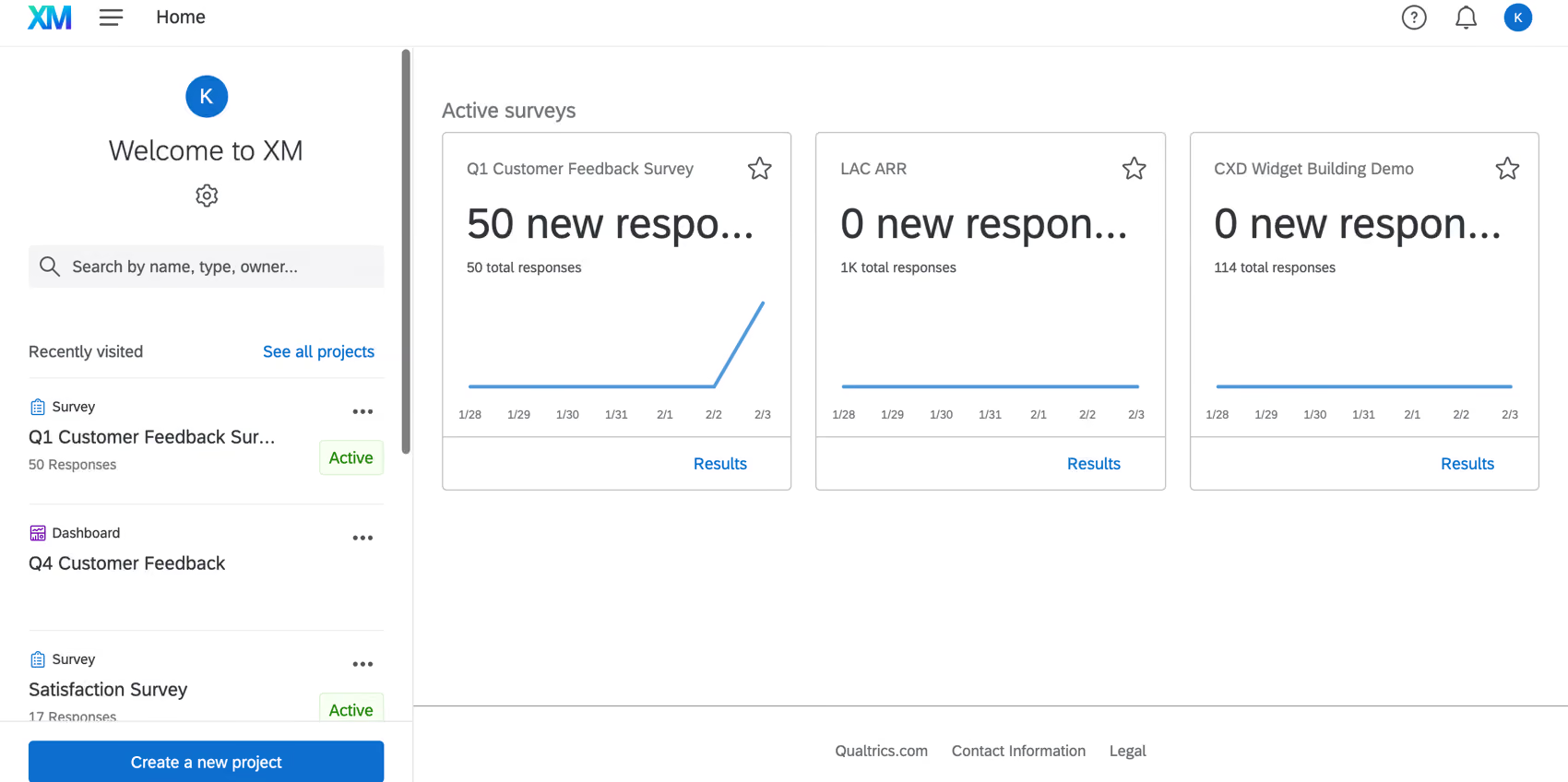
What is Qualtrics?
Qualtrics is an enterprise experience management and voice of customer platform, with Qualtrics XM Discover handling text and sentiment analysis. It is the heavyweight incumbent for large organizations running experience programs across the whole business.
Qualtrics is powerful and broad, covering customer, employee, product, and brand experience in one suite. That reach is its strength and its cost: it is built for enterprises with the budget and dedicated teams to run it.
Key features
- Text iQ and XM Discover: NLP-driven text and sentiment analysis across large feedback sets.
- Omnichannel collection: Gathers experience data across enterprise channels and touchpoints.
- Advanced statistics: Deep analytics, predictive modeling, and experience program management.
- Broad integrations: Connects across enterprise systems and data sources.
Pros
- Extremely comprehensive across multiple experience disciplines.
- Strong analytics and enterprise-grade governance.
- Established, well-supported market leader.
Cons
- High cost that typically prices out smaller teams.
- Complexity and setup overhead can slow time to value.
Pricing
Custom pricing by request — Qualtrics publishes no list price. Verified-contract data from Vendr puts the median buyer at around $30,000/year, with observed contracts ranging from roughly $6,900 to $140,000 depending on modules, users, and interaction volume. For a deeper breakdown of what Qualtrics really costs, see our dedicated guide. A limited free account is available for basic use.
G2 rating
Qualtrics G2 score: approximately 4.4.
Best for
Large enterprises that need omnichannel experience management across customer, employee, and brand, and have the budget to match. For a focused comparison, see our best enterprise voice of customer platforms guide.
3. Hotjar (Contentsquare)

What is Hotjar (Contentsquare)?
Hotjar, now part of Contentsquare following the merger completed in July 2025, is a behavior analytics tool that pairs heatmaps and session replay with on-site surveys and feedback widgets. It answers not just what customers say, but what they actually do on your pages.
That combination is its edge. When a feedback widget flags a confusing checkout, you can watch session replays of the same flow and see the friction for yourself. For website and UX teams, seeing behavior and feedback together is genuinely useful.
Key features
- Heatmaps: Visualize clicks, scrolls, and attention across a page.
- Session replay: Watch real user sessions to diagnose friction.
- On-site surveys and widgets: Capture feedback in context, in the moment.
- AI survey summaries: Basic AI to summarize open-text responses.
Pros
- Uniquely pairs behavioral data with qualitative feedback.
- Accessible free plan and low entry price.
- Fast to deploy on a website.
Cons
- Feedback analysis is light compared with dedicated platforms.
- Focused on website and app behavior, not omnichannel feedback.
Pricing
Free plan available; paid Observe and Ask tiers now start from approximately $40–49/mo under Contentsquare branding (the ~$32/mo figure was the pre-merger Hotjar price).
G2 rating
Hotjar G2 score: approximately 4.3.
Best for
Website and UX teams that want behavior analytics and on-site feedback in one tool.
4. SurveyMonkey
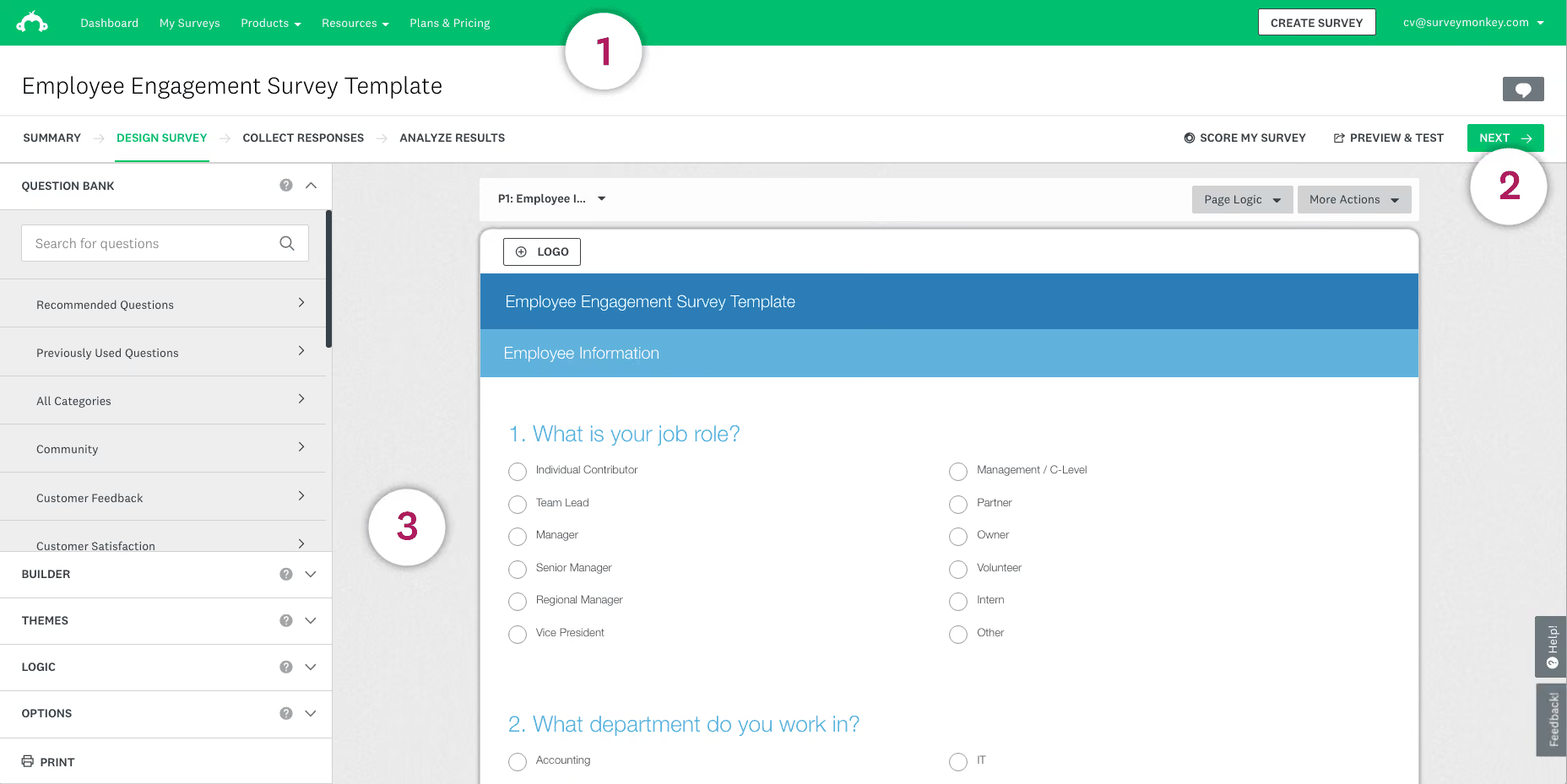
What is SurveyMonkey?
SurveyMonkey is a general-purpose survey builder with 400+ templates and broad brand recognition. It is the default choice for teams that need to launch a survey quickly without specialist tooling.
Its strength is accessibility. Almost anyone can build and send a survey in minutes, which makes it a reliable workhorse for ad-hoc research across a company. Depth of analysis is not its focus.
Key features
- 400+ templates: Prebuilt surveys for common use cases.
- SurveyMonkey AI (formerly Genius): AI assistance for building and improving surveys.
- Flexible distribution: Email, web link, and embed options.
- Standard reporting: Built-in charts and basic analysis.
Pros
- Very easy to learn and use.
- Huge template library for fast setup.
- Trusted, widely recognized brand.
Cons
- Analysis stays surface-level for large feedback volumes.
- Per-user pricing adds up across bigger teams.
Pricing
Free plan available; Team plans from approximately $30/user/mo (billed annually, 3-user minimum), individual plans from approximately $39/mo.
G2 rating
SurveyMonkey G2 score: approximately 4.4.
Best for
Teams that need general, ad-hoc surveys across a company without specialist analysis needs.
5. Typeform
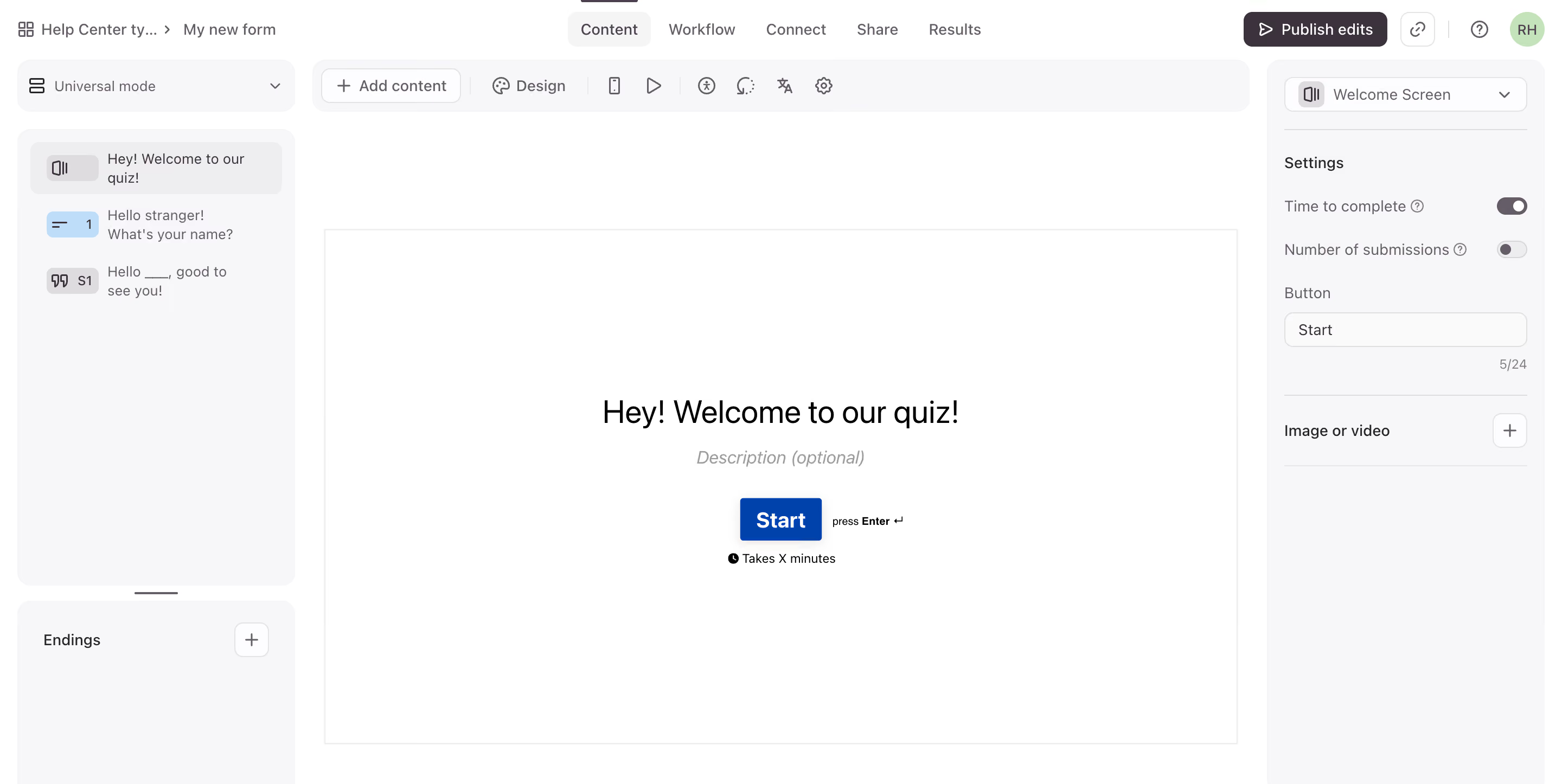
What is Typeform?
Typeform is a conversational, design-led survey and form builder known for high completion rates. It asks one question at a time in a clean, on-brand flow that people actually finish.
If response quality suffers because your surveys feel like a chore, Typeform's format is a real fix. It is especially strong for customer-facing surveys and lead capture where brand experience matters.
Key features
- Conversational, one-question flow: Boosts engagement and completion.
- Design-led templates: Polished, on-brand forms out of the box.
- Typeform AI: AI-assisted form creation.
- Flexible embedding: Web link, embed, and email distribution.
Pros
- High completion rates from an engaging format.
- Strong design and branding control.
- Simple to build and share.
Cons
- Analysis features are limited for deep feedback work.
- Can get costly as response volumes grow.
Pricing
Free plan available but limited to 10 responses/mo; paid Basic plan from approximately $28/mo (billed annually; $39/mo monthly).
G2 rating
Typeform G2 score: approximately 4.5.
Best for
Teams that need on-brand, engaging surveys and lead capture with strong completion rates.
6. Qualaroo
What is Qualaroo?
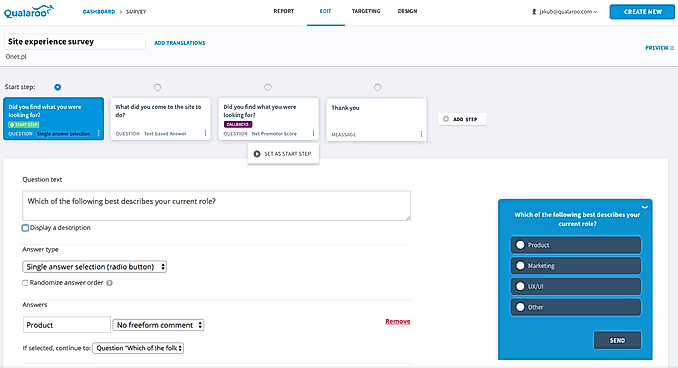
Qualaroo is an in-context survey tool that fires targeted micro-surveys, called nudges, on your website and in your app, with AI sentiment analysis on responses. It is the closest direct substitute for Survicate's in-context collection.
Its value is precision. By asking the right question at the right moment in the user journey, Qualaroo captures feedback with clear context attached. Analysis stays lighter than a dedicated platform.
Key features
- Nudges: Targeted micro-surveys triggered by user behavior.
- AI sentiment analysis: Automatic sentiment scoring on responses (IBM Watson, Enterprise tier).
- In-context targeting: Rules-based triggers by page, action, or segment.
- Multi-surface reach: Website, in-app, and email.
Pros
- Excellent contextual targeting.
- Lightweight and quick to deploy.
- Generous entry point for small teams.
Cons
- Analysis depth is limited at large scale.
- Best suited to website and in-app, not full omnichannel.
Pricing
Free up to 50 responses; Essentials plan from approximately $19.99/mo (billed annually).
G2 rating
Qualaroo G2 score: 4.3.
Best for
Teams that need targeted, in-context UX and website feedback and want the closest like-for-like Survicate substitute.
7. SurveySparrow
What is SurveySparrow?
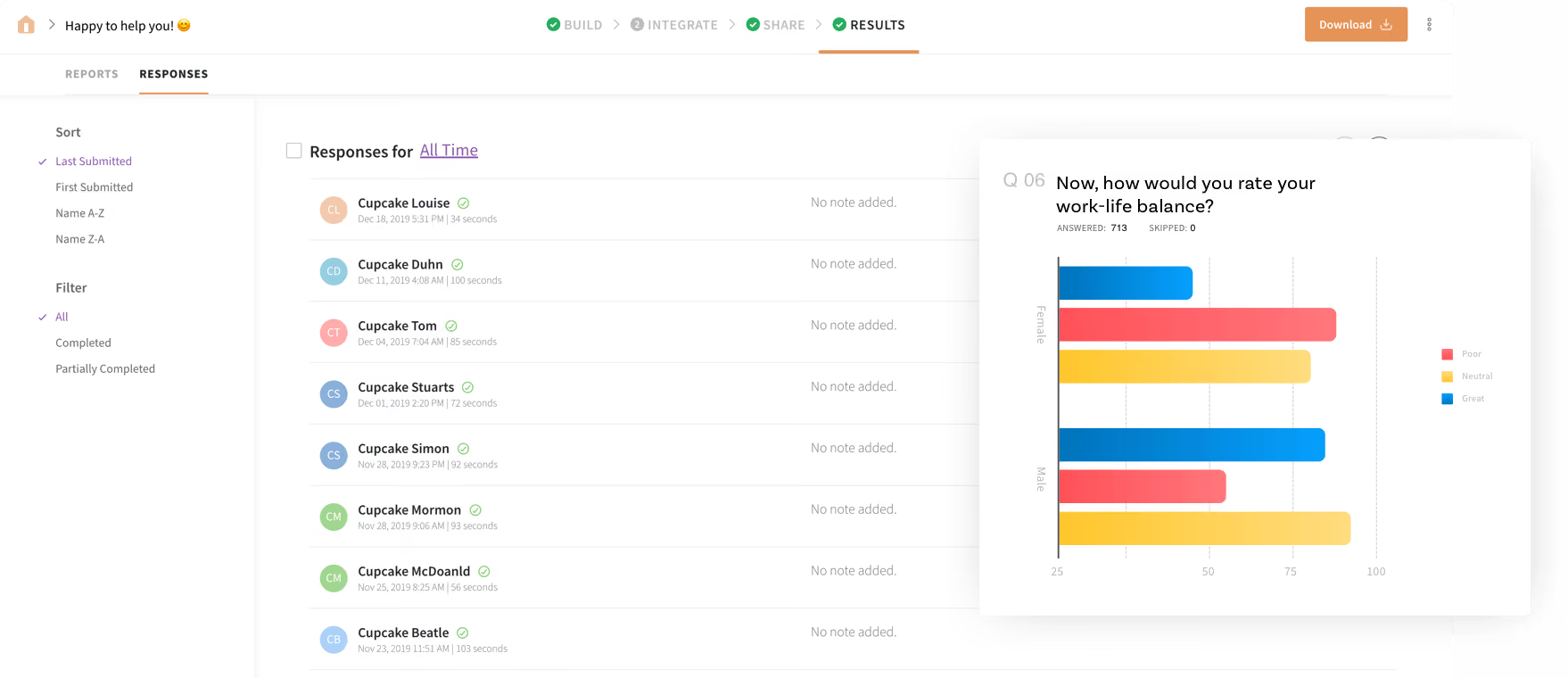
SurveySparrow is a conversational survey tool with a broader CX suite covering NPS, CSAT, and CES across omnichannel touchpoints. It blends engaging survey design with structured customer experience programs.
Its reach is the draw. You can run feedback across email, web, chat, SMS, and social from one place, and its Enterprise tier adds CogniVue key-driver analysis to explain what moves your scores.
Key features
- Conversational surveys: Engaging, chat-style question flows.
- CX suite: Built-in NPS, CSAT, and CES programs.
- Omnichannel distribution: Email, web, chat, SMS, and social.
- CogniVue key-driver analysis: Enterprise-tier driver analytics.
Pros
- Wide channel coverage for the price.
- Engaging survey formats.
- Affordable entry point.
Cons
- Deeper analysis sits behind the Enterprise tier.
- Feature breadth can feel sprawling for simple needs.
Pricing
Free plan available; paid plans from approximately $19/mo (billed annually).
G2 rating
SurveySparrow G2 score: approximately 4.4.
Best for
Teams running omnichannel conversational CX programs on a moderate budget.
8. Refiner
What is Refiner?
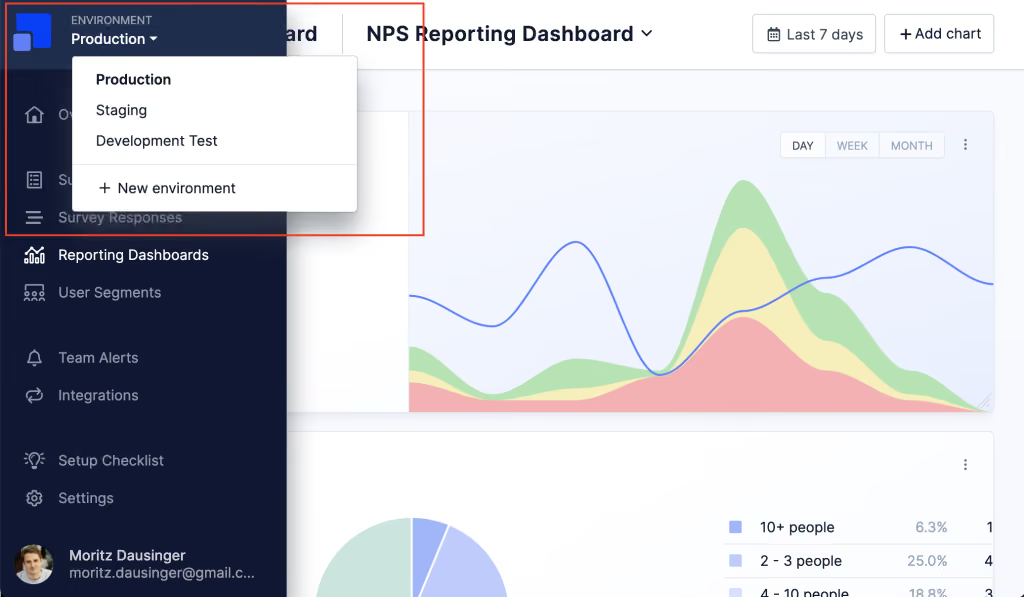
Refiner is an in-app microsurvey tool built for product-led SaaS teams, covering NPS, CES, CSAT, and PMF surveys with AI insights and user segmentation. It targets users inside the product, at the moment that matters.
Its focus is a strength for SaaS. By tying surveys to user attributes and behavior, Refiner helps product teams reach the right segment with the right question, then act on the response.
Key features
- In-app microsurveys: NPS, CES, CSAT, and PMF templates.
- User segmentation: Target surveys by attributes and behavior.
- AI insights: Automated analysis of responses.
- Multi-surface delivery: In-app, mobile, website, email, and link.
Pros
- Purpose-built for product-led SaaS workflows.
- Strong segmentation and targeting.
- Clean integration with product data.
Cons
- Higher entry price than several rivals.
- Cost scales with response volume.
Pricing
Free trial available; paid plans from approximately $99/mo (Essentials), scaling by responses.
G2 rating
Refiner G2 score: approximately 4.8, from a small number of reviews.
Best for
Product-led SaaS teams surveying users in-app and segmenting by behavior.
9. Sprig
What is Sprig?
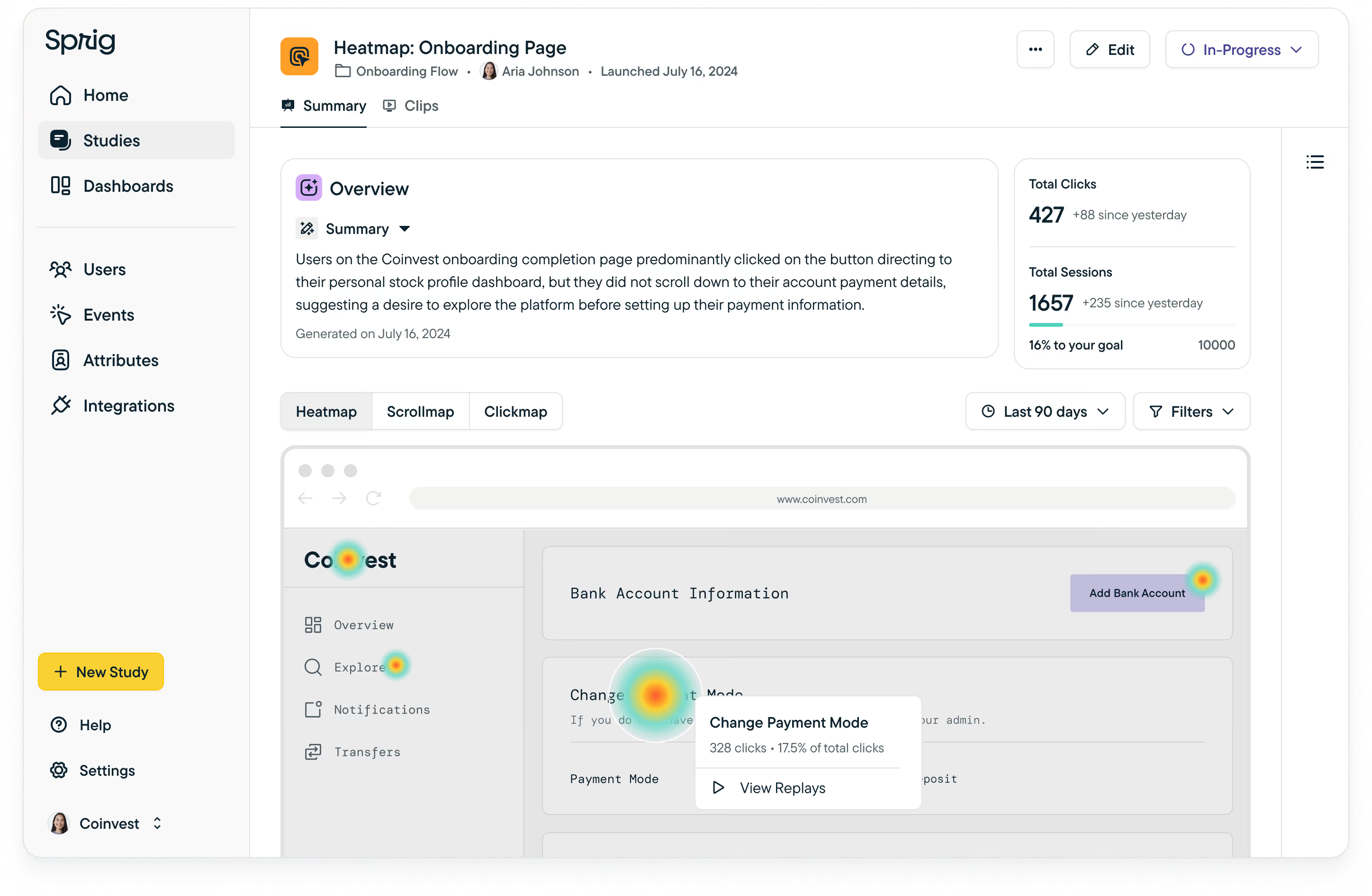
Sprig is an in-product experience research platform with AI analysis and a research panel of 5M+ verified B2B and B2C participants. It helps product teams run continuous research inside the product experience rather than in one-off studies.
Its modern edge is agentic AI. Sprig's Design, Field, and Synthesize AI agents help teams build studies, run them, and summarize findings, making continuous discovery more practical for lean teams.
Key features
- In-product studies: Surveys and research embedded in web and mobile.
- AI agents: Design, Field, and Synthesize agents across the research workflow.
- Research panel: Access to 5M+ verified B2B and B2C participants.
- Continuous discovery: Always-on research rather than one-off projects.
Pros
- Purpose-built for continuous product research.
- Modern AI-agent workflow.
- Access to a large research panel.
Cons
- Enterprise features require custom pricing.
- Narrower than an omnichannel feedback platform.
Pricing
Free plan available with limits; Enterprise pricing is custom. Vendr transaction data shows annual contracts commonly ranging from about $25,000 to $75,000+, with mid-sized deployments (2,500–5,000 monthly active users) often around $6,000–$12,000/year.
G2 rating
Sprig G2 score: approximately 4.6.
Best for
Product teams running continuous in-product experience research.
How to Choose the Right Survicate Alternative
There is no single best tool, only the best tool for your team and your goal. Which of these describes you?
- You need to analyze feedback at scale across many channels. Choose Chattermill. Aspect-Based Sentiment Analysis and the Lyra model turn messy, multi-topic feedback into decisions, which is exactly where survey-first tools stall.
- You are a large enterprise running a full experience program. Choose Qualtrics for omnichannel experience management, if the budget supports it.
- You are a website or UX team. Choose Hotjar (Contentsquare) to see behavior and feedback side by side.
- You need fast, general surveys. Choose SurveyMonkey for breadth or Typeform for completion and brand polish.
- You want in-context website feedback. Choose Qualaroo, the closest Survicate substitute.
- You run omnichannel CX programs on a budget. Choose SurveySparrow.
- You are a product-led SaaS team. Choose Refiner for in-app surveys or Sprig for continuous in-product research.
A useful rule of thumb: survey-first tools answer "what did customers say?" while a feedback analysis platform answers "what should we do about it?" If your bottleneck is analysis, prioritize the tools that lead on it.
FAQ
What are the best Survicate alternatives in 2026?
The best Survicate alternatives in 2026 are Chattermill for AI-native feedback analysis at scale, Qualtrics for enterprise experience management, and Hotjar (Contentsquare) for combining behavior with feedback. SurveyMonkey, Typeform, Qualaroo, SurveySparrow, Refiner, and Sprig round out the list for more specific needs.
Is there a free alternative to Survicate?
Yes, several Survicate alternatives offer free plans. Hotjar (Contentsquare), SurveyMonkey, Typeform, SurveySparrow, and Sprig all have free tiers, and Qualaroo is free up to 50 responses. These free plans suit small teams; high-volume feedback analysis typically needs a paid or custom plan.
What is the best Survicate alternative for analyzing feedback at scale?
Chattermill is the best Survicate alternative for analyzing feedback at scale. Its Aspect-Based Sentiment Analysis scores sentiment per theme within each response. The proprietary Lyra model then unifies feedback across 65+ channels and 100+ languages, tying it to NPS, CSAT, and CES.
Survicate vs SurveyMonkey — which is better?
It depends on your goal. SurveyMonkey is better for general, ad-hoc surveys with a huge template library, while Survicate is stronger at in-context, multi-channel feedback collection on websites and apps. Neither leads on deep analysis at scale, which is where dedicated platforms like Chattermill fit.
What are good alternatives to Qualtrics for customer feedback?
Good alternatives to Qualtrics for customer feedback include Chattermill for AI-native feedback analysis, SurveySparrow for omnichannel CX programs, and SurveyMonkey for general surveys. Chattermill is a strong fit for enterprises that want deep analysis without the cost and complexity of a full experience management suite; our enterprise voice of customer platforms guide compares the options.
The Bottom Line
If you are choosing among Survicate competitors for 2026, the shortlist is clear: Chattermill for AI-native feedback analysis at scale, Qualtrics for enterprise experience management, and Hotjar (Contentsquare) for behavior plus feedback. The right pick depends on whether your real gap is collecting feedback or making sense of it, and our roundup of customer feedback tools goes wider still.
For most CX, insights, and product teams, that gap is analysis, and it is only widening as feedback pours in from more channels every year. Survicate collects it well; the harder, more valuable work is turning it into decisions. That is the work the AI-native CXI platform was built for, and it is why Chattermill is our top pick for feedback analysis. When you are ready to see it on your own data, book a personalized demo.



See Chattermill in action on your own feedback
Book a demo


