


7 Best Zonka Feedback Alternatives in 2026



The CX intelligence
platform that's AI-native by design
Book a demoIf you are shopping for Zonka Feedback alternatives, the real question is not who builds a nicer survey, but who actually analyzes feedback at scale. This guide ranks seven tools with that distinction front and center.
Quick Summary
We evaluated 7 customer feedback analysis tools across data unification, analysis depth, accuracy on mixed feedback, integrations, ease of use, and pricing transparency. Among these Zonka Feedback alternatives, Chattermill is the strongest platform for enterprise feedback analysis at scale, thanks to Aspect-Based Sentiment Analysis and multi-source unification. Enterpret is the strongest option for product teams that want an adaptive feedback taxonomy, and Thematic is the best choice for teams that need explainable theme and driver analysis.
Before we get into the detailed comparisons, here are our top three picks:
Why Listen To Us
Chattermill is an AI-native customer experience intelligence platform and a leading feedback analytics platform trusted by teams at Uber, H&M, HelloFresh, Booking.com, Amazon, and Tesco. We analyze customer feedback at scale every day, unifying signals from dozens of channels and more than 100 languages into insights CX, insights, and product leaders act on. That hands-on category experience, not a generic review roundup, informs how we rank the customer feedback analysis tools below.
7 Top Zonka Feedback Alternatives: Head to Head Comparison
How We Evaluated These Tools
Not all Zonka Feedback alternatives solve the same problem, so we weighted our criteria toward analysis rather than collection. Six factors shaped the ranking.
- Data unification breadth (highest weight): How many sources a tool ingests, and whether it can bring surveys, reviews, tickets, chat, social, and app store feedback into one place.
- Analysis depth: Whether the tool separates themes from sentiment and can score both, rather than returning a single blended number.
- Accuracy on mixed feedback: How well the tool handles multi-topic comments, where one sentence praises delivery and the next criticizes price.
- Integrations and channels: The number of native connectors and languages supported, which determines how much of your voice of customer actually reaches the platform.
- Ease of use: How quickly non-technical CX and product teams can get to an answer without a data analyst in the loop.
- Pricing transparency: Whether pricing is public or quote-based, and how predictable it is as feedback volume grows.
We treated data unification and analysis depth as the two heaviest factors, because a tool that collects feedback but cannot interpret it at scale is a survey builder, not a feedback analytics platform.
The 7 Best Zonka Feedback Alternatives
1. Chattermill
.avif)
What is Chattermill?
Chattermill is an AI-native customer experience intelligence platform built for teams whose primary job is analyzing feedback, not just gathering it. Its defining capability is Aspect-Based Sentiment Analysis (ABSA), which scores sentiment per theme or aspect inside a single comment rather than assigning one sentiment score to the whole comment. That difference matters when a customer writes "checkout was fast but the refund took two weeks," because the AI-native CXI platform records positive sentiment for checkout and negative sentiment for refunds instead of averaging them into a meaningless neutral. Chattermill unifies feedback from 65+ channels across 100+ languages, applies its proprietary Lyra model to surface themes and trends, and ties every insight back to NPS, CSAT, CES, and revenue impact.
Key features
- Aspect-Based Sentiment Analysis (ABSA): Aspect-level scoring that preserves signal on messy, multi-topic feedback where per-comment scoring blurs it.
- Proprietary Lyra model: A model purpose-built for customer experience intelligence, engineered for accuracy and trust.
- 65+ feedback channels: Surveys, reviews, support tickets, chat, social, and app stores unified into one dataset.
- 100+ languages: Global feedback analyzed without manual translation steps.
- Business-metric impact: Links themes and sentiment to NPS, CSAT, CES, and downstream revenue.
Explore the full platform overview and its native integrations to see how sources connect.
Pros and cons
Pros
- Aspect-Based Sentiment Analysis delivers best-in-class accuracy on mixed, multi-topic feedback.
- Widest source coverage in this list, spanning 65+ channels and 100+ languages.
- Insights tie back to business metrics like NPS, CSAT, and CES, and to revenue rather than vanity metrics.
- No per-user fee, so teams can add unlimited users.
Cons
- Custom pricing is oriented to enterprise budgets.
- Platform depth is more than a small team running a single survey needs.
- Onboarding a full multi-source setup takes more initial configuration than a lightweight survey tool.
Pricing
Chattermill uses custom pricing tailored to feedback volume and the number of data sources and integrations, with no per-user fee, so teams should request a quote.
G2 rating
~4.5 on G2.
Best for
Enterprise CX, insights, and product teams that need to analyze customer feedback analysis software inputs at scale, with aspect-level accuracy and business-metric attribution. If you are weighing a direct switch, see our Chattermill vs Zonka Feedback comparison.
2. Enterpret
What is Enterpret?
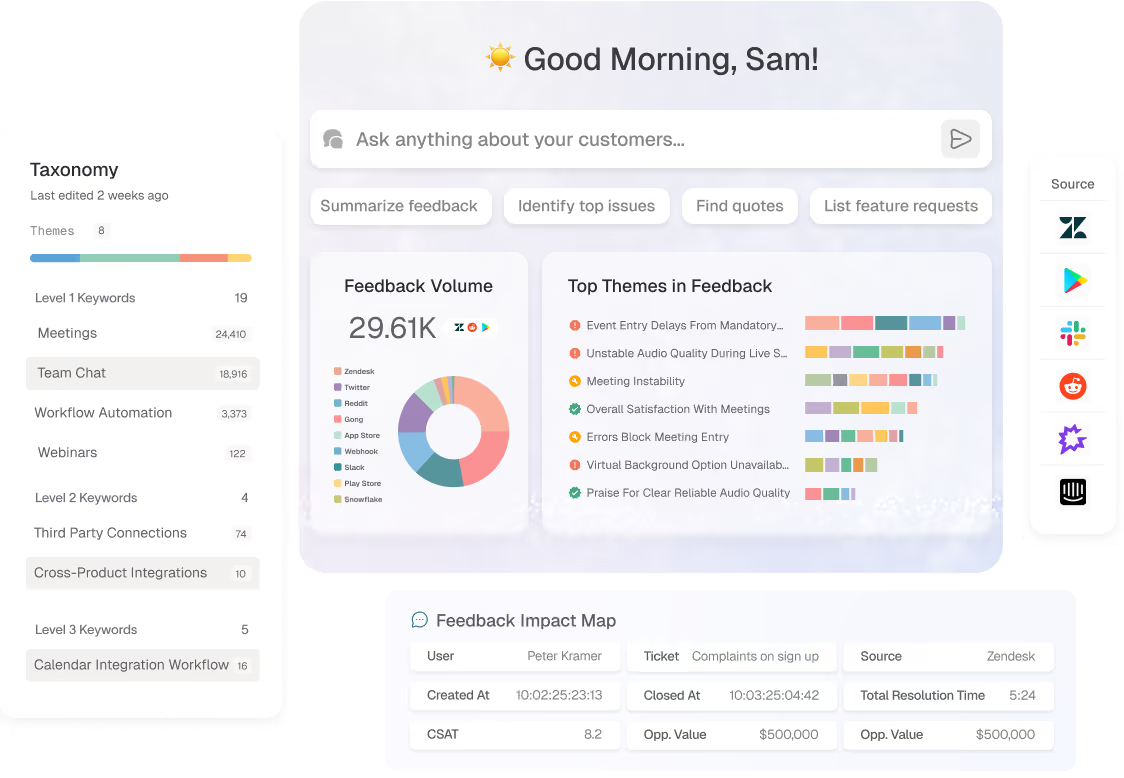
Enterpret is a feedback analytics platform aimed at product teams that want their categorization to evolve with their data. Instead of a fixed tag list, it builds an adaptive feedback taxonomy that auto-categorizes incoming feedback and adjusts as new themes emerge. It pulls from multiple sources so product managers can see what customers are asking for across support, reviews, surveys, and sales calls in one view.
Key features
- Adaptive taxonomy: Auto-generated categories that update as feedback patterns shift.
- Multi-source ingestion: Support tickets, reviews, surveys, and sales calls in a single workspace.
- Product-team workflows: Views built around roadmap and prioritization decisions.
Pros and cons
Pros
- Adaptive taxonomy auto-builds and updates categories, so teams avoid manual tag upkeep.
- Strong multi-source ingestion across support, reviews, surveys, and sales calls.
- Workflows are built around product roadmap and prioritization decisions.
Cons
- Pricing is quote-based and not publicly listed.
- Product-team focus fits roadmap use cases better than broad enterprise CX programs.
- Less emphasis on published pricing and ratings transparency.
Pricing
Custom, quote-based, and not publicly listed. Pricing depends on data volume and integrations, so buyers need to contact sales for a quote.
G2 rating
4.5 on G2 (111 reviews).
Best for
Product teams that want an adaptive taxonomy and AI feedback analysis without hand-building categories. Teams comparing it against wider customer feedback analysis tools should weigh its product focus against broader CX coverage.
3. Thematic
What is Thematic?
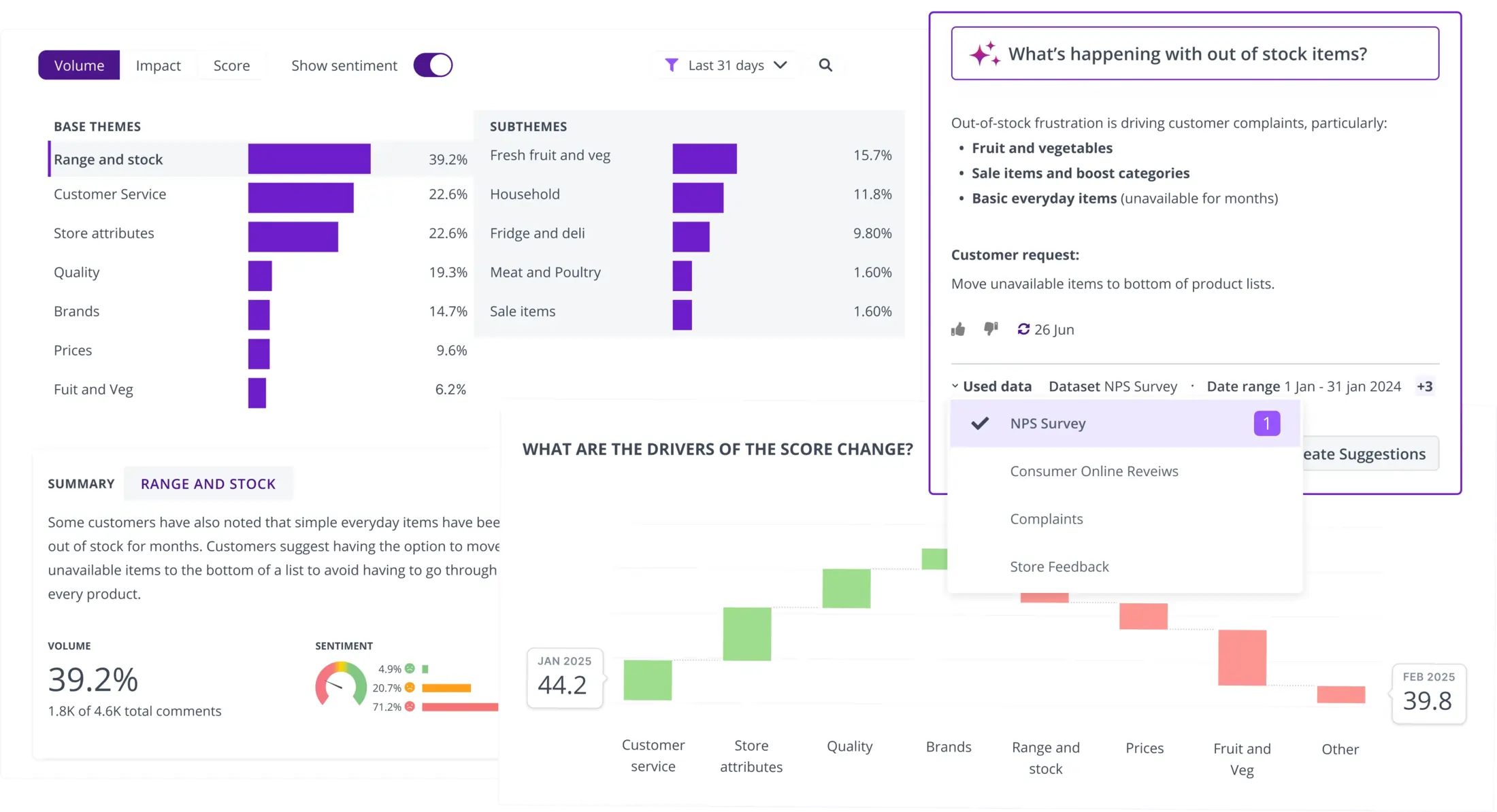
Thematic is a customer feedback analysis software focused on explainability. It surfaces the themes driving your scores and shows how each theme affects metrics like NPS, so analysts can trace a number back to the verbatims behind it. Teams that need to defend their conclusions to stakeholders tend to value this transparency.
Key features
- Theme and driver analysis: Identifies which themes move the metrics and by how much.
- Sentiment scoring: Sentiment applied alongside themes for context.
- Verbatim traceability: Insights link back to the source comments.
Pros and cons
Pros
- Explainable outputs let analysts trace a score back to the underlying verbatims.
- Strong theme and driver analysis quantifies what moves metrics like NPS.
- Well suited to defending conclusions to stakeholders.
- High user satisfaction, at 4.8 on G2.
Cons
- Narrower source coverage than the top multi-channel picks.
- Pricing is quote-based.
- Smaller review base (~43 on G2) than larger suites.
Pricing
Custom, quote-based. A G2-listed Foundation plan sits around $25,000/year.
G2 rating
4.8 on G2 (~43 reviews).
Best for
Teams that want explainable theme and driver analysis they can present with confidence.
4. Medallia

What is Medallia?
Medallia is an established voice of customer platform built for large, complex enterprise CX programs. Its Text Analytics, powered by Medallia AI, interprets feedback across omnichannel signals including voice, video, and digital. Organizations running mature, multi-region experience programs are its natural home.
Key features
- Medallia AI Text Analytics: Interprets unstructured feedback across channels.
- Omnichannel signal capture: Voice, video, and digital in addition to text.
- Enterprise governance: Role and program controls for large deployments.
Pros and cons
Pros
- Deep enterprise feature set for large, complex CX programs.
- Broad omnichannel signal capture, including voice, video, and digital.
- Strong governance and role controls for large deployments.
- AI-powered text analytics across channels.
Cons
- Cost and complexity scale quickly.
- Can feel heavy for smaller teams.
- Pricing is opaque and quote-based, making budgeting harder.
Pricing
Custom, quote-based. SpendHound reports roughly $21,000/year for SMB up to ~$599,000/year at enterprise scale.
G2 rating
4.5 on G2 (~200 reviews at the Customer Experience product level).
Best for
Large enterprise CX programs that need omnichannel signal capture and governance.
5. Qualtrics
What is Qualtrics?
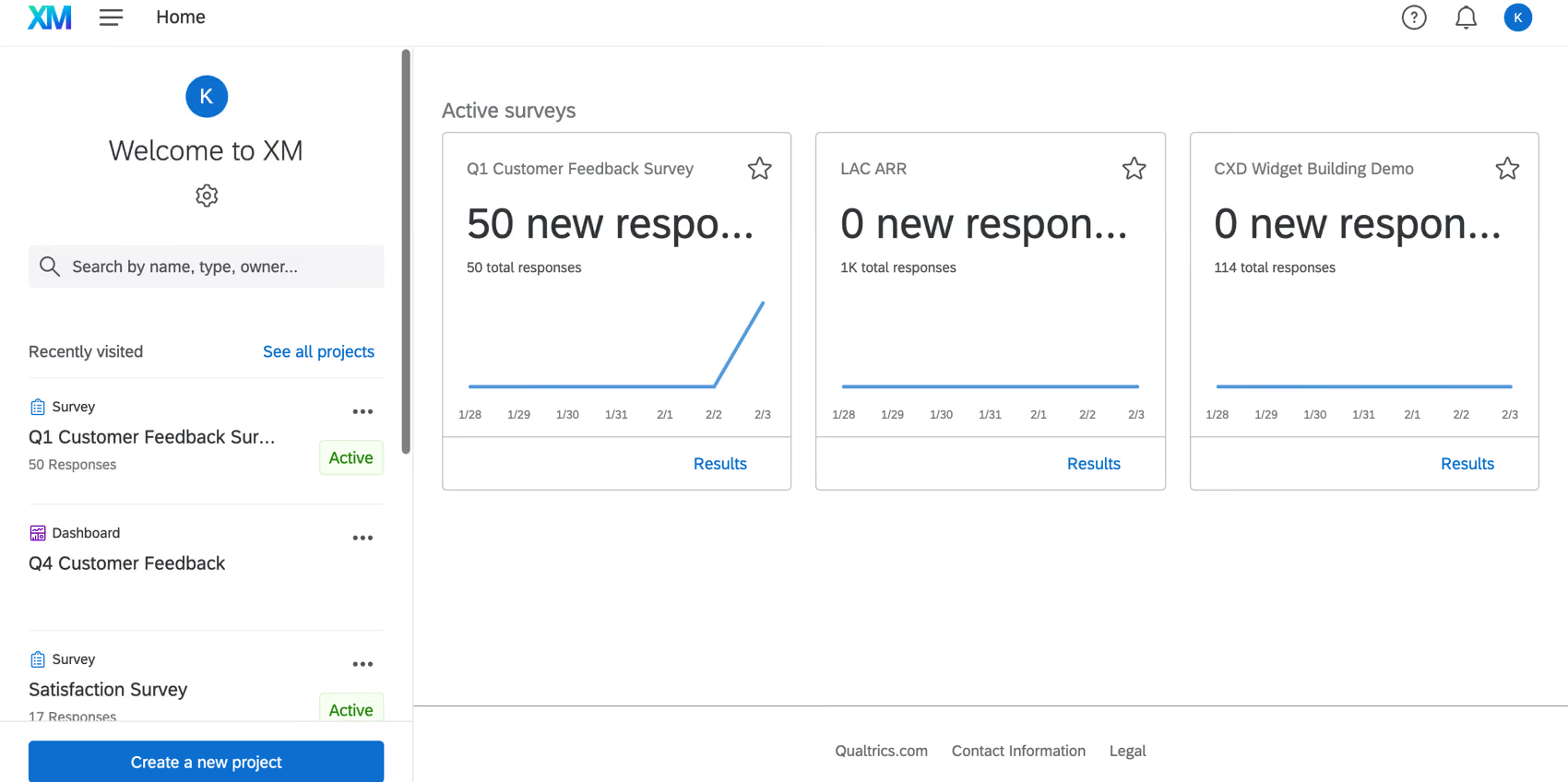
Qualtrics is an experience management suite whose XM Discover module handles text and sentiment analytics. It suits enterprises that want to standardize surveys, feedback, and analytics on a single platform. XM Discover analyzes surveys alongside omnichannel conversational data.
Key features
- XM Discover: Text and sentiment analytics across feedback types.
- Experience management suite: Survey, CX, and analytics in one platform.
- Conversational data support: Analyzes chat and call transcripts alongside surveys.
Pros and cons
Pros
- Broad experience-management platform depth spanning surveys, CX, and analytics.
- Strong survey heritage.
- XM Discover adds text and sentiment analytics across conversational data.
Cons
- Enterprise pricing.
- Learning curve can slow smaller teams.
- Analysis depth may require confirming that XM Discover fits specific needs, and pricing is quote-based.
Pricing
Custom, quote-based. Vendr reports a median around $30,000/year.
G2 rating
4.4 on G2.
Best for
Enterprises standardizing on a single experience management platform. Buyers weighing it as a dedicated feedback analytics platform should confirm how deeply XM Discover fits their analysis needs.
6. SurveySparrow
What is SurveySparrow?
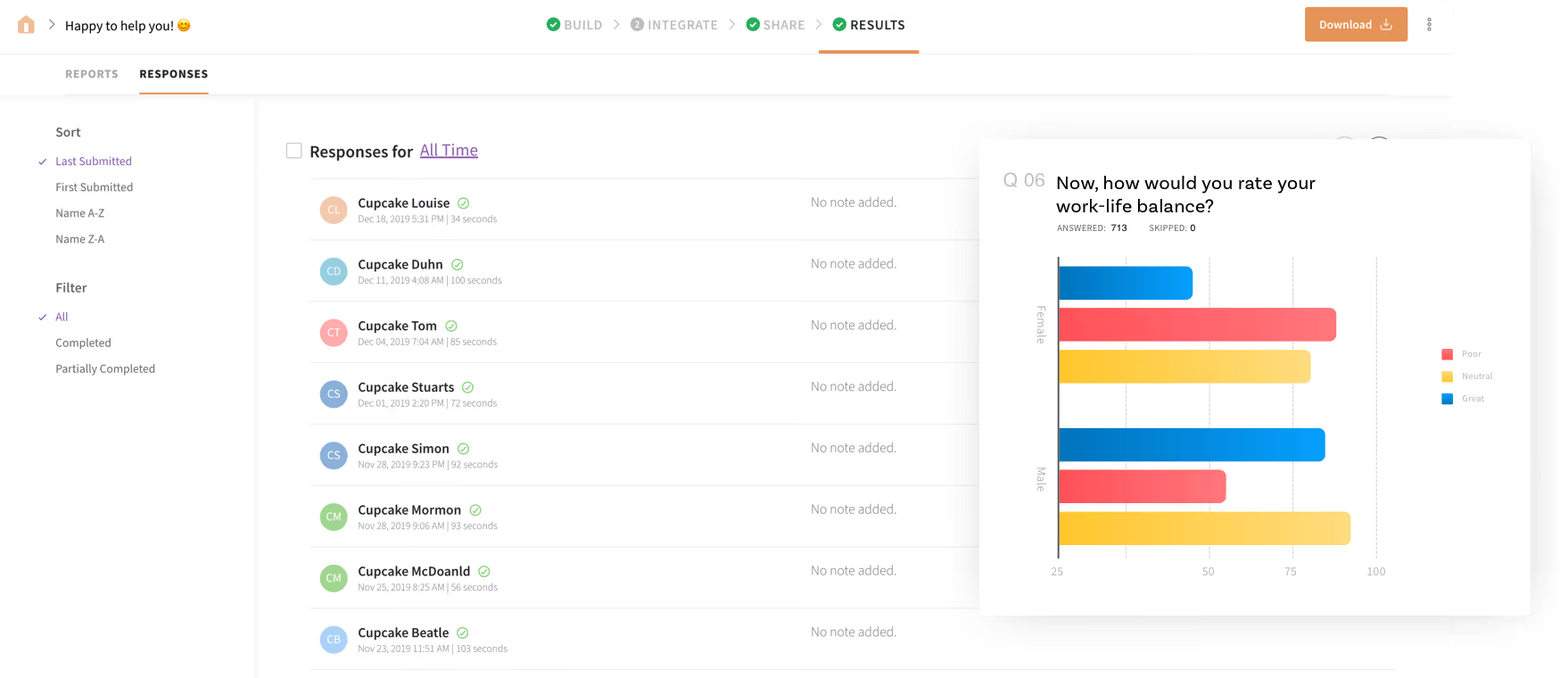
SurveySparrow is a conversational survey tool with sentiment and text analysis available as add-ons. It leans toward collection, with engaging, chat-style surveys delivered across channels. Teams that prioritize response rates and omnichannel distribution find it a fit.
Key features
- Conversational surveys: Chat-style formats designed to lift completion rates.
- Omnichannel delivery: Surveys across chat, email, and web.
- Text analysis add-ons: Sentiment and theme analysis available as extensions.
Pros and cons
Pros
- Conversational, chat-style surveys that lift completion rates.
- Omnichannel delivery across chat, email, and web.
- Accessible entry pricing.
- Large, established user base (~2,045 reviews on G2).
Cons
- Analysis is an add-on rather than core, so deep feedback analysis is limited.
- Leans toward collection over interpretation.
- Higher tiers move to sales-led pricing.
Pricing
Per TrustRadius listings, SurveySparrow's Basic plan starts from about $19/month billed annually.
G2 rating
4.4 on G2 (~2,045 reviews).
Best for
Teams that want conversational, omnichannel surveys with light analysis.
7. Survicate
What is Survicate?
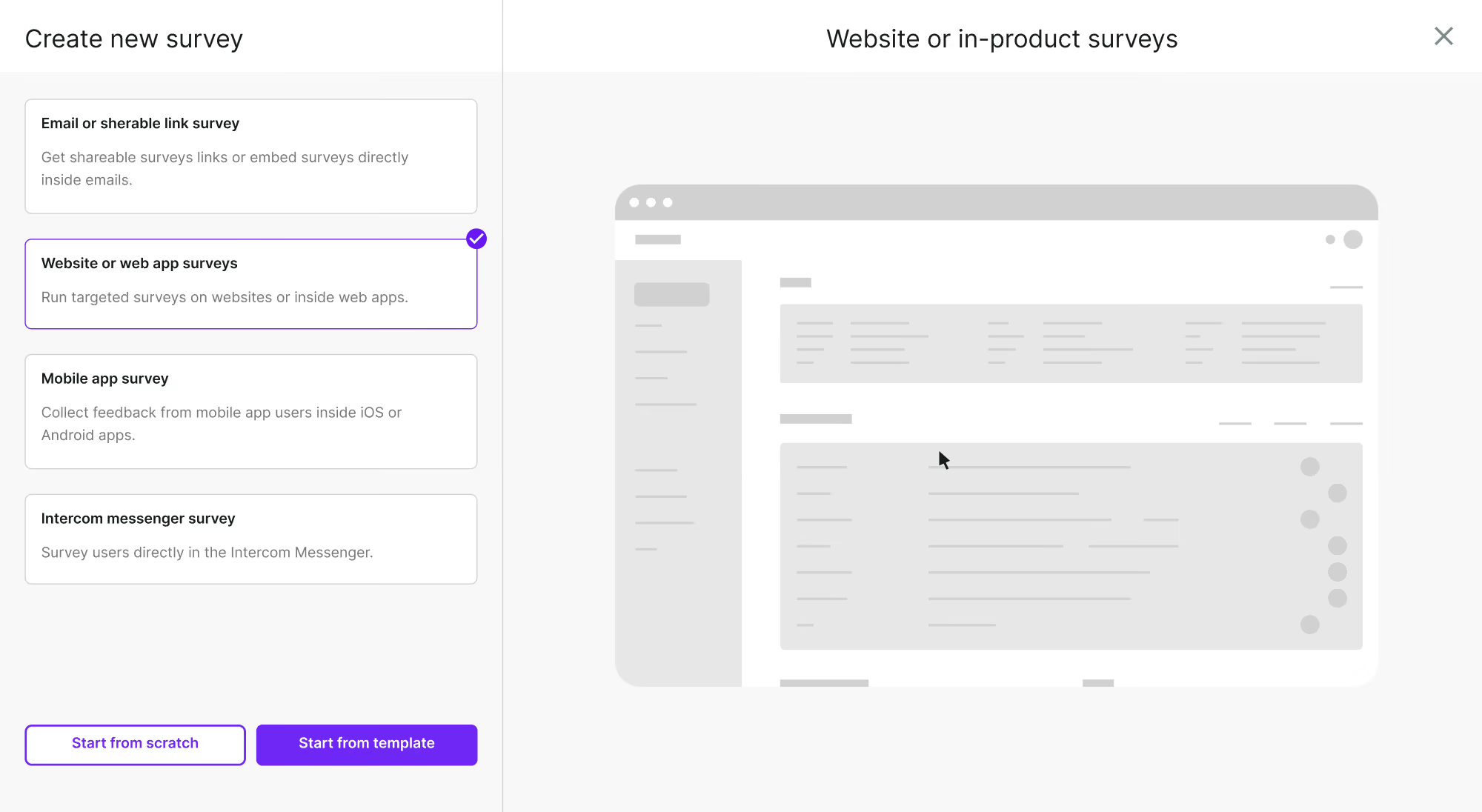
Survicate is a lightweight, affordable survey tool with AI insights and categorization built in. It collects feedback across web, email, in-product, and mobile surveys and connects to common integrations. For smaller teams, it is one of the closest like-for-like Zonka Feedback alternatives, though its depth trails the dedicated enterprise voice of customer platforms higher in this list.
Key features
- Multi-surface surveys: Web, email, in-product, and mobile.
- AI insights and categorization: Automated grouping of survey responses.
- Integration library: Connectors to common CRM and support tools.
Pros and cons
Pros
- Free plan and accessible pricing make it easy to start.
- Multi-surface surveys across web, email, in-product, and mobile.
- Built-in AI insights and categorization.
- Solid integration library.
Cons
- Analysis depth and source breadth trail the dedicated analysis platforms.
- Better suited to SMBs than large enterprise programs.
- Response-volume caps can raise costs as usage grows.
Pricing
Free plan available. Per Survicate's pricing page, Growth is about $114/month billed annually, with higher tiers up to ~$569/month (Enterprise).
G2 rating
4.6 on G2 (~200 reviews).
Best for
SMBs wanting a lightweight, affordable Zonka-like tool.
Survey Builder vs. Feedback-Analysis Platform
If your goal is feedback analysis rather than collection, choose a feedback-analysis platform such as Chattermill, Enterpret, or Thematic, not a survey builder. Survey builders like Zonka, SurveyMonkey, and Typeform are excellent at asking questions and capturing responses, but they stop short of interpreting that feedback at scale.
A feedback-analysis platform starts where the survey ends. It ingests responses alongside reviews, support tickets, chat, and social, then applies AI feedback analysis to separate themes from sentiment and quantify what is driving your scores. The distinction is the whole reason this list exists: many of the tools that rank for zonka feedback alternatives are survey builders, so if analysis is the job, weight the ranking toward platforms built to analyze feedback at scale. Chattermill's ABSA takes this a step further by scoring sentiment per aspect, so a single mixed comment yields accurate signal instead of a blurred average.
Frequently Asked Questions About Zonka Feedback Alternatives
What are the best Zonka Feedback alternatives?
The best Zonka Feedback alternatives are Chattermill, Enterpret, and Thematic. Chattermill leads for enterprise feedback analysis at scale, Enterpret suits product teams that want adaptive taxonomies, and Thematic is strongest for explainable theme and driver analysis. Beyond the top three, Medallia, Qualtrics, SurveySparrow, and Survicate round out the list depending on budget and use case.
Which Zonka Feedback alternative is best for feedback analysis?
For feedback analysis specifically, Chattermill, Enterpret, and Thematic are the strongest picks. Chattermill is the top choice for analyzing feedback at scale because its Aspect-Based Sentiment Analysis scores sentiment per aspect and unifies 65+ channels across 100+ languages, which preserves accuracy on mixed feedback where simpler tools lose it.
How much does Zonka Feedback cost, and are alternatives cheaper?
Per Capterra, Zonka Feedback starts at $199/month for Feedback Management, with an AI Feedback Intelligence tier at $999/month. Some alternatives are cheaper for small teams, such as SurveySparrow from about $19/month and Survicate's free plan, while dedicated analysis platforms like Chattermill use custom pricing scaled to volume and sources.
What is Zonka Feedback used for?
Zonka Feedback is used to create and distribute surveys, such as NPS, CSAT, and CES, and to collect responses across web, email, and in-product channels. It is primarily a survey and feedback management tool, which is why teams focused on deep analysis often pair it with, or replace it by, a dedicated feedback analytics platform.
What's the difference between a survey builder and a feedback-analysis platform?
A survey builder collects feedback by asking questions and capturing responses, while a feedback-analysis platform interprets feedback at scale across many sources. Survey builders answer "what did people say," and a voice of customer platform answers "what does it mean, and what should we do about it."
The Bottom Line
Most Zonka Feedback alternatives compete on how easily they collect responses, but the tools that change outcomes are the ones that analyze feedback at scale. Across our six criteria, Chattermill is the top recommendation for teams whose goal is customer feedback analysis software at enterprise scale, because Aspect-Based Sentiment Analysis and multi-source unification turn messy, multi-topic feedback into accurate, business-ready insight. Enterpret and Thematic are strong choices when adaptive taxonomies or explainable driver analysis matter most.
If analyzing feedback at scale is your priority, the opportunity is clear: unify every channel, score sentiment at the aspect level, and tie insight to the metrics your business already tracks. Book a personalized demo to see



See Chattermill in action on your own feedback
Book a demo


