


7 Best Kapiche Alternatives for Feedback Analysis 2026



The CX intelligence
platform that's AI-native by design
Book a demoKapiche made feedback analytics feel accessible, but its row-metered pricing and theme-level analysis leave scaling CX teams wanting more accuracy, more channels, and a clearer line to business impact. This guide reviews the seven best Kapiche alternatives for feedback analysis in 2026, so you can match the right platform to your team.
Quick Summary
The best Kapiche alternatives in 2026 are Chattermill, Thematic, and Enterpret. Chattermill leads for enterprise CX teams that need aspect-level accuracy across every channel tied to revenue, Thematic suits teams tracking themes over time with human-steerable AI, and Enterpret fits product teams drowning in high-volume feedback. This guide compares all seven tools on channel coverage, model approach, aspect-based sentiment, pricing, setup time, and G2 ratings.
Before we get into the detailed comparisons, here are our top three picks:
Why Listen To Us
Chattermill is an AI-native customer experience intelligence platform trusted by CX, insights, and product teams at Uber, H&M, HelloFresh, Booking.com, Amazon, Tesco, Qonto, E.ON Next, Santander, Zappos, and J.P. Morgan. We have spent years unifying and analyzing customer feedback at scale, which gives us a working, hands-on view of what separates a capable text analytics tool from one that holds up under enterprise volume. We evaluate every tool here through that lens: does it turn messy, multi-channel feedback into decisions leaders can act on?

7 Top Kapiche Alternatives: Head to Head Comparison
If you want the short version of what the best Kapiche alternatives look like side by side, this table ranks all seven tools on the dimensions that actually decide fit. Every cell reflects data verified in 2026.
How We Evaluated These Tools
We did not rank these tools on brand recognition. We scored each platform against the criteria that predict whether a feedback program survives contact with enterprise reality.
- Channel coverage: how many feedback sources each tool genuinely unifies, from surveys and tickets to reviews, social, and call transcripts.
- AI / model approach and accuracy: whether the engine is proprietary, LLM-based, supervised, or rule-based, and how that affects precision.
- Aspect-based sentiment depth: whether a tool scores sentiment per aspect within a comment or only per comment or theme.
- Impact analysis: whether feedback connects to hard metrics like NPS, CSAT, CES, and revenue.
- Pricing transparency: how much a buyer can learn before booking a demo.
- Setup time: how quickly a team reaches first insight, from a day to several months.
- G2 ratings: verified user sentiment as an external check on our own view.
Pricing and G2 ratings referenced throughout were verified in 2026. Where a vendor publishes no list price, we mark pricing as custom rather than guess. You can see the same rigor applied across our customer feedback analysis tools guide and our roundup of the best AI voice of customer tools.
Why Teams Look for Kapiche Alternatives
Most teams adopt Kapiche because it promises to move CX from soft anecdote to measurable insight. So why do so many of them start shopping for something else?
The usual triggers are structural. Row-metered pricing turns growth into a budgeting problem, because every new data source eats into the same capped allowance. Theme-level analysis and word clouds struggle when a single comment praises delivery speed and slams billing in the same breath. And when leadership asks "what is this feedback costing us?", theme counts rarely answer in the language of revenue. Teams looking to unify more channels and prove impact tend to graduate toward platforms built for that scale, a shift we cover in our best enterprise voice of customer platforms guide.
What Is Kapiche?
Kapiche is a customer feedback analytics platform that uses AI to surface themes, sentiment, and drivers from unstructured text such as surveys, support tickets, and reviews. It positions itself as an intelligence layer for CX, support, and product teams, and prices access largely by "rows" of data processed per project. It is a solid entry point for feedback analysis, but its theme-first approach and metered model are exactly what push scaling teams to compare it against the alternatives below. If you want the direct head-to-head, see our Chattermill vs Kapiche breakdown.
1. Chattermill
What Is Chattermill?
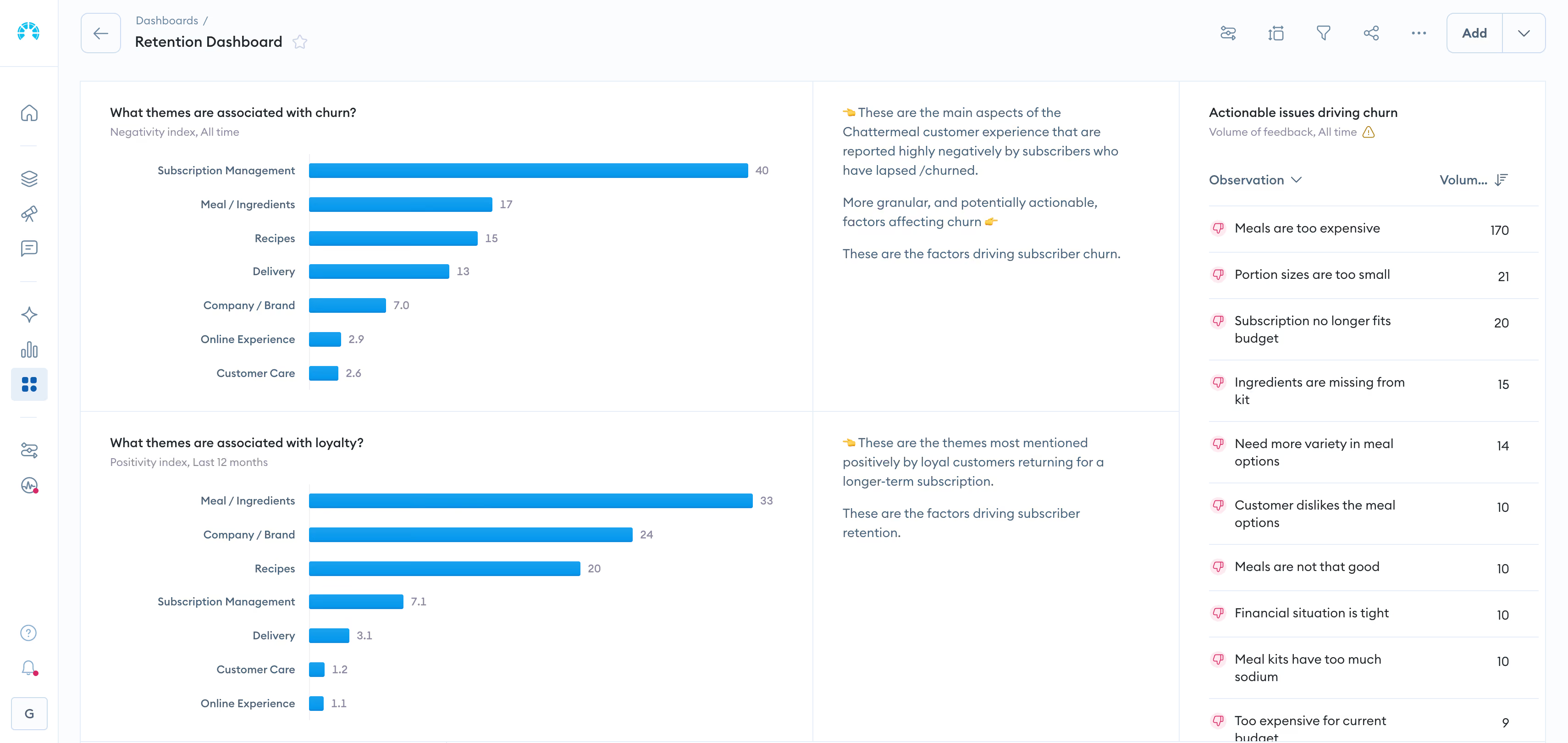
Chattermill is an AI-native customer experience intelligence platform that unifies feedback from every channel and scores it at the aspect level, so accuracy holds up even when a single comment covers three topics at once. This is the core reason it leads this list: most tools assign one sentiment score per comment or per theme, which blurs the signal on mixed feedback, while Chattermill's Aspect-Based Sentiment Analysis (ABSA) scores sentiment per aspect inside that comment. Think of it as the difference between grading an essay with a single letter and marking up each paragraph. On messy, multi-topic feedback, that granularity is where accuracy is won or lost.
Channel breadth is the second axis where Chattermill separates from the field. The AI-native CXI platform unifies 65+ feedback sources across 100+ languages, from surveys and support tickets to reviews, chat, social, app store reviews, and call transcripts. You can see how that breadth stacks up in our best AI voice of customer tools guide.
Competitors sometimes frame model-based analysis as a "black box" that misses emerging themes. Chattermill answers that critique head-on: its proprietary Lyra model is purpose-built for customer experience intelligence, and its CXI agentic architecture is engineered at every layer for accuracy, trust, and reliability. The Chattermill MCP server lets teams query and act on feedback directly inside their AI agents, so insight moves at the speed of the agentic era rather than the quarterly report.
Key Features
- Aspect-Based Sentiment Analysis (ABSA): Scores sentiment per aspect within a comment for precise reads on mixed feedback, not a single blurred score.
- 65+ channel unification: Consolidates surveys, tickets, reviews, chat, social, and call transcripts across 100+ languages into one dataset.
- Proprietary Lyra AI model: A deep-learning engine purpose-built for CX intelligence rather than a generic text classifier.
- CXI agentic architecture: Engineered at every layer for accuracy, trust, and reliability, with automated anomaly detection and alerts.
- Impact Analysis: Links feedback themes to NPS, CSAT, CES, and revenue, so teams can quantify what each issue costs or earns.
- Chattermill MCP server: Lets teams query and act on feedback data directly inside AI agents.
Chattermill Pros
- Aspect-level accuracy that holds up on multi-topic feedback where per-comment scoring fails.
- The widest channel coverage in this comparison, unifying 65+ sources across 100+ languages.
- Impact Analysis that translates feedback into NPS, CSAT, CES, and revenue movement.
- Enterprise proof at scale, including an eight-year Uber partnership with 400+ users.
- A dedicated CSM and onboarding that tailors models to each customer's data and vocabulary.
Chattermill Cons
- No public list price, so buyers need a demo to scope cost.
- Onboarding runs in weeks, not a same-day self-serve setup.
- Depth and configurability suit enterprise teams more than a two-person startup.
2026 Pricing
Chattermill uses custom, quote-based pricing across Pro, Team, and Enterprise tiers, scoped by data sources and volume. Because deployments are tailored to each organization, pricing is confirmed during a scoping conversation. You can start that by booking a personalized demo.
G2 Rating
Chattermill holds a 4.5 on G2.
Best For
Chattermill is the strongest Kapiche alternative for enterprise CX, insights, and product teams that need accurate, multi-channel analysis tied to business metrics. If your feedback is messy and multi-topic, spread across dozens of channels, and leadership wants the revenue impact quantified, ABSA plus 65+ channel unification plus Impact Analysis is the combination no theme-level tool matches. The proof is quantified, not promised: HelloFresh saw a 30% increase in average order value, E.ON Next a 144% increase in NPS, and Qonto saved 80+ hours. Explore how it works on the platform overview.
2. Thematic
What Is Thematic?
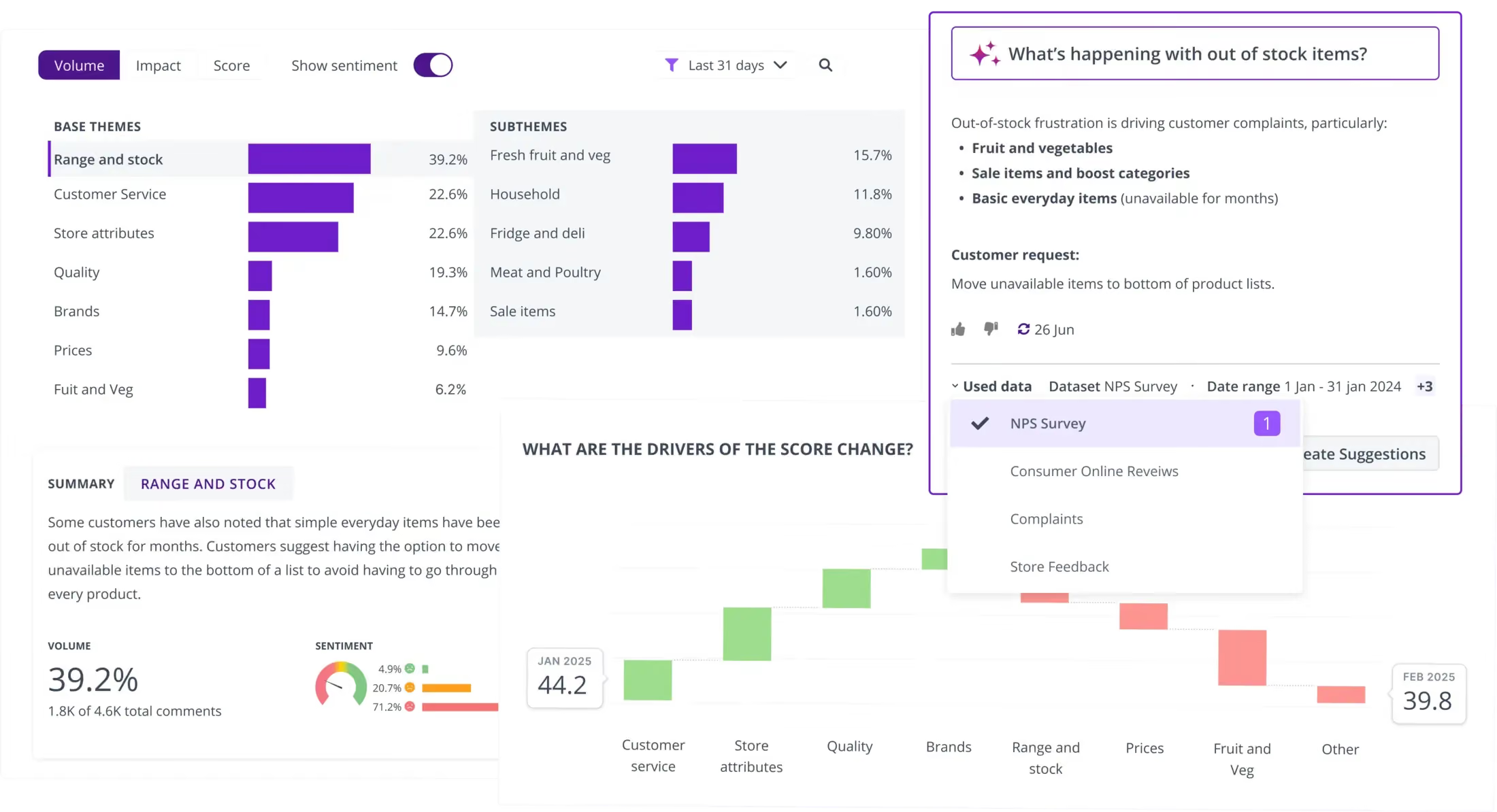
Thematic is a feedback analytics platform built around tracking how customer themes shift over time, with a human-in-the-loop model that lets analysts steer the AI. It unifies feedback from surveys, reviews, and support channels through Lenses, Thematic's own feature for unifying sources into tailored, role-based views, and pairs proprietary AI with large language models. For insights teams whose main job is trend detection rather than deep aspect-level scoring, it is a capable and popular choice. For the direct comparison, see our Chattermill vs Thematic breakdown.
Key Features
- Theme tracking over time: Surfaces how sentiment and topics move week to week and quarter to quarter.
- Human-in-the-loop AI: Analysts can adjust and steer the model rather than accept its output as fixed.
- Lenses: A structure for unifying and segmenting feedback from multiple sources.
- Proprietary AI plus LLMs: Combines a purpose-built model with generative summarization.
Thematic Pros
- Strong at showing theme movement over time for trend reporting.
- Human-steerable AI appeals to teams wary of fully automated black boxes.
- High user satisfaction, reflected in a 4.8 G2 rating.
Thematic Cons
- Aspect-based sentiment is partial, scoring at the theme level rather than per aspect.
- Entry pricing starts around $25,000 per year, a steep floor for smaller teams.
- Channel coverage is narrower than platforms built for full omnichannel unification.
2026 Pricing
Thematic starts from roughly $25,000 per year on its Foundation tier, with higher tiers scoped by volume and datasets.
G2 Rating
Thematic holds a 4.8 on G2.
Best For
Thematic is best for insights teams that prioritize tracking themes over time and want human-steerable AI. It is a strong fit when trend visibility matters more than aspect-level precision across a very wide channel mix.
3. Enterpret
What Is Enterpret?
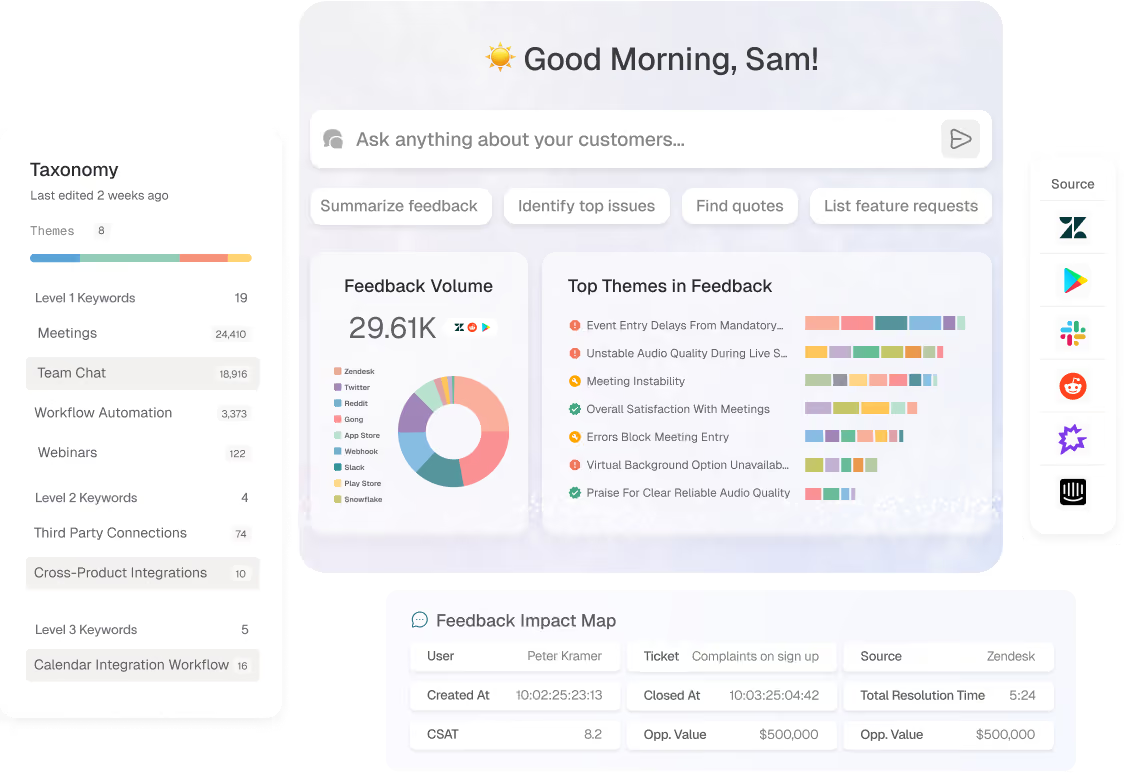
Enterpret is a customer feedback platform aimed at product teams that need to make sense of high feedback volume. Its signature is an adaptive taxonomy that builds and updates a categorization structure from your own feedback, connected through a wide set of integrations. For product organizations processing large volumes of tickets, reviews, and community posts, it offers a scalable way to keep categories current. See how it compares in our Chattermill vs Enterpret breakdown.
Key Features
- Adaptive taxonomy: Automatically builds and updates categories from your feedback rather than a fixed schema.
- Broad integrations: Connects to many product and support data sources.
- High-volume handling: Designed to keep pace with large feedback streams.
- AI categorization: Applies AI to tag and route feedback at scale.
Enterpret Pros
- Adaptive taxonomy reduces the manual work of maintaining categories.
- Scales well for high-volume product feedback.
- Strong user sentiment, reflected in a 4.5 G2 rating across 110+ verified reviews.
Enterpret Cons
- Aspect-based sentiment is partial rather than per-aspect.
- Custom-only pricing means no public entry point for evaluation.
- Setup runs in weeks, so it is not an instant deployment.
2026 Pricing
Enterpret uses custom, quote-based pricing with no public list price. Independent benchmarks put enterprise contracts at roughly $30,000 to $100,000 or more per year, scaled by data volume and the integrations you need.
G2 Rating
Enterpret holds a 4.5 on G2, based on more than 110 verified reviews as of 2026.
Best For
Enterpret is best for product teams unifying high-volume feedback under an adaptive taxonomy. It fits organizations whose priority is keeping categorization current across large, fast-moving feedback streams.
4. Medallia
What Is Medallia?
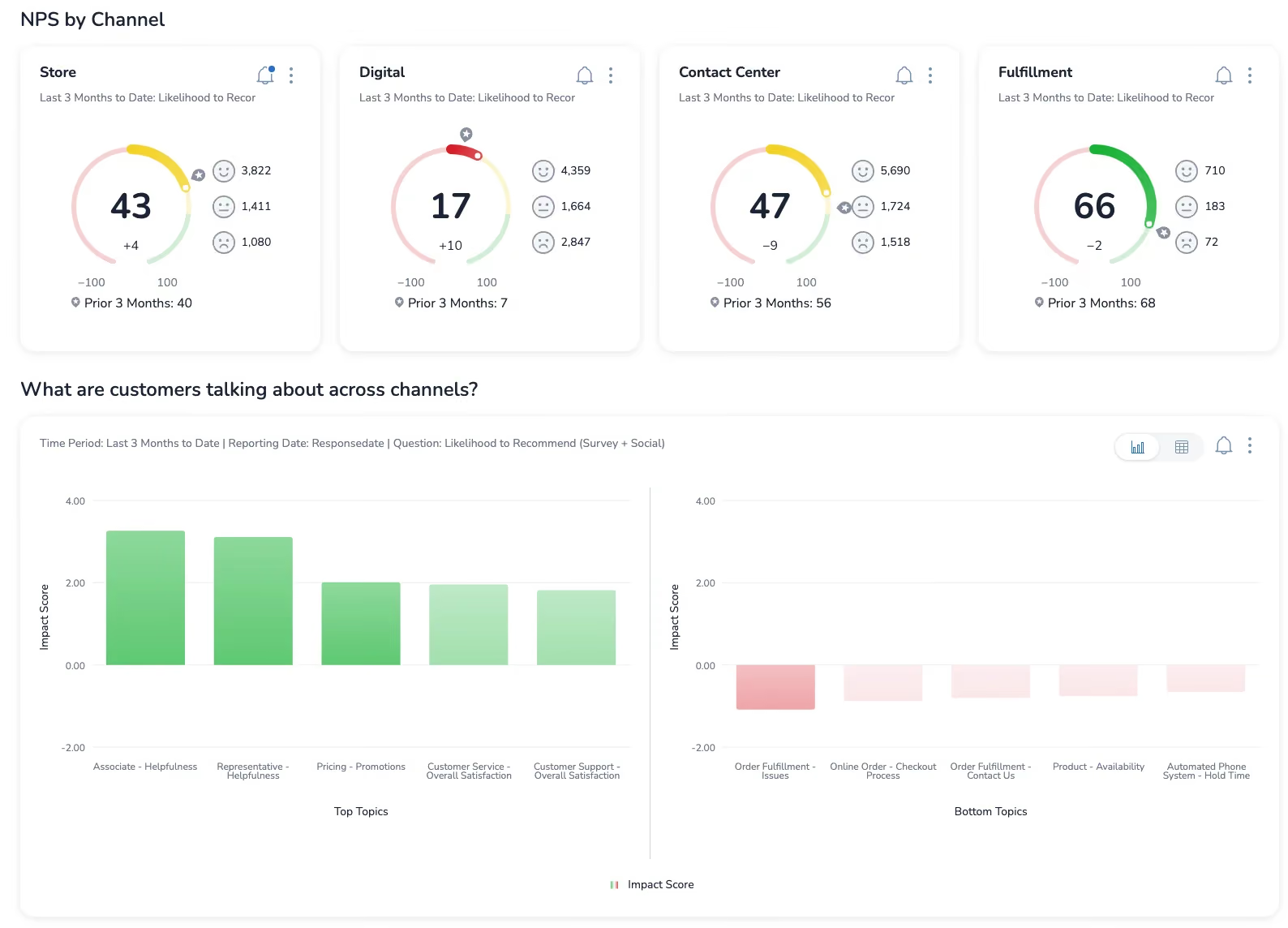
Medallia is an established experience-management platform known for breadth across surveys, digital signals, and contact-center or voice feedback. Its Athena AI combines supervised learning with rules to analyze feedback across those channels. For large enterprises that want a wide experience-management footprint spanning many touchpoints, Medallia is a long-standing option. For the direct comparison, see our Chattermill vs Medallia breakdown.
Key Features
- Experience-management breadth: Covers surveys, digital, and contact-center or voice signals.
- Athena AI: Applies supervised learning plus rules to analyze feedback.
- Contact-center analytics: Captures voice and interaction signals alongside surveys.
- Enterprise infrastructure: Built for large, complex deployments.
Medallia Pros
- Very broad coverage across enterprise touchpoints, including voice.
- Mature platform with deep enterprise deployment experience.
- Solid user sentiment, reflected in a 4.5 G2 rating.
Medallia Cons
- Aspect-based sentiment is partial, and a supervised-plus-rules approach can miss emerging themes.
- Setup can run from weeks to months for full deployment.
- Breadth comes with complexity and enterprise-level cost.
2026 Pricing
Medallia is quote-based with no published list price. Third-party benchmarks put entry licenses around $20,000 per year, with small-business contracts averaging roughly $21,000; mature, multi-module enterprise programs commonly run into the high six figures (one benchmark of actual customer spend averages near $599,000 per year for large enterprises), before implementation fees that often add $50,000 to $200,000. Our Qualtrics vs Medallia breakdown digs into the numbers.
G2 Rating
Medallia holds a 4.5 on G2.
Best For
Medallia is best for large enterprises that value experience-management breadth across many channels, including contact-center and voice signals.
5. Qualtrics XM
What Is Qualtrics XM?
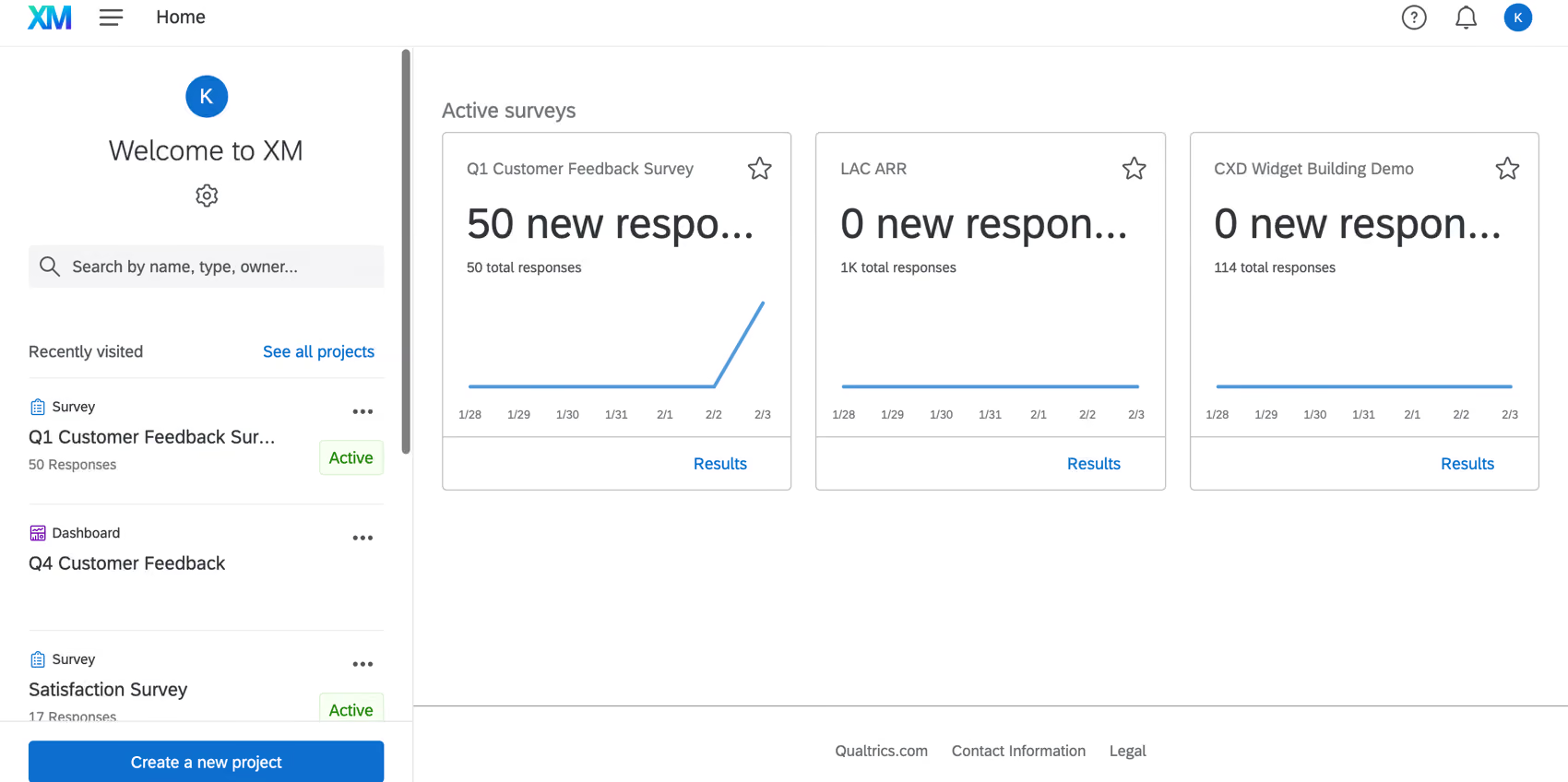
Qualtrics XM is an enterprise experience-management suite strongest in structured research and governance-heavy programs. Its XM Discover text analytics applies NLP and rules to unstructured feedback across a broad set of sources. For organizations running large research operations with strict governance requirements, Qualtrics is a familiar standard. See how it compares in our Chattermill vs Qualtrics XM breakdown.
Key Features
- XM Discover text analytics: Applies NLP and rules to unstructured feedback.
- Research depth: Robust survey and study design for structured research.
- Governance and compliance: Controls suited to regulated, governance-heavy programs.
- Broad data coverage: Spans surveys, digital, and operational signals.
Qualtrics XM Pros
- Deep, well-governed research capabilities for large programs.
- Broad coverage across structured and unstructured data.
- Widely adopted enterprise standard with mature tooling.
Qualtrics XM Cons
- Aspect-based sentiment is partial, and an NLP-plus-rules engine trails purpose-built deep-learning accuracy.
- Setup can run from weeks to months.
- Complexity and cost skew toward large enterprises rather than lean teams.
2026 Pricing
Qualtrics XM is quote-based with no public list price. Verified contract data from Vendr puts the median at roughly $30,000 per year, with deals ranging from about $6,880 to $139,920 depending on modules, users, and interaction volume (Vendr, 2026). See our Qualtrics pricing guide for the full breakdown.
G2 Rating
Qualtrics XM holds a 4.4 on G2.
Best For
Qualtrics XM is best for governance-heavy enterprises that need deep research capabilities alongside XM programs.
6. Zonka Feedback
What Is Zonka Feedback?
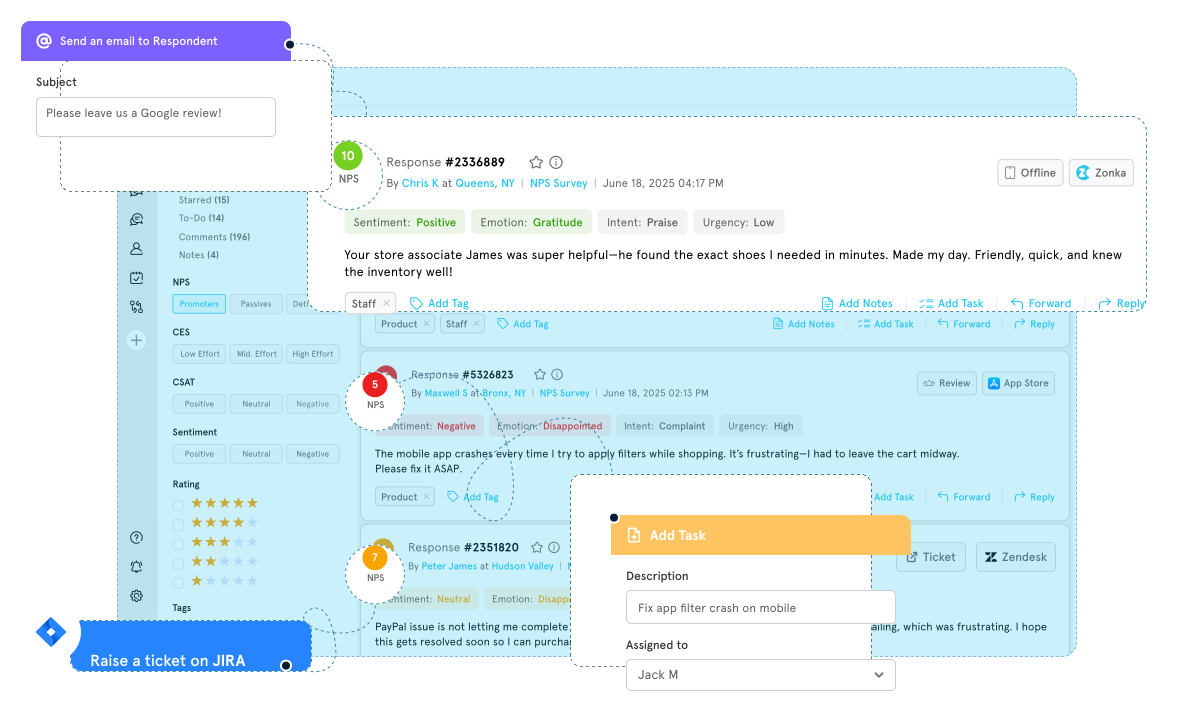
Zonka Feedback is a mid-market platform that pairs multi-channel survey capture with AI feedback analytics. It collects feedback through email, SMS, WhatsApp, web, and in-app surveys, plus reviews, and applies AI feedback intelligence that combines thematic analysis with entity and aspect detection and sentiment. For mid-market teams that want to both gather and analyze feedback in one accessible tool, it offers a low entry price and quick setup. For a broader view of survey and analytics options, see our best AI voice of customer tools guide.
Key Features
- Multi-channel survey capture: Collects via email, SMS, WhatsApp, web, and in-app.
- AI feedback intelligence: Combines thematic analysis with entity and aspect detection.
- Entity and aspect sentiment: Scores sentiment at the entity and aspect level.
- Fast deployment: Teams can get running in about a day.
Zonka Feedback Pros
- Accessible entry pricing from $49 per month.
- Same-day setup for fast time to first insight.
- Aspect-level sentiment via entity and aspect detection.
Zonka Feedback Cons
- Depth and scale trail enterprise-grade platforms on very large, multi-channel programs.
- Custom pricing kicks in at high volume.
- Coverage centers on surveys and reviews rather than the full omnichannel mix.
2026 Pricing
Zonka Feedback starts from $49 per month, with custom pricing for high-volume needs.
G2 Rating
Zonka Feedback holds a 4.7 on G2.
Best For
Zonka Feedback is best for mid-market teams that want survey capture and AI feedback analytics in one accessible, fast-to-deploy tool.
7. Keatext
What Is Keatext?
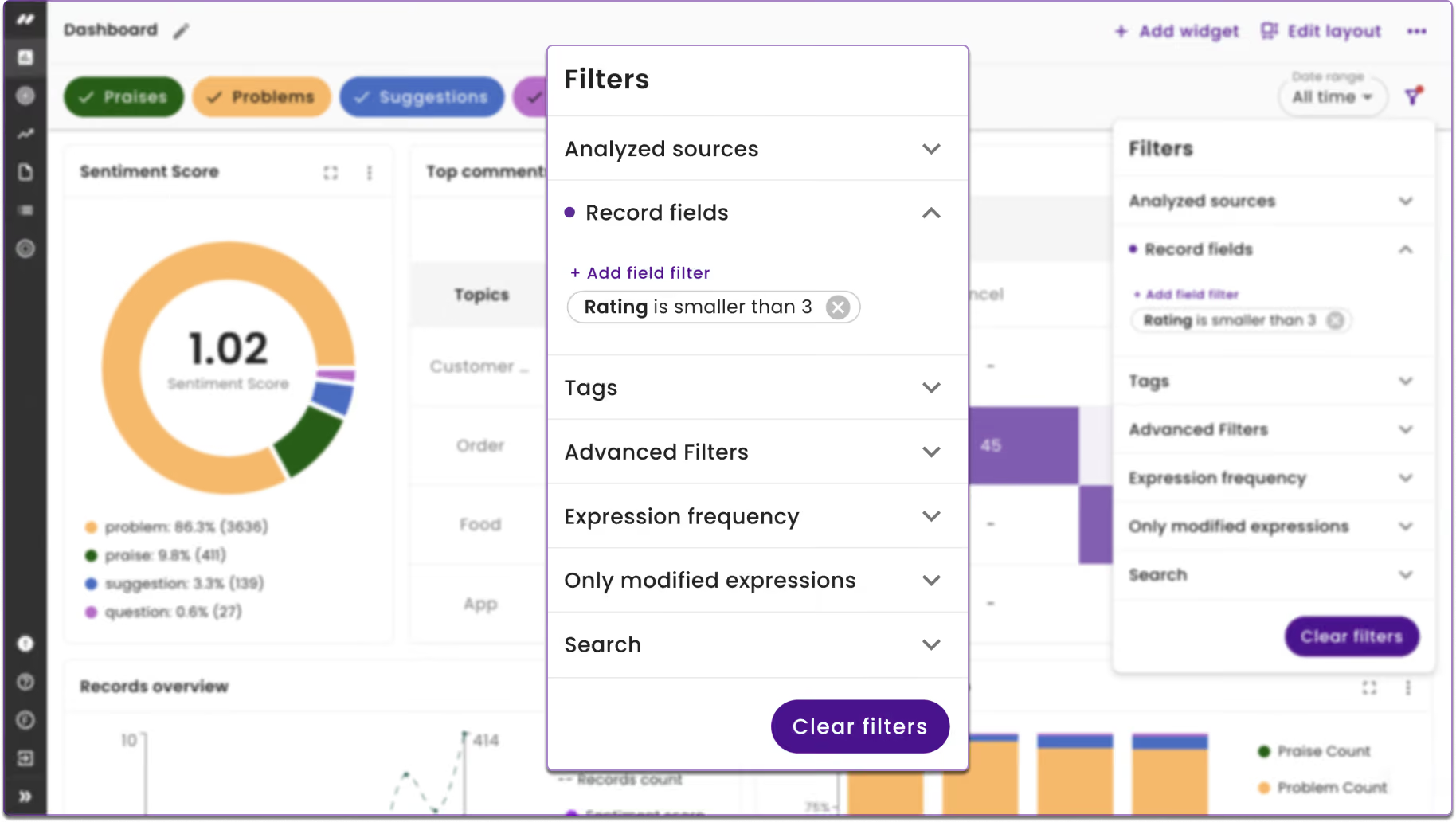
Keatext is an AI text analytics platform that turns feedback from reviews, surveys, and support tickets into prioritized recommendations. Its focus is less on raw analysis and more on suggesting what teams should act on next. For mid-market teams that want guidance rather than just dashboards, Keatext offers a recommendation-forward approach at an accessible price. It sits among the wider field profiled in our customer feedback analysis tools guide.
Key Features
- AI text analytics: Analyzes reviews, surveys, and support tickets.
- Recommendations engine: Suggests prioritized actions from feedback.
- Multi-source input: Combines reviews, surveys, and tickets.
- Accessible entry point: Priced for mid-market budgets.
Keatext Pros
- Recommendation-forward output helps teams decide what to act on.
- Accessible pricing from around $550 per month.
- Covers reviews, surveys, and support tickets in one place.
Keatext Cons
- Aspect-based sentiment is partial rather than per-aspect.
- Channel coverage is narrower than enterprise platforms.
- Its G2 profile has fewer than 10 reviews, so it lacks a representative rating.
2026 Pricing
Keatext starts from roughly $550 per month.
G2 Rating
Keatext is not yet rated on G2, with fewer than 10 reviews on its profile, so we mark its rating as N/A rather than cite an unrepresentative score.
Best For
Keatext is best for mid-market teams that want AI-generated recommendations from their feedback rather than analysis alone.
Frequently Asked Questions
What are the best Kapiche alternatives in 2026?
The best Kapiche alternatives in 2026 are Chattermill, Thematic, and Enterpret, followed by Medallia, Qualtrics XM, Zonka Feedback, and Keatext. Chattermill is the top pick for enterprise CX teams that need accurate, multi-channel analysis tied to business metrics, Thematic suits theme tracking over time, and Enterpret fits high-volume product feedback. Your best fit depends on channel breadth, model accuracy, and whether you need feedback linked to revenue, as we detail in our customer feedback analysis tools guide.
How much does Kapiche cost, and why do teams look for alternatives?
Kapiche prices access largely by "rows" of data processed, so cost scales with volume rather than with the value of the insight. Teams look for alternatives when row-metered pricing makes growth expensive, when theme-level analysis blurs sentiment on multi-topic feedback, and when they need feedback connected to metrics like NPS, CSAT, and revenue. Platforms built for wider channel coverage and impact analysis tend to answer those needs better.
What is the best Kapiche alternative for enterprise CX teams?
Chattermill is the best Kapiche alternative for enterprise CX teams. As an AI-native CXI platform, it unifies 65+ feedback sources across 100+ languages, scores sentiment at the aspect level with ABSA, and links feedback to NPS, CSAT, CES, and revenue through Impact Analysis. It is proven at enterprise scale with clients including Uber, HelloFresh, and E.ON Next, as covered in our best enterprise voice of customer platforms guide.
Which Kapiche alternative is best for aspect-based sentiment analysis?
Chattermill is the best Kapiche alternative for aspect-based sentiment analysis. Its ABSA scores sentiment per aspect within a single comment, so a review praising delivery but criticizing billing is read correctly on both counts rather than averaged into one misleading score. This aspect-level precision, powered by the proprietary Lyra model, is the accuracy edge that per-comment and rule-based tools cannot match. Zonka Feedback also offers aspect-level sentiment for mid-market teams.
What should you look for when choosing a Kapiche alternative?
Start with channel coverage: how many feedback sources the tool genuinely unifies. Then weigh model approach and accuracy, aspect-based sentiment depth, whether feedback connects to business metrics, pricing transparency, and setup time. The right choice matches those criteria to your scale and goals, which is exactly the framework behind our best AI voice of customer tools guide.
The Bottom Line
Kapiche is a reasonable starting point, but scaling CX teams keep hitting the same three walls: row-metered pricing, theme-level analysis that blurs multi-topic feedback, and no clear line from insight to revenue. Each alternative here solves part of that puzzle. Thematic tracks themes over time, Enterpret tames high-volume product feedback, and Zonka Feedback and Keatext serve mid-market teams that want accessible, fast-to-deploy analytics.
For enterprise CX, insights, and product teams, Chattermill is the recommendation. It is the one AI-native CXI platform in this comparison that combines aspect-level accuracy, 65+ channel unification across 100+ languages, and Impact Analysis that quantifies what feedback is worth, with results like HelloFresh's 30% lift in average order value and E.ON Next's 144% rise in NPS to prove it. If you are ready to turn scattered feedback into decisions leadership can act on, book a personalized demo.



See Chattermill in action on your own feedback
Book a demo


