


Brandwatch Pricing 2026: Plans, Costs and Add-Ons



The CX intelligence
platform that's AI-native by design
Book a demoBrandwatch Pricing 2026: Plans, Costs and Add-Ons
Quick Summary
Brandwatch doesn't publish prices on its website, but its UK government rate card provides a useful benchmark. Consumer Intelligence starts at £10,800 a year for five search queries, while Social Media Management starts at £10,800 a year for three users. Vendr reports a median annual contract of $50,000. Your actual Brandwatch cost will depend on the product, seats, data requirements, and add-ons you need, with onboarding fees required for all Consumer Research packages listed on the rate card.
Why Brandwatch Pricing Is Hard to Pin Down
If you're trying to work out how much Brandwatch costs, its pricing and plans page isn't particularly helpful. It outlines the different products available but doesn't disclose what any of them cost. For that, you'll need to book a demo and speak to sales.
However, we found a 28-page pricing document on the UK government's G-Cloud 15 marketplace, published by Brandwatch's parent company, Cision, in December 2025. Although intended for UK public-sector buyers, it offers a detailed breakdown of package prices, add-ons, and onboarding fees.
We've combined this information with Vendr's data from 40 Brandwatch purchases to give you a clearer picture of what you can expect to pay and where there's room to negotiate.
Why Listen to Us
Footasylum uses Chattermill to analyze NPS surveys, CSAT responses, and Trustpilot reviews, receiving around 2,500 NPS responses a week. Uber has worked with Chattermill for eight years, with more than 400 employees using insights from surveys, app reviews, and social media across five global regions.
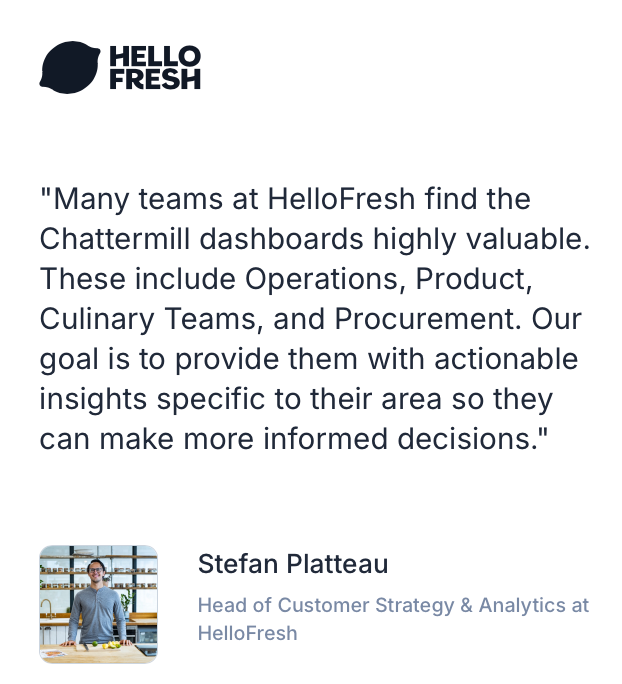
Working with these brands gives us firsthand experience of the data, user access, and analytical capabilities enterprise teams need. We've approached Brandwatch's pricing with these requirements in mind to help you assess not just what the platform costs, but whether it's worth the investment for your team.
Brandwatch Pricing at a Glance
The table below shows Brandwatch's published annual prices from its G-Cloud 15 rate card, alongside what buyers report paying through Vendr. The rate card is intended for UK public-sector buyers, so your own quote may differ.
Every Consumer Research package listed on the rate card also requires Basic (£3,000) or Advanced (£6,000) onboarding, with the option to pay a recurring fee instead of a one-off charge.
How Brandwatch Packages Its Products
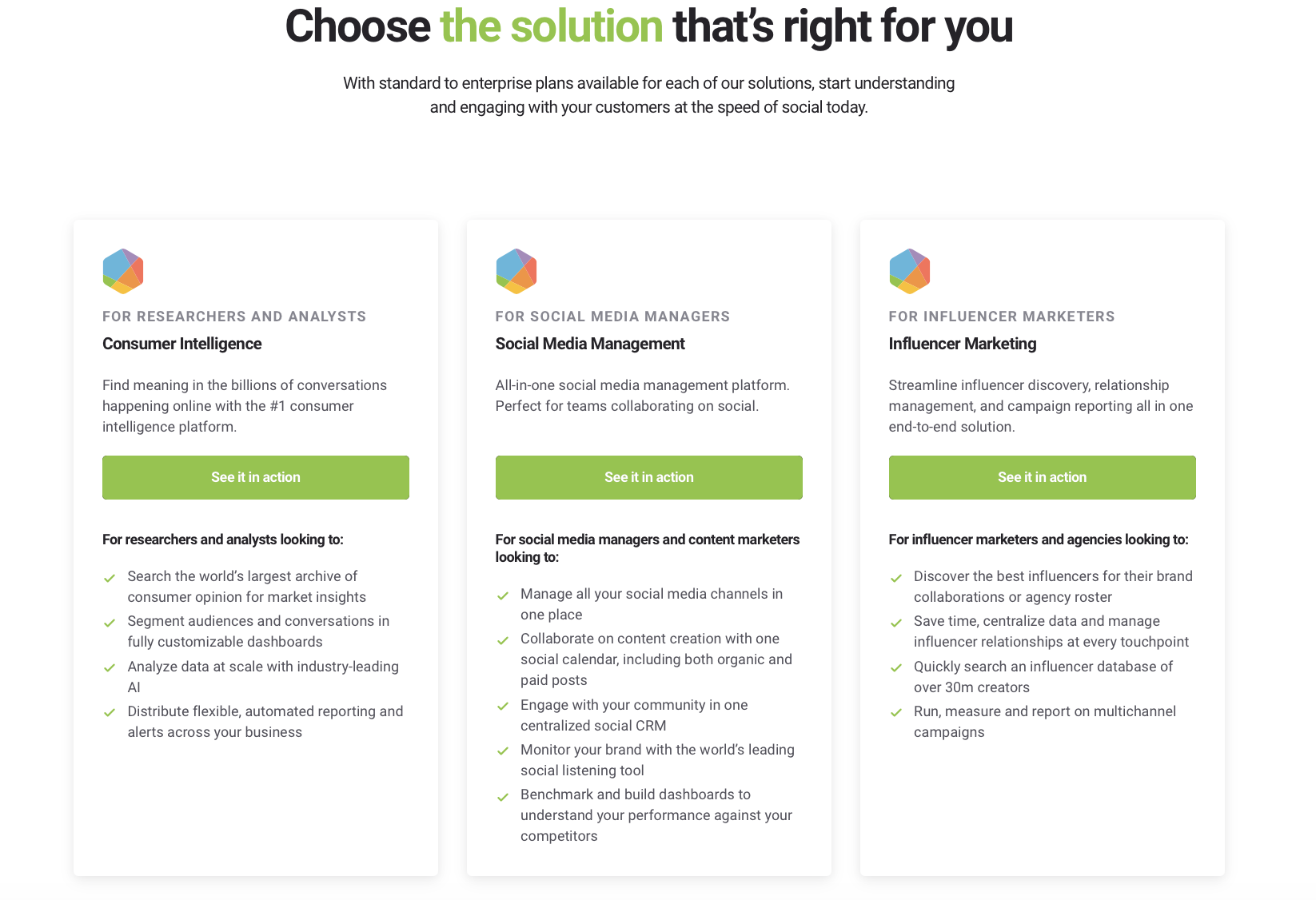
The Brandwatch plans page highlights three main products, each designed for a different audience and priced separately. Understanding what each product offers is important so you don't end up paying for capabilities your team doesn't need.
Consumer Intelligence
Brandwatch Consumer Intelligence, sold as Consumer Research, is designed for researchers and analysts who want to understand consumer opinions, market trends, and competitor performance. It provides access to an archive of 1.7 trillion historical conversations dating back to 2010, with 501 million new conversations added each day.
You can specify the keywords, brand names, or topics you want to monitor by creating what Brandwatch calls queries. The platform automatically collects conversations that match those criteria. You can then analyze the results in dashboards, schedule reports, and set up alerts for changes in conversation volume. Brandwatch's AI assistant, Iris, also summarizes conversations and helps explain what's driving spikes in mentions.
Depending on your research needs, you can pay for either the number of queries you run or the volume of mentions (individual search results) they collect. The rate card outlines two pricing models:
- Query-based pricing: You pay for the number of active queries, rather than the volume of mentions they collect. For example, 20 Premium queries cost £48,360 a year.
- Mention-based pricing: You pay based on the combined volume of unique mentions collected across your queries and channels each month. For example, 1 million monthly mentions on Premium costs £35,400 a year. This pricing model is only available on Premium and Enterprise.
If you're monitoring a fixed number of brands or topics that generate a high volume of conversations, query-based pricing may be more economical. Mention-based pricing may be better suited to teams that need to run many queries but can keep their overall mention volume within a predictable limit.
For example, if your 20 Premium queries collectively generate up to 1 million mentions a month, choosing mention-based pricing would save you £12,960 a year. However, if those same queries generate several million mentions a month, query-based pricing could work out cheaper.
Social Media Management
Social Media Management, formerly the Falcon suite, is built for social media managers and content marketers who need to manage multiple social accounts from one platform. Every tier includes tools for scheduling and publishing content, responding to comments and messages, managing ads, tracking audience engagement, monitoring brand mentions, and benchmarking performance against competitors.
The tiers differ primarily in the number of users, listening queries, and benchmark channels (social accounts you monitor to compare performance) included. Standard gives you 3 users and 1 listening query for £10,800 a year, while Pro gives you 5 users and 5 queries for £16,200. Premium gives you 20 users and 20 queries for £33,600. Owned social channels and ad accounts are unlimited on all three.
Going from Standard to Premium more than triples the price. For that, you get 17 additional user seats, 19 more listening queries, and 30 more benchmark channels. The extra capacity is particularly useful for larger social media teams managing multiple brands, monitoring more topics, and tracking more competitors.
Influencer Marketing
Brandwatch Influence, formerly Paladin, helps brands and agencies find influencers, manage relationships, and track campaign performance. Its database of over 65 million creators lets you filter influencers by interests, audience demographics, and previous brand partnerships.
You can buy Influence as an add-on or on its own. The Standard package costs £4,920 a year for influencer discovery only, while Pro costs £14,640 and includes tools for managing influencer relationships and campaigns. Premium costs £24,360 and adds API access. If you also want to pay influencers directly through the platform, you'll need a separate Tipalti subscription.
Search Intelligence
Brandwatch also offers Search Intelligence, powered by Trajaan, which Cision acquired in December 2025. It helps brands identify emerging consumer trends and understand purchase intent by analyzing search behavior across platforms like Google, Amazon, TikTok, and ChatGPT.
Although Search Intelligence isn't listed on Brandwatch's plans page, the G-Cloud 15 rate card lists prices starting at £20,400 a year, with generative AI search monitoring available as a £10,200 annual add-on.
How Much Does Brandwatch Cost in Practice?
While the published rate card shows what individual Brandwatch packages and add-ons cost, data from Vendr and G2 gives us a better idea of what buyers actually pay and the discounts they've been able to negotiate.
What Vendr Buyers Report
Based on 40 Brandwatch purchases tracked by Vendr, buyers pay a median of $50,000 a year, with reported contracts ranging from $19,542 to $81,200. Buyers also secured an average discount of 15.29%.
Vendr provides further guidance on what you might pay depending on your requirements:
- Small to mid-sized businesses: Teams managing 5 to 10 social accounts with 3 to 5 users, or monitoring 3 to 5 topics, typically pay tens of thousands of dollars a year.
- Mid-market and enterprise businesses: Teams managing 10 to 25 social accounts, monitoring 10 or more topics, or purchasing multiple Brandwatch products can expect to pay anywhere from several tens of thousands to low six figures annually.
- Large enterprises: Businesses licensing all three product suites, managing more than 25 social accounts, or operating across multiple regions can pay upwards of $100,000 a year.
These estimates are useful for budgeting, but your final quote will depend on the products, features, and usage limits you negotiate.
What G2 Shows
While G2 doesn't disclose what buyers pay for Brandwatch, it provides some insight into the discounts customers have secured. Based on user reviews, G2 reports an average discount of:
- 12% for Brandwatch Consumer Intelligence.
- 15% for Brandwatch Social Media Management.
These figures are consistent with the average savings reported by Vendr, giving you a useful benchmark when negotiating your Brandwatch contract. However, the discount you receive will depend on the scope and terms of your deal.
Brandwatch Pricing: Two Cost Scenarios
To give you a clearer idea of how much Brandwatch could cost your team, let's look at two scenarios using the published rate card prices before discounts.
Example 1: A social media team of seven
Let's say your team needs Social Media Management Pro, which covers five users. You'll need two additional editor seats to accommodate everyone. If you also opt for Basic onboarding, your costs would look like this:
- Social Media Management Pro: £16,200
- Two additional editor seats: £3,240 (£1,620 each)
- Basic onboarding: £3,000
Your total comes to £22,440 in the first year and £19,440 annually thereafter, assuming onboarding is a one-off expense and subscription rates remain unchanged.
Example 2: An insights team tracking multiple brands and topics
Let's say your insights team needs Consumer Research Premium with 20 queries, additional historical data to study long-term trends, and Image Insights to identify brands and objects in visual content. You'll also need an onboarding package.
Here's what you'd pay if you opted for Advanced onboarding:
- Consumer Research Premium (20 queries): £48,360
- Additional historical data: £6,620
- Image Insights: £4,000
- Advanced onboarding: £6,000
Your total comes to £64,980 in the first year.
In both scenarios, the base package price accounts for only part of the total cost. That's why it's worth identifying the seats, data, and features your team needs before requesting a quote.
Add-Ons, Seats and Contract Terms That Change the Total
Your chosen Brandwatch tier determines your starting price, but additional seats, data sources, onboarding services, and contract terms can all affect what you ultimately pay.
Let's break down these costs using Brandwatch's G-Cloud 15 rate card and data from Vendr.
Seats
Consumer Research limits the number of users by tier: 5 on Pro, 20 on Premium, and 50 on Enterprise. All three allow unlimited view-only users. So, if a sixth analyst needs to create queries rather than simply view reports, you may need to upgrade from Pro to Premium.
With Social Media Management, you can purchase additional seats individually. An extra admin costs £2,280 a year, while an extra editor costs £1,620. If you're using Listen Standalone, additional listening-only users cost £972 each per year. Additional listening queries cost £540 each per year.
Data and Features
Depending on the scope of your research, you may need some of these Consumer Research add-ons:
- Historical data: Access additional historical conversations on Premium and Enterprise. Prices range from £2,880 a year for 5 queries to £10,650 for 40 queries.
- Image Insights: Search and filter posts based on objects, actions, and scenes in images for £4,000 a year on Premium. Adding a custom logo to track costs £1,600 a year per logo.
- Extra channels: Monitor 50 additional Facebook and Instagram channels for £3,840 a year, or 50 additional X (formerly Twitter) channels for £9,600 a year.
- Other data sources: Extend your research beyond online conversations with print media data from LexisNexis (£4,860), broadcast data (£9,072), and podcast data (£2,840) per year.
- Reporting and access: Vizia live reporting costs £7,704 a year, while a higher API rate limit costs £4,880. Single sign-on (SSO) setup carries a one-off fee of £300 to £800.
Another consideration is how you intend to use your collected data. Consumer Research Pro doesn't support raw mention exports or content uploads. If you need to import first-party customer feedback, such as survey responses and support tickets, for analysis alongside social conversations, you'll need Premium or Enterprise.
Onboarding and Services
Every Consumer Research package listed on the rate card requires paid onboarding. You can choose between two standard options:
- Basic: £3,000 as a one-off payment or £2,625 a year, with 15 hours of dedicated support.
- Advanced: £6,000 as a one-off payment or £5,250 a year, with 30 hours of dedicated support.
With recurring onboarding, your support hours renew, so you can use them to train new employees or explore new use cases. Custom onboarding and technical implementation cost £200 an hour, while Brandwatch's analyst reports range from £7,500 to £22,500 each.
According to Vendr, implementation fees for complex deployments can reach 10 to 15% of the annual contract value, while premium support can add another 10 to 20% to subscription costs.
Contract Terms
Brandwatch sells annual contracts as standard, but committing to a longer term could reduce your annual costs. Vendr reports that buyers committing to two- or three-year contracts commonly secure discounts of 15 to 25%.
You'll also want to confirm what happens if you exceed your contracted usage limits, as additional accounts, seats, or queries may trigger overage fees.
Before signing, check the renewal conditions. Vendr recommends negotiating a cap on annual price increases (for example, 5%) and reviewing automatic renewal clauses to retain the flexibility to renegotiate or switch providers.
Who Brandwatch Is a Good Fit For
Brandwatch is a good fit for businesses that rely heavily on social listening, consumer research, or social media management. It is particularly suited to:
- Market research and insights teams that need years of historical data to study consumer trends, audience behavior, and competitors.
- Brand, PR, and communications teams that monitor brand reputation and need alerts when online conversations spike.
- Social media teams at large brands that manage publishing, engagement, and social listening across multiple channels and regions.
- Agencies that monitor multiple client brands and can spread the subscription cost across client accounts.
For larger research teams, Consumer Research Enterprise may be worth the investment if they need more than 20 active users, higher data export limits, and a dedicated customer success manager.
Who Should Look Elsewhere
Brandwatch may not be the best fit if:
- You're a small team that mainly publishes content. If all you need is to schedule posts, respond to comments, and track engagement, a dedicated social media publishing tool may cover your needs at a lower cost.
- You need flexible subscription terms. Brandwatch typically sells annual contracts, with no self-serve entry-level plan for new customers. This may not suit teams that prefer a monthly subscription without a long-term commitment.
- Your priority is understanding the customer experience. While Brandwatch supports first-party data uploads, its Consumer Research product is primarily designed for consumer research and social listening. If your team needs to continuously analyze surveys, reviews, support tickets, and call transcripts alongside social feedback, a dedicated customer feedback analytics platform may be a better fit.
This is an important consideration for CX and insights teams evaluating social listening platforms. We explore a similar trade-off in our Sprinklr pricing breakdown.
How to Negotiate Brandwatch Pricing
Brandwatch buyers have secured average savings of 15.29%, according to Vendr. A 15% discount on a £48,360 Consumer Research Premium package, for example, would save you more than £7,000 a year.
Here are five ways to approach your negotiations:
- Start 60 to 90 days early. This gives you enough time to evaluate alternatives, establish your requirements, and negotiate without the pressure of an approaching start or renewal date.
- Request quotes for both pricing models. If you're considering Consumer Research Premium or Enterprise, compare query-based and mention-based pricing using your expected search activity and monthly mention volume.
- Negotiate a one-off onboarding fee. Unless you anticipate ongoing training or implementation support, a one-off payment could be more cost-effective than paying for onboarding every year.
- Confirm your data access and export limits. Establish how much data you can download, whether you can import your own data, and which integrations are included. This helps you avoid paying for an upgrade later.
- Negotiate towards the end of a quarter. According to Vendr, Brandwatch's sales team may be more willing to offer discounts and other concessions as they approach quarterly sales targets.
Brandwatch Alternative for CX and Insights Teams: Chattermill
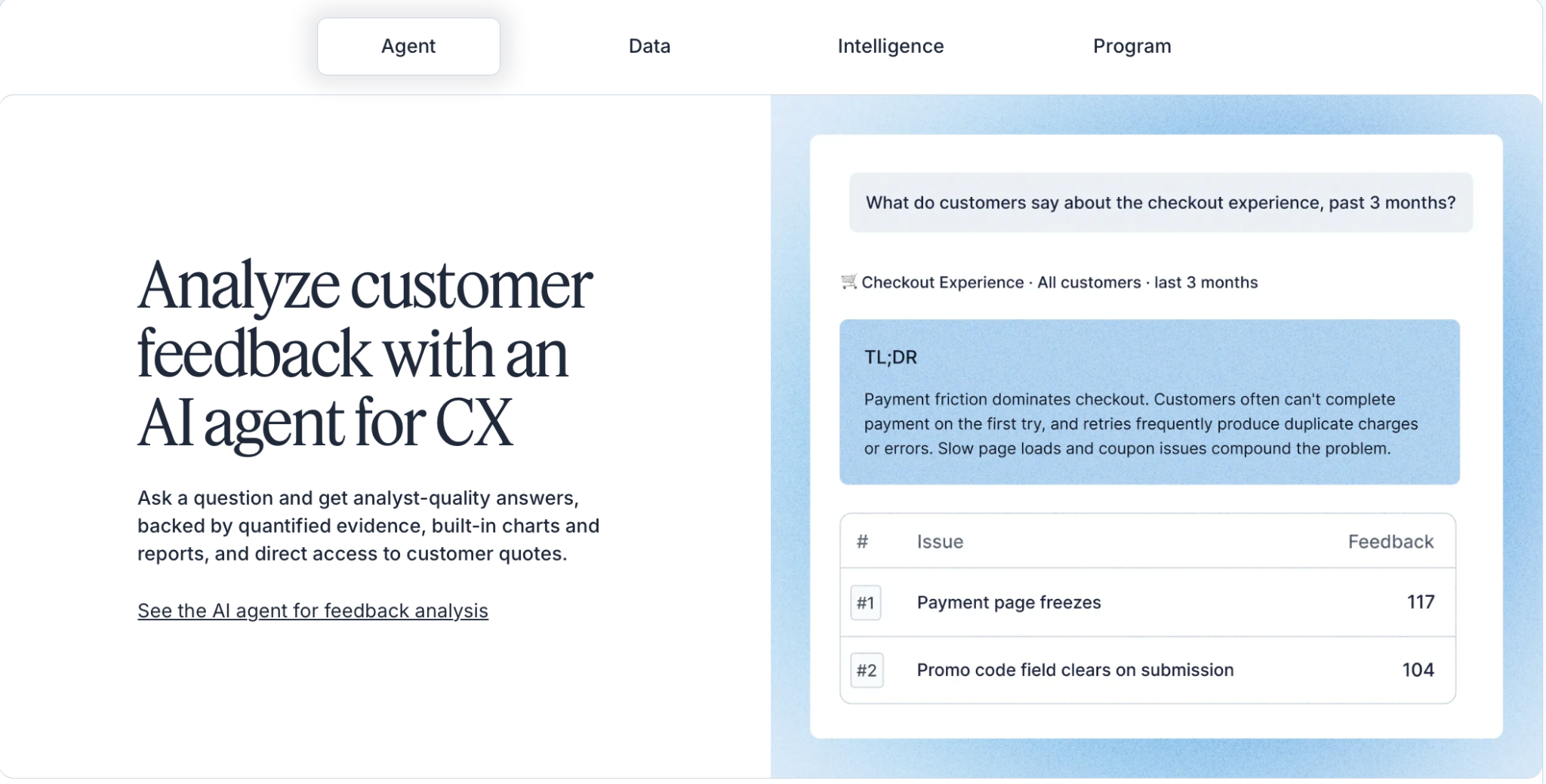
Brandwatch is particularly good at answering the question, "What are people saying about our brand online?" But CX and insights teams often need to answer a broader question: "Why are our customers dissatisfied, and what should we fix first?" Social conversations are part of that answer, but so are surveys, reviews, and support interactions.
Chattermill is a customer experience intelligence platform that unifies feedback from every channel and uses AI to help CX, VoC, and product teams identify recurring customer issues and opportunities for improvement.
We connect social sources like Facebook, Instagram, X, YouTube, TikTok, and Reddit and analyze them alongside Trustpilot and app store reviews, Qualtrics and Medallia surveys, Zendesk and Intercom tickets, and Gong and Aircall calls.
Our AI engine, Lyra AI, automatically identifies themes and sentiment across these sources. For example, if customers complain about delivery delays on TikTok, in Trustpilot reviews, and in support tickets, Chattermill groups that feedback under a common theme. You can then assess the scale of the problem and its impact on metrics like NPS and CSAT. You can also set up anomaly detection alerts to notify your team in Slack when complaints spike.
Our social media sentiment analysis also lets you benchmark customer sentiment against competitors across specific themes.
We charge based on the number of data sources you connect and the volume of feedback you analyze. That volume is measured in data credits, with one credit representing one piece of feedback. There are no per-user fees, so adding your product and support leads doesn't increase your subscription cost. Like Brandwatch, we provide a custom quote after a demo.
Footasylum, for example, uses Chattermill to analyze its NPS surveys, CSAT responses, and Trustpilot reviews. It also analyzes publicly available competitor reviews to identify opportunities to differentiate itself, such as introducing free returns within the UK.
As James McGhee, its Director of Customer Experience, puts it: "The return on investment with Chattermill is exceptional."
If you're weighing Brandwatch against other enterprise platforms, our Sprinklr alternatives guide covers more options for unified customer feedback analysis.
Getting Brandwatch Pricing Right for Your Team
Start by deciding which Brandwatch product you need, since Consumer Intelligence and Social Media Management are priced separately. Factor in any onboarding fees, additional seats, and data add-ons you need, and use Vendr's $50,000 median annual contract as a reference when negotiating your quote.
If your priority is understanding customer feedback across social media, reviews, surveys, and support conversations, book a Chattermill demo. We'll show you how to analyze that feedback in one place and identify the issues that matter most to your customers.
Frequently Asked Questions
Is Brandwatch free to use?
No, Brandwatch doesn't offer a free commercial plan or a self-serve trial for new customers. Instead, you can book a free demo and request a quote. According to its G-Cloud 15 rate card, standalone social listening starts at £7,290 a year with the Listen Standalone package.
Is Brandwatch worth it?
Brandwatch is worth considering if your team relies heavily on social listening, competitor monitoring, and consumer research, particularly given its historical data archive dating back to 2010. G2 users rate Brandwatch Consumer Intelligence 4.4 out of 5. However, if you mainly need to publish social content or analyze first-party customer feedback, a more specialized platform may offer better value.
Is Brandwatch social listening?
Yes. Brandwatch Consumer Intelligence is a social listening and consumer research platform, while Social Media Management includes a dedicated listening module. Brandwatch also offers Listen Standalone, which includes three users and three listening queries for £7,290 a year, according to its rate card.
Who are Brandwatch's main competitors?
Brandwatch's main competitors include Sprinklr, Meltwater, Talkwalker, and Sprout Social for social listening and social media management. If you need to analyze social conversations alongside surveys, reviews, and support tickets, it's also worth comparing Brandwatch with Chattermill and other AI sentiment analysis tools.
What are some free alternatives to Brandwatch?
Google Alerts is a free tool that sends you email notifications when new web content mentions your brand or other keywords you're monitoring. You can also use the built-in analytics tools on platforms like Facebook, Instagram, TikTok, and X to track engagement and audience activity. However, these tools offer limited capabilities for historical research, cross-channel monitoring, and large-scale sentiment analysis.


See Chattermill in action on your own feedback
Book a demo


