


Customer Feedback Management: Process, System and Scale


The CX intelligence
platform that's AI-native by design
Book a demoQuick Summary
Customer feedback management (CFM) means gathering what customers say, working out why they say it, fixing what matters, and letting them know. It has five steps:
- Collect: Run surveys at key moments and pull in tickets, reviews and calls.
- Centralize: Keep all feedback in one place, tied to each customer.
- Analyze: Spot the main themes and see which ones affect NPS, CSAT or churn.
- Act: Fix the themes with the biggest impact first.
- Close the loop: Tell customers what you changed.
For large volumes of feedback, you need a customer feedback system with shared themes, clear owners and regular reviews.
Why Customer Feedback Stalls After You Collect It
Most large brands don't have a collection problem. Survey responses, support tickets, app reviews and social comments arrive every day in thousands. The problem is what happens next.
Each source usually lives in its own tool. In Nextiva's survey of more than 1,000 CX leaders, 86% of companies running several CX tools said their data was siloed. So an analyst reads a sample by hand, tags it in a spreadsheet and shares a slide deck weeks later. When leadership asks what's driving churn, there's no clean answer.
It shows in the scores. In Forrester's CX Index 2026, only 26% of North American brands improved their CX quality, while 68% stayed flat. In Europe, 91% stayed flat. Scores only move when customers notice a fix, so feedback has to reach a team that can make one.
This guide walks through each stage of the process, what good looks like at each one, and the system that keeps it running as volume grows.
Why Listen to Us?
Since 2015, Chattermill has helped high-volume consumer brands turn feedback into action. Uber's work with Chattermill started in 2018 as an NPS project in Latin America. It now spans five mega-regions, with more than 400 people across CX, Product, Operations and Support using insights from surveys, app reviews and social media.

Footasylum unifies about 2,500 NPS responses a week with CSAT and Trustpilot reviews in our platform, and grew revenue 7% year on year. This guide is the process we see working at that scale.
What Is Customer Feedback Management?
Customer feedback management is the ongoing work of gathering what customers tell you, understanding it and acting on it. It covers two kinds of feedback:
- Solicited feedback that you ask for, like NPS, CSAT and CES surveys.
- Unsolicited feedback that customers give on their own, in support tickets, chats, call transcripts, app reviews and social posts.
Both arrive as structured data, like scores and star ratings, and as open text, like comments and transcripts. The open text is where the "why" lives. It's also the hardest part to manage at volume.
Here's a simple example. One late delivery can show up as a two-star review, an angry live chat and an NPS comment that says "still waiting." Across 50,000 orders a week, CFM is what turns those scattered comments into one issue your team can count, size and fix.
Customer Feedback Management Vs. Voice Of The Customer
A voice of the customer (VoC) program is the bigger goal: understanding what customers need and using it to shape decisions. CFM is the operating process inside that program. Gartner expects VoC platforms to collect feedback, analyze it and help teams act on it. CFM is the day-to-day work that moves each comment through those steps.
A customer feedback management system, in turn, is the mix of tools and rules that runs the process: where feedback comes in, how it's tagged, who owns each theme and when it gets reviewed. We'll cover the process first, then the system.
The Customer Feedback Management Process in 5 Stages
The customer feedback management process runs as one cycle of five stages. You collect feedback, centralize it, analyze it, act on it and close the loop. Then the cycle starts again with fresh feedback. Each stage below ends with a short checklist of what good looks like at scale, so you can see where your own program stands.
1. Collect Feedback Across The Journey
Collection decides what every later stage has to work with. If a survey records a score with no comment, you'll see NPS fall without knowing why. If it doesn't record who answered, you can't tell which product or region the drop came from.
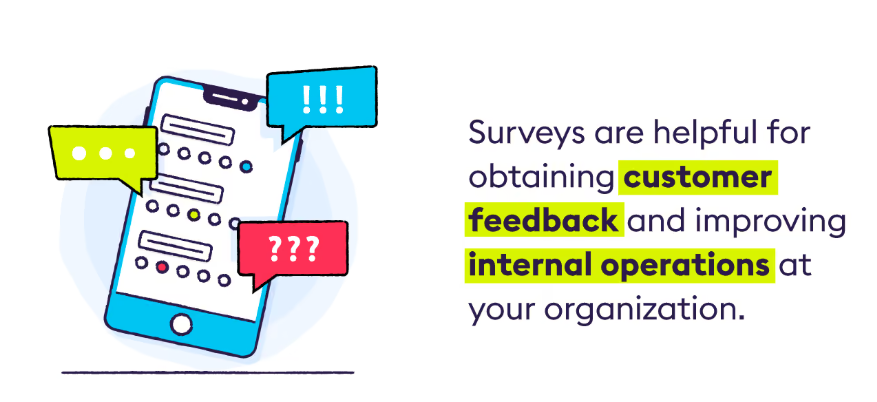
Start with the moments where customers form an opinion: checkout, delivery, a support contact and renewal. Then match the survey to the moment. Use CSAT after an interaction, CES after a solved problem and NPS for the overall relationship. Keep each survey to a few well-written questions, and always add one open-text question that asks why.
Short surveys matter. Low response rates leave you with a biased sample of your most committed customers, so you hear from fans and miss everyone else. That's why you also pull in what customers say unprompted, in tickets, chats, call transcripts, reviews and social posts.
Last, attach context at the point of capture: customer ID, journey stage, product and region. Most survey tools can pass these values through the survey link, so nobody has to match thousands of responses by hand later.
What good looks like:
- Every survey pairs its score with one open-text "why" question.
- Every key journey moment is covered by a survey or an unsolicited channel.
- Responses arrive with customer ID, journey stage, product and region attached.
2. Centralize Every Source In One Place
Until feedback sits in one place, you can't tell whether late-delivery tickets and one-star reviews describe the same problem. Most CX leaders know this. In the same Nextiva survey, 81% said consolidating customer data into one system of record could improve their customer experience.
Connect each source through a native integration or API, so feedback flows in daily without manual exports. Then map every source onto the same core fields: source, date, customer ID, product, region and language. That gives you a single source of truth for customer feedback, where one filter works across every channel.
Next, join each comment to its CRM record using the customer ID you captured at collection. Now every comment carries spend, tenure and plan, so you can see whether a complaint comes from new customers or your most valuable ones. Tag each comment's language too, and keep the original text next to any translation.
Finally, clean up duplicates. De-duplicate on each record's source ID, and watch for syndicated reviews. On Bazaarvoice, a review written on your site can also appear on retailers' product pages, and an IsSyndicated flag marks the copies. But keep three complaints from the same customer as three, because merging them undercounts the issue.
What good looks like:
- Every source syncs automatically, with no manual exports.
- Every record carries the same core fields.
- You can split any comment by spend, tenure or plan.
- A syndicated review or re-imported ticket appears once.
3. Analyze For Themes And The Why Behind Them
Customer feedback analysis turns thousands of open-text comments into themes, each with its own sentiment. A score tells you customers are unhappy. A theme like "delivery cost" tells you why. From there, you link each theme to a metric, so you can see which ones pull down NPS, CSAT or retention. And you set alerts, so a sudden spike gets caught in hours, not at the next monthly report.
This is where manual methods break first. Outletcity's CX manager, Melina Colling, used to spend 10 to 20 hours a week reviewing survey comments, and even then she could only read a random sample. ChatGPT can handle a few hundred comments, but it may tag the same comment differently each time you run it. When tags shift, this month's themes won't line up with last month's, and your trends stop meaning anything.
Chattermill's Lyra AI tags every comment against one consistent taxonomy and gives each theme in a comment its own sentiment. So a review that loves the product but hates the delivery counts toward both. Impact analysis then shows which themes push your NPS or CSAT up or down, by segment or channel, and anomaly detection flags spikes as they happen. Our platform connects to 65+ feedback channels and works across 100+ languages.
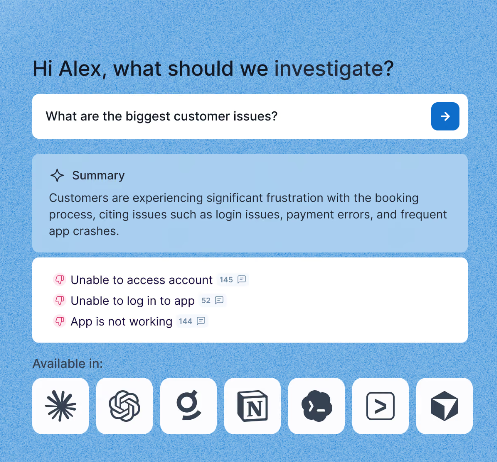
That's how Outletcity spotted negative sentiment about shipping costs and introduced free delivery for gold members. It was one of several changes behind a 13% rise in NPS, while negative sentiment fell by a third.
What good looks like:
- Every comment gets a theme and sentiment within a day, in every language you collect.
- Each theme shows its measured effect on NPS, CSAT or churn.
- The same comment gets the same tag every time, so trends hold month to month.
- A spike on any theme reaches the owning team within hours.
4. Act On The Themes That Matter Most
Analysis only pays off when something changes for customers. But at volume you'll have dozens of themes and limited people, so the first job is deciding the order.
Don't rank by mention count alone. The most-mentioned theme sometimes barely moves your score, while a quieter one may be what turns loyal customers into detractors. Instead, score each theme on what it costs you and what it takes to fix.
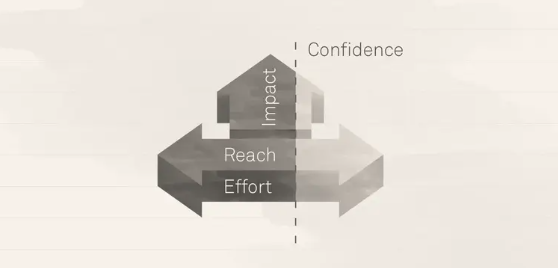
RICE, a scoring method from Intercom's product team, works well here:
- Reach: how many customers raised the theme last quarter
- Impact: how much it lowers NPS, CSAT or retention
- Confidence: how sure you are of both numbers
- Effort: the person-months needed to fix it
Multiply reach, impact and confidence, then divide by effort. The highest scores go first.
Hand each top theme to the team that can fix it, as a ticket or roadmap item in its own backlog, with one owner, a target metric and a due date. That's much of what it takes to drive action from a voice of the customer program, because the fix becomes routine work, not a favor.
Then check that it worked. Record the baseline before the fix ships and compare it one or two survey cycles later. That before-and-after number is the ROI story leadership keeps asking for.
What good looks like:
- Every theme you act on is scored on reach, metric impact and effort.
- Each fix has one named owner, a target metric and a due date.
- You record a baseline before release and re-measure afterward.
5. Close The Loop With Customers And Teams
Closing the loop shows customers that a person read their feedback and did something about it. Skip it, and they have little reason to answer your next survey. When you close the customer feedback loop, you work on two tracks.
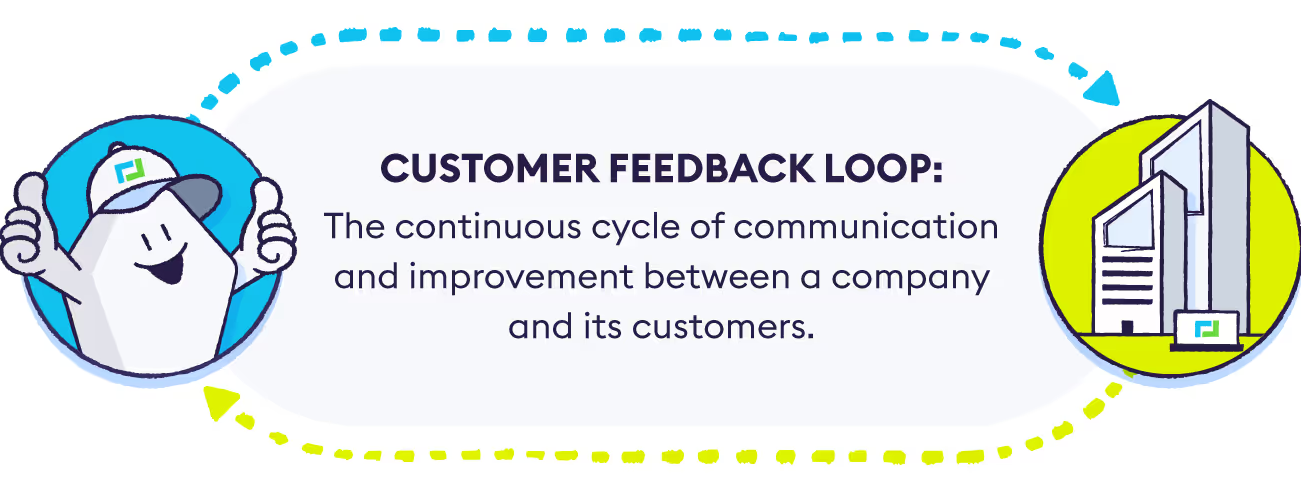
The inner loop is one-to-one follow-up. Set your survey or CX platform to open a ticket, with an owner, for every detractor or unresolved problem. At volume, route each ticket to the team that served that customer. Apple's retail stores worked this way. The system forwarded each score and comment to the store manager, with the goal of contacting every unhappy customer within 24 hours.
Work detractors first, but don't stop there. Bain notes that some of the most constructive suggestions come from promoters. And keep replies personal. In BrightLocal's 2026 survey, generic or templated replies put off 50% of consumers.
The outer loop is the one-to-many update. When a fix ships, tell the customers whose comments raised the problem, through email, release notes or in-app messages. Brief frontline teams first, so they're ready when customers ask about it.
What good looks like:
- Every detractor and unresolved issue gets an owner and a personal reply within a set window.
- Promoters with suggestions hear back too.
- Each follow-up is logged against the original comment, with its outcome.
- Every shipped fix reaches the customers who raised it and your frontline teams.
What a Customer Feedback System Needs
A customer feedback system is the standing setup that keeps the feedback process repeatable as channels and volume grow. It has four parts: a map of your sources, one shared taxonomy, named owners and a fixed review cadence. Put simply, the process is what you do with feedback. The system makes sure it keeps getting done, even after the person who set it up moves on.
A Map Of Every Feedback Source
A source map is one shared list of every channel where customers tell you what they think. It lets you trust a trend, because you can see which channels feed it and which don't. Give each channel a row with four fields:
- Volume: comments or responses per month
- Owner: the team that runs the channel
- Connection status: connected, exported by hand, or not connected
- Journey stage: where in the journey it captures feedback
A row might read: app store reviews, 4,000 a month, owned by the mobile team, exported by hand, post-purchase. That last "exported by hand" is a gap worth fixing.
Then walk the list through your customer journey, from first visit to returns, and flag any stage with no source. Rank sources by volume and by how much each one shapes decisions. Before you add a new survey, audit your feedback stack. You may already hold call transcripts or chat logs that nobody reads.
A Shared Taxonomy With Clear Rules
Every team needs to sort feedback into the same themes, or one problem gets counted in pieces. If support tags a complaint "late delivery" and operations calls it "shipping delay," each label catches only part of the problem. Nielsen Norman Group makes the same point about any taxonomy: when people use different terms for the same thing, each tag finds only some of the relevant content.
So build your feedback taxonomy in two levels, such as Delivery > Late delivery. Leaders watch Delivery as a whole, and operations works from Late delivery. Then put taxonomy governance in place, meaning the rules for who can change the taxonomy and how:
- Define every theme in one line, with an example of what doesn't belong.
- Let anyone propose a theme, but have one person approve each addition, rename or merge.
- Number each version. When you split or merge a theme, apply the change to past feedback too, so trends stay comparable.
You'll know it's working when two teams pull the same theme and get the same count.
Named Owners For Every Theme
When a theme has no owner, it lands with the CX team by default. But CX rarely controls the product roadmap or the warehouse. The team can flag a jump in app-crash complaints, but it can't schedule the fix. So you need three kinds of owner:
- A program owner who runs the process day to day and answers for whether it works.
- An executive sponsor outside CX, such as the COO, who finds budget and breaks ties between teams.
- An owning team for each theme area, so delivery goes to operations and app bugs go to product, each with one named lead.
Without a named lead, themes bounce between teams and nobody closes them. Then give each team its own view of the feedback, filtered to its themes, so nobody has to forward comments around or wait for an analyst's report.
A Review Cadence Everyone Keeps
A review cadence sets when each group looks at feedback and acts on it. A spike can't wait for next month's meeting, and a slow decline rarely trips an alert. So at high volume, you need four rhythms:
- Real-time alerts ping the owning team when a theme spikes or a score drops.
- Weekly team huddles go through each team's own themes.
- A monthly cross-functional review takes on themes no single team can fix, like late deliveries that flood support.
- A quarterly executive review ties the top themes to revenue and retention, so leaders can fund the right fixes.
Automate the reporting so every review opens with fresh numbers, not a week of slide-building. And protect the meetings. Bain warns that huddles are "easy to skip or to treat casually," so end each one with a named follow-up and open the next by checking it got done.
The Customer Feedback Management Maturity Model
Customer feedback management programs grow through four levels, from ad hoc surveys read by hand to one unified system. Use the table to place your own program.
Score each column separately, because few programs sit neatly on one row. You might be Centralized on sources but Siloed on ownership. Fix the weakest column first, since sharp analysis won't help if nobody owns its themes.
Then use the last column to make the case for investment. Show leadership what the next row up would let you report. Moving from "NPS dropped" to "here's what the drop costs and which fix wins it back" is often what gets a CX program funded.
How to Choose a Customer Feedback Management System
A good customer feedback management system keeps up with your volume without anyone reading comments by hand. Before you commit, test each option on a few thousand of your own comments and check five things:
- Does it connect every source? Surveys, tickets, calls, reviews and social posts should arrive with the customer ID attached.
- Does the analysis hold up? Its themes should match what your own analysts would tag, in every language you sell in.
- Can you control the taxonomy? You should be able to rename and merge themes without breaking past trends.
- Does it tie themes to metrics? It should show how much each theme moves NPS, CSAT or churn.
- Can every team see its own themes? Product and operations shouldn't have to wait on a CX analyst for reports.
Spreadsheets and in-house AI scripts can work for a pilot. At volume, though, someone has to keep them running and keep the themes consistent month after month. Count that upkeep when you weigh build vs. buy.
During the pilot, give each vendor the same sample. Then compare its top ten themes with what your analysts found. The gaps show you where each tool will need hand-holding after launch.
When you're ready to shortlist, compare the leading customer feedback management software side by side.
Find the Stage Where Your Feedback Stalls
Before you add another survey, trace one recent theme, like late deliveries, through the five stages. Did every comment reach one place? Did it get the same theme tag everywhere? Did a team own the fix, and did the customers who raised it hear back? Wherever the trail goes cold is the stage to fix first.
If it stalled at analysis, because nobody could say why customers were unhappy or what it cost, that's where Chattermill helps. We unify feedback from every channel and tie each theme to NPS, CSAT and revenue, so you know what to fix first.
Book a Demo to see which themes are driving your NPS.
FAQs
What Is The Difference Between Customer Feedback Management And Voice Of The Customer?
Voice of the customer is the wider program for understanding customers. Customer feedback management is the process inside it, from collection to follow-up. VoC is the why, CFM the how.
What Are The Three Main Types Of Customer Feedback?
Gartner groups VoC feedback into three types. Direct feedback is given on purpose, like surveys. Indirect is unprompted, like tickets and reviews. Inferred comes from behavior, like abandoned carts.
How Often Should You Review Customer Feedback?
At high volume, use four rhythms: real-time alerts for spikes, weekly team huddles, a monthly cross-functional review, and a quarterly executive review linking top themes to revenue and retention.
How Do You Prioritize Customer Feedback?
Rank themes by business impact, not mention count. A method like RICE weighs reach, impact on NPS or CSAT, confidence and effort to fix. Then fix the highest scores first.
Can AI Categorize Customer Feedback Accurately?
Yes, with purpose-built tools. General chatbots can tag the same comment differently each run, breaking trends. Feedback analytics platforms apply one consistent taxonomy and trace every number back to comments.
How Do You Know Your Customer Feedback Management Is Working?
Track process measures alongside CX scores: time to theme new feedback, share of themes with an owner, detractor closed-loop rate, and NPS or CSAT movement after each fix ships.


See Chattermill in action on your own feedback
Book a demo


