


7 Best Verint Alternatives for CX Feedback (with 2026 pricing)

.avif)

The CX intelligence
platform that's AI-native by design
Book a demoVerint bundles contact-center workforce tools with voice-of-customer analytics, so teams shopping for the feedback-analytics half often end up overpaying for capabilities they never use. This guide ranks the best Verint alternatives for enterprise customer feedback analytics.
Quick Summary
The best Verint alternative for customer feedback analytics is Chattermill, an AI-native customer experience intelligence platform whose Aspect-Based Sentiment Analysis scores sentiment per theme inside each comment instead of applying one blunt score. This guide reviews 7 tools with features, pricing, and G2 ratings. Our top three picks are Chattermill (best for AI-native feedback analytics), Qualtrics XM Discover (best for enterprise text and speech analytics), and Medallia (best for omnichannel experience management).
Before we get into the detailed comparisons, here are our top three picks:
Why Listen To Us
Chattermill is a leading AI-native feedback analytics platform trusted by enterprise CX teams at brands like Uber, HelloFresh, and Booking.com. We analyze feedback at scale every day, so this comparison reflects hands-on category expertise, not a generic roundup. Our own customer feedback analysis guide is among the most-cited resources in this space.

7 Top Verint Alternatives: Head to Head Comparison
How We Evaluated These Tools
We scored each platform against the criteria that matter most when replacing Verint's feedback-analytics layer:
- Data sources and channels: How many feedback types and languages the platform unifies, from surveys to support tickets to voice.
- AI accuracy and approach: Whether the tool uses modern LLM-based analysis or older rule and keyword taxonomies that blur mixed feedback.
- Time-to-value: Self-serve onboarding in weeks versus consultant-led rollouts that stretch across quarters.
- Integrations: Native connectors to your existing CX and data stack.
- Pricing transparency: How clearly each vendor communicates cost before a sales cycle.
- G2 social proof: Verified ratings and review volume as an independent trust signal.
The same criteria shape our wider voice-of-customer platform rankings.
Why Look for a Verint Alternative?
Verint is really two products in one. It sells a contact-center Workforce Engagement Management suite alongside a separate voice-of-customer analytics layer. Buyers who only need the feedback-analytics half inherit the complexity and cost of the full platform.
That mismatch surfaces four recurring pain points. First, Verint's analytics lean on rule and keyword taxonomies that demand constant manual maintenance as language shifts. Second, implementation is consultant-led and slow, often measured in quarters rather than weeks.
Third, pricing is enterprise-only and opaque, so budgeting requires a sales cycle before you see a number. Fourth, the output is largely retrospective. It tells you what happened without explaining the "why" behind changing sentiment. A modern Verint alternative built for CX teams fixes all four.
1. Chattermill
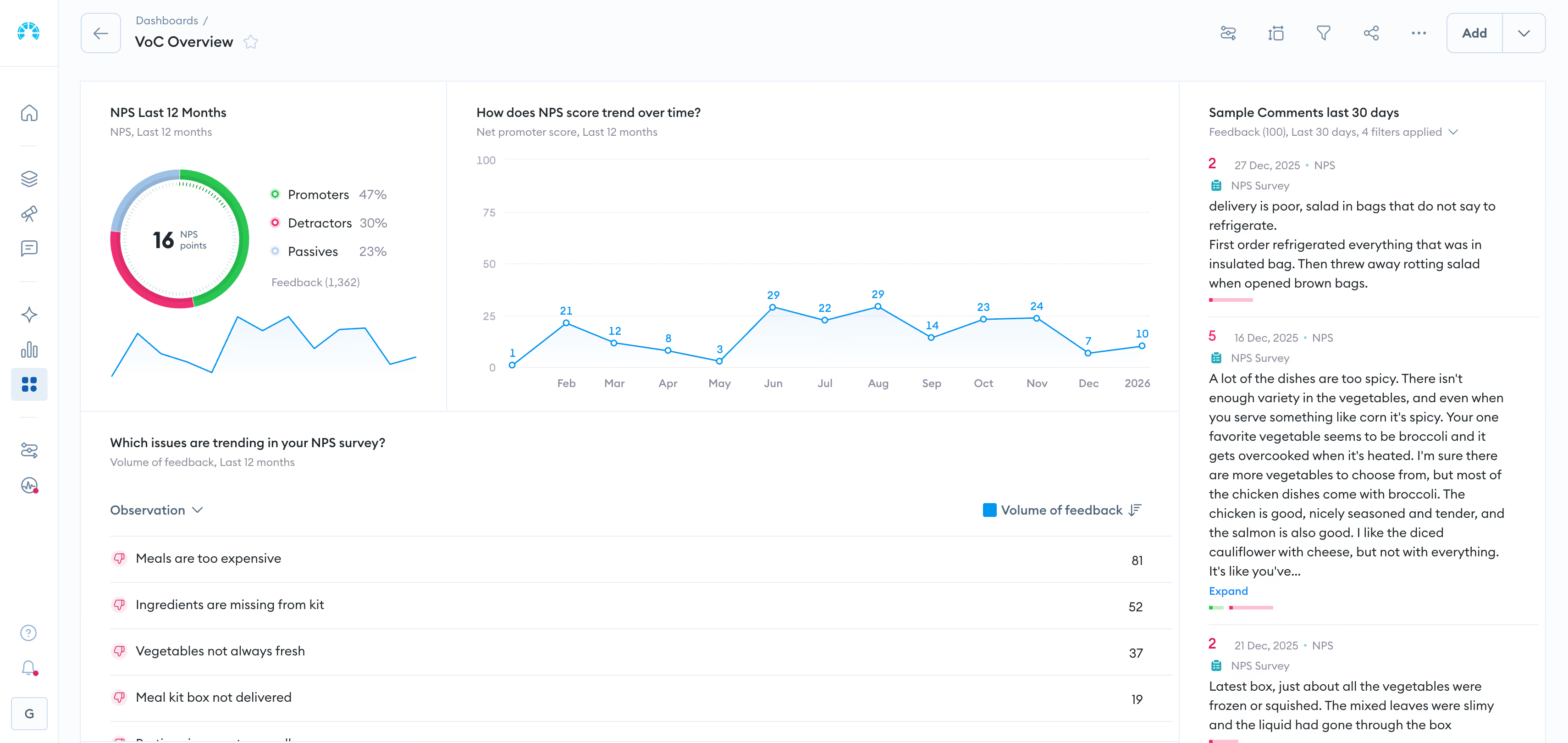
What is Chattermill?
Chattermill is an AI-native customer experience intelligence platform that unifies feedback from every channel and explains the "why" behind your metrics. Its concrete wedge against Verint is Aspect-Based Sentiment Analysis (ABSA): rather than assigning one blunt score to a comment, the AI-native CXI platform scores sentiment per theme or aspect inside a single piece of feedback. That preserves signal on mixed, multi-topic comments where rule-based tools blur it.
Under the hood, Chattermill's proprietary Lyra model auto-discovers themes without the manual taxonomy upkeep Verint requires. Feedback ties directly to NPS, CSAT, and CES, and onboarding takes weeks, not quarters.
Key features
- Aspect-Based Sentiment Analysis: Scores sentiment per theme within each comment for accuracy on messy, mixed feedback.
- Lyra AI model: Purpose-built for customer experience intelligence, with auto-discovery of emerging themes.
- Unified feedback analytics: Consolidates 65+ feedback channels across 100+ languages into one view.
- Business-metric linkage: Connects theme-level sentiment to NPS, CSAT, and CES impact.
- Automated anomaly alerts: Flags spikes and emerging issues before they escalate.
- Chattermill MCP server: Lets teams query feedback directly inside AI agents.
Pros and cons
- Pros: Best-in-class ABSA accuracy; fast, self-serve time-to-value; broad channel and language coverage; insights tied to business outcomes.
- Cons: Quote-based pricing requires a conversation; built for enterprise scale rather than very small teams.
Pricing
Custom, quote-based pricing tailored to enterprise scale and channel volume.
G2 rating
4.5★ from 218 reviews on G2.
Best for
CX, insights, and product teams replacing Verint's feedback-analytics half who want per-aspect sentiment, AI-native CX analytics, and fast time-to-value tied to real business metrics.
2. Qualtrics XM Discover
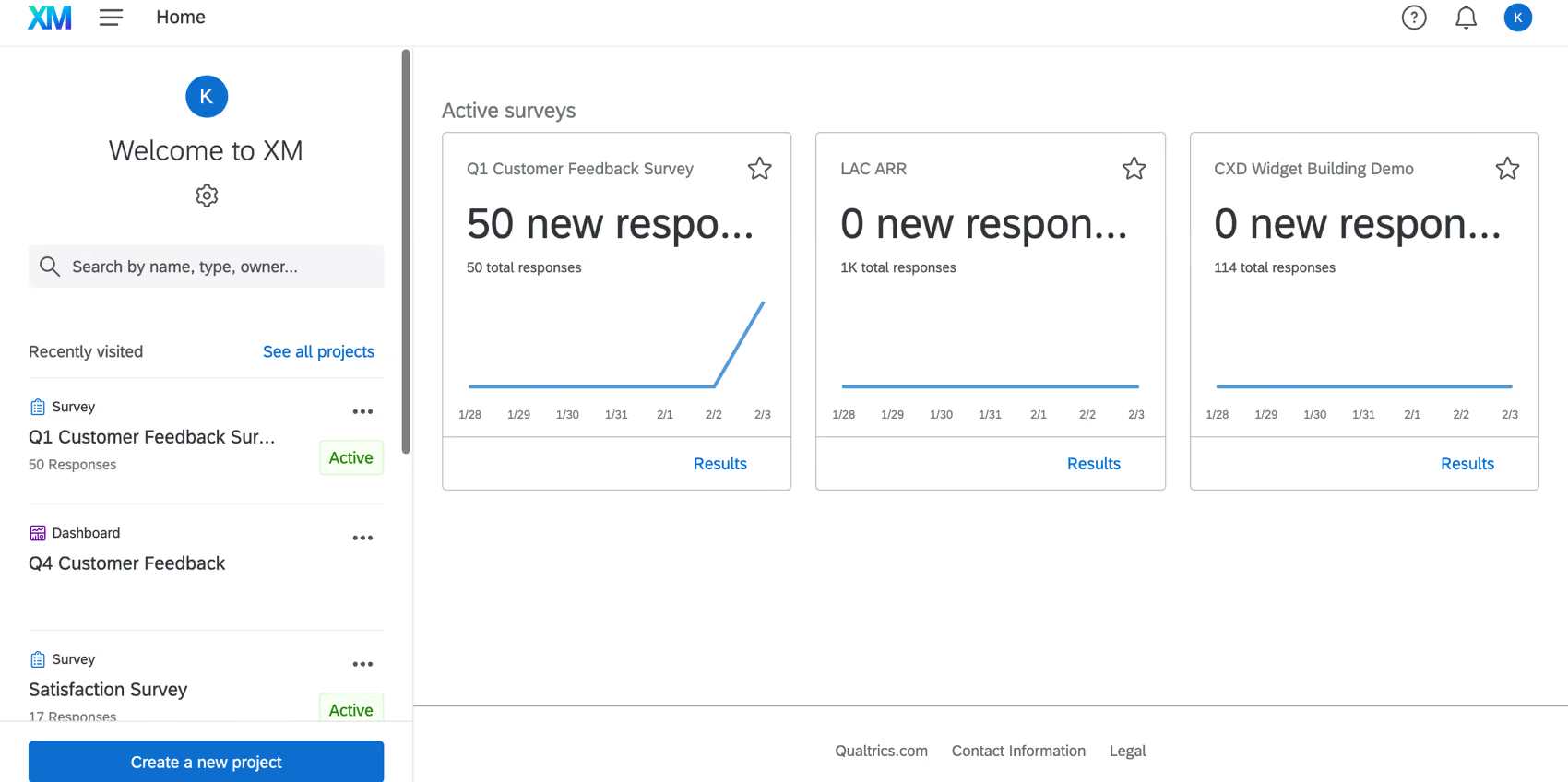
What is Qualtrics XM Discover?
Qualtrics XM Discover, formerly Clarabridge, is the enterprise incumbent for text and speech analytics and the most direct like-for-like to Verint's VoC layer. It applies iQ analytics and 150+ industry NLU models to score emotion, intent, and effort across large volumes of contact-center and open-text feedback.
Key features
- 150+ NLU models: Prebuilt industry models for emotion, intent, and effort scoring.
- Speech analytics: Processes contact-center calls alongside digital text.
- XM ecosystem: Integrates with the wider Qualtrics experience-management suite.
Pros and cons
- Pros: Deep enterprise text and speech capability; mature model library; strong brand recognition.
- Cons: Consultant-led deployment measured in quarters; sales-gated pricing; heavier to configure than AI-native challengers.
Pricing
No public list price. Per Vendr's 2026 benchmark data, the median Qualtrics buyer pays roughly $30,000 per year, with observed contracts ranging from about $6,880 to $139,920 depending on modules, seats, and interaction volume.
G2 rating
4.3★ on G2 (Qualtrics Customer Experience proxy; XM Discover has no standalone G2 profile).
Best for
Large enterprises with heavy contact-center estates. Teams weighing this option often review Qualtrics alternatives before committing.
3. Medallia
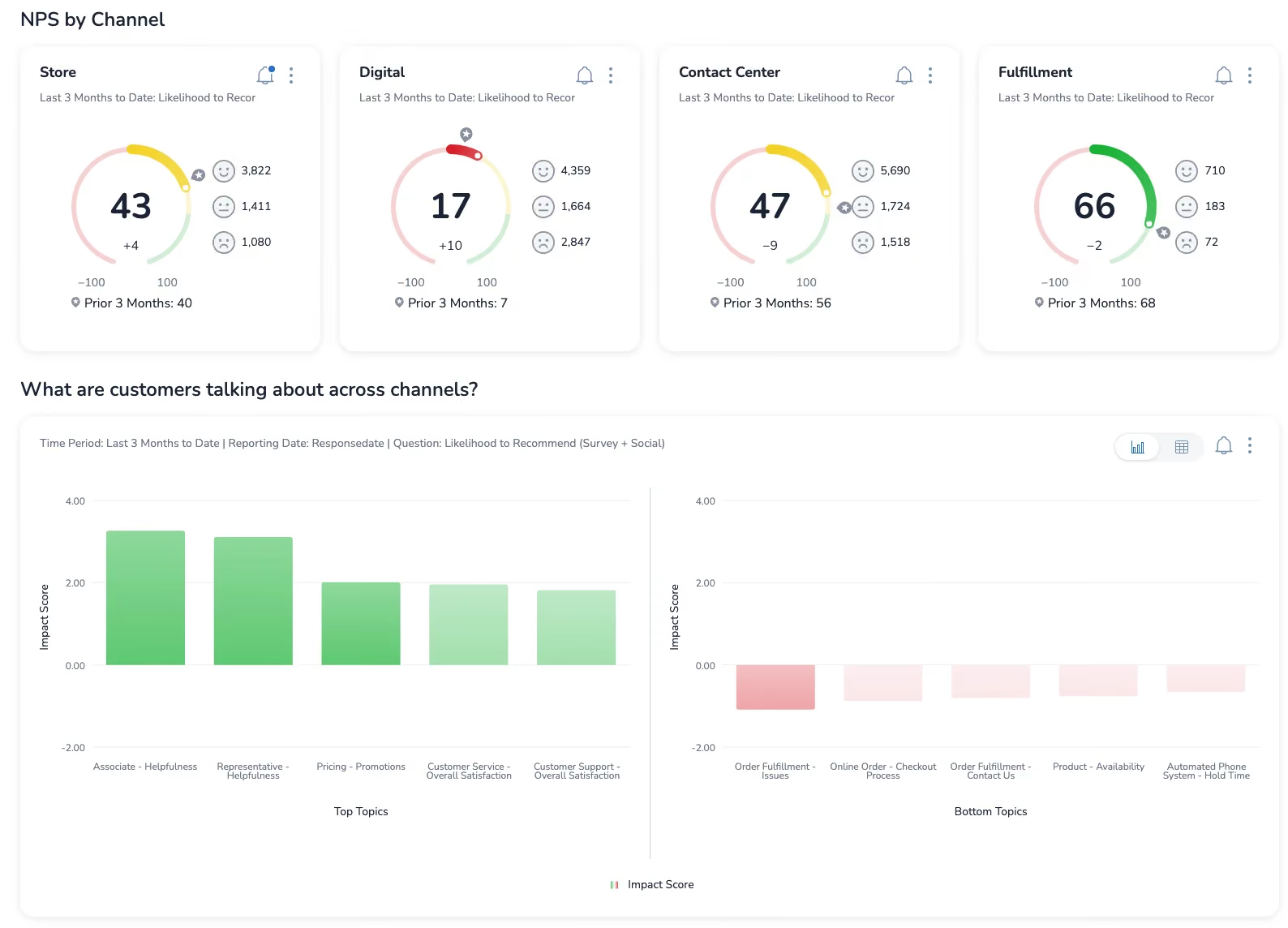
What is Medallia?
Medallia is an enterprise experience-management leader known for broad signal capture across the customer journey. It combines AI/ML and GenAI analytics with closed-loop workflows so frontline teams can act on feedback in context.
Key features
- Omnichannel capture: Collects signals across web, mobile, in-person, contact center, and social.
- Closed-loop workflows: Routes feedback to owners for follow-up and resolution.
- GenAI analytics: Summarizes themes and surfaces trends across large datasets.
Pros and cons
- Pros: Extensive signal coverage; strong enterprise track record; mature closed-loop tooling.
- Cons: Quote-based pricing at a premium; implementation complexity; broad scope can slow focused feedback analysis.
Pricing
Quote-based and enterprise-only, with no public list price. Per SpendHound's benchmark data, the average SMB contract is around $20,700 per year, rising to an average enterprise contract near $599,000 per year — the exact figure scales with interaction volume, modules, and services.
G2 rating
4.5★ from 210 reviews on G2 (Medallia Customer Experience).
Best for
Large enterprises wanting omnichannel signal capture and closed-loop action across the full journey. Focused feedback teams may prefer a dedicated feedback analytics tool.
4. Thematic
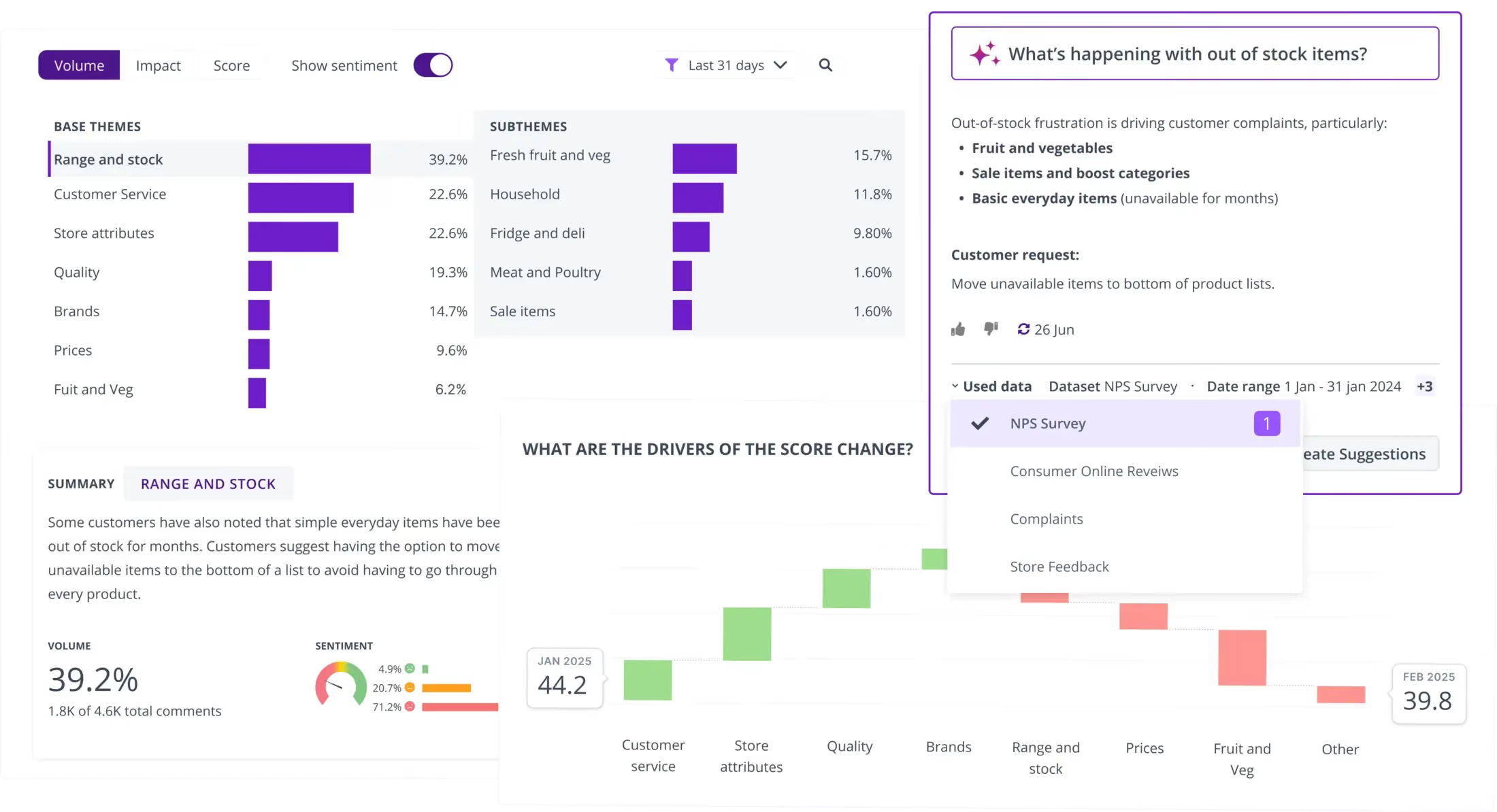
What is Thematic?
Thematic is an AI theme-discovery specialist that turns unstructured feedback into themes and sentiment without manual coding. It blends GenAI with traditional algorithms to surface what customers talk about across surveys, tickets, and reviews.
Key features
- Automated theme discovery: Builds themes from raw text without manual tagging.
- Sentiment scoring: Pairs themes with sentiment for prioritization.
- Channel coverage: Ingests surveys, tickets, calls, reviews, chat, and social.
Pros and cons
- Pros: Strong theme automation; high G2 satisfaction; clear reporting.
- Cons: Small G2 review base of 40; narrower enterprise footprint than incumbents; entry pricing starts high.
Pricing
Around $25,000/yr and up (Vendr average ~$35k).
G2 rating
4.8★ from 40 reviews on G2 (small review base; interpret accordingly).
Best for
Insights teams focused on automated theme discovery. Buyers comparing this category often scan Thematic alternatives alongside broader voice-of-customer tools.
5. InMoment

What is InMoment?
InMoment is an established experience-management platform that blends survey programs with analytics. Its AI adds GenAI summarization across a wide mix of structured and unstructured feedback.
Key features
- Survey plus analytics: Combines VoC surveys with text and feedback analysis.
- GenAI summarization: Condenses large feedback volumes into digestible insights.
- Broad channel intake: Handles surveys, social reviews, call logs, emails, tickets, and chat.
Pros and cons
- Pros: Well-rounded XM feature set; high G2 rating; wide channel coverage.
- Cons: Premium quote-based pricing; consultant-led setup; survey-first heritage over AI-native analytics.
Pricing
No public list price. Based on Vendr's transaction data across 38 purchases, the median annual contract is about $13,488, ranging from roughly $5,424 to $61,752 depending on response volume, named users, and modules.
G2 rating
4.7★ from 319 reviews on G2.
Best for
Enterprises wanting one vendor for both survey programs and feedback analytics.
6. Enterpret
What is Enterpret?
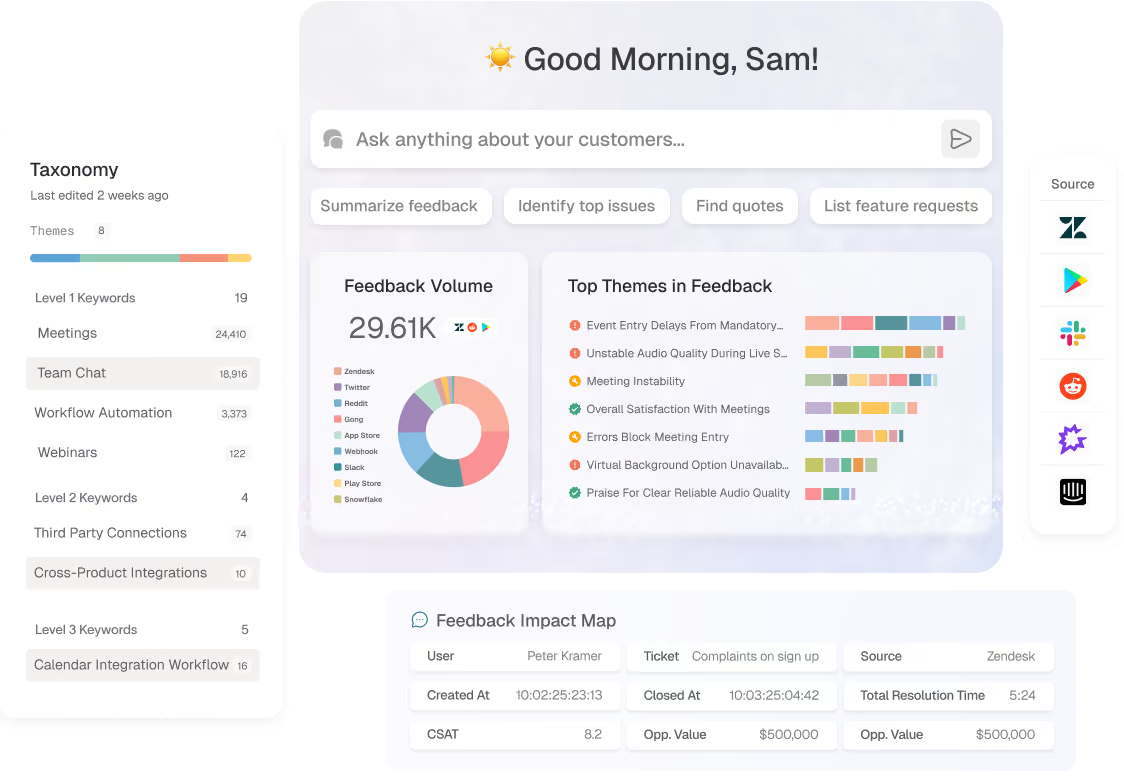
Enterpret is an AI-native challenger focused on product feedback, using an adaptive AI/ML taxonomy that auto-categorizes feedback into a structured hierarchy. It appears regularly across top-cited category listicles.
Key features
- Adaptive taxonomy: Auto-builds and maintains a categorization hierarchy from your data.
- Product-tool integrations: Connects to Zendesk, Slack, app stores, and forums.
- NPS and survey intake: Blends structured scores with unstructured text.
Pros and cons
- Pros: Modern AI taxonomy; strong product-team fit; fast onboarding.
- Cons: Custom premium pricing; narrower enterprise CX scope; smaller review base than incumbents.
Pricing
Custom, quote-based pricing, depending onfeedback volume and number of integrations. Vendr's verified third-party benchmark puts the median Enterpret contract at roughly $36,000 per year, with a range of about $23,000 to $98,000.
G2 rating
4.5★ from 111 reviews on G2.
Best for
Product teams wanting an adaptive taxonomy over their support and app-store feedback. For a broader shortlist, see our guide to customer feedback analysis tools.
7. Sprinklr
What is Sprinklr?
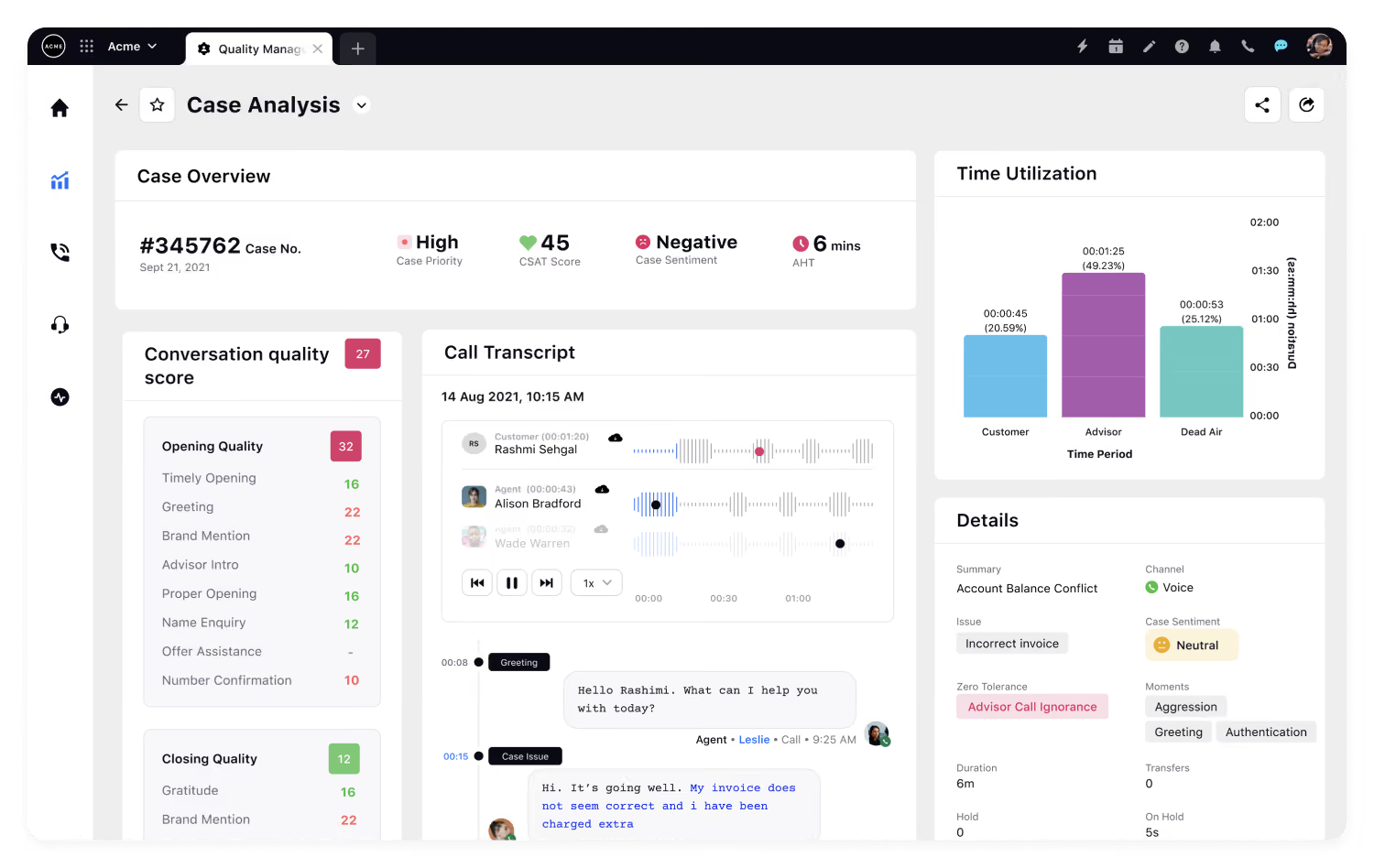
Sprinklr is a unified customer experience management suite spanning social, marketing, and service. Its patented deep-learning AI powers insights across a very broad channel footprint.
Key features
- 30+ channels: Covers digital, social, and voice, with strong social listening.
- Deep-learning insights: Patented AI surfaces patterns across large datasets.
- Service suite: Combines feedback analytics with care and engagement tooling.
Pros and cons
- Pros: Exceptional channel breadth; strong social listening; enterprise scale.
- Cons: Broad suite can dilute focused feedback analysis; enterprise pricing; heavier deployment.
Pricing
Quote-based enterprise pricing (Sprinklr retired its self-serve plans in 2026). Per Vendr benchmark data, the median annual contract is about $127,490, with observed deals starting near $28,800 and large multi-suite deployments ranging well into the hundreds of thousands.
G2 rating
4.2★ (2,185 reviews seller-wide) on G2.
Best for
Enterprises prioritizing social listening and service breadth over specialized feedback analytics.
How to Migrate Off Verint
Switching platforms is lower-risk than most teams expect. Start with a parallel run: keep Verint live while a modern CX analytics platform ingests the same feedback, then compare outputs.
Next, export your historical data and re-analyze it so trend lines stay intact. Finally, phase the switch channel by channel, retiring Verint only once stakeholders trust the new insights. A structured, phased cutover protects continuity and builds internal confidence.
FAQ
What is the best Verint alternative?
Chattermill is the best Verint alternative for customer feedback analytics, with Aspect-Based Sentiment Analysis, AI-native theme auto-discovery, and fast time-to-value tied to NPS, CSAT, and CES. Qualtrics XM Discover and Medallia are strong enterprise options for text and speech analytics and omnichannel capture.
What is Verint best known for — and is it a CRM tool?
Verint is best known for contact-center workforce engagement management (WEM) and speech/voice-of-customer analytics. It is not a CRM system of record like Salesforce or HubSpot.
What happened to Verint Systems? V
erint Systems was taken private by private equity firm Thoma Bravo in an all-cash deal valued at about $2 billion, delisted from Nasdaq, and combined with Thoma Bravo portfolio company Calabrio into a single contact-center and CX-automation company. The take-private completed around late 2025 to early 2026, which is why some teams are re-evaluating their Verint footprint.
What's the best Verint alternative for customer feedback analytics vs. contact-center QA?
It depends on the job. For the feedback-analytics and VoC half, Chattermill, Qualtrics XM Discover, Medallia, Thematic, and InMoment are the strongest picks, and Chattermill is our recommended choice. For the contact-center QA and workforce side, buyers typically look at NICE, Genesys, Calabrio, or Cresta.
How do I migrate off Verint without losing historical data?
Run the new platform in parallel with Verint, export and re-analyze historical data so trend lines stay intact, then phase the cutover channel by channel. Most teams see value in weeks rather than the quarters typical of consultant-led rollouts.
The Bottom Line
The best Verint alternatives for enterprise feedback analytics are Chattermill, Qualtrics XM Discover, and Medallia, with the right pick depending on whether you prioritize AI-native accuracy, text/speech depth, or omnichannel breadth. For CX and feedback analytics specifically, Chattermill is our top recommendation. Its Aspect-Based Sentiment Analysis, Lyra model, and fast time-to-value turn scattered feedback into decisions your team can act on today.
Ready to see per-aspect sentiment on your own data? Book a personalized demo and start turning customer feedback into your next competitive advantage.



See Chattermill in action on your own feedback
Book a demo


