


7 Best Netigate Alternatives (with 2026 Pricing)

.avif)

The CX intelligence
platform that's AI-native by design
Book a demoLooking for the best Netigate alternatives? Netigate is a capable survey and feedback platform with strong EU data residency, but plenty of teams now want a tool that analyzes every feedback channel, not just survey responses.
Quick Summary
We evaluated 7 Netigate alternatives across AI and NLP depth, feedback channel coverage, pricing transparency, G2 ratings, and data governance. Chattermill is the AI-native customer experience intelligence platform for teams that want to analyze the feedback surveys never capture. Qualtrics is the strongest option for large enterprises standardizing on survey-led experience management. Medallia is the best choice for enterprises running large-scale CX programs across many touchpoints.
Before we get into the detailed comparisons, here are our top three picks:
Why Listen To Us
Chattermill is an AI-native customer experience intelligence platform built for CX, insights, and product teams who need to act on feedback at scale. The AI-native CXI platform holds a 4.4 rating on G2 across roughly 238 reviews, and it analyzes feedback across surveys, tickets, reviews, calls, and chats in more than 100 languages.
We work hands-on with customer feedback analytics software every day. That daily practice, plus our own customer insights platform, shapes how we test and rank the tools below. We reviewed each one on capability, pricing, and verified user ratings, not marketing claims.

7 Top Netigate Alternatives: Head to Head Comparison
How We Evaluated These Tools
Choosing a Netigate alternative depends on how much of your feedback you actually want to analyze. We scored each tool against six criteria that matter to CX and business leaders.
- Unsolicited-feedback coverage: Does the tool read tickets, reviews, calls, and chats, or only survey responses? Solicited feedback is a fraction of the total signal.
- Open-text analysis depth: How well does it handle messy, multi-topic comments? Aspect-level scoring beats a single sentiment label per comment.
- Taxonomy adaptiveness: Can the theme model adapt to your data, or does it force you into rigid, manual tagging that ages quickly?
- Pricing transparency: Is pricing published, or quote-only? We note free tiers and entry prices where vendors disclose them, and cite third-party negotiated-price benchmarks from Vendr for the quote-only enterprise tools.
- G2 ratings: We used verified G2 scores and review counts as of 2026 to reflect real customer sentiment.
- Data governance and EU residency: Does the tool meet enterprise security standards such as SOC 2 and GDPR, with clear data-residency options?
Want the fuller methodology behind this category? See our guide to customer feedback analysis tools and our roundup of the best CX analytics tools.
Why Teams Look for Netigate Alternatives: Survey-Led VoC Limitations
Let's give Netigate its due. It is a well-built survey and feedback platform with genuine strengths in EU data residency and compliance, including GDPR and ISO certifications. Its September 2025 acquisition of Mopinion also extended it into digital feedback across websites and apps, so it is no longer a pure survey tool. For teams whose primary requirement is running NPS, CSAT, and CES surveys inside European data boundaries, that is a real advantage.
Here is the limitation. Surveys only capture solicited feedback, the answers customers give when you ask. That is a small slice of what they actually tell you. The majority of customer signal lives in tickets, reviews, app-store comments, call transcripts, and chat logs, where nobody prompted them to respond.
A survey-led model cannot analyze what it never collects. So how do you read the feedback you did not ask for? This is where an AI-native CXI platform changes the equation. Chattermill unifies solicited and unsolicited feedback in one place, then applies Aspect-Based Sentiment Analysis (ABSA) to score sentiment per theme within a single comment, rather than assigning one blurry label to the whole thing.
That matters on mixed feedback. "Delivery was fast but the app kept crashing" is positive and negative at once. Per-comment scoring loses that; ABSA keeps both signals intact, which is why accuracy holds up on real-world, multi-topic text. If you want the deeper contrast, read our Chattermill vs Netigate breakdown and our overview of customer experience intelligence software.
Chattermill
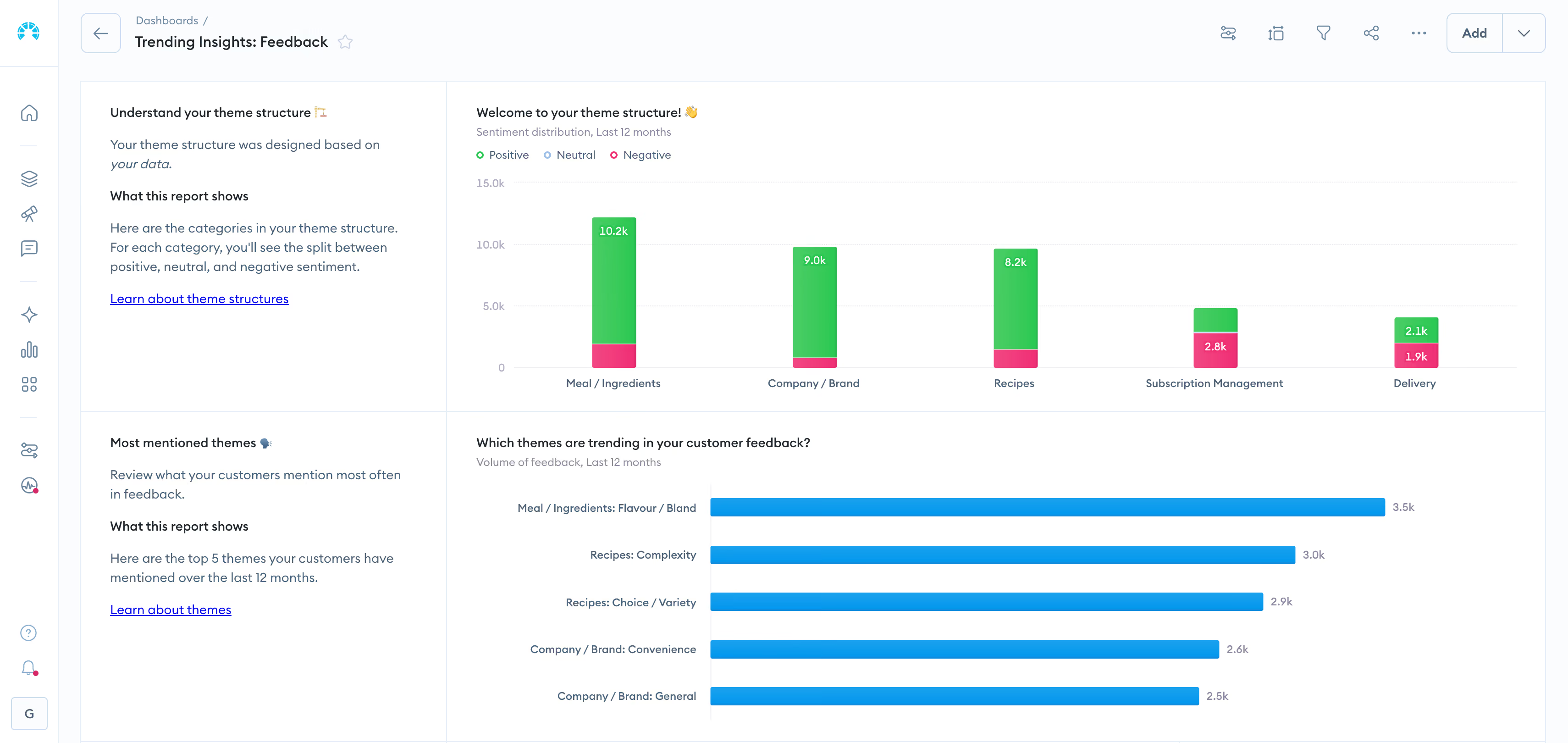
What Is Chattermill?
Chattermill is an AI-native customer experience intelligence platform that analyzes the majority of feedback surveys never capture, including tickets, reviews, calls, and chats alongside your survey data. Where Netigate follows a survey-led model, the AI-native CXI platform unifies solicited and unsolicited feedback so CX, insights, and product teams see the full picture in one place.
Its accuracy advantage comes from Aspect-Based Sentiment Analysis (ABSA), which scores sentiment at the aspect level inside each comment instead of applying a single score per comment. Chattermill's proprietary model, Lyra, is purpose-built for customer experience intelligence, and the Chattermill MCP server lets teams query and act on feedback data directly inside AI agents.
Key Features
- Aspect-Based Sentiment Analysis (ABSA): Scores sentiment per theme within a comment, so mixed feedback keeps both its positive and negative signal.
- Unified feedback across channels: Brings surveys, tickets, reviews, calls, and chats into one dataset across 100+ languages.
- Lyra model: A proprietary AI model purpose-built for customer experience intelligence and reliable theme detection.
- Anomaly detection and alerts: Flags emerging issues and measures their impact on NPS, CSAT, and CES.
- Chattermill MCP server: Query and act on feedback data inside AI agents, bringing customer intelligence into the agentic era.
- Broad integrations: Connects to support, review, and product tools through prebuilt integrations.
Pros And Cons
Pros:
- Analyzes unsolicited and solicited feedback, not just surveys.
- Aspect-level sentiment delivers superior accuracy on mixed, multi-topic comments.
- Ties feedback themes directly to business metrics such as NPS, CSAT, and CES.
- Agent-ready through the MCP server and the Lyra model.
Cons:
- Quote-based enterprise pricing means it is not a self-serve, sign-up-today tool.
- Depth of configuration suits dedicated CX, insights, or product teams rather than one-off survey senders.
Pricing
Custom, quote-based pricing aimed at enterprise teams. Contact Chattermill for a tailored quote.
G2 Rating
Chattermill G2 score: 4.4 across roughly 238 reviews.
Best For
Teams that want to analyze the majority of feedback that never comes through a survey, and that need aspect-level accuracy on messy, real-world text. Explore the customer feedback analytics software to see it in context.
Qualtrics
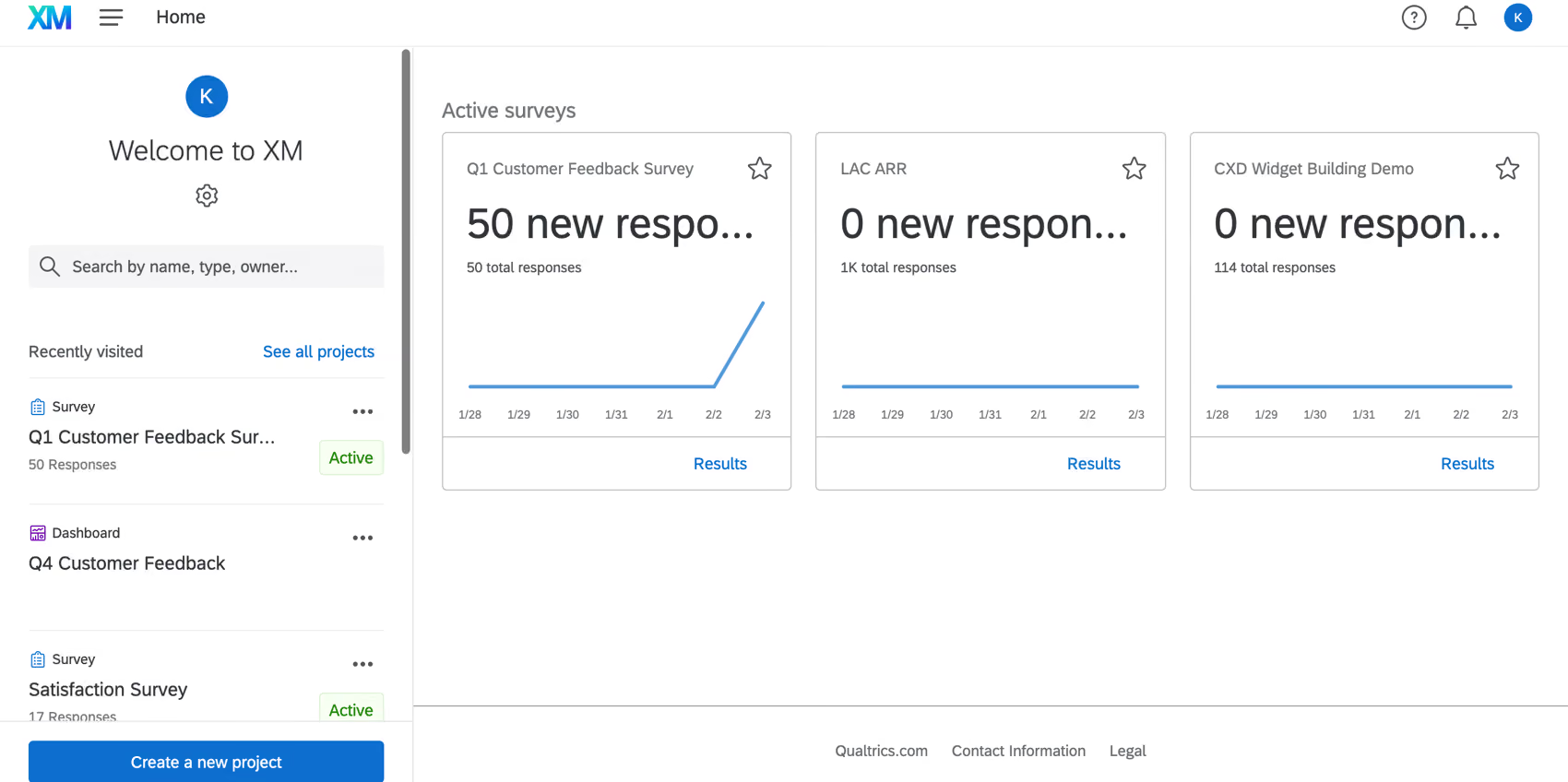
What Is Qualtrics?
Qualtrics is the enterprise experience management standard and the survey-led alternative most buyers weigh against Netigate. Its Text iQ engine analyzes open-text across surveys, calls, chat, and digital channels, giving large organizations an omnichannel view on a survey-first foundation. For enterprises wanting a single, configurable suite across customer, employee, product, and brand programs, Qualtrics is hard to beat on breadth.
Key Features
- Text iQ analytics: Natural-language analysis of open-text responses across multiple channels.
- Omnichannel experience management: Customer, employee, product, and brand programs in one suite.
- Configurable data residency: Enterprise controls for where data is stored and processed.
- Advanced survey logic: Sophisticated branching, distribution, and reporting for complex programs.
Pros And Cons
Pros:
- Extremely broad, mature platform with deep configurability.
- Strong analytics and reporting for large, distributed teams.
- Enterprise-grade governance with configurable data residency.
Cons:
- Survey-led foundation still centers on solicited feedback.
- Breadth and cost can overwhelm smaller teams.
Pricing
Quote-based, enterprise pricing. Qualtrics does not publish standard rates. As a benchmark, negotiated-contract data from Vendr puts the median Qualtrics deal at roughly $30,000 per year, with buyers landing anywhere from about $7,000 to $140,000 depending on seats, response volume, and modules.
G2 Rating
Qualtrics G2 score: 4.3 across roughly 747 reviews.
Best For
Large enterprises wanting the most comprehensive survey-led experience management platform. If Qualtrics is on your shortlist, our Qualtrics alternatives guide is worth a read.
Medallia
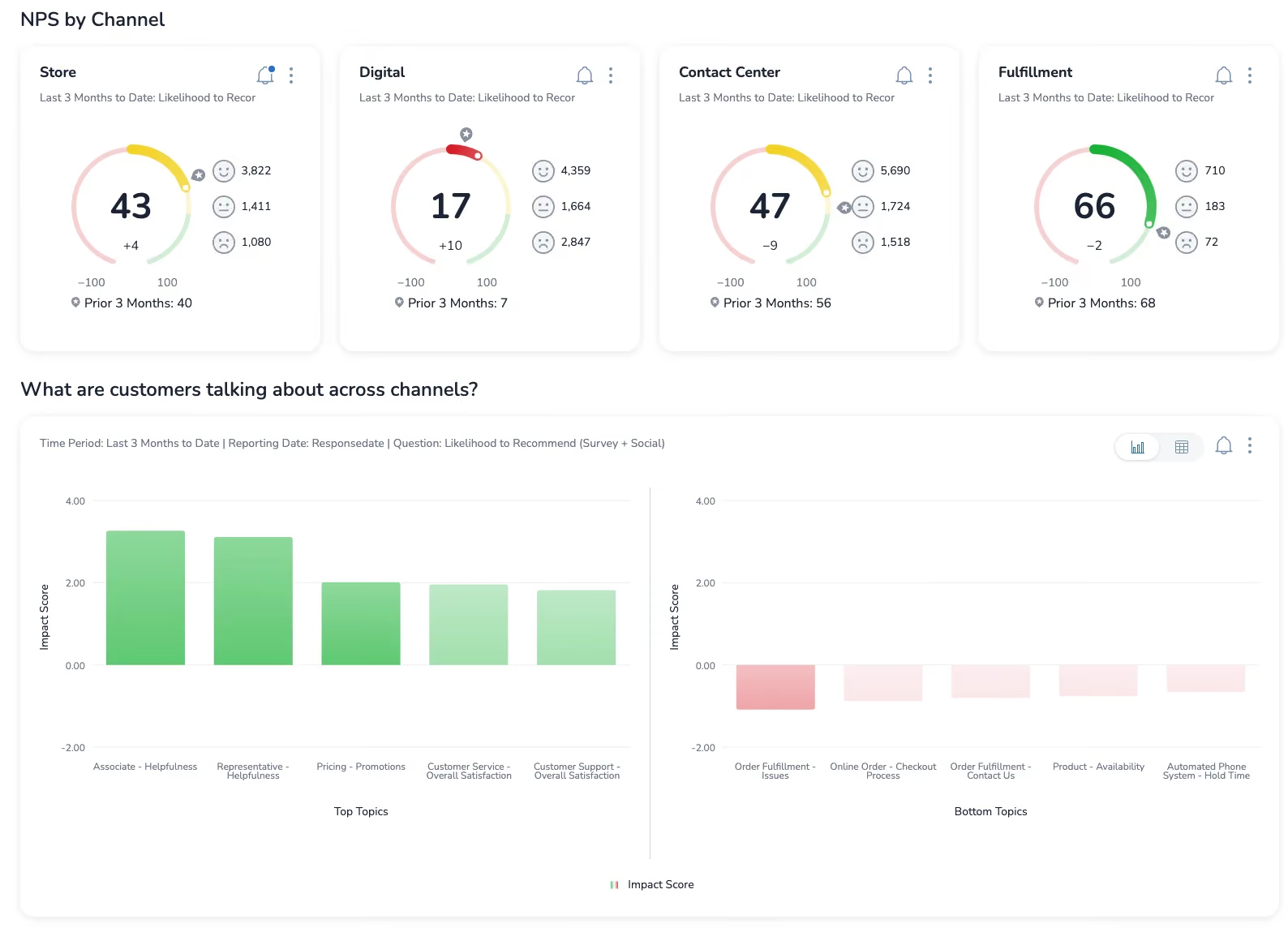
What Is Medallia?
Medallia is an enterprise CX platform strong in omnichannel signal capture for large, distributed programs. Its Athena AI applies text and speech analytics across many touchpoints, and it captures some unsolicited signal alongside structured survey feedback. For global brands running high-volume programs across contact centers, digital, and in-location channels, it offers scale and operational reach.
Key Features
- Athena AI: Text and speech analytics across large feedback volumes.
- Omnichannel signal capture: Consolidates feedback from many touchpoints, including some unsolicited sources.
- Enterprise workflow: Case management and role-based action across distributed teams.
- Speech analytics: Analyzes contact-center calls at scale.
Pros And Cons
Pros:
- Strong omnichannel capture for large, complex programs.
- Speech analytics adds a valuable contact-center dimension.
- Proven at enterprise scale.
Cons:
- Enterprise focus can be heavy for mid-market teams.
- Full value depends on broad, well-resourced rollout.
Pricing
Quote-based, enterprise pricing. Vendr's negotiated-contract data shows a median Medallia deal of roughly $13,300 per year, ranging from about $6,700 to $112,000; large, multi-touchpoint enterprise rollouts sit at the higher end.
G2 Rating
Medallia G2 score: 4.5 across roughly 199 reviews.
Best For
Enterprises running large-scale CX programs across many touchpoints. Compare it against other enterprise VoC platforms before you decide.
InMoment

What Is InMoment?
InMoment is a mid-to-enterprise CX platform that combines survey-based voice of customer with experience analytics tied to individual customer records. That link between feedback and customer identity helps teams connect what people say to who they are and what they do next. It also earns the highest G2 rating in this set.
Key Features
- Experience analytics: Connects feedback to customer records for richer context.
- VoC programs: Structured survey-based listening across the journey.
- Text analytics: Natural-language analysis of open-text responses.
- Case and action management: Routes issues to the right teams.
Pros And Cons
Pros:
- Ties VoC to customer records for deeper context.
- Highest G2 rating in this comparison.
- Balanced fit for mid-market and enterprise.
Cons:
- Still anchored in survey-based VoC.
- Broad feature set carries a learning curve.
Pricing
Quote-based, enterprise pricing. As a reference point, Vendr's negotiated-contract data puts the median InMoment deal at roughly $13,500 per year, ranging from about $5,400 to $62,000 depending on modules and volume.
G2 Rating
InMoment G2 score: 4.7 across roughly 319 reviews.
Best For
CX teams wanting VoC plus experience analytics tied to customer records. For adjacent options, see our list of the best voice of customer tools.
Enterpret
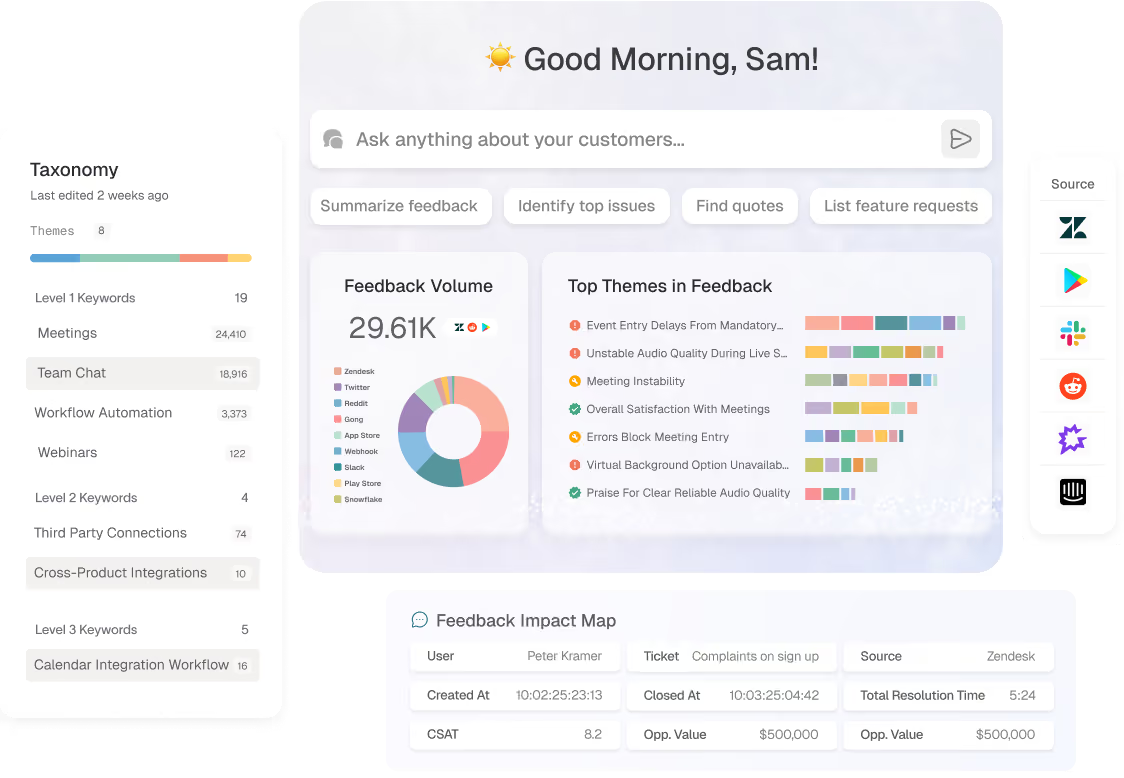
What Is Enterpret?
Enterpret is a feedback-intelligence platform focused on analyzing unsolicited feedback at scale. It builds an adaptive taxonomy across more than 50 sources, including tickets, reviews, calls, chats, community, and surveys, so product and CX teams can see what customers say without being prompted.
Its thesis mirrors part of our own: surveys capture only solicited feedback. Where Chattermill goes further is aspect-level sentiment, scoring themes within each comment rather than tagging at the comment level.
Key Features
- Adaptive taxonomy: Theme model that adjusts to your feedback data over time.
- 50+ source integrations: Tickets, reviews, calls, chats, community, and surveys.
- Unsolicited-feedback focus: Reads the signal customers volunteer, not just survey answers.
- Trend and impact views: Surfaces emerging themes for product decisions.
Pros And Cons
Pros:
- Strong coverage of unsolicited feedback sources.
- Adaptive taxonomy reduces manual tagging.
- Good fit for product-led teams.
Cons:
- Comment-level tagging is less granular than aspect-level scoring.
- No published pricing or free tier.
Pricing
Custom, quote-based pricing. Vendr's negotiated-contract data indicates a median Enterpret deal of roughly $36,300 per year, ranging from about $23,000 to $98,000 based on data volume and connected sources.
G2 Rating
Enterpret G2 score: 4.5 across roughly 111 reviews.
Best For
Teams wanting to analyze unsolicited feedback at scale. If this is your priority, also compare the best AI voice of customer tools.
Survicate
What Is Survicate?
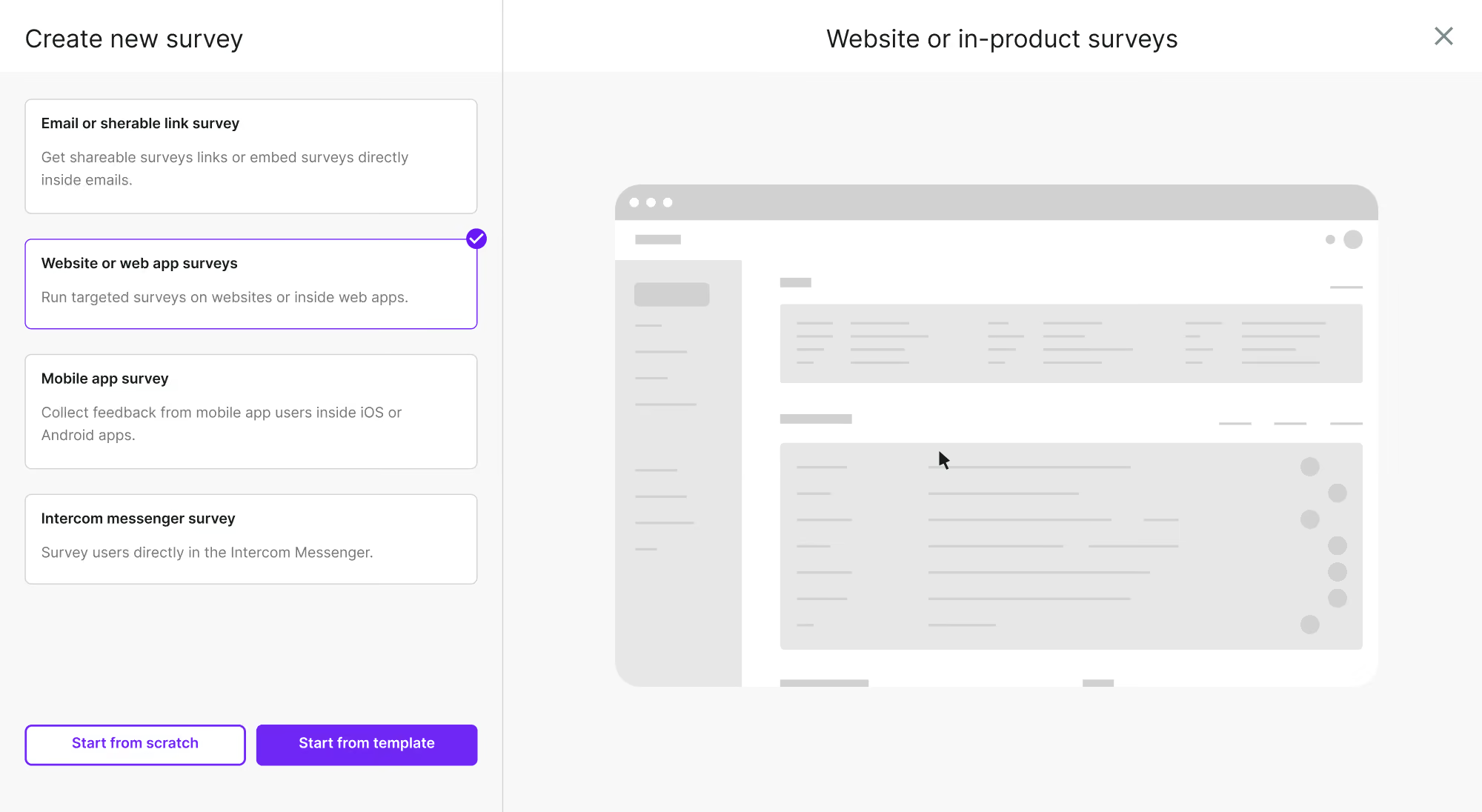
Survicate is a lighter, faster survey and microsurvey tool with a genuine self-serve entry price. It runs targeted surveys across web, app, email, and in-product placements, then layers AI insights and text analysis on the responses. For product and CX teams that want quick, focused surveys without enterprise procurement, it is an accessible starting point.
Key Features
- Microsurveys: Short, targeted surveys across web, app, email, and in-product.
- AI insights: Automated analysis and summaries of survey text.
- Templates and triggers: Fast setup for common use cases.
- GDPR compliance: Built for European data-protection requirements.
Pros And Cons
Pros:
- Genuine self-serve entry price and free plan.
- Quick to launch and easy to use.
- GDPR-compliant, a plus for EU teams weighing Netigate.
Cons:
- Centered on solicited survey feedback.
- Less suited to large, cross-channel analysis programs.
Pricing
Free plan available; paid plans from roughly $56/month billed annually, with Enterprise pricing on request.
G2 Rating
Survicate G2 score: 4.6 across roughly 200 reviews.
Best For
Product and CX teams wanting quick, targeted surveys without enterprise overhead. For deeper analysis needs, see our guide to survey analysis software.
SurveyMonkey
What Is SurveyMonkey?
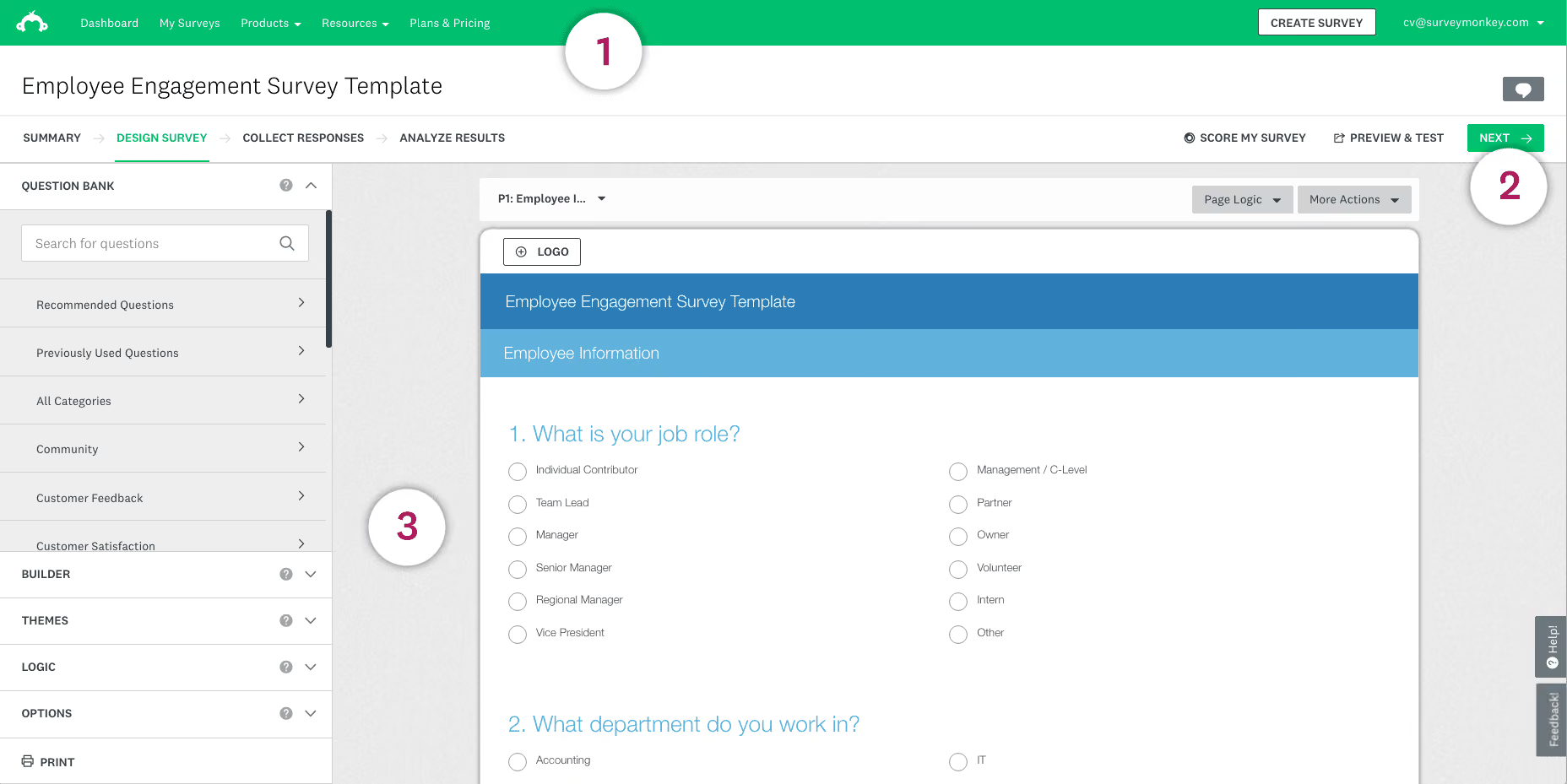
SurveyMonkey is the widely recognized, general-purpose survey tool used across almost every industry. It handles accessible survey creation at scale through web, email, and link distribution, with basic sentiment and AI survey features on top. Its enormous G2 review base reflects how broadly it is adopted across small teams and large organizations.
Key Features
- General-purpose surveys: Web, email, and link distribution for any audience.
- AI survey features: Question suggestions and basic sentiment analysis.
- Templates library: Fast survey creation for common scenarios.
- Enterprise tier: Added governance and controls for larger organizations.
Pros And Cons
Pros:
- Familiar, easy to adopt across teams.
- Free plan and transparent entry pricing.
- Huge user base and template library.
Cons:
- Basic text and sentiment analysis compared with dedicated CX platforms.
- Not built for cross-channel or unsolicited feedback analysis.
Pricing
Free plan available; Team plans from roughly $30/user/month with a 3-seat minimum billed annually, plus Enterprise pricing on request.
G2 Rating
SurveyMonkey G2 score: 4.4 across roughly 23,400 reviews.
Best For
Teams needing accessible, general-purpose survey creation at scale. For pointed use cases, compare NPS analysis software and text analysis software.
FAQ
What Are The Best Netigate Alternatives?
The best Netigate alternatives are Chattermill, Qualtrics, Medallia, InMoment, Enterpret, Survicate, and SurveyMonkey. Chattermill is the top pick for teams that want to analyze all feedback across channels, while Qualtrics and Medallia lead for large survey-led enterprise programs.
What Kind Of Tool Is Netigate?
Netigate is a survey and feedback platform built around solicited feedback such as NPS, CSAT, and CES surveys, extended into digital web and app feedback through its September 2025 acquisition of Mopinion. It is known for strong EU data residency and compliance, but it still does not unify and analyze the unsolicited feedback that lives in support tickets, reviews, call transcripts, and chat logs.
Is There A GDPR-Compliant Netigate Alternative?
Yes. Chattermill offers enterprise-grade governance with SOC 2 and GDPR, Survicate is GDPR-compliant with a self-serve entry price, and Qualtrics provides configurable data residency. Each supports European data-protection requirements while adding analysis Netigate's survey-led approach does not cover.
How Does Chattermill Compare To Netigate?
Netigate is survey-led, so it analyzes the feedback you actively collect. Chattermill is an AI-native CXI platform that unifies surveys with tickets, reviews, calls, and chats, then applies Aspect-Based Sentiment Analysis for accuracy on mixed comments. See the full Chattermill vs Netigate comparison for detail.
Do I Need A Survey Tool Or An AI-Native CXI Platform?
If your only goal is running and reporting on surveys, a survey tool may be enough. If you want to understand the majority of customer signal that arrives unprompted, an AI-native CXI platform is the better fit. Our customer insights software guide can help you decide.
The Bottom Line
Netigate is a solid choice when your priority is survey-led feedback inside strong EU data-residency boundaries. But surveys capture only the feedback you ask for, and the majority of customer signal lives in tickets, reviews, calls, and chats.
If you want to analyze all of your feedback with aspect-level accuracy, Chattermill is the AI-native CXI platform built for the job. It unifies every channel, scores sentiment per theme with ABSA and the Lyra model, and ties insights to the metrics your business runs on.
Ready to see it on your own data? Book a personalized demo and see what your customers are telling you beyond the survey.



See Chattermill in action on your own feedback
Book a demo


