


The 8 Best Reforge Insights Alternatives in 2026 (with pricing)



The CX intelligence
platform that's AI-native by design
Book a demoReforge Insights is no longer available as a standalone product after Miro's acquisition, and teams that relied on it now need a new home for customer feedback analysis. This guide compares the eight best reforge insights alternatives for 2026, with features, pricing, and G2 ratings.
Quick Summary
The strongest reforge insights alternatives swap Reforge's course-tied synthesis for standalone platforms that analyze feedback from any source. This guide reviews eight tools in depth. Our top pick is Chattermill, an AI-native customer experience intelligence platform that unifies multilingual feedback and ties it to revenue without methodology lock-in. Enterpret ranks second for its adaptive taxonomy built for product-led SaaS. Unwrap takes third for real-time alerts on feedback spikes.
Before we get into the detailed comparisons, here are our top three picks:
Why Listen To Us
We build Chattermill, a leading AI-native feedback analytics platform trusted by CX, insights, and product teams to analyze customer feedback at scale. The platform holds a 4.5 G2 rating across roughly 238 reviews and processes feedback from more than 100 channels in over 100 languages. That hands-on experience analyzing feedback across surveys, reviews, tickets, and conversations informs every assessment in this guide.

What Happened to Reforge Insights?
Yes. Miro announced its acquisition of Reforge on March 24, 2026, and the standalone Reforge Insights product, which originated as the AI tool Monterey AI, is being folded into Miro's Product Acceleration offering rather than sold as a separate product.
The practical takeaway is clear: teams that standardized on Reforge Insights are migrating their customer feedback analysis to a dedicated platform. The rest of this guide covers where to go next.
8 Top Reforge Insights Alternatives: Head to Head Comparison
The table below compares every tool on the criteria that matter most when replacing Reforge Insights.
How We Evaluated These Reforge Insights Alternatives
We scored each tool against the criteria that separate a durable feedback platform from a point solution. These are the same benchmarks we apply in our voice of customer tools research.
- Multi-source ingestion: Can the tool unify surveys, tickets, reviews, calls, and social in one place, across languages? Consolidation is the foundation of trustworthy customer feedback analytics.
- AI theme and sentiment accuracy: How precisely does the model tag themes and score sentiment, especially on mixed-topic feedback where per-comment scoring breaks down?
- Integrations and workflow: Does it connect to your existing stack and push insights where teams already work? We weighted native integrations and agent access.
- Freedom from methodology lock-in: Can you act on evidence without adopting a single vendor framework? This is where Reforge Insights constrained teams most.
- Pricing transparency and time-to-value: How clear is pricing, and how quickly does the platform deliver usable insight?
The 8 Best Reforge Insights Alternatives in Detail
Here is a closer look at each tool, in the same order as the comparison table above.
1. Chattermill
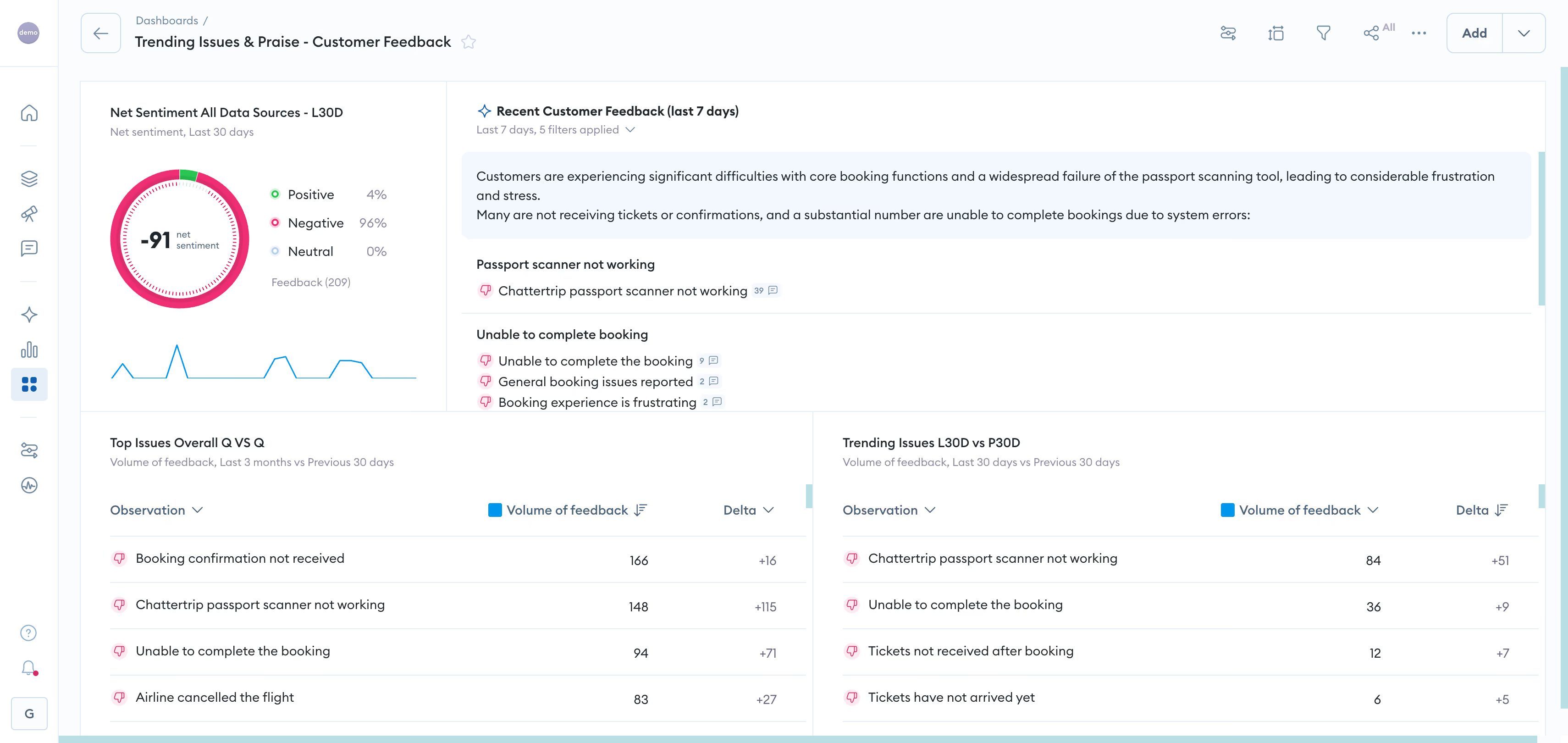
What is Chattermill? Chattermill is an AI-native customer experience intelligence platform that unifies and quantifies feedback from any source, then structures it with a self-updating taxonomy. Where Reforge Insights tied synthesis to its own frameworks and courses, the AI-native CXI platform lets teams act on customer evidence without adopting one prescribed methodology.
That distinction matters for buyers replacing Reforge. Instead of learning a proprietary framework, teams point Chattermill at their feedback and get themes, sentiment, and trends mapped to the metrics they already report. It is AI-native and fast to value, not a heavyweight deployment that needs a dedicated research team to operate.
The technical core is aspect-based sentiment analysis (ABSA). Rather than assigning one sentiment score per comment, Chattermill scores sentiment per theme within a single piece of feedback. This preserves signal on mixed, multi-topic comments where rule-based and per-comment scoring blur or lose it, a concrete accuracy advantage documented in our text analysis software guide.
Key features
- Lyra AI model: A proprietary model purpose-built for customer experience intelligence, combining supervised learning with LLMs for accurate theme and sentiment tagging.
- Aspect-based sentiment analysis: Scores sentiment per aspect within a comment, delivering superior accuracy on mixed feedback.
- 100+ channels and languages: Unifies surveys, reviews, tickets, conversations, and social across more than 100 languages.
- 50+ native integrations plus MCP server: Connects your stack and lets teams query feedback inside AI agents via the MCP server.
- Business-metric linkage: Ties themes to NPS, CSAT, CES, and revenue so teams can prioritize by impact, not volume.
Pros and cons
Pros:
- Self-updating taxonomy removes framework lock-in and manual tag upkeep.
- ABSA delivers accurate sentiment on messy, multilingual feedback.
- Direct links from themes to business metrics support NPS analysis and revenue prioritization.
Cons:
- Pricing is quote-based, so buyers cannot self-serve a published price.
- Depth suits scaled feedback volumes more than very small teams.
Pricing
Custom, quote-based pricing scaled to feedback volume and channels. Request a demo to discuss pricing.
G2 rating
Chattermill G2 score: 4.5 across roughly 238 reviews.
Best for: enterprise B2C and DTC teams that need to unify multilingual feedback and tie it to revenue, without locking into a single methodology.
2. Enterpret
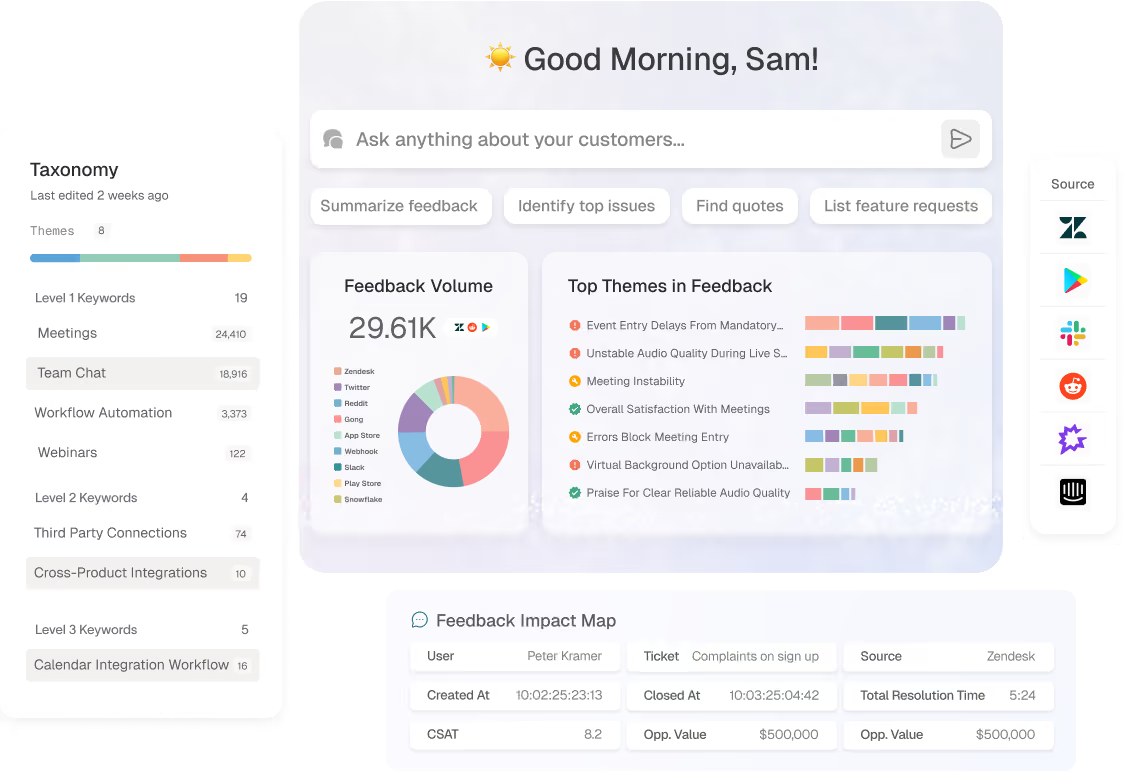
What is Enterpret? Enterpret is a feedback analytics platform that auto-tags customer feedback using models trained on your own data. It is the most-cited Reforge Insights alternative and a strong benchmark, as our Chattermill vs Enterpret comparison details.
Its dynamic, adaptive taxonomy adjusts as new feedback arrives, and action agents help route findings into workflows. That makes it a natural fit for product-led SaaS teams centralizing signals from support and sales tools.
Key features
- Adaptive taxonomy: Auto-tags feedback with models trained on your data and evolves categories over time.
- 50+ sources: Ingests from Zendesk, Intercom, Gong, and more.
- Action agents: Automates routing and follow-up on emerging themes.
- Customer Knowledge Graph: Links feedback back to individual customer records.
Pros and cons
Pros:
- Custom-trained models fit your product vocabulary well.
- Strong integration coverage for SaaS support and sales stacks.
Cons:
- Pricing is quote-based with no published tier.
- Orientation skews product-led SaaS more than broad B2C CX.
Pricing
Custom, quote-based pricing, scaled to feedback volume and integrations. Vendr's verified third-party benchmark puts the median Enterpret contract at roughly $36,000 per year, with a range of about $23,000 to $98,000.
G2 rating
Enterpret G2 score: 4.6 across roughly 111 reviews.
Best for: product-led SaaS teams that want a self-training taxonomy tied to customer records.
3. Unwrap
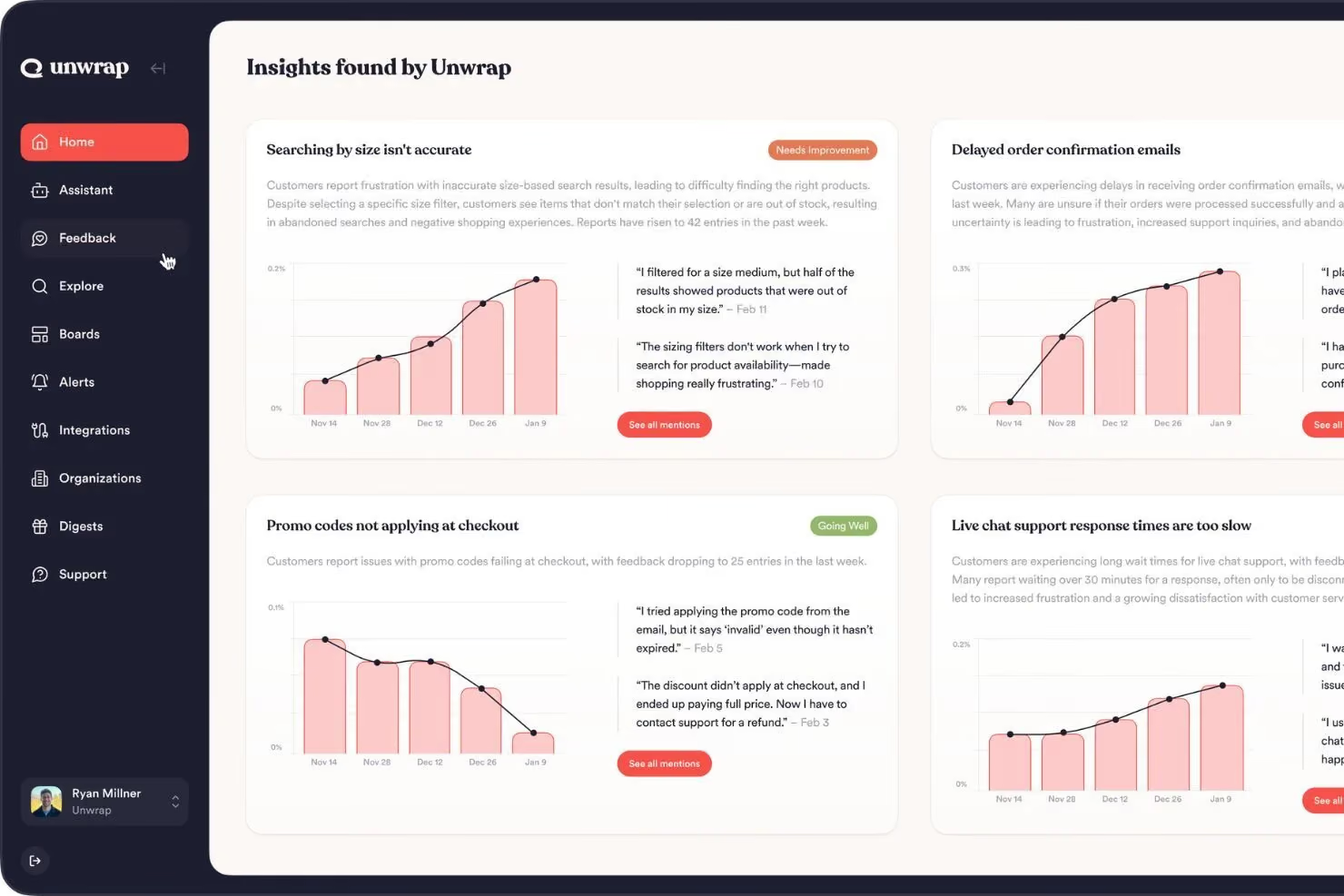
What is Unwrap? Unwrap is an AI feedback analysis tool that auto-tags and clusters feedback into themes, then alerts teams to spikes in real time. Its standout capability is anomaly detection that flags emerging issues as they surface.
Teams that need to react quickly to shifts in voice of customer signal choose Unwrap for its alerting rather than its historical depth.
Key features
- Auto-tag and cluster: Proprietary models group feedback into themes automatically.
- Real-time anomaly alerts: Flags spikes and emerging issues as they happen.
- Broad integrations: Connects Zendesk, Intercom, HubSpot, Qualtrics, GitHub, and Slack.
- Trend and impact alerting: Surfaces which issues are accelerating.
Pros and cons
Pros:
- Fast, real-time alerting on feedback spikes.
- Wide integration list for a focused tool.
Cons:
- G2 sample is small (~25 reviews), so ratings carry less weight.
- Volume-based pricing starts high relative to smaller needs.
Pricing
Volume-based, listed from roughly $24,000 per year.
G2 rating
Unwrap G2 score: 4.7–4.8 across roughly 25 reviews (low sample, varies by sub-page).
Best for: teams that need real-time alerts on feedback spikes.
4. Thematic
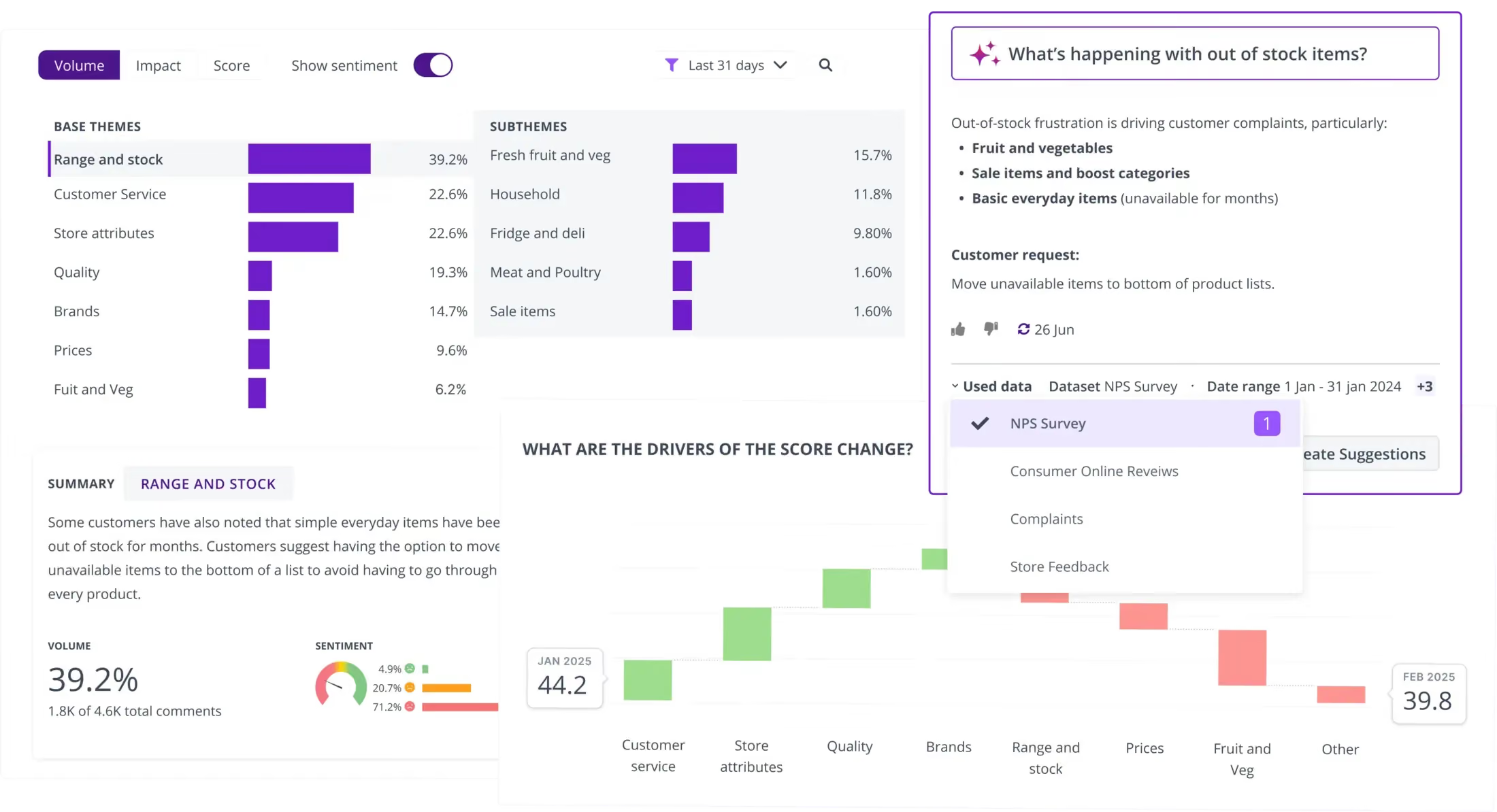
What is Thematic? Thematic is a feedback analysis platform built around transparent, user-controlled theme discovery. Every theme it generates is traceable back to the raw comments behind it, which appeals to insights teams that need to defend their conclusions.
It combines generative and traditional algorithms with a theme editor, so analysts can refine the model's output. Buyers weighing it against our top pick can read the Chattermill vs Thematic breakdown or our wider Thematic alternatives guide.
Key features
- Theme editor: Analysts adjust and control theme definitions directly.
- Traceable themes: Every theme links back to source comments.
- Mixed AI approach: Generative plus traditional algorithms for balance.
- Metric linkage: Connects themes to CX metrics and impact.
Pros and cons
Pros:
- High transparency and analyst control over theming.
- Published starting price aids budgeting.
Cons:
- Hands-on theme curation adds effort.
- Integration set centers on the survey/CX stack.
Pricing
Foundation plan from $25,000 per year (published).
G2 rating
Thematic G2 score: 4.8 across roughly 41 reviews.
Best for: teams wanting transparent, user-controlled theme discovery.
5. Qualtrics XM Discover
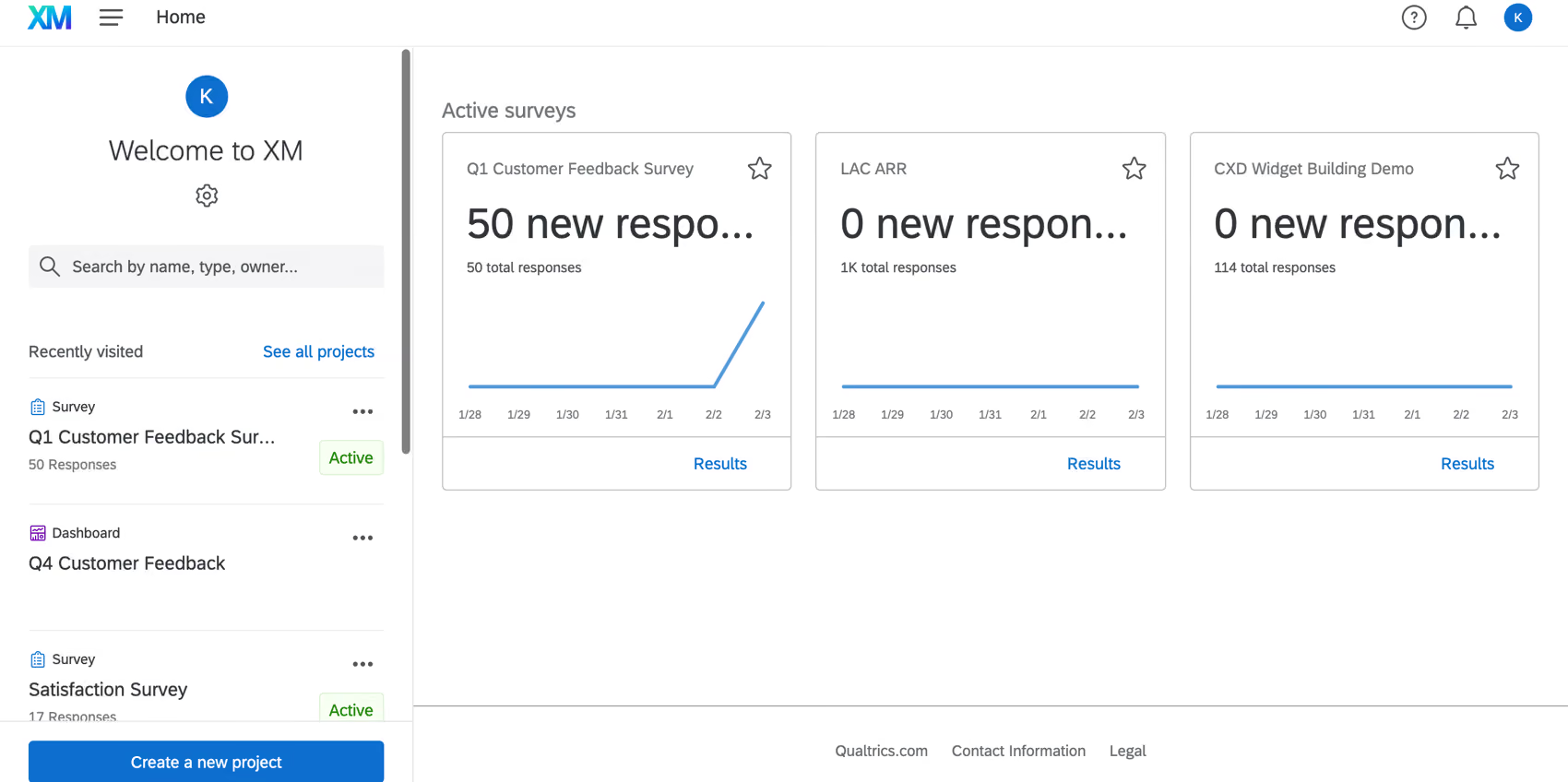
What is Qualtrics XM Discover? Qualtrics XM Discover is an enterprise text and speech analytics product, formerly Clarabridge, which Qualtrics acquired in 2021. It specializes in conversational and contact-center analytics across omnichannel text and speech.
Its 150+ industry NLU models detect sentiment, emotion, intent, and effort, making it a fit for large contact-center operations. Teams comparing the broader suite can review our Qualtrics alternatives analysis.
Key features
- Speech and text analytics: Analyzes contact-center calls alongside written feedback.
- 150+ NLU models: Industry-tuned models detect sentiment, emotion, intent, and effort.
- XM ecosystem: Integrates across the Qualtrics experience management suite.
Pros and cons
Pros:
- Deep conversational and speech analytics for contact centers.
- Mature enterprise ecosystem.
Cons:
- No standalone G2 profile to benchmark independently.
- Sales-gated pricing and enterprise complexity.
Pricing
Custom, sales-gated pricing with no standalone published price. Vendr's verified data puts the median Qualtrics contract at roughly $30,000 per year, with enterprise programs reaching six figures; XM Discover sits at the higher enterprise end of that range.
G2 rating
N/A. No standalone G2 profile exists.
Best for: enterprise contact-center and omnichannel teams needing conversational plus speech analytics.
6. Medallia
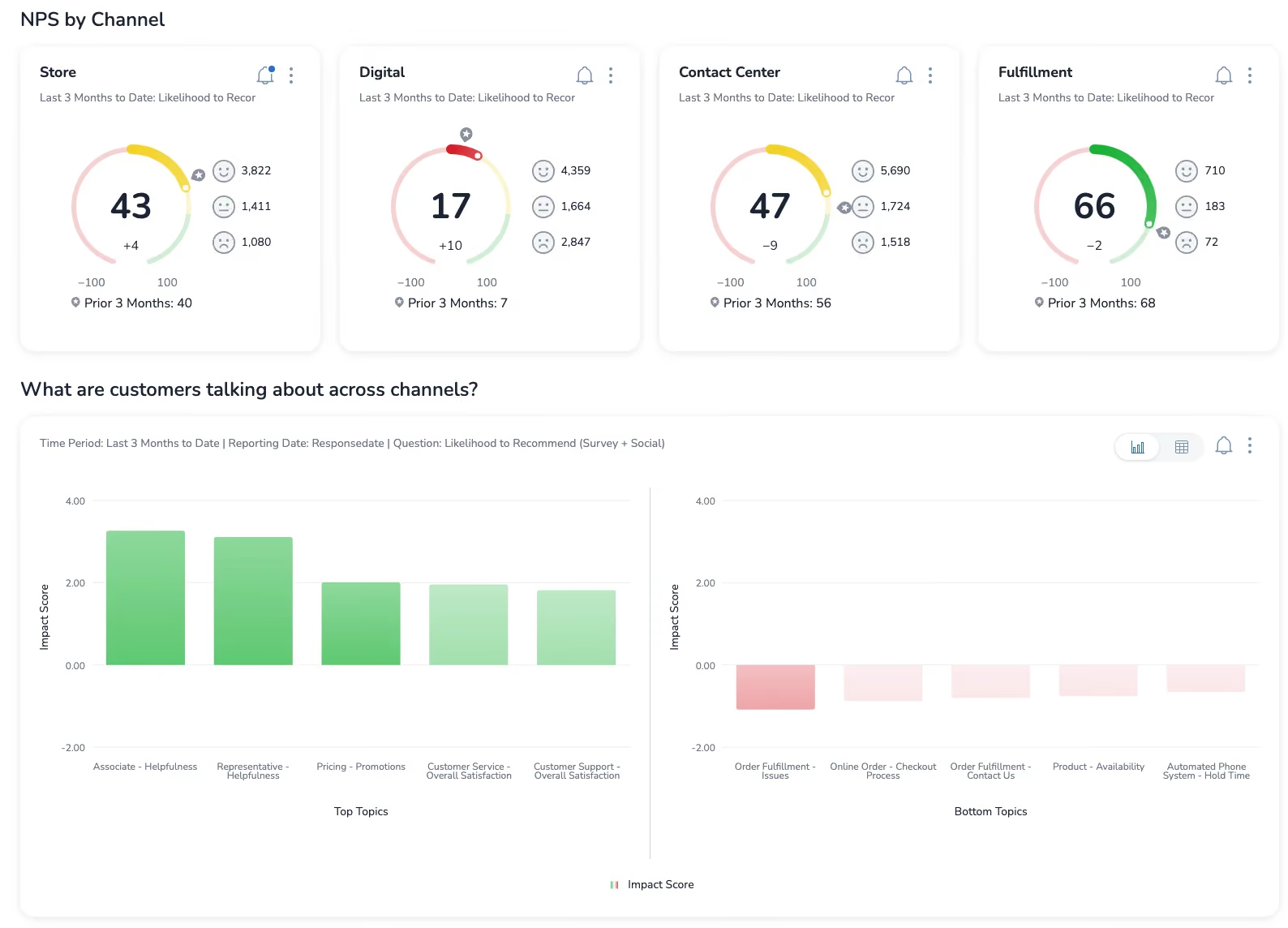
What is Medallia? Medallia is an enterprise experience management platform known for the breadth of signals it captures. It gathers feedback across email, social, digital web and in-app, messaging, and connected devices.
Its Medallia Athena AI applies machine learning for pattern detection and prediction across that wide signal base. For large enterprises comparing platforms at this tier, our enterprise voice of customer platforms guide adds context.
Key features
- Broad signal capture: Email, social, digital, messaging, and device data.
- Medallia Athena: ML-driven pattern detection and prediction.
- Enterprise integrations: Connects across a wide enterprise stack.
Pros and cons
Pros:
- Widest signal capture in this list.
- Predictive experience and behavior signals.
Cons:
- Scale and setup suit large, dedicated CX departments.
- Quote-based pricing with enterprise overhead.
Pricing
Custom, quote-based pricing. Third-party benchmarks (e.g. SpendHound and VendorBenchmark) estimate entry licenses from around $20,000 per year, with typical enterprise contracts ranging roughly $200,000 to $800,000+ per year.
G2 rating
Medallia G2 score: 4.5 across roughly 200 reviews.
Best for: large enterprises with dedicated CX departments and broad signal capture needs.
7. unitQ
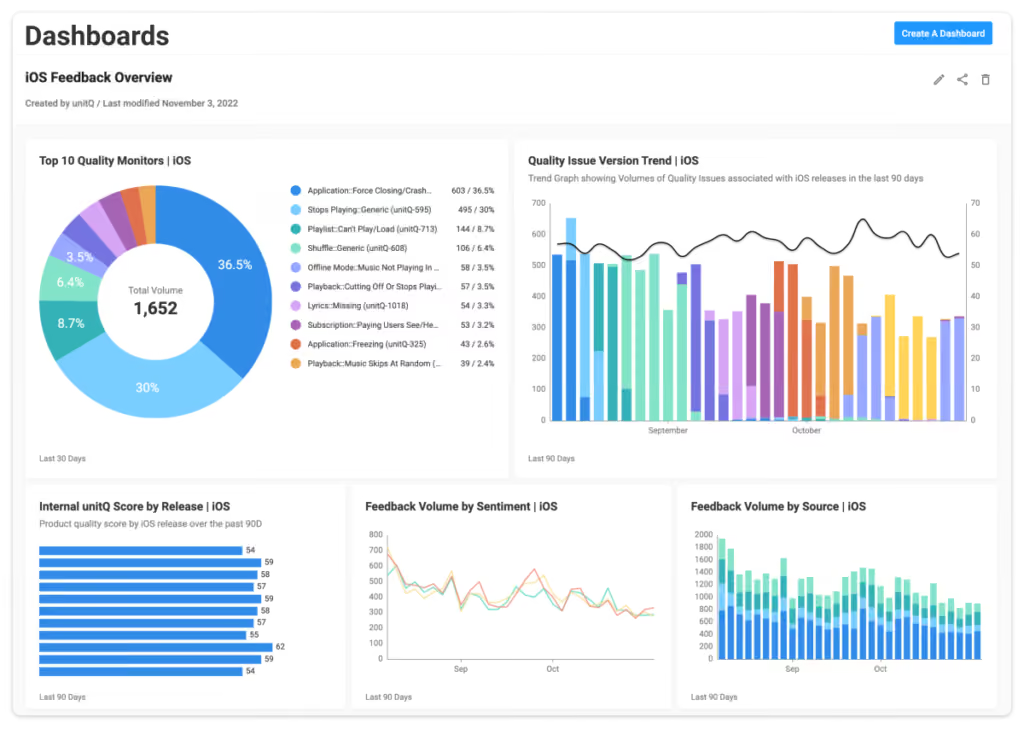
What is unitQ? unitQ is a feedback analytics platform focused on product quality. It surfaces product-quality issues and root causes across review sites, support, social, and surveys in more than 100 languages.
Its unitQ Score quantifies quality issues so product teams can track bugs and friction over time. It complements the discovery patterns in our customer insights software roundup.
Key features
- unitQ Score: Quantifies product-quality issues and root causes.
- Review-site coverage: Ingests Trustpilot, G2, Capterra, and app stores.
- 100+ languages: Analyzes global feedback across sources.
Pros and cons
Pros:
- Strong for product-quality and bug monitoring.
- Wide review-site and app-store coverage.
Cons:
- Narrower than a full CX intelligence platform.
- Quote-based pricing.
Pricing
Custom, subscription-based pricing, scaled to feedback volume, sources, and users. There is no published third-party benchmark available for unitQ.
G2 rating
unitQ G2 score: 4.5 across roughly 47 reviews.
Best for: product teams monitoring product quality and bugs.
8. Bagel AI
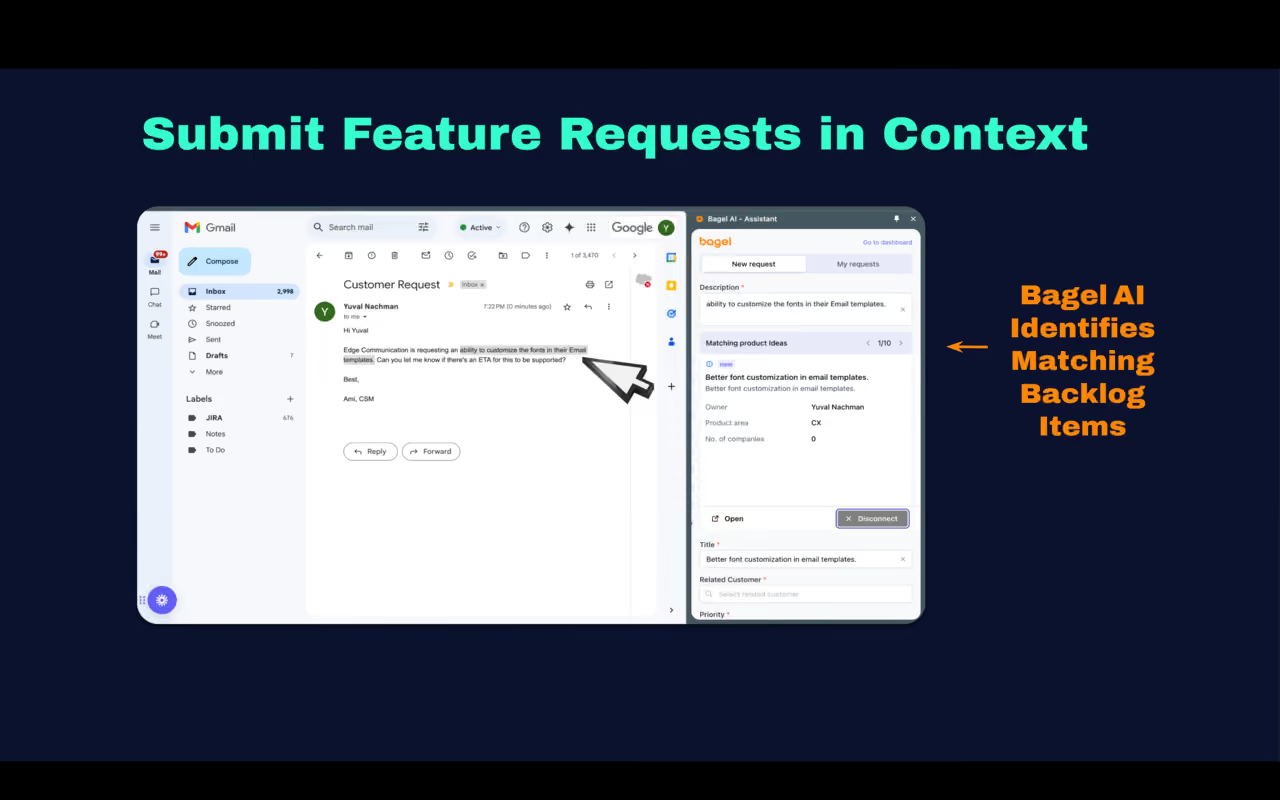
What is Bagel AI? Bagel AI is a newer entrant that maps customer feedback directly to revenue impact. It scopes product decisions and produces dev-ready artifacts from feedback pulled out of your existing stack.
Its strongest signal is revenue linkage, tying feedback to deal, pipeline, renewal, and upsell data, and serving decisions to AI agents via MCP. That focus complements how teams handle product feedback prioritization.
Key features
- Revenue mapping: Ties feedback to deal, pipeline, renewal, and upsell.
- Dev-ready artifacts: Scopes product decisions into build-ready outputs.
- Stack integrations: Salesforce, Gong, Zendesk, Jira, plus MCP.
Pros and cons
Pros:
- Strong, explicit revenue linkage.
- Serves decisions to AI agents via MCP.
Cons:
- No G2 reviews yet, so limited independent validation.
- Pricing appears only in third-party listings.
Pricing
Pro plan from roughly $24,000 per year (third-party listing).
G2 rating
N/A. No G2 reviews yet.
Best for: teams tying product decisions directly to revenue.
How to Choose a Reforge Insights Replacement
Which tools offer similar insight synthesis to Reforge without the framework lock-in? Standalone, AI-native platforms like Chattermill, Enterpret, and Unwrap synthesize feedback into themes and sentiment without tying you to a proprietary methodology or course. You get the synthesis, minus the framework dependency.
From there, match the tool to your use case. Choose Chattermill when you need multilingual, multi-source unification tied to revenue and reported metrics. Choose Enterpret for product-led SaaS with a self-training taxonomy, and Unwrap when real-time spike alerts are the priority. For contact-center depth, look at Qualtrics XM Discover; for the widest signal capture, Medallia; and for product-quality monitoring, unitQ.
Weigh pricing transparency and time-to-value too. Published starting prices help budgeting, but quote-based platforms often scale better with volume. Our CX analytics tools guide walks through the trade-offs in more detail.
Frequently Asked Questions
Is Reforge Insights shutting down? Yes. Following Miro's acquisition of Reforge on March 24, 2026, Reforge Insights is no longer available as a standalone product and is being folded into Miro, prompting teams to migrate.
What is the closest alternative to Reforge Insights for customer feedback analysis? Chattermill is the closest alternative for most teams. It is an AI-native CXI platform that synthesizes feedback from any source and ties it to business metrics, without methodology lock-in.
Which tools offer similar insight synthesis to Reforge without the framework lock-in? Standalone AI-native platforms like Chattermill, Enterpret, and Unwrap deliver comparable synthesis without a proprietary framework. They turn raw feedback into themes and sentiment you can act on immediately.
How much do Reforge Insights alternatives cost? Published entry points sit around $24,000 to $25,000 per year for Unwrap, Thematic, and Bagel AI. The rest, including Chattermill, Enterpret, Medallia, unitQ, and Qualtrics XM Discover, use custom, quote-based pricing that scales with feedback volume and channels.
How do I migrate my feedback data off Reforge Insights? Export your feedback and any tags from Reforge Insights, then import them into your new platform and reconnect your live sources. Platforms with broad integrations can reconnect surveys, tickets, and reviews quickly to rebuild your analysis.
The Bottom Line
The right replacement turns scattered feedback into decisions your team can defend, and the wrong one traps you in another rigid framework. Across all eight reforge insights alternatives, Chattermill is our top recommendation for teams that want AI-native synthesis without methodology lock-in.
As an AI-native CXI platform, Chattermill unifies feedback from 100+ channels and languages, scores sentiment per aspect with the Lyra model, and ties every theme to NPS, CSAT, CES, and revenue. It gives Reforge teams the insight synthesis they relied on, with the accuracy and business-metric linkage the old framework never provided. Compare it against the field in our customer feedback analysis tools guide.
Ready to see it on your own feedback? Book a personalized demo.



See Chattermill in action on your own feedback
Book a demo


