

Most DTC brands collect customer feedback — but few actually turn it into decisions that move retention, product quality, or NPS. The gap is not data; it is the ability to unify and analyze feedback across every channel in real time.
Our top pick for DTC brands is Chattermill — an AI-native voice of customer platform that unifies every feedback channel and connects themes directly to NPS, churn, and revenue outcomes.
We evaluated 10 voice of customer tools across AI-powered analytics, multi-channel feedback ingestion, ecommerce integrations, and pricing transparency. Qualtrics XM is the strongest option for enterprise teams that need a survey-first research platform with broad methodology support. Yotpo is the best choice for Shopify-native DTC brands focused on reviews, UGC, and loyalty program feedback.
Why Listen to Us
Chattermill powers voice of customer programs for brands like Uber, HelloFresh, H&M, Booking.com, and Amazon. The platform is a G2 Leader in feedback analytics with 150+ five-star reviews and a 4.5/5 rating.
What Is a Voice of Customer Tool?
A voice of customer (VoC) tool is software that collects, organizes, and analyzes customer feedback from multiple sources — surveys, product reviews, support tickets, social media, in-app interactions, and call transcripts — to help teams understand what customers think, feel, and need.
For DTC brands, this matters because feedback is scattered across channels that rarely talk to each other. Your Shopify reviews say one thing, your support tickets say another, and your post-purchase surveys capture a third signal. A VoC tool brings all of these into a single view so your CX, product, and marketing teams can make decisions based on the full picture rather than fragments.
The best voice of customer tools go beyond collection: they use AI to automatically identify themes and sentiment trends, surface root causes behind satisfaction or frustration, detect anomalies in real time, and connect feedback insights to business metrics like NPS, CSAT, and churn.
10 Top Voice of Customer Tools for DTC Brands: Head-to-Head Comparison
How We Evaluated These Tools
Choosing a voice of customer platform for a DTC brand is not the same as choosing one for a B2B SaaS company. DTC brands deal with high feedback volumes across product reviews, post-purchase surveys, support tickets, and social channels — and they need insights fast enough to act on during a product launch or seasonal spike.
We assessed each tool against six criteria specific to the DTC use case:
1. Chattermill
.avif)
What Is Chattermill?
Chattermill is an AI-native feedback analytics and voice of customer platform built to unify feedback from every channel and turn it into measurable business outcomes. Where most VoC tools stop at collecting data or scoring sentiment, Chattermill's Lyra AI engine goes deeper — extracting granular themes, identifying root causes behind customer issues, and connecting those themes directly to movements in NPS, CSAT, churn, and revenue.
For DTC brands, this matters because customer feedback is rarely confined to a single channel. Post-purchase surveys, product reviews, support tickets, social media comments, and in-app feedback all carry signal — but only if you can analyze them together. Chattermill brings all of these sources into a single analytical layer, so a CX or product team can see, for example, that delivery complaints spiked 40% this week, that the spike is concentrated in a specific region, and that the trend correlates with a 3-point NPS decline.
The platform also offers real-time anomaly detection: if a new product defect starts generating negative feedback, Chattermill surfaces it before it becomes a crisis. And with MCP server integration, AI agents can pull live customer intelligence directly from the platform — bringing voice of customer data into workflows without manual dashboard checks.
Key Features
- Lyra AI Engine: Extracts themes, sub-themes, and root causes from unstructured feedback across 100+ languages — far beyond keyword matching or basic sentiment analysis
- Multi-Channel Unification: Ingests surveys, support tickets, product reviews, social media, in-app feedback, and call transcripts into one analytical view
- Impact Analysis: Quantifies how specific feedback themes drive NPS, CSAT, CES, churn, and revenue — so teams prioritize what actually affects the business
- Real-Time Anomaly Detection: Automatically flags emerging issues and unusual feedback patterns before they escalate
- Enterprise Integrations: Native connectors for Salesforce, Zendesk, Intercom, Slack, Snowflake, and 50+ other platforms
- Automated Reporting and Alerts: Pushes insights and threshold alerts to Slack, email, or dashboards without manual effort
Pricing
Custom enterprise pricing. Chattermill does not publish self-serve pricing tiers — plans are scoped to feedback volume, channels, and team size. Book a Demo to get a tailored quote.
Pros
- Unifies all feedback channels into one platform — eliminates data silos that plague DTC brands running separate review, survey, and support tools
- AI goes beyond sentiment to surface specific, actionable root causes (not just "negative" or "positive")
- Connects feedback themes to concrete business metrics, making it easy to build a business case for CX investments
- Real-time alerting catches emerging issues during critical periods like product launches and peak seasons
- Supports 100+ languages natively — strong fit for DTC brands selling across multiple markets
- Chattermill MCP server for querying feedback data inside AI agents, enabling agentic VoC workflows
Cons
- Custom enterprise pricing with no self-serve entry point — not designed for very early-stage DTC brands with minimal feedback volume
- Full AI value requires a meaningful volume of feedback data flowing through the platform
- Advanced analytics capabilities have a learning curve; onboarding investment is needed to get the most from the platform
Who It's for
DTC brands with meaningful feedback volume across multiple channels that need to move beyond basic survey scores and understand why customers feel a certain way — and which issues actually impact retention and revenue. If your team is making decisions based on NPS scores alone and wants to connect customer insights to outcomes, Chattermill is built for that problem.
G2 Rating
4.5/5 (G2 Leader in feedback analytics, 150+ five-star reviews)
2. Qualtrics XM
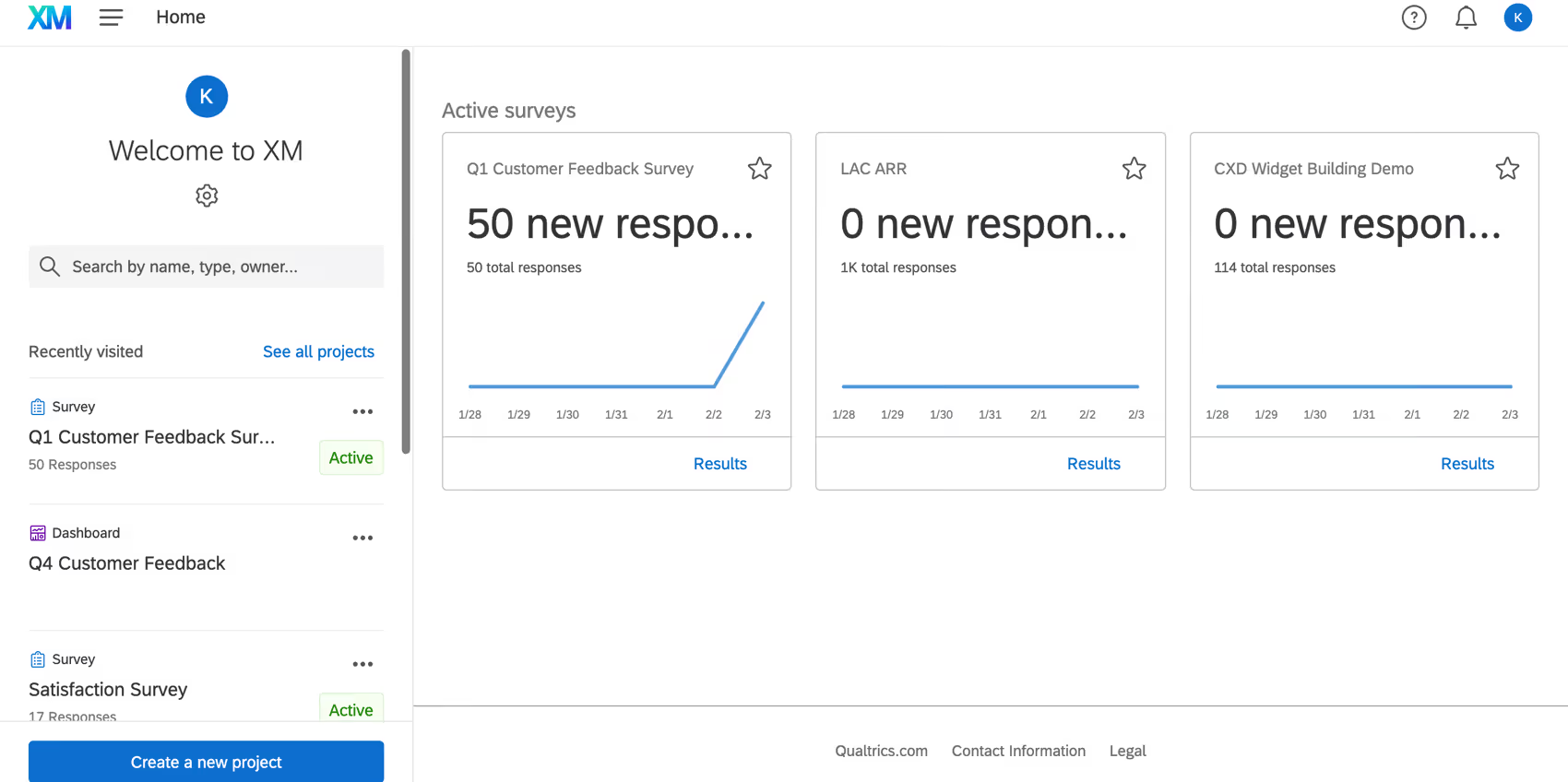
What Is Qualtrics XM?
Qualtrics XM is the enterprise standard for experience management, anchored in survey research methodology. It is a consistent Gartner Magic Quadrant Leader, and its XM platform spans customer experience, employee experience, product experience, and brand tracking. For DTC brands, Qualtrics brings rigorous survey design, sophisticated branching logic, and statistical analysis capabilities that simpler tools cannot match.
The trade-off? Qualtrics is a survey-first platform. It excels at structured feedback collection but does not natively unify unstructured sources like product reviews, social media, or support tickets into a single analytical view. DTC teams that need a multi-channel feedback approach may find themselves layering additional tools on top.
Key Features
- Advanced Survey Design: Complex branching, piping, randomization, and conjoint analysis for sophisticated research
- Text iQ: NLP-powered text analytics for open-ended survey responses with topic and sentiment detection
- Predict iQ: Machine learning models that forecast churn and satisfaction trends
- XM Directory: Centralized contact and experience data management
- Integrations: Salesforce, SAP, Marketo, Slack, and custom API access
Pricing
Custom enterprise pricing. Qualtrics uses interaction-based pricing and does not publish standard rates. Expect a significant enterprise investment for full XM platform access.
Pros
- Industry-leading survey methodology and research design capabilities
- Broad platform covering CX, EX, product, and brand research in one ecosystem
- Strong statistical analysis and reporting for data-driven teams
- Extensive academic and enterprise adoption — deep knowledge base and community
Cons
- Survey-first architecture — does not natively unify reviews, social, and support feedback
- Enterprise pricing puts it out of reach for most growing DTC brands
- Complexity can be overkill for teams that need fast, lightweight feedback loops
- Text analytics (Text iQ) is less granular than purpose-built AI analytics tools
Who It's for
Large enterprise DTC brands with dedicated research teams that need sophisticated survey methodology and broad experience management. If you already run structured CX research programs and need a platform that scales across departments, Qualtrics is a strong fit — but teams looking for AI-native multi-channel analytics may need a complementary solution.
G2 Rating
4.4/5
3. Yotpo
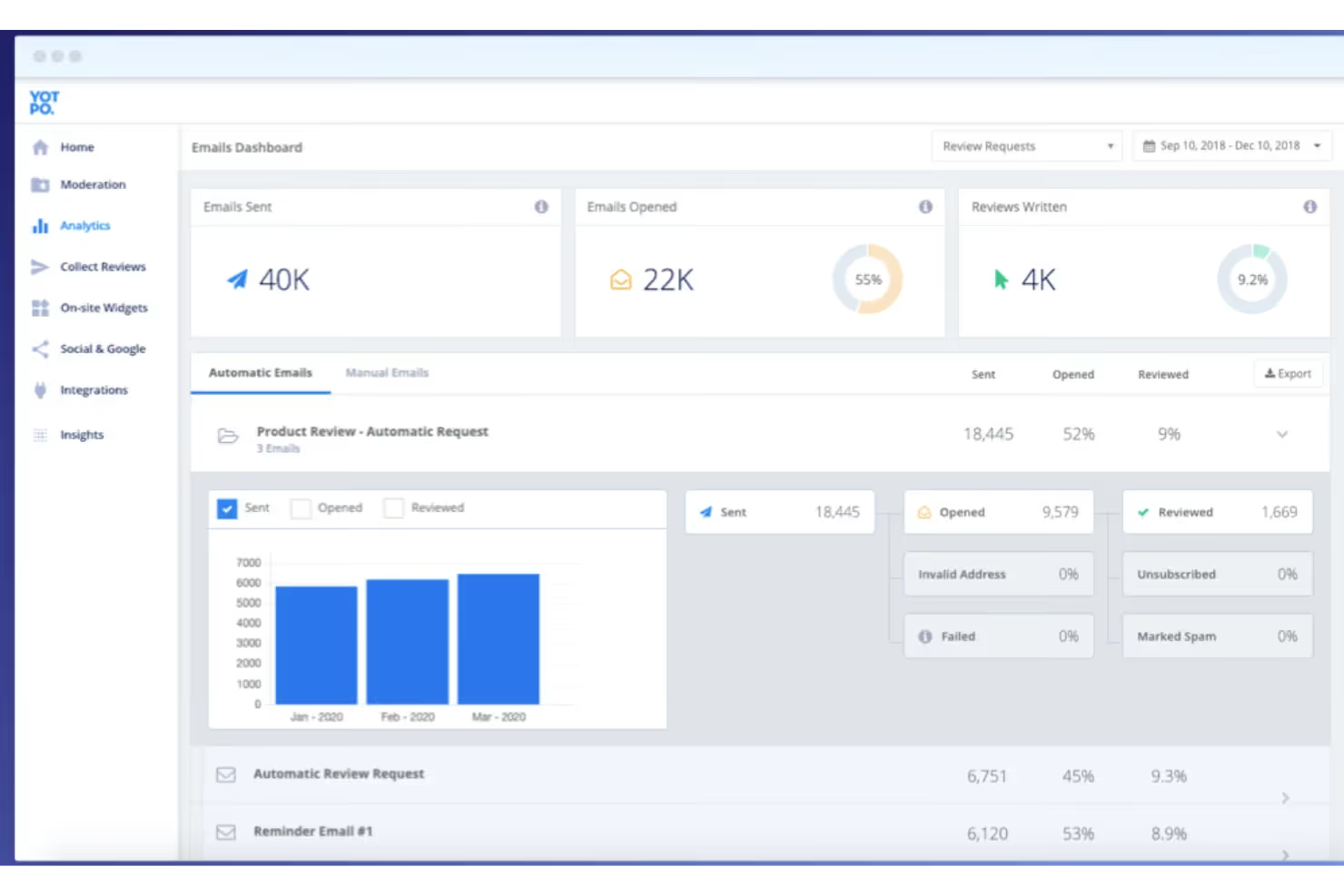
What Is Yotpo?
Yotpo is a DTC-native ecommerce retention platform built around reviews, UGC, loyalty, and SMS marketing. Unlike horizontal VoC platforms, Yotpo was designed specifically for ecommerce brands — particularly those on Shopify — and its feedback capabilities center on product reviews and customer-generated content rather than traditional surveys or support analytics.
Key Features
- Product Reviews and Ratings: Automated review request flows with photo and video UGC collection
- Loyalty and Referrals: Points-based loyalty programs integrated with review collection
- SMS Marketing: Direct customer communication with feedback collection triggers
- Visual UGC: Curate and display customer photos and videos on product pages
- Ecommerce Integrations: Deep native integration with Shopify, BigCommerce, WooCommerce, and Magento
Pricing
Free plan available with basic reviews. Paid plans start at $79/month for expanded features. Enterprise pricing for full platform access.
Pros
- Built specifically for DTC ecommerce — Shopify integration is best-in-class
- Combines reviews, UGC, loyalty, and SMS in one platform — reducing tool sprawl for smaller DTC teams
- Free plan makes it accessible for early-stage brands
- Strong visual UGC features that drive conversion alongside feedback collection
Cons
- Not a true VoC analytics platform — limited ability to analyze feedback themes, sentiment trends, or root causes across channels
- Feedback data is confined to reviews and UGC — does not ingest support tickets, surveys, or social mentions
- Analytics capabilities are basic compared to dedicated customer feedback analytics platforms
Who It's for
Shopify-native DTC brands that want to build a reviews, UGC, and loyalty engine in one platform and view product feedback as primarily a conversion and marketing tool rather than a CX analytics function.
G2 Rating
4.3/5
4. Medallia
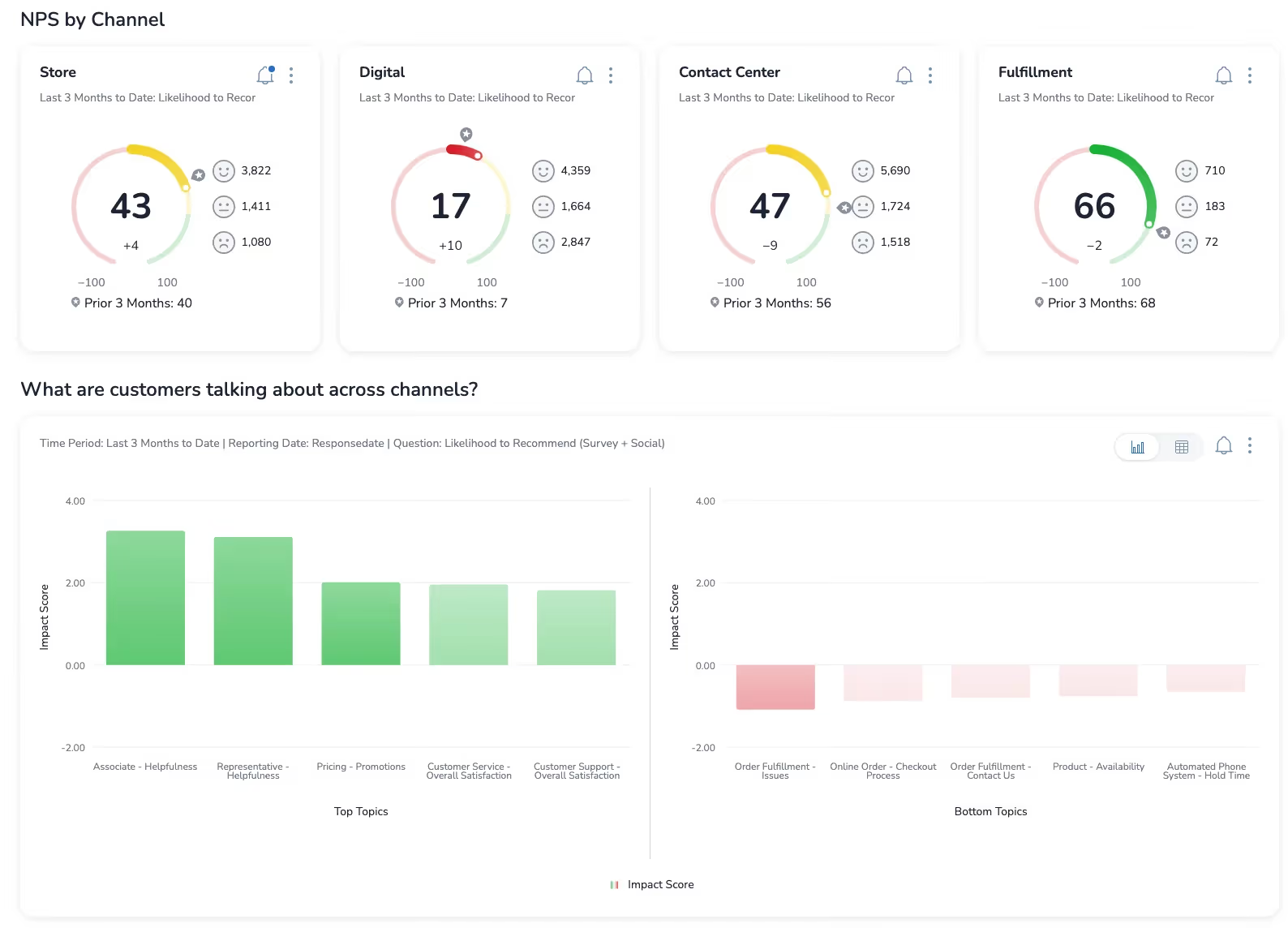
What Is Medallia?
Medallia is an omnichannel experience management platform and perennial Gartner Magic Quadrant Leader, built to capture and analyze customer signals at enterprise scale. The platform ingests feedback from surveys, contact centers, digital interactions, social media, and IoT devices, applying text analytics and topic modeling to surface trends.
Important context for 2026: Medallia underwent ownership changes in 2026. While the platform remains operational, prospective buyers should assess the company's long-term product roadmap and support commitments carefully.
Key Features
- Omnichannel Signal Capture: Surveys, contact center transcripts, digital behavior, social, messaging, and IoT signals
- Text Analytics: Topic modeling, sentiment scoring, and trend identification across unstructured feedback
- Athena AI: Machine learning for predictive analytics and automated action recommendations
- Role-Based Dashboards: Tailored views for frontline, management, and executive stakeholders
- Integrations: Salesforce, ServiceNow, Adobe, SAP, and extensive API access
Pricing
Custom enterprise pricing based on experience data records (EDR). Typically six figures annually for full deployment.
Pros
- True omnichannel signal capture at scale — few platforms match the breadth of data sources
- Mature enterprise platform with deep industry-specific solutions for retail and consumer brands
- Strong action management workflows that push insights to frontline teams
Cons
- Enterprise pricing and implementation complexity make it impractical for mid-market DTC brands
- Creditor ownership (April 2026) creates uncertainty around long-term product investment
- Can require significant professional services engagement for deployment and customization
- Analytics depth on unstructured feedback lags behind AI-native platforms focused specifically on theme and root-cause extraction
Who It's for
Large enterprise brands with complex omnichannel operations that need to capture signals across physical stores, digital, and contact center channels. DTC brands evaluating Medallia should weigh its breadth against the current ownership situation.
G2 Rating
4.5/5
5. Sprinklr
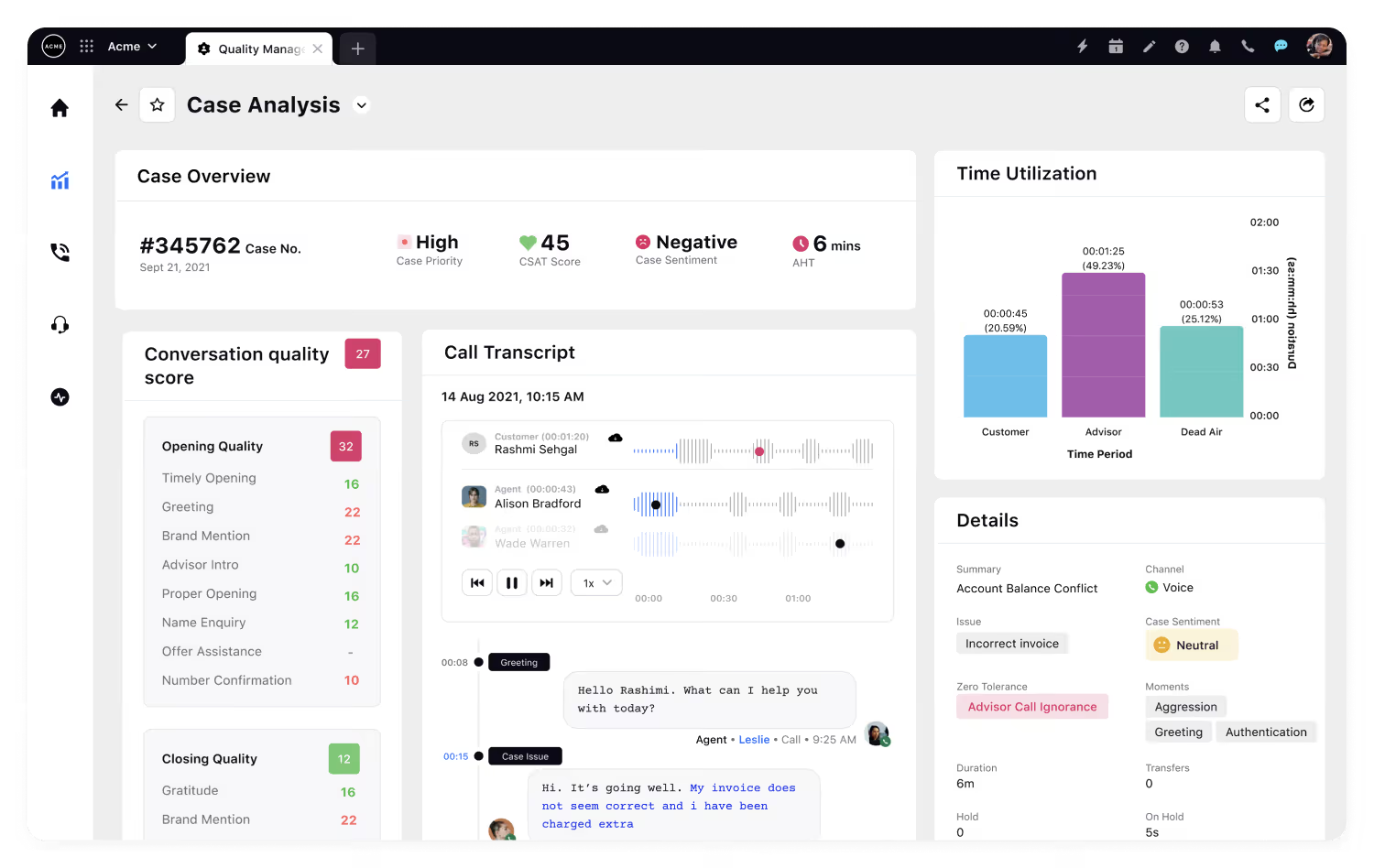
What Is Sprinklr?
Sprinklr is a unified CXM platform that originated in social media management and has expanded to cover customer service, marketing, and feedback analytics. As a Gartner Magic Quadrant Leader, Sprinklr brings strong social listening and engagement capabilities that are particularly relevant for DTC brands with heavy social commerce and community-driven marketing strategies.
Key Features
- Social Listening and Engagement: Real-time monitoring across major social and messaging channels
- Sprinklr AI+: Intent detection, sentiment analysis, and automated response suggestions
- Unified CXM: Customer service, marketing, social, and feedback in one platform
- Survey and Feedback Collection: In-platform surveys alongside social and messaging feedback
- Integrations: Shopify, Salesforce, SAP, Adobe, and custom API access
Pricing
Custom enterprise pricing. No self-serve plans.
Pros
- Strongest social listening and engagement capabilities of any tool on this list — ideal for DTC brands where social is a primary feedback channel
- Unified platform reduces tool sprawl across marketing, service, and CX teams
- AI-powered intent detection helps prioritize customer interactions
Cons
- Platform breadth creates complexity — teams focused solely on VoC may find it overwhelming
- Enterprise pricing is a barrier for smaller DTC operations
- Feedback analytics depth on non-social channels is less mature than purpose-built VoC analytics platforms
Who It's for
DTC brands where social media, community engagement, and messaging are primary customer interaction channels and the team wants a unified platform that covers marketing, service, and feedback. Less suited to brands that need deep analytics across surveys, support tickets, and product reviews.
G2 Rating
4.3/5
6. Bazaarvoice
What Is Bazaarvoice?
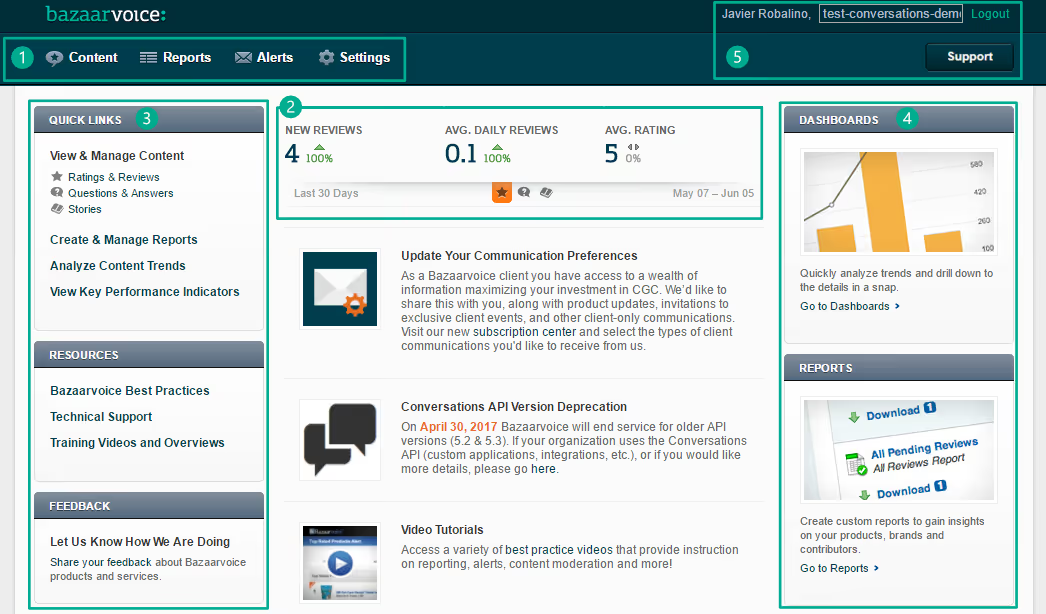
Bazaarvoice is a UGC and review syndication platform built for retail and DTC brands that need to collect, manage, and distribute product reviews and customer-generated content across their own sites, retail partners, and social commerce channels. Its syndication network — which distributes reviews across retailer sites — is a differentiator for brands selling through both DTC and wholesale channels.
Key Features
- Review Collection and Moderation: Automated review solicitation with fraud detection and moderation tools
- Review Syndication Network: Distribute reviews across a large retail partner network
- Visual UGC: Collect and display customer photos and videos across product pages
- Social Commerce: Shoppable social galleries integrated with product catalogs
- Integrations: Shopify, BigCommerce, Salesforce Commerce Cloud, and major retail platforms
Pricing
Custom pricing based on brand size, syndication volume, and feature requirements.
Pros
- Review syndication network is unmatched — distributes feedback across retail partner sites, extending reach
- Strong moderation and fraud detection keeps review quality high
- Useful for brands selling across both DTC and wholesale channels
Cons
- Focused on reviews and UGC — does not provide the survey, support ticket, or multi-channel analytics capabilities of a full VoC platform
- Analytics are basic — limited sentiment trending, no root-cause analysis
- Custom pricing is not transparent; can be expensive for smaller brands
Who It's for
DTC and retail brands that sell through both their own site and retail partners and need review syndication across a network of retailer sites. Less suited to brands looking for comprehensive voice of customer analysis across all feedback channels.
G2 Rating
4.2/5 (809 reviews)
7. Hotjar (Contentsquare)
What Is Hotjar?
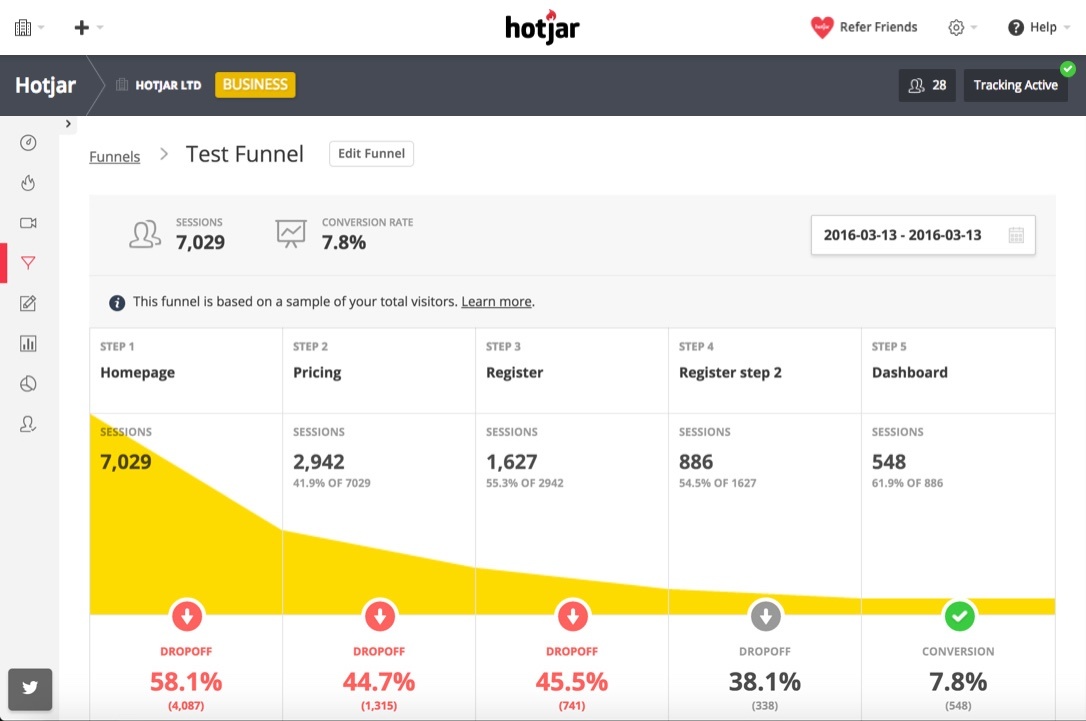
Hotjar — now part of Contentsquare — combines behavioral analytics with on-site feedback collection. It is best known for heatmaps, session recordings, and conversion funnels, but it also offers on-site surveys and feedback widgets that let DTC brands capture qualitative feedback at specific points in the customer journey. Think of it as a product and UX feedback tool rather than a full VoC analytics platform.
Key Features
- Heatmaps and Session Recordings: Visualize where users click, scroll, and drop off on your site
- On-Site Surveys: Deploy targeted micro-surveys triggered by behavior, page, or user segment
- Feedback Widget: Always-on "rage click" and satisfaction feedback on any page
- Conversion Funnels: Identify drop-off points in checkout and product flows
- Integrations: Shopify, BigCommerce, HubSpot, Google Analytics, Slack
Pricing
Free plan available with limited sessions. Paid plans start at $32/month. Enterprise pricing through Contentsquare for advanced features.
Pros
- Combines behavioral analytics with feedback collection — useful for DTC brands optimizing site UX and checkout flows
- Free plan is generous enough for small DTC sites to get started
- Visual heatmaps make it easy to communicate UX issues to product teamsd
Cons
- Not a VoC analytics platform — no ability to ingest support tickets, product reviews, social feedback, or multi-channel data
- AI and NLP capabilities are minimal — no theme extraction or sentiment analysis beyond basic response tagging
- Feedback data stays siloed in Hotjar; limited ability to connect insights to NPS, CSAT, or business metrics
Who It's for
DTC brands focused on optimizing their website and checkout experience that want behavioral analytics (heatmaps, recordings) alongside on-site feedback collection. Not a replacement for a dedicated VoC platform that analyzes feedback across all channels.
G2 Rating
4.3/5
8. Typeform
What Is Typeform?
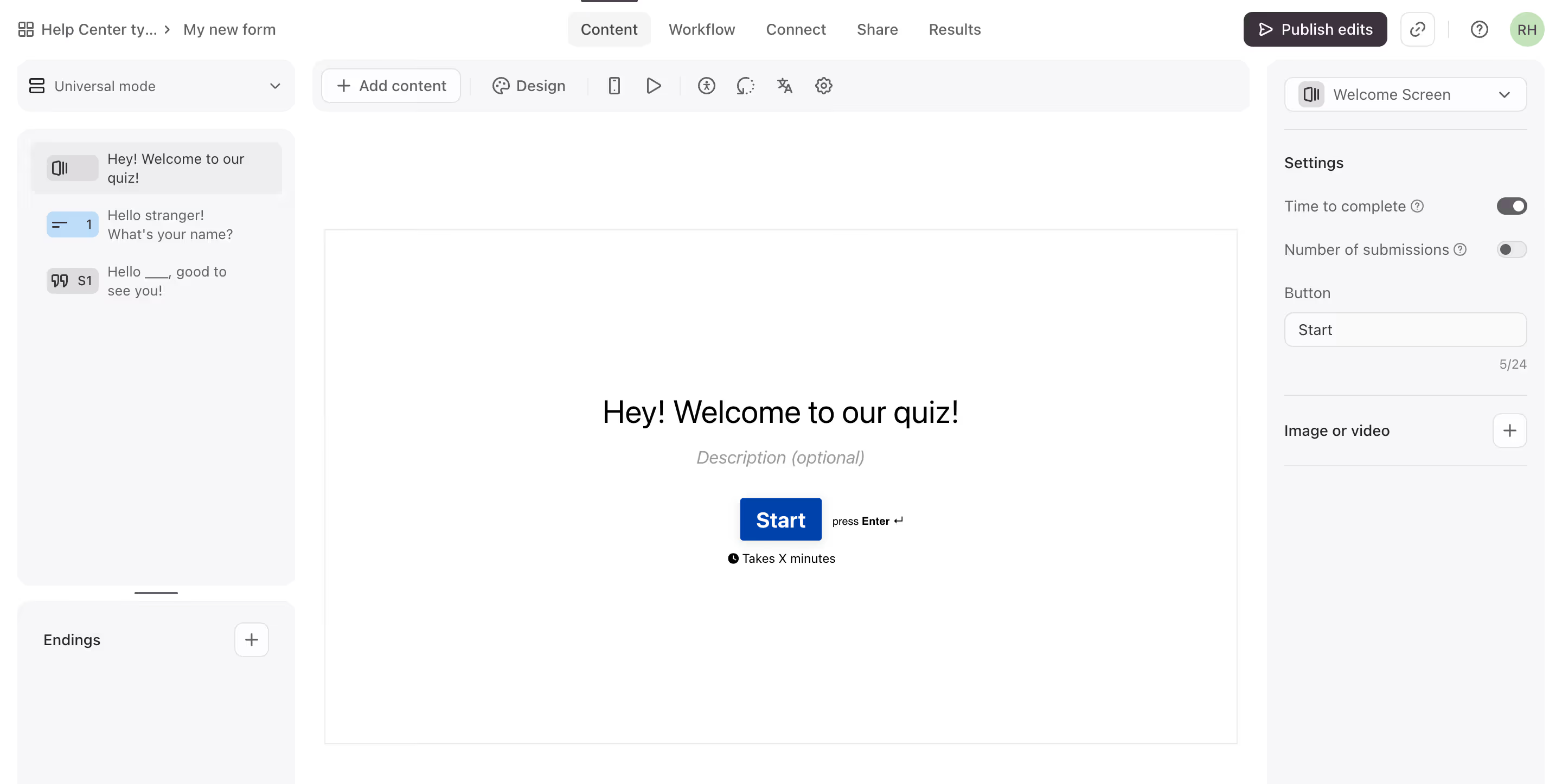
Typeform is a conversational form and survey platform known for its one-question-at-a-time interface that drives significantly higher completion rates than traditional survey tools. DTC brands use Typeform for post-purchase surveys, product feedback forms, NPS polls, and quiz-style shopping experiences — making it both a feedback collection tool and a conversion asset. Its Shopify and Klaviyo integrations make it easy to embed feedback into ecommerce workflows.
Key Features
- Conversational Survey Design: One-question-at-a-time format with branching logic, images, and video — drives higher completion rates
- AI Form Builder: Generate surveys from a text prompt, with AI-suggested questions and logic flows
- Post-Purchase Feedback Flows: Trigger surveys after Shopify orders, embed in confirmation pages, or distribute via Klaviyo email flows
- Interactive Quizzes and Product Finders: Use feedback forms as shopping tools that also capture VoC data
- Integrations: Shopify, Klaviyo, HubSpot, Google Sheets, Slack, Zapier, and native webhooks
Pricing
Free plan available with basic features. Paid plans start at $25/month (Basic), with Business plans from $83/month for advanced logic, integrations, and branding control.
Pros
- Best-in-class form UX — completion rates are measurably higher than traditional survey tools
- Affordable entry point with a free plan and low-cost paid tiers
- Doubles as a marketing tool (quizzes, product finders) alongside customer feedback collection
- Strong Shopify and Klaviyo integrations for DTC-native workflows
Cons
- Not a VoC analytics platform — collects feedback but does not analyze themes, sentiment, or root causes
- Each survey is a standalone form; no unified view across multiple feedback sources
- Advanced features (removing Typeform branding, custom domains) require higher-tier plans
- No native support for ingesting reviews, social mentions, or support conversations
Who It's for
DTC brands that want a polished, high-converting survey experience for post-purchase feedback, NPS, and product research — and value form design and completion rates over deep analytics. Teams that need multi-channel feedback analysis will pair Typeform with a dedicated VoC analytics platform.
G2 Rating
4.5/5 (1,002 reviews)
9. Survicate
What Is Survicate?
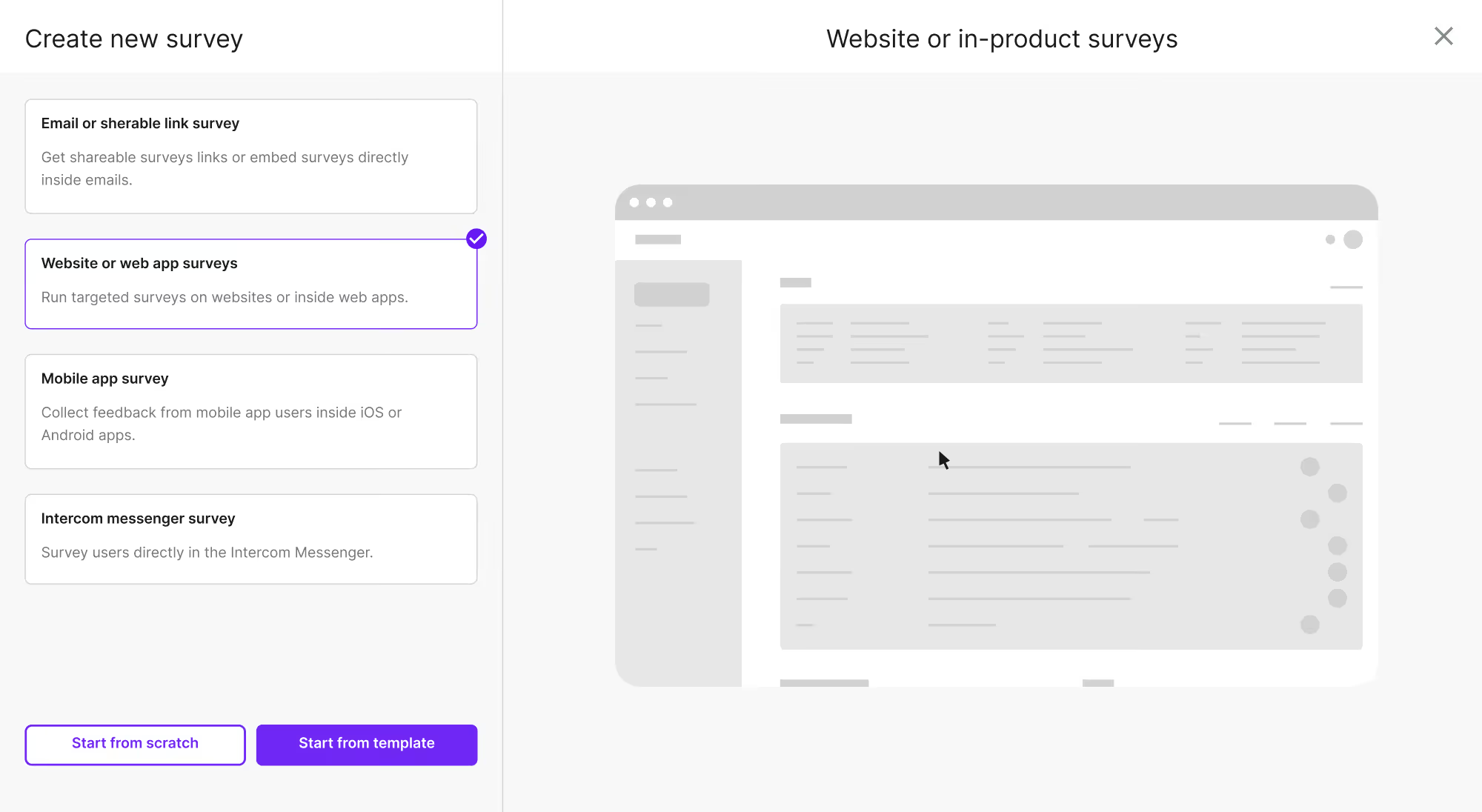
Survicate is a multi-channel survey platform designed for product, marketing, and CX teams at growing companies. It supports website, email, in-product, and mobile surveys with a visual builder and a library of templates. For DTC brands, Survicate offers a flexible middle ground between lightweight NPS tools and full enterprise platforms — with enough channel coverage to capture feedback at key customer journey touchpoints.
Key Features
- Multi-Channel Surveys: Website, email, in-product, mobile, and link surveys from one platform
- Visual Survey Builder: Drag-and-drop editor with a broad library of templates and question types
- Targeting and Triggers: Deploy surveys based on user behavior, page, device, or custom attributes
- Basic Analytics: Response analysis, NPS/CSAT tracking, and basic text analysis
- Integrations: Shopify, HubSpot, Intercom, Salesforce, Slack, Google Analytics
Pricing
Free plan available (limited responses). Paid plans start at $99/month with expanded volume and features.
Pros
- Good multi-channel coverage at a mid-market price point — more versatile than single-channel survey tools
- Strong targeting and triggering options for contextual feedback collection
- Native Shopify integration and ecommerce-friendly templates
Cons
- Analytics remain basic — no AI-driven theme extraction or feedback analytics capabilities
- Does not ingest unstructured feedback from reviews, social, or support channels
- Scaling beyond simple survey use cases requires layering additional tools
Who It's for
Growing DTC brands that have outgrown free NPS tools and want multi-channel survey coverage with behavioral targeting — but do not yet need the AI-powered analytics or multi-source unification of a full VoC analytics platform.
G2 Rating
4.6/5
10. Birdeye
What Is Birdeye?
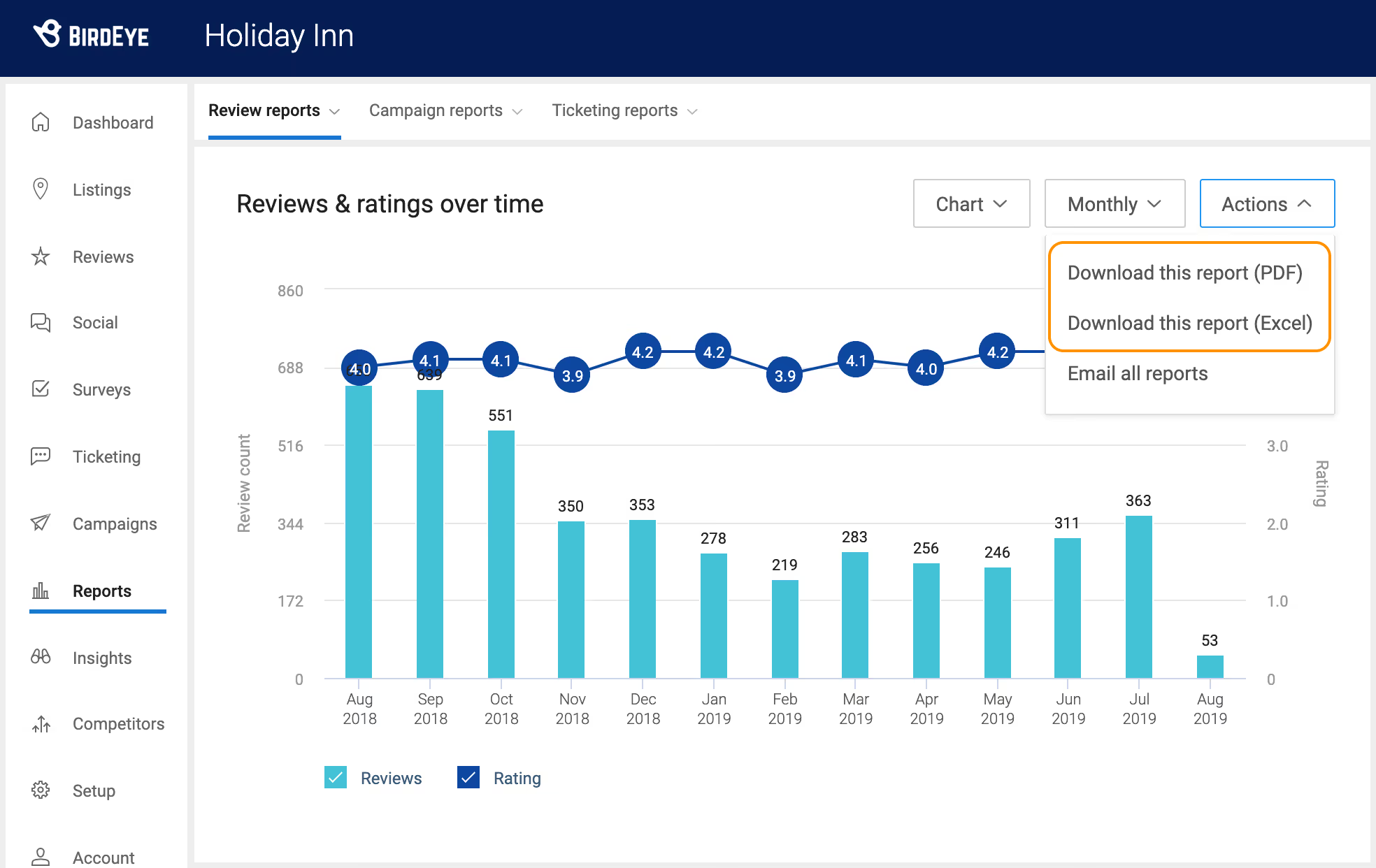
Birdeye is a review management and customer experience platform built for multi-location businesses. It combines review monitoring, survey collection, and messaging into a single dashboard — making it particularly relevant for DTC brands that operate physical retail locations or pop-up stores alongside their online channel. Its review management capabilities are strongest across Google, Facebook, and industry-specific review sites.
Key Features
- Review Monitoring and Generation: Automated review requests across Google, Facebook, and 200+ sites
- Survey Builder: NPS, CSAT, and custom surveys via email, SMS, and QR code
- Messaging Platform: Unified inbox for social, SMS, and webchat customer interactions
- Listings Management: Sync business information across directories and review sites
- Integrations: Shopify, Salesforce, HubSpot, QuickBooks, and 3,000+ apps via Zapier
Pricing
Custom pricing based on number of locations and features. No self-serve pricing published.
Pros
- Strong review management across Google and major review sites — ideal for DTC brands with physical retail presence
- Combines reviews, surveys, and messaging in one platform
- Automated review generation increases review volume without manual effort
Cons
- Primarily designed for multi-location businesses — less suited to pure DTC ecommerce without physical locations
- Feedback analytics are limited to basic sentiment on reviews and surveys; no deep theme analysis or root-cause detection
- Custom pricing is not transparent
Who It's for
DTC brands with physical retail locations, pop-ups, or service components that need review management alongside survey-based feedback. Less relevant for pure online DTC brands without a physical footprint.
G2 Rating
4.7/5
Get Started with Chattermill
If your DTC brand is ready to move beyond scattered feedback and disconnected survey scores, Chattermill unifies every channel into a single analytical layer — and connects what customers say to the metrics that drive your business. Book a Demo to see how it works with your data.
Voice of Customer Tools: FAQs
What Is a Voice of Customer Tool?
A voice of customer (VoC) tool is software that collects, organizes, and analyzes customer feedback from sources like surveys, product reviews, support tickets, social media, and in-app interactions. The goal is to turn raw feedback into actionable insights that help teams improve products, services, and customer experience. Modern VoC platforms use AI and NLP to automatically identify feedback themes, track sentiment trends, and surface the root causes behind customer satisfaction or frustration.
What Features Should DTC Brands Look for in VoC Software?
DTC brands should prioritize five capabilities when evaluating voice of customer software: multi-channel feedback ingestion (reviews, surveys, support, social), AI-powered analytics that go beyond basic sentiment scores to extract themes and root causes, native ecommerce integrations (especially Shopify), the ability to connect feedback insights to business metrics like NPS, CSAT, and churn, and pricing that matches the brand's scale. A tool that only handles surveys or only handles reviews will leave significant feedback data siloed.
Which Voice of Customer Tools Are Best for DTC Brands in 2026?
The best voice of customer tools for DTC brands in 2026 depend on your scale and analytical needs. Chattermill is the top choice for brands that need AI-native multi-channel analytics tied to business outcomes. Yotpo is best for Shopify-native brands focused on reviews and UGC. Qualtrics XM leads for enterprise teams running sophisticated survey research programs. For smaller DTC brands starting out, Typeform and Survicate offer accessible survey tools, while SurveyMonkey provides the lowest-cost entry point. See our full VoC tools comparison for detailed evaluations.
How Do Voice of Customer Tools Use AI?
VoC tools use AI in several ways, ranging from basic to advanced. At the basic level, tools like SurveyMonkey and Hotjar use simple text categorization and word clouds. Mid-tier tools like Qualtrics (Text iQ) and Medallia apply NLP for topic detection and sentiment scoring. AI-native platforms like Chattermill go further: the Lyra AI engine extracts granular themes and sub-themes from unstructured feedback, identifies root causes behind sentiment shifts, detects anomalies in real time, and quantifies how specific feedback themes impact business metrics like NPS, CSAT, and revenue. The most advanced applications include predictive analytics and AI-powered customer intelligence that AI agents can access directly.
Can Small DTC Brands Afford Voice of Customer Software?
Yes. Several voice of customer tools offer free plans or budget-friendly starting points. SurveyMonkey starts at $25/user/month with a free tier. Hotjar offers a free plan for basic behavioral analytics and surveys. Yotpo has a free plan for basic reviews. Survicate starts at $99/month, and Nicereply starts at $59/month. These tools handle straightforward survey or review collection well at small scale. As feedback volume grows and the need for AI-driven analytics and multi-channel unification increases, brands typically move to a platform like Chattermill that can connect insights to business outcomes. The key is starting with a tool that matches your current volume, then upgrading as your program matures.
The Bottom Line
The voice of customer tool you choose shapes the quality of decisions your team can make. Survey-only tools and review platforms serve specific purposes — but DTC brands generating feedback across surveys, reviews, support, and social channels need a platform that brings it all together and surfaces what actually matters.
If your team is still piecing together customer sentiment from disconnected tools, the real cost is not the software — it is the insights you are missing. The DTC brands that pull ahead in 2026 will be the ones that treat every piece of customer feedback as intelligence, not just data.
Ready to see how unified feedback analytics works in practice? Book a Demo with Chattermill.