


Chattermill vs Canny: Which AI Feedback Analysis Tool is Best For You?


The CX intelligence
platform that's AI-native by design
Book a demoChoosing between Chattermill and Canny often comes down to a question people don't ask early enough: are you trying to understand what customers feel, or organize what they want you to build? These tools both handle feedback, but they solve fundamentally different problems.
This guide breaks down how Chattermill's AI-powered voice of customer analytics compares to Canny's feature request management, covering capabilities, integrations, pricing, and which type of organization each platform serves best.
What is Chattermill
.avif)
Chattermill and Canny solve fundamentally different problems, even though both handle customer feedback. Chattermill is an AI-powered voice of customer analytics platform that unifies feedback from surveys, support tickets, reviews, social media, and chat into a single source of truth. The platform uses deep learning to automatically detect themes, sentiment patterns, and emerging issues across millions of data points.
CX, product, and insights teams at enterprise and mid-market organizations typically use Chattermill to understand why customers feel a certain way. The platform connects feedback directly to customer experience metrics like NPS, CSAT, and retention, helping teams prioritize what matters most.
- Core function: Unified feedback analytics across all channels
- AI capabilities: Automated theme detection, sentiment analysis, anomaly alerts
- Primary users: Enterprise CX, product, and insights teams
What is Canny
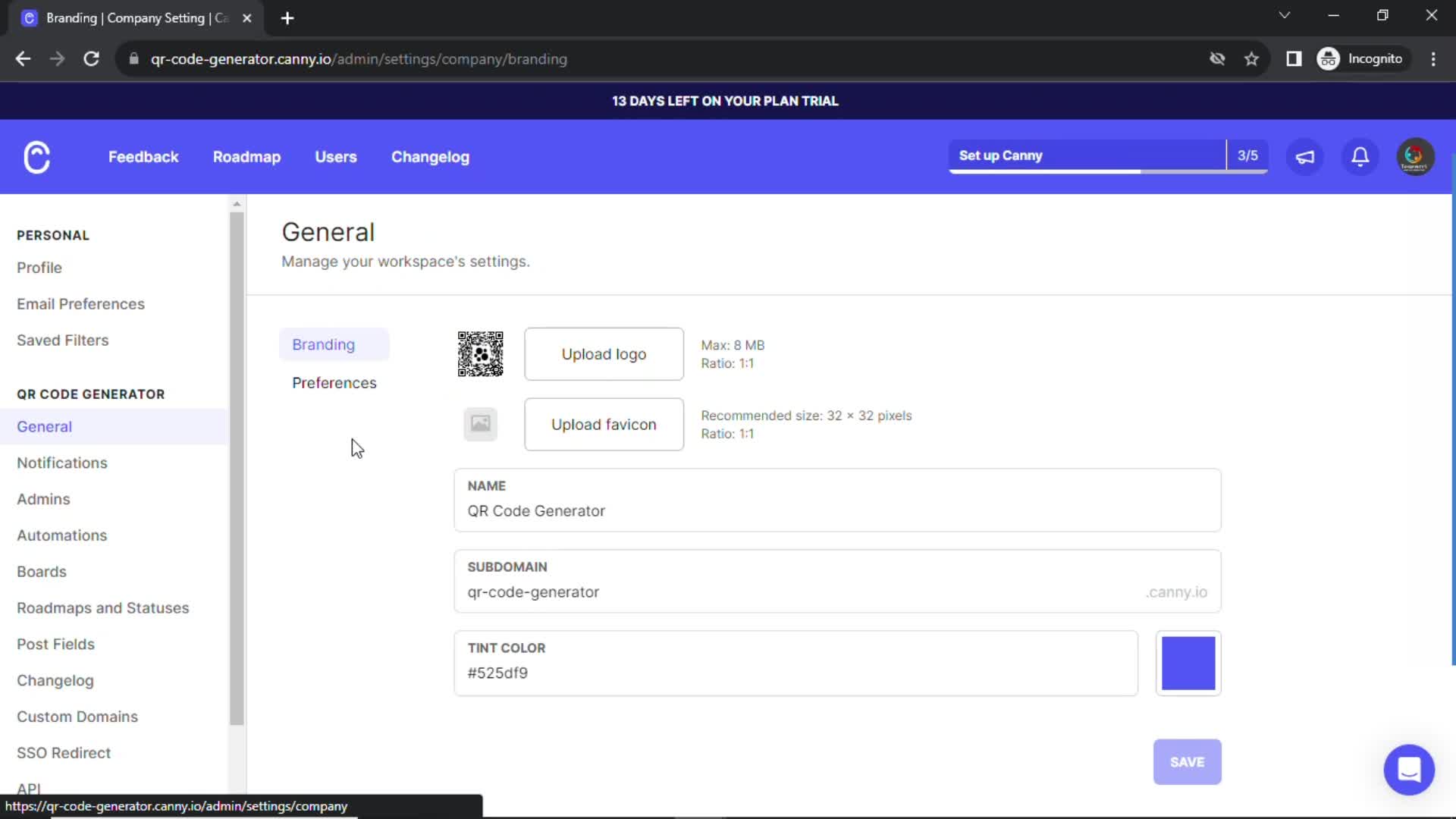
Canny takes a completely different approach. It's a feature request management tool that helps product teams collect, organize, and prioritize user suggestions through public-facing feedback boards where customers vote on ideas.
The platform creates transparency between product teams and users. Customers submit feature requests, vote on existing ideas, and receive notifications when features ship. This closing the loop mechanism builds trust and keeps users engaged with your product roadmap.
- Core function: Feature request collection and prioritization
- Key mechanism: Public voting boards and roadmap sharing
- Primary users: Product managers and SaaS product teams
Chattermill and Canny: Features at a glance
The distinction between Chattermill and Canny comes down to what problem you're trying to solve. One analyzes feedback to surface insights. The other organizes specific requests to guide product decisions.
Voice of customer analytics vs feature request management
Chattermill analyzes all customer feedback to surface insights you didn't know to look for. The platform processes unstructured data like open-ended survey responses, support conversations, and app reviews, then identifies patterns automatically. Canny organizes specific feature requests that customers explicitly submit.
Here's a simple way to think about it: Chattermill tells you what customers are frustrated about across your entire experience. Canny tells you which features customers want you to build next.
AI-powered insights vs manual categorization
Chattermill uses deep learning to automatically tag and categorize feedback without requiring manual setup or rule creation. The AI learns your business context and surfaces themes, sentiment shifts, and anomalies in real time.
Canny relies on user-generated categories and manual organization. This approach works well for straightforward feature tracking but doesn't scale for high-volume, unstructured feedback.
Enterprise scalability vs product team focus
Chattermill is built for enterprise complexity, handling multiple brands, languages, regions, and feedback sources flowing into a unified view. Canny is designed primarily for product teams at SaaS companies who want a lightweight way to manage feature requests without enterprise overhead.
Multi-channel feedback unification vs community boards
Chattermill connects to your existing tech stack and aggregates feedback automatically from Zendesk, Intercom, Salesforce, survey tools, and review platforms. Canny uses dedicated feedback portals where customers actively submit and vote on ideas.
Feature comparison for product feedback tools
Beyond strategic differences, the day-to-day functionality varies significantly between Chattermill and Canny.
Feedback collection and aggregation
Chattermill pulls feedback from wherever your customers already communicate. You don't ask customers to go somewhere new; you analyze what they're already telling you through support tickets, NPS surveys, app store reviews, and social mentions.
Canny requires customers to visit a dedicated feedback board. This approach captures intentional feature requests but misses the broader voice of customer.
Tagging and categorization methods
With Chattermill, AI handles categorization automatically. The platform identifies themes like "checkout friction" or "mobile app performance" without you defining rules upfront.
Canny uses manual tags and user-generated categories. This gives you control but requires ongoing maintenance as your product evolves.
Reporting and dashboard capabilities
Chattermill provides analytics dashboards that visualize sentiment trends, theme frequency, and impact on business metrics over time. You can segment by customer cohort, product line, or journey stage. Canny's reporting focuses on request popularity, voting trends, and roadmap progress.
Team collaboration and workflow tools
Chattermill enables cross-functional insight sharing with role-based dashboards for CX, product, and insights teams. Canny's collaboration features center on product team workflows like assigning requests, updating statuses, and managing the roadmap.
Customer communication and closing the loop
Canny shines here. The platform automatically notifies customers when you ship features they requested, creating a feedback loop that builds loyalty. Chattermill focuses on internal insight distribution rather than direct customer communication.
AI and sentiment analysis capabilities
For organizations dealing with high-volume, unstructured feedback, AI capabilities become the deciding factor.
Automated theme detection
Chattermill's AI identifies recurring themes without manual configuration. The platform learns from your data and surfaces issues like "delivery delays" or "billing confusion" automatically, even when customers describe problems in different ways. Canny doesn't offer comparable theme detection since it's designed for structured feature requests.
Multilingual sentiment accuracy
Chattermill processes feedback in multiple languages natively, detecting sentiment nuances that translation-based approaches miss. For global organizations, this means accurate insights across markets without separate analysis workflows. Canny is primarily English-focused.
Anomaly detection and real-time alerts
When customer sentiment shifts unexpectedly due to a product issue, competitor move, or service disruption, Chattermill alerts you proactively. This early warning system helps teams respond before small issues become major problems. Canny doesn't monitor for sentiment anomalies.
Trend analysis and predictive insights
Chattermill tracks how themes and sentiment evolve over time, helping you spot emerging issues before they peak. Canny provides a snapshot of current feature request popularity but doesn't analyze longitudinal trends.
Integration options for your tech stack
How well a tool connects to your existing systems often determines whether it actually gets used.
CRM and support platform integrations
Chattermill integrates with Zendesk, Intercom, Salesforce, and other platforms where customer conversations already happen. Canny connects to support tools primarily for capturing feature requests from tickets.
Business intelligence and data warehouse connections
Chattermill exports data to BI tools and warehouses for advanced analysis alongside other business metrics. Canny's data portability is more limited.
Survey tool and feedback source integrations
Chattermill connects to survey platforms like Qualtrics and SurveyMonkey, review sites, and social channels. Canny focuses on its own feedback collection mechanism.
API access and custom integrations
Both platforms offer APIs. Chattermill's is designed for enterprise data pipeline requirements while Canny's supports product team workflows.
Pricing comparison for Chattermill and Canny
Pricing structures reflect the different markets Chattermill and Canny serve.
Canny pricing tiers and limits
Canny publishes transparent pricing starting with a free tier for basic feedback collection. Paid plans scale based on features like private boards, integrations, and team seats.
Chattermill pricing model
Chattermill uses custom pricing based on feedback volume, data sources, and use case complexity. This approach reflects the enterprise nature of the platform since implementations vary significantly based on organizational needs.
Hidden costs and scaling considerations
With any feedback tool, consider what happens as you grow:
- Implementation: Onboarding and training requirements differ significantly between platforms
- Scaling: Volume-based pricing can change economics as feedback grows
- Add-ons: Advanced features may require additional investment
Who should use Chattermill
Chattermill fits organizations that want to understand customer sentiment at scale across multiple channels and languages. Typical users include organizations with high-volume, multi-channel feedback, teams needing AI-powered analytics across languages, CX leaders measuring impact on NPS, CSAT, and retention, and enterprises requiring governance, security, and scalability.
Who should use Canny
Canny works well for product teams that want a straightforward way to collect and prioritize feature requests. The platform is particularly suited for product teams prioritizing feature requests from users, SaaS companies wanting public roadmap transparency, teams focused on customer communication about shipped features, and organizations with straightforward feedback collection requirements.
How to choose the right customer feedback analytics platform
Rather than prescribing an answer, consider walking through a few evaluation steps.
1. Define your primary feedback use case
Are you trying to understand customer sentiment and identify pain points across your experience? Or are you specifically managing feature requests and product roadmap decisions? The answer points you toward different tools.
2. Evaluate AI and analytics requirements
Do you have high volumes of unstructured feedback that would take months to analyze manually? Or is your feedback relatively structured and manageable with manual organization?
3. Assess integration and scalability needs
Consider your current tech stack, future growth trajectory, and enterprise requirements around security and compliance.
4. Run a pilot or request a demo
Hands-on evaluation beats feature comparisons. See how each tool handles your actual data and workflows.
Book a personalized demo to explore how Chattermill transforms customer feedback into actionable insights.
FAQs about Chattermill vs Canny
Can Canny replace Chattermill for enterprise feedback analytics?
Canny excels at feature request management but lacks the AI-powered analytics, multi-channel unification, and enterprise scalability that Chattermill provides for comprehensive voice of customer programs.
Does Chattermill offer feature request voting like Canny?
Chattermill focuses on analyzing feedback to surface insights rather than collecting feature votes. Organizations often use Chattermill alongside feature request tools when both capabilities are relevant.
Which tool is better for analyzing multilingual customer feedback?
Chattermill's AI natively processes feedback in multiple languages with accurate sentiment detection. Canny is primarily designed for English-language feature requests.
How long does implementation take for Chattermill and Canny?
Canny can be set up in days for basic use. Chattermill implementations typically take longer due to integration complexity and AI model customization for enterprise requirements.
Can organizations use Chattermill and Canny together?
Yes. Some organizations use Canny for public-facing feature request collection while using Chattermill to analyze aggregated feedback from all channels including Canny data.
What happens to existing feedback data when switching from Canny to Chattermill?
Chattermill can ingest historical feedback data during onboarding, allowing teams to analyze past trends alongside new feedback from connected channels.



See Chattermill in action on your own feedback
Book a demo


